Why young Japanese see North Korea as the biggest threat to their country
Tokyo defense planners are more focused on China, but new generation is more concerned about missiles and kidnappings
Justin Yeo March 7, 2023
SHARE
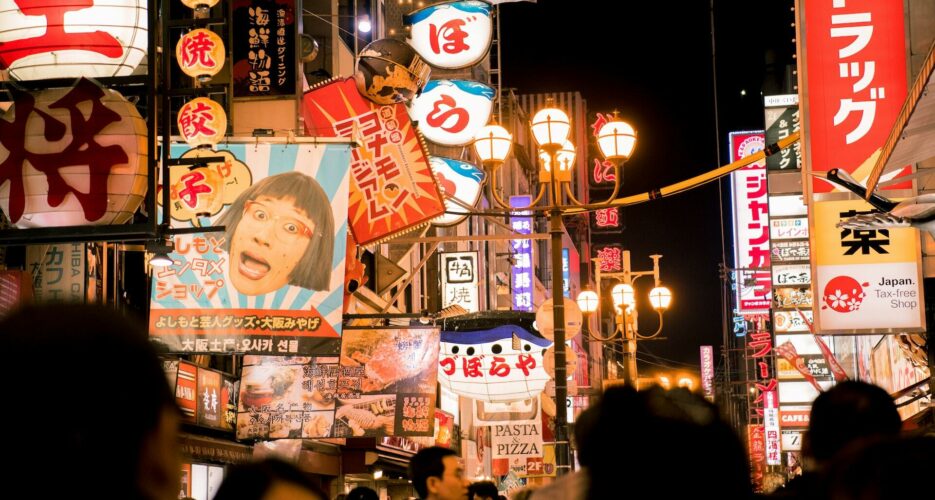
Osaka at night, March 2019 | Image: Satoshi Hirayama / Pexels
A recent poll shows young people in Japan see North Korea as the chief external threat to their country, even as Tokyo decision-makers frame China as Japan’s “biggest strategic challenge.”
Young Japanese aged 17 to 19 were significantly more likely to identify DPRK as the biggest threat to their country (67%) than Russia (55%) and China (49%), according to the survey by the nonprofit Nippon Foundation.
The poll also found that participants saw a possible military confrontation in the vicinity of Japan as the greatest threat their country faces, followed by a direct armed attack against Japan (47%) or against a U.S. base there (31%).
But despite their perceptions of the military threats to Japan, young people continued to strongly oppose the possibility of their country acquiring nuclear weapons.
Taken together, the poll results reflect the post-Cold War environment in which young people in Japan have grown up, when North Korea has struggled economically even as it has developed missiles capable of striking Japan, and they provide a glimpse at how the country’s younger generation is likely to shape public opinion and thus government policy toward Pyongyang in the decades to come.
A NEW GENERATION
A number of factors help explain the results of the Nippon poll.
First, North Korea receives enormous attention in Japanese media, most of it overwhelmingly negative. For Japanese youngsters, North Korea is a brutal dictatorship whose actions are often irrational and incomprehensible.
Second, North Korea has launched dozens of short- to long-range nuclear-capable missiles toward or over the country since early 2022. Last year, these provocations triggered nationwide alerts including evacuation and shelter-in-place warnings in northern Japan.
Young Japanese may also see North Korea as uniquely threatening because Kim Jong Un is a young dictator that they will have to live with for decades. China and Russia, while certainly not viewed positively, are led by 70-year-olds who Kim will surely outlive barring a health crisis.
 Kim Jong Un and his daughter during a long-range missile test | Image: Rodong Sinmun (Nov. 27, 2022)
Japanese people were not always so hawkish toward the DPRK. Attitudes toward the country were far more positive during the Cold War and as recently as the early 2000s, particularly from the left.
Progressives published editorials, articles and scholastic literature endorsing North Korea as a socialist paradise superior to the free-market South. Tellingly, when a communist Japanese militant group hijacked a Japanese airliner in 1970, they chose Pyongyang as their final destination under the belief that the DPRK would support their revolutionary struggle. (They were correct.)
But these illusions began to fade in the 1990s after the breakup of the Soviet Union and a devastating famine exposed the failures of the North Korean system. In 1998, the first North Korean missile flew over the Japanese mainland, triggering mass outcry and Tokyo’s withdrawal of funding for energy aid.
Kim Jong Il delivered the final nail in the coffin when he admitted that North Korean agents had kidnapped a dozen Japanese nationals in the 1970s and 80s. The Japanese left had long defended Pyongyang against these allegations but could no longer do so when the leader himself admitted to it.
The respondents in the Nippon poll have all come of age after these events and are far less open to socialism and more pragmatic about Japan’s relationships with its neighbors.
Japanese teenagers see North Korea primarily as a country that has constantly expanded its missile arsenal aimed at Japan, conducted multiple nuclear weapons tests and repeatedly criticized Tokyo based on a virulently anti-Japanese ideology. They view the country as a major threat that they will have to live with for some time.
By comparison, China is not ordering the launch of nuclear-capable missiles over the country, even though Japan identified Beijing as its primary challenger in the region in its latest defense white paper. While China’s rise has generated much debate around defense planning and doctrine in Japan, young people do not see it as a threat on the same level as North Korea.
When it comes to Russia, the invasion of Ukraine last year and Japan’s ongoing land disputes with Moscow may have elevated young people’s perception of the threat posed by their northern neighbor. But Russian state media, while sometimes hostile to Japan, does not promote anti-Japanism as a core tenant of national identity.
And neither China nor Russia ever dispatched agents to Japan to kidnap children, as the North Koreans did, another reason why Japanese young people may not look as negatively on those two countries.
NUCLEAR ATTITUDES
Another notable aspect of the survey is that the young Japanese surveyed once again confirmed their opposition to their country acquiring nuclear weapons, with 80% voicing negative views despite their perception of the North Korean nuclear threat. This contrasts sharply with South Korea, where polls have shown widespread support for an indigenous nuclear program to defend against the DPRK.
Prime Minister Eisaku Sato declared In 1967 that “Japan does not possess, does not produce and does not permit the introduction of nuclear weapons,” stating what has become known as the “three principles” guiding Tokyo’s non-nuclear policies. 21% of those polled by Nippon said these principles constitute a major tool to ensure Japan’s security.
18% of the respondents also endorsed dialogue with neighboring countries to ensure peace, while 17% said Japan should maintain its pacifist constitution that Tokyo has traditionally interpreted as only allowing for the country’s self-defense.
More hard-line policies to defend against North Korea and other threats received less support: Only 16% said the U.S.-Japan alliance should be strengthened, and only 14% favored bolstering the country’s armed forces.
The survey results are not too surprising. Japan is a country with a severe nuclear allergy, even though every new generation has been less negative about nuclear weapons than the last. Interestingly, young women are even more critical of nuclear weapons than young men, according to the Nippon poll, though it doesn’t offer a theory as to why.
The legacy of the atomic bombings on Hiroshima and Nagasaki strongly shapes this opposition to nuclear war, but media and schools have also influenced people through their emphasis on the evils of nuclear weapons.
Edited by Arius Derr
FOREIGN RELATIONS
RECENT STORIES

Yoon to hold summit with Biden to discuss alliance and North Korean threats

North Korea slams ‘provocative’ US-ROK drills that Seoul denies took place

Why North Korea’s state ideology appeals to some in Africa - Ep. 278
About the Author

Justin Yeo
Justin Hyun-jun Yeo is a research assistant to Professor Andrei Lankov at Kookmin University in Seoul. His areas of expertise include ROK domestic politics and Korea-Japan relations, as well as international relations in East Asia.
No comments:
Post a Comment
Note: Only a member of this blog may post a comment.