Audiobook
$14.95Available instantly
Paperback
$34.85

In the Cemetery of the Orange Trees
 Audible Audiobook – Unabridged
Jeff Talarigo (Author), Ross Klavan (Narrator), & 1 more
4.6 4.6 out of 5 stars (16)
See all formats and editions
In the mode of J. M. Coetzee’s Waiting for the Barbarians and Italo Calvino’s Invisible Cities, In the Cemetery of the Orange Trees engages poetic language, mythic themes, and childlike perspectives to offer an original approach to a conflict that has become hardened and polarized. These linked stories of an American’s experience in Gaza expose the seven-decade long Palestinian diaspora in a disquieting allegory of the clash between the occupied and the occupier.
In a place where political posturing, bloody war, journalistic witness, and even patient negotiation have yielded so little understanding, we enter the cemetery of the orange trees, where urchins kite dead birds, goats utter wisdom, camels and donkeys huddle together, and merchandise magically passes underground through the tunnels of Gaza. But this is no fairy tale or bestiary. In the Cemetery of the Orange Trees is a waking, attentive dream-journal, leading us back to a place where hatred, strife, and even human language itself might sing.
Jeff Talarigo is the author of two novels: The Pearl Diver and The Ginseng Hunter. He has lived in Gaza and Japan, and currently resides in Oakland, California.
===
Listening Length
4 hours and 45 minutes
Author
Jeff Talarigo
Next slide of product details
See all details
Report an issue with this product
Product details
Listening Length 4 hours and 45 minutes
Author Jeff Talarigo
Narrator Ross Klavan
Audible.com.au Release Date 23 May 2019
Publisher Etruscan Press
Program Type Audiobook
Version Unabridged
Language English
ASIN B07S3849CY
Looking for specific info?
Search
Customer reviews
4.6 out of 5 stars
4.6 out of 5
16 global ratings
5 star
83%
4 star
8%
3 star
0%
2 star
9%
1 star
0%
How are ratings calculated?
Review this product
Share your thoughts with other customers
Write a customer review
Top reviews from Australia
There are 0 reviews from Australia
Top reviews from other countries
Amazon Customer
5.0 out of 5 stars An exquisite bookReviewed in the United States on 16 February 2018
Verified Purchase
In the Cemetery of the Orange Trees is clearly not a stroll through charming fairy tales. The pieces are unsettling, even nightmarish. Talarigo’s inventive prose reinforces the feeling that the camps, intended to be temporary, are the only permanent features of the landscape. As with human beings anywhere, people in the camps try to build a normal life in this aberration of politics and geography. A life with family pictures, businesses, schools and pets.
“Normal,” however, is as impossible as conversations between donkeys and sheep. Maybe more so.
Talarigo does, to some extent, provide an anchor, a familiar place to stand and observe through a character called The American – his alter ego. The American’s defining moment occurs when he is manhandled by an Israeli soldier who thinks he is Palestinian. Just being Palestinian constitutes a suspect, even threatening, act. His American passport protects him, serving as talisman and exit visa, but only if someone asks to see it. Otherwise, he is as vulnerable as those around him. Unlike his Gaza friends, he could, and does, leave. This incident, he says, opens his eyes to Gaza, to its reality and to himself. It gives him the impetus to write.
He wants to tell the stories of the people of Gaza, the people who offered him hospitality and kindness, despite their hopeless poverty. The people who are not just in Gaza, as the American realizes, but everywhere in the world.
The stories are well worth reading.
Read more
Report
Jennifer Jenkins
5.0 out of 5 stars Even an occasional miracle, I guess, graces Gaza.Reviewed in the United States on 2 March 2018
Verified Purchase
When you are reading that rare book slowly after the halfway point, you know it’s because you don’t want it to end. The author has created a world you want to live in, revel in, make your own. It’s even more fantastical if that world happens to be a place ripped apart by war, occupation, hatred and violence. Jeff Talarigo made me want to go to Gaza.
The relationships between the characters intertwine like the vines of cucumbers reaching for light and air, despite the herbicides sprayed to stop them. The stories they weave paint a magical life. A man betrays his village, causing his wife to give birth to a talking goat before she disappears. A pigeon narrates his ability to see into the mind of a boy who sells pictures of martyrs, since his father died and he can no longer remember his face. Animals are smuggled in through tunnels to create a zoo, even a giraffe, because, “Even an occasional miracle, I guess, graces Gaza.” The fact that this is said by a red-wooled sheep, rescued by the veterinarian who will later use that tunnel for other purposes, can only come from the stories that Talarigo has to tell from his time living there.
Report
Qussss
4.0 out of 5 stars Great bookReviewed in the United States on 7 October 2020
Verified Purchase
The book is amazing. But the page number of the kindle version confuses me.
Report
See more reviews
====
Want to read
Buy on Kobo
Rate this book
Edit my activity
In the Cemetery of the Orange Trees
Jeff Talarigo
4.53
45 ratings13 reviews
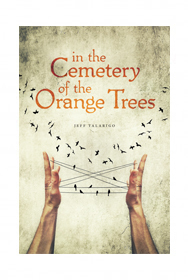
Jeff Talarigo offers a rare glimpse and alternative point of view into a place few people have dared to visit: the Gaza Strip. These linked stories expose the seven-decade-long Palestinian diaspora in a disquieting allegory of the clash between the occupied and the occupier. In 1993, Talarigo watched two Palestinian boys playing with an injured bird with a string around its neck. The boys tossed the bird into the air, waiting for it to fly before the string ran out, and the bird fell into the boys' hands. For nearly a year, the author carried this image with him before he wrote a story about the bird. This story became his first published piece of fiction about his Gaza journey.
Jeff Talarigo is the author of two novels: The Pearl Diver and The Ginseng Hunter. He has lived in Gaza and Japan, and currently resides in Oakland, California.
GenresShort StoriesFiction
196 pages, Paperback
Published February 13, 2018
Book details & editions


6 people are currently reading


96 people want to read
About the author

Jeff Talarigo9 books46 followers
Follow
Jeff Talarigo is the author of three novels and numerous short stories. Born and raised in Pennsylvania, he has received many honors, including the American Academy of Arts and Letters Rosenthal Award for his first novel “The Pearl Diver”, one of eleven novels on the 2009 Notable Books List by the American Library Association for his second novel “The Ginseng Hunter”, NPR’s 2008 “Under the Radar”, a 2005 Kiriyama Prize Notable Book, been featured on NPR’s “Weekend Edition” and awarded a fellowship at the New York Public Library’s Cullman Center for Scholars and Writers in 2006-07. His work has been published in five languages. He lived in Japan for fifteen years and twice lived in the Gaza Strip, the setting for his third novel “In the Cemetery of the Orange Trees”.
Show more
Community Reviews
4.53
45 ratings13 reviews
5 stars
31 (68%)
4 stars
8 (17%)
3 stars
5 (11%)
2 stars
1 (2%)
1 star
0 (0%)
Search review text
Filters
Displaying 1 - 10 of 13 reviews

Tara
Author 24 books613 followers
Follow
September 25, 2018
This is a beautifully written book of linked stories set in Gaza. Part memoir, part collection, this hybrid novel straddles boundaries and walls, as do the characters, and it defies genre and expectations. It took me a while to adjust to the animals narrating, but I eventually let go and let the voices take over. Some very powerful writing here that explores the devastation of war and occupation on a community.
As Talarigo writes: "Isn't this what we all want and need to strive for: to be able to go a little further? And when there is no hope to do so, isn't this when we are at our most vulnerable?"
No answers here, only a poetic, surreal look into both small and major tragedies.
Want to read
Buy on Kobo
Rate this book
Edit my activity
In the Cemetery of the Orange Trees
Jeff Talarigo
4.53
45 ratings13 reviews
Jeff Talarigo offers a rare glimpse and alternative point of view into a place few people have dared to visit: the Gaza Strip. These linked stories expose the seven-decade-long Palestinian diaspora in a disquieting allegory of the clash between the occupied and the occupier. In 1993, Talarigo watched two Palestinian boys playing with an injured bird with a string around its neck. The boys tossed the bird into the air, waiting for it to fly before the string ran out, and the bird fell into the boys' hands. For nearly a year, the author carried this image with him before he wrote a story about the bird. This story became his first published piece of fiction about his Gaza journey.
Jeff Talarigo is the author of two novels: The Pearl Diver and The Ginseng Hunter. He has lived in Gaza and Japan, and currently resides in Oakland, California.
GenresShort StoriesFiction
196 pages, Paperback
Published February 13, 2018
Book details & editions
6 people are currently reading
96 people want to read
About the author
Jeff Talarigo9 books46 followers
Follow
Jeff Talarigo is the author of three novels and numerous short stories. Born and raised in Pennsylvania, he has received many honors, including the American Academy of Arts and Letters Rosenthal Award for his first novel “The Pearl Diver”, one of eleven novels on the 2009 Notable Books List by the American Library Association for his second novel “The Ginseng Hunter”, NPR’s 2008 “Under the Radar”, a 2005 Kiriyama Prize Notable Book, been featured on NPR’s “Weekend Edition” and awarded a fellowship at the New York Public Library’s Cullman Center for Scholars and Writers in 2006-07. His work has been published in five languages. He lived in Japan for fifteen years and twice lived in the Gaza Strip, the setting for his third novel “In the Cemetery of the Orange Trees”.
Show more
Community Reviews
4.53
45 ratings13 reviews
5 stars
31 (68%)
4 stars
8 (17%)
3 stars
5 (11%)
2 stars
1 (2%)
1 star
0 (0%)
Search review text
Filters
Displaying 1 - 10 of 13 reviews
Tara
Author 24 books613 followers
Follow
September 25, 2018
This is a beautifully written book of linked stories set in Gaza. Part memoir, part collection, this hybrid novel straddles boundaries and walls, as do the characters, and it defies genre and expectations. It took me a while to adjust to the animals narrating, but I eventually let go and let the voices take over. Some very powerful writing here that explores the devastation of war and occupation on a community.
As Talarigo writes: "Isn't this what we all want and need to strive for: to be able to go a little further? And when there is no hope to do so, isn't this when we are at our most vulnerable?"
No answers here, only a poetic, surreal look into both small and major tragedies.
animal-stories history novel-in-stories
...more
8 likes
Like
Comment

Joseph
26 reviews1 follower
Follow
February 20, 2018
Reading Talarigo’s latest novel lures the reader across an indefinable border. Sure, things happen in many of the stories that couldn’t happen in everyday life…or could they? The reader remains so transfixed on the magic Talarigo elicits through his realism that talking goats, voyeuristic pigeons, and journeying sheep are accepted unblinkingly. He lays his sentences like stone paths through a village that exists outside of reality yet within the human heart… “A thousand pieces, never whole again.”
Some of his phrases explode like land mines or a Molotov cocktail. “Maybe this is why, he thinks, they bury the photo with the coffin; some people, perhaps, just don’t want to remember.”
Has he captured life on the Gaza Strip? Has he risen as a voice for the Palestinian point of view? I wouldn’t know. Most Americans reading this book will surely identify best with the American – an observer who seeks to lose himself in the stories of another country in hopes of finding his purpose. What American can’t relate to the desire to travel and document the foreign only to return and report how un-foreign the world really is?
Talarigo best captures the essence of this book through one the story of the pigeon who yearns to communicate with humans. Such communication remains elusive for the bird. If it could only verbalize how the physical borders of the world mirror the spiritual, emotional, and ideological borders within humankind!
But perhaps the pigeon realizes, to fully grasp such a concept would require that the reader possess wings.
4 likes
Like
Comment

Megy Karydes
30 reviews1 follower
Follow
October 22, 2017
Beautiful, poetic language. It's not the kind of book I'd normally read but so glad I picked it up and kept reading it. How the author uses words is really a gift. I didn't want it to end. I'm still struggling to understand parts of it but I feel like it'll come to me as I reflect on the story over time.
3 likes
Like
Comment

Nanseaaaa
22 reviews
Follow
July 26, 2024
« I am the anti-Noah. My ark—this zoo—is a death ship »
A powerful read.
megy-s-recommendations rethinking-the-global-south
2 likes
1 comment
Like
Comment

Ronnie Stephens
Author 3 books32 followers
Follow
December 20, 2017
While some shrink back from the label of magical realism, Talarigo embraces it, drawing on the inspiration of J. M. Coetzee and Italo Calvino to balance history with fable. In “So That We Never Forget,” we meet Ghassan, whose child will be born a goat if he does not finish a task set forth by a pair of jackals. “One by one, with hands weighted by a mortified heart and pounds of sadness, he paints the renamed towns and villages that have fallen in the war. But what is one to do, faced with the burden of being the father of a goat?” This emotional strain sets the stage, literally and figuratively, for the rest of the book, which never ventures far from those at once desperate to survive and refusing to be ruled.
This dichotomy is what resonates most throughout the collection. In a pair of particularly haunting stories, Talarigo perfectly capture how institutionalization and isolation can break even the strongest spirits; “Three Cigarette Story” features a caged hawk made to turn on his brother, while “Four Cigarette Story” tells the story of a man who eats books, left in a cell with only the handbook of his captors. Together, these tales force us to confront the methods used to quell resistance in occupied territories. Though told with the slant of magical realism, both the author and reader are keenly aware that, at the core, this collection is forebodingly honest glimpse into the lives of Palestinians today.
*Excerpted from a longer review, forthcoming from Stirring: A Literary Magazine.
2 likes
Like
Comment

Lenore
11 reviews6 followers
Follow
January 19, 2018
This fabulist novel in stories has a powerful voice and a quiet, irresistible impact, thanks to Talirigo's skillful, empathetic character development and use of specific sensory details in the vividly-drawn setting. The reader willingly accepts the ability of the animals in Gaza -- domestic creatures as well as more exotic residents of a zoo, smuggled in at great risk through a system of tunnels -- to communicate. Together they stand as symbols of the heartbreaking, endless captivity and inhumane treatment of refugees in camps in this area of the world. But the story is not politically heavy-handed or didactic. It inspires and entertains even as it enlightens -- and that is, of course, the best of all possible worlds for a novel to inhabit.
Show more
2 likes
Like
Comment

Melissa
3 reviews1 follower
Follow
August 11, 2017
I loved reading this book! The entire read felt like a journey into what it is like in Gaza. The first part of the book made me feel like I was learning about the community and way of life that the American came to love and hold dear to his heart. The last part of the book was marvelous. It reminded me of learning about the world through the eyes of Aesop's Fables. It really reminded me of the innocent things we take for granted in countries, like the US. The ending of the book brought me to tears. I recommend that anyone who wants to learn more about Gaza or see through the eyes of a traveler read this book.
2 likes
Like
Comment
Dfuser
2 reviews
Follow
February 17, 2018
In the Cemetery of the Orange Trees is clearly not a stroll through charming fairy tales. The pieces are unsettling, even nightmarish. Talarigo’s inventive prose reinforces the feeling that the camps, intended to be temporary, are the only permanent features of the landscape. As with human beings anywhere, people in the camps try to build a normal life in this aberration of politics and geography. A life with family pictures, businesses, schools and pets.
“Normal,” however, is as impossible as conversations between donkeys and sheep. Maybe more so.
Talarigo does, to some extent, provide an anchor, a familiar place to stand and observe through a character called The American – his alter ego. The American’s defining moment occurs when he is manhandled by an Israeli soldier who thinks he is Palestinian. Just being Palestinian constitutes a suspect, even threatening, act. His American passport protects him, serving as talisman and exit visa, but only if someone asks to see it. Otherwise, he is as vulnerable as those around him. Unlike his Gaza friends, he could, and does, leave. This incident, he says, opens his eyes to Gaza, to its reality and to himself. It gives him the impetus to write.
He wants to tell the stories of the people of Gaza, the people who offered him hospitality and kindness, despite their hopeless poverty. The people who are not just in Gaza, as the American realizes, but everywhere in the world.
The stories are well worth reading.
1 like
Like
Comment
Frances Colahan
5 reviews
Follow
April 16, 2018
A must read book about humanity woven with poetic language that is enthralling from the very start
1 like
Like
Comment

Иван Величков
1,075 reviews66 followers
Follow
August 7, 2019
Ох, сега първо да я похваля ли книгата или да си помрънкам?
Да кажем, започвам с условието, че това далеч не е моята литература. Историите за която и да е война никога не са ме привличали. Да, гадно е, хора мрат, мизерстват, правят всичко в името на оцеляването. Има страни и винаги едната (ако не и двете) е потърпевша.
Ама как да не прочетеш книга с такова заглавие – „В гробището на портокаловите дървета”? Самото то е самодостатъчна история.
И точно за истории става въпрос. Действието се развива в лагерите на Газа някъде в края на десетилетията окупация. Тук хората вкарват контрабандно от Египет през тунелите животни за зоопарка, а ако не могат, боядисват магаре като зебра или някоя овца червена. Хлапе събира снимки на бомбаджии-камикадзе, за да не забрави лицата им. Мъж облича в палтото си последната си коза, за да не и е студено.Друг всяка седмица разказва спомени от детството си срещу цигари, които в последствие заменя за хранба. Момчета връзват на конец птици, за да не им избягат (това и ние сме го правили, но доста по-садистично).
Но има и други истории – Дърводелец който трябва да направи табели на всички унищожени от войната градове, за да не роди жена му яре. Ястреб, затворен в клетка от толкова време, че е забравил да лети трябва да предаде свободните си приятели. Мъж цитира страници от забранени книги, които израелските войници са го накарали да изяде... тези щипки магически реализъм заедно с говорещите животни, разчупват малко шаблона на историите и придават на текста форма на басни, но далеч не са достатъчни за сравненията с Езоп и Калвино. Метафорите са тежки, изводите трагични и авторът не смее да излезе дори с изречение от затворената тема, сякаш хората и животните дишат единствено окупацията, сякаш живота им започва и свършва с нея.
Друго нещо – Талариго е журналист и това си личи по шаблоните на курсовете за творческо писане. Рядко някоя история успява да излезе от формата. Времето е сегашно историческо, хуморът и мелодрамата са внимателно премерени и вкарани точно където трябва, темата за войната винаги стои зад всяка малка драма, колкото да трогне читателя. Успява, не че не успява, Иван и той е хора, та мозъкът му е програмиран от четивата през годините да харесва такива неща, поне умерено, миришат на класика, правилно, ни и леко насилено. Да добавя, че има неточности, умишлено вкарани за заблуда на читателя (примерно не Израел, а Хамаз налагат цензура над определени книги, ама карай).
Все пак историята за пророкуващите чакали и другата за бамбардировката над зоологическата градина ме отвяха, та книгата си получава трите звезди. Също, ще погледна и „Гмуркачката за перли” от същия автор. Ама все по-рядко излизам от комфорта на жанровата литература, за да се впускам в подобни ��риключения. И май има защо.
исторически разнидруги
Oh, now should I praise the book first or sulk?
Let's say, I'll start with the condition that this is far from my kind of literature. Stories about any war have never attracted me. Yes, it sucks, people die, suffer, do everything in the name of survival. There are always sides and one (if not both) is always the victim.
But how can you not read a book with such a title - "In the Cemetery of Orange Trees"? It is a self-sufficient story in itself. And it's exactly about stories. The action takes place in the Gaza camps somewhere at the end of the decades of occupation. Here, people smuggle animals for the zoo from Egypt through tunnels, and if they can't, they paint a donkey like a zebra or a sheep red. A kid collects photos of suicide bombers so he won't forget their faces. A man dresses his last goat in his coat so it doesn't get cold. Another tells memories of his childhood every week in exchange for cigarettes, which he later exchanges for food. Boys tie birds to a string so they don't run away (we've done that too, but much more sadistically).
But there are other stories too - A carpenter who has to make signs for all the cities destroyed by the war so that his wife doesn't give birth to a kid. A hawk, locked in a cage for so long that it has forgotten how to fly, has to betray its free friends. A man quotes pages from banned books that Israeli soldiers made him eat... these pinches of magical realism, together with the talking animals, break the pattern of the stories a little and give the text the form of fables, but they are far from enough for comparisons with Aesop and Calvino. The metaphors are heavy, the conclusions tragic, and the author does not dare to even come out with a sentence from the closed topic, as if people and animals only breathe the occupation, as if their lives begin and end with it.
Another thing – Talarigo is a journalist and this is evident from the templates of the creative writing courses. Rarely does a story manage to get out of shape. The time is current historical, the humor and melodrama are carefully measured and inserted exactly where they need to be, the theme of war is always behind every little drama, just enough to move the reader. He succeeds, not that he doesn't succeed, Ivan is also human, so his brain has been programmed by reading over the years to like such things, at least moderately, they smell of classics, correctly, not even slightly forced. I should add that there are inaccuracies deliberately inserted to mislead the reader (for example, not Israel, but Hamas impose censorship on certain books, but go for it). Still, the story about the prophesying jackals and the other about the bombing of the zoo blew me away, so the book gets three stars. I'll also check out "The Pearl Diver" by the same author. But I rarely leave the comfort of genre literature to embark on such adventures. And I guess there's a reason.

No comments:
Post a Comment