Showing posts with label Odd Arne Westad. Show all posts

2021-11-01

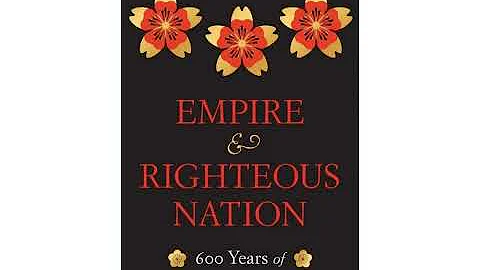
Reischauer Lecture Series – Empire and Righteous Nation: 600 Years of China-Korea Relations | Fairbank Center for Chinese Studies

Reischauer Lecture Series – Empire and Righteous Nation: 600 Years of China-Korea Relations | Fairbank Center for Chinese Studies

REISCHAUER LECTURE SERIES – EMPIRE AND RIGHTEOUS NATION: 600 YEARS OF CHINA-KOREA RELATIONS

MAY 1, 2017 @ 4:00 PM - 6:00 PM


DAY ONE FOCUS:
CHINA AND KOREA FROM 1392 (THE BEGINNING OF THE CHOSON STATE) TO THE LATE 19TH CENTURY


May 1, 2017 | 4pm – 6pm
Discussant: Kirk W. Larsen, Brigham Young University

DAY TWO FOCUS:
CHINA AND KOREA IN THE NINETEENTH AND TWENTIETH CENTURIES


May 2, 2017 | 4pm – 6pm
Discussant: Ezra F. Vogel, Harvard University

DAY THREE FOCUS:
CONTEMPORARY CHINA AND THE TWO KOREAS


May 3, 2017 | 4pm – 6pm
Discussant: Sung Yoon Lee, Tufts University

Speaker: Odd Arne Westad is the S.T. Lee Professor of U.S.-Asia Relations at Harvard University, where he teaches at the Kennedy School of Government. He is an expert on contemporary international history and on the eastern Asian region.

Before coming to Harvard in 2015, Westad was School Professor of International History at the London School of Economics and Political Science (LSE). While at LSE, he directed LSE IDEAS, a leading center for international affairs, diplomacy and strategy.

Professor Westad won the Bancroft Prize for The Global Cold War: Third World Interventions and the Making of Our Times. The book, which has been translated into fifteen languages, also won a number of other awards. Westad served as general editor for the three-volume Cambridge History of the Cold War, and is the author of the Penguin History of the World (now in its 6th edition). His most recent book, Restless Empire: China and the World since 1750, won the Asia Society’s book award for 2013.

Listen Again on the Fairbank Center Podcast:

+ GOOGLE CALENDAR+ ICAL EXPORT

DETAILSDATE:May 1, 2017TIME:
4:00 pm - 6:00 pmEVENT CATEGORIES:Co-Sponsored Lectures, Events of Interest, Government, History, International Relations, Law, Lecture Series, Special Event

ORGANIZER   Fairbank Center for Chinese Studies

VENUECGIS South S020, Belfer Case Study Room1730 Cambridge St.
Cambridge, MA 02138 United States opens in a new window+ Google Map


=
===

1:56:18NOW PLAYING
Part 3: Empire and Righteous Nation: 600 Years of China-Korea Relations
1.2K views3 years ago


1:53:44NOW PLAYING
Part 2: Empire and Righteous Nation: 600 Years of China-Korea Relations
1.5K views3 years ago


1:53:07NOW PLAYING
Part 1: Empire and Righteous Nation: 600 Years of China-Korea Relations
5.3K views3 years ago


1:21:20NOW PLAYING
Empire and Righteous Nation: Odd Arne Westad on 600 years of China-Korea Relations
1.3K views1 year ago

Yale Center Beijing
Yale Center Beijing is delighted to host Odd Arne Westad, Elihu Professor of History and Global Affairs at Yale, for a discussion on ...


1:28:55NOW PLAYING
Empire and Righteous Nation: Past, present and future of China Korea relations

133 views7 months ago
LSE IDEAS
Sino-Korean relations have played a key part in the Korean Peninsula's history. They will do so further still in coming decades.


49:46NOW PLAYING
600 Years Of Sino-Korean Relations

53 views5 months ago


Jordan Schneider
Odd Arne Westad joins ChinaTalk to discuss his latest book Empire and Righteous Nation: 600 Years of China-Korea Relations.


Odd Arne Westad, “The Cold War: A World History” (Basic Books, 2017)

Odd Arne Westad, “The Cold War: A World History” (Basic Books, 2017)
Odd Arne Westad, “The Cold War: A World History” (Basic Books, 2017): There have been many histories and treatments of the Cold War, few however have the breath, range and definitiveness of Harvard Professor Odd Arne Westad’s new take on the subject: The Cold War: A World History (Basic Books, 2017).

Odd Arne Westad, “The Cold War: A World History” (Basic Books, 2017): There have been many histories and treatments of the Cold War, few however have the breath, range and definitiveness of Harvard Professor Odd Arne Westad’s new take on the subject: The Cold War: A World History (Basic Books, 2017).

FromNew Books in History

67 minutes

Description

There have been many histories and treatments of the Cold War, few however have the breath, range and definitiveness of Harvard Professor Odd Arne Westad’s new take on the subject: The Cold War: A World History (Basic Books, 2017). In a book which takes the reader from the economic crisis of the 1890’s to the present-day, Professor Westad delineates a history of the Cold War unlike any in the past. In The Cold War, Westad gives the reader a new perspective on a century when great power rivalry and ideological battles transformed every part of the globe. From Europe and North America to the Third World, The Cold War achieves a broadness in its coverage which has yet to be equaled. Based upon a mountain of primary and secondary source research, Professor Westad’s book has set a new standard of scholarship in the field of Cold War studies. All from a past winner of the Bancroft award.

Charles Coutinho holds a doctorate in history from New York University. Where he studied with Tony Judt, Stewart Stehlin and McGeorge Bundy. His Ph. D. dissertation was on Anglo-American relations in the run-up to the Suez Crisis of 1956. His area of specialization is 19th and 20th-century European, American diplomatic and political history. It you have a recent title to suggest for a podcast, please send an e-mail to Charlescoutinho@aol.com.Learn more about your ad choices. Visit megaphone.fm/adchoices

Odd Arne Westad, "Empire and Righteous Nation: 600 Years of China-Korea Relations" (Harvard UP, 2021)

Odd Arne Westad, "Empire and Righteous Nation: 600 Years of China-Korea Relations" (Harvard UP, 2021)

Odd Arne Westad, "Empire and Righteous Nation: 600 Years of China-Korea Relations" (Harvard UP, 2021): An interview with Odd Arne Westad

Odd Arne Westad, "Empire and Righteous Nation: 600 Years of China-Korea Relations" (Harvard UP, 2021): An interview with Odd Arne Westad

FromNew Books in History

41 minutes

Description

Being arguably each side’s most enduring international bond, the China-Korea relationship has long been of great practical and symbolic importance to both. Moreover, as Odd Arne Westad observes in his new book, this has in many ways also been a paradigmatic kind of tie between a large ‘empire’ and smaller (though by no means small) ‘nation’, and thus has much to teach us about past and present international relationships in East Asia and beyond.
Westad’s Empire and Righteous Nation: 600 Years of China-Korea Relations (Harvard UP, 2021) is both a highly readable survey of a special dynamic between polities and cultures, and an argument for the important continuities and trends running throughout six centuries of tumultuous Ming, Choson, Qing, Japanese, Soviet, American, Republican, Nationalist and Communist history. As this book convincingly shows, in all its mutual admiration, suspicion, hierarchy and compromise, this has been a deeply revealing relationship and one which – as scholars in both countries would themselves agree – it would benefit today’s world to understand in greater historical context.
Ed Pulford is a Lecturer in Chinese Studies at the University of Manchester. His research focuses on friendships and histories between the Chinese, Korean and Russian worlds, and northeast Asian indigenous groups.
Learn more about your ad choices. Visit megaphone.fm/adchoices
Support our show by becoming a premium member! https://newbooksnetwork.supportingcast.fm/history

Listen on the Scribd mobile app

제국과 의로운 국가: 한-중 관계사 600년 2021년 11월 9일 화 10:00 - 12:00

 안녕하세요,

규장각한국학연구원에서 <해외 한국학 저자특강 시리즈: 제12강>을 개최합니다.

제목: 제국과 의로운 국가: 한-중 관계사 600년 (Empire and Righteous Nation: 600 Years of China-Korea Relations)

일시: 2021년 11월 9일 화요일, 10:00 - 12:00

저자: Odd Arne Westad (예일대학교)

사회: Sem Vermeersch (서울대학교)

토론: 김선민 (고려대학교), Thomas Quartermain (연세대학교)

저자소개: Odd Arne Westad는 예일대학교의 역사학 교수이다. 그는 오슬로 대학에서 역사학, 철학, 그리고 근대 언어학을 전공하였고, 이후 채플 힐의 노스캐롤라이나대학에서 미국사와 세계사 박사학위를 받았다. 그의 주요 연구분야는 세계사와 18세기 이후 동양사이며, 냉전시대와 관련한 많은 저서를 출간했다. Westad는 2019년 런던정경대에서 예일대학교 역사학 교수로 부임했으며 잭슨 국제관계 연구소 교수를 역임하고 있다.

저서소개: 『제국과 의로운 국가: 한-중 관계사 600년 (Empire and Righteous Nation: 600 Years of China-Korea Relations)』

한국인은 중국을 오랫동안 멘토로 여겨왔다. 한국인은 초기 문자로 한자를 들여와 20세기까지 실질적인 문자로 사용하였다. 유학, 특히 성리학은 14세기 조선 건국의 근간이었다. 중국과 한국은 유교적 가치를 함께하며 중국은 형의 나라, 한국은 동생의 나라로 여겼다. 이러한 한국과 중국의 관계는 19세기 서구열강이 들어오면서 깨지기 시작했고, 일제강점기와 새로운 국면을 맞이했다. 본 저서는 한국전쟁이 국제관계와 아시아에 미친 악영향을 분석하고, 오늘날 한중관계에 미친 영향에 대해 기술한다.

본 특강은 영어로 진행되는 온라인 행사입니다. 사전등록 링크를 통해 참가신청해주시면 행사 하루 전에 Zoom 접속링크를 보내드립니다.

기타 문의사항은 icks@snu.ac.kr (Tel. 02-880-9378 )로 연락주시기 바랍니다.

Dear All,

The International Center for Korean Studies of the Kyujanggak Institute is hosting a Book Talk series, introducing Odd Arne Westad’s Empire and Righteous Nation: 600 Years of China-Korea Relations.

Title: Empire and Righteous Nation: 600 Years of China-Korea Relations.

Date: November 9 (Tuesday) 10:00 - 12:00 (Seoul)

Author: Odd Arne Westad (Yale University)

Moderator: Sem Vermeersch (Seoul National University)

Discussants: Seonmin Kim (Korea University), Thomas Quartermain (Yonsei University)

About the Author:

Odd Arne Westad is a scholar of modern international and global history, with a specialization in the history of eastern Asia since the 18th century. He studied history, philosophy, and modern languages in Oslo before doing a graduate degree in US/international history at the University of North Carolina at Chapel Hill. Westad has published 16 books, most of which deal with twentieth century Asian and global history. In the first part of his career, Westad was mainly preoccupied with the history of the Cold War, China-Russia relations, and the history of the Chinese civil war and the Chinese Communist Party.

At Yale, he teaches in the History Department and at the Jackson Institute for Global Affairs, is an adviser at Davenport College, and serves as director of International Security Studies. Westad is a fellow of the British Academy and of several other national academies, a visiting professor at Peking University, and a research associate of the Harvard Fairbank Center.

About the Book:


In a concise, trenchant overview, Odd Arne Westad explores the cultural and political relationship between China and the Koreas over the past 600 years.

Koreans long saw China as a mentor. The first form of written Korean employed Chinese characters and remained in administrative use until the twentieth century. Confucianism, especially Neo-Confucian reasoning about the state and its role in promoting a virtuous society, was central to the construction of the Korean government in the fourteenth century. These shared Confucian principles were expressed in fraternal terms, with China the older brother and Korea the younger. During the Ming Dynasty, mentor became protector, as Korea declared itself a vassal of China in hopes of escaping ruin at the hands of the Mongols. But the friendship eventually frayed with the encroachment of Western powers in the nineteenth century. Koreans began to reassess their position, especially as Qing China seemed no longer willing or able to stand up for Korea against either the Western powers or the rising military threat from Meiji Japan. The Sino-Korean relationship underwent further change over the next century as imperialism, nationalism, revolution, and war refashioned states and peoples throughout Asia. Westad describes the disastrous impact of the Korean War on international relations in the region and considers Sino-Korean interactions today, especially the thorny question of the reunification of the Korean peninsula.

Illuminating both the ties and the tensions that have characterized the China-Korea relationship, Empire and Righteous Nation provides a valuable foundation for understanding a critical geopolitical dynamic.

The event will be held online via Zoom. The link for Zoom meeting will be sent a day before the event after your registration is confirmed (register here).

Please contact icks@snu.ac.kr (Tel. 02-880-9378 ) for more information. 

===

From an award-winning historian, a concise overview of the deep and longstanding ties between China and the Koreas, providing an essential foundation for understanding East Asian geopolitics today.


In a concise, trenchant overview, Odd Arne Westad explores the cultural and political relationship between China and the Koreas over the past 600 years.


Koreans long saw China as a mentor. The first form of written Korean employed Chinese characters and remained in administrative use until the twentieth century. Confucianism, especially Neo-Confucian reasoning about the state and its role in promoting a virtuous society, was central to the construction of the Korean government in the fourteenth century. These shared Confucian principles were expressed in fraternal terms, with China the older brother and Korea the younger. During the Ming Dynasty, mentor became protector, as Korea declared itself a vassal of China in hopes of escaping ruin at the hands of the Mongols. But the friendship eventually frayed with the encroachment of Western powers in the nineteenth century. Koreans began to reassess their position, especially as Qing China seemed no longer willing or able to stand up for Korea against either the Western powers or the rising military threat from Meiji Japan. The Sino-Korean relationship underwent further change over the next century as imperialism, nationalism, revolution, and war refashioned states and peoples throughout Asia. Westad describes the disastrous impact of the Korean War on international relations in the region and considers Sino-Korean interactions today, especially the thorny question of the reunification of the Korean peninsula.


Illuminating both the ties and the tensions that have characterized the China-Korea relationship, Empire and Righteous Nation provides a valuable foundation for understanding a critical geopolitical dynamic.

Editorial Reviews

Review

“The relationship between China and Korea is one of the most important, and least understood, in Asia. With the wisdom and clarity we have come to expect from Westad, this book illuminates the long history of these two neighbors. He tells a story both of closeness brought about by Confucianism and Communism and of prickliness that comes from two fierce and rival nationalisms, providing compelling insights on the future of this volatile partnership.”―Rana Mitter, author of China’s Good War


“In this incisive and engaging overview, Westad offers a new framework for understanding China and Korea that weaves their interconnected histories together in a concise, thoughtful way. The themes of ‘empire’ and ‘righteous nation’ offer some excellent insights into both the differences between the two countries and their long, complex relationship.”―Gregg Brazinsky, author of Nation Building in South Korea


“Westad offers a sweeping historical overview of what is arguably the most important relationship in Asia today, that between China and the Korean Peninsula. How that relationship is managed and plays out in the coming years is central to questions of national and regional interests as well as to global issues of war and peace. Unique in its broad perspective and engagingly written, this is a timely must-read primer on the China–Korea relationship in its longue durée and its impact on and implications for our world today.”―Carter J. Eckert, author of Park Chung Hee and Modern Korea


“A smart and engaging work, with a provocative, sweeping narrative that is a pleasure to read. Anyone interested in Sino–Korean relations and the current standoff on the peninsula would be well advised to start with this book.”―Andre Schmid, author of Korea Between Empires, 1895–1919


“Valuable and wide-ranging…As two thousand years of history have shown, China’s role in Korea is a complex one. Westad’s short and stimulating study provides many clues to understanding that relationship.”―J. E. Hoare, Literary Review

About the Author

Odd Arne Westad is Elihu Professor of History and Global Affairs at Yale University. A Fellow of the British Academy, he is the author of Restless Empire: China and the World since 1750 and The Global Cold War: Third World Interventions and the Making of Our Times, which won the Bancroft Prize.

Product details

Publisher ‏ : ‎ Belknap Press: An Imprint of Harvard University Press (January 12, 2021)

Language ‏ : ‎ English

Hardcover ‏ : ‎ 216 pages


===


2021-09-19

Postwar: A History of Europe Since 1945 - Wikipedia

Postwar: A History of Europe Since 1945 - Wikipedia


Postwar: A History of Europe Since 1945
From Wikipedia, the free encyclopedia


Jump to navigationJump to search

Postwar: A History of Europe
Since 1945
Cover of 1st edition
Author Tony Judt
Country United Kingdom
Language English
Genre Non-fiction
Publisher Penguin Press

Publication date 6 October 2005
Media type Print
Pages 878 (1st ed.)
ISBN 978-1594200656


Postwar: A History of Europe Since 1945 is a 2005 non-fiction book written by British historian and scholar Tony Judt who specialised in European history. The book examines six decades of European history from the end of World War II in 1945 up to 2005.

The book won considerable praise for its breadth and comprehensive approach.[1] The New York Times Book Review listed it as one of the ten best books of 2005. It won the 2006 Arthur Ross Book Award for the best book published on international affairs,[2] and was shortlisted for the 2006 Samuel Johnson Prize. It also won the 2008 European Book Prize.

As is made clear in the introduction, the author makes no attempt to expound any grand theory or "overarching theme" for contemporary European history, aiming to avoid narrative fallacies by plainly retelling the entire scope of European history in that period, to let what themes do exist become self-apparent.
See also[edit]
History of Europe
References[edit]

^ "Postwar by Tony Judt". Metacritic. Archived from the original on March 20, 2006. Retrieved April 14, 2006.
^ Council on Foreign Relations
Judt, Tony (2005). Postwar: A History of Europe Since 1945. Penguin Press. ISBN 1-59420-065-3.

hide

v
t
e
Cold War


USA
USSR
NATO
Warsaw Pact
ANZUS
SEATO
Baghdad Pact (METO)
Non-Aligned Movement
1940s

Morgenthau Plan
Hukbalahap Rebellion
Jamaican political conflict
Dekemvriana
Percentages agreement
Yalta Conference
Guerrilla war in the Baltic states
Operation Priboi
Operation Jungle
Occupation of the Baltic states
Cursed soldiers
Operation Unthinkable
Operation Downfall
Potsdam Conference
Gouzenko Affair
Division of Korea
Operation Masterdom
Operation Beleaguer
Operation Blacklist Forty
Iran crisis of 1946
Greek Civil War
Baruch Plan
Corfu Channel incident
Turkish Straits crisis
Restatement of Policy on Germany
First Indochina War
Truman Doctrine
Asian Relations Conference
May 1947 crises
Marshall Plan
Comecon
1948 Czechoslovak coup d'état
Al-Wathbah uprising
1947–1949 Palestine war
1947–1948 Civil War in Mandatory Palestine
1948 Arab–Israeli War
1948 Palestinian exodus
Tito–Stalin split
Berlin Blockade
Western betrayal
Iron Curtain
Eastern Bloc
Western Bloc
Chinese Civil War
Malayan Emergency
March 1949 Syrian coup d'état
Albanian Subversion
1950s

Bamboo Curtain
Korean War
McCarthyism
Mau Mau Uprising
Algerian War
Egyptian revolution of 1952
1953 Iranian coup d'état
East German uprising of 1953
Pact of Madrid
Bricker Amendment
1954 Guatemalan coup d'état
Capture of Tanker Tuapse
1954 Geneva Conference
Jebel Akhdar War
Vietnam War
First Taiwan Strait Crisis
Cyprus Emergency
Kashmir Princess
Geneva Summit (1955)
Bandung Conference
Poznań protests of 1956
Hungarian Revolution of 1956
Suez Crisis
"We will bury you"
Ifni War
Operation Gladio
Arab Cold War
Syrian Crisis of 1957
1958 Lebanon crisis
Iraqi 14 July Revolution
Sputnik crisis
Second Taiwan Strait Crisis
1959 Tibetan uprising
1959 Mosul uprising
Cuban Revolution
Aftermath of the Cuban Revolution
Kitchen Debate
Sino-Soviet split
1960s

Congo Crisis
Simba rebellion
1960 U-2 incident
Bay of Pigs Invasion
1960 Turkish coup d'état
Soviet–Albanian split
Iraqi–Kurdish conflict
First Iraqi–Kurdish War
Berlin Crisis of 1961
Berlin Wall
Papua conflict
Sand War
Portuguese Colonial War
Angolan War of Independence
Guinea-Bissau War of Independence
Mozambican War of Independence
Cuban Missile Crisis
El Porteñazo
Sino-Indian War
Communist insurgency in Sarawak
Ramadan Revolution
Eritrean War of Independence
North Yemen Civil War
1963 Syrian coup d'état
Assassination of John F. Kennedy
Aden Emergency
Cyprus crisis of 1963–64
Vietnam War
Shifta War
Mexican Dirty War
Tlatelolco massacre
Guatemalan Civil War
Colombian conflict
1964 Brazilian coup d'état
Dominican Civil War
Rhodesian Bush War
South African Border War
Transition to the New Order (Indonesia)
Domino theory
ASEAN Declaration
Laotian Civil War
1966 Syrian coup d'état
Argentine Revolution
Korean DMZ Conflict
Greek military junta of 1967–1974
Years of Lead (Italy)
USS Pueblo incident
Six-Day War
War of Attrition
Dhofar Rebellion
Al-Wadiah War
Nigerian Civil War
Protests of 1968
May 68
Cultural Revolution
Prague Spring
1968 Polish political crisis
Communist insurgency in Malaysia
Warsaw Pact invasion of Czechoslovakia
17 July Revolution
1968 Peruvian coup d'état
1969 Libyan coup d'état
Football War
Goulash Communism
Sino-Soviet border conflict
Communist rebellion in the Philippines
Corrective Move
1970s

Détente
Nuclear Non-Proliferation Treaty
Black September
Alcora Exercise
Corrective Movement (Syria)
Western Sahara conflict
Cambodian Civil War
Vietnam War
Koza riot
Realpolitik
Ping-pong diplomacy
1971 JVP insurrection
Corrective Revolution (Egypt)
1971 Turkish military memorandum
1971 Sudanese coup d'état
Four Power Agreement on Berlin
Bangladesh Liberation War
1972 Nixon visit to China
North Yemen-South Yemen Border conflict of 1972
Yemenite War of 1972
Munich massacre
Communist insurgency in Bangladesh
Eritrean Civil Wars
1973 Uruguayan coup d'état
1973 Afghan coup d'état
1973 Chilean coup d'état
Yom Kippur War
1973 oil crisis
Carnation Revolution
Spanish transition to democracy
Metapolitefsi
Strategic Arms Limitation Talks
Second Iraqi–Kurdish War
Turkish invasion of Cyprus
Angolan Civil War
Mozambican Civil War
Oromo conflict
Ogaden War
1978 Somali coup d'état attempt
Western Sahara War
Ethiopian Civil War
Lebanese Civil War
Sino-Albanian split
Cambodian–Vietnamese War
Operation Condor
Dirty War (Argentina)
1976 Argentine coup d'état
Libyan–Egyptian War
German Autumn
Korean Air Lines Flight 902
Nicaraguan Revolution
Uganda–Tanzania War
NDF Rebellion
Chadian–Libyan conflict
Yemenite War of 1979
Grand Mosque seizure
Iranian Revolution
Saur Revolution
Sino-Vietnamese War
New Jewel Movement
1979 Herat uprising
Seven Days to the River Rhine
Struggle against political abuse of psychiatry in the Soviet Union
1980s

Salvadoran Civil War
Soviet–Afghan War
1980 and 1984 Summer Olympics boycotts
Gera Demands
Peruvian Revolution
Eritrean Civil Wars
1980 Turkish coup d'état
Ugandan Bush War
Gulf of Sidra incident
Casamance conflict
Falklands War
1982 Ethiopian–Somali Border War
Ndogboyosoi War
United States invasion of Grenada
Able Archer 83
Star Wars
1985 Geneva Summit
Iran–Iraq War
Somali Rebellion
Reykjavík Summit
1986 Black Sea incident
South Yemen Civil War
Toyota War
1987 Lieyu massacre
Operation INFEKTION
1987–1989 JVP insurrection
Lord's Resistance Army insurgency
1988 Black Sea bumping incident
8888 Uprising
Solidarity (Soviet reaction)
Contras
Central American crisis
RYAN
Korean Air Lines Flight 007
People Power Revolution
Glasnost
Perestroika
First Nagorno-Karabakh War
Afghan Civil War
United States invasion of Panama
1988 Polish strikes
1989 Tiananmen Square protests
Revolutions of 1989
Fall of the Berlin Wall
Fall of the inner German border
Velvet Revolution
Romanian Revolution
Peaceful Revolution
1990s

Mongolian Revolution of 1990
Min Ping Yu No. 5540 incident
Gulf War
Min Ping Yu No. 5202
German reunification
Yemeni unification
Fall of communism in Albania
Breakup of Yugoslavia
Dissolution of Czechoslovakia
Dissolution of the Soviet Union
1991 August Coup
Frozen conflicts

Abkhazia
China-Taiwan
Korea
Kosovo
Nagorno-Karabakh
South Ossetia
Transnistria
Sino-Indian border dispute
North Borneo dispute
Foreign policy

Truman Doctrine
Containment
Eisenhower Doctrine
Domino theory
Hallstein Doctrine
Kennedy Doctrine
Peaceful coexistence
Ostpolitik
Johnson Doctrine
Brezhnev Doctrine
Nixon Doctrine
Ulbricht Doctrine
Carter Doctrine
Reagan Doctrine
Rollback
Kinmen Agreement
Ideologies

Capitalism

Liberalism
Chicago school
Keynesianism
Libertarianism
Monetarism
Neoclassical economics
Reaganomics
Supply-side economics
Democratic capitalism
Socialism

Communism
Marxism–Leninism
Castroism
Eurocommunism
Guevarism
Hoxhaism
Juche
Ho Chi Minh Thought
Maoism
Trotskyism
Naxalism
Stalinism
Titoism
Other

Imperialism
Anti-imperialism
Nationalism
Ultranationalism
Chauvinism
Ethnic nationalism
Racism
Zionism
Fascism
Neo-Nazism
Islamism
Totalitarianism
Authoritarianism
Autocracy
Liberal democracy
Illiberal democracy
Guided democracy
Social democracy
Third-Worldism
White supremacy
White nationalism
White separatism
Apartheid


Organizations

NATO
SEATO
METO
EEC
Warsaw Pact
Comecon
Non-Aligned Movement
ASEAN
SAARC
Safari Club
Propaganda

Pro-communist

Active measures
Izvestia
Pravda
TASS
Pro-democratic

Amerika
Crusade for Freedom
Voice of America
Radio Free Europe/Radio Liberty
Radio Free Asia
Red Scare
Soviet Life


Technological
competition

Arms race
Nuclear arms race
Space Race
Historians

Gar Alperovitz
Thomas A. Bailey
Michael Beschloss
Archie Brown
Warren H. Carroll
Adrian Cioroianu
John Costello
Michael Cox
Nicholas J. Cull
Willem Drees
Robert D. English
Herbert Feis
Robert Hugh Ferrell
André Fontaine
Anneli Ute Gabanyi
John Lewis Gaddis
Lloyd Gardner
Timothy Garton Ash
Gabriel Gorodetsky
Fred Halliday
Jussi Hanhimäki
John Earl Haynes
Patrick J. Hearden
Tvrtko Jakovina
Tony Judt
Harvey Klehr
Gabriel Kolko
Walter LaFeber
Walter Laqueur
Melvyn Leffler
Geir Lundestad
Mary Elise Sarotte
Vojtech Mastny
Jack F. Matlock Jr.
Thomas J. McCormick
Timothy Naftali
Marius Oprea
David S. Painter
William B. Pickett
Ronald E. Powaski
Yakov M. Rabkin
Arthur M. Schlesinger Jr.
Ellen Schrecker
Giles Scott-Smith
Shen Zhihua
Athan Theoharis
Andrew Thorpe
Vladimir Tismăneanu
Patrick Vaughan
Alex von Tunzelmann
Odd Arne Westad
William Appleman Williams
Jonathan Reed Winkler
Rudolph Winnacker
Ken Young
Espionage and
intelligence

List of Eastern Bloc agents in the United States
Soviet espionage in the United States
Russian espionage in the United States
American espionage in the Soviet Union and Russian Federation
CIA and the Cultural Cold War
CIA
SS (MI5)
SIS (MI6)
KGB
Stasi
See also

Allied intervention in the Russian Civil War
Soviet Union–United States relations
USSR–USA summits
Russia–NATO relations
War on terror
Brinkmanship
Second Cold War
Russian Revolution

Category
Commons
Timeline
List of conflicts

2021-08-23

Odd Arne Westad - Wikipedia

Odd Arne Westad - Wikipedia

Odd Arne Westad

From Wikipedia, the free encyclopedia
Jump to navigationJump to search
Arne Westad

Odd Arne Westad.png
Born
Odd Arne Westad

January 5, 1960 (age 61)
NationalityNorwegian
Education
OccupationHistorian
Known for
  • International relations
  • diplomacy
  • Asia
  • history
OfficeElihu Professor of History and Global Affairs, Yale University
Websiteoaw.cn

Odd Arne Westad FBA (born 5 January 1960) is a Norwegian historian specializing in the Cold War and contemporary East Asian history. He is the Elihu Professor of History and Global Affairs at Yale University, where he teaches in the Yale History Department and in the Jackson Institute of Global Affairs.[1] Previously, Westad held the S.T. Lee Chair of US-Asia Relations at Harvard University, teaching in the John F. Kennedy School of Government.[2] Westad has also taught at the London School of Economics, where he served as director of LSE IDEAS.[3] In the spring semester 2019 Westad was Boeing Company Chair in International Relations at Schwarzman CollegeTsinghua University.[4]

Background[edit source]

After studying as an undergraduate at the University of Oslo, Westad attended the University of North Carolina at Chapel Hill to work on his Ph.D under Professor Michael H. Hunt. He was appointed Director of Research at the Norwegian Nobel Institute and Adjunct Professor of History at the University of Oslo in 1991. In 1998, he left Oslo to join the International History Department at the LSE, where he also worked in the LSE Asia Research Centre before becoming Head of Department in 2003.[5]

While at LSE, Westad set up LSE IDEAS, the LSE's centre for international affairs, diplomacy and strategy, together with Professor Michael Cox in 2008. Westad speaks and writes in a number of languages, including his native NorwegianEnglishFrenchGermanMandarin and Russian. He is a well known lecturer in several countries, both on history and on contemporary international affairs, especially with regard to China and East Asia.

In 2014 Westad became the inaugural holder of the S.T. Lee Chair of US-Asia Relations at Harvard University. While at Harvard, Professor Westad taught international affairs and global history at the John F. Kennedy School of Government.[6] At Harvard, he was also a Senior Scholar at the Harvard Academy of International and Area Studies.[7] In 2019, Westad joined Yale University, where he now teaches courses in global and international history. He is based both in the Yale History Department and in the Jackson Institute of Global Affairs.[1]

Work[edit source]

Westad is particularly known for his re-evaluation of the history of the Cold War. His interpretation emphasizes the role of the conflict on a global scale, and not just in Europe or North America. He also underlines the ideological origins of the Cold War and the long-term effects it had in Asia, Africa, and Latin America. The term 'global Cold War' is often associated with Westad's work, and has been taken up by many historians and social scientists.[8]

Westad is also known for his work on Chinese and East Asian history and contemporary international affairs. In his books, he stresses the links between China and the outside world, noting that China's opening to the outside is not a new phenomenon. He often speaks of contemporary China, more than most countries, as a hybrid society, consisting both of Chinese and foreign elements. He has been critical of current Chinese foreign policy, which he sees as too nationalistic, although he is in favor of other countries working with China rather than trying to contain it.[9]

Westad is the editor of the University of North Carolina Press's book series on the Cold War and founding editor of the journal Cold War History.[5]

As well as his work at the London School of Economics, Westad has held Visiting Fellowships at Cambridge University and New York University. He has received major grants for research from the British Arts and Humanities Research Board, the John D. and Catherine T. MacArthur Foundation and the Leverhulme Trust. He also worked as the International Coordinator of the Russian Foreign Ministry's Advisory Group on Declassification and Archival Access.[10] In 2011 he was nominated as one of two candidates for president of the American Historical Association. From 2013 to 2016 Westad also served as Distinguished Visiting Research Professor at Hong Kong University, and since 2016 he has been a guest professor in the History Department at Peking University.[11]

Westad has published fifteen books on international history and contemporary international affairs, including a new version of the Penguin History of the World (2013). He co-edited the three-volume Cambridge History of the Cold War (2010) with Melvyn Leffler.[5] His Restless Empire: China and the World since 1750 (2012) surveys the last 250 years of China's relations with the world, and The Cold War: A World History (2017) provides an overview of the conflict and its long-term significance. The Times Literary Supplement, making it one of its books of the year, called it "a book of resounding importance for appraising our global future as well as understanding our past."[12]

Awards and distinctions[edit source]

Westad's book, The Global Cold War: Third World Interventions and the Making of Our Times, won the 2006 Bancroft Prize, the Michael Harrington Prize of the American Political Science Association, and the Akira Iriye International History Book Award. It was also shortlisted for the Council on Foreign Relations' Arthur Ross Award for the best book published in the last two years on international affairs. Restless Empire won the Asia Society's Bernard Schwartz Book Award for 2013. Westad is a fellow of the British Academy and of the Norwegian Academy of Science and Letters.[13][14] In 2012 he gave the British Academy's Sarah Tryphena Phillips Lecture in American Literature and History, on Ronald Reagan and the Re-Constitution of American Hegemony.[15]

Published works[edit source]

  • Westad, O. A., Cold War and Revolution: Soviet-American Rivalry and the Origins of the Chinese Civil War, 1993 (Columbia University Press) ISBN 0-231-07985-0
  • Holtsmark, S. G., Neumann, I. B., Westad, O. A. (eds), The Soviet Union in Eastern Europe, 1945-89, 1994 (Palgrave Macmillan) ISBN 0-333-60230-7
  • Westad, O. A., The Fall of Détente: Soviet-American Relations During the Carter Years, 1997 (Aschehoug AS) ISBN 82-00-37671-0
  • Westad, O. A. (ed), Brothers in Arms: The Rise and Fall of the Sino-Soviet Alliance, 1945-1963, 1998 (Stanford, CA: Stanford University Press) ISBN 0-8047-3485-2
  • Westad, O. A. (ed), Reviewing the Cold War: Approaches, Interpretations, Theory, 2000 (Routledge) ISBN 0-7146-8120-2
  • Kang, G. H., Moon, C. Y., Westad, O. A. (eds), Ending the Cold War in Korea: Theoretical and Historical Perspectives, 2001 (Seoul: Yonsei University Press) ISBN 89-7141-563-0
  • Westad, O. A., Decisive Encounters: The Chinese Civil War, 1945-1950, 2003 (Stanford, CA: Stanford University Press) ISBN 0-8047-4478-5
  • Hanhimäki, J., Westad, O. A., The Cold War: A History in Documents and Eyewitness Accounts, 2003 (Oxford University Press) ISBN 0-19-927280-8
  • Westad, O. A., Beginnings of the End: How the Cold War Crumbled, in Pons, S., Romero, F., Reinterpreting the End of the Cold War: Issues, Interpretations, Periodizations, 2005 (London: Frank Cass) ISBN 0-203-00609-7 (hardback) ISBN 0-7146-8486-4 (paperback)
  • Westad, O. A., The Global Cold War: Third World Interventions and the Making of Our Times, 2006 (Cambridge: Cambridge University Press) ISBN 0-521-85364-8 ; French translation: La Guerre froide globale. Le tiers-monde, les Etats-Unis et l'URSS, 1945-1991 (Paris, Payot, 2007)
  • Quinn-Judge, S., Westad, O. A. (eds), The Third Indochina War, 2006 (Routledge) ISBN 0-415-39058-3
  • Roberts, J., Westad O. A., The New Penguin History of the World, 2007 (Penguin) ISBN 978-0-14-103042-5
  • Villaume, P., Westad, O. A. (eds), Perforating the Iron Curtain. European Détente, Transatlantic Relations and the Cold War, 1965-1985 (Copenhagen: Museum Tusculanum Press, 2010) ISBN 978-87-635-2588-6
  • Leffler, M. P., Westad, O.A. (eds), The Cambridge History of the Cold War, (Cambridge: Cambridge University Press, 2010).
  • Odd Arne Westad. Restless Empire: China and the World since 1750. (New York: Basic Books, 2012) ISBN 978-0-465-01933-5
  • Odd Arne Westad. The Cold War: A World History (New York: Basic Books, 2017) ISBN 978-0-465-05493-0

References[edit source]

  1. Jump up to:a b "Arne Westad"Yale Jackson Institute for Global Affairs. Retrieved 2019-07-02.
  2. ^ "Arne Westad"Harvard Kennedy School. Archived from the original on July 3, 2017.
  3. ^ "LSE International History Professor Odd Arne Westad"lse.ac.uk. Retrieved 31 October 2013.
  4. ^ "Schwarzman Scholars"Schwarzman Scholars. Retrieved 2019-05-22.
  5. Jump up to:a b c "Odd Arne Westad's LSE International History Department Page".
  6. ^ Westad, Odd Arne. "Interview with Arne Westad - Arne Westad - Directors - People - IDEAS"London School of Economics(Interview).
  7. ^ "People | The Harvard Academy"academy.wcfia.harvard.edu.
  8. ^ O.A. Westad, "Exploring the Histories of the Cold War: A Pluralist Approach," in D. Bell and J. Isaac, eds., Uncertain Empire: American History and the Idea of the Cold War (Oxford: Oxford University Press, 2013)
  9. ^ O.A. Westad, Restless Empire: China and the World since 1750(New York: Basic Books, 2012
  10. ^ "Odd Arne Westad's LSE IDEAS Bio".
  11. ^ "Bio | O. A. Westad". Retrieved 2019-07-02.
  12. ^ "Books of the Year 2017 | The TLS contributors decide"TheTLS. Retrieved 2019-05-22.
  13. ^ "IDEAS co-Director Arne Westad elected Fellow of the British Academy -…"London School of Economics. July 22, 2011. Archived from the original on December 23, 2012.
  14. ^ "Nye medlemmer 2016" (in Norwegian). Norwegian Academy of Science and Letters. Archived from the original on 27 September 2011. Retrieved 24 March 2016.
  15. ^ "Sarah Tryphena Phillips Lectures in American Literature and History"The British Academy. audio

External links[edit source]