CHOMSKY.INFO
RECENT UPDATES
BOOKS ARTICLES AUDIO AND VIDEO INTERVIEWS BIOS
TALKS DEBATES LETTERS ABOUT
BOOKS
(Please note that chomsky.info has no specific recommendations as to where to obtain these titles, other than suggesting you try a well-stocked library or bookstore, or the various places to buy new or used books on the internet. A number of Noam Chomsky’s books are also now available in e-book format.)
Most recent titles:
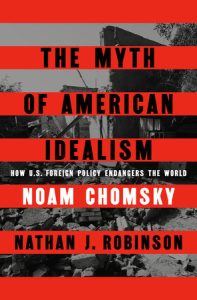
The Myth of American Idealism: How U.S. Foreign Policy Endangers The World
From one of the world’s most prominent thinkers, an urgent warning of the threat that U.S. power poses to humanity’s future as well as a sharp indictment of both American foreign policy and the national myths that support it.
The Myth of American Idealism offers a timely and comprehensive introduction to the incisive critiques of U.S. power that have made Noam Chomsky a “global phenomenon,” one of the most widely known public intellectuals of all time. Surveying the history of U.S. military and economic activity around the world, Chomsky and his co-author Nathan J. Robinson vividly trace the way the American pursuit of global domination has wrought havoc in country after country – without, ironically, making Americans any safer. And they explore how dominant elites in the United States have pushed self-serving myths about this country’s commitment to “spreading democracy,” while pursuing a reckless foreign policy that served the interest of few and endangered all too many.
Chomsky and Robinson range across the globe, offering penetrating accounts of Washington’s relationship with the Global South, its role in the Israeli-Palestinian conflict, and the wars in Iraq and Afghanistan –all justified with noble stories about humanitarian missions and the benevolent intentions of American policy makers. The same kinds of myths that have led to repeated disastrous wars, they argue, are now driving us closer to wars with Russia and China that imperil humanity’s future. Examining nuclear proliferation and climate change, they show how U.S. policies are continuing to exacerbate global threats.
For well over half a century, Noam Chomsky has committed himself to exposing governing ideologies and criticizing his country’s unchecked use of military power. At once thorough and devastating, urgent and provocative, The Myth of American Idealism offers a highly readable entry to the conclusions he has come to after a lifetime of thought and activism.Click here for more information, and to preorder the book, out October 15, 2024.
The Precipice: Neoliberalism, the Pandemic and Urgent Need for Radical Change
A collection of extensive interviews with the world’s greatest public intellectual on four years of an American nightmare.
The book, a collection of interviews with the world’s leading public intellectual from the time of the rise of Donald Trump to power to the end of his presidency. In it, Noam Chomsky sheds light into the phenomenon of Trumpism, exposes the catastrophic nature and impact of Trump’s policies for average Americans, the environment and the planet on the whole, respectively, and captures the dynamics and contradictions operating in today’s USA–from the brutal class warfare launched by the masters of capital to maintain and even enhance the features of a dog-eat dog society to the unprecedented mobilization of millions of people against neoliberal capitalism, racism, and police violence.
Click here to pre-order the book, out June 2021.
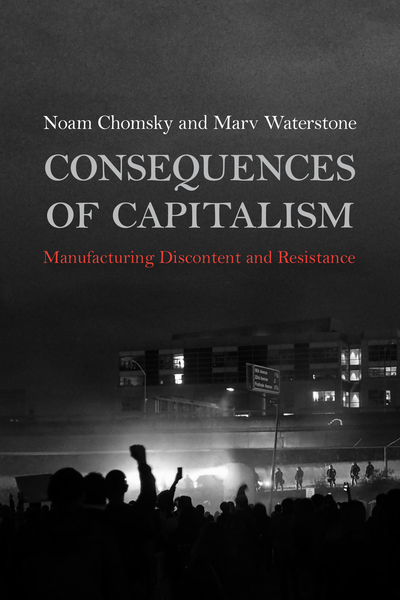
Consequences of Capitalism: Manufacturing Discontent and Resistance
Is there an alternative to capitalism? In this landmark text Chomsky and Waterstone chart a critical map for a more just and sustainable society.
Covid-19 has revealed glaring failures and monstrous brutalities in the current capitalist system. It represents both a crisis and an opportunity. Everything depends on the actions that people take into their own hands.’
How does politics shape our world, our lives and our perceptions? How much of ‘common sense’ is actually driven by the ruling classes’ needs and interests? And how are we to challenge the capitalist structures that now threaten all life on the planet?
Consequences of Capitalism exposes the deep, often unseen connections between neoliberal ‘common sense’ and structural power. In making these linkages, we see how the current hegemony keeps social justice movements divided and marginalized. And, most importantly, we see how we can fight to overcome these divisions.
Click here to buy the book.
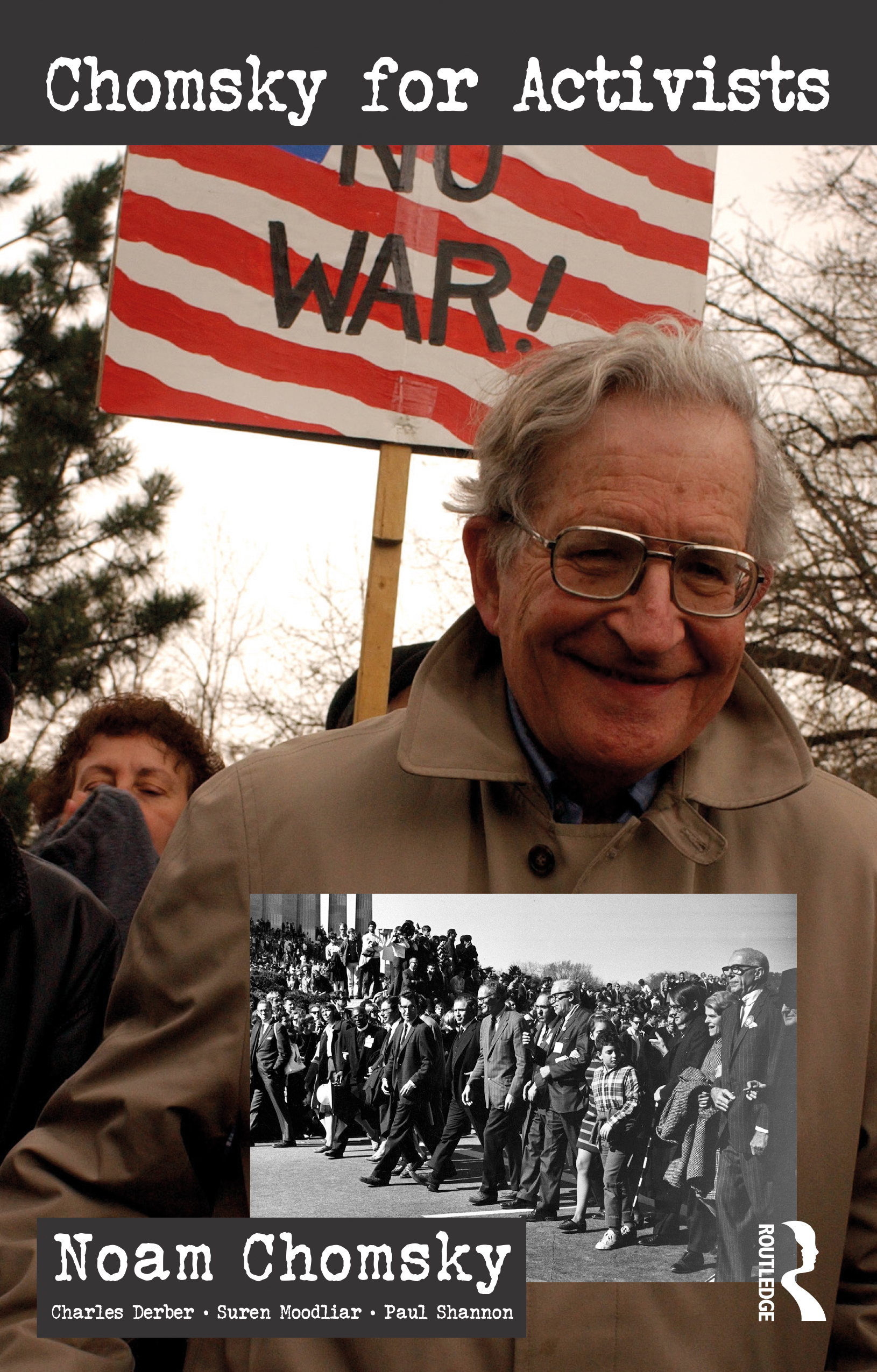
Chomsky for Activists
Those who regard him as a “doom and gloom” critic will find an unexpected Chomsky in these pages. Here the world-renowned author speaks for the first time in depth about his career in activism, and his views and tactics. Chomsky offers new and intimate details about his life-long experience as an activist, revealing him as a critic with deep convictions and many surprising insights about movement strategies. The book points to new directions for activists today, including how the crises of the Coronavirus and the economic meltdown are exploding in the critical 2020 US presidential election year. Readers will find hope and new pathways toward a sustainable, democratic world.
Click here to buy the book.
Climate Crisis and the Global Green New Deal: The Political Economy of Saving the Planet
Climate change: watershed or endgame?
In this compelling new book, Noam Chomsky, the world’s leading public intellectual, and Robert Pollin, a renowned progressive economist, map out the catastrophic consequences of unchecked climate change—and present a realistic blueprint for change: the Green New Deal.
Together, Chomsky and Pollin show how the forecasts for a hotter planet strain the imagination: vast stretches of the Earth will become uninhabitable, plagued by extreme weather, drought, rising seas, and crop failure. Arguing against the misplaced fear of economic disaster and unemployment arising from the transition to a green economy, they show how this bogus concern encourages climate denialism.
Humanity must stop burning fossil fuels within the next thirty years and do so in a way that improves living standards and opportunities for working people. This is the goal of the Green New Deal and, as the authors make clear, it is entirely feasible. Climate change is an emergency that cannot be ignored. This book shows how it can be overcome both politically and economically.
Click here to buy the book.
Internationalism or Extinction
In his new book, Noam Chomsky writes cogently about the threats to planetary survival that are of growing alarm today. The prospect of human extinction emerged after World War II, the dawn of a new era scientists now term the Anthropocene. Chomsky uniquely traces the duality of existential threats from nuclear weapons and from climate change—including how the concerns emerged and evolved, and how the threats can interact with one another. The introduction and accompanying interviews place these dual threats in a framework of unprecedented corporate global power which has overtaken nation states’ ability to control the future and preserve the planet. Chomsky argues for the urgency of international climate and arms agreements, showing how global popular movements are mobilizing to force governments to meet this unprecedented challenge to civilization’s survival.
Click here to buy the book.
The Responsibility of Intellectuals
As a nineteen-year-old undergraduate in 1947, Noam Chomsky was deeply affected by articles about the responsibility of intellectuals written by Dwight Macdonald, an editor of Partisan Review and then of Politics. Twenty years later, as the Vietnam War was escalating, Chomsky turned to the question himself, noting that “intellectuals are in a position to expose the lies of governments” and to analyze their “often hidden intentions.”
Originally published in the New York Review of Books, Chomsky’s essay eviscerated the “hypocritical moralism of the past” (such as when Woodrow Wilson set out to teach Latin Americans “the art of good government”) and exposed the shameful policies in Vietnam and the role of intellectuals in justifying it.
Also included in this volume is the brilliant “The Responsibility of Intellectuals Redux,” written on the tenth anniversary of 9/11, which makes the case for using privilege to challenge the state. As relevant in 2017 as it was in 1967, The Responsibility of Intellectuals reminds us that “privilege yields opportunity and opportunity confers responsibilities.” All of us have choices, even in desperate times.
Click here to buy the book.
Global Discontents: Conversations on the Rising Threats to Democracy
In a compelling new set of interviews, Noam Chomsky identifies the “dry kindling” of discontent around the world that could soon catch fire.
In wide-ranging discussions with David Barsamian, his longtime interlocutor, Noam Chomsky asks us to consider “the world we are leaving to our grandchildren”: one imperiled by climate change and the growing potential for nuclear war. If the current system is incapable of dealing with these threats, he argues, it’s up to us to radically change it.
These twelve interviews examine the latest developments around the globe: the rise of ISIS, the reach of state surveillance, growing anger over economic inequality, conflicts in the Middle East, and the presidency of Donald Trump. In personal reflections on his Philadelphia childhood, Chomsky also describes his own intellectual journey and the development of his uncompromising stance as America’s premier dissident intellectual.
Click here to buy the book.
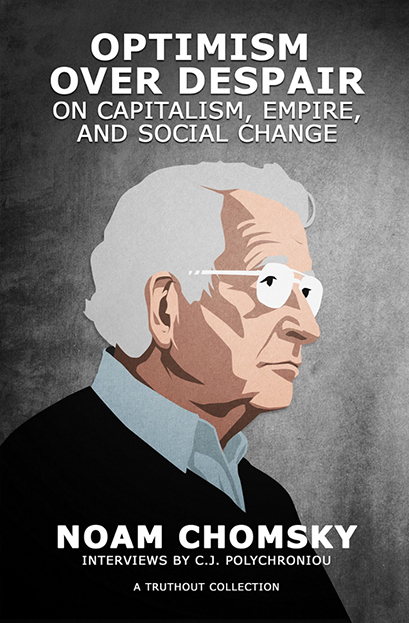
Optimism over Despair: On Capitalism, Empire, and Social Change
Wide-ranging interviews on war, power, and politics with Noam Chomsky, the world’s leading critic of US foreign policy.
This volume offers readers a concise and accessible introduction to the ideas of Noam Chomsky, described by the New York Times as “arguably the most important intellectual alive.”
In these recent, wide-ranging interviews, conducted for Truthout by C. J. Polychroniou, Chomsky discusses his views on the “war on terror” and the rise of neoliberalism, the refugee crisis and cracks in the European Union, prospects for a just peace in Israel/Palestine, the rise of the Black Lives Matter movement, the dysfunctional US electoral system, the grave danger posed to humanity by the climate crisis, and the hopes, prospects, and challenges of building a movement for radical change.
Click here to buy the book.
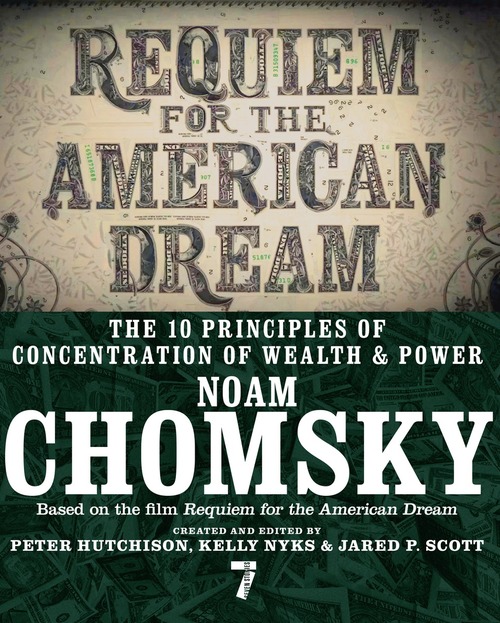
Requiem for the American Dream
In his first major book on the subject of income inequality, Noam Chomsky skewers the fundamental tenets of neoliberalism and casts a clear, cold, patient eye on the economic facts of life. What are the ten principles of concentration of wealth and power at work in America today? They’re simple enough: reduce democracy, shape ideology, redesign the economy, shift the burden onto the poor and middle classes, attack the solidarity of the people, let special interests run the regulators, engineer election results, use fear and the power of the state to keep the rabble in line, manufacture consent, marginalize the population. In Requiem for the American Dream, Chomsky devotes a chapter to each of these ten principles, and adds readings from some of the core texts that have influenced his thinking to bolster his argument.
Click here for a free introductory chapter.
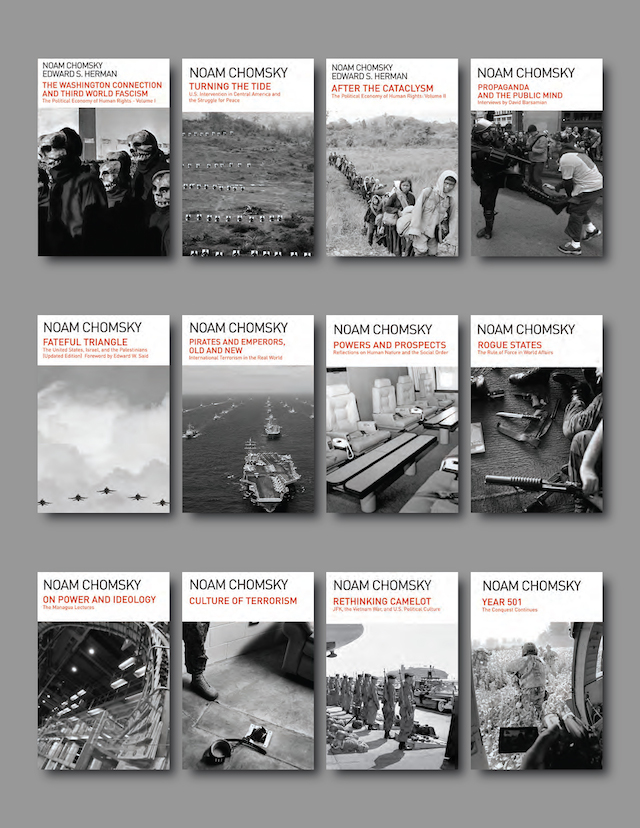
The Noam Chomsky Collection
Haymarket Books is proud to present the Noam Chomsky Collection. The collection includes some of Chomsky’s most important writings, including:
Rogue States
The Washington Connection and Third World Fascism
On Power and Ideology
After the Cataclysm
The Fateful Triangle
Year 501
Turning the Tide
Pirates and Emperors, Old and New
Propaganda and the Public Mind
Rethinking Camelot
Culture of Terrorism
Powers and Prospects
More information at
http://www.haymarketbooks.org/pb/The-Noam-Chomsky-Collection
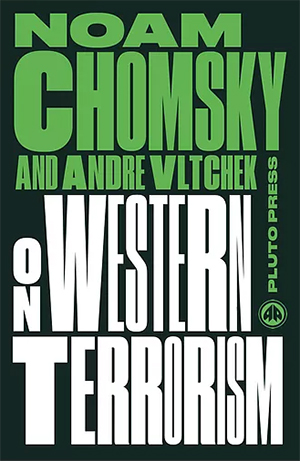
On Western Terrorism
This book is the perfect introduction to Chomsky’s political thinking, and makes a refreshing read for anyone who is uneasy about the West’s wider role in the world. Beginning with the New York newsstand where Chomsky started his political education as a teenager, the discussion broadens out to encompass colonialism and imperial control, propaganda and the media, the Arab Spring and drone warfare. The authors offer a powerful critique of the legacy of colonialism, touching upon many countries including Syria, Nicaragua, Cuba, China, Chile and Turkey.
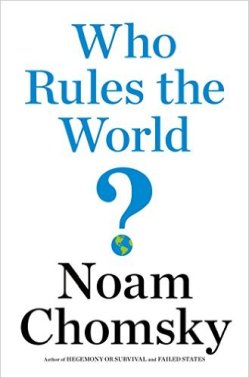
Who Rules the
World?
The world’s leading intellectual offers a probing examination of the waning American Century, the nature of U.S. policies post-9/11, and the perils of valuing power above democracy and human rights.
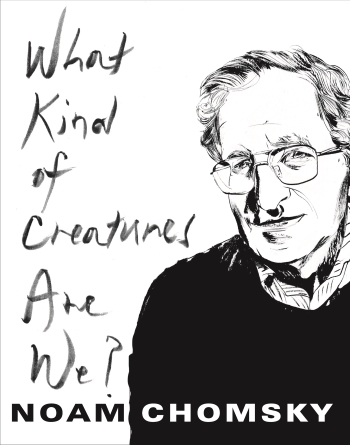
What Kind of Creatures Are We?
Noam Chomsky is widely known and deeply admired for being the founder of modern linguistics, one of the founders of the field of cognitive science, and perhaps the most avidly read political theorist and commentator of our time. In these lectures, he presents a lifetime of philosophical reflection on all three of these areas of research to which he has contributed for over half a century.
Click here to buy the book.
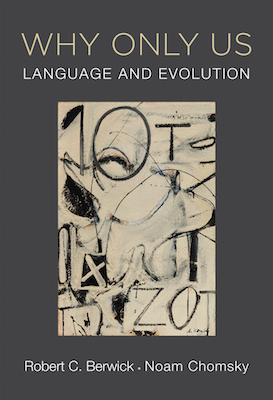
Why Only Us?
We are born crying, but those cries signal the first stirring of language. Within a year or so, infants master the sound system of their language; a few years after that, they are engaging in conversations. This remarkable, species-specific ability to acquire any human language—“the language faculty”—raises important biological questions about language, including how it has evolved. This book by two distinguished scholars—a computer scientist and a linguist—addresses the enduring question of the evolution of language.
Click here to buy the book.
Chronological list of Noam Chomsky’s books:
Syntactic Structures, London: Mouton, 1957. /Limited preview available in English/ /Vista previa limitada disponible en castellano/
Current Issues in Linguistic Theory, The Hague: Mouton, 1964. /Vista previa limitada disponible en castellano/
Aspects of the Theory of Syntax, Cambridge: M.I.T. Press, 1965. /Limited preview available in English/
Cartesian Linguistics: A Chapter in the History of Rationalist Thought, New York: Harper and Row, 1966.
Language and Mind, New York: Harcourt, Brace & World, 1968. /Limited preview available in English/ /Excerpt available in English/
The Sound Pattern of English (with Morris Halle), New York: Harper & Row, 1968.
American Power and the New Mandarins, New York: Pantheon Books, 1969.
At War With Asia, New York: Pantheon Books, 1970. /Limited preview available in English/
- Two Essays on Cambodia, Nottingham: Spokesman Books, 1970.
- Chomsky: Selected Readings (edited by J. P. B. Allen and Paul Van Buren), London: Oxford University Press, 1971.
- Problems of Knowledge and Freedom, New York: Pantheon Books, 1971.
- Studies on Semantics in Generative Grammar, The Hague: Mouton, 1972. /Limited preview available in English/ /Vista previa limitada disponible en castellano/
- Topics in the Theory of Generative Grammar, Paris: Mouton, 1972. /Limited preview available in English/ /Vista previa limitada disponible en castellano/
- Counter-Revolutionary Violence: Bloodbaths in Fact and Propaganda (with Edward S. Herman), Andover: Warner Modular Publications, 1973. /Full text available in English/
- For Reasons of State, New York: Pantheon Books, 1973. /Excerpt available in English/
- Peace in the Middle East? Reflections on Justice and Nationhood, New York: Pantheon Books, 1974.
- The Logical Structure of Linguistic Theory, New York: Plenum Press, 1975.
- Reflections on Language, New York: Pantheon Books, 1975.
- Essays on Form and Interpretation, New York: North-Holland, 1977.
- “Human Rights” and American Foreign Policy, Nottingham: Spokesman Books, 1978.
- Language and Responsibility: Based on Conversations with Mitson Ronat (translated from the French by John Viertel), New York: Pantheon Books, 1979. /Excerpt available in English/
- Morphophonemics of Modern Hebrew, New York: Garland, 1979.
- After the Cataclysm: Postwar Indochina and the Construction of Imperial Ideology (with Edward Herman), Boston: South End Press, 1979. /Limited preview available in English/ /Excerpt available in English/
- The Washington Connection and Third World Fascism (with Edward Herman), Boston: South End Press, 1979. /Limited preview available in English/ /Excerpt available in English/
- Language and Learning: The Debate between Jean Piaget and Noam Chomsky (edited by Massimo Piattelli-Palmarini), Cambridge: Harvard University Press, 1980. /Limited preview available in English/
- Rules and Representations, New York: Columbia University Press, 1980.
- Radical Priorities (edited by Carlos P. Otero), Montréal: Black Rose Books. 1981. /Limited preview available in English/ /Excerpt available in English/
- Lectures on Government and Binding: The Pisa Lectures, Dordrecht, Holland: Foris Publications, 1982. /Limited preview available in English/
- Noam Chomsky on the Generative Enterprise: A Discussion with Riny Huybregts and Henk van Riemsdijk, Dordrecht, Holland: Foris Publications, 1982.
- Some Concepts and Consequences of the Theory of Government and Binding, Cambridge: M.I.T. Press, 1982. /Limited preview available in English/
- Towards a New Cold War: Essays on the Current Crisis and How We Got There, New York: Pantheon Books, 1982.
- Language and the Study of Mind, Tokyo: Sansyusya Publishing, 1982.
- The Fateful Triangle: The United States, Israel and the Palestinians, New York: South End Press, 1983. /Limited preview available in English/ /Excerpt available in English/
- Modular Approaches to the Study of the Mind, San Diego: California State University Press, 1984.
- Turning the Tide: U.S. Intervention in Central America and the Struggle for Peace, Boston: South End Press, 1985. /Limited preview available in English/
- Pirates and Emperors: International Terrorism in the Real World, New York: Claremont Research & Publications, 1986. /Limited preview available in English/
- Barriers, Cambridge: M.I.T. Press, 1986. /Limited preview available in English/
- Knowledge of Language: Its Nature, Origin, and Use, New York: Praeger, 1986. /Limited preview available in English/
- Language in a Psychological Setting, Tokyo: Sophia University, 1987.
- The Chomsky Reader (edited by James Peck), New York: Pantheon Books, 1987. /Excerpt available in English/
- On Power and Ideology: The Managua Lectures, Boston: South End Press, New York: Black Rose Books, 1987. /Limited preview available in English/
- Language and Problems of Knowledge: The Managua Lectures, Cambridge: M.I.T. Press, 1988. /Limited preview available in English/
- Manufacturing Consent: The Political Economy of the Mass Media (with Edward Herman), New York: Pantheon Books, 1988.
- The Culture of Terrorism, London: Pluto Press, Boston: South End Press, 1988. /Limited preview available in English/
- Necessary Illusions: Thought Control in Democratic Societies, Boston: South End Press, 1989. /Full text available in English/
- Terrorizing the Neighborhood: American Foreign Policy in the post-Cold War Era, Stirling, Scotland: AK Press, San Francisco: Pressure Drop Press, 1991.
- Chronicles of Dissent: Interviews with David Barsamian, Monroe, ME: Common Courage Press, 1992. /Excerpt available in English/
- What Uncle Sam Really Wants, Berkeley, CA: Odonian Press, 1992. /Vista previa limitada disponible en castellano/
- Deterring Democracy, London: Verso, 1991. /Full text available in English/
- Language and Thought, Wakefield, RI: Moyer Bell, 1993.
- Rethinking Camelot: JFK, the Vietnam War, and U.S. Political Culture, Boston: South End Press, 1993. /Full text available in English/
- The Prosperous Few and the Restless Many (with David Barsamian), Berkeley, CA: Odonian Press, 1993. /Vista previa limitada disponible en castellano/
- Discurs Politic: Tres Converencies a Catalunya, Barcelona: Editorial Empuries, 1993.
- Year 501: The Conquest Continues, Boston: South End Press, 1993. /Full text available in English/
- Secrets, Lies and Democracy, Berkeley, CA: Odonian Press, 1994. /Full text available in English/ /Vista previa limitada disponible en castellano/
- World Orders, Old and New, New York: Columbia University Press, 1994. /Limited preview available in English/
- Keeping the Rabble in Line: Interviews with David Barsamian, Monroe, ME: Common Courage Press, 1994. /Full text available in English/
- Sprache als Organ, Sprache als Lebensform: Anhang, Interview mit Noam Chomsky Über Linguistik und Politik (with Günther Grewendorf), Frankfurt: Suhrkamp, 1995.
- The Minimalist Program, Cambridge, MA: M.I.T. Press, 1995. /Limited preview available in English/
- Class Warfare: Interviews with David Barsamian, Monroe, ME: Common Courage Press, 1996. /Excerpt available in English/
- Cómo se reparte la tarta: políticas USA al final del milenio, Barcelona: Icaria Editorial, 1996. /Vista previa limitada disponible en castellano/
- Powers and Prospects: Reflections on Human Nature and the Social Order, Boston: South End Press, 1996. /Limited preview available in English/ /Excerpt available in English/
- Democracy in a Neoliberal Order: Doctrines and Reality, Cape Town: University of Cape Town, 1997.
- Media Control: The Spectacular Achievements of Propaganda, New York: Seven Stories Press, 1997, updated 2002. /Vista previa limitada disponible en castellano/ /Excerpt available in English/
- Language and Politics (edited by Carlos P. Otero), Montréal: Black Rose Books, 1998. /Limited preview available in English/
- Noam Chomsky habla de América Latina (interviews with Heinz Dieterich), La Habana: Casa Editora Abril, 1998. (Later published as Hablemos de terrorismo) /Vista previa limitada disponible en castellano/
- Acts of Aggression: Policing “Rogue States” (with Edward Said and Ramsey Clark), New York: Seven Stories Press, 1999. /Limited preview available in English/
- Profit over People: Neoliberalism and Global Order, New York: Seven Stories Press, 1999. /Limited preview available in English/
- The New Military Humanism: Lessons from Kosovo, Monroe, ME: Common Courage Press, 1999. /Limited preview available in English/ /Vista previa limitada disponible en castellano/ /Excerpt available in English/
- The Umbrella of U.S. Power: The Universal Declaration of Human Rights and the Contradictions of U.S. Policy, New York: Seven Stories Press, 1999. /Limited preview available in English/
- The Architecture of Language (edited by Nirmalangshu Mukherji, Bibudhendra Narayan Patnaik, Rama Kant Agnihotri), Oxford: Oxford University Press, 2000. /Excerpt available in English/
- A New Generation Draws the Line: Kosovo, East Timor and the Standards of the West, London: Verso, 2000.
- Rogue States: The Rule of Force in World Affairs, Cambridge, MA: South End Press, 2000. /Limited preview available in English/ /Limited preview available in Italian/ /Excerpt available in English/
- New Horizons in the Study of Language and Mind, Cambridge: Cambridge University Press, 2000. /Limited preview available in English/
- 9-11, New York: Seven Stories Press, 2001. /Limited preview available in English/ /Excerpt available in English/
- Propaganda and the Public Mind: Conversations with Noam Chomsky (with David Barsamian), Cambridge, MA: South End Press, 2001. /Limited preview available in English/
- Pirates and Emperors, Old and New: International Terrorism in the Real World (updated edition), London: Pluto, 2002. /Limited preview available in English/
- Peering into the Abyss of the Future, New Delhi: Institute of Social Sciences, 2002.
- On Nature and Language, with an essay on “The secular priesthood and the perils of democracy” (edited by Adriana Belletti and Luigi Rizzi), Cambridge: Cambridge University Press, 2002. /Limited preview available in English/
- Understanding Power: The Indispensable Chomsky (edited by Peter R. Mitchell and John Schoeffel), New York: The New Press, 2002. /Excerpt available in English/
- The Common Good: Interviews with David Barsamian, Berkeley, CA: Odonian Press, 2002. /Vista previa limitada disponible en castellano/ /Excerpt available in English/
- Bush y los años del miedo: Conversaciones con Jorge Halperín, Buenos Aires: Capital Intelectual, 2003.
- Objectivity and Liberal Scholarship, New York: The New Press, York: Signature Books Services, 2003.
- Hegemony or Survival: America’s Quest for Global Dominance, New York: Metropolitan Books, 2003. /Vista previa limitada disponible en castellano/ /Excerpt available in English/
- Power and Terror: Post-9/11 Talks and Interviews (edited by John Junkerman and Takei Masakazu), New York: Seven Stories Press, Tokyo: Little More, 2003. /Limited preview available in English/
- Middle East Illusions (including Peace in the Middle East? Reflections on Justice and Nationhood), Lanham, MD: Rowman & Littlefield Publishers, 2003. /Limited preview available in English/
- Chomsky on Democracy and Education (edited by Carlos P. Otero), New York: RoutledgeFalmer, 2003. /Limited preview available in English/
- Chomsky on Miseducation (edited by Donaldo Macedo), Lanham, MD: Rowman and Littlefield, 2004. /Limited preview available in English/
- Getting Haiti Right This Time, Monroe, ME: Common Courage Press, 2004. /Excerpt available in English/
- Letters from Lexington: Reflections on Propaganda, Boulder, CO: Paradigm Publishers, 2004. /Limited preview available in English/ /Vista previa limitada disponible en castellano/
- The Generative Enterprise Revisited: Discussions with Riny Huybregts, Henk van Riemsdijk, Naoki Fukui, and Mihoko Zushi, with a new foreword by Noam Chomsky, Berlin: Mouton de Gruyter, 2004. /Limited preview available in English/
- El terror como política exterior de Estados Unidos, Buenos Aires: Libros del Zorzal, 2005. /Vista previa limitada disponible en castellano/ /Extracto del libro disponible en castellano/
- Chomsky on Anarchism (edited by Barry Pateman), Oakland, CA: AK Press, 2005. /Limited preview available in English/
- Rules and Representations, New York: Columbia University Press, 2005.
- Government in the Future, New York: Seven Stories Press, 2005.
- Imperial Ambitions: Conversations on the Post-9/11 World (Interviews with David Barsamian), New York: Metropolitan Books, 2005. /Limited preview available in English/
- The Chomsky-Foucault Debate: On Human Nature (with Michel Foucault), New York: The New Press, distributed by W.W. Norton, 2006. /Vista previa limitada disponible en castellano/
- Failed States: The Abuse of Power and the Assault on Democracy, New York: Metropolitan Books/Henry Holt, 2006.
- Perilous Power: The Middle East and US Foreign Policy: Dialogues on Terror, Democracy, War, and Justice (with Gilbert Achcar, edited by Stephen Shalom), Boulder, CO: Paradigm Publishers, 2006. /Limited preview available in Turkish/
- What We Say Goes: Conversations on U.S. Power in a Changing World (Interviews with David Barsamian), New York: Metropolitan Books, 2007.
- Interventions, San Francisco: City Lights Books, 2007. /Limited preview available in English/ /Vista previa limitada disponible en castellano/
- The Essential Chomsky (edited by Anthony Arnove), New York: The New Press, 2008.
- Of Minds and Language: A Dialogue with Noam Chomsky in the Basque Country (edited by Massimo Piattelli-Palmarini, Juan Uriagereka, and Pello Salaburu), Oxford: Oxford University Press, 2009. /Limited preview available in English/
- New World of Indigenous Resistance: Voices from the Americas (edited by Lois Meyer and Benjamín Maldonado Alvarado), San Francisco: City Lights, 2010.
- Hopes and Prospects, Chicago: Haymarket Books, 2010. /Limited preview available in English/
- Chomsky Notebook (Edited by Jean Bricmont and Julie Franck), New York: Columbia University Press, 2010.
- Making the Future: The Unipolar Imperial Moment, San Francisco: City Lights, 2010.
- Gaza in Crisis: Reflections on Israel’s War Against the Palestinians (with Illan Pappé), Chicago: Haymarket Books, October 2010. /Excerpt available in English/
- Power and Terror: Conflict, Hegemony, and the Rule of Force, Boulder: Paradigm Publishers, March 2011.
- How the World Works, Berkeley: Soft Skull Press, September 2011.
- (A compilation of What Uncle Sam Really Wants; The Prosperous Few and the Restless Many; Secrets, Lies and Democracy; and The Common Good.)
- 9-11: Was there an Alternative? (New Edition), New York: Seven Stories Press, September 2011.
- A New Generation Draws the Line: Humanitarian Intervention and the “Responsibility to Protect” Today (Expanded Edition), Boulder: Paradigm Publishers, November 2011.
- The Science of Language (Interviews with James McGilvray), Cambridge: Cambridge University Press, March 2012.
- Occupy, Brooklyn: Zuccotti Park Press, May 2012. /Excerpt available in English/
- Power Systems: Conversations on Global Democratic Uprisings and the New Challenges to U.S. Empire (Interviews with David Barsamian), New York: Metropolitan Books, January 2013. /Limited preview available in English/
- On Western Terrorism: From Hiroshima to Drone Warfare (with Andre Vltchek), London: Pluto Press, September 2013. /Excerpt available in English/
- Masters of Mankind: Essays and Lectures, 1969-2013 Chicago: Haymarket Books, September, 2014. /Overview available in English/
- Because We Say So San Francisco: City Lights Publishers, August 11, 2015. /Excerpt available in English/
- Why Only Us: Language and Evolution Cambridge, MA: MIT Press, December 2015. /Overview available in English/
- What Kind of Creatures Are We? New York: Columbia University Press, December 2015. /Overview and Book Information/ /Excerpts available in English/
- Who Rules the World? New York: Metropolitan Books, 2016. /Limited preview available in English/
- Requiem for the American Dream: The Ten Principles of Concentration of Wealth and Power: Seven Stories Press, 2017. /Excerpt available in English/
Book Excerpts
· Excerpted from Language and Mind, 1968.Linguistic Contributions to the Study of Mind.
· Excerpted from For Reasons of State, 1973.Notes on Anarchism.
Language and Freedom
· Excerpted from Language and Responsibility, 1979.Triumphs of Democracy.
Empiricism and Rationalism.
· Excerpted from After the Cataclysm, 1979.Miscellaneous selections.
· Excerpted from The Washington Connection and Third World Fascism, 1979.Introduction.
The Dominican Republic: U.S. Model for Third World Development.
The Nazi Parallel: The National Security State and the Churches.
· Excerpted from Radical Priorities, 1981.The Carter Administration: Myth and Reality.
Watergate: Small Potatoes.
· Excerpted from The Fateful Triangle, 1983.War is Peace.
“Stability”.
· Excerpted from The Chomsky Reader, 1987.Personal Influences.
What the World is Really Like: Who Knows It — and Why.
· Excerpted from Chronicles of Dissent, 1992.Israel, the Holocaust, and Anti-Semitism.
Pearl Harbor.
Miscellaneous selections.
· Excerpted from Class Warfare, 1996.Robert McNamara.
Education is Ignorance.
Looking for the Magic Answer?.
· Excerpted from Powers and Prospects, 1996.Miscellaneous selections.
· Excerpted from The New Military Humanism, 1999.Lessons from Kosovo.
· Excerpted from The Architecture of Language, 2000.The “Chomskyan Era”.
· Excerpted from Rogue States, 2000.Rogues Gallery; Rogue States; Crisis in the Balkans.
East Timor Retrospective.
Cuba and U.S. Government.
Putting on the Pressure: Latin America.
“Recovering Rights” — A Crooked Path.
The Legacy of War.
Socioeconomic Sovereignty.
Plan Colombia.
· Excerpted from 9-11, 2001.Miscellaneous selections.
· Excerpted from The Common Good, 2002.Miscellaneous selections.
· Excerpted from Media Control, 2002.The Journalist from Mars.
Miscellaneous selections.
Quotations.
· Excerpted from Understanding Power, 2002.The Fate of an Honest Intellectual.
An Exchange on Manufacturing Consent.
Footnotes.
· Excerpted from Hegemony or Survival, 2003.Priorities and Prospects.
Cuba in the Cross-Hairs: A Near Half-Century of Terror.
The Resort to Force.
Afterword.
Footnotes.
· Excerpted from Getting Haiti Right This Time, 2004.The “Noble Phase” and “Saintly Glow” of US Foreign Policy.
· Extracto de El terror como política exterior de Estados Unidos, 2004.¿Quién dominará el mundo?
· Excerpted from Gaza in Crisis, 2010.The betrayal of Gaza.
· Excerpted from Hopes and Prospects, 2010.The high cost of neoliberalism.
· Excerpted from Rogue States, 2015 Edition.The Hubris of the United States.
· Excerpted from What Kind of Creatures Are We?, 2015 Edition.Chapter 1: What is Language?
Chapter 3: What Is the Common Good?
· Excerpted from Requiem for the American Dream: The Ten Principles of Concentration of Wealth and Power, 2017 Edition.Principle #6: Running the Regulators
The Republican Party Is the ‘Most Dangerous Organization in World History’
853Shares


CHOMSKY.INFO


