Wuhan Diary
 | show This article may be expanded with text translated from the corresponding article in Chinese. (May 2020) Click [show] for important translation instructions. |
| Author | Fang Fang |
|---|---|
| Frequency | Daily |
| Format | Online diary |
| Publisher | Self-published |
| First issue | 25 January 2020 |
| Final issue Number | 25 March 2020 60 |
| Country | China |
| Based in | Wuhan |
| Language | Chinese |
Wuhan Diary (Chinese: 武汉日记; pinyin: Wǔhàn rìjì) is an online diary written by Chinese writer Fang Fang about the life of the people of Wuhan, China during the Wuhan lockdown during efforts to quarantine the center of an outbreak of coronavirus disease 2019 (COVID-19) and stop it spreading.[1][2][3] An English translation of the diary, titled Wuhan Diary: Dispatches from a Quarantined City, was published in book format by Harper Collins in June 2020.
Background[edit]
During the 2020 Hubei lockdowns, her Wuhan Diary (武汉日记), the daily account of the locked down city's posted on social media, was widely made public. However, each post was quickly deleted by censors.[4] Fang Fang's Weibo account, which had more than 3.8 million followers, was shut down in February. It was later reinstated.[5] Fang Fang started the diary on 25 January 2020, two days after Wuhan was locked down.[6][7][8] She published her 60th and what she called her final entry shortly after midnight on 25 March 2020, hours after the authorities announced that Wuhan's lockdown would end on 8 April.[9] Fang wrote her diary from her house in Wuhan's Wuchang District, where she lives alone.[10]
An English translation, titled Wuhan Diary: Dispatches from a Quarantined City, translated by Michael Berry, was published in book format by Harper Collins in June 2020.[11] Berry has received angry and death threat emails for translating the diary.[12][13]
According to the Global Times, a nationalistic state-run tabloid under the administration of the Chinese Communist Party, the publication has drawn outrage from the Chinese audience, due to the diary's imagery of the Chinese government and the alleged use of second-hand sources. The speed of its English and German translations, which both became available to pre-order on Amazon on 8 April, merely 2 weeks after the completion of its original Chinese Weibo version (which was finished on 25 March), also drew criticism and speculations of "potential collaborations with foreign influences" according to the Global Times.[14][15] Michael Berry, who started translating “Wuhan Diary” into English since late February, 2020, denied such allegations, said he translated the book in order for “the world to learn from China’s experience in Wuhan”.[12] The German version was translated by Michael Kahn-Ackermann, and was published by Hoffmann und Campe Verlag on May 30,2020.[16]
In her Wuhan Diary, Fang Fang has called for an end of the Internet censorship in China: "Dear internet censors, you should let Wuhan people speak".[17]
See also[edit]
References[edit]
- ^ "Chinese writer faces backlash for 'Wuhan Diary'". Bangkok Post. 22 April 2020. Retrieved 22 April 2020.
- ^ "She Kept a Diary of China's Epidemic. Now She Faces a Political Storm". The New York Times. 14 April 2020. Retrieved 22 April 2020.
- ^ "Notes on Covid-19 outbreak: Chinese writer Fang Fang faces death threats for 'Wuhan Diary'". India Today. 22 April 2020. Retrieved 22 April 2020.
- ^ "Fang Fang: The 'Conscience of Wuhan' Amid Coronavirus Quarantine". The Diplomat. 23 March 2020.
- ^ Davidson, Helen (10 April 2020). "Chinese writer faces online backlash over Wuhan lockdown diary". The Guardian. Retrieved 27 April 2020.
- ^ Lau, Mimi; Xie, Echo (18 April 2020). "Coronavirus: Chinese writer hit by nationalist backlash over diary about Wuhan lockdown". South China Morning Post. Retrieved 27 April2020.
- ^ Su, Alice (21 March 2020). "Two months into coronavirus lockdown, her online diary is a window into life and death in Wuhan". Los Angeles Times. Retrieved 27 April 2020.
- ^ Wu, Yuwen (2 March 2020). "Chinese propagandists don't want you to read this diary on the coronavirus lockdown in Wuhan". The Independent. Retrieved 27 April 2020.
- ^ Wong, Chun Han (1 April 2020). "A Wuhan Writer Rages Against China's Communist Machine and Becomes an Online Star". The Wall Street Journal. Retrieved 27 April 2020.
- ^ Sherwell, Philip (12 April 2020). "Coronavirus in China: Wuhan's chronicler of daily lies branded a 'traitor'". The Sunday Times. Retrieved 27 April 2020.
- ^ "Wuhan Diary by Fang Fang". Harper Collins.
- ^ a b Michael Berry (26 June 2020). "I translated 'Wuhan Diary' to amplify the author's voice of courage". The Washington Post.
- ^ "'Wuhan Diary' Brings Account Of China's Coronavirus Outbreak To English Speakers". NPR. Retrieved 14 May2020.
- ^ Cao, Siqi (8 April 2020). "Chinese vigilant on deifying writer Fang Fang amid publication of Wuhan diary in English". Global Times.
- ^ Cao Siqi and Chen Qingqing (10 April 2020). "Fans disappointed as Wuhan Diary's overseas publication 'gives ammunition to antagonist forces'". Global Times.
- ^ "Wuhan Diary". Hoffmann und Campe Verlag (in German).
- ^ Kiki Zhao (14 February 2020). "The Coronavirus Story Is Too Big for China to Spin". The New York
=====
https://www.scmp.com/magazines/post-magazine/books/article/3093294/wuhan-diary-chinese-writer-fang-fangs-nuanced
Books
Review | Wuhan Diary: Chinese writer Fang Fang’s nuanced, personal account of life under quarantine
Fang Fang documents confusing, conflicting and distressing circumstances in real time
The book collects 60 social media posts, written daily during the world’s strictest Covid-19 lockdown
Yeung Ji-ging
Published: 10:03am, 16 Jul, 2020
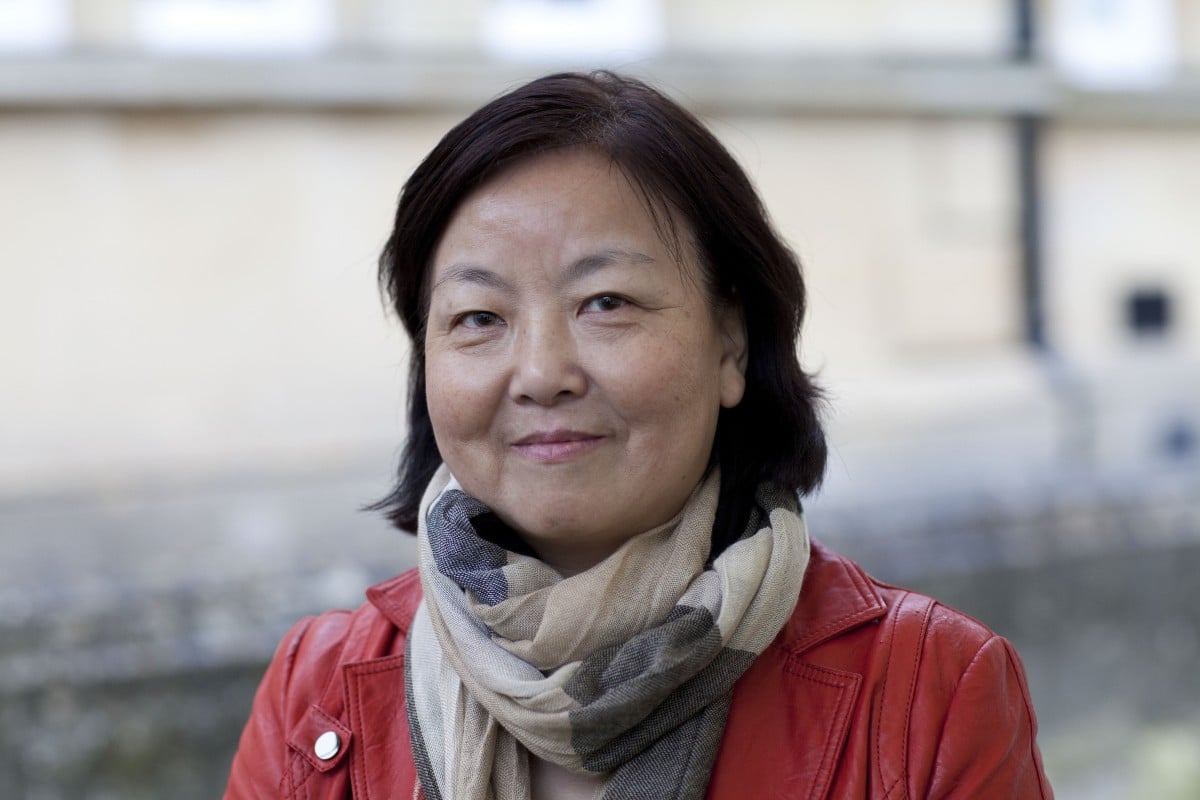
Chinese novelist Fang Fang. Photo: Getty Images
Wuhan Diary: Dispatches from a Quarantined City
by Fang Fang (translated by Michael Berry)
Harper Collins
4/5 stars
Wuhan Diary, or at least its recent English translation, is a work whose reputation precedes it.
Its author, a 65-year-old award-winning writer known as Fang Fang, was
targeted with online trolling and state censorship after she began posting about the coronavirus outbreak on her personal Weibo account.
Outrage grew in April after Harper Collins began marketing an English-language compilation of her posts, to be published in book form in June. Fang Fang was accused of casting the nation’s coronavirus response in a poor light.

This is unfortunate because it distracts from what is a nuanced, personal and humane account of life under quarantine. What began as an extended essay has been turned into a political football – and the insights of Fang Fang’s writing have been lost in the fray.
It would take too long to list the accusations against Fang Fang here. For example, there is a persistent but false rumour that Fang Fang was writing at the behest of foreign forces, sparked in part by the quick publication timeline. But in fact Michael Berry, her regular collaborator, began translating her social media posts in February, as she was writing them.
Wuhan Diary is not meant to be a news report, academic study or medical text. It is the personal account of a layperson reacting to confusing, conflicting and distressing circumstances in real time. It is an emotional work that finds its charm in its spontaneity and wit.
Fang Fang’s own personality – one that is both fiercely defensive of her city and people, and stubbornly critical of government mishaps – comes shining through in writing that is simple and heartfelt.
Wuhan Diary is a collection of 60 social media posts, written daily during the world’s strictest Covid-19 lockdown. It begins on January 25, just as Wuhan was preparing for the Lunar New Year holiday amid news reports of a new disease. It ends on March 26, the day the government announced the April reopening of Wuhan.
EVERY FRIDAY
Post Magazine Newsletter
By submitting, you consent to receiving marketing emails from SCMP. If you don't want these, tick here
By registering, you agree to our T&C and Privacy Policy
Almost all of the diary is written from Fang Fang’s apartment window, where she watches the weather change from winter to spring. This limited viewpoint reflects how people all over the world have experienced Covid-19, relying on phone calls and the internet for news.
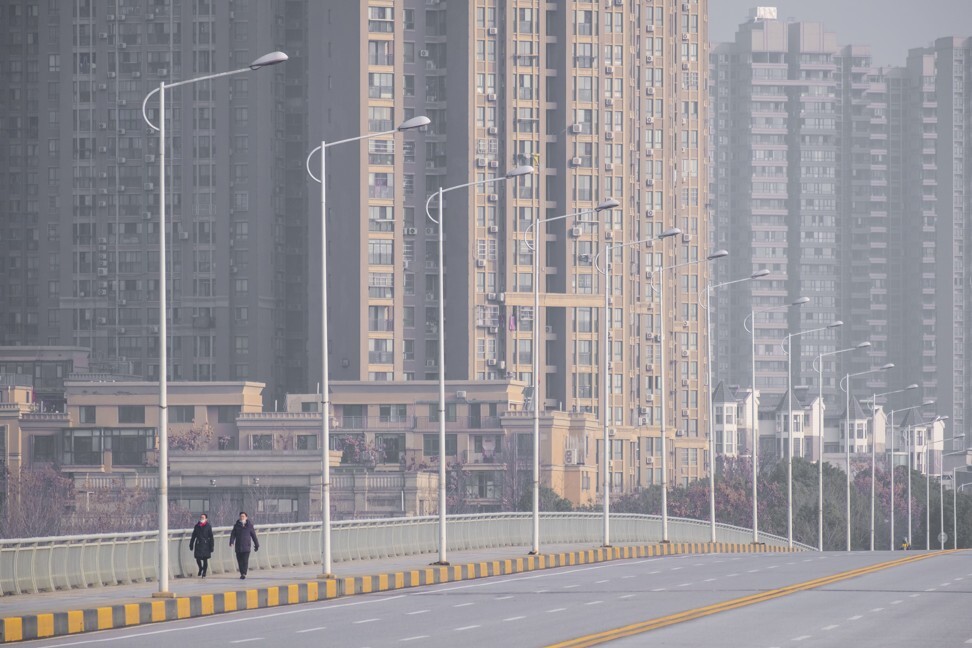
People walk down a deserted street in Wuhan, China, on January 28. Photo: AP
Her diary conveys that sense of helplessness and restraint. It is also filled with anecdotes from that time – of a peasant who can’t get home, a patient who can’t get a hospital bed, a group of well-meaning student volunteers.
“My heart felt as empty as those abandoned avenues,” she wrote, as she looked upon Wuhan’s empty streets. “This was a feeling I had never before experienced in my life – that feeling of uncertainty about the fate of my city.”
Like most of us, Fang Fang’s initial preoccupation was with the mundane tasks of survival. She began stockpiling supplies and masks, and fretted about how she would get food for her elderly dog and her hapless grown daughter, who was living alone. “Can you believe she actually put a head of cabbage in the freezer?” she writes with all the frustration of a Chinese mother.
Also like a lot of us, she spent many a morning lying in bed, doomscrolling through the news, feeling frustrated by the government but unable to do anything about it. She bristles when she hears that a 40,000-person banquet is allowed to go ahead. She has great sympathy for medical workers and great respect for medical leaders such as Zhong Nanshan, and nothing but derision for officials such as Wang Guangfa, who claimed the disease was not infectious before becoming infected himself.
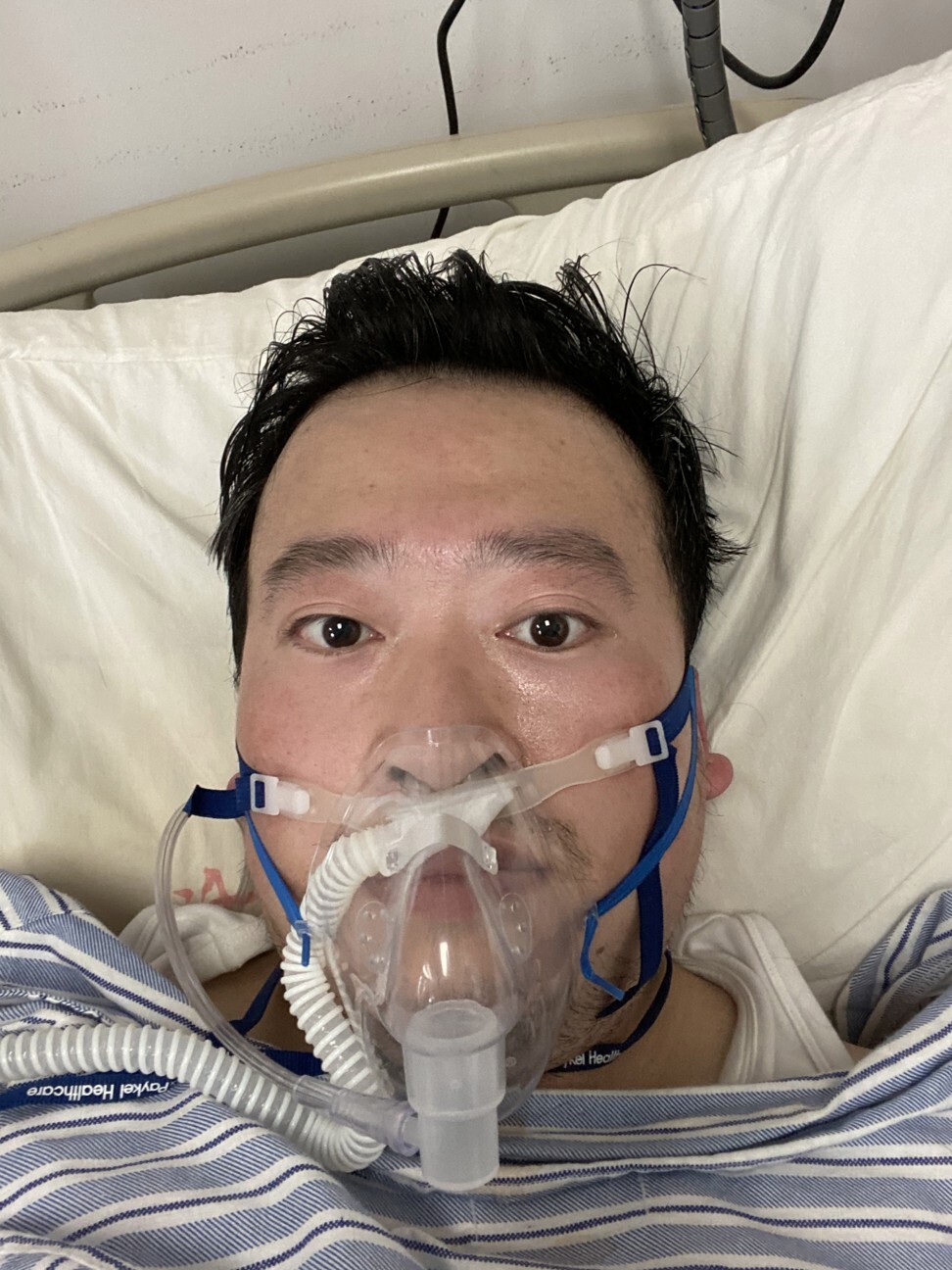
Dr Li Wenliang, at Wuhan Central Hospital, on February 3, just days before he succumbed to the coronavirus. Photo: EPA-EFE
On February 6, the tone of the diary takes a marked turn, becoming darker and more critical. It is the day that Li Wenliang, one of the “whistle-blower” doctors who had warned about a Sars-like disease, reportedly dies. “Right now everyone in this city is crying for him,” Fang Fang writes. It is also the day that her Weibo account is deleted, the rest of the diary being published on a friend’s account.
Also by mid-February, deaths are on the rise and quarantine is becoming stricter. The reality of a massive global disaster is hitting home. “A calamity is when the hearse that brings bodies to the crematorium goes from delivering a single body in a coffin to delivering an entire truckload of bodies stuffed into bags,” she writes.
Fang Fang’s views on Dr Li are balanced, and she resists the temptation to turn him into a martyr. “Everyone knows that he was not a hero […] the actions he took are the kind of actions you would expect any ordinary person to take if put in his position,” she writes.
Similarly, Fang Fang’s account did not start out as heroic or extraordinary. It is what millions went through in Wuhan and now all over the world. But she has leveraged the power of words to bring those stories to a broader audience, and has fought censorship in order to do so.
Each post, presented as a mini chapter, begins with an italicised sentence or saying: Technology can sometimes be every bit as evil as a contagious virus; The virus doesn’t discriminate between ordinary people and high-ranking leaders; Taking care of oneself is one way to contribute to the effort; and Lamenting our difficult lives, I heave a deep sigh and wipe away my tears.
The most famous of these – the one that went viral – is this: One speck of dust from an era may not seem like much, but when it falls on your head, it is like a mountain crashing down on you.

No comments:
Post a Comment