Masaji Ishikawa
Masaji Ishikawa | |
|---|---|
| 石川 | |
| Born | 1947 (age 73–74) |
| Known for | Defection from North Korea |
| Writing career | |
| Pen name | Shunsuke Miyazaki (宮崎 俊輔) |
| Children | 3 |
| Korean name | |
| Hangul | |
| Revised Romanization | Do Changsun |
| McCune–Reischauer | To Ch'angsun |
Masaji Ishikawa is a North Korean defector and author on Zainichi heritage. Ishikawa was thirteen years old when he moved from Japan to North Korea in 1960. His father was Zainichi Korean and his mother was Japanese. Ishikawa later defected from North Korea in 1996 via the Yalu river, leaving behind three children and a spouse.[1][2] The Japanese government assisted him in leaving China.[3] In 2003, he was working as a security guard.[1]
Memoir[edit]
In 2000, Ishikawa published his memoirs in Japan under the title 北朝鮮大脱出地獄からの生還 and the nom de plume Shunsuke Miyazaki (宮崎 俊輔).[4][5] They were translated into English in 2017 under the title A River in Darkness.[6] Ishikawa's memoirs are published in Korean under his Korean name[nb 1] and the title 역사의 증언자.[7] The book was translated into Persian in 2020.[8] The part of the book focused on the river crossing was published in Literary Hub.[9]
Notes[edit]
References[edit]
- ^ a b Matsubara, Hiroshi (5 February 2003). "No welcome mat for North Korea escapees". The Japan Times. Retrieved 23 May 2021.
- ^ Scanlon, Charles (25 November 2002). "Identity crises for Japan's Koreans". BBC. Retrieved 23 May 2021.
- ^ Lee, Young Hwa (August 2002). "Shenyang asylum incident co-produced by Japan & China" (PDF). The Seiron. Retrieved 23 May 2021.
- ^ Ishikawa, Masaji; Kobayashi, Risa; Brown, Martin (2017). A River in Darkness: One Man's Escape from North Korea (A Memoir) (First ed.). ISBN 978-1542047197.
- ^ Matsubara, Hiroshi (23 January 2004). "Risky North Korea rescue left unfinished". The Japan Times. Retrieved 23 May 2021.
- ^ Chan, Charmaine (1 February 2018). "Review: Memoir that should be standard work on the hell of North Korea". South China Morning Post. Retrieved 23 May 2021.
- ^ 북랩, 북한에 표류된 한 인간의 목숨을 건 탈출기 ‘역사의 증언자’ 출간 (in Korean). Korea Newswire. 22 July 2020. Retrieved 23 May 2021.
- ^ "Masaji Ishikawa's "A River in Darkness" published in Persian". Tehran Times. 3 January 2020.
- ^ Ishikawa, Masaji (2 January 2018). "One Man's Escape From North Korea". Literary Hub. Retrieved 23 May 2021.


A River in Darkness: One Man's Escape from North Korea Kindle Edition
by Masaji Ishikawa (Author), Risa Kobayashi (Translator), & 1 more Format: Kindle Edition
4.5 out of 5 stars 8,644 ratings
Goodreads ChoiceAward nominee
Kindle
from $1.99Read with Our Free App
 Audiobook
$7.95$7.95 with discounted Audible membership
Hardcover
$13.62
23 Used from $4.089 New from $33.90
A New York Times bestseller and Amazon Charts Most Read and Most Sold book.
A Goodreads Choice Award nominee for Memoir & Autobiography.
The harrowing true story of one man’s life in—and subsequent escape from—North Korea, one of the world’s most brutal totalitarian regimes.
Half-Korean, half-Japanese, Masaji Ishikawa has spent his whole life feeling like a man without a country. This feeling only deepened when his family moved from Japan to North Korea when Ishikawa was just thirteen years old, and unwittingly became members of the lowest social caste. His father, himself a Korean national, was lured to the new Communist country by promises of abundant work, education for his children, and a higher station in society. But the reality of their new life was far from utopian.
In this memoir translated from the original Japanese, Ishikawa candidly recounts his tumultuous upbringing and the brutal thirty-six years he spent living under a crushing totalitarian regime, as well as the challenges he faced repatriating to Japan after barely escaping North Korea with his life. A River in Darkness is not only a shocking portrait of life inside the country but a testament to the dignity—and indomitable nature—of the human spirit.
Read less
===
Editorial Reviews
Review
“A terrifying true story of life in North Korea…Told in simple prose, this is a shocking and devastating tale of a country’s utter contempt for its citizens.” —Kirkus Reviews
“In his achingly straightforward memoir, Ishikawa vividly describes the horrendous conditions that the tyrannical and cultish state inflicts on its people…Ishikawa relates his painful story with sardonic humor and unwavering familial love even in the depths of despair, making human the often impersonal news coverage of mysterious and threatening North Korea.” —Booklist (starred review)
“Like Kang Chol-hwan’s The Aquariums of Pyongyang (2001)—the book that spurred President George W. Bush’s commitment to helping the people of North Korea—Mr. Ishikawa’s…descriptions of North Korean poverty are chilling, as are his accounts of the corruption and repression that dominated every aspect of life there…searing, swiftly paced.” —Wall Street Journal
“Masaji Ishikawa was born in Japan to a Korean father but repatriated as a boy to the supposed paradise of North Korea. Newly translated into English, this account of his life and appalling times should become a classic.” —South China Morning Post
“We often turn to books to help us understand people, experiences, and worldviews different from our own. If you’re looking to further your education in 2018, pick up A River in Darkness: One Man’s Escape from North Korea. In his memoir, translated from Japanese, Masaji Ishikawa recounts his turbulent childhood and life under a totalitarian regime in North Korea. Yes, you’ll learn about the country’s politics, leaders, and economy. But more importantly, you’ll learn about the people who live there and what it’s like to be on the lower end of the social hierarchy.” —HelloGiggles
“Compulsively readable and heart-wrenching, A River in Darkness reveals the daily cruelty of North Korea’s government to its poorest people. In this memoir, the victim is a young Japanese-born Korean who settles in the North with his parents, only to endure privation and abuse, as those he loves die of exhaustion, hunger, and loss of hope.” —Blaine Harden, New York Times bestselling author of Escape from Camp 14 and King of Spies: The Dark Reign of America’s Spymaster in Korea
From the Publisher
When I read headlines about North Korea, the first thing that comes to mind is a cartoonish image of the country’s leader, projected on large screens in front of military displays, bragging about testing nuclear weapons. But what about the regular people like you and me? It’s difficult to imagine the challenges they face while raising families, while living their everyday lives. Enter Masaji Ishikawa, who has risked his safety and the safety of his family members—if any of them remain alive—to come forward with a daring story of escape.
Only a few scraps of information make their way across the barbed-wire borders of nations and ideologies that divide America from North Korea. Add the physical distance between us and it’s clear why we don’t automatically feel a kinship with people living in Pyongyang, Dong Chong-ri, or Wonsan. But A River in Darkness breathed life into the “enemy,” revealing warmth, humanity, and dignity in the face of a man we come to know well. Mr. Ishikawa has lost everything, but he holds out hope that at least one of his sons is alive—and that, perhaps, if more people know his story, his son might learn that his dad is alive and safe in Japan.
It is my hope that by sharing this story with you I will share the empathy that overwhelmed me while reading. What do we do with this newfound connection to our fellow human beings—those living next door as well as those living across the world? Perhaps we will all feel encouraged to promote peace in our neighborhoods, vote for things we believe in, reach out to those in need, and realize that there are always real people involved in current events—some of them fathers who go to bed each night dreaming of reconnecting with their sons.
- Gabriella Page-Fort, Editor
About the Author
Born in 1947 in Kawasaki, Japan, Masaji Ishikawa moved with his parents and three sisters to North Korea in 1960 at the age of thirteen, where he lived until his escape in 1996. He currently resides in Japan.
Read less
Product details
ASIN : B06XKRKFZL
Publisher : Amazon Crossing (January 1, 2018)
Publication date : January 1, 2018
Language : English
File size : 3144 KB
Text-to-Speech : Enabled
Screen Reader : Supported
Enhanced typesetting : Enabled
X-Ray : Enabled
Word Wise : Enabled
Print length : 174 pages
Lending : Not Enabled
Best Sellers Rank: #13,284 in Kindle Store (See Top 100 in Kindle Store)
#4 in Poverty Studies
#6 in Biographies of Social Activists
#10 in Biographies & Memoirs of Authors
Customer Reviews: 4.5 out of 5 stars 8,644 ratings
Videos
Help others learn more about this product by uploading a video!
Upload video
About the author
Follow authors to get new release updates, plus improved recommendations.
Follow
Masaji Ishikawa
Born in 1947 in Kawasaki, Japan, Masaji Ishikawa moved with his parents and three sisters to North Korea in 1960 at the age of thirteen, where he lived until his escape in 1996. He currently resides in Japan.
Customer reviews
4.5 out of 5 stars
Top reviews
Top reviews from the United States
Rob Natiuk
4.0 out of 5 stars An escape from "HELL ON EARTH" -- a simply told but gripping memoir
Reviewed in the United States on December 1, 2017
Verified Purchase
HOW TO CHOOSE? I had to ask myself: Which selection offers me the most in-depth “feel” of a nation or a time in history, a family’s struggles and survival? What shows great courage in the midst of extreme hardship? What demands to be read NOW?
To me, it is A RIVER IN DARKNESS. That metaphor is apt for the oppression faced by so many people in the last 40 years in North Korea. It deepens my understanding, sympathy and appreciation for freedom.
A TOUGH MEMOIR. I’m sure it was not easy for the author, Masaji Ishikawa, to share his story with us. So much suffering, deprivation, and death from disease and starvation. So if you want a happy book, this is not it. It is a tough read, satisfying to my need to know and to share in the author’s life. But often I had to take a break from reading it in order to cope with the build-up of inner distress.
STYLE—NOT FANCY BUT HONEST. “Truth is stranger than fiction.” If I read this as a novel, I would find much that's hard to believe. The hardest would be the loss of loved ones to starvation, loss of dignity, purpose, hope. But somehow the author clings to the hope of escape to freedom, to return to his homeland of Japan from which he was taken 39 years earlier.
VIVID—I felt I was right there with Ishikawa, suffering and hoping with him, holding my breath as he tries to escape across the river to China. Always he faces the possibility of being sidetracked and captured even after he's in China. It's amazing how certain people come to his rescue, showing there is still good in the world.
THE GREATEST RIGHT--STOLEN. Even though as a young man Ishikawa did well in a North Korean university, he was reduced to being a farmer; he was too educated for the repressive governing officials. I felt his sorrow when he stated: “I never could forgive Kim Il-sung for taking away our right to think.”
Hopefully where you are, you have the right to express what you think. After reading this simple but disturbing book, I was left thinking far into the night. And this morning I'm so grateful for what I have in this land of freedom and much love.
Read less
474 people found this helpful
Helpful
Report abuse
Richard and Liz
TOP 1000 REVIEWER
5.0 out of 5 stars ~~ Starvation: "Once your lips disappear, your teeth are bared all the time, like a snarling dog." ~~
Reviewed in the United States on December 1, 2017
Verified Purchase
Starvation (death) if he stayed where he was or risk of being captured/shot if he attempted escape! What would your choice be?
Born to a Korean father and Japanese mother in Japan, Masaji's early childhood was sweet despite the family being poor. Alas, it was not to stay that way when his frequently drunken, abusive father came back on the scene. The beatings given to Masaji's mother got so bad that she had to literally run away to preserve her life. Masaji was left with his three younger sisters. Enter center stage the wicked stepmother for a period of time.
Whilst this was going on in Japan, Kim Il-sung was enticing Korean citizens in Japan to come to the "promised land, the land of milk and honey". What was he promising? Jobs, housing, education and more! This book, as well as being someone's story, is also a history lesson. We learn why the Koreans were in Japan in the first place and what life was like for them there, especially after the end of WWII. North Korea had not even existed when Masaji's father had lived in the southern part, now South Korea, and yet now he was was believing what he was being told and looking forward to going. Masaji was never fooled by all the promises but had no choice but to go along with his father's wishes and yes, his mother had surprisingly returned home and eventually agreed to go with them. Repatriation began! You may be surprised to learn the numbers and also the length of time it continued. "So yes, the mass repatriation was great news for both governments, the perfect win-win situation for everyone except the real human beings involved."
The year was 1960, Masaji was now 13 and his promised "fantastic" life in North Korea was about to begin! He played the role well hoping that somewhere along the line he would be able to move up the social/job ladder. Free education? Hmmm... University? Not a hope! Nothing this "Japanese bastard" could do about it. Faking your loyalty to Kim Il-sung meant life. Lack of food and supplies was part of daily life if you could even call it that. Eating stuff that gave you guts ache was sometimes the only way to physically survive.
Falling in love? The family of his original love didn't want Masaji anywhere near their daughter because of the trouble he may bring them! You can read for yourselves the despairing trials of future loves, trying to raise children when there was not enough food etc. We read of how his mother, at 44, had only 8 teeth left. Did his parents live to enjoy old age? What about his sisters? Do you know the Kim Il-sung's Ten Commandments?
Having read someone else's memoir of life in North Korea, I kind of knew what to expect when choosing this for my Kindle First choice. Even so, the realities of what happened are truly horrific. Yes, we know before starting the book that the author made it to safety by reading the Amazon listing but he spent 36 years surviving in that regime! If you are looking for a book with a happy ending this is not for you! If you are looking for a flowery, escape from reality type book this is definitely not for you! However if you want to read a true story where the raw pain can almost be felt, this is for you. Even on his escaping, you would think that once in China returning to Japan would be easy. Wrong! This book deserves to be read and the message spread abroad. It is well written and not overly long, moving on at a good pace. I downloaded this on to my Kindle. I was not required to write a review but chose to do so. Thanks, Liz
Read less
211 people found this helpful
Helpful
Report abuse
See all reviews
Top reviews from other countries
M. Dowden
5.0 out of 5 stars Worth Reading
Reviewed in the United Kingdom on November 30, 2017
Verified Purchase
Although originally published in Japan in 2000, this is I believe the first time that this memoir has been translated and published in English. Here Masaji Ishikawa recounts how his family emigrated from Japan to North Korea, and the experiences and trials that they went through.
Starting off when he was still little Masaji explains about life for him and his family in Japan. Although his mother was Japanese his father was actually Korean, coming from a place that is now in South Korea. We read of what life was like at home, and how the family was discriminated against because of his dad’s nationality.
Being given a chance to live and work in the new Democratic People’s Republic of Korea so the family transpose to North Korea, only to find the stories of some sort of wonderful utopia are completely false. We then read of Masaji’s growing up under the regime of Kim Il-Sung and then later under his son Kim Jong-il, before he made his escape.
I think most people have an idea of what life is like in North Korea, and the philosophy of Juche, plus how really although a supposedly communist country it is really more akin to a feudal system with a ‘royal family’ as such in overall control. What then makes this stand out from other books along these lines is that we learn of the difficulties of the family as well as those faced by Masaji. We know from the beginning of this that his father is a violent man, but as Masaji grows up and starts to learn so do we of why his father is like he is, and the discrimination he faced in Japan, where he was taken by the Japanese controlling forces at the time.
Returning then to Korea, albeit the North he finds there that he is discriminated because he lived in Japan and has a Japanese wife, thus not being that welcome. Of course, we see through the lies of North Korea, and the real conditions for the vast majority of the people who live there, as well as all the propaganda and brainwashing that goes on.
A relatively quick read there is a lot to take in here, and reminds us that for the people of North Korea, in general they have never known anything else than how they live now, because they have even before the rise of the regime lived under the control of others. We are also reminded that trying to leave the country, especially at the time that Masaji Ishikawa did and through somewhere like China, meant that if you were caught on the Chinese side of the border you would be returned. In all this makes for a thoughtful and poignant read and should do quite well.
Read less
57 people found this helpful
Report abuse
Richard G. Monson
5.0 out of 5 stars Eye opening read
Reviewed in the United Kingdom on December 2, 2017
Verified Purchase
In the bleakest and simplest terms Masaji describes his life. There is no agenda put forth. There is no hidden meaning. There's just a glimpse into a life so harsh and brutal that we can barely comprehend it. It's almost as if he was sitting there with us, just telling his tale... almost as if to fulfill his promise to his mother that when he got back to Japan he would let the world know what happened to his family.
Don't expect a light or witty tale. There are no flourishes. Had there been it would have made the story more appreciable but much less real. Such things don't come easy to a person who has stared death down in desperation.
A good read for people looking to understand a bit about communism, social injustice and the will to live.
24 people found this helpful
Report abuse
Sineddy
5.0 out of 5 stars Terrible situation to live through
Reviewed in the United Kingdom on December 31, 2017
Verified Purchase
I have read numerous books on north Koreans escaping to the south and although life is still difficult for those individuals the life of returnees seems to be so much worse. Lied to, cheated and selected as the lowest of the low caste members it is difficult to comprehend how harsh their life was and still is to this day. We see well fed leaders with smiles of death who can say and do whatever the wish and if you disagree or are corageous enough to say no then you are beaten or become one of the disappeared . Ishikawa San story from childhood to present is written well, his family have suffered all their life and even though he made it back to Japan he is still suffering with guilt about who he left behind. The authorities should never ignore this story and they should be doing everything possible to help Ishikawa San help his remaining family. It is a sad thought that Ishikawa San is possibly one of many in the same boat who have made it back but stuck as a non gratis
13 people found this helpful
Report abuse
M. Mullen
5.0 out of 5 stars One of the most harrowing books I've ever read
Reviewed in the United Kingdom on April 19, 2018
Verified Purchase
I picked this book up because it was on sale and I was interested in reading about North Korea.
From the very start it's a story of a hard life of extreme poverty in Japan. That's before they even get to North Korea. Once they get there the poverty is turned up to 11 and they are astounded by what they've signed up to. But too late, they can't return to Japan.
The writer is an incredibly humble man, full of humility, wisdom and the inner workings of the human condition. Particularly the human condition under extreme stress.
His life in North Korea is about as terrible as I could imagine. Seriously, the people in this story have nothing and starvation is a very real and constant threat.
All the while he has to deal with the 'Regime' and it's corruption, it's defiance of logic and common sense and it's insanity.
8 people found this helpful
Report abuse
Stiven Skyrah
4.0 out of 5 stars Books like this are essential for us to know whats really happening in the world.
Reviewed in the United Kingdom on March 3, 2018
Verified Purchase
This is one powerful little memoir. It's a true story that sounds like dystopian fiction - for most of us, it is difficult to imagine families being lured to a new "paradise", only to be met with famine, concentration camps and violence. It's hard to accept that this is still part of our world.
I, like many, am fascinated and horrified by North Korea. Recent news stories have only fuelled that particular fire of fascination. I've read fiction about the history of Korea in books such as Pachinko, which showed many Koreans migrating to Japan during colonization and being seen as second class citizens. Then, later, when their home country was split in two, many were unable to return. I have also read Nothing to Envy: Ordinary Lives in North Korea, which documents a variety of different experiences from defectors.
A River in Darkness complements both those books and adds something very unique - a detailed first person account of what it was and is really like to live in this secretive nation.
Ishikawa was born in Japan but his Korean father was seduced by promises of "paradise" and having "everything you need" in North Korea. The Red Cross shipped Japanese families to North Korea; something which the Japanese government and the UN were all too aware of and made no effort to prevent. So Ishikawa's family packed up and got on the boat. They arrived in a wasteland of horrors and were given a shack to live in with no electricity or running water.
For over thirty years, Ishikawa and his family suffered and starved. No one dared to speak out against the system, and it would have done no good if they did. As Japanese nationals, they were labelled as "hostiles", which meant they were given the worst jobs and worst homes. Ishikawa lost loved ones, his freedom, and most of his life to North Korea.
It is a deeply sad memoir and even the ending brings little relief. Ishikawa admits that he can feel nothing but bitterness. It's a dark, haunting, and eye-opening look into one of the greatest atrocities of our time.
Read less
6 people found this helpful
Report abuse
See all reviews
====
===
Want to Read
Rate this book
1 of 5 stars2 of 5 stars3 of 5 stars4 of 5 stars5 of 5 stars
Preview
A River in Darkness: One Man's Escape from North Korea
by
Masaji Ishikawa,
Risa Kobayashi (Translator),
محمد عبد العاطي عبد الخير (مترجم),
Martin Brown (Translator)
4.22 · Rating details · 49,462 ratings · 4,610 reviews
The harrowing true story of one man’s life in—and subsequent escape from—North Korea, one of the world’s most brutal totalitarian regimes.
Half-Korean, half-Japanese, Masaji Ishikawa has spent his whole life feeling like a man without a country. This feeling only deepened when his family moved from Japan to North Korea when Ishikawa was just thirteen years old, and unwittingly became members of the lowest social caste. His father, himself a Korean national, was lured to the new Communist country by promises of abundant work, education for his children, and a higher station in society. But the reality of their new life was far from utopian.
In this memoir translated from the original Japanese, Ishikawa candidly recounts his tumultuous upbringing and the brutal thirty-six years he spent living under a crushing totalitarian regime, as well as the challenges he faced repatriating to Japan after barely escaping North Korea with his life. A River in Darkness is not only a shocking portrait of life inside the country but a testament to the dignity—and indomitable nature—of the human spirit (less)
Want to Read
Rate this book
1 of 5 stars2 of 5 stars3 of 5 stars4 of 5 stars5 of 5 stars
Preview
A River in Darkness: One Man's Escape from North Korea
by
Masaji Ishikawa,
Risa Kobayashi (Translator),
محمد عبد العاطي عبد الخير (مترجم),
Martin Brown (Translator)
4.22 · Rating details · 49,462 ratings · 4,610 reviews
The harrowing true story of one man’s life in—and subsequent escape from—North Korea, one of the world’s most brutal totalitarian regimes.
Half-Korean, half-Japanese, Masaji Ishikawa has spent his whole life feeling like a man without a country. This feeling only deepened when his family moved from Japan to North Korea when Ishikawa was just thirteen years old, and unwittin ...more
Popular Answered Questions
Will the author of this book receive the royalties from the sales which he so greatly deserves? Who helped him to get his story written?
20 Likes · Like
3 Years Ago
See All 2 Answers

Lo That's a good question. I also wondered if there might be negative consequences for him having this published, since the Japanese government seemed against him telling the story of his escape from China, and he still lives in Japan.
This was published through AmazonCrossing, which is a translation service that Amazon runs that I'd never heard of before. This explains why there have been so many foreign Kindle First selections over the past year! There's an article about it here: https://www.theguardian.com/books/201...
So Amazon invited the author to submit the work, and the two translators are freelancers working for Amazon. It's a total mystery how they heard about the story... maybe it was originally published in Korean or Japanese, but I don't know either language and so can't really look. The author is presumably getting paid like any other Kindle direct self-publisher, thought probably not a ton of money. It's a fair question, though, whether the author is doing all this himself, or if someone is helping/exploiting him.
Hopefully someone will come along with more info! I'd love to see an interview with the author, but haven't found anything yet.(less)

Michael asked:
I'm left with a strange feeling after reading this. According to his own story he has broken his agreement with the Japanese government by publishing this. This leads to one of three conclusions: 1) The author had permission to publish, but it was not disclosed in the book, 2) He published surreptitiously, or 3) This is a work of fiction. Which is it?
flag
8 Likes · Like
3 Years Ago
8 Answers


Shannon In the Copyright area of my Kindle book, it says that he changed some names, withheld some details, and used a pen name...all to protect his family and friends back in North Korea. "Otherwise, all the events described in this book happened as he remembers them, or was told about them by others"
flag
6 Likes · Like
Comment
3 Years Ago

Marianne K Yes, I agree with Bettina. In the book it was requested he “wait” before implicating Japan. He escaped in 1996 and the book was published in Japan in 2000. I’ve read many memoirs written by escapees from NORK and I have no doubt that this is truthful.
flag
5 Likes · Like
Comment
3 Years Ago

Joan
This answer contains spoilers… (view spoiler)
flag
4 Likes · Like
Comment
3 Years Ago

Duane I haven't read the book... But these comments have me completely confused.
Japan and Korea have *never* been on good terms and during WW II, the Japanese *enslaved* the Koreans - they shipped their women off to serve as prostitutes for the Imperial Japanese Army. IIRC when relations thawed somewhat, the Japanese *immediately* agreed to reparations with SK... and Korean movies *still* treat the Japanese as imperialist aggressors... Etc., etc. ...
So, not only why, but *how* could a Japanese emigrate to Korea after WW II, without getting brutalized? You'd have to be *nuts*, by my understanding of *that* situation... ??
flag
1 Like · Like
4 Comments
3 Years Ago

Bettina I thought I read in the book that Japan just needed him to wait; at least that was implied. He escaped in 2010? I think... so the statute of limitations or whatever has run out and he is free to publish.
flag
1 Like · Like
1 Comment
3 Years Ago

Richard D. Barr I felt the very same way after reading this book. Very interesting, but I truly wonder about its authenticity. It will be interesting to hear if anyone follows up on this with more factual information.
flag
1 Like · Like
Comment
3 Years Ago

Raura Not sure if anyone is still interested. This book isn't published in Japan, which means it's only translated in English and other languages. Hope the info helps.
flag
Like
Comment
One Year Ago
goldie sapp Who cares. It is probably true.
flag
Like
Comment
3 Years Ago

Feb 05, 2018Emily May rated it really liked it · review of another edition
Shelves: 2018, memoirs-or-bios, nonfiction
Serfdom is freedom. Repression is liberation. A police state is a democratic republic. And we were “the masters of our own destiny.” And if we begged to differ, we were dead.
This is one powerful little memoir. It's a true story that sounds like dystopian fiction - for most of us, it is difficult to imagine families being lured to a new "paradise", only to be met with famine, concentration camps and violence. It's hard to accept that this is still part of our world.
I, like many, am fascinated and horrified by North Korea. Recent news stories have only fuelled that particular fire of fascination. I've read fiction about the history of Korea in books such as Pachinko, which showed many Koreans migrating to Japan during colonization and being seen as second class citizens. Then, later, when their home country was split in two, many were unable to return. I have also read Nothing to Envy: Ordinary Lives in North Korea, which documents a variety of different experiences from defectors.
A River in Darkness complements both those books and adds something very unique - a detailed first person account of what it was and is really like to live in this secretive nation.
Ishikawa was born in Japan but his Korean father was seduced by promises of "paradise" and having "everything you need" in North Korea. The Red Cross shipped Japanese families to North Korea; something which the Japanese government and the UN were all too aware of and made no effort to prevent. So Ishikawa's family packed up and got on the boat. They arrived in a wasteland of horrors and were given a shack to live in with no electricity or running water.
For over thirty years, Ishikawa and his family suffered and starved. No one dared to speak out against the system, and it would have done no good if they did. As Japanese nationals, they were labelled as "hostiles", which meant they were given the worst jobs and worst homes. Ishikawa lost loved ones, his freedom, and most of his life to North Korea.
It is a deeply sad memoir and even the ending brings little relief. Ishikawa admits that he can feel nothing but bitterness. It's a dark, haunting, and eye-opening look into one of the greatest atrocities of our time.
Blog | Facebook | Twitter | Instagram | Youtube (less)
flag488 likes · Like · 19 comments · see review

Sara Oh enjoy! I got completely wrapped up in this.
Feb 19, 2018 11:57AM · flag

Mimi This is still on my reading list - looks like I should move it up! Is it the kind of book that you need to be in a certain mood to read though?
Feb 21, 2018 10:53AM · flag

Martha Sounds interesting! You might like In Order to Live by Yeonmi Park (on the app so cant add the book) - it’s another memoir but I thought the female pe ...more
Feb 21, 2018 10:59AM · flag

Erica Tackett So happy to see someone reading this! I've been intrigued by it, but haven't seen it much anywhere. Glad you enjoyed it. (less)
Feb 21, 2018 12:39PM · flag

Jo-Ann Breitstein Emily, I too have been reading about the North Korean regime and these stories read like a dystopian novel. (I recently reread 1984, WE, and a short story by Ayn Rand whose title escapes me). Your review is so good and I have already downloaded the book. Thank you. (less)
Feb 21, 2018 10:15PM · flag

Laura Great review, but sounds like a horribly depressing book.
Feb 21, 2018 10:47PM · flag

Carla Corinne So excited about this one! I am completely obsessed with North Korean memoirs. "In Order to Live" and "The Girl With Seven Names" are two of my favorites. (less)
Feb 22, 2018 03:29AM · flag

Liza Connolly (Hinkle) I am also reminded of The Girl With Seven Names. I'll have to look into this one! ...more
Feb 22, 2018 08:24AM · flag
Melody J. Scherting Mimi wrote: "This is still on my reading list - looks like I should move it up! Is it the kind of book that you need to be in a certain mood to read though?"
I read it during lunch at work. I didn't like to read it when I was feeling low. Much of the book details the ravages that starvation brings to a person. When he frankly mentions that one meal in Japan equated to half a month of his food ration in North Korea, it blew me away. The book doesn't contain blatant visions of atrocities, but rather depicts the slow and methodical grinding to dust of the human spirit. Hope that helps you on when to read. It is fascinating and hard to put down once you begin. I read the news on N. Korea a lot more intently now. (less)
Feb 24, 2018 07:59AM · flag

Karen Beculhimer Great review. I couldn't have said it better. ...more
Jun 29, 2018 04:05PM · flag

Lynn It is depressing but strangely absorbing. Hard to put down. Agree w Melody, above.
Aug 12, 2018 08:33PM · flag

Dianne Another powerful book you may like to read is Dear Leader by Jang-Jin Sun.
Nov 28, 2018 09:39PM · flag

Holly Dianne I literally just finished Dear Leader about 20 minutes ago! Fascinating book.
Nov 29, 2018 03:00PM · flag

Hamza El Moussaoui I loved this book so much
Nov 30, 2018 10:58AM · flag

Pipa If you haven’t read it already, “In Order to Live” definitely needs reading. I’ve read quite a few books on North Korea and although it is fascinating ...more
Nov 30, 2018 07:36PM · flag
Pat Kavanagh I usually read to pass time and rarely finish the books I start but this booked stopped my life for two days. I stopped eating sleeping socializing an ...more
Jan 01, 2019 12:41PM · flag

Lawrence W. Lee Mimi wrote: "This is still on my reading list - looks like I should move it up! Is it the kind of book that you need to be in a certain mood to read t ...more
Mar 16, 2019 06:57AM · flag

Honey Escape from Camp 14, The Sun Between the Moon and Stars Between the Moon and Sun, and Somewhere Inside are also great books about this topic.
Aug 30, 2019 02:17PM · flag
Srija Podder I feel like everyone should this book. We really do take too many things for granted in our lives.
Feb 08, 2021 10:57PM · flag

Dec 03, 2017Lo rated it it was amazing
1 note & 3 highlights
The short version: This is easily the best firsthand narrative about life in North Korea that I've found, and it's a gripping, well-written story in its own right. If you haven't read anything like this, it will be VERY educational. But be aware that it doesn't have the happy ending the title implies, and prepare yourself accordingly.
The long version: Some years ago, I realized that my view of North Korea was overly cartoonish. I didn't want to think of it as "the most hilarious awful dictatorship" anymore, so I started reading about it. There's an awful lot of political and economic posturing and maneuvering to read about, and tons of analysis about the leaders and the military, but what about the actual people who live there? What are their lives like?
Turns out that it's pretty hard to find out. The fact that regular citizens, especially the non-elite, are essentially hostages makes it hard to get information. I found and really enjoyed Nothing to Envy: Ordinary Lives in North Korea, a collection of stories from former North Koreans living in exile. That's interesting in that the stories come from a variety of people who came from different backgrounds in North Korea, but this book is a much more in-depth picture of a single life, and has better narrative flow. The prose is spare and impressively clear, and the book is quite short.
Ishikawa was born in Japan and moved as part of a mass migration program that essentially tricked huge numbers of Koreans to "return" from Japan to North Korea, facilitated by the Red Cross. Many had never even been to North Korea, and empty promises of opportunity were repeated for years. This program, and the subsequent ill treatment of the Japanese "returnees" by the "native" Koreans was eye-opening to discover. Because of this aspect, the story manages to be even more grim than other stories I've read, which is really saying something. Just the first few pages, while he's still a child in Japan, were enough to fill an entire teary daytime talk show. And while life after escaping is never easy for the fortunate Koreans who make it out alive, the poor guy has a worse outcome than any I've heard before.
The horrors in the lives depicted are many, from the extreme to the mundane - starvation, long propaganda meetings, being denied opportunity due to circumstances of your birth, facing inadequate shelter, and that's all before the 90s famine. But the greatest horror is revealed gradually across many small moments: to survive people must lose their humanity, stop seeing each other as people, no longer caring if their neighbors live or die. Then the government uses the citizens as the most effective tool to oppress themselves by turning them against each other, encouraging and rewarding reporting your own family for defying the regime. The most common lament I've read (across all accounts) about the famine was, "the kind people were the first to die." As much as I found myself deeply appreciating eating dinner after reading this, I was even more moved by the love and support of my friends and family, savoring the marvelous experience of not having to fear for their lives every day.
I would recommend that everyone read this, and probably try to convince them given the opportunity, because there's a lot more to North Korea than nuclear weapons. If more people knew what life there is like, it would undoubtedly help -- it's pretty hard not to care in the face of this insanity. But I wouldn't force this on anyone, because it really is a difficult read twice over. First, while you're reading, the events in the story are brutal. It's hard to watch an incredibly resilient protagonist be defeated again and again. Then after you're done with the book, it's depressing to watch the world let this situation continue because it's too much trouble to address. The political and economic arguments seem even more unsatisfactory. On the other hand, it's not all bad. Nothing has ever made me appreciate my life like reading this. Every time Ishikawa's story pops into my mind, and it's hard to forget, I feel a huge wave of gratitude in addition to the sadness and compassion.
So read it, but please be ready. (less)
flag191 likes · Like · 27 comments · see review

Feb 20, 2021Mischenko rated it it was amazing
Shelves: nonfiction, memoir
A River in Darkness is an incredibly disturbing true story about a man’s life in North Korea after being forced to move from Japan around the age of 13. The life that was expected becomes something totally different, and by then it’s too late to get out.
This was so hard to read at times, but I just couldn’t put it down. I had so many feelings—mainly helplessness and a complete loss of hope for this family. It just seemed to get worse and worse. I truly cannot imagine living like this. I’d love to talk more about this book, but more would be completely spoiling it.
This book was finished in one sitting. I highly recommend this for those with interest, and this would be great reading for high schoolers. (less)
flag118 likes · Like · 16 comments · see review

Oct 04, 2019Diane S ☔ rated it really liked it · review of another edition
Shelves: 5000-2019
A simply told, but harrowing take of one mans anguish and desperation, living in North Korea. We find how how he came to live there and the toll it took on his family, then and in the future. It is beyond a horrible existence for those who have no status, live on the fringes of the country, forced to work in whatever job is given. Work for food, but even that little bit of substinance is not provided. Starting, living in hovels, at the mercy of whoever is in authority, anyone with a status that is higher than you. What the eat is barely enough to substain life, and for many it didn't. I was surprised any managed to live.
His story, which is the story of many living there, highlights how little the regime they must give constant thanks to, cares about its people. Although he says all are not brainwashed, many living there know no difference. He also says, and I hope it's true, that those who are not brainwashed, though who are tired of barely surviving, will someday rise up and end the dictatiors hold on this country.
He escapes, has no choice, but even that has lasting effects. I can't believe that all other civilized countries has let North Korea get away with the way they treat their people and not interfere. There is just so much injustice in this world, it can be overwhelming. (less)
flag85 likes · Like · see review

Sep 04, 2018J.L. Sutton rated it really liked it · review of another edition
Masaji Ishikawa's harrowing memoir, A River in Darkness: One Man's Escape from North Korea, is astounding! I recently read Suki Kim's Without You: There is No Us: Undercover Among the Sons of North Korea's Elite. I really liked Suki Kim's work and thought there were great insights on the mindset of North Koreans. A River of Darkness has remarkable insights on North Korea as well, but it is completely different. Ishikawa focuses on the mindset of average North Koreans along with the extreme privation of most of the population. He also focuses on a group of people who immigrated from Japan known as returnees. This book is recommended for those who are interested in knowing more about this very isolated country! (less)
flag66 likes · Like · 5 comments · see review

Apr 24, 2019Beverly rated it really liked it
1 highlight
This review has been hidden because it contains spoilers. To view it, click here. The first and only book I've read about the brutal life of North Koreans, A River in Darkness is a sad, sad tale. What this poor man went through is beyond belief. Poverty in the United States while bad, is nothing like poverty in North Korea. The worse thing about his story, is while he was able to escape and eventually moved to Japan, since he was Japanese, his children and wife, still lived there and he was unable to rescue them. Some of them ended up dying of starvation and he had to stand by, helpless. (less)
flag61 likes · Like · 9 comments · see review

Jan 02, 2018Chrissie rated it really liked it · review of another edition
Shelves: bio, 2018-read, korea, audible
I liked A River in Darkness: One Man's Escape from North Korea a lot. It is a personally told story. The author is speaking from his heart of what he has experienced—first ostracism in Japan due to his dual Japanese and Korean background, then the horror of the thirty-six years of his life spent in North Korea from 1960-1996 under the rule of Kim Il Sung and then Kim Jong Il, why he had to flee, how he did it and finally what happened when he returned to Japan. During his youth in Japan, where he was born in1947, he was discriminated against because of his Korean background. Emigrating to North Korea at the age of thirteen, he was again discriminated against, now because of his Japanese background. His mother was Japanese, his father South Korean. He has lived a very difficult life as a second-class citizen without a country to call home.
Successfully escaping from North Korea in 1996, perhaps this looks like a story with a happy ending. It isn’t. This man’s life is noteworthy. His life story needed to be published. It is a memoir written not for him but for us. The book was first published in 2000, but only now has it drawn attention, twenty-two years after fleeing North Korea. The Japanese government helped Ishikawa escape, but his escape was hushed up and he was not to tell anyone. Relations between Japan and China would otherwise have been strained. Back in Japan, he was no longer on the verge of death from starvation, but he was a-g-a-i-n without job, family or friends. He escaped for the sole purpose of rescuing his family, and this he has not been able to do. The dire situation existing in North Korea is today common knowledge. The Korean leaders are faulted, as they should be, but the complicity of Japan, China, the UN, the Red Cross and other world authorities should be acknowledged too. The events in Ishikawa’s life show this.
It took me awhile to get caught up in the story. I approached the book from the wrong direction. I was looking for an impersonal presentation of clear facts, and it took me a while to understand what this book offers instead. I questioned some of the information laid at my feet. I found holes in what I was given. I would ask myself why did that happen and why did that person do that?! For example, it is hard to understand why Ishikawa’s mother married his father. Neither are we given a full explanation of how and why his father ended up in Japan. This is not a book written by an impartial third party, nor a book offering a thorough presentation of documented facts and research. The author does not have full information; he is telling us what he does know, and he is telling it as if you were sitting across the table from him. He is just talking, not in fancy words, not peppered with proof or statistics. He speaks in simple words, telling how, step by step, his life unfolded, how one event lead to another and another and how it has felt to live through these events! He swears. Yes, he complains. He isn’t stoical, but I came to completely understand his anger, his disappointment and his frustration. This is an engaging personal story. We need stories such as this.
We are not told how the author came to write this book nor what he is doing today.
I listened to the audiobook narrated by Brian Nishii. I have given the narration four stars. It felt as though the author was speaking to me directly. It felt as though there was nobody in between me and the author. I felt his exhaustion, his anger, his fear and his frustration.
There is a need for both non-fiction books that are well researched, without bias and provide an all-inclusive presentation of facts as well as those that have a more personal angle. It is the latter that we have here. This book shows us how it is to live through the events we hear of on the news. There, we are distanced from the facts. Here, events are brought up close, so we understand them on an emotional level.
Highly recommended reading :
*A River in Darkness: One Man's Escape from North Korea 4 stars
*Nothing to Envy: Ordinary Lives in North Korea 4 stars
*The Great Leader and the Fighter Pilot: The True Story of the Tyrant Who Created North Korea and The Young Lieutenant Who Stole His Way to Freedom 4 stars
Each gives a different perspective.
More books on North and South Korea : https://www.goodreads.com/review/list... (less)
flag58 likes · Like · 25 comments · see review

Jul 24, 2021Debra rated it really liked it
It is absolutely heartbreaking to know that this book is one man's true story of living in and escaping from North Korea. Horrible to know that these things happen. in today’s world this is still occurring in North Korea. Masaji Ishikawa is half-Japanese, half-Korean. He never felt like he belonged anywhere. He never felt accepted. He spent his early years in Japan, but his family moved to North Korea when he was thirteen years old. His father, a Korean national, believed there was abundant work waiting there for him. The promise of education for his children and having a higher social standing was also enticing. Once they arrived, the family became members of the lowest social caste. n Masaji's Japanese mother began to wither. She had a sad existence. Her husband was physically abusive, and she was an outsider in Korea.
Life was brutal in North Korea. Existence there was devastating, harsh and heartbreaking. It is a brutal and horrific life and Masaji details his existence, his jobs, family life, health issues and his decision to escape.
Not an easy read but I feel a necessary one. It is gut wrenching to think about the conditions people live in. A country where you must escape because you can't willingly leave. Hard to read at times, this also shows the will to survive, the will to make a better life and the resiliency of a man who was willing to risk all in search of a better life. (less)
flag65 likes · Like · see review

Feb 06, 2018Sara rated it really liked it
Shelves: non-fiction, biographies-and-memoirs
It's been a while since I read anything in one sitting, but this was utterly heartbreaking and compelling.
Masaji Ishikawa and his family moved to North Korea during the great migration of Japanese/Korean immigrants to the communist state in the 1960s. Promises of a paradise and jobs for all duped many a family at the time, but the reality was far from what was expected.
This is by far one of the best first hand accounts I've read of life in North Korea, and in some respects it completely overwhelmed me. The outpouring of grief, bitter regret and disappointment Masaji feels for himself and his family is palpable on every page. It's his passion to tell his story, and shame both the Korean and Japanese governments for their failings, that make this so readable - but never enjoyable. It follows Masaji from that fateful journey across the sea to North Korea, to his life as a tractor driver and endless search for a happy life with his growing family, to the famine of the late 1980s and early 90s which ultimately leads to his desperate escape.
The desperation of a whole nation is described so eloquently here, it's hard to read at times. But it should be read. The cruelty of human nature is all too evident, and shouldn't be ignored. I admire Masaji Ishikawa for the courage it must have taken to recall his past, and defy a nation in doing so. I can only hope that by doing so he's finally found some peace. (less)
flag52 likes · Like · see review

Apr 19, 2018Maxwell rated it really liked it
Shelves: translated
A devastating account of one man's life in North Korea. This also has the added element of examining North Korean life from the perspective of someone who is half-Japanese, half-Korean. A good companion piece of Pachinko and In Order to Live. (less)
flag50 likes · Like · comment · see review

Feb 03, 2019Jessaka rated it it was amazing · review of another edition
Shelves: non-fiction, north-korea
This was a disturbing true story about conditions in North Korea, so much so that I find that I don’t wish to go back and listen to parts of it again in order to make a better review.
If only the world was not so full of suffering. If only people were not beaten, killed, starved or worked to death, what a better place this would be. But what happened in North Korea, and could still be happening for all I know happens in many countries, and it makes me wish that the U.N. could step in and correct things all over the world. It is not to be. But then I read that humanitarian wars cause much more suffering.
This was a story about a man and his family that had lived in Japan as displaced people and were then sent back to North Korea from their new home in Japan. North Korea was said to be the land of milk and honey, a paradise. It was nothing but. It was hell.
Masaji tried to take care of his family, but the pay was not enough to feed them. This is beginning to feel like the poor class in America who can’t afford to eat or pay for their medical expenses, but, yes, I realize that it was much worse there. People were beaten, sent to concentration camps, murdered, and literally died in the streets. Part of that reminds me of how the black and brown people are sent to prison to rot for much less crimes than the white people in this nation.
Anyway, by the time that Masaji crossed the river into china, he was skin and bones, and he had lost family members.
This next paragraph may be a spoiler:
After the Chinese helped him to get back to Japan, he wanted so much to get his family out of N. Korea. That would not happen. I can imagine that he had wished that he had stayed in N. Korea just to be with them and to help them to survive as best he could. The guilt he must have felt. (less)
flag46 likes · Like · 10 comments · see review

May 06, 2018~Jo~ rated it really liked it
Shelves: inspirational, non-fiction
"Her desperation, her fear, her exhaustion-all of it seeped through her thin clothes and straight into my heart."
This is not the first non fiction book that I have read, regarding real people's lives in North Korea. It probably won't be my last, either. Much of the information in this particular account wasn't new to me, but this did not stop the utter disbelief washing over me, as I was reading.
This very personal memoir is just gut-wrenchingly tragic, and it is told with such honestly, that the horrors Masaji Ishikawa endured over all of those years, is all the more vivid and harrowing for the reader to digest. This memoir gives a powerful insight to what life was actually like in North Korea. I think countries know enough about this and should do more rather than simply turning a blind eye to it, in order to protect themselves.
This really is harrowing, and at the same time, compelling. It makes you sit up and appreciate the liberties you have that are quite often these days, just taken for granted. (less)
flag39 likes · Like · 3 comments · see review

Aug 28, 2019Constantine rated it liked it
Shelves: x-3-star, z2019-08
Rating: 3.0/5.0
Genre:
Nonfiction
Synopsis:
Masaji Ishikawa, a 13-year-old boy who is half Japanese and half Korean move from Japan to North Korea with his family. Once in Korea, they will have to adapt to a completely new life and a new world.

“There’s a saying, “Sadness and gladness follow each other.” As I see it, people who experience equal amounts of sadness and happiness in their lives must be incredibly blessed.”
My Thoughts:
This memoir is very hard to read for several reasons. It shows how life can be difficult in certain countries around the world, especially those countries with no democracies. North Korea is ruled by a totalitarian regime. I learned a lot from this book about living in North Korea, of course, this is one side of the story, not sure if there is another side to it if told from a different perspective. I haven't read about the country or visited it to have my own opinion or view about the things the author was talking about in his memoir.
I totally understand the devastating conditions that the author and his family lived in there. I feel many readers have already felt the difficulties that family has gone through. The book might have been getting high ratings because of that compassion. I personally felt the writing was too monotone for my taste, not sure if this is because of translation or what. There is no hope, not even a small dim light in the far. It felt very dark and negative to me. I really wanted something in the story to show or represent hope but there was none. I remember when I told a friend about this book he asked me "Why do you want to read it? I have read it and it is just an angry person who keeps whining from the beginning until end". I disregarded his remarks and still decided to give it a shot.

“Every day was like living in a nightmare. It sounds dreadful to say, but I grew immune to the horror of all the people lying in the streets. Sometimes, I couldn’t tell whether they were dying or already dead. And the awful thing was, I didn’t have the energy to care.”
While reading this I felt that the author was angry about his life there all the time, which is understandable. This was the only mood throughout the book. He channeled this anger the right way, through writing this memoir but to be honest I don't feel that reading this was a pleasant or even a beneficial experience for me personally. I will have to go with 3.0 stars out of 5.0

“In the West, I guess you’d call it corruption. In North Korea, it was just standard operating procedure.” (less)
flag37 likes · Like · 7 comments · see review

Jan 04, 2018Nicki White rated it really liked it · review of another edition
While the life that Mr. Ishikawa live was horrifying by anyone standards, I found that at time the book was difficult to read. At moments it seemed as though a cohesive thought was not entirely transformed from reality to word. I think that has a lot to do with the fact that this book was written from translation, so I can’t really fault it.
I’m not a history buff, I will never claim to be. I know enough that I was able to graduate from school but never really gave much thought to what was being taught to me. I find the memoirs have become a much more effective way for me to comprehend the history throughout the world as opposed to reading from a textbook that seemed to just ramble facts off. For instance I’m sure I learn of what was happening in Korea prior to reading A River in the Dark. But as I read I became more invested in the journey, more invested in the political aspect, the trying nature of the events that unfolded.
I was left elated and heartbroken as I reached the end of one man’s journey to just return home to a life that was striped from him because he was a child. The worst part is that even though this is part of our global existence not enough is being done to rectify the situation for him and everyone who has and still are suffering. One can only hope that something even if it small can be accomplished with that talks between South and North Korea. Yes, after reading this memoir I found myself wanting to know what was happening. This was the first time in a long time that I voluntarily looked up anything along the political line.
Now with all the positive being said I still had one question left unanswered. Once you draw to the conclusion of the story Masaji Ishikawa openly tells that he is not suppose reveal that the Japanese authority helped in him in anyway. But by writing this novel is that not what he did. Did he not reveal the one part of the agreement that was the most crucial. There are also other questions that sort of had been left open. While some information was given to the whereabouts of his family that was left in Korea, there really wasn’t a complete conclusion.
This was an eye opener for me. I think starting of my year with this has really grounded me. It has really made me realize just how lucky of a person I am in life. I don’t think I could have been as strong as Masaji Ishikawa or his sister or even his children who grew only to know one world. (less)
flag31 likes · Like · 1 comment · see review

Jan 31, 2018Books on Stereo rated it really liked it · review of another edition
A breathtaking real, unfiltered view of life in North Korea as a Japanese-Korean. Not all tales end happily, but Masaji Ishikawa's story exemplifies the resilience of the human spirit and importance of optimism even in the darkest of times. (less)
flag29 likes · Like · 2 comments · see review

Jan 02, 2018Chandra Claypool (WhereTheReaderGrows) rated it it was amazing · review of another edition
My first love in books is horror followed closely by psychological thrillers. When I read nonfiction/memoirs, I typically stay somewhat within the same genre - true crime, etc. As a half South Korean woman, I also typically avoid reading anything regarding North Korea. I always assumed that these types of books would be the only ones that would get me "triggered"... and by that I mean PISSED OFF! However, when Ashley at Amazon Publishing gave me this book, I couldn't NOT read it.. and I'm SO happy she sold me on this. Turns out, it may as well be a horror book... unfortunately. Phew - I'm still trying to wrap my feelings around this one.
Masaji takes us on his journey. That's thirty-six (36) years of him living in North Korea with his family. Decades of trying not to starve to death. Decades of trying not to get shot, beaten up or turned away simply for being 1/2 Japanese - something that is (obviously) out of his control. Decades of wondering how the government did NOTHING that it promised them. Becoming walking skeletons and deciding that dying trying to escape was better than the alternative - because clearly dying was going to happen anyways. Watching family members, children and seniors alike, dying all around you. Uff. At 178 pages, Masaji manages to put you right in there with him. At one point he even apologies to the reader .. but then saying it was necessary to say to show exactly how bad they had it.
My heart hurts for him... for his family... for all the Koreans and Japanese living there in squalor as death surrounds them at every turn. An extremely emotional read but one that should be read. At the very least, let his story get out there. He didn't go through all of that and manage to escape just to not be heard. (less)
flag27 likes · Like · 2 comments · see review

Feb 02, 2018Alaina rated it it was amazing · review of another edition
Shelves: fiction, favorites, february-challenge-2018, historical-fiction, kindle-unlimited, nonfiction
I feel like I've been on a non-fiction kick lately and I've loved every minute of it.
What first got my attention was the cover. I don't really know how else to explain it other than say it intrigued me so much that I didn't even think twice before I clicked it.
Second, the title makes you think it will be a happy-ish book. Or that it will have a happy ending after all of the doom, sadness, and torture thrown upon you. Don't get your hopes up high people because this is one spoiler you will get from me: there is no happy ending.
Nope, not here. If you want one.. look somewhere else.
A River in Darkness: One Man's Escape from North Korea was such an amazing book. It definitely tug at my heart strings and I'm pretty sure there were some tears falling down my cheeks as well. Since I already mentioned one spoiler about this entire book I'm going to try really hard not to spoil anything else.
Masaji, the MC, takes you on this heart wrenching journey of him battling through North Korea. Fair warning, you will cry at some point in this book. He goes through starvation and trying to fight to keep food on the table for his family. He went through discrimination for being half-Japanese. This resulted in him getting beaten up, shot, or turned away from everyone on a daily basis.
I probably cried the whole book - or shed tears throughout some chapters. Okay, all of the chapters. OKAY, THE ENTIRE BOOK. Seriously, I don't think I've ever cried so much from one book. I loved everything about this book and the story that was told. It definitely helped me see a more definite side of North Korea. I felt for Masaji and his family so much.
I wish this book had a happy ending. Truly I do. I'm so glad that I got to read this book and that it was available on Kindle for free. I'm moved. I'm touched. I have no idea how I'm going to fall asleep right now after that book.
I'm shook guys.
(less)
flag25 likes · Like · 1 comment · see review

Feb 22, 2018Holly rated it really liked it · review of another edition
Shelves: 2018-read, non-fiction
This isn't the first non-fiction book I've read about real people's lives in North Korea (the first was Nothing to Envy: Ordinary Lives in North Korea), so some of the information wasn't new to me this time around. However, this still was gut wrenching and captivating and horrifying. I can't imagine how so many people can endure so much needless suffering. I highly recommend reading either book - I think there's not enough people who realize how bad it really is in North Korea and why other countries turning a blind eye to it as long as they don't threaten their own welfare is a humanitarian atrocity we are now all complicit with. (less)
flag25 likes · Like · 4 comments · see review

Jan 07, 2020Christy rated it it was amazing · review of another edition
Shelves: memoirs, audiobook, read-in-2020, non-fiction, kindle-unlimited
This is the true story of Masaji Ishikawa's life and escape from North Korea. He moved to North Korea when he was 13 years old, and spent 36 years living in horrific conditions with his family and children before fleeing with his life. It's so heartbreaking, appalling, and full of sadness and despair. However, If you like nonfiction or memoirs... I highly recommend. Bonus = It's a book in translation and I was able to learn about a place I knew nothing much about. (less)
flag25 likes · Like · comment · see review

Dec 02, 2017Marilyn Hitesman rated it it was amazing
The horror of life in North Korea
Beyond comprehension. The atrocities are being silenced but must be made known. No one should endure what these people do.
flag25 likes · Like · comment · see review

May 09, 2020✨Bean's Books✨ rated it really liked it
A memoir that will tear your heart right out. Very eye-opening account of a man's life and escape from North Korea. A short read but very, very sad. (less)
flag25 likes · Like · comment · see review

Jun 19, 2019Caro the Helmet Lady rated it really liked it · review of another edition
Shelves: 2019-reads, non-fiction, this-must-be-hell, bio, cultural-asia
Winston Smith was a pussy. After reading this book his misery doesn't seem like a big deal to me. After all he only had to take care of himself, didn't have kids or relatives to take care of in the imaginary world of 1984. Love interest? Oh please. Masaji Ishikawa did have a family and was a caring son, father and brother. And he really tried to make lives better no matter what in that hell of a country and the hell of a system. Betrayed and left on his own for more than a couple of times he never abandoned hope for better tomorrow for his family. He was a true hero in my eyes. Victimized by the system, by the governments in one way or another himself he was never a victim, he always was looking for the light in the end of the tunnel.
But was it worth it in the end? I don't know... But that's just my pessimistic point of view.
I's a sad book and very hard to read, because of the feeling of complete hopelessness and darkness, but somehow you just can't put it down.
Definitely recommended for everyone in the first world who thinks his glass is half empty because of some shitty tiny problem. (less)
flag24 likes · Like · 2 comments · see review

Jun 06, 2021Negin rated it it was amazing
Recommends it for: everyone, most especially when you're feeling strong enough to handle depressing subject matter
Shelves: north-korea, all-time-favourites, memoir-biography
I’ve read a few other books on North Korea. All of them riled up my emotions, but this one left me sobbing. The author was born in Japan. His father was Korean, and his mother was Japanese. Along with many others, they believed that they would have far greater opportunities if they were to move to North Korea. They believed all the lies and empty promises of a paradise on earth, a utopian Communist state – free healthcare, free university tuition, and jobs galore. It was heartbreaking and frustrating to read. You may wish to scroll down and read the quote that I have on the mass repatriation that occurred all the way up to 1984.
Reading books such as this remind me as to how blessed we are, most especially those of us living in countries with basic freedoms. I’ve said this before in other reviews and I’m sure that I’ll say it again. We need to remember to act nobly and to have an attitude of gratitude and humility. I wish that this book would be required reading in high schools or colleges. It would be such an inspiring and refreshing change when compared to all the negativity these days. It would be eye-opening for many. My two favorite books on North Korea are this one and Nothing to Envy, which, I believe should be read first. Since they’re both quite similar and depressing, I would let some time pass between each.
Here are some of my favorite excerpts and quotes:
Health Care in North Korea
“Health care in North Korea is supposedly free, but in reality it isn’t free at all. Poor people can’t get treatment without some form of payment. If you don’t have any money—bring some alcohol. Bring some cigarettes. Bring some Chinese medicine. Or forget it.”
The Mass Repatriation – an Absolute and Utter Nightmare
“In the early days of the so-called repatriation, some seventy thousand people left Japan and crossed the sea to North Korea. With the exception of a brief three-and-a-half-year hiatus, the process continued until 1984. During this period, some one hundred thousand Koreans and two thousand Japanese wives crossed over to North Korea. That’s one hell of a mass migration. In fact, it was the first (and only) time in history that so many people from a capitalist country had moved to a socialist country. The Japanese government actively promoted the repatriation, supposedly on humanitarian grounds. But in my opinion, what they were actually pursuing was opportunism of the most vile and cynical kind. Look at the facts. During the period of the Japanese Empire, thousands upon thousands of Koreans had been brought to Japan against their will to serve as slave laborers and, later, cannon fodder. Now, the government was afraid that these Koreans and their families, discriminated against and poverty-stricken in the postwar years, might become a source of social unrest. Sending them back to Korea was a solution to a problem. Nothing more.”
“… the mass repatriation was great news for both governments (North Korea and Japan) —the perfect win-win situation for everyone except the real human beings involved.”
“Did the International Committee of the Red Cross know anything about this? Did the United States? The UN? Yes, yes, and yes. And what did they do about it? Nothing.”

The System
“When you find yourself caught in a crazy system dreamed up by dangerous lunatics, you just do what you’re told.
“We were taught that the United States brutally slaughters our brothers and sisters in the south. That we must free the people of South Korea. That their country is occupied by the enemy, the United States.”
“If you suffer long enough, it almost becomes funny, and you can find yourself laughing at the most miserable situations.”

(less)
flag22 likes · Like · see review

Aug 13, 2018Marilyn rated it it was amazing · review of another edition
Shelves: marilyn-s-challenge
I wasn't sure what to expect as I began to read A River in Darkness One Man's Escape from North Korea by Masaji Ishikawa but I have to say that I was so glad I decided to read it. Some people are dealt challenges in life. These people are not necessarily looking for them or have done anything to deserve them but it is their fate. It is almost as if they are being tested to see how much they can endure.
Masaji Isikawa grew up in in the city of Kawasaki, south of Tokyo with his Japanese mother and Korean national father and three younger sisters. He was born in 1947. He had nothing to do with his Korean father until Masaji started elementary school. His father had been in prison. When his father was a boy of fourteen years old he was kidnapped by the Japanese and brought to Japan to work in a munitions factory along with about 200 other Koreans. His mother's family, although not wealthy, owned a shop where they sold chickens. Masaji's grandparents were very opposed to their daughter marrying his father. They believed it was a terrible mistake. Their fears proved to be justified. His father was physically and verbally abusive to his mother and he drank a lot. One night his father got so drunk that he actually pushed his mother over the side of a cliff at knife point. Thankfully, Masaji had followed them and was able to save his mother after his father left. Masaji's mother knew she had to leave her family and find work so she could save money to help her children. Somehow Masaji found his mother working in a restaurant. At about this time Masaji's father decided that Masaji should attend a Korean school and he invited his Korean girlfriend to live with them. The children at his new school were poor but he realized that what his grandparents had told him about Koreans being monsters was wrong. Masaji befriended on boy in particular. His name was Lion. Their friendship meant a lot to Masaji. Masaji's father was told by the League of Koreans to change. He was told to make things work with his mother and to find work. Masaji's mother returned home.
At about this time, Japan began experiencing a recession. Lots of people were out of work and Koreans were considered the lowest of people in Japan and so were the last to be offered jobs. Kim Il-sung began to build his socialist utopia at around this same time. Then in 1958, Kim Il-sung made a speech that focused on the inequalities of Koreans living in Japan and the injustices that they had to suffer. He was giving Koreans living in Japan the opportunity to return home to North Korea. They were promised a better life, with free housing and education. Shortly after that a Return Agreement was put in place in 1959 between the Japanese Red Cross Society and the Korean Red Cross Society. Then members of the League of Koreans started putting pressure on Masaji's family to return to North Korea. His mother refused at first but gradually the League was able to persuade her. In January of 1960 Masaji's family departed for North Korea. He was thirteen years old.
The realities of Masaji's life in North Korea were unreal and the worst nightmare anyone could possibly imagine. To know that those conditions and circumstances actually exist should open everyone's eyes. Something must be done! A River in Darkness was a gut-wrenching, but well written account of Masaji's life. Everyone should read this book. I highly recommend it. (less)
flag22 likes · Like · 4 comments · see review

Feb 02, 2019Zuky the BookBum rated it it was amazing
Shelves: kindle, 5-stars, made-me-cry, 2019
I honestly think this book is the modern day Night. It's just as harrowing a story and is something that needs to be talked about and pushed into the public eye more. I'm sat here worried about Brexit but at the end of the day, I'm going to have my family, food and a place to live - millions of people living in North Korea have none of these things. I know you can't always compare your situation to situations such as this but it puts things into perspective and makes you realise just how easy you have it.
There are a few reviews of this that talk about how the book is all pain and misery, which is certainly true, but they talk about that in a negative way. I'm not sure what those people were expecting to read when they picked up this novel about an escapee of North Korea? Admittedly there isn't a whole lot of resolution to the end of this book but I don't think one man's story of death and starvation could be anything other than pain and misery. I personally think this book was a courageous move on Ishikawa's part and informs a new generation of the horrors of North Korea.
There's not a lot I can say about this book other than it's a truly haunting memoir that needs to be experienced firsthand. It's a relatively short book but it drops us right into the middle of a modern-day nightmare that needs to be heard. This book has left a mark on me and it's not something I'm ever going to forget reading. It's brutal, dark, open, and honest, and it's worth reading. (less)
flag21 likes · Like · comment · see review

May 28, 2018Joy D rated it liked it
Shelves: journeys, politics, zck, reviewed, non-fiction, asia
Memoir of Masaji Ishikawa wherein he relates the details of his life from being born in Japan in 1947 to moving with his family to North Korea, where they were promised “paradise on earth,” to his escape to Japan in 1996. Unsurprisingly, the so-called paradise never materialized, and his family’s standard of living gradually diminished until it reached starvation-level.
Ishikawa tells his story in a very straight-forward conversational manner. This memoir delivered educational information about life in North Korea under Kim Il-sung. It is often a gut-wrenchingly difficult read, as he and his family dealt with such an array of appalling circumstances, such as racism, brutality, discrimination, threats, policies that made no sense but were mandated to be followed, brainwashing of the masses by the government, and death of family members. Short but powerful. Recommended to those interested in Korean history, especially first-hand accounts of life in North Korea.
Memorable quotes:
“When you find yourself caught in a crazy system dreamed up by dangerous lunatics, you just do what you’re told.”
“No one thought or talked about anything except food. When we could manage to get around, we spent all our time searching and searching for anything remotely edible. We were nothing but a bunch of ravenous ghosts. The barely living dead.”
(less)
flag20 likes · Like · 2 comments · see review

May 12, 2020Nenia ✨ I yeet my books back and forth ✨ Campbell rated it really liked it
Recommended to Nenia ✨ I yeet my books back and forth ✨ by: Emily May
Shelves: mem-wars, nonfiction, poc-nonfic

Instagram || Twitter || Facebook || Amazon || Pinterest
I picked this up last year from the Kindle store as a freebie for World Book Day because the reviews for it looked great. It took me a while to read it though, because the subject matter looked heavy. North Korea gets a lot of bad press in the U.S.-- admittedly, for good reason-- but often in a way that portrays the nation as a cartoon straw man and in a way that diminishes the psychology and the history that facilitates tyrannical rule, as well as the suffering of the people who live there.
It was interesting to compare this with the other North Korean defector memoir I read recently, THE GIRL WITH SEVEN NAMES. This author is older than Hyeonseo Lee, and most of his time there was spent under Kim Il-Sung's rule. Unlike Hyeonseo, Masaji Ishikawa was not born in North Korea. He is half-Japanese and half-Korean, and grew up in Japan in an abusive home environment. His father, who was Korean, seemed to be without purpose after the war ended and he could not longer smuggle goods, and took out his feels of uselessness with physical violence on his wife and young children.
During this time, North Korea was trying to lure back people who had been displaced during the war, who were called "returnees." It was painted as a paradise to people of Korean descent who were being treated poorly as ethnic minorities in other Asian countries. What a hideous surprise it was to poor Masaji, who wanted to turn back as soon as they reached port. Their family was put in a small home with no bathtub, where they were bullied and targeted as being "Japanese." Ironically, this was the same treatment that they had come to North Korea to escape.
Masaji's voice-- which I'm assuming has been preserved to the best ability of the translator-- is quite a bit different than Hyeonseo's. He is acerbic and sarcastic and stark in his condemnation of what he sees as hypocrisy in the cognitive dissonance that arises between North Korea's creeds and philosophies and the way that the people there actually behave. His writings about his bullying and they way his family was taken advantage of, scapegoated, and ostracized by turns were heartbreaking. He was married twice, had two children, and had to leave them behind when he left North Korea as a defector. He writes about the famine and it seems like his caste, or songbun, was also lower than Hyeonseo's, as they were part of the "hostile" class as returnee foreigners and were forced to scrounge the earth for dropped crumbs and weeds, some of which made him violently ill.
His one advantage as someone who was of Japanese ancestry was that his defection was easier. China and North Korea have an agreement that China deports and repatriates North Korean defectors, and South Korean embassies in China comply with this in that they refuse to help (unless said defector is able to make it to South Korea, or an Asian country with looser rules regarding defectors). But because he was Japanese, and not North Korean, by birth, the Chinese officials were able to look the other way and allow the Japanese embassy to escort him back to Japan.
This is a really excellent memoir. I didn't really know much at all about North Korea bar the propaganda that I see in the news, so it's interesting to learn about this very secretive country by reading memoirs of people who actually lived there and from journalists who at least make an effort to be impartial to the best of their admittedly biased cultural lenses. Anyone who wants to learn more about North Korea should read this book. It's dark and horrible, but really well written, and the voice of the narrator is just so compelling, it's impossible not to root for him from the very beginning.
4 to 4.5 stars (less)
flag20 likes · Like · see review

Jan 02, 2018Janelle Janson rated it it was amazing · review of another edition
Shelves: 2018, autobiography-memoir-biography, nonfiction, from-publisher-or-author
A RIVER OF DARKNESS by Masaji Ishikawa (translated by Risa Kobayashi and Martin Brown) Thank you so much to Amazon Publishing for sending me a free copy - all opinions are my own.
“Someone once said, ‘If a crying baby could tear down the universe, it would.’ Thats how I felt that day. I wanted to demolish the whole universe, but the sad truth was, it had already come crashing down around my head.”
My Review:
This story is so personal—you feel as if your friend is telling you a story. It’s not overly dramatic—it doesn’t need to be. The details of this little book are very upsetting and hit straight to the heart.
Masaji Ishikawa tells his life from his childhood in Japan, up through his escape from North Korea. He was born in 1947, just after the conclusion of the Second World War, and after Japanese colonial rule in Korea ended. His father, Do Sam-dal, was Korean and his mother, Miyoko Ishikawa, Japanese. It was a tumultuous childhood, full of fear, anger, and pain. Even though his mother’s family was respected, his father was not. His father was very resentful towards his mother and took it out on her.
When Masaji was thirteen, his father insisted they move to North Korea under the regime of Kim Il-Sung. He thought he’d have a better life in North Korea, which he had told would be “paradise on Earth”. Except, as Masaji describes it, it was hell on Earth, and after reading his story, I am in 100 percent agreement.
His childhood was difficult but it did not hold a handle to the struggles of living in North Korea for thirty-six years and every time I saw the phrase, “Luckily I...” I couldn’t believe how optimistic he was—the human spirit is an amazing thing. I also thought it was interesting to see the change in his father’s temperament over the years in North Korea. And how Masaji finally understood what made his father who he was.
I loved how matter-of-factly Masaji speaks. It is very well-written memoir and I believe 170 pages is all it needed to be extremely impactful. This is an important story and one that everyone should know and understand.
For all of my reviews, please visit https://shereadswithcats.com (less)
flag19 likes · Like · comment · see review

Sep 26, 2018Malia rated it really liked it · review of another edition
Shelves: non-fiction
This is a short book, but what a harrowing, thought-provoking story it tells! It is not an easy read, this man's account of life in North Korea, his escape back to Japan and the terrible losses he and his family suffered in the process. I kept feeling stunned when the author mentioned the dates - so recent! - and that people dying of starvation seems a fairly common occurrence in North Korea. he paints a bleak picture, made bearable by the fact that he felt close bonds with his family. An eye-opening and important book!
Find more reviews and bookish fun at http://www.princessandpen.com (less)
flag20 likes · Like · 2 comments · see review

Jan 06, 2019Laura Noggle rated it really liked it
Shelves: biography-autobiography, nonfiction, 2019
2 highlights
One Word Review: Harrowing
"So there we were—the beneficiaries of smug humanitarianism—prisoners in paradise on earth."
After reading this book, my first inclination is: What right do I have to judge Masaji Ishikawa's life story? Not much as far as I can see, my opinion is irrelevant.
"I soon learned that thought was not free in North Korea. A free thought could get you killed if it slipped out."
This is a raw, honest story of extreme suffering told in a unique voice—I'm not sure if it was the translation or syntax, but the tone was almost childlike in its simplicity and straightforwardness.
"You don't choose to be born. You just are. And your birth is your destiny, some say. I say the hell with that. And I should know. I was born not just once but five times. And five times I learned the same lesson. Sometimes in life, you have to grab your so-called destiny by the throat and wring its neck."
There were a couple points where the timeline seemed to contradict itself, and got a little muddled, but the big picture is clear: North Korea is one of the worst places in the world to live.
"This was laughable, of course, but that's always the way with totalitarian regimes. Language gets turned on its head. Serfdom is freedom. Repression is liberation. A police state is a democratic republic. And we were 'the masters of our destiny.' And if we begged to differ, we were dead."
I started this book on a Sunday afternoon as it happened to be on my Kindle. Several times I tried to put it down to finish later, but I couldn't stay away. Finally, I finished reading it in bed at 2am—all in one "sitting."
A quick engrossing read, this book is heavy. I can't give such a collection of traumatic events five stars, it feels wrong.* Still, this account is important and something we need to be aware of to ensure it never happens in our country.
"And I came to recognize that, no matter how difficult the reality, you mustn't let yourself be beaten. You must have a strong will. You have to summon what you know is right from your innermost depths and follow it."
*I had the same issue with Roxane Gay's Hunger: A Memoir of (My) Body. Both Gay and Ishikawa are brave, and admirable for their strength and ability to share the worst days of their lives—but their stories are so sad, it's hard for me to give them a full stamp of approval. Does anyone else feel similar? (And for some reason, I have no problem giving books like Helter Skelter and The Stranger Beside Me five stars ... maybe because serial killers don't induce sympathy.) (less)
flag23 likes · Like · comment · see review
북랩, 북한에 표류된 한 인간의 목숨을 건 탈출기 ‘역사의 증언자’ 출간
미국 아마존 베스트셀러 ‘A River in Darkness’를 고국의 언어로 다시 쓰다
출처: 북랩
2020-07-22 08:42
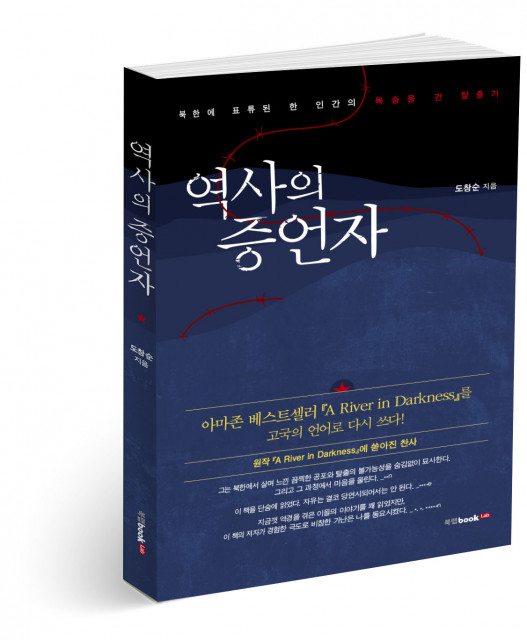
역사의 증언자, 도창순 지음, 202쪽, 1만3800원
서울--(뉴스와이어) 2020년 07월 22일 -- ‘젖과 꿀이 흐르는 땅’이라는 감언이설에 속아 북한으로 이주한 뒤 장장 37년 동안 가난과 야만, 공포에 시달리다 목숨을 건 탈주 끝에 한국에 정착한 한 중년 남자의 북한 탈출기가 출간됐다.
북랩은 최근 1960년 13세의 나이로 북송선 ‘쿠리리온호’를 타고 북한으로 이주한 뒤 나이 쉰이 되어 탈출하기까지 북녘에서 겪은 찢어지는 가난과 공포, 이방인에 대한 멸시를 고발한 재일 조선인 출신 도창순 씨의 북한 탈출기 <역사의 증언자>를 펴냈다.
이 책은 2000년 일본 신조사에서 <북조선 대탈출 - 지옥에서의 생환>이란 이름으로 일본어 판본이 출간된 데 이어 2017년 미국 아마존의 출판 브랜드인 아마존크로싱에서 ‘A River in Darkness’로 영어 판본이 출간돼 베스트셀러에 올랐던 화제작이다. 이번에 북랩이 선보인 <역사의 증언자>는 일본어 판본과 영어 판본에서 못다 한 이야기를 추가해 더욱 생생한 모국어로 북한의 실상을 폭로하고 있다.
저자는 일제 강점기에 강제징용으로 일본에 끌려간 한국인 아버지와 일본인 어머니 사이에서 태어난 재일 조선인으로, 현재는 한국인으로 귀화해 한국에 살고 있다. 아버지의 나라인 한국으로 돌아온 그는 기존 책을 단순 번역하지 않고 고국의 언어로 다시 써야겠다고 생각하여 이번 책을 새로 냈다.
이 책이 제기하는 문제의식은 9만명이 넘는 재일 조선인들을 북한으로 데려가 가난 속에 죽게 만든 일의 책임은 누구에게 있는가 하는 것이다. 그는 13세에 가족과 함께 배에 실려 북한으로 갔는데, 50세가 된 37년 뒤에야 북한에서 탈출할 수 있었다. 가족 대부분은 북한에서 아사했으며, 그 역시 굶어 죽기 직전에 강물에 몸을 던져 간신히 빠져나올 수 있었다. 저자는 “내 가족들의 운명이 무엇 때문에 말살됐는지 알리고 싶다”고 집필 의도를 밝혔다.
이 책은 개인의 체험을 담은 에세이이자, 역사적 증거라는 점에서 의미를 지닌다. 저자가 37년간 겪은 개인적 고통은 국가 간 이해관계가 얽힌 사회 문제의 결과물이기에, 그 과정을 상세히 기록한 이 책은 곧 역사적 기록물이 된다. 풀을 뜯어 먹어서 변비에 걸리면 항문을 파내야 했고, 영양실조에 걸려 눈, 코, 입에서 모두 피가 쏟아지는 병에 걸리기도 했던 저자의 개인사는 북송사업이라는 역사의 결과를 선명히 보여준다.
북송사업은 부족한 인력을 충원해야 했던 북한과 해방 후 골칫거리가 된 재일 조선인을 쫓아낼 필요가 있었던 일본의 이해관계가 맞아떨어져 벌어진 사건이다. 그로 인해 북송된 조선인들이 겪어야 했던 고통은 형언할 수 없다. 저자의 전작인 ‘A River in Darkness’가 전 세계 사람들을 충격에 빠뜨린 이유가 여기에 있다. 저자는 세계의 어떤 나라보다 한국에서 이 사건에 대해 알 필요가 있다며 한국 독자들과의 만남을 고대하고 있다.
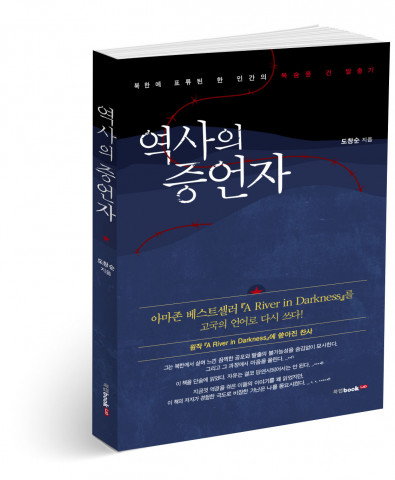

No comments:
Post a Comment