
“The Showa Emperor repeatedly advocated for the necessity of rearmament”: Interview with Ryuichi Kitano by David McNeill
By: David McNeill

October 6, 2025

Abstract: David McNeill discusses the new book, 側近が見た昭和天皇 天皇の言動でたどる昭和史 [The Showa Emperor as Seen by His Close Aides: Tracing Showa History Through the Emperor’s Words and Deeds] with the author, Ryuichi Kitano.
Keywords: Imperial Japan, Showa Emperor, Second World War, historical memory
Introduction
Ryuichi Kitano has been a staff writer for The Asahi Shimbun since 1990. He has won numerous awards for his journalism and is the author of several books, including 側近が見た昭和天皇 天皇の言動でたどる昭和史 The Showa Emperor as Seen by His Close Aides: Tracing Showa History Through the Emperor’s Words and Deeds, 『朝日新聞の慰安婦報道と裁判』The Asahi Shimbun’s Comfort Women Reporting and Lawsuit, and 『フェイクと憎悪 歪むメディアと民主主義』Fake News and Hatred: Distorted Media and Democracy.
Q: Would you outline the contents of your book and its main arguments? The book introduces the most up-to-date scholarship by historians on the Showa Emperor…
The emperor dealt with the war in his capacity as the supreme ruler under the Constitution of the Empire of Japan and as the supreme commander leading the military. The book asks what actions he took and what statements he made during crucial junctures before and after the war. Over the past decade, several key historical accounts have been released. These include 百武三郎日記 (The Diary of Saburō Hyakutake), grand chamberlain from 1936 to 1944 during the prewar and wartime periods; and 昭和天皇拝謁記 (The Showa Emperor’s Private Journal) by Michiji Tajima, who was grand-steward of the Imperial Household Agency from 1948 to 1953. These are diaries and records kept by close aides who served Emperor Showa before, during and after the war years. They represent firsthand accounts, written in real time, of the emperor’s private words spoken only to his inner circle, making them primary historical materials of the highest order. They give us a picture of the emperor as a human being.
Q: The Showa Emperor was a taboo figure in the postwar years, but since his death we have had multiple accounts of his life. Is it fair to say that we now have a complete historical picture of his life and the decisions he made?
The Showa Emperor’s Official Record (昭和天皇実録)were compiled by the Imperial Household Agency and published in 2014. The set comprises 61 volumes: 60 volumes of main text and one volume containing the table of contents and explanatory notes. Approximately 3,000 historical documents were used in the compilation, including about 40 previously unknown materials. Numerous previously unrecorded anecdotes, including those from the emperor’s childhood, which had been poorly documented, were revealed for the first time. On the other hand, direct quotations of the emperor are extremely rare; most entries are just summaries of his statements.
The Imperial Household Agency adopted a policy of recording only content based on reliable sources. Consequently, even previously known information not covered in the Showa Emperor’s Official Record is frequently omitted. These omissions include statements reportedly expressing displeasure over the enshrinement of Class-A war criminals at Yasukuni Shrine and the Emperor’s eleven meetings with General Douglas MacArthur, Supreme Commander of the Allied Powers (GHQ).
Professor Akira Yamada of Meiji University, an expert on modern Japanese and military history, notes that the official record “consistently emphasizes the narrative of a peace-loving emperor who avoided war, seemingly glossing over anything that contradicts that image.”1 It is known from the diaries of prewar and wartime chamberlains and military officers that Emperor Showa was deeply involved in the decision to go to war against the United States and provided detailed guidance on the conduct of the war even after hostilities began. These points, however, have been carefully omitted from the Showa Emperor’s Official Record.
Q: One of the key issues of the wartime emperor is how much responsibility he had for starting and prolonging the war. Was he (as Herbert Bix, for example argues) a dynamic wartime leader, or merely a pawn of the military and political class? Has that debate finally been resolved?
The conclusion I have reached is that the emperor was not merely a pawn of the military and politicians. As for whether he was an active wartime leader, I believe there were periods when he was, and periods when he was not. Nonfiction writer Masayasu Hosaka, an expert on Showa history, has spoken about the emperor’s views on war. I fully agree with his perspective, so I quote it below:
“I believe the emperor was neither a warmonger nor a pacifist; his fundamental stance was the preservation of the Imperial line. He would prefer not to fight if possible, but would wage war if necessary for the Imperial throne, and would choose peace if peace better safeguarded the throne. The process leading to the 1941 declaration of war against the United States shows the emperor initially being passive, thinking ‘I dislike war,’ yet gradually accepting it. This shift likely occurred because military leaders persistently persuaded him, arguing ‘If we do not fight, the nation cannot survive, and the Imperial throne cannot be protected.’ It becomes clear that, while he didn’t like to, he found himself in a position where he had no choice but to decide on war.”
Q: Were you surprised by anything in the research? Do ordinary Japanese still have misunderstandings about the Showa Emperor?
Some of the emperor’s more candid remarks are cited by Tajima in 昭和天皇拝謁記 (The Showa Emperor’s Private Journal). Some surprised even me. Article 9 of the Japanese Constitution, enacted in 1947, renounced war and prohibited the maintenance of military forces. The emperor never publicly expressed his views on this in official settings. However, these memoirs revealed for the first time that he frequently voiced dissatisfaction with the provisions of Article 9 to aides like Tajima and repeatedly advocated for the necessity of rearmament through constitutional revision.
According to Tajima’s account, the emperor was not necessarily positive about postwar democracy and lamented that students participating in political movements was a “troublesome matter”. Analysis of handwritten drafts of waka poems believed to have been written by the emperor shortly before his death reveals for the first time that he sympathized with former Prime Minister Nobusuke Kishi. Kishi had faced strong student opposition while attempting to advance the revision of the Japan-U.S. Security Treaty and resigned after the Diet ratified the treaty.
Q: The records reveal that Hirohito delayed ending the war, despite the urging of his Moscow envoy, Naotake Sato, former foreign Minister Mamoru Shigemitsu, and former Prime Minister Fumimaro Konoe to surrender immediately. In the meantime, the Americans bombed over 60 Japanese cities, including Hiroshima and Nagasaki, killing hundreds of thousands of people. Do most Japanese accept that he bears responsibility for this?
First, I believe the vast majority of Japanese people have little knowledge or interest in the emperor. Even those with some knowledge or interest in the Imperial Family are not particularly well-informed about his actions and statements before and after the war, and many seem to simply believe the image of the “emperor who loved peace” disseminated by the government. However, a significant minority of Japanese do believe the emperor should bear responsibility for the war. This view is particularly common among left-leaning liberals who believe Japan should accept responsibility for its aggression against Asian nations.
Immediately after defeat, the view that the emperor should abdicate to take responsibility for the war held sway not only among leftists but also among government officials and former military officers – the leadership that had guided Japan before and during the war. Although the pre-war Constitution of the Empire of Japan granted the emperor immunity from legal and political accountability, the call for him to take moral responsibility remained strong.
According to the Tajima papers, the emperor himself stated, “For me, leaving my position would be an easy way to take responsibility. It is precisely because I feel this moral responsibility that I must make the painful effort to rebuild.” He expressed that remaining in his position was how he would fulfill his responsibility. In contrast, Tajima, who before becoming head of the Imperial Household Agency believed the emperor should abdicate to take responsibility, responded to the emperor’s statement by saying, “Given that not a single person in a position of authority before or during the war remains today, while His Majesty alone continues to reign, I think the abdication argument arises.” He thus frankly conveyed that the emperor’s argument that “it is precisely because I feel responsibility that I remain on the throne” would likely be difficult for the public to understand.
Q: For some, the emperor is a ghostly figure, an empty symbol. But for others, he is still the core of Japanese identity. Sanseito, for example, recently urged “respect for the Imperial Rescript on Education” issued in 1890 by Emperor Meiji, which outlined the virtues that the “subjects” of the Japanese Empire were expected to uphold. How important is the emperor to contemporary Japan?
In modern Japan, the emperor’s presence is scarcely noticed. We’re only reminded of his existence through news coverage of disaster relief visits or memorial services for war dead, or perhaps when people gaze with admiration at his splendid ceremonial attire during formal occasions.
Of course, for right-wing groups emphasizing Japanese identity, the emperor is a figure of immense importance. This explains why right-wing parties, including Nippon Ishin no Kai (Japan Innovation Party), emphasize the Imperial Rescript on Education and visits to Yasukuni Shrine.
However, the right wing believe the Imperial Household should conform to their idealized image of the emperor, irrespective of the facts. The most prominent example of this is the debate surrounding Imperial succession. Within the Imperial Family, Prince Hisahito of the Akishino family is the only male heir born in the past 50 years. Yet the right clings to the notion that succession through male-line descendants is Japanese tradition, strongly rejecting female emperors or succession through the female line.
In stark contrast to European monarchies that have recognized female succession, Japan still permits only succession through male-line descendants. This stems from the right’s fixation on the idea that the living emperor and his family should conform to their idealized vision. They have rejected perspectives such as respecting the emperor and the Imperial Family as human beings in their actual state, or the need to reconsider the male-line succession system to prevent the Imperial bloodline from terminating.
While Japanese public opinion polls show over 70% support for allowing female or matrilineal emperors, the voices of the roughly 30% of right-wingers who firmly oppose this are louder. Furthermore, the right holds significant influence among politicians, including Diet members. Consequently, despite discussions on female or matrilineal emperors beginning 20 years ago in 2005, it has not happened. In the debate surrounding imperial succession, it seems the strong minority holds more influence than the weaker majority.
/ENDS/
Japanese
Q: Would you outline the contents of the book and its main arguments? The book introduces the most up-to-date scholarship by historians on the Showa Emperor…
本の内容と主な論点を概説していただけますか?本書は昭和天皇に関する歴史家による最新の研究を紹介していると言っても良いでしょう。
(答え)本書の内容は以下の通りです。
第2次世界大戦で昭和天皇は、大日本帝国憲法上の「統治権の総攬者」、また軍を率いる「大元帥」として日本を率いる立場で戦争に臨みました。戦前、戦後の重要な局面で昭和天皇はどんな行動をとり、どんな発言をしたのでしょうか。
戦前・戦中の1936年から1944年まで侍従長を務めた百武三郎による「百武三郎日記」や、戦後の1948年から1953年まで宮内府や宮内庁の長官を務めた田島道治による「昭和天皇拝謁記」などが、ここ10年足らずの間に相次いで公開されました。いずれも戦争の時代前後に昭和天皇に仕えた側近の日記や記録で、天皇が側近だけに語った肉声が、リアルタイムでつづられた一級の史料といえます。
これら新史料を読み解き、人間・昭和天皇のどんな姿が明らかになったか。歴史研究者たちの研究の最前線を紹介するのが本書の主な目的です。
Q: The Showa Emperor was a taboo figure in the postwar years, but since his death we have had multiple accounts of his life. Is it fair to say that we now have a complete historical picture of his life and the decisions he made?
昭和天皇は戦後、タブー視される存在でしたが、ご逝去後は数多くの伝記が刊行されました。今やその生涯と決断に関する歴史的全体像が明らかになったと言えるでしょうか?
(答え)昭和天皇実録は、宮内庁書陵部が編修し、2014年に内容が公表されました。本文60冊と目次・凡例1冊の計61冊。編修には約3000点の史料が使われ、このうち「百武三郎日記」など約40点がこれまでに知られていない資料でした。
これまでに記録が少ない昭和天皇幼少期など、初めて明らかにされた逸話も少なくありません。一方で、昭和天皇の発言が直接引用されることはきわめて少なく、要旨だけ紹介する形が多いといえます。
宮内庁は「確実な資料に基づいた内容のみを記載する方針」をとり、すでに知られた内容でも「昭和天皇実録」に触れられていないものも少なくありません。たとえば、靖国神社のA級戦犯合祀に不快感を示したとされる発言や、計11回に及んだ連合国軍総司令部(GHQ)最高司令官のダグラス・マッカーサーとの会見などです。
日本の近現代史や軍事史に詳しい山田朗・明治大学教授は「昭和天皇実録」について、「一貫して、平和愛好、戦争回避の姿勢だったというストーリー性を強く出し、そのイメージに反することにはふたをしているようです」と指摘しています。戦前・戦中の侍従武官や軍幹部の日記などから、昭和天皇は米国に対する開戦の意思決定に深くかかわり、開戦後もかなり細部にわたって戦争指導をしていたことが知られていますが、そうした点は「昭和天皇実録」から注意深く削除されているからです。
Q: In particular, one of the key issues of the wartime emperor is how much responsibility he had for starting and prolonging the war. Was he (as Herbert Bix, for example argues) a dynamic wartime leader, or merely a pawn of the military and political class? Has that debate finally been resolved?
特に、戦時中の天皇に関する核心的な問題の一つは、彼が戦争の開始と長期化にどれほどの責任を負っていたかです。(例えばハーバート・ビックスが主張するように)彼は積極的な戦時指導者であったのか、それとも単なる軍部と政治家の操り人形に過ぎなかったのでしょうか? その議論はついに決着したのでしょうか?
(答え)私が得ている結論は、天皇は「軍部や政治家たちの単なる駒」ではなかったということです。では「積極的な戦時指導者」だったかといえば、そうだった時期もあるし、そうではなかった時期もあると思います。
昭和史に詳しいノンフィクション作家の保阪正康さんが昭和天皇の戦争観について語っている言葉があり、私もその考え方に全面的に賛同するので、以下に引用します。
「昭和天皇は好戦主義者でも和平主義者でもなく、皇統の維持が基本的な立場だったと考えています。できれば戦いたくはないが、皇位のため必要なら戦争もするし、平和がほうが皇位を守れるなら平和を選択するということです。
1941年の対米開戦にいたる過程で、天皇が初めは『戦争は嫌だ』と消極的だったのに、しだいに開戦を受けいれていくのは、軍事指導者が執拗に『戦わなければ国は存立しない、皇位を守れない』と説得したからでしょう。嫌だ嫌だと考えながらも、戦争を決断せざるを得ない立場になっていくことがわかる」
Q: Were you surprised by anything in the research? Do ordinary Japanese still have misunderstandings about the Showa Emperor?
調査で驚いた内容はありましたか?一般の日本国民は今でも昭和天皇について誤解を持っているのでしょうか?
(答え)戦後の1948年から1953年にかけて宮内府や宮内庁の朝刊を務めた田島道治による「昭和天皇拝謁記」に、昭和天皇の率直な言葉が記されていました。そのなかに、私も驚かされた発言がいくつかありました。
1947年に施行された日本国憲法の第9条で、戦争放棄と戦力不保持が定められました。昭和天皇は公の場では憲法に関する評価は決して公言しませんでした。しかし田島ら側近に対しては、9条にの規定にたびたび不満をもらし、憲法改正による再軍備の必要性を繰り返し説いていたことが、「昭和天皇拝謁記」の公表によって初めてわかりました。
「昭和天皇拝謁記」によると、天皇は戦後の民主主義には必ずしも肯定的ではなく、学生らが政治運動に参加することについて「困ったことだ」と嘆いています。これは日米安保条約の改定に反対する1960年の学生らによる安保闘争についても同様とみられます。昭和天皇が死去する直前、最晩年に書いたとみられる和歌の肉筆草稿を読み解くと、安保条約改定を進めようとして学生らの強い反対運動に遭い、条約改定の国会批准成立後に退陣した岸信介元首相に対して同情的だったことが、この肉筆原稿で初めて明らかになりました。
Q: The records reveal that Hirohito delayed ending the war, despite the urging of his Moscow envoy, Naotake Sato, former foreign Minister Mamoru Shigemitsu, and former Prime Minister Fumimaro Konoe to surrender immediately. In the meantime, the Americans bombed over 60 Japanese cities, including Hiroshima and Nagasaki, killing hundreds of thousands of people. Do most Japanese accept that he bears responsibility for this?
史料によれば、昭和天皇はモスクワ特使の佐藤直武、元外相の重光守、元首相の近衛文麿らが即時降伏を強く促したにもかかわらず、終戦を遅らせたことが分かります。その間、アメリカ軍は広島や長崎を含む60以上の日本都市を爆撃し、数十万人の命を奪いました。この責任を天皇が負うべきだと、大多数の日本国民は認めているのでしょうか?
(答え)まず大多数の日本人は、天皇についての知識も関心もほとんどないと思います。皇室について少し知識や関心のある人でも、昭和天皇の戦前、戦後の言動についてはそれほど詳しくなく、政府が流布させた「平和を愛した天皇」というイメージをそのまま信じている人も多いと思われます。
ただ少数ながらも、戦争についての責任を天皇が負うべきだと考える日本人はそれなりの割合で存在しています。とくに、日本がアジア諸国に対して加害責任を負うべきだと考える左派リベラル層に多いと思います。
敗戦直後の日本では、左派だけでなく、政府幹部や元軍人など戦前・戦中の日本を率いた指導者層の間でも、天皇は戦争の責任をとって退位すべきだという意見が有力でした。戦前の大日本帝国憲法上、天皇は無答責、つまり法的・政治的な責任を問われない立場だったとはいえ、「道義的な責任を取るべきだ」という声が根強かったのです。
この「退位論」について、「昭和天皇拝謁記」によると天皇自身は、「地位を去るという責任の取り方は私にとって安易である。道義上の責任を感ずればこそ苦しい再建のための努力をするのである」と、天皇の地位にとどまることが責任を果たすということだと語っていました。これに対し田島道治は長官就任前は、天皇は責任を取って退位すべきだと考えていたので、天皇のこの発言についても、「戦争前や戦争中の要路の人は今一人もいないのに陛下お一人は引き続いておいでというところに、退位論など出ると思います」などと返し、「責任を感じればこその在位」という天皇の言い分は世間ではなかなか理解されないだろうことを、率直に伝えています。
Q: For some, the emperor is a ghostly figure, an empty symbol. But for others, he is still the core of Japanese identity. Sanseito, for example, recently urged “respect for the Imperial Rescript on Education” issued in 1890 by Emperor Meiji, outlined the virtues that the “subjects” of the Japanese Empire were expected to uphold. How important is the emperor to contemporary Japan?
一部の人々にとって天皇は幽霊のような存在、空虚な象徴に過ぎないと言えます。しかし他の人々にとっては、今もなお日本的アイデンティティの核心です。例えば参政党は最近、明治天皇が1890年に発布した「教育勅語」への敬意を促し、日本帝国の「臣民」が守るべき徳目を概説しました。現代日本において天皇制度はどれほど重要なのでしょうか?
(答え)現代日本では天皇の存在がほとんど意識されていません。ただ災害被災地のお見舞いや戦没者慰霊というニュースを通じて存在が意識されたり、儀式の際に華やかに盛装する姿に対するあこがれの視線が送られたりする程度だと思います。
もちろん、日本人のアイデンティティーを重視する右派にとっては、天皇は非常に重要な存在といえます。参政党をはじめ右派政党が教育勅語や靖国神社参拝などを重視するのもその一環といえます。
ただ、右派の天皇に対する視線は、天皇や皇族らの実際の人間像に即したものでは必ずしもなく、右派にとっての理想的な天皇像に実在の皇室が合わせるべきだという理想主義的なところがあります。その最たるところが皇位継承をめぐる議論です。天皇家ではここ40年間のうちに秋篠宮家の悠仁親王しか男子が生まれていません。しかし右派は男系男子による皇位継承こそ日本の伝統だとして執着し、女性天皇や女系天皇を強く拒否しています。
欧州の君主国が相次いで女性の王位継承を認めているのとは対照的に、日本では依然として男系男子のみの継承しか認めない。これも右派にとっては、自分たちが理想とする天皇や皇室のあり方に生身の天皇や皇室が合わせるべきだという考え方にこだわるあまり、人間としての天皇や皇室をありのままの姿で尊重するとか、このままでは天皇家の血統が途絶えるから男系男子継承の制度を見直そうとかいった考え方を拒絶してきたからといえます。
日本の世論調査では女性や女系の天皇を認めるべきだという意見が7割以上に達していますが、女性や女系天皇に断固反対する3割ほどの右派の意見のほうが声が大きく、また国会議員ら政治家の間でも有力であるため、女性や女系天皇は20年前の2005年から議論されているにもかかわらず、実現していません。皇位継承をめぐる議論では、強い少数派のほうが弱い多数派よりも影響力をもっているという状況だと思います。
▽北野隆一
Hyperlinks in order of usage in article:
Michiji Tajima. 昭和天皇拝謁記 [The Showa Emperor’s Private Journal] https://www.iwanami.co.jp/news/n43580.html
百武三郎日記 (The Diary of Saburō Hyakutake) https://www.iwanami.co.jp/news/n114334.html
Akira Yamada. 増補 昭和天皇の戦争──「昭和天皇実録」に残されたこと・消されたこと (岩波現代文庫 学術469) [Emperor Showa’s War—What Was Recorded and What Was Erased from the Official Record] (Iwanami Gendai Bunko Academic: 2023). https://www.amazon.co.jp/増補-昭和天皇の戦争──「昭和天皇実録」に残されたこと・消されたこと-岩波現代文庫-学術469-山田/dp/4006004699/ref=sr_1_1?a
“Why did Japan plunge into war? Interview with Masayasu Hosaka on the ‘Turbulent Showa Era’” Kyodo News. (2025) https://www.youtube.com/watch?v=kvf0FAH2HQ8
Additional references for interested readers:
Herbert Bix. “Showa History, Rising Nationalism, and the Abe Government” Asia-Pacific Journal: Japan Focus. (2015) https://apjjf.org/2015/13/2/herbert-p-bix/4251
“Emperor Showa wanted to express ‘deep regret’ in speech, documents reveal” NHK World Japan. (January 22, 2020) https://www3.nhk.or.jp/nhkworld/en/news/backstories/817/
Ryuichi Kitano. “Diary: Hirohito prepared for U.S. war before Pearl Harbor attack” The Asahi Shimbun. (December 6, 2021) https://www.asahi.com/ajw/articles/14496398
David McNeill and Herbert P. Bix. “Selective history: Hirohito’s chronicles.” The Japan Times. (October 11, 2014) https://www.japantimes.co.jp/news/2014/10/11/national/history/selective-history-hirohitos-chronicles
[戦争回避の物語前面に] Asahi Shimbun. (October 7, 2014)
===

 Audible版
¥3,000予約注文
新書
¥1,034 (32pt)
このタイトルのこのエディションは、お住まいの国ではご購入いただけません。上記のオプションから利用可能なエディションを選択してください
リストに追加
Kindle本セール情報を入手
Kindle日替わりセールなど、
Kindle本のお買い得情報をメール
で受け取ることができます。
今はしない
著者をフォロー
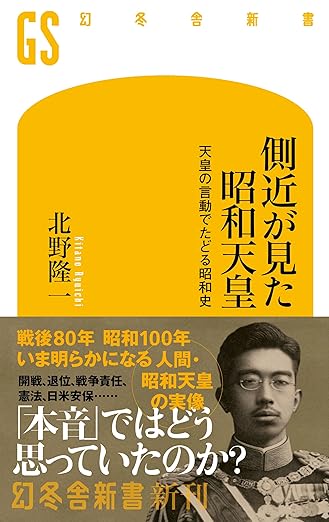
側近が見た昭和天皇 天皇の言動でたどる昭和史 (幻冬舎新書) Kindle版
北野隆一 (著) 形式: Kindle版
3.8 5つ星のうち3.8 (10)
すべてのフォーマットとエディションを見る
開戦、退位、戦争責任、憲法、日米安保……
「本音」ではどう思っていたのか?
戦後80年 昭和100年
いま明らかになる人間・昭和天皇の実像
開戦、退位、戦争責任、憲法、日米安保……戦前・戦後の重要局面で、昭和天皇は本当は何を思い、何をしたかったのか。
昭和一一年から一九年まで侍従長を務めた百武三郎による「百武三郎日記」や、昭和二三年から二八年まで宮内府・宮内庁長官を務めた田島道治による「拝謁記」など、近年立て続けに公開された天皇の側近による記録には、天皇の肉声がリアルタイムで綴られている。これら新史料を丹念に読み解き、人間・昭和天皇の知られざる姿に迫る、もうひとつの昭和史。
==
側近が見た昭和天皇 天皇の言動でたどる昭和史|歴史の舞台裏を“声”で読む一冊
kindle書評さん
kindle書評さん
2025年7月27日 19:33
この記事ではアフィリエイトプログラムを利用して商品を紹介しています。公式情報やネット上の口コミ等をもとにChatGPTを使用してまとめています。
側近が残した「生きた昭和史」——本書の最大の魅力
昭和の激動を、最も近くで見つめていた人たちがいた。側近が見た昭和天皇 天皇の言動でたどる昭和史は、まさにその“目撃者”たちが日々記していた記録から、昭和天皇の素顔と歴史の転換点を読み解いていく一冊です。
ふだん歴史は、大きな出来事や政策の流れで語られることが多いですよね。でも、この本は違います。百武三郎、田島道治、寺崎英成といった、天皇の側近中の側近たちが書き残した日記や回顧録、独白録にフォーカス。その“肉声”に限りなく近い言葉を拾い集めて、教科書には載らない人間らしい昭和天皇の姿を描き出します。
「天皇の一言が、どう歴史を動かしたのか」。
そんな視点で昭和をたどる体験は、ありそうでなかなかないもの。政治や外交の裏側が、リアルな会話のトーンで伝わってくるのが本書の大きな魅力です。
日記と証言から浮かび上がる、歴史の転換点
昭和天皇に関する証言や記録は数多く存在しますが、本書が取り上げるのは、近年公開が進んだ侍従長・侍従・宮内庁長官などの一次資料。百武三郎日記、田島道治「拝謁記」、寺崎英成『昭和天皇独白録』といったものです。
これらの記録から、昭和の大事件が「その場でどう語られ、どんな決断がなされていたか」が具体的に伝わってくる。たとえば、満洲事変や日中戦争、太平洋戦争開戦、そして終戦の詔書(いわゆる“玉音放送”)の裏側。側近たちはそのときの天皇の表情や、わずかな言葉のニュアンスまで丹念に記しています。
読み進めるうちに、単なる歴史の流れが、急に“現在進行形”の出来事に変わっていく感覚がある。これは、側近たちが天皇のそばで、戸惑いながらも真剣に記録し続けた証拠と言えるでしょう。
「決断の瞬間」を支えた側近たちの視点
特に印象に残るのが、昭和史の分岐点での“やり取り”です。
開戦の是非をめぐる議論、戦局悪化のなかでの苦悩、そして終戦へ向けた“聖断”——。そのすべての瞬間に、側近の姿がありました。
たとえば1945年夏の御前会議。戦争終結の道を探る中で、昭和天皇は「戦争終結を具体的に研究すべき」と明言したと伝えられています。記録者はその言葉の重み、会議室の緊張感までも残しています。単なる一言の奥に、国と人々の運命が託されていたことがひしひしと伝わってくるのです。
また、玉音放送を録音する際のドタバタや、戦後の靖国神社参拝中止に至るまでの心の葛藤も、側近の細やかな記述があるからこそ、単なる史実の羅列ではなく、人間ドラマとして感じられます。
「肉声」に近づくことで、歴史が身近になる
こうした側近日記や独白録が今、注目される理由は何でしょうか。
それは、政治家や軍人の公式発言とは別に、現場で交わされたリアルなやりとりが、歴史を「実感」として捉え直すヒントを与えてくれるからだと思います。
昭和天皇が一個人としてどんな思いで決断を下し、どんな言葉を残していたのか。これまで曖昧だった「昭和天皇像」が、側近という“人間レンズ”を通すことで、急に手の届く距離に近づくのです。
資料としての価値はもちろん、昭和を生きた一人の人間としての天皇像を知ることで、私たちの戦争観や歴史観も少しずつ変わっていく。そんな読後感が、この本にはあります。
どんな人におすすめ?
● 歴史が好きな人
● 近現代史に興味がある人
● 昭和天皇や皇室の素顔に触れてみたい人
● 教科書では満足できない「現場の空気」を感じたい人
歴史好きの方はもちろん、「昭和」という言葉が少し遠く感じる若い世代にも読んでほしい一冊です。文章は専門的すぎず、会話や日常描写も多いので、分厚い歴史書が苦手な人でも抵抗なく読み進められます。
まとめ|「昭和史」は遠い話じゃない
側近が見た昭和天皇 天皇の言動でたどる昭和史は、激動の時代を動かした“人間の声”を、今の時代に届けてくれる本です。
政治や戦争の重大な局面が、ただの出来事ではなく、「その時そこにいた人たちの言葉」として伝わってくる——。
私たち一人ひとりが、今という時代をどう生きていくか。そのヒントも、この本のなかに隠れているかもしれません。
#側近が見た昭和天皇天皇の言動でたどる昭和史 #書評 #昭和天皇 #歴史本 #ノンフィクション #近現代史 #皇室 #レビュー
いいなと思ったら応援しよう!
==
==
==
==
==
Share with a colleague:
==
==
Share with a colleague:

No comments:
Post a Comment