대한민국 국군의 베트남 전쟁 참전
| 대한민국 국군의 베트남 전쟁 참전 | |
|---|---|
| 베트남 전쟁의 일부 | |
| 위치 | 베트남 공화국 전역 |
| 날짜 | 1964년 9월 11일 ~ 1973년 3월 23일 |
| 결과 | 파리 평화협정에 따른 철수 |
| 사상자 | 5,099명 사망 11,232명 부상 |
대한민국 국군의 베트남 전쟁 참전(South Korea in the Vietnam War, Hàn Quốc trong chiến tranh Việt Nam)은 1964년 9월 11일 1차 파병을 시작으로, 1966년 4월까지 4차에 걸친 박정희 정부 하에서 베트남 전쟁에 대한민국 국군 부대를 파병한 일을 말한다. 줄임말로 베트남전 참전, 베트남 참전 혹은 월남전 참전, 월남 참전으로도 불린다. 한국의 파병 제안과 베트남정부 및 미국의 요청에 따라 행해진 대한민국 최초의 국군 해외 파병이다. 대략 5만명의 대한민국군이 베트남에 상주하였고 여러차례 왔다갔다하며 장기, 단기 체류한 대한민국군의 총합은 대략 30만명이다.
대한민국은 미국의 요청과 맞물려 대한민국 역사상 최초로 1964년 7월 31일에 국군의 베트남 해외 파병을 위한 제1차 파병동의안이 국회에서 가결되었다. 여기에는 한국이 공산침략을 경험한 국가로서 아시아지역의 안보와 자유수호를 위한다는 명분도 있었다. 한편 야당인사인 윤보선, 장준하, 김준연 등은 한국군 파병에 반대하거나 부정적인 입장을 피력하였으나 반영되지 않았다.
개괄

전세가 치열해지기 시작한 1965년부터 휴접협정이 조인된 1973년까지 파병하였다. 1964년 9월 11일 1개 의무중대(醫務中隊) 및 태권도 교관단을 파견하는 등 후방지원부대 파병을 시작으로 육군 맹호부대와 해병 청룡부대가 파병되었고, 1966년에는 "브라운 각서"의 조인으로 백마부대가 추가 파병하고, 이들을 지원하기 위한 군수지원단(軍需支援團) 및 백구부대 등 1개군단 병력을 파견하여, 베트남전 참전 8년간 총 31만 2천853명(최대 5만 명)의 병력이 파견되었다. 이로써 미국 다음으로 베트남 전쟁에 깊이 개입하였다. 파월 후 한국정부는 베트남문제에 대해서 큰 발언권을 행사했다. 또한 미국으로부터 전쟁 참전 수당과 차관을 받아내게 되었다.
1966년 10월 필리핀 마닐라에서 열린 참전국 정상회담에서는 주도적 지원국가라는 점에서 박대통령이 기조연설 행하고, 베트남평화방안으로서 협상전에 공산주의자들이 침략중지 등 구체적 성의를 보일 것, 베트남의 의사를 존중할 것 등을 제시하였다.

(베트남 파병의 대가로 지불받은 지원금과 차관이 투입되었다.)
베트남 전쟁에의 참전은 대한민국으로서는 최초의 해외 파병으로서, 이를 통해 베트남 전쟁의 특수한 사정에 따라, 외화획득이라는 경제적 이득이 부수되어 이루어진 사건이다. 또한 한반도 안보 문제와 관련, 한국군 현대화를 골자로 한 브라운각서(1966년 3월)를 낳았고, 전투에 참전하는 경험을 한다. 반면, 파병된 대한민국군 32만명 중 5,099명의 사망자(KIA)와 11,232명의 부상자(WIA)[1]를 기록하고, 31만명이 생존 귀국하였다. 또한 159,132명이 고엽제 피해자로 간주되며[2] 화공약품 후유증으로 귀국후 병사자가 다수 발생하였다. 전두환은 이 전쟁에 연대장의 신분으로 참전하였다.
베트남 전쟁 참전의 대가로 대한민국 정부는 미국으로부터 경제원조자금을 지원받았고, 이는 경부고속도로 건설 비용으로 일부 충당되었다. 베트남 전쟁 파병은 한국 경제의 활로를 트고 군을 현대화하는 데 기여하였다.
1970년대에 들어서면서부터는 미국의 베트남 전쟁의 베트남화 계획에 발맞추어 한국도 점차 주월군 철수를 시작, 1973년까지는 완전히 철수했고, 그 후 베트남은 공산화되었다.[3] 2005년 8월 26일 대한민국 정부가 베트남전 관련 문서를 공개하면서 좀 더 정확한 역사적 검증이 가능하게 되었다. 이 문서에는 브라운 각서의 이행 상황과 1970년 2월 24일부터 26일까지 열린 미상원 사이밍턴 청문회에서 주한 미국 대사인 포터의 증언 내용과 한국의 대응과정이 자세히 담겨 있었다.[4]
배경
1964년 8월 2일 북베트남의 통킹만에서 미국 해군 구축함 매독스 호가 북베트남에 의해 공격을 받는 통킹만 사건이 일어났다. 미국은 이를 빌미로 베트남에 대한 군사 개입을 강화하여 베트남 전쟁이 일어나게 된다. 케네디 대통령은 당시 전 세계가 공산화 도미노의 위협을 받고 있다고 판단, 베트남 파병을 3200명으로 확대했다. 1961년, 5.16 군사쿠데타로 집권한 뒤 미국을 방문한 박정희를 케네디는 별로 좋아하지 않았다. 그러나 1964년 미국은 한국에게 베트남 파병 지원 요청을 하였고, 미국은 베트남에 한국군을 파병하겠다는 박 대통령의 제안을 받아들여 베트남전 파병이 이루어졌다.[5] 대한민국군의 참전은 조약상의 의무에서가 아니라 미국측이 파병의 대가로 한국군의 전력증강과 경제발전에 소요되는 차관공여를 약속함으로써 이루어졌고, 미국이 한국군을 참전시킨 이유는 1차적으로 미국내에서 광범위하게 일고 있던 반전여론을 무마시키고 미국군 봉급의 1/3 수준인 한국군을 전선에 투입함으로써 전비절감을 꾀하고자 한 계산에서였다. 이에 따라 당시 일부 야당의 반대를 무릅쓰고 1964년 10월 대한민국군의 베트남 파병을 단행하였으며, 1964년 8월 제1이동외과병원(130명)과 태권도 교관단(10명) 파월을 시작으로 주월 한국군사원조단(비둘기부대), 방공포병대대(호크유도탄부대)를 창설하고 백마부대 등 한국군을 파견하였다.[6]
참전 일지
2005년 8월 26일 공개된 베트남 전쟁 참전 외교문서에 의하면 다음과 같다.[7][8]
1964년
- 5월 9일 - 존슨 미국 대통령 자유우방 25개국에 남베트남 지원 요청
- 7월 15일 - 응웬칸 남베트남 총리, 한국군 파병 요청
- 7월 31일 - 국회 제1차 파병동의안 가결
- 9월 12일 - 제1차 파병단 사이공 도착(제1이동외과병원 및 태권도교관단)
1965년
- 1월 26일 - 국회 제2차 파병동의안 가결
- 3월 16일 - 건설지원단(비둘기 부대) 사이공 도착
- 8월 13일 - 국회 제3차 파병(전투부대) 동의안 가결
- 10월 9일 - 제2해병여단(청룡부대) 깜라인 상륙, 수도사단(맹호부대) 선발대 꾸이년 상륙[9]
- 10월 20일 - 주월한국군사령부 사이공 개소
- 10월 22일 - 수도사단(맹호부대) 본대 꾸이년 상륙[10]
1966년
- 3월 20일 - 국회 제4차 파병동의안 가결(전투부대 증파)
- 4월 19일 - 수도사단(맹호부대) 제26연대 본대 꾸이년 상륙
- 10월 3일 - 제9사단(백마부대) 닌호아 및 깜라인 상륙
- 10월 21일 - 박정희 대통령 남베트남 방문
1970년대
- 1971년 12월 4일 - 주월 한국군 제1단계 철수 시작(제2해병 여단)
- 1972년 4월 13일 - 주월 한국군 제1차 철군 완료
- 1973년 1월 28일 - 베트남 전쟁 평화협정 발효
- 1973년 3월 13일 - 주월 한국군 제2차 철군 완료(본대)
- 1973년 3월 23일 - 주월 한국군 후발대 철수 완료
- 1975년 4월 30일 - 북베트남에 의한 사이공 점령
파병
1964년 5월 9일 미국은 한국 등 25개 우방국에 베트남 지원을 요청했다. 그리하여 1964년 9월 11일 이동외과병원과 태권도 교관단을 시작으로 1965년부터는 수도사단(맹호부대), 제2해병여단(청룡부대) 그리고 1966년에는 제9보병사단(백마부대)의 파견으로 연인원 30만 명, 최대 5만 명이 파병되었다.
1차
1964년 5월 9일 미국이 보낸 서한에는 "1개 이동 외과병원"을 파병해 주도록 요청을 했다. 그리하여 국방부는 130명 규모의 이동외과병원과 10명을 편성된 태권도교관단 등 140명을 파병하기로 결정했다. 1964년 6월 10일 주한미군 사령관에게 "이동외과병원과 태권도 교관단을 파병하겠다고 통보를 하고, 1964년 7월 31일에는 파병동의안을 국회본회의에서 만장일치로 가결하였다. 1964년 9월 11일 부산항을 출발하여 9월 22일 사이공에 도착하였다. 23일 환영행사에 참가한 대한민국군은 9월 25일 붕따우에 도착하여, 9월 28일부터 업무를 시작하였다.[11]
2차
1964년 8월 2일과 4일 통킹만 사건이 발발한 후 본격적인 미국의 군사 개입과 베트남 전쟁이 확대되었다. 그리하여 미군은 후방지원 병력이 추가로 필요하게 되자, 1964년 12월 18일 윈스럽 브라운 주한미군 대사가 박정희 대통령을 만나 남베트남에서 후방지원을 담당할 비전투부대의 파병을 요청하는 존슨 대통령의 친서를 전달했다. 1965년 1월 2일 남베트남 정부로부터 한국군 2차 파병 요청을 서한으로 접수하고, 파병동의안을 국회에 상정하여 동의를 받았다.
국회에서 파병안이 가결되자, 국방부는 강원도 현리에 있는 제6사단사령부에서 〈한국군사원조단〉 본부를 창설하고 《비둘기부대》로 명명했다. 이 부대는 건설지원단으로 자체 방어를 위한 경비대대와 수송자동차, 공병 등으로 편성되었다. 1965년 3월 10일 인천항을 출발하여, 3월 16일 사이공에 도착하였고, 사이공 동북쪽 22km에 있는 지안에 주둔하여 건설 지원임무를 수행하였다.[12]
3차
2차 파병이후 베트남의 상황은 점점 악화되고 있었다. 호찌민 루트를 통한 북베트남 정규군의 남하가 계속되자 남베트남의 곳곳에서 지상군 전투가 격화되고 있었다. 1965년 3월 11일 김현철 주미대사는 조지 볼 미국무부 차관과의 면담을 통해 "한국 정부는 베트남에서 추가적인 병력을 기꺼이 파견하겠다."고 말했으며, 이동원 외부무 장관은 브라운 주한미국 대사와의 다음과 같이 협상을 한다.
- 파병 상한선은 5만명이내
- 한국군의 현대화 지원
- 북한의 침공시 미국이 즉각 출병하도록 한미방위조약을 개정한다.
- 남베트남에서 사용할 군수품 공급 등 한국의 남베트남 시장진출을 보장한다.
위와 같은 한국 정부의 요구사항은 1965년 5월 17일에서 18일까지 워싱턴에서 개최된 한미정상회담에서 대부분 타결되었다. 이에 따라 한국 정부는 6월 14일 남베트남 정부로부터 전투병력 정식 파병요청서를 접수하고, 8월 13일에 국회의결을 얻었다. 국방부는 수도사단과 해병대 제2해병여단을 파병부대로 선정하고, 《맹호부대》와 《청룡부대》로 각각 명명하였다. 9월 25일 〈주월한국군사령부〉를 창설하고 수도사단장 채명신 소장을 사령관으로 임명하였다. 10월 9일 청룡부대는 남베트남 깜란에 상륙하여 9월 20일부터 주월한국사령부가 사이공에서 문을 열었고, 11월 1일 맹호부대가 뀌년에 상륙을 하였다.[13]
4차
1965년 말까지 184,300여명을 파병한 미국 내에서는 반전여론으로 인해 추가 파병이 한계에 봉착했다. 그리하여 존슨 정부는 반전 여론을 무마시키기 위해 한국 정부에 파병을 요청하였다. 1965년 12월 유엔총회 참석차 미국을 방문한 이동원 외무부장관에게 러스크 국무부 장관이 전투부대 추가파병을 공식 요청하였다.
한국은 3차 파병시 합의했던 한국군 장비현대화 등의 약속이행을 촉구하며, 〈선약속 이행, 후파병〉을 요구하였다. 그러나 미국은 〈선파병, 후약속이행〉을 주장하여 협상이 결렬되었다. 상황이 점점 악화되자 다급해진 미국은 1966년 1월 1일과 2월 22일 험프리 부통령을 특사로 파견하여 약속 이행을 선언하며, 추가 파병을 요청했다. 이동원 외무부 장관은 브라운 미국대사와의 협상을 통해 한국에 약속한 내용을 서면화한 《브라운각서》를 받아내었다.
1966년 2월 22일 남베트남 정부가 추가 파병을 요청하자, 3월 22일 국회 의결을 거쳐 그리하여 제9사단(백마부대)와 수도사단(맹호부대) 제26연대의 파병을 결정한다. 4월 19일 수도사단(맹호부대) 제26연대가 꾸이년에 상륙을 하고, 이어서 10월 8일 제9사단(백마부대)가 닌호아 일대로 진군한다.[14]
연도별 참전병력 현황
1964년부터 1972년까지 9년에 걸친 연도별 참전현황은 다음과 같다.[1]
| 년도 | 총계 | 육군 | 해군 | 공군 | 해병대 | 기타 |
|---|---|---|---|---|---|---|
| 1964년 | 140 | 140 | 0 | 0 | 0 | - |
| 1965년 | 20,541 | 15,973 | 261 | 21 | 4,286 | - |
| 1966년 | 45,605 | 40,534 | 722 | 54 | 4,295 | - |
| 1967년 | 48,839 | 41,877 | 735 | 83 | 6,144 | - |
| 1968년 | 49,869 | 42,745 | 785 | 93 | 6,215 | 31 |
| 1969년 | 49,755 | 42,772 | 767 | 85 | 6,096 | 35 |
| 1970년 | 48,512 | 41,503 | 772 | 107 | 6,096 | 34 |
| 1971년 | 45,663 | 42,354 | 622 | 98 | 2,558 | 31 |
| 1972년 | 37,438 | 36,871 | 411 | 95 | 28 | 33 |
1964년 9월부터 1973년 3월까지 피해 현황은 다음과 같다.[15]
| 군별 | 참전 병력 | 사망자(KIA) | 부상자(WIA) | 실종자 |
|---|---|---|---|---|
| 계 | 325,517 | 5,099 | 11,232 | 4 |
| 육군 | 288,656 | 3,859 | 8,211 | 4 |
| 해군(해병) | 36,246 | 1,124 | 3,021 | - |
| 공군 | 615 | - | - | - |
육군은 23.9명당 1명꼴로 전사상자가 발생하였으며 해병대 측은 8명당 1명 측의 전사상자가 발생하였다.
이들 뿐만 아니라 고엽제에 의한 피해자수도 2007년을 기준으로 159,132명[16] 이나 된다.
파급 효과
베트남 전쟁의 대가로 대한민국 정부는 미국정부로부터 한국군의 현대화 장비를 지원받았고, 해외전투수당과 원조수당 등의 자금을 지원받았다. 파월 한국군의 일체의 경비를 미국이 부담한 상태에서 해외전투수당 및 추가지원금은 대한민국의 경제력 육성에 활용되었다.
이후 베트남 파병의 대가로 지원받은 해외전투수당 및 지원금으로 박정희 정권은 경공업 육성에 투자, 수출 장려정책을 폈고, 파병수당의 일부로는 국토개발사업에 충당하였다. 당시 국토개발사업에 투입된 것 중 대표적인 것이 경부고속도로의 건설 지원금이었다. 그 밖에 미국으로부터 경제개발 차관을 제공받기도 했다.
참전한 파병부대 목록

- 주월한국군사령부
- 수도사단(맹호부대)
- 제9사단(백마부대)
- 제2해병여단(청룡부대)
- 해군 수송전대(백구부대)
- UDT - 해군 수송전대에 배속되어 함정 경비 임무 등 수행
- 제55항공수송단 (은마부대)
- 주월한국군사원조단(비둘기부대)
- 제1이동외과병원
- 태권도 교관단
참전 일지
2005년 8월 26일 공개된 베트남 참전 외교문서에 의하면 다음과 같다.[18]
1964년
- 5월 9일 - 존슨 미국 대통령 자유우방 25개국에 남베트남 지원 요청
- 7월 15일 - 응웬칸 남베트남 총리, 한국군 파병 요청
- 7월 31일 - 국회 제1차 파병동의안 가결
- 9월 12일 - 제1차 파병단 사이공 도착(제1이동외과병원 및 태권도교관단)
1965년
- 1월 26일 - 국회 제2차 파병동의안 가결
- 3월 16일 - 건설지원단(비둘기 부대) 사이공 도착
- 8월 13일 - 국회 제3차 파병(전투부대) 동의안 가결
- 10월 14일 - 제2해병여단(청룡부대) 깜리인 상륙
- 10월 20일 - 주월 한국군 사령부 사이공 개소
- 11월 2일 - 수도사단(맹호부대) 본대 꾸이년 상륙
1966년
- 3월 20일 - 국회 제4차 파병동의안 가결(전투부대 증파)
- 4월 19일 - 수도사단(맹호부대) 제26연대 본대 꾸이년 상륙
- 10월 3일 - 제9사단(백마부대) 닌호아 및 깜라인 상륙
- 10월 21일 - 박정희 대통령 남베트남 방문
1970년대
- 1971년 12월 4일 - 주월 한국군 제1단계 철수 시작(제2해병 여단)
피해
1964년에 의무중대 파견을 시작으로, 1965년부터는 맹호, 청룡부대를 파병하였고 1966년에는 백마부대의 파견으로 연인원 5만 명, 최대 30만 명을 파병하였다. 이 중 5,099명의 사망자(KIA)가 발생했으며, 11,232명의 사상자(WIA)와 4명의 실종자(MIA) 그리고 참전 군인 중 이후 159,132명이 고엽제 등으로 인한 후유증을 앓고 있는 참전용사가 발생하였다. 베트남에 군대를 파병하여 경제 발전에 필요한 외화수입이라는 많은 경제적 이익과 한국전쟁 이후의 실제 전투 경험을 얻은 반면 그 대가로 파병자 중 5,000명의 사망자가 발생했으며 참전 군인 중 이후 2만여 명이 고엽제 등으로 인한 후유증을 앓고 있는 참전용사가 많다.
국교 회복
 한-베트남 관계 문서를 참고하십시오.
1975년 베트남에서 대사관을 철수한 이래, 1992년 4월 노태우 대통령의 임기 때 양국 연락대표부 설치를 합의하였고, 12월에는 외교관계를 수립하여 상주대사관이 설치되었다. 1998년 김대중 대통령이 베트남을 방문하여 양국의 불행에 대해 사과를 하였고, 2001년에는 양국의 포괄적 동반자 관계를 선언하였다. 2004년에는 노무현 대통령이 베트남을 방문을 하고, 호찌민 묘소에 헌화를 하고 묵념을 했다.
2009년 10월 20일 이명박 대통령의 베트남 방문을 앞두고, 국가유공자법 개정 과정에서 베트남 참전 유공자들을 한국 전쟁 유공자와 동일하게 대우하기로 결정했다. 그러나 "세계평화 유지에 공헌한 베트남 전쟁쟁 유공자"라는 문구에서 베트남 전쟁을 〈민족해방운동〉으로 자부하고 있던 베트남 정부가 강력하게 항의를 하였다. 결국 유명환 외교통상부 장관이 10월 12일 하노이를 방문하여, 외무부 장관을 만나 "베트남 전쟁쟁"이라는 문구를 삭제하고 일단락 지었다. 11월 2일 라디오 연설에서 "베트남과는 러시아, 중국과 같은 최고 수준의 외교 관계를 맺었으며, 베트남 주석과는 형-동생하는 관계를 맺었다"고 소개를 했다.[19] 이에 대해 야당은 외교적 과오와 실책을 공개하지도 않고 자화자찬했다고 비난하였다.[20]
평가
성과
집요한 참전 의사를 밝히던 박정희 정부는 1964년 5월 9일 미국의 정식 파병 요청에 따라 1964년 9월 11일부터 베트남 전쟁에 참전하여 파병하였다. 베트남 참전의 대가로 한미외교의 강화와 일제강점기와 6·25 전쟁 이후 기근과 고아의 나라로 인식되던 대한민국이 타국의 전쟁에 대규모 파병을 할 수 있을 만큼 성장했다는 등 국제사회의 지원으로 연명하는 나라로 인식된 대한민국에 대한 국제사회의 인식을 변화시키는 데 기여하였다.
베트남 참전의 경제적인 기여로는 미국으로부터 파병 대가로 받은 경제적 비용 획득이 있다. 2005년 8월 26일 브라운 각서와 함께 공개된 외교통상부의 베트남전쟁 관련 자료에서 미국에서 지급한 연도별 해외근무 수당지급 총액과 국내 송금액을 살펴보면 다음과 같다. (단위 $100)[21]
| 년도 | 수당지급액 | 본국송금액(%) | 현지소비액(%) |
|---|---|---|---|
| 총계' | 2,355,684 | 1,951,108(82.8%) | 408,390(17.3%) |
| 1965년 | 30,591 | 17,973(58.8%) | 12,618(41.2%) |
| 1966년 | 197,576 | 148,822(75.3%) | 48,754(24.7%) |
| 1967년 | 339,068 | 276,892(81.7%) | 62,176(18.3%) |
| 1968년 | 365,995 | 294,098(80.4%) | 71,897(19.6%) |
| 1969년 | 369,827 | 316,258(85.5%) | 53,569(14.5%) |
| 1970년 | 361,286 | 293,729(81.3%) | 67,557(18.7%) |
| 1971년 | 356,680 | 302,946(84.9%) | 53,734(15.1%) |
| 1972년 | 295,192 | 257,107(87.0%) | 38,085(13.0%) |
| 1973년 | 39,469 | 43,283(109.6%) | - |
1965년부터 1973년까지 한국군의 베트남전 참전 기간에 파병 국군장병이 해외근무 수당으로 벌어들인 수입은 총 2억 3556만 달러였다. 이 중 82.8%에 달하는 1억 9511만 달러가 국내로 송금되었고, 이 돈으로 경부고속도로 건설 등에 기여되었다. 전쟁에 조달할 군수물자 납품과 용역사업 투입 등으로 한국 기업들은 베트남전 특수(特需)를 톡톡히 누렸다. 국군의 파병 대가로 들어온 외화 송금에 힘입어 당시 내수산업과 수출이 성장하여 호황을 누리게 되었다.[22] 전투병 파병 직전인 1964년 한국의 1인당 국민총생산(GNP)은 103달러에서 한국군 철수가 끝난 1974년에는 5배가 넘는 541달러로 국민 소득을 향상되었다.[22]
또한 베트남 참전으로 M1 개런드등 재래식 병기와 군용장비에서 M16 소총 등으로 병기와 군용장비의 근대화와 개량 등이 이루어지기도 하였다.
부정적 시각
정계

야당인사인 윤보선, 장준하, 김대중, 김준연 등은 한국군 파병에 반대하거나 부정적인 입장을 피력하였다. 그들은 박정희가 젊은 장정들의 피를 팔아서 정권연장에 활용하려 든다며 비난한 것이다.
베트남 파병 당시 야당인 신한당과 신민당의 지도자였던 윤보선은 한국군의 베트남 파병 정책은 박정희 대통령이 그 자신의 집권을 연장하기 위해 애꿎은 젊은이들의 피를 팔아먹으려는 수단이므로 단호히 반대해야 된다고 주장했다.[23]
야당 의원 김대중은 한국군의 베트남 전쟁 파병을 부정적으로 생각하였다. 그러나 미국이 한국군의 파병이 안 되면 주한미군을 빼내어 베트남으로 보내겠다는 반협박적인 상황에서 신중하게 대처해야 한다는 주장이었다. 김대중은 당내 의견 수렴과 국회대정부 정책질의를 통해 예비역ㆍ퇴역군인 가운데 지원자를 모집해서 의용군을 파견하자고 제안했다.[24]
전두환은 이 전쟁에 연대장으로 참전하여 세운 무훈으로 군대에서의 자신의 입지를 절대화시켰으며 이를 바탕으로 군사정변을 일으켜 박정희의 뒤를 이어 대한민국의 대통령이 되었다.
학계

학계에서는 베트남 참전을 베트남의 민족 해방 운동을 방해하였다며 비판적으로 평가하기도 한다. 동국대학교 사회학과 교수이자 공산주의자인 강정구 등에 의해 베트남에서 발생한 양민 학살사건의 책임자라는 비판이 있기도 하였고, 2000년 한국 대통령 김대중은 베트남을 방문, 베트남 국민들에게 사과를 하기도 하였다. 이에 대하여 베트남 참전 전우회 등 참전유공단체 및 참전 유공자 등의 반발이 거세게 일어났다. 그리고, 2001년 8월 23일 김대중 대통령은 방한한 쩐득르엉 베트남 국가원수에게 "불행한 전쟁에 참여해 본의 아니게 베트남 국민에게 고통을 준 데 대해 미안하게 생각하고 위로의 말씀을 드린다"라고 공식 사과했다. 그러나 일부 시민 단체에서는 그 이상의 사죄와 보상을 요구하는 소리도 있다. 이에 대하여 베트남 참전 전우회 등 참전유공단체 및 참전 유공자 등의 반발이 거세게 일어났다.
한편 전쟁 당시 베트남에 진출한 대한민국 기업인들과 군인들이 현지에서 베트남 여성들과의 사이에 낳은 2세들인 라이따이한(Lai大韓, Lai Daihan)과 대한민국군 일부가 베트남전에서 저지른 민간인 학살과 부녀강간[25]에 대한 정부 차원의 공식적인 조사와 배상이 이뤄지지 않고 있어 양국 관계에 잠재적 문제가 될 소지를 안고 있다.
1999년 이래 한국의 언론 한겨레 신문에서 발간하는 주간지 《한겨레21》에서 대한민국군의 베트남 양민 학살에 대해 현지 취재를 하고, 관련자의 증언을 기사화하였으나, 참전자 단체들이 이에 반발하여, 2002년에는 사무실에 난입하기도 하였다. 일부는 MBC 방송국에 난입하기도 했다.
문학 작품
전쟁의 일반적인 참혹함 뿐만 아니라 베트남과 한반도의 역사적 유사성 때문에 참전했던 작가들에 의해 이 전쟁은 각종 문학, 영화, 만화의 소재가 되었다.
소설
영화 드라마
- 《베트남에서 돌아온 김상사》, 1971년 이성구 감독
- 《푸른 옷소매》, 1991, 김유민 감독
- 《하얀 전쟁》, 1992, 정지영 감독, 안정효 원작
- 《머나먼 쏭바강》, 1994, SBS TV 특집드라마
- 《알포인트》, 2004년, 공수창 감독
- 《님은 먼곳에》, 2008년, 이준익 감독
- 《국제시장 (영화)》, 2014년, 윤제균 감독
노래 / 뮤비
- 《베트남에서 돌아온 김상사》, 1969년 김추자
- 《아시나요》, 2000년, 조성모
- 《님은 먼곳에》, 2008년, 신애
만화
뮤지컬
같이 보기
참고
인용
- “보관된 사본” (PDF). 2013년 10월 29일에 원본 문서 (PDF)에서 보존된 문서. 2014년 1월 31일에 확인함.
- 대한민국고엽제전우회 (2007년 11월 30일). “고엽제 후유증 환자 등 처리현황”. 2011년 9월 11일에 원본 문서에서 보존된 문서. 2013년 10월 27일에 확인함.
- 《글로벌 세계 대백과사전》〈베트남파병〉
- 정준영 기자 (2005년 8월 26일). “<베트남전> 브라운각서와 사이밍턴 청문회(재송)”. 연합뉴스.
- “한반도 고비마다 ‘민주당 대통령’ 있었다”. 중앙일보사. 2008년 11월 10일. 2012년 7월 7일에 원본 문서에서 보존된 문서. 2009년 5월 2일에 확인함.
- “박정희 대통령 기념사업회”. 2007년 9월 30일에 원본 문서에서 보존된 문서. 2009년 4월 28일에 확인함.
- “베트남 참전 외교문서 공개- 박정희,안보·경제에 십분활용”. 국민일보. 2005년 12월 2일.
- 기사의 수도사단(맹호부대)과 제2해병여단(청룡부대)의 1965년 베트남 상륙 날짜에 오류가 있는데 여기에 기재된 날짜가 정확하다.
- 靑龍部隊(청룡부대)상륙
- 暴雨(폭우)속에퀴논上陸(상륙)
- 군사편찬연구소 (2005년 10월 28일). “제1차 파병(이동외과병원/태권도교관단)은 어떻게 이루어졌나” (PDF). 국방부. 2011년 12월 17일에 원본 문서 (PDF)에서 보존된 문서. 2014년 1월 29일에 확인함.
- 군사편찬연구소 (2005년 10월 28일). “제2차 파병(건설지원단)은 어떻게 이루어졌나?” (PDF). 국방부. 2011년 12월 17일에 원본 문서 (PDF)에서 보존된 문서. 2011년 4월 23일에 확인함.
- 군사편찬연구소 (2005년 10월 28일). “제3차 파병(수도사단/제2해병여단)은 어떻게 이루어졌나?” (PDF). 국방부.[깨진 링크(과거 내용 찾기)]
- 군사편찬연구소 (2005년 10월 28일). “제4차 파병(9사단)은 어떻게 이루어졌나?” (PDF). 국방부. 2013년 10월 29일에 원본 문서 (PDF)에서 보존된 문서. 2014년 1월 31일에 확인함.
- “보관된 사본” (PDF). 2011년 7월 22일에 원본 문서 (PDF)에서 보존된 문서. 2014년 1월 29일에 확인함.
- “고엽제후유의증환자등 처리현황(총괄)”. 2011년 9월 11일에 원본 문서에서 보존된 문서. 2013년 10월 27일에 확인함.
- “베트남전쟁시 한국군의 해·공군 및 특수작전”. 2022년 1월 27일에 원본 문서에서 보존된 문서. 2020년 10월 3일에 확인함.
- “베트남 참전 외교문서 공개- 박정희,안보·경제에 십분활용”. 국민일보. 2005년 12월 2일.
- 이승윤 (2009년 11월 2일). “이명박 대통령, "변방적 사고 버리고 목소리 내야"”. YTN. 2016년 3월 6일에 원본 문서에서 보존된 문서.
- 한장희 기자 (2009년 11월 2일). “야당, MB연설에 “뒷담화용 전파낭비””. 국민일보. 2014년 8월 19일에 원본 문서에서 보존된 문서.
- 군사편찬연구소 (2005년 11월 9일). “연도별 해외근무수당 지급총액 및 국내송금액”. 국방부. 2011년 10월 21일에 원본 문서에서 보존된 문서. 2010년 9월 23일에 확인함.
- “[책갈피 속의 오늘]1965년 전투병 베트남 파병 의결”. 2008년 7월 2일.
- 민준기, 《한국의 정치발전 무엇이 문제인가》 (을유문화사, 2007) 229페이지
- 김삼웅의 <<후광 김대중 평전>> 참조
- ““총성 소리만 듣고도 보복”
최초공개하는 미국 민간인 보고서, 다이앤 & 마이클 존스의 ‘한국군이라 불린 동맹군1”. 한겨레신문사. 2000년 2월 3일.
자료
- 에세이 세계사, 현대편/백산서당
- 강준만의 한국현대사산책:1960년대편 3, 인물과사상사
- 강준만의 한국현대사산책:1970년대편 1, 인물과사상사
- 채명신, 《베트남 전쟁과 나:채명신 회고록》 (팔복원, 2006)
- 채명신, 《사선을 넘고 넘어:채명신 장군 회고록》 (매일경제신문사, 1994)
- [베트남전 종전 30주년 끝나지 않은 40년 전 악몽…반전운동·종교 귀의] 서울신문 2005년 4월 30일자 기사 22면
외부 링크
- 국방부 베트남 전쟁
- 베트남전쟁 통계
- https://web.archive.org/web/20060827110612/http://www.stopusa.be/scripts/texte.php?section=CL&langue3&id=24471
- https://web.archive.org/web/20060527034732/http://www.monde-solidaire.org/spip/article.php3?id_article=2295
- 베트남 참전 사망자수
- 대한민국 고엽제 전우회
- 베트남 참전 전우회
- 베트남참전전우회
- [KBS 역사스페셜] 베트남파병, 박정희의 승부수였다 (KBS 2003.5.24 방송)
==
South Korea in the Vietnam War
| South Korean involvement in the Vietnam War | |
|---|---|
| Part of the Vietnam War | |
| Type | War |
| Location | |
| Objective | To support South Vietnam against Communist attacks |
| Date | 11 September 1964 – 23 March 1973 |
| Executed by | Approximately 320,000 military personnel, with an average of 48,000 per year. |
| Casualties | 5,099 killed 10,962 injured |
South Korea, which was at the time an semi-presidential republic under its right-wing president Park Chung Hee, took a major active role in the Vietnam War. The Korean War just a decade prior was still fresh on the minds of the South Korean people, and the threat from North Korea was still very real. South Korea's decision to join resulted from various underlying causes. This included the climate of the Cold War, to further develop of South Korea–United States relations for economic and military support and political exigencies like anti-communism.[1] Under the wartime alliance, the South Korean economy flourished, receiving tens of billions of dollars in grants, loans, subsidies, technology transfers, and preferential economic treatment.[2]
From September 1964 to March 1973, South Korea sent some 350,000 troops to South Vietnam. The South Korean Army, Marine Corps, Navy, and Air Force all participated as an ally of the United States. The number of troops from South Korea was much greater than those from Australia and New Zealand, and second only to the U.S. military force for foreign troops located in South Vietnam. The military commander was Lieutenant general Chae Myung-shin of the South Korean army. Participation of South Korean forces in the war included both non-combatant and combatant roles. Its role was also not without controversy, with South Korean forces having committed numerous war crimes in Vietnam, issues that still affect contemporary South Korea–Vietnam relations due to South Korea's indifferent stance.[3]
Causes

Although the South Korean military was firstly dispatched in the time of Park Chung Hee administration the discussions to send the troops to Vietnam already started in Syngman Rhee era, when the French forces fought with Vietnam in the First Indochina War.[4] In 1954, Syngman Rhee originally offered to send troops to South Vietnam, as he was concerned about the redeployment of American troops from Korea to Vietnam, which would have reduced the amount of protection from North Korea, a constant security threat.[5] With a South Korean military presence in Vietnam, Rhee surmised that he could demand a larger American military presence in South Korea in return.[5] At that time his proposal to dispatch the military was declined both by France and by US, the same agenda was, however, back at the first meeting of Park and John F. Kennedy in the Washington D.C. in November 1961.[6]
When Park Chung Hee became the President of South Korea, seeing strategic benefits, which included troop modernization, economic aid, domestic help, and other potential benefits, he continued Rhee's policy, and saw the Vietnam War as an opportunity to further the alliance with the United States.[7] Out of all of the countries that agreed to send troops to Vietnam, South Korea was the poorest.[8] Park saw South Korea's participation in the war as a way to receive American dollars — valuable currency that was used to kick-start the country's industrial development.[9] South Korea also saw how American economic power helped Japan in its economic recovery during the destructive Korean War, and saw the same opportunity for South Korea's development during the Vietnamese war.[10]
In 1965 Lyndon Johnson administration requested twenty five countries to participate in the Vietnam War and seven countries accepted it.[11] As far as South Korea is concerned President Lyndon Johnson made a formal request to it for noncombatant troops on May 1, 1964.[12] President Dwight D. Eisenhower rejected the previous offers because American public opinion would not support an American military presence in South Korea if the South Korean troops were fighting in Vietnam.[7] President John F. Kennedy rejected the previous offers because he hoped that the situation in Vietnam would not deteriorate to the point that South Korean troops were needed.[13] President Johnson, in comparison, was frustrated by the lack of international support for the war, and desperate for foreign forces.[14] The Johnson administration requested for foreign mercenary troops, and South Korea responded and quickly sent the first deployment of South Korean troops, which were made from the groups of Taekwondo instructors and medical corps, in 1964.[15][16]
Role
Depended documents referred the time and the place the first South Korean units arrived at South Vietnam vary. The report by Stanley Larsen and James Collins Jr describes that the first units arrived in February 1965, in a brigade group known as Dove Force[17]: 122 but there is also a book they were sent on January in the same year.[18] These included engineers, a medical unit, military police, a navy LST, liaison staff, and other support personnel. Dove Force was deployed to the Biên Hòa region of South Vietnam, and helped build schools, roads and bridges. Medical teams are reported to have treated over 30,000 South Vietnamese civilians. The civilian operations in the early southern part of the campaign are reported to have had some success.[17]: 122–4 At this time two thousand soldiers of the advance troops were dispatched and reached 50,000 finally within this year.[18] In addition to combat and non-combat forces, South Korea had sent around 100,000 civilian workers to South Vietnam, employed in technical and civilian tasks.[19] On the other hand, the Korean book by 金賢娥 writes that the first South Korean troops were sent in October 1965.[16] According to it Blue Dragon Division and Fierce Tiger Division landed on Vũng Tàu after the South Korean national assembly approved the dispatch unanimously.[16]
Under the assembly's approval South Korean troops were sent totally four times after it.[20] The second dispatch was in April 1966 and the third in September of the same year and at the times 26th regiment in Fierce Tiger Division and White Horse Division were sent.[16] In 1966 the sent soldiers amounted to 45,000 besides 5,000 military engineering and medical corps were added.[21]
In 1966 Korean combat forces were deployed to the Tuy Hòa valley and taking over security operations, where there was some positive evaluations of ROK's operational capability.[17] They are alleged to have had a casualty ratio of 24 to 1 during one operation in 1966.[22]
At the start of the Tet Offensive they were transferred to the Da Nang and Quảng Nam Province region.[23]
State Department reports state that though they were seen as effective in combat in the initial years, they had later withdrawn to the coast and were reluctant to undertake offensive operations.[24][25] A passive role was not limited to just the Koreans; other armies including ANZAC and US forces were also kept at minimal combat following the Tet Offensive.[26] Part of the reason for this was the US announcement of withdrawal following political failures revealed by Tet, which caused the Korean military to lose motivational commitment, the Korean military's assessment received favourable reviews in the beginning and was passive in the second half.[17] The withdrawal process had negatively impacted Korean-US relations, despite economic benefits gained,[27]: 77–106 with Nixon and Secretary of Defense Melvin Laird considering simultaneous withdrawal from both Korea and Vietnam.[24]
In 1969 the South Korean army accounted for 9% of the foreign troops stationed in South Vietnam (US Army 475,200, ROK Army 49,755); by the end of 1972, they comprised 60.5% of foreign troops (US Army 24,200, ROK Army 37,438).[28] US Marine Aviation assets that supported the 2nd Marine Brigade withdrew completely in May 1971 while the combat role of Korean troops continued. As Vietnamization progressed the U.S., had to consider keeping support units in South Vietnam to support the two ROK Divisions.[27]: 99 Around the time of the Battle of An Khe Pass, ROK forces had more limited air-support, but remained until 1973 when all foreign troops withdrew due to the Paris Peace Accords.[29][30][31] The U.S. considered convincing the South Korean government to keep one of the divisions in South Vietnam into 1974 given the slow progress of development of Army of the Republic of Vietnam (ARVN) units in the area.[27]: 99
Evaluation
American war planners are alleged to have leaned heavily on ROK forces, given their ability to carry out missions with considerable success. Koreans often outperformed other allied forces in Vietnam in lethality, organization, and professionalism.[32][33][34] Other commanders whom interacted with them were more critical and stated "Koreans made excessive demands for choppers and artillery support and that they stood down for too long after an operation. He equated the total two Korean divisions to "what one can expect from one good US Brigade".[17]: 152
Secretary of Defense Melvin Laird publicly and openly questioned their usefulness in the conflict and had notable conflict with Korean leaders during the US Withdrawal period, questioning their use in the conflict and threatening to withdraw funding for them.[24] Some reports state that ARVN forces were instead effectively buffering Korean forces from the PAVN and providing actual security of most areas.[24] Other reports indicate civilians often left the Korean occupied areas.[35][36] and that areas Korean forces operated in experienced significant unrest and strengthening of Vietcong control.[37][36] One countering author claims that widespread success of South Korean operations spread among the Viet Cong guerrillas which are claimed by one author as having caused the Viet Cong to avoid engagements with South Korean forces.[38]
As a component of the joint-service MACV, the South Korean marines had a great deal of interaction with American Marines. While the Vietnam War constituted the first military action on foreign soil for the South Korean marines since their formation, they claimed to have proven themselves to be highly skilled and capable warriors. All of the 2nd Marine Brigade's officers were trained in Quantico, Virginia or San Diego, California by the U.S. Marine Corps.
Overall, assessments of the ROK military vary greatly over time. The tactics of the ROK military changed to defensive and passive tactics including the establishment of siege-like bases, unlike aggressive tactics prior to the Tet Offensive. This passivity became even worse since the US 7th Division withdrew from South Korea. Since one of the reasons for participation was due to fears of US withdrawal from South Korea, when the United States was planning on reducing the number of US troops on the Korean Peninsula later on, public opinion and government opinion declined, and they became less willing to participate.[39] Other U.S. data generally positively assess the military activities of the Korean military.[17]
Non-combat and civilian support operation in the southern areas were well received, and included medical, antimalarial and surgery aid which also benefitted South Korea's public health knowledge.[40] During the Vietnam War, the South Korean military provided 3,353,364 public health services, 1,640 tons of food, 461,764 points of clothing, 6,406 farm tools, and 3,319 bridges[41] This hearts and minds campaign received positive reporting.[42]
South Koreans tried to support the cooperative civilians around the base, but the civilians in the town where Viet Cong was active were seen by Koreans as enemies, not civilians. This was particularly noticeable in the northern areas where the Vietcong was very active.[43] In other cases the Korean military and in particular engineering, medical and construction units put a great deal of effort into helping the people.[44][45][46]
Impact within South Korea

In return for deploying South Korean combat troops in Vietnam, the U.S. paid for the financial costs associated with South Korean troops in Vietnam; promised not to withdraw American troops from South Korea without prior consultation with the South Korean government; helped modernize the South Korean army; provided substantial military aid to South Korea; and gave economic aid to South Korea, including a $150 million development loan.[47] The average salary for Korean servicemen in Vietnam was $37.50 per month, higher than the base pay of $1.60 per month back home although much of it was taken by the South Korean government.[9] Over the nine-year period of South Korean troop commitments to Vietnam, 40% of the country's overall export earnings during this period came from the money combat personnel were paid, making an average of $200 million each year.[48] The economic aid South Korea received from the U.S. was used to fund South Korea's industrialization efforts.[48] For some of South Korea's largest conglomerates, they can attribute their subsequent success and growth to the lucrative business contracts awarded to them by the U.S. military.[48] The total cost to the United States of paying for Korean participation was "peanuts compared to what it would be for a comparable number of Americans," but those payments are estimated to account for 4 percent of the GNP in 1967 and totalling more than one billion dollars.[49][50] Under the wartime alliance, the South Korean economy flourished, receiving tens of billions of dollars in grants, loans, subsidies, technology transfers, and preferential economic treatment from America.[2]
Some Korean soldiers saw themselves as repaying the sacrifices Americans had made during the Korean War. Others saw it as an economic opportunity for combat pay and took on service to support their families.[10]
The wartime alliance between the U.S. and South Korea stabilized Park Chung Hee's regime, creating both short- and long-term effects for South Korea.[51] South Korea's economic success deterred the appeal and threat of communism domestically, furthering the stability of Park's rule.[52] Park took advantage of the alliance and used it to implement authoritarian policies in South Korea. He arrested his opposition, implemented martial law, and amended the constitution to allow himself to serve a third presidential term, bolstering the power of his regime.[53] The U.S. tolerated his undemocratic policies to ensure the stability of South Korea.[54][55][56]
Because of the alliances the U.S. had with South Korea and Japan, the U.S. played an important role in normalizing relations between South Korea and Japan, which brought long-lasting economic benefits to South Korea, receiving financial support from Japan and access to the Japanese economy.[57] An example is the establishment of POSCO steel mill.
The Korean government refused to provide additional compensation for their war veterans by establishing a "no duplicate reward" in the Constitution. Korean victims of Agent Orange have also not received compensation from the Korean government.[58][59]
There are allegations of missing POWs from Korea. A total of 320,000 troops were deployed, but only eight people have been officially recognized by the Korean government so far as missing in action. There are suspicions that the South Korean government intentionally ignored South Korean POWs captured by the North Vietnamese. It was believed that some of them were forcibly sent to North Korea,[60] with the South Korean government concluding that at least two captured soldiers had been moved there, being forced to deliver speeches on North Korean Radio.[61]
South Korean war crimes
Because of their fierce attacks, the National Liberation Front of South Vietnam (NLF) feared the dispatched South Korean forces and atrocities conducted by the latter are in effect crueler than by South Vietnamese forces and by US troops, which were sporadically reported by international magazines, say, Time, during the Vietnam War.[62][63] Nevertheless, the facts were shut out because of censorship in South Korea during the Park Chung Hee era and it was not until in 1999 that South Koreans knew the brutality in detail.[63] Strictly speaking, the atrocities have not been concealed fully but ex-soldiers serving the Vietnam War had been talking about them rather openly as brave exploits or patriotic actions, they were, nevertheless, not considered as war crimes in South Korea for many years.[64]
After the first detailed Korean article about the war crimes was published in 1999, which is explained later, various civilian groups have accused the South Korean military of war crimes, while the Korean Ministry of Defense has denied all such accusations.[65]
Korean forces are alleged to have perpetrated the Binh Tai, Bình An/Tây Vinh, Bình Hòa, and Hà My massacres. Further incidents are alleged to have occurred in the villages of An Linh and Vinh Xuan in Phú Yên Province.[66]
In 1972, Vietnamese-speaking American Friends Service Committee members Diane and Michael Jones looked at where Korean forces operated in Quảng Ngãi and Quảng Nam provinces and alleged they had conducted 45 massacres, including 13 in which over 20 unarmed civilians were purportedly killed.[67][68] The Phong Nhị and Phong Nhất massacre is confirmed to have taken place within these two provinces.[68] A separate refugee study by RAND authored by Terry Rambo, reported in a 1970 New York Times story, conducted interviews in early to mid 1966 in Phu Yen Province which confirmed that widespread war crimes had occurred. These included systemic mass-killings and deliberate policies to massacre civilians, with murders running into the hundreds.[69][36]
War crimes by Korean forces were covered by Edward S. Herman and Noam Chomsky in Counter-Revolutionary Violence: Bloodbaths in Fact & Propaganda in the chapter "The 43+ My Lais of South Korean Mercenaries". They reported thousands of routine murders of primarily elderly, women, and children civilians as most men in these regions had been conscripted into the Viet Cong or the ARVN. Chomsky has raised allegations that U.S. leadership did not discourage Korean atrocities, but tolerated them.[70]
The Associated Press (AP) in April 2000 investigated the purported Bình An/Tây Vinh massacre and stated that it "was unable to independently confirm their [the Vietnamese victims'] claims" and "an additional 653 civilians were allegedly killed the same year by South Korean troops in neighboring Quang Ngai and Phu Yen provinces, according to provincial and local officials interviewed by the AP on a trip the government took two months to approve. As is routine with foreign reporters, several government escorts accompanied the AP staff. The AP was unable to search for documents that would back up the officials' allegations". The AP wrote that "neither the Pentagon nor the South Korean Defense Ministry would comment on the allegations or offer independent confirmation".[71] A Reuters story from January 2000 stated that:
When Korean forces were deployed to I Corps in 1968, U.S. Marine General Rathvon M. Tompkins stated that "whenever the Korean Marines received fire or think [they got] fired on from a village... they'd divert from their march and go over and completely level the village. It would be a lesson to [the Vietnamese]". General Robert E. Cushman Jr. stated several years later that "we had a big problem with atrocities committed by them which I sent down to Saigon."[73] presumably in reference to the Phong Nhị and Phong Nhất massacre.[23]
Koreans have claimed that war crimes committed by their forces stemmed from orders by Park Chung Hee to minimise casualties through practices such as hostage-taking. Furthermore, the brutality of the South Koreans was due to many officers being Japanese-trained and implementing the same doctrines used during the Korean War.[74]
Punishment for some war crimes did occur. The Korean Army responded to the case of General Seo Kyung-seok, decorated for winning a victory but found to have beaten a prisoner, by revoking his award.[75]
The first Korean report of the war crimes by the South Korean troops appeared in the 9 May 1999 issue of Hankyoreh 21, the weekly magazine published by the Hankyoreh, which was written by Ku Su-jeong (具秀姃).[76] At that time she was a Korean master student of Ho Chi Minh City National University and was studying Vietnamese modern history.[76] Her article shocked Korean society.[77] After the issue Hankyoreh 21 continued to publish a series of articles to bring the crimes to light for a year.[78] These reports came just as the newly democratized South Korea was facing pressures from civic groups to recognize the mass killings of South Korean civilians by ROK forces during the Korean War such as the Bodo League massacres.[79] In the first article Ku classified the massacres as follows:[80]
- civilians, most of them were women, children and elderly, were collected in one place to be eradicated by machine guns
- citizens were pushed in a house and the soldiers fired them wildly. After it they set fire to kill even though they were still alive.
- the soldiers smashed heads of children, cut their necks and mutilated. After it they were thrown into fire.
- the soldiers raped women to kill
- the soldiers crushed stomachs of pregnant women underfoot with combat boots until their bellies were broken for the fetuses to appear.
- citizens were pushed in a cellar of a village to be killed with poison gas
Further testimonies and extensive accounts in the South Korean media emerged from South Korean Vietnam War veterans, and have caused considerable debate and re-assessment within South Korea about its role in the conflict.[81] Korean civil groups have discussed the issue considerably, and calls have been made for a Korean inquiry, in line with the Truth and Reconciliation Commission on massacres committed by government forces during the Korean War, known as the People's Tribunal on War Crimes by South Korean Troops during the Vietnam War.[82]
South Korean civic groups have created a statue on Jeju Island dedicated to Vietnam War victims at a site commemorating victims of the Jeju uprising.[83]
Impact on South Korea and Vietnam relations

The issue of war crimes has not been an aspect of foreign relations between the governments of Korea and Vietnam both when the countries were opening up relations and to the present day, unlike the role historical issues have played in Korean-Japanese relations.[65] Much of this issue is instead driven by civic groups in both countries. In April 2020, a survivor of the Phong Nhi massacre alongside the Korea-Vietnam Peace Foundation filed a civil lawsuit in the court of South Korea against the Korean government in an effort to have a fact-finding mission convened. The Korean Defense Ministry in its response has stated that its own records do not support allegations of the lawsuit, and has called for a joint investigation by the Korean and Vietnamese governments.[84] Survivors of the Phong Nhi massacre have also traveled to South Korea to give accounts of events to various groups.[85]
Apologetic statements from President Kim Dae-jung[86] and Moon Jae-in[87] have been given, short of a full public apology. Apologies for war crimes has become a political issue within South Korean politics, as President Moon Jae-in had planned on making a unilateral official apology but stopped short due to widespread opposition from prominent conservatives within South Korea.[88] The recent political interest in South Korea for an official apology is contextualized within the ongoing trade war and diplomatic rifts between Japan and Korea over a South Korean court having ordered compensation for forced labor from a Japanese company.[89]
The issue is rarely acknowledged or discussed by the Vietnamese government or state-controlled media following normalization of relations, though in a rare statement the Vietnamese government did oppose the "commemoration of mercenaries" when South Korean President Moon Jae-in honoured the 50th anniversary of South Korean servicemen who had fought in South Vietnam on South Korea's Memorial Day in 2017.[90][91]
The issue around children conceived through wartime affairs and rape known as Lai Đại Hàn remains, similar to the controversies around comfort women. Civic groups in Vietnam have campaigned for recognition of the issue and an apology by the Korean government.[92] Most were ostracised and neglected by Vietnamese society following the war.[93][94] Lai Đại Hàn and their families faced mistreatment following North Vietnam's victory for allegedly siding with opposing forces, including one rape victim's father being beaten to death by the communist regime shortly after the war ended. Both the Korean and Vietnamese governments have sidelined or ignored this issue, and requests by the BBC to produce a documentary on it was turned down by the Vietnamese government.[95]
Order of battle

- Capital Division (Fierce Tiger)
- 9th Infantry Division (White Horse)
- 1st Airborne Special Forces Group - 12 teams are each attached to the Capital Mechanized Infantry Division and 9th Infantry Division[96]
- 2nd Marine Brigade (Blue Dragon)
- Navy Transportation Flotilla (White Sea Gull)
- UDT - attached to ROK Navy Transportation Flotilla
- Air Force Support Group (Silver Horse)
Battles and operations involving South Korea
- Operation Van Buren
- Operation Masher
- Operation Crazy Horse
- Battle of Đức Cơ
- Operation Geronimo
- Operation Pershing
- Operation Hong Kil Dong
- Operation Hood River
- Operation Imperial Lake
- Operation Dragon Fire
- Operation Thayer
- Battle of Trà Bình
- Tet offensive attacks on Đà Nẵng
- Operation Pipestone Canyon
Media
In 1992, Korean film director Chung Ji-young directed a War film titled White Badge. It follows two veterans who fought in the Vietnam War and had seen the horrors of war through a series of flashbacks. 2004 horror war film R-Point depicts a squad of eight soldiers tasked with extracting a missing platoon that was sent to R-Point in an abandoned French plantation, only to find out that the building is being haunted by the spirits of the deceased. In 2008, Lee Joon-ik produced a drama war film titled Sunny which follows a young woman who joins a band in order to find her husband who is sent off fighting in Vietnam. The 2020 TV drama It's Okay to Not Be Okay depicts a veteran named Gan Pil-ong suffering from PTSD. He expresses remorse for obeying orders to massacre Vietnamese children.
See also
- MACV
- Republic of China in the Vietnam War
- New Zealand in the Vietnam War
- Military history of Australia during the Vietnam War
- Canada and the Vietnam War
- North Korean involvement in the Russian invasion of Ukraine
References
- Article title
- Tae Yang Kwak (Spring–Summer 2003). "The Nixon Doctrine and the Yusin Reforms: American Foreign Policy, the Vietnam War, and the Rise of Authoritarianism in Korea, 1968—1973". The Journal of American-East Asian Relations. 12 (1/2): 33–57. doi:10.1163/187656103793645315. JSTOR 23613179. Archived from the original on 26 June 2021. Retrieved 26 June 2021.
- Luong, Dien (9 January 2025). "It's Time for South Korea to Acknowledge Its Atrocities in Vietnam". Foreign Policy. Retrieved 21 January 2025.
- 金賢娥 (30 November 2009). 戦争の記憶 記憶の戦争 韓国人のベトナム戦争. Translated by 安田敏朗. 三元社. p. 108. ISBN 978-4-88303-255-6. (The Japanese translation of 전쟁의 기억 기억의 전쟁 by 검현p의 originally published in 2002)
- Lee, Min-Yong (2013). The Park Chung Hee Era: The Transformation of South Korea. Cambridge, Massachusetts: Harvard University Press. p. 405. ISBN 9780674072312.
- 金賢娥 (30 November 2009). 戦争の記憶 記憶の戦争 韓国人のベトナム戦争. Translated by 安田敏朗. 三元社. p. 109. ISBN 978-4-88303-255-6.
- Lee, Min-Yong (2013). The Park Chung Hee Era: The Transformation of South Korea. Cambridge, Massachusetts: Harvard University Press. p. 406. ISBN 9780674072312.
- Korea's Amazing Century: From Kings to Satellites. James F. Larson. p. 51. Archived from the original on 18 February 2021. Retrieved 13 May 2020.
- Korea's Amazing Century: From Kings to Satellites. James F. Larson. p. 52. Archived from the original on 18 February 2021. Retrieved 13 May 2020.
- Kwon, Heonik (10 July 2017). "Opinion – Vietnam's South Korean Ghosts". The New York Times. Archived from the original on 9 November 2020. Retrieved 12 March 2018.
- 金賢娥 (30 November 2009). 戦争の記憶 記憶の戦争 韓国人のベトナム戦争. Translated by 安田敏朗. 三元社. p. 50. ISBN 978-4-88303-255-6.
- Kimiya, Tadashi (2011). Reassessing the Park Chung Hee Era, 1961-1979: Development, Political Thought, Democracy & Cultural Influence. Seattle, Washington: University of Washington Press. p. 406. ISBN 9780295991405.
- Blackburn, Robert M. (1994). Mercenaries and Lyndon Johnson's "more flags": the hiring of Korean, Filipino, and Thai soldiers in the Vietnam War. Jefferson, N.C.: McFarland Publishing. p. 41. ISBN 9780899509310.
- Kwak, Tae Yang (22 January 2024). "The Nixon Doctrine and the Yusin Reforms: American Foreign Policy, the Vietnam War, and the Rise of Authoritarianism in Korea, 1968—1973". The Journal of American-East Asian Relations. 12 (1/2): 33–57. doi:10.1163/187656103793645315. JSTOR 23613179.
- Kwak, Tae Yang (22 January 2024). "The Nixon Doctrine and the Yusin Reforms: American Foreign Policy, the Vietnam War, and the Rise of Authoritarianism in Korea, 1968—1973". The Journal of American-East Asian Relations. 12 (1/2): 33–57. doi:10.1163/187656103793645315. JSTOR 23613179.
- 金賢娥 (30 November 2009). 戦争の記憶 記憶の戦争 韓国人のベトナム戦争. Translated by 安田敏朗. 三元社. p. 51. ISBN 978-4-88303-255-6.
- Larsen, Stanley (1975). Vietnam Studies – Allied Participation in Vietnam. U.S. Army center of Military History. ISBN 9781782893714. Archived from the original on 10 January 2021. Retrieved 9 July 2020.
 This article incorporates text from this source, which is in the public domain.
 - 三野正洋 (15 September 2008). わかりやすいベトナム戦争 超大国を揺るがせた15年戦争の全貌. NF文庫. 光人社. p. 90. ISBN 978-4-7698-2582-1.
- Lee, Jin-kyung (2010). Service Economies: Militarism, Sex Work, and Migrant Labor in South Korea. U of Minnesota Press. p. 37. ISBN 9780816651252. Archived from the original on 18 February 2021. Retrieved 13 May 2020.
- 金賢娥 (30 November 2009). 戦争の記憶 記憶の戦争 韓国人のベトナム戦争. Translated by 安田敏朗. 三元社. pp. 113–114. ISBN 978-4-88303-255-6.
- 三野正洋 (15 September 2008). わかりやすいベトナム戦争 超大国を揺るがせた15年戦争の全貌. NF文庫. 光人社. p. 99. ISBN 978-4-7698-2582-1.
- "The United States Army". Archived from the original on 28 November 2020. Retrieved 20 June 2018.
- Shulimson, Jack (1997). U.S. Marines in Vietnam: The Defining Year, 1968. History and Museums Division, Headquarters United States Marine Corps. p. 614. ISBN 9781786256331.
- Hunt, Richard A. (2015). Melvin Laird and the Foundation of the Post-Vietnam Military, 1969–1973. Government Printing Office. pp. 352–355. ISBN 9780160927577. Archived from the original on 26 January 2021. Retrieved 13 May 2020.
- Foreign Relations of the United States, 1969–1976, Volume XIX, Pt. 1, Korea, 1969–1972. Government Printing Office. p. 242. ISBN 9780160876424. Archived from the original on 13 July 2020. Retrieved 13 May 2020.
- Neale, Jonathan (2 July 2018). "The American War: Vietnam 1960–1975". Bookmarks. Archived from the original on 27 June 2018. Retrieved 27 June 2018 – via National Library of Australia (new catalog).
- Benjamin Engel (Summer 2016). "Viewing Seoul from Saigon: Withdrawal from the Vietnam War and the Yushin Regime". The Journal of Northeast Asian History. 13 (1). Archived from the original on 23 November 2020. Retrieved 13 May 2018.
- Eckhardt, Fuchs (4 December 2017). A New Modern History of East Asia. V&R unipress GmbH. p. 334. ISBN 9783737007085. Archived from the original on 24 September 2021. Retrieved 24 October 2020.
- "미군과 함께 철수했다면 전사자 줄었을 텐데". 17 October 2014. Archived from the original on 22 June 2018. Retrieved 22 June 2018.
- "국가기록원 > 기록정보 콘텐츠 > 국정분야별 주제콘텐츠 > 국정분야별 목록 > 외교 > 대아시아 외교> 동남아시아 외교협력> 주월한국군 철수". Archived from the original on 22 June 2018. Retrieved 22 June 2018.
- "Archived copy". Archived from the original on 22 June 2018. Retrieved 22 June 2018.
- MAJ Michael, H. Liscano Jr. (2006). Multinational Force Integration: The ROK Army's Integration with the US Army in the Vietnam War (PDF). Archived (PDF) from the original on 25 March 2020.
- "A Perspective on Korea's Participation in the Vietnam War". The Asian Institute for Policy Studies. 9 April 2013. Archived from the original on 11 May 2018. Retrieved 14 May 2018.
- "A Perspective on Korea's Participation in the Vietnam War". en.asaninst.org. Archived from the original on 11 May 2018. Retrieved 13 May 2018.
- Smith, Robert M. (10 January 1970). "Vietnam Killings Laid to Koreans". The New York Times. ISSN 0362-4331. Archived from the original on 28 April 2019. Retrieved 27 May 2018.
- Elliott, Mai (8 February 2010). RAND in Southeast Asia: A History of the Vietnam War Era. Rand Corporation. pp. 187–193. ISBN 9780833049155. Archived from the original on 29 October 2020. Retrieved 13 May 2020.
- Goure, Leon; Russo, A.J. (1966). "Some Findings of the Viet Cong Motivation and Morale Study: June–December 1965" (PDF). RAND Corporation. Archived (PDF) from the original on 21 September 2020. Retrieved 27 May 2018.
- Yi, J (2004). MCMAP and the Marine Warrior Ethos. Military Review. p. 17.
- "진짜 배후는 주한미군·한국군 동시감축 계획이었나". 10 January 2014. Archived from the original on 23 June 2018. Retrieved 23 June 2018.
- Harrison, Mark; Yim, Sung Vin (July 2017). "War on Two Fronts: The Fight against Parasites in Korea and Vietnam". Medical History. 61 (3): 401–423. doi:10.1017/mdh.2017.35. ISSN 0025-7273. PMC 5471985. PMID 28604294.
- "군사편찬연구소". medcmd.mil.kr. Archived from the original on 23 June 2018. Retrieved 23 June 2018.
- "The Independent-Record from Helena, Montana on June 13, 1966 · Page 4". 13 June 1966. Archived from the original on 11 April 2020. Retrieved 11 April 2020 – via Newspapers.com.
- Lee, Gyu Bong (2011). Sorry! Vietnam. pp. 202, 203.
- "군사편찬연구소". medcmd.mil.kr. Archived from the original on 2 July 2018. Retrieved 2 July 2018.
- "군사편찬연구소". medcmd.mil.kr. Archived from the original on 2 July 2018. Retrieved 2 July 2018.
- "군사편찬연구소". medcmd.mil.kr. Archived from the original on 2 July 2018. Retrieved 2 July 2018.
- Lee, Min-Yong (2013). The Park Chung Hee Era: The Transformation of South Korea. Cambridge, Massachusetts: Harvard University Press. p. 413. ISBN 9780674072312.
- Lee, Jin-kyung (2010). Service Economies: Militarism, Sex Work, and Migrant Labor in South Korea. U of Minnesota Press. p. 41. ISBN 9780816651252. Archived from the original on 18 February 2021. Retrieved 13 May 2020.
- Rowen, Henry (1998). Behind East Asian Growth: The Political and Social Foundations of Prosperity. Psychology Press. ISBN 978-0415165198. Archived from the original on 20 February 2022. Retrieved 13 May 2020.
- Nancy Abelmann; et al. (2009). Blue Dreams: Korean Americans and the Los Angeles Riots. Harvard University Press. ISBN 978-0674020030. Archived from the original on 20 February 2022. Retrieved 13 May 2020.
- Lee, Min-Yong (2013). The Park Chung Hee Era: The Transformation of South Korea. Cambridge, Massachusetts: Harvard University Press. pp. 405–429. ISBN 9780674072312.
- Kimiya, Tadashi (2011). Reassessing the Park Chung Hee Era, 1961-1979: Development, Political Thought, Democracy & Cultural Influence. Seattle, Washington: University of Washington Press. p. 74. ISBN 9780295991405.
- Lee, Min-Yong (2013). The Park Chung Hee Era: The Transformation of South Korea. Cambridge, Massachusetts: Harvard University Press. p. 419. ISBN 9780674072312.
- "Telegram From the Embassy in Korea to the Department of State". Office of the Historian, Foreign Service Institute, United States Department of State. Archived from the original on 30 May 2021. Retrieved 26 June 2021.
- "Telegram From the Embassy in Korea to the Department of State". Office of the Historian, Foreign Service Institute, United States Department of State. Archived from the original on 26 June 2021. Retrieved 26 June 2021.
- Lee, Min-Yong (2013). The Park Chung Hee Era: The Transformation of South Korea. Cambridge, Massachusetts: Harvard University Press. pp. 403–429. ISBN 9780674072312.
- Kimiya, Tadashi (2011). Reassessing the Park Chung Hee Era, 1961-1979: Development, Political Thought, Democracy & Cultural Influence. Seattle, Washington: University of Washington Press. pp. 70–74. ISBN 9780295991405.
- "대법, 베트남전 참전용사 고엽제 후유증 39명만 인정". OhmyNews. 12 July 2013. Archived from the original on 22 June 2018. Retrieved 22 June 2018.
- "A Proposal to Change Welfare Policy Principles for Agent Orange Exposed Korean Veterans". CiteSeerX 10.1.1.882.6299.
{{cite journal}}: Cite journal requires|journal=(help) - "포로 없다더니…베트남 파병 장병이 평양에 나타나". 12 December 2014. Archived from the original on 22 June 2018. Retrieved 22 June 2018.
- Sung-ki, Jung (2009). "Vietnam War Soldier Is POW, Not Defector to Pyongyang". The Korea Times. Archived from the original on 12 January 2022. Retrieved 12 January 2022.
- 三野正洋 (15 September 2008). わかりやすいベトナム戦争 超大国を揺るがせた15年戦争の全貌. NF文庫. 光人社. p. 100. ISBN 978-4-7698-2582-1.
- 野田正彰 (April 2001). "ベトナム戦の罪責に向き合う韓国 元兵士三人の証言". 世界. 686. 岩波書店: 236.
- 金賢娥 (30 November 2009). 戦争の記憶 記憶の戦争 韓国人のベトナム戦争. Translated by 安田敏朗. 三元社. p. 371. ISBN 978-4-88303-255-6.
- "The Forgotten History of South Korean Massacres in Vietnam". thediplomat.com. Archived from the original on 11 September 2020. Retrieved 10 September 2020.
- "Apocalypse Then". Newsweek. 9 April 2000. Archived from the original on 12 June 2018. Retrieved 12 May 2018.
- Baldwin, Frank; Jones, Diane; Jones, Michael. America's rented troops: South Koreans in Vietnam. American Friends Service Committee. Archived from the original on 30 September 2019. Retrieved 24 February 2019.
- Journal, The Asia Pacific (4 June 2007). "Anatomy of US and South Korean Massacres in the Vietnamese Year of the Monkey, 1968 | The Asia-Pacific Journal: Japan Focus". apjjf.org. Archived from the original on 13 May 2018. Retrieved 12 May 2018.
- Smith, Robert M. (10 January 1970). "Vietnam Killings Laid to Koreans". The New York Times. ISSN 0362-4331. Archived from the original on 28 April 2019. Retrieved 27 May 2018.
- Chomsky, Noam; Herman, Edward (1973). Counter-Revolutionary Violence:Bloodbaths in fact and propaganda (PDF). Warner Modular Publications. pp. 29–30. Archived (PDF) from the original on 13 May 2018. Retrieved 13 May 2018.
- Paul Alexander (9 April 2000). "Villagers recall S. Korean atrocities in Viet War Troops massacred 1,600 civilians in all, survivors say". Deseret News. Associated Press. Archived from the original on 2 May 2018. Retrieved 13 May 2018.
- Dean Yates (20 January 2000). "Vietnam memorial recalls massacre by Korean troops". Reuters News Agency. Archived from the original on 13 June 2020. Retrieved 26 July 2018.
- Griffiths, James. "The 'forgotten' My Lai: South Korea's Vietnam War massacres". CNN. Archived from the original on 12 June 2018. Retrieved 27 May 2018.
- Miyoshi, Sheila (2007). Ruptured Histories: War, Memory, and the Post-Cold War in Asia. Harvard University Press. p. 299. ISBN 978-067402470-0. Archived from the original on 20 February 2022. Retrieved 24 October 2020.
- 서, 경석 (29 June 2013). 전투감각. 샘터(샘터사). ISBN 9788946412804. Archived from the original on 20 February 2022. Retrieved 13 May 2020 – via Google Books.
- 伊藤正子 (9 October 2013). 戦争記憶の政治学 韓国軍によるベトナム人戦時虐殺問題と和解への道. 平凡社. pp. 10, 20. ISBN 978-4-582-44120-8.
- "Reckoning with Korea's role in Vietnam War massacres". Korea JoongAng Daily. 24 April 2018. Archived from the original on 26 May 2018. Retrieved 27 May 2018.
- 伊藤正子 (9 October 2013). 戦争記憶の政治学 韓国軍によるベトナム人戦時虐殺問題と和解への道. 平凡社. p. 24. ISBN 978-4-582-44120-8.
- "People's Tribunal on War Crimes Committed by South Korean Troops during the Vietnam War | The Asia-Pacific Journal: Japan Focus". apjjf.org. 15 June 2019. Archived from the original on 2 August 2020. Retrieved 14 September 2020.
- Noda Masaaki (野田正彰) (April 2001). "ベトナム戦の罪責に向き合う韓国 元兵士三人の証言". 世界. 686. 岩波書店: 237.
- Armstrong, Charles K. (1 September 2001). "America's Korea, Korea's Vietnam". Critical Asian Studies. 33 (4): 527–540. doi:10.1080/146727101760107415. S2CID 144205767.
- "Citizens' court to investigate Vietnam War atrocities committed by South Korean troops". Archived from the original on 21 May 2018. Retrieved 27 May 2018.
- "Vietnam pieta: a last lullaby for peace in Vietnam, on Jeju Island". The Hankyoreh. Archived from the original on 20 February 2020. Retrieved 14 September 2020.
- "Survivor of Korean troops' civilian killings in Vietnam files suit against Korean government". The Korea Herald. 21 April 2020. Archived from the original on 2 November 2020. Retrieved 10 September 2020.
- "Vietnam War massacre survivors making their first visit to South Korea". Archived from the original on 28 May 2018. Retrieved 27 May 2018.
- "The South Korean Vietnam War experience". The Hankyoreh. 8 July 2013. Archived from the original on 14 May 2018. Retrieved 14 May 2018.
- Choi Ha-young (15 November 2017). "Moon's apology ignored in Vietnam". The Korea Times. Archived from the original on 13 May 2018. Retrieved 14 May 2018.
- "Moon's apology ignored in Vietnam". koreatimes. 15 November 2017. Archived from the original on 5 December 2020. Retrieved 10 September 2020.
- "Moon faces growing calls to investigate South Korean war crimes in Vietnam". South China Morning Post. 18 April 2019. Archived from the original on 8 November 2020. Retrieved 10 September 2020.
- "Hanoi objects to glorification of S.Korean mercenaries engaging in war in Vietnam". Tuoi Tre News. 13 June 2017. Archived from the original on 13 May 2018. Retrieved 14 May 2018.
- "Remarks by MOFA Spokesperson Le Thi Thu Hang on Viet Nam's view on the June 6 remarks by President Moon Jae-in of the Republic of Korea in which he honored Korean veterans who fought various wars oversea, including the war in Viet Nam". www.mofa.gov.vn. Archived from the original on 24 February 2018. Retrieved 10 September 2020.
- "Women raped by Korean soldiers during Vietnam war still awaiting apology". The Guardian. 19 January 2019. Archived from the original on 2 September 2020. Retrieved 14 September 2020.
- "The Vietnamese women whose mothers were raped in wartime seek justice for a lifetime of pain and prejudice". The Independent. 11 September 2017. Archived from the original on 13 May 2019. Retrieved 14 May 2018.
- "OpEdNews-South Korea's War Crimes Still Haunt Vietnam". OpEdNews. September 2017. Archived from the original on 21 May 2018. Retrieved 20 May 2018.
- "1968 - The year that haunts hundreds of women". BBC News. Archived from the original on 1 November 2020. Retrieved 14 September 2020.
- 베트남전쟁시 한국군의 해·공군 및 특수작전
External links
| Outline | |
| Participants | |
| Related conflicts | |
| Background | |
| Events |
|
| Conflict | |
| Impacts | |
| Aftermath | |
| Reactions | |
| Other topics | |

==
대한민국 국군의 베트남 참전
대한민국 국군의 베트남 참전 (다이칸민코쿠군의 베트남 산선)은 1964년 제1차 파병에서 1966년 제4차 파병으로 건너가는 박정희 군사 정권하에서 행해진 베트남 으로의 파병을 말한다. 한국 측의 제안과 미국 측의 요구에 따라 이루어진 대한민국에서 최초의 국외군사파병이다. 본 항에서는 베트남 전쟁 에서 한국의 활동도 포함 기술한다.
개요
남베트남 정부의 참전 요청과 한국측의 군사지원 제안에 따라 대한민국 국군의 파병은 1964년부터 시작되어 1966년까지 진행됐다. 군사지원뿐만 아니라 인프라지원 등 비전투원 지원도 이루어졌지만 전투지역에서는 대규모 전쟁범죄도 일어났다.
한국군에서는 4968명의 전사자, 부상자 8004명을 냈다 [ 1 ] .
참전의 시계열
2005년에 공개된 외교문서에 근거한다 [ 2 ] .
1964년
- 5월 9일 - 존슨 미국 대통령이 우호국 25개국에 남베트남의 지원을 요청.
- 7월 15일 - 남 베트남 총리, 한국군 파병 요청
- 7월 31일 - 한국 국회가 제1차 파견 동의안을 통과
- 9월 12일 - 제1회 파견단 사이공 도착
1965년
- 1월 26일 - 한국 국회가 제2차 파견 동의안을 통과
- 3월 16일 - 건설 지원단(비둘기 부대) 사이공 도착
- 8월 13일 - 국회 제3차 파견(전투부대) 움직임 가결
- 10월 14일 - 제2해병여단(청룡부대) 리인 상륙
- 10월 20일 - 주월 한국군 사령부 사이공 개소
- 11월 2일 - 수도 사단(맹호부대) 본대 퀴논 상륙
1966년
- 3월 20일 - 국회 제4차 파견 동의안 가결(전투 부대 증파)
- 4월 19일 - 수도 사단(맹호부대) 제26연대 본대 퀴논 상륙
- 10월 3일 - 제9사단(백마부대) 닌호아와 점멸 라인 상륙
- 10월 21일 - 박정희 대통령 남부 베트남 방문
1970년대
- 1971년 12월 4일 - 주월한국군 제1단계 철수 개시(제2해병여단)
- 1972년 4월 13일 - 주월한국군 제1차 철수완료
- 1973년 1월 28일 - 베트남 전쟁, 평화협정 발효
- 1973년 3월 13일 - 주월한국군 제2차 철수완료(본대)
- 1973년 3월 23일 - 주월한국군 후발대 철수 완료
한국 국군에 의한 전쟁 범죄

베트남 미디어 의 ' Vn 익스프레스 '에 따르면 30만명 이상의 한국군 병사 가 베트남 전쟁 에 파견되어 9000명의 베트남 민간인이 살해되었다 [ 3 ] .
생존자의 한국군의 행위에 관한 증언에서 공통적인 점은 무차별기 총소사나 대량살육, 베트남인 여성 에 대한 강간, 살해 , 가옥 에 의 방화 등이다 .
1966년 2월, 빈딘성 타이빈 마을에서는 한국군 맹호부대가 주민 68명을 모아 부녀를 포함한 65명을 학살했다( 빈딘성 공격과 대량 학살 ). 현장이었던 타이빈 마을에서 2015년 2월 26일에 열린 희생자 49주년 위령제에는 마을의 모든 사람들이 모였다 [ 5 ] [ 6 ] .
' 한겨레 '에 따르면, 학살 사건이 있던 빈호아 마을에서는 지금도 마을 입구까지밖에 한국인의 출입을 허용하지 않고, 미군 의 피해에 있던 옆의 미라이 마을에서는, 미국에 의한 피해자에 대한 지원이 행해지고 있지만 , 빈호아 마을에서는 한국의 지원이 없기 때문인가, 「한국 이 ] .
베트남 사람들은 한국군 병사에게 말살된 마을마다 비석을 세우고 ''다이한'의 잔학 행위를 잊지 마라'고 맹세하고 있다 [ 8 ] .
2001년 한국 김대중 대통령 이 베트남 사회주의 공화국 주석 장덕 루온 에게 박정희 정권 하에서 한국군 베트남 전쟁 참전에 유감의 뜻을 나타냈을 때 나중에 한국 대통령이 되는 박근혜 는 “김 대통령의 역사 인식을 우려하지 않을 수 없다. 참전 용사의 명예를 해치는 것이다” 칭찬을 이렇게 상처 입어도 좋을지 묻지 않을 수 없다 . 일에 대해 사과한다』라고 하는 것과 같은 터무니없는 일 이다 . 9 ] [ 10 ] .
박근혜는 대통령 취임 이래 일본에 대해 “과거를 직시하라”고 다가와 2013 년 8월 15일 광복절 에서는 “과거를 직시하는 용기와 상대의 통증에 대한 배려가 없으면 미래를 여는 신뢰를 거듭해 나가는 것은 힘들다”고 연설했지만, 2013년 9월 베트남 방문에서는 베트남 전쟁 당시 한국군 병사에게 성폭행 된 베트남인 여성이나 학살당한 베트남인 유족에 대한 사과는 전혀 없었고, “과거를 직시하는 용기와 상대의 통증에 대한 배려”를 보이지 않았다 [ 11 ] .
2013년 9월 박근혜 대통령의 베트남 방문에서는 호치민 묘의 참배나 헌화 때를 포함해 베트남 전쟁에 대해 전혀 언급하지 않고, 베트남 전쟁시에 한국군 병사에게 성적 폭행된 베 토남인 여성이나 학살당한 베트남인 유족에 대해 사죄를 하지 않았지만, '한겨레'는 한국이 일본에 대해 '역사 직시'를 요구하는 것과 모순된다고 비판하고 있다 [ 10 ] . 베트남 전쟁 때 사과를 베트남 측에서 요구받지 못한 것에 대해 한국 정부 고관은 “과거에 대한 한국과 베트남의 성숙한 입장과 잘못된 역사인식에 갇혀 있는 일본과 자연스럽게 비교되지 않을까”며 “일본에의 압박”이 될 것이라고 주장하고 있다 [ 9 ] .
2015년 10월 13일부터 한국 박근혜 대통령의 방미에 맞춰 15일 베트남계 미국인 단체가 워싱턴 에서 기자회견을 하고 베트남 전쟁 당시 수천명의 베트남 여성이 한국군 병사로부터 성폭행을 받았다며 박근혜 대통령 에 대해 를 요구하는 청원서를 제출했다고 발표하고, 15일자의 ' 월 스트리트 저널 '에 성폭행 피해를 당한 베트남 여성 4명의 얼굴 사진을 게재해 “박 대통령, 우리는 강간당했습니다. 사과해야 할 때입니다”라는 공식 사과를 요구하는 의견 광고가 게재되었다 [ 12 ] [ 13 ] .
베트남 전쟁에서 한국군 병사로부터 성적 폭행을 받은 베트남 여성과 그녀들의 아이( 라이다이한 )를 지원하기 위해 영국의 활동가인 피터 캐롤과 잭 스트로 전 영외상 들이 , 2017년 9월 12일에 지원단체 '라이다이한을 위한 정의'를 시작하여 유엔인권이사회 에 의한 조사와 한국에 의한 베트남 여성과 그 아이(라이다이한)에 대한 사과를 요구하는 운동 을 하고 있다 [ 14 ] .
2017년 6월 28일 베트남 유학생이 서울 에서 항의활동을 펼쳐 “한국에 사는 가운데 어떻게 한국이 위안부 문제 로 끝없이 일본을 싫어하는지 봤다” “한국도 역사문제에 대한 인식을 바로잡아야 한다”고 말했다 [ 15 ] .
한국 대통령의 박정희 는 1961년 11월 방미 때 미국 의 환심과 자신의 정권의 정당성을 확보하기 위해 당시 대통령 존 F. 케네디에게 한국군의 베트남 전쟁에 파병을 제기했다. 남베트남 에 파병된 한국군은 2개 사단 플러스 1개 여단의 총 3.1만명. 최성기에는 5만명을 세었다. 또 '베트남특수'를 맞은 산업자본과 돈벌이 민간인도 진출했고, 이것도 최성기에는 2만명 가까이가 베트남으로 향했다 [ 16 ] . 한국군 병사와 이익 민간인에 의한 본국으로의 송금은 일년에 1억 2천만 달러를 세고, 1969년 한국의 외화수입의 20%에 달했다 [ 16 ] . 1965년부터 1972년까지 베트남 특수 총액은 10억 2200만 달러에 이른다 [ 5 ] . 이는 미국에 의한 군사·경제 원조, 한일 기본 조약에 의한 막대한 원조와 함께 한강의 기적의 기초 가 되었다 .
2017년 6월 6일 한국 문재인 대통령은 현충일 추도식에서 “베트남 전쟁 참전 용사의 헌신과 희생을 바탕으로 조국 경제가 부활했다” “오늘의 한국 경제가 있는 것은 베트남에서 싸운 전 군인 들의 헌신 과 희생 이 있었던 것 8 ” 이 한국군 병사에 의한 베트남 민간인 학살에 대한 찬사라고도 받을 수 있는 발언에 대해 베트남 외무성 은 재베트남 한국대사관 을 통해 한국 정부에 항의했다 [ 18 ] . 또 베트남 외무성은 홈페이지에서 “한국 정부가 베트남 국민의 감정을 해치고 양국의 우호와 협력관계에 부정적인 영향을 줄 수 있는 언동을 하지 않도록 요청한다 [ 19 ] ”라고 표명했다 [ 17 ] . 게다가 ' 조선 일보 '에 따르면 베트남 언론은 한국군이 9000여명의 베트남 민간인을 학살했음에도 불구하고 한국 정부는 이를 인정하지 않았다고 비판하고 있다 [ 17 ] [ 20 ] .
학살 사건
하미의 학살
콴남성 하미마을(당시)에서 촌민 135명에게 행해진 학살. 당시 마을 남자는 남베트남 정부에 징병될지 베트콘에 들어갈지였기 때문에 마을 사람들의 대부분이 여성, 노인, 어린이였다.
전후 참전군인이 방문했을 때 위령비의 자금이 부족하다는 점에서 지원을 모았다. 그 위령비에는 처참한 전쟁 범죄의 시가 새겨져 있으며, 이에 충격을 받은 전 군인은 한국 정부를 통해 수정을 요구. 한국 정부의 요구에 부응한 베트남 정부는 꽝남성에 압력을 가해 주민들은 부러졌다. 수정을 요구받은 위령비의 문장은 석판으로 덮여 있는 형태로, 문자 그대로 뚜껑을 덮는 것으로 결착했다 [ 21 ] .
빈안 학살, 고다이 학살, 타이빈 학살
모두 빈딘성에서 행해진 학살이다.
하미의 학살과 달리 대규모 위령제, 한국군 병사가 베트남인 농민을 덮치는 그림이 그려진 위령비 등이 있지만 문제가 되지 않는다. 이는 외교 문제가 되지 않을 수도 있지만 위령비 등의 비용은 베트남 측의 비용으로만 충당되기 때문이다 [ 21 ] .
전후
한국군이 베트남에서 철수 후인 1975년 사이공 함락으로 남베트남 정부는 붕괴했다. 1992년 북 베트남 정부였던 현재 베트남과 국교 정상화가 되었다.
베트남 측은 국교회복 때 한국에 보상을 요구하지 않았다. 한일과 달리 전쟁범죄 및 보상의 문제는 정부간이 아니라 시민간의 문제로 존재하고 있다 [ 22 ] .
한국측
민주화 후 1997년 한겨레 21의 보도에 따라 한국군의 전쟁범죄가 알려져 한국사회에 충격을 주었다. 2000년에는 고엽제 후유증 전우회의 멤버 2000명이 보도한 한겨레사를 습격, 같은 해 11월 미국에서 폰니·퐁냐트 마을의 기밀 해제가 이루어졌다 [ 23 ] .
2018년 민주사회를 위한 변호사회(민변)와 한·베트남 평화재단 등에 의해 베트남 전쟁 시기의 한국군에 의한 민간인 학살 진상규명을 위한 시민평화법정 이 열린다.
베트남쪽
베트남 전쟁을 외교 문제로 만들고 싶지 않기 때문에 기본적으로 한국군의 전쟁 범죄 등을 추구하지는 않지만 현 체제의 정당성에 직결하는 것은 별개이다.
2009년 9월, 한국의 국가보훈처 가 발표한 「국가보훈제도」의 전면 개정 작업에 대해, 「전쟁 참가 공적자」라고 되어 있던 베트남 전쟁 참가자의 취급을 「국가적 공로자」로 격상할 방침을 결정해, 국회 에 법안 개정의 취지 설명문을 제출했다 에 공헌한 베트남 전쟁 참전 용사”라고 표현한 것에 베트남 정부 가, “우리는 피해자. 베트남 전쟁의 목적이 왜 세계 평화의 유지인가”라고 반발해, 10월 20일부터 예정된 이명박 대통령의 국빈 으로서의 베트남 방문을 “ 이대로는 방문을 24 ] . 한국은 류명환 외교부 장관을 급히 베트남에 파견해 '세계평화 유지에 공헌' 문서를 삭제할 것을 약속하며 이명박 대통령의 베트남 방문을 예정대로 실현시켰지만 베트남 정부 "침략자는 '미래 지향'이라는 말을 사용하고 싶어 과거를 잊으려 한다" "( 야스쿠니 신사 문제 로) 일본을 비판하고 있는 한국이라면 우리의 생각을 이해할 수 있을 것"이라고 비판 했다 24 ] .
그러나 위의 뉴스도 베트남 국내에서는 보도되는 일이 없고, 사과와 화해를 위해 결성된 한국의 NGO가 베트남의 저널리스트·작가를 초대해 한국에 있는 참전비를 보러 갈 계획에 베트남 정부는 외교 문제의 종이 되면 계획을 허가하지 않았다 [ 21 ] .
재판
구엔 티탄의 소송
2020년 폰니 퐁냐트의 학살 생존자인 구엔티탄이 한국 정부에 일으킨 손해배상 청구인 [ 25 ] , 변호단은 2018년 징용공소송 대리인도 맡았다 [ 26 ] .
한국군에 가족을 살해당해 자신도 부상했다고 3000만100원의 배상을 요구 제소, 원고의 증언 내용과 소멸 시효가 쟁점이 됐다.
피고인 한국 정부는 “베트남, 미국, 한국 사이에 있는 약정서가 있어 제소할 수 없다”, “게릴라전이 이뤄진 전쟁으로 한국군이 한 것은 정당 방위이며 가해자 책임 는 없다」, 「한국군의 옷을 입고 베트남어를 말하지 않은 것만으로는 한국군으로 간주할 수 없다, 과거에는 베트콘, 북한 병사가 변장해 남베트남 시민을 학살한 사실이 있다 [ 27 ] ” [ 28 ] , “수십 년 전의 사건이며 시효가 소멸하고 있다”고 주장했다.
2023년 2월 7일 서울 지재는 판결을 내렸다.
원고의 증언은 대부분이 사실이며 구엔 등 가족을 베트콘으로 간주할 정도의 상황이 아니기 때문에 병사가 행한 행위는 정당 방위가 아니고, 약정서는 군 등 기관끼리의 합의이며 조약에서는 없이 개인의 청구권을 방해하는 효력을 가지지 않는 시효는 범죄의 발생으로부터가 아니라 권리행사를 할 수 있을 때가 스타트이며 원고는 제소를 할 수 없는 장애 이유 때문에 시효소멸의 예외이다.
한국 정부에 3000만100원과 지체손해금 지급을 명령했다.
반응
함께 민주당 이재명 대표는 판결을 환영했다. 마찬가지로 개인청구가를 인정한 징용공, 위안부와 베트남전쟁 피해자로 태도가 다른 것은 문명국가가 아니라 한국은 일본처럼 잘못된 길을 걸어서는 안 되는 민간인 학살의 대처를 함으로써 징용공 등의 정당성이 지시된다고 윤정권 을 비판 했다 .
평가
긍정적인 평가
비전투원과 민간지원은 남베트남 사람들로부터 호평이었다. 의료품, 인프라 건설 등에 지원이 이루어졌다. 그러나 전투원이 파견된 지역에서는 전쟁범죄의 의혹이 발생했다 [ 30 ] .
한국군은 SEATO 파병 총수의 약 4배 규모로 미국 이외의 나라로서는 최대의 병력을 투입했다. 왕전 기분이 만연한 미군과는 달리 한국군은 파리 협정 까지 높은 사기를 유지했다. 한국군은 남베트남 해방민족전선 과 북베트남 정규군 에 대해 각각 1:10, 1:5라는 손해비로 양 세력을 압도했다. 미국 육군 특수부대군 의 일원으로 베트남 전쟁에 종군한 미시마 미즈호 는, 한국군에 대해 군규의 철저, 군상층부의 통율력이라는 점에서, 미군과는 비교할 수 없을 정도로 우수했다고 말해, 한국군은 대임을 완수해, 만족감 을 느끼면서 고국에 개선했다 [ 3 ]
부정적인 평가
야당의 윤선선 , 장준하, 김대중, 김준연 등은 한국군 파병에 반대하거나 부정적인 입장을 표명했다. 이들은 “박정희가 젊은이들의 피 희생으로 정권연장에 활용하려 한다”고 비난했다.
베트남의 파병 당시 야당인 신한창과 신민당 의 지도자였던 윤가선 은 한국군의 베트남 파병 정책은 박정희 대통령이 자신의 집권을 연장하기 위해 말할 수 없는 젊은이들의 피를 팔아 먹자는 수단이기 때문에 단호히 반대 해야 한다 .
야당의원 김대중은 한국군의 베트남 전쟁파병을 부정적으로 생각했다. 그러나 미국이 한국군의 파병이 없다면 주한미군을 꺼내 베트남에 보낸다는 반협박적인 상황에서는 신중하게 대처해야 한다는 주장이었다. 김대중은 당내 의견집약과 국회 대 정부 정책 질의를 통해 예비역 및 퇴역군인 가운데 지원자를 모집하여 의용군을 파견하라고 제안했다 [ 33 ] .
군사독재 정권이었던 제5공화국 성립의 배경에는 베트남 전쟁에서 무훈을 올린 전두환이 군에서의 지위를 절대화시킨 것에 있으며, 베트남 전쟁의 참전은 전두환 정권 탄생의 원인이 되었다.
각주
- ↑ “ 베트남전의 한국군 전사자, 4968명에게 총 30억원 ”. 동아일보. 2021년 10월 31일 열람.
- ^ “ [베트남 참전 외교문서 공개 박정희, 안보·경제에 십분활용]”. NAVER. 2021년 10월 26일에 확인함.
- ↑ “South Korea seeks to calm Vietnam after controversial remarks by president ” . Vn 익스프레스 .
- ↑ “99년 5월 256호 한겨레 21” . 오리지날 의 2001년 12월 24일 시점에 있어서의 아카이브.
- ^ a b 사쿠라이 이즈미. “한국 군도 기업도 베트남 참전” . 아사히 신문 . 오리지널 의 2021년 5월 8일 시점에 있어서의 아카이브.
- ^ “ 주간 문춘의 '한국군 터키탕' 보도, 화가 나지만 반론은 곤란…” . 한겨레 .
- ^ “치유할 수 없는 베트남 전쟁에서의 민간인 학살 “ 아, 한국인은 지금도 마을에 넣지 않는다” ” . 한겨레 .
- ↑ 김완료『친일파를 위한 변명』쿠사시샤 , 2002년 7월 1일, 44쪽. ISBN 479421152X .
- ^ a b “박근혜 대통령, 베트남에서 아버지 시대의 역사의 매듭을 풀다 ” . 중앙 일보 .
- ↑ a b 구로다 카츠히로 (2013년 9월 10일). “베트남 방문의 박 대통령 과거의 전쟁의 역사로 사죄하지 않고” . 산케이 신문 . 오리지날 의 2013년 9월 10일 시점에 있어서의 아카이브.
- ↑니시 하라 마사시 (2013년 10월 7일). “방월로 사과하지 않았던 박 대통령” . 산케이 신문 . 오리지널 의 2020년 9월 24일 시점에 있어서의 아카이브.
- ^ “한국군의 성폭력 호소 대통령에게 사과 요구 ” . NHK .
- ^ ““한국병으로부터 성적 폭행” 베트남 여성들 사과 요구 박 대통령에게 ” . 도쿄 신문 .
- ^ 하라카와 타카로(2020년 4월 4일). “라이다이한 베트남 전쟁시의 한국군의 소업을 영국 BBC가 보도” . 산케이 신문 . 오리지날 의 2021년 5월 28일 시점에 있어서의 아카이브.
- ↑ “To become an advanced country, S. Korea should reckon with Vietnam War massacres” . 한겨레 . (2017년 6월 29일). 오리지널 2017년 6월 29일 시점의 아카이브.
- ^ a b 마츠오카완 「베트남 전쟁 오산과 오해의 전장」 중앙 공론 신사 < 중공 신서 1596 > , 2001년 7월 25일, 219쪽. ISBN 978-4-12-101596-9 .
- ^ a b c “베트남 전쟁에 종군한 한국 병사에의 조사에 항의.베트남 정부 “국민 감정을 해칠 수 있다” ” . 허프 포스트 .
- ↑ a b “베트남 정부, 문대통령 '베트남전 참전용사 경의'에 반발 ” . 연합 뉴스 .
- ↑ “Phát biểu của Người Phát ngôn Bộ Ngoại giao Lê Thị Thu Hằng về quan điểm của Việt Nam trước việc ngy Hàn Quốc Mun Che In (Moon Jae-in) đã phát biểu vinh danh những “người có công” Hàn Quốc tham chiến tại nước ngoài trong đ . 베트남 외무성 . 오리지날 의 2021년 7월 29일 시점에 있어서의 아카이브.
- ^ “베트남, 문 대통령의 '베트남 참전용사 경의' 추념사 내용에 항의” . 조선 일보 .
- ↑ a b c “ 한국군에 의한 베트남인전시 학살 문제――전쟁의 기억과 화해 ”. 시노도스. 2021년 10월 26일 열람.
- ↑ “[The Forgotten History of South Korean Massacres in Vietnam https://thediplomat.com/2020/05/the-forgotten-history-of-south-korean-massacres-in-vietnam/ ]”. 2021년 10월 26일 열람.
- ↑ “ 베트남 민간인 학살 “한겨레 21” 첫 보도로부터 23년 후에 인정된 한국의 배상 책임 ”. 한겨레. 2023년 2월 19일 열람.
- ^ a b 이토 마사코 「 한국군에 의한 베트남인전시 학살 문제―전쟁의 기억과 화해」『아시아 연구』 제63권 제3호, 아시아 정경학회, 2017년, 12-29페이지, doi : 10.11479 / asianstudies.63.3_12 , ISSN 130006068129 .
- ↑ “ 베트남 전쟁으로 민간인 학살 정부의 배상 책임 첫 인정=한국 지재 ”. 연합 뉴스. 2023년 2월 9일 열람.
- ↑ “ 한국군의 베트남 전쟁시 민간인 학살 한국지재, 정부에 첫 배상 명령”. 아사히 신문 . 2023년 2월 19일 열람.
- ^ “ 법원 "정부, 베트남전 민간인학살 은폐…시효 남았다" ”. 연합 뉴스. 2023년 2월 19일 열람.
- ↑ “ 베트남 전쟁에서 한국군의 민간인 사살에 첫 배상 판결 ”. 동아일보. 2023년 2월 9일 열람.
- ^ “ 이재명 "오늘 이상민 탄핵…윤정권 비상식 바로잡는 첫걸음" ”. 서울경제신문. 2023년 2월 9일 열람.
- ↑ “ 제127 공병대대 ”. 2021년 10월 26일 열람.
- ↑ 미시마 2003, P203-205
- ^ 민준기, 《한국의 정치발전 무엇이 문제인가》 (을유문화사, 2007) 229페이지
- ↑ 김삼웅의 <<후광 김대중 평전>> 참조
관련 항목
==
베트남 전쟁/한국군


이 저작물은 CC BY-NC-SA 2.0 KR에 따라 이용할 수 있습니다. (단, 라이선스가 명시된 일부 문서 및 삽화 제외)
기여하신 문서의 저작권은 각 기여자에게 있으며, 각 기여자는 기여하신 부분의 저작권을 갖습니다.
나무위키는 백과사전이 아니며 검증되지 않았거나, 편향적이거나, 잘못된 서술이 있을 수 있습니다.
나무위키는 위키위키입니다. 여러분이 직접 문서를 고칠 수 있으며, 다른 사람의 의견을 원할 경우 직접 토론을 발제할 수 있습니다.
==
베트남전쟁 파병 (Vietnam戰爭 派兵)
글자 크기
URL 복사페이스북 공유트위터 공유
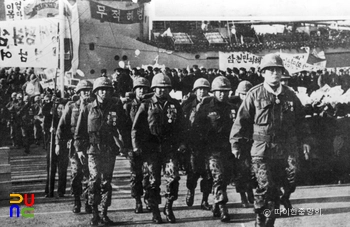
월남 파병 환송식 / 부산 부두
국방
사건
1964년 9월부터 1973년 3월까지 한국 정부가 베트남 전쟁에 전투 부대를 파병하여 참전한 사건.
• 본 항목의 내용은 해당 분야 전문가의 추천을 통해 선정된 집필자의 학술적 견해로 한국학중앙연구원의 공식입장과 다를 수 있습니다.
접기/펼치기목차
정의
역사적 배경
경과
결과
의의와 평가
참고문헌
접기/펼치기정의
1964년 9월부터 1973년 3월까지 한국 정부가 베트남 전쟁에 전투 부대를 파병하여 참전한 사건.
접기/펼치기역사적 배경
자유 우방의 지원으로 한국 전쟁을 승리로 이끌었으며, 1964년 당시 미 지상군에게 안보의 한 축을 의탁하고 있던 한국의 입장에서는 베트남의 사태를 남의 일처럼 바라볼 수만은 없는 입장이었다. 따라서 당시의 박정희 정부는 존슨 대통령의 파병 요청 이전부터 베트남의 사태를 예의 주시하고 있었다. 때마침 미국의 요청과 함께 남베트남 정부에서도 파병을 요청해 오자, 한국 정부는 “한국 전쟁시 참전한 우방국에 보답한다.”는 명분과 “베트남 전선은 한국 전선과 직결되어 있다.”는 국가 안보의 차원에서 국회의 동의를 얻어 파병을 결정하였다.
접기/펼치기경과
정부의 파병 결정에 따라 제1차 파병으로 제1이동외과병원 요원 130명과 태권도 교관단 요원 10명 등 140명이 1964년 9월 11일, 해군 LST편으로 부산항을 출항하여 22일 남베트남의 수도 사이공에 도착하였다. 이후 제1이동외과병원은 붕타우에 주둔하고, 태권도 교관단은 육·해군 사관 학교와 육군 보병 학교에서 남베트남군을 지도하게 되었다.
제1차 파병에 이어서 미국과 남베트남 정부로부터 추가 파병을 요청받은 정부는 2차로 후방지원과 건설 지원 임무를 수행하는 2,000명 규모의 비전투부대를 파병하기로 결정하고 ‘국군의 해외 추가파병에 대한 동의안’이 국회에서 가결되자, 경기도 현리에 위치한 국군 제6사단 사령부에서 ‘주월 한국군 군사원조단본부’를 창설하여 평화를 상징하는 뜻의 비둘기 부대로 명명하였다. 창설된 한국군 군사원조단은 3월 10일 인천항을 출발하여 16일 사이공에 도착하였으며, 사이공 동북방 22㎞ 지점의 디안에 주둔하였다.
한국군의 제2차 파병이 있었던 1965년의 베트남 상황은 미국의 강력한 폭격에도 불구하고, 호치민 루트를 이용한 북베트남군의 남파가 계속되면서 남부의 전 지역에서 지상전이 가열되고 있었다. 이에 따라 미국과 남베트남 정부는 한국에 1개 사단 규모의 전투 부대 파병을 요청해왔다. 당시 미국은 본토의 예비 병력과 해외 주둔군의 일부를 베트남전에 투입하였기 때문에 주한 미군 2개 사단도 언제 남베트남으로 이동할지 모르는 상황이었다.
박정희 대통령은 미국과 남베트남 정부의 파병 요청을 긍정적으로 검토하고 있었다. 이동원 외무부 장관이 브라운 대사에게 제시하였던 요구 사항은 1965년 5월 17일과 18일 양일간에 워싱턴에서 개최된 한·미 정상회담에서 대부분 타결되었다. 이에 따라 정부는 8월 13일 국회의 의결을 거쳐 수도사단과 제2해병여단의 파병을 결정하였다. 이어서 10월 12일 여의도 광장에서 박정희 대통령 임석하에 파병되는 수도사단의 환송식이 열렸으며, 수도사단은 11월 1일까지 퀴논에, 제2해병여단은 10월 9일 캄란에 도착함으로써 제3차 파병이 마무리되었다.
한편 남베트남에서 한국군의 눈부신 활약이 계속되고 있는 가운데 전투 병력 부족으로 애로를 겪고 있던 미국 정부는 베트남의 “작전 환경에 한국군이 가장 적합하다.”는 결론을 내리고 한국군 전투 병력의 증파를 요청하였다. 한국 정부에서도 “5만 명 선 까지는 무리가 없다.”는 판단을 내리고 있었기 때문에 1966년 3월 20일 국회의 의결을 거쳐 수도기계화사단(맹호부대) 제26연대와 제9사단의 파병을 결정하였다. 이에 따라 수도기계화사단 (맹호부대) 제26연대는 4월 15일 퀴논에 상륙하여 수도사단의 통제하에 들어가고, 제9사단은 10월 8일까지 닌호아 일대에 전개하였다.
1960년대 후반에 접어들면서 미국 내에서는 TV와 신문 등 언론의 영향으로 반전 여론이 고조되고 있었다. 이에 따라 1969년 1월 미국의 대통령에 취임한 닉슨은 남베트남에서의 단계적인 철군을 발표하고, 1969년 7월부터 일부 병력을 철수시키면서 “베트남 전쟁은 베트남인이 수행하게 한다.”는 ‘베트남 전쟁의 베트남화 정책’을 추진하고 있었다.
미국이 베트남에서 일부 병력을 철수시키자, 전투 부대를 파병한 오스트레일리아, 뉴질랜드, 필리핀, 타일랜드 등 연합국도 이에 동조하여 철수를 시작하였으며, 1972년 초에는 100여 명 정도의 상징적인 병력만을 잔류시키고 있었다. 그러나 당시의 주베트남 한국군의 병력은 47,860명을 유지하고 있었다.
접기/펼치기결과
한국 정부는 1971년에 접어들면서부터 ‘베트남 전쟁의 베트남화 정책’에 따라 파병 병력의 철수를 검토하고 있었다. 이에 1971년 12월 4일 제2해병여단의 철수를 시작으로 1972년 4월 1일까지 9,476명의 병력을 철수시켰다. 반면 2개 보병 사단을 주축으로 한 전투 병력(37,000여 명)은 1973년 초 휴전이 될 때까지 계속 잔류시켰다. 이로써 주 베트남 한국군의 병력 규모는 1972년 후반기부터 미국의 지상군 규모를 능가하여 참전국 가운데 가장 많은 병력으로 남베트남군을 지원하고 있었다.
주베트남 한국군의 제2단계 철수는 1973년 1월 8일, 파리에서 체결된 휴전 협정의 규정 사항인 “모든 외국 군대는 휴전 후 60일 이내에 베트남으로부터 철수한다.”는 조항에 따라 실시되었다. 이에 따라 한국군은 잔류 부대의 철수를 지시한 국방부 훈령(1973.1.26)에 의해 1973년 1월 30일 125명의 선발대가 항공편으로 철수하였으며, 3월 14일까지 본대가 철수하고, 3월 23일 후발대 118명이 항공편으로 철수함으로써, 남베트남에 주둔하였던 모든 부대가 철수를 완료하였다.
접기/펼치기의의와 평가
한국군의 남베트남 파병은 조약 상의 의무에서 비롯된 것이 아니었으며, ‘자유 우방에 대한 신의’라는 명분에서 시작되었다. 또한 당시의 시각에서 볼 때 베트남 전쟁은 한반도의 안보와도 직결되는 것이었다. 따라서 한국군의 파병은 당시의 한국 정부가 국내·외적으로 여러 가지로 어려운 상황에서 결정한 국가의 생존 및 발전 전략으로써 역사의 큰 획을 긋는 중요한 사건이었다.
결론적으로 한국군의 남베트남 파병과 관련하여 미국으로부터 국가 안보를 위한 군사 원조와 함께 장병들에게 일정액의 전투 수당이 지급된 것은 사실이지만 처음부터 이 같은 군사 원조나 전투 수당을 목적으로 파병을 협의하였거나 파병된 것은 아니었다. 따라서 한국군의 파병은 처음부터 파병 목적이 명확하였고, 한국군의 독자적인 지휘권 하에서 작전에 임하였기 때문에 ‘용병’이라는 말은 일부 인사들의 잘못된 표현이다.
접기/펼치기참고문헌
『월남파병과 국가 발전』(국방군사연구소, 1996)
『파월한국군전사』제10권(국방부전사편찬위원회, 1985)
『육군발전사』상(육군본부, 1970)
『주월한국군전사』제2권(국방부전사편찬위원회, 1968)
접기/펼치기관련 미디어(3)
월남 파병 환송식 / 부산 부두
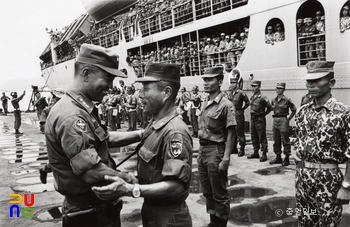
월남 파병 환송식 / 청룡부대
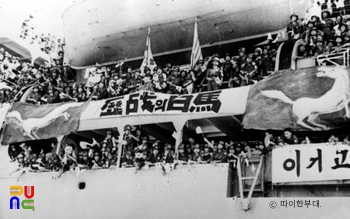
월남 파병다음 슬라이드이전 슬라이드
접기/펼치기집필자==
==
베트남 전쟁/한국군/논란


==

No comments:
Post a Comment