
Read sample
 Audible sample
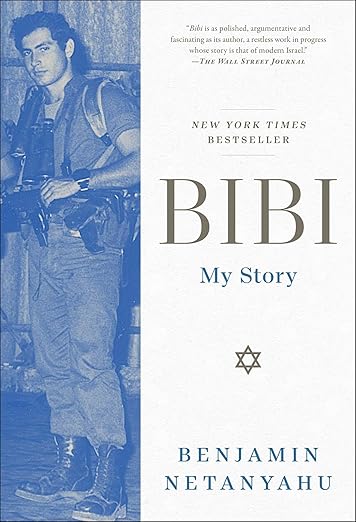
Bibi: My Story Kindle Edition
by Benjamin Netanyahu (Author) Format: Kindle Edition
4.8 4.8 out of 5 stars (3,284)
In Benjamin “Bibi” Netanyahu’s “compelling” (The Economist) and “fascinating” (The Wall Street Journal) New York Times bestselling autobiography, the prime minister of Israel tells the story of his family, his path to leadership, and his unceasing commitment to defending his country and securing its future.
From their earliest days, Bibi and his close-knit brothers, Yoni and Iddo, were instilled with purpose. Born in the wake of the Holocaust at the dawn of Israel’s independence and raised in a family with a prominent Zionist history, they understood that the Jewish state was a hard-won and still precarious gift. All three studied in American high schools—where they learned to appreciate the United States—before returning to their cherished homeland.
The brothers joined an elite special forces outfit of the Israeli Defense Forces known as “the Unit.” At twenty-two, Bibi was wounded while leading his team in the rescue of hostages from a hijacked plane. Four years later, in 1976, Yoni was killed in Entebbe, Uganda, while leading his men in one of the most daring hostage-rescue missions in modern times. Yoni became a legend; Bibi felt he would never recover from his grief. Yet, inspired by Yoni’s legacy and guided by the wisdom of his visionary historian father, Bibi thrust himself into the international struggle against terrorism, ultimately becoming the longest-serving prime minister in Israel’s history—an honor he further cemented by winning reelection in 2022.
In this memoir Bibi weaves together his gripping personal story with the dramatic history of Israel and the Jewish people. Through a host of vivid anecdotes, he narrates his own evolution from soldier to statesman, while providing a unique perspective on leadership, the fraught geopolitics of the Middle East, and his successful efforts to liberate Israel’s economy, which helped turn it into a global powerhouse of technological innovation.
Netanyahu gives colorful, detailed, and revealing accounts of his often turbulent relationships and negotiations with Presidents Clinton, Obama, and Trump. With eye-opening candor, he delves into the back channels of high diplomacy—including his struggle against the radical forces that threaten Israel and the world at large, and the decisive events that led to Israel’s groundbreaking 2020 peace agreements with four Arab states.
Offering an unflinching account of a life, a family, and a nation, Netanyahu writes from the heart and embraces controversy head-on. Steely and funny, high-tempo and full of verve, this autobiography will stand as a defining testament to the value of political conviction and personal courage.
===
Print length
733 pages
Product description
Review
"For his admirers and critics alike, he has produced a compelling memoir and an intriguing study of power."
— The Economist
"Bibi is as polished, argumentative and fascinating as its author, a restless work in progress whose story is that of modern Israel."
— The Wall Street Journal
“Benjamin Netanyahu's autobiography is one of history’s great Zionist texts. Most politicians’ autobiographies are turgid affairs . . . Then there is Benjamin Netanyahu’s autobiography, which is not a politician’s autobiography at all, but an adventure story dressed up as one. It is a Tom Clancy novel written for a Tom Cruise movie adaptation, posing as a normal politician’s memoir.”
— Claremont Review of Books
"After a stunning victory, Netanyahu is returning as Israel’s next prime minister . . . Now, therefore, is the perfect moment to take a closer look at who Netanyahu really is . . . not your run-of-the-million campaign autobiography, most of which are tedious and boring and not worth the paper they are printed on . . . This is an incredibly well-written, captivating – at times, spell-binding – account of his triumphs and trials. And it is a must read for every Evangelical who loves Israel and prays for the peace of Jerusalem.”
— All Israel News
"In the latest election, Netanyahu accomplished what few of his peers ever could: He won what passes in Israel as a resounding victory, granting him the opportunity to become prime minister for a third time. And rather than reading like a typical self-serving retrospective, a classic bid for immortality, his memoir now becomes a reintroduction to a man who has rarely been out of the public eye for a quarter-century . . . [and] serves as an essential window into his character."
— The Washington Post
“From a purely literary point of view, this is without doubt the best autobiography written by an Israeli prime minister . . . [Netanyahu] demonstrates Churchillian abilities in the literary field."
— Literary Review
"Benjamin Netanyahu’s new book Bibi: My Story [is] worthy of being added to the shelf in a place of honor . . . the world will understand him and his country better as a result of this book."
— The Algemeiner
“Bibi: My Story is a surprisingly sentimental and ideologically thoughtful autobiography from a politician known for his cold, hard realism. Unlike other political autobiographies, which mostly serve to obscure their subjects, this one provides us with the tools to understand this signature figure in modern Jewish history . . . a far better book than we had any reason to think it would be.”
— Commentary Magazine
"Netanyahu wrote his memoir longhand. It is not the standard campaign autobiography. It has heft, and not just because it runs to 650 pages. Primed for debate, he conveys his point of view with plenty of notes. He paints in primary colors, not pastels. The canvas is filled with adulation, anger, frustration and dish. Bibi is substantive and barbed. It is interesting. Netanyahu has scores to settle and punches to land."
— The Guardian
About the Author
Benjamin Netanyahu is the Prime Minister of Israel, having been reelected in 2022 after previously serving from 1996–1999 and 2009–2021. From 1967–1972 he served as a soldier and commander in Sayeret Matkal, an elite special forces unit of the Israeli Defense Forces. A graduate of MIT, he served as Israel’s Ambassador to the United Nations from 1984–1988, before being elected to the Israeli parliament as a member of the Likud party in 1988. He has published five previous books on terrorism and Israel’s quest for peace and security. He lives in Jerusalem with his wife, Sara.
Publisher : Threshold Editions
Accessibility : Learn more
Publication date : 18 October 2022
Best Sellers Rank: 166,915 in Kindle Store (See Top 100 in Kindle Store)10 in Biographies of Jewish People
22 in Biographies of Presidents & Heads of State (Books)
99 in President & Head of State Biographies
Customer Reviews:
4.8 4.8 out of 5 stars (3,284)

Customer reviews
4.8 out of 5 stars
Amazon Customer TE
5.0 out of 5 stars A Truly Great Leader
Format: KindleVerified Purchase
Bibi has written a compelling story of his life and one can see at once why he is the longest serving Prime Minister in the history of Israel. He has given his life to serving Israel politically, socially, and economically. He is a loving husband, a devoted father, and his account of his life is written in a spirit of humility and honesty. This is not the account of an ordinary politician motivated by a lust for power, but an extraordinary man with a seemingly divine mission to protect and cherish Israel at all cost.
==
Bruce Lindley
5.0 out of 5 stars A powerful insight into the modern history of IsraelReviewed in Australia on 5 November 2022
Format: KindleVerified Purchase
Bibi: My Story is a powerful insight into the modern Israel.
==
Lauralina
5.0 out of 5 stars A must have bookReviewed in Australia on 21 January 2024
Format: HardcoverVerified Purchase
One of the best autobiographies I've ever read. Highly recommend.
Rick Puleio
5.0 out of 5 stars PresentReviewed in Australia on 29 September 2023
Format: HardcoverVerified Purchase
Bought this as present and they enjoyed the story
==
John K
4.0 out of 5 stars I now understand why he is the best leader for IsraelReviewed in Australia on 23 December 2022
Format: Audio CD
The book has not yet been released but, despite my dislike for him brought about by years of anti-Netanyahu sentiment promulgated by the media, I decided to buy the audio book. This was driven by Bibi's recent resurrection in Israeli politics.
In addition to these accords, another example of warming of relationships between Israel and former enemies is the recent agreement between Lebanon (and Hezbollah) on the gas in Eastern Mediterranean. This will eventually involve Egypt and result in gas being exported to Europe. Trade trumps war! The Palestinians once had the highest standard of living in the Arab world but their leaders chose violence over economics.
One needs to recognise that two things have happened in recent years. As there is nobody on the Palestinian side to negotiate with as the corrupt Fatah on the West Bank is more or less at war with terrorist Hamas in Gaza, the route to peace is, as Bibi explains, not through the Palestinians but around them. Importantly, peace can only be made with the Arabs when a right wing Government is in power in Israel. The problem remains with the Palestinians. They still have not accepted the right of Israel to exist – and they still want its destruction.
I recommend the book to you. Even if you don't like the guy, his explanation of history going back to biblical times is quite absorbing. The book is very educational, reinforces history and is not self-promoting as you would expect from a Bibi autobiography as he identifies his errors as well as his achievements.
Read more
3 people found this helpful
Rosalind Baker
5.0 out of 5 stars great readReviewed in Australia on 31 January 2023
Format: KindleVerified Purchase
I couldn’t put it down and was so disappointed when it ended. I even read the acknowledgements. I didn’t want to let go of the book.i
One person found this helpful
==
Abusa
5.0 out of 5 stars A must readReviewed in Australia on 25 November 2022
Format: KindleVerified Purchase
If you are interested in Israel and the history of the Israel/Palestinian conflict you couldn't do better than read this book.
Top reviews from other countries
Translate all reviews to English
Marcus Philpott
5.0 out of 5 stars Brilliantly toldReviewed in the United Kingdom on 21 October 2024
Format: HardcoverVerified Purchase
This was an amazing insight into the political world not just in Israel but world wide .An honest and heartfelt well written book if you have the time to stick with it. The loss of his brother no doubt had a marked influence on his life and you feel his pain. I found it fascinating and at times disturbing in equal parts. In light of the things now happening in Israel it explains to some degree why this nation still fights for its right to exist,
Report
Laura
5.0 out of 5 stars Great bookReviewed in France on 26 October 2024
Format: HardcoverVerified Purchase
Truly recommended 👌
Report
Amazon Customer
4.0 out of 5 stars Una version diferente y muy interesanteReviewed in Spain on 17 January 2023
Format: HardcoverVerified Purchase
Fascinante historia de un personaje politico y gyerrero, con un destino y que sabe lo que quiere. No es literatura erudita, pero si muy entretenida y sobre todo que te da una vision de una sociedad y pais que no es bien conocida y de la que en muchos sentidos tenemos mucho que aprender.
Report
Translate review to English
Barbara M. Yaffe
5.0 out of 5 stars excellent recent synopsis of Israeli political eventsReviewed in Canada on 5 January 2023
Format: HardcoverVerified Purchase
It is hard to believe he wrote it himself. I'm a former political journalist myself and I have to say he is an excellent writer as well as a brilliant political strategist and communicator. I could not put this book down. He takes you right inside meetings with Army generals and to tete a tete dinners at his home with leaders of countries around the world. Most fascinating are his encounters with Obama and Clinton who were stubbornly myopic about Israel's security needs, as well as his communications with Donald Trump who helped Bibi fulfill many of his national dreams. Sure, it's an autobiography. Of course that makes it overwhelmingly subjective and full of self praise. But no matter; definitely worth reading!!
Report
Kindle Customer
5.0 out of 5 stars Great biographyReviewed in Germany on 12 December 2024
Format: KindleVerified Purchase
“Bibi: My Story” is a gripping book for those interested in history and politics that captures the complexity of a man and his time. It offers both admirers and critics of Netanyahu the opportunity to learn first-hand about the motives and decisions of one of Israel's most influential politicians.
Report
Translated from German by Amazon
See original ·Report translation
See more reviews
'Bibi: My Story'는 이스라엘의 최장수 총리인 **베냐민 네타냐후(Benjamin Netanyahu)**가 2022년에 출간한 자서전입니다. 이 책은 그의 개인적인 삶, 군 복무, 외교 경력, 그리고 정치적 여정을 자세히 다루며, 이스라엘의 안보 및 외교 정책에 대한 그의 견해를 제시합니다.
요약 (Summary)
이 자서전은 네타냐후의 삶을 시간순으로 따라가며, 그의 사상적 배경과 정치적 성장에 영향을 미친 세 명의 가족 구성원, 즉 역사가였던 그의 아버지 벤지온, 엔테베 작전에서 전사하여 국가적 영웅이 된 형 요니, 그리고 아내 사라에게 경의를 표합니다.
<초기 생활과 군 복무> 네타냐후는 이스라엘 독립 직후 홀로코스트의 여파 속에서 태어났으며, 저명한 시온주의 역사가 집안에서 자랐습니다. 그는 형제들과 함께 미국 고등학교에서 공부하며 미국에 대한 이해를 키웠고, 이후 귀국하여 이스라엘 방위군(IDF)의 정예 특수부대인 '사이렛 마트칼(<the Unit>)'에 입대했습니다. 그는 22세에 하이재킹된 비행기에서 인질을 구출하는 작전을 이끌다가 부상을 입었고, 1976년 엔테베 작전에서 형 요니가 전사한 사건은 그의 삶에 결정적인 전환점이 되었습니다. 네타냐후는 형의 유산에 영감을 받아 대테러 투쟁에 헌신하기로 결심합니다. 그는 MIT에서 석사 학위를 받는 등 학업을 마쳤지만, 결국 이스라엘을 위해 봉사하는 길을 택합니다.
<외교관 및 정치 경력> 그는 미국에서 외교관으로 경력을 시작하여 유엔 주재 이스라엘 대사를 지냈고, 이 시기에 세계에 테러리즘의 위협에 대해 알리는 데 주력했습니다. 이 경험은 그가 정계에 진출하고 이스라엘의 안보를 최우선으로 하는 그의 정치적 신념을 형성하는 데 중요한 역할을 했습니다. 네타냐후는 리쿠드당의 지도자로 여러 차례 총리직을 역임하며 이스라엘 최장수 총리가 되었습니다.
<주요 정책 및 외교> 이 책은 그의 총리 재임 기간 동안의 주요 사건과 정책 결정을 상세히 다룹니다. 특히, 이스라엘 경제의 자유화를 통해 이스라엘을 기술 강국으로 만들었다고 주장합니다. 외교 면에서는 이란의 핵 위협에 대한 그의 강경한 입장을 강조하며, 이란 핵 협상(JCPOA)에 반대했던 자신의 정책적 고려 사항을 자세히 설명합니다. 또한, 빌 클린턴, 버락 오바마, 도널드 트럼프 미국 대통령들과의 종종 격렬했던 관계와 협상에 대한 생생하고 솔직한 회고를 제공합니다. 가장 주목할 만한 외교적 성과는 2020년 네 개의 아랍 국가와 이스라엘 간의 **아브라함 협정(Abraham Accords)**을 이끌어낸 과정에 대한 뒷이야기입니다.
<개인적인 시각과 논란> 네타냐후는 이 책을 통해 자신의 삶과 국가를 유대인의 역사라는 더 넓은 맥락 속에 위치시키고, 자신을 이스라엘의 생존과 미래를 보호하는 데 필수적인 영웅적 인물로 묘사합니다. 그는 자신에게 쏟아지는 정치적 반대와 법적 논란을 자신에 대한 부당한 박해로 간주하며 정면으로 다룹니다. 책은 네타냐후가 현역 정치인으로서 재집권을 목표로 하는 시기에 쓰여져, 그의 정치적 신념을 담은 강한 선언서와 같은 성격을 띠고 있습니다.
서평 (Review)
'Bibi: My Story'는 뛰어난 문학적 완성도와 강력한 정치적 논쟁을 겸비한 자서전으로 평가됩니다. 총 736페이지에 달하는 방대한 분량에도 불구하고, 네타냐후의 명료하고 지적인 글쓰기 능력 덕분에 흡인력이 뛰어나다는 평을 받습니다.
<강점 및 특성>
뛰어난 스토리텔링: 이 책은 단순한 정치 회고록을 넘어, 군인에서 외교관, 그리고 최종적으로 국가 원수에 이르는 그의 모험적인 개인사와 이스라엘의 극적인 역사가 엮인 모험 이야기처럼 읽힙니다. 그는 유머와 활력을 잃지 않으면서도, 자신의 정책적 신념과 이스라엘의 안보에 대한 심각한 우려를 전달합니다.
외교의 비하인드 스토리: 미국 대통령들을 비롯한 세계 지도자들과의 복잡한 관계와 고위 외교의 막후 채널에 대한 상세하고 솔직한 묘사는 이 책의 가장 흥미로운 부분 중 하나입니다. 특히, 오바마 행정부와의 이란 핵 문제에 대한 이견과 트럼프 행정부와의 협력에 대한 그의 관점은 역사적 기록으로서 가치가 있습니다.
정치적 선언: 이 책은 네타냐후의 정치 철학과 세계관을 이해하는 데 필수적인 창 역할을 합니다. 그는 자신의 시온주의적 뿌리, 이스라엘이 직면한 실존적 위협에 대한 확고한 믿음, 그리고 유대 민족의 생존을 위한 강력한 방어의 필요성을 역설합니다.
<비판 및 논란>
자기 미화와 일방적 관점: 비평가들은 이 책이 매우 자기방어적이고 자기 미화적이라는 점을 지적합니다. 네타냐후는 자신의 성공을 강조하고 정치적 반대파나 언론의 비판을 **'피해 의식'**에 기반하여 부당한 박해로 치부하는 경향을 보입니다.
팔레스타인 문제의 편향성: 이 책은 이스라엘-팔레스타인 분쟁에 대한 네타냐후의 강경한 이념을 여과 없이 드러냅니다. 일부 서평에서는 네타냐후가 '팔레스타인'이라는 용어 대신 '아랍인'이나 '테러리스트'와 같은 용어를 사용하며, 역사적 맥락에서 편의적인 진실과 생략을 사용한다고 비판합니다. 예를 들어, 그는 팔레스타인 측의 입장을 충분히 고려하지 않고 이스라엘의 행동을 도덕적으로 정당화하는 데 집중합니다.
현역 정치인의 회고록: 은퇴 후가 아닌, 여전히 활발하게 정치를 하는 시기에 쓰여졌다는 점 때문에, 이 책은 객관적인 역사적 평가라기보다는 정치적 복귀를 위한 성명서나 선거 운동 자료의 성격이 강하다는 평가도 있습니다. 독자들은 책에 묘사된 '신중하고 중도적인' 지도자의 모습과 선거 유세에서 보여주는 '극우 포퓰리스트'의 모습 사이의 괴리를 느낄 수 있습니다.
<결론> 'Bibi: My Story'는 네타냐후의 정치적 여정을 심층적으로 이해하고자 하는 독자, 특히 이스라엘 정치와 중동 외교에 관심 있는 독자에게 필수적인 독서입니다. 이 책은 논쟁의 여지가 있지만, 이스라엘 역사상 가장 영향력 있는 지도자 중 한 명의 개인적인 용기와 정치적 신념을 강력하게 보여주는 증거이며, 그를 지지하든 비판하든 관계없이 오늘날의 이스라엘을 이해하는 데 중요한 통찰력을 제공합니다.
이 영상은 'Bibi: My Story'의 저자인 베냐민 네타냐후가 자신의 책과 삶에 대해 직접 이야기하는 인터뷰입니다.


Summary (approx. 600 words)
Benjamin Netanyahu’s Bibi: My Story is a political autobiography that seeks to weave his personal narrative into the larger story of the modern Israeli state. Written with a mix of military pride, ideological conviction, and self-justification, the book traces Netanyahu’s life from his childhood in Jerusalem and his time in the elite Israeli commando unit Sayeret Matkal to his long career as Israel’s prime minister.
The early chapters focus on Netanyahu’s family background and formative influences. His father, Benzion Netanyahu, was a historian and ardent Zionist who deeply shaped his worldview—especially his belief in the existential vulnerability of the Jewish people and the moral legitimacy of Jewish self-defense. Netanyahu recalls growing up amid the trauma of the Holocaust’s shadow and Israel’s early wars, portraying himself as part of a generation that internalized the necessity of vigilance and strength for national survival.
One of the most emotional sections recounts the death of his older brother Yonatan (Yoni), commander of the 1976 Entebbe rescue operation, who was killed during the mission. Netanyahu turns this tragedy into a lifelong symbol of heroic sacrifice and leadership. The memory of Yoni, he writes, guided his own political mission and hardened his conviction that Israel must never rely on others for its defense.
Netanyahu’s time in the United States in the 1970s and 1980s marks a turning point. He studied at MIT and Harvard, worked as a business consultant, and learned to navigate the American political and media landscape. These experiences, he argues, equipped him with communication and strategic skills that later proved crucial in both diplomacy and domestic politics. They also shaped his perception of Israel’s image abroad and the importance of public diplomacy (“hasbara”) in defending Israeli policies.
When Netanyahu entered politics, first as Israel’s ambassador to the UN (1984–88) and later as Likud leader, he positioned himself as a sharp critic of the Oslo peace process. The book devotes significant space to his opposition to the accords, arguing that the Palestinian leadership, particularly Yasser Arafat, never intended genuine peace but used diplomacy as a means to weaken Israel. Netanyahu portrays himself as a realist facing naïve or idealistic opponents—Israeli leftists and Western leaders—who underestimated the persistence of antisemitism and Arab rejectionism.
The later chapters cover his prime ministerial tenures (1996–99, 2009–2021). He details his economic reforms, including privatization and deregulation policies that, he claims, transformed Israel into a high-tech powerhouse. He also highlights his foreign-policy achievements, from strengthening U.S.–Israel relations to negotiating the Abraham Accords—normalization agreements with several Arab states that bypassed the Palestinian issue.
Throughout, Netanyahu presents himself as a defender of Jewish security and Western civilization, often positioning Israel as the front line against Islamist extremism and Iranian ambitions. His depiction of the Iran nuclear deal (JCPOA) is especially critical; he sees it as a historic error that he personally fought to expose and reverse.
The book concludes with his reflections on political survival, media hostility, and corruption charges—portraying them as politically motivated attempts by elites to undermine the will of the Israeli public. While defensive in tone, these passages reveal the siege mentality that defines Netanyahu’s political identity: Israel, and Netanyahu himself, are always embattled, misunderstood, and yet destined to prevail through resilience and intellect.
Critical Review (approx. 400 words)
Bibi: My Story is at once a memoir, a defense brief, and a political manifesto. Netanyahu writes in a brisk, often persuasive style, shaped by his years of public speaking and rhetorical training in the U.S. The prose is confident and disciplined, though it sometimes slips into propaganda or self-congratulation.
The book’s greatest strength lies in its coherence of worldview. Unlike many politicians’ memoirs, it presents a consistent ideological narrative: the belief that Israel is perpetually under threat; that moral clarity and power, not compromise, ensure survival; and that leadership means resisting fashionable illusions. In this sense, Bibi is less a personal confession than a polished ideological autobiography—akin to Churchill’s wartime writings or de Gaulle’s Mémoires de guerre.
Readers sympathetic to Netanyahu’s realism will find his analysis of Middle Eastern geopolitics compelling. His critique of Western diplomacy—especially its tendency to reward aggression and mistake weakness for virtue—draws on both historical experience and strategic logic. His account of the Abraham Accords illustrates his core argument: peace can emerge not from appeasing enemies but from strengthening deterrence and building mutual interests.
However, the memoir also reveals the limits of Netanyahu’s vision. His narrative of Israeli heroism and moral clarity leaves little room for empathy toward Palestinians or for introspection about the cost of occupation. When he recounts peace efforts, he emphasizes deception and betrayal on the other side, rarely questioning his own approach or considering the possibility that long-term security may require more than deterrence. The book’s silence on civilian suffering—both Palestinian and Israeli—underscores its ideological rigidity.
Stylistically, Bibi is clean but repetitive. The later chapters read partly as a self-defense against corruption investigations and political enemies, which may fatigue readers seeking a balanced portrait. The personal dimension—his marriage, emotional life, inner doubts—is minimal. Netanyahu remains, even in autobiography, a disciplined political actor, not a vulnerable narrator.
Ultimately, Bibi: My Story is less revealing of the man than of the mindset of modern Israeli nationalism: confident, besieged, rational, and morally certain. For historians, it is valuable as a primary source in understanding how Israel’s longest-serving prime minister conceives of leadership and legitimacy. For critics, it is also a reminder that personal conviction, when fused with national destiny, can be both a source of strength and a barrier to empathy.
In short:
-
Genre: Political autobiography / ideological memoir
-
Tone: Assertive, defensive, nationalist
-
Themes: Security, leadership, Jewish history, Western civilization, moral clarity vs. appeasement
-
Strengths: Strategic insight, ideological consistency, clear prose
-
Weaknesses: Lack of introspection, limited empathy, self-justifying tone

세진님, 전자책에서 <thousands of years> 또는 <thousand years>가 포함된 문구들을 직접 확인하시기 편하도록 이미지 속 텍스트를 페이지별로 타이핑해 드립니다.
전체적으로 유대 민족의 역사적 정당성과 이스라엘 땅과의 연결고리를 강조하는 맥락에서 이 표현들이 자주 사용되고 있습니다.
전자책 <thousands of years> 검색 결과 타이핑
42페이지: 이스라엘인들은 3,000년(three thousand years) 전 솔로몬 왕이 첫 번째 유대 성전을 세웠던 성전산을 방문했다.
206페이지: 이스라엘 땅은 약 3,500년 전의 것이며, 이 땅에 대한 아랍의 정복은 그로부터 2,000년(two thousand years) 뒤인 서기 7세기에 일어났다.
207페이지: 유대 민족의 역사는 거의 4,000년에 걸쳐 있다. 첫 수천 년(thousand years) 정도는 성경에 기록되어 있으며...
207페이지: 아브라함과 사라는 거의 4,000년(four thousand years) 전 갈대아 우르에서 가나안 땅으로 긴 여정을 떠났다.
209페이지: 아랍의 식민 통치는 그 후 1,000년(thousand years) 동안 이 땅을 떠나지 않았다.
211페이지: 아랍인들은 이 땅을 정복했고 **수천 년(thousands of years)**에 걸친 유대인들의 거주를 박탈하는 데 크게 기여했다.
211페이지: 반이스라엘 선동가들은 3,000년(three thousand years) 넘게 이 땅에 매달려 온 유일한 민족이 그들 자신의 주권 국가에서 살 권리가 없다고 주장한다.
212페이지: 아라파트는 우리가 최근 발굴한 도자기 파편의 윤곽을 제시했다. 그것은 수천 년(several thousand years) 된 것이었다.
222페이지: 사람들은 이 땅을 위해 수많은 희생을 치렀고, 그들의 피를 흘렸으며, 1,000년(thousand years) 동안 이곳으로 돌아오기를 기도했다.
225페이지: 이스라엘 땅은 우리가 수천 년(thousands of years) 동안 애착을 가졌던 유일한 나라였고, 유대인들이 수세기에 걸쳐 돌아온 곳이다.
271페이지: "중국 인민은 지구상에서 가장 오래된 문명 중 하나입니다."라고 그는 말하며, 각각 **4,000년(four thousand years)**과 5,000년(five thousand years) 전으로 거슬러 올라간다고 했다.
272페이지: "대통령님," 내가 말했다. "유대인들이 이곳에 존재해 온 지 **수천 년(thousands of years)**이 되었으니, 그것은 상당히 낮은 수치입니다. 2,000년(two thousand years) 전 유대인들은 로마 제국 인구의 10%를 차지했습니다."
272페이지: 우리의 가장 큰 비극인 20세기의 나치 홀로코스트가 있었다. 이것이 지난 2,000년(two thousand years) 동안 우리가 고국을 되찾고 독립 국가를 재건하기 위해 노력해 온 이유다.
287페이지: "그들의 땅이 아니에요," 사라가 대답했다. "3,000년(three thousand years) 넘게 우리 땅이었어요."
303페이지: 나는 이스라엘 총리로서 조건에 굴복하여 3,000년(three thousand years) 넘는 유대 민족의 투쟁을 위험에 빠뜨리지 않을 것이다.
374페이지: 2,000년(two thousand years) 후, 중세의 가장 위대한 유대인 사상가인 마이모니데스는 다소 복잡한 상황에 처했다.
423페이지: 4,000년 된(four-thousand-year-old), 3,000년 된(three-thousand-year-old) 국가의 선출된 지도자로서...
426페이지: 그는 이스라엘의 건국이 홀로코스트의 산물인 것처럼 암시하며, 유대 민족이 고국에 가졌던 **수천 년(thousands of years)**의 애착을 무시했다.
450페이지: 성경에서. "나는 당신으로부터 이 이스라엘 땅을 사고 싶습니다." 2,700년(two thousand seven hundred years) 전 유대 왕 히스기야는...
451페이지: 예루살렘에 눈에 띄게 전시되어 있으며, 그것이 유대인의 것이었지 무슬림의 도시가 아니었음을 명백히 증명한다. 수천 년(thousands of years) 전의 일이다.
463페이지: 유대 국가. "이스라엘의 고대 국가는 거의 4,000년(four thousand years) 동안 존재해 왔습니다."라고 나는 말을 이었다.
501페이지: 2,000년(two thousand years) 동안 유대 민족의 역사였던 정복과 대학살로부터 당신을 구해주지 않을 것이다.
529: 그 순간 2,000년(two thousand years) 전 위대한 유대인 현자 힐렐의 불멸의 말씀이 강력하게 나를 강타했다. "내가 나를 위하지 않으면, 누가 나를 위하겠는가?"
534: 거의 **4,000년(four thousand years)**의 역사 속에서 유대 민족을 반복적으로 멸망시키려 시도했다.
538: 모세는 수천 년(thousands of years) 동안 이스라엘 사람들에게 결의를 주었다.
552: 에티오피아 민족은 3,000년(three thousand years) 전 시바의 여왕이 예루살렘의 솔로몬 왕을 방문했던 때로 거슬러 올라간다.
552: "우리가 다시 만날 때까지 또 다른 **3,000년(three thousand years)**이 걸리지 않기를 확신합니다."라고 나는 아디스아바바의 에티오피아 의회에서 말했다.
601: 2017년, 도널드 트럼프 대통령은 3,000년(three-thousand-year-old) 된 진실을 인정함으로써 70년간의 외교적 불합리함을 끝냈다.
602: 성전산과 다윗성을 보라. 그가 3,000년(three thousand years) 전 우리의 수도를 세웠던 경사진 언덕이다.
653: 유대 민족이 존재해 온 수천 년(thousands of years) 동안, 우리는 통일된 독립의 시기를 단 세 번만 누렸다.
이 텍스트들이 세진님의 독서와 내용 확인에 도움이 되길 바랍니다. 다른 챕터나 구체적인 문장에 대해 더 궁금한 점이 있으시면 언제든 말씀해 주세요. Would you like me to analyze how Netanyahu uses these historical timeframes to justify his current policies?

No comments:
Post a Comment