1 2] Repairing Biographies and Aligning Family Memories
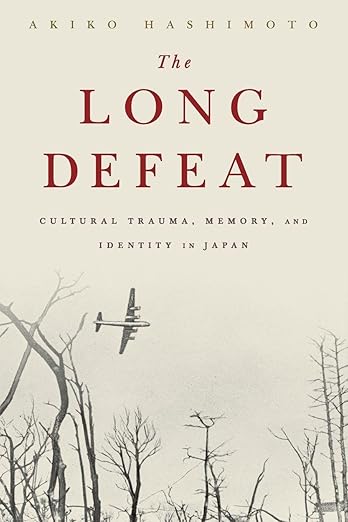
A war story told in my family when I was growing up was about the Tokyo air raids in May 1945 when my grandfather’s home in Komazawa was scorched by one of the hundreds of thousands of incendiary bombs dropped by American air squads. As narrated to the children—usually by my mother—it was not a story about a lucky family that escaped death from night raids that killed hundreds of thousands, but a story about an unlucky family that was devastated by the twist of fate that left them financially and emotionally distressed for a long time. It was always added that the house had been the crowning achievement of my grandfather’s career, built from his lifelong savings, and therefore its loss, together with all other possessions, left him a distraught man. Told from the viewpoint of the family, the story elicited awe, sadness, and pity, but because it also lacked any sense of historical and political context and proportion, to me as a child it sounded as if the hundreds of American B-29s had flown all the way to Tokyo that night specifically to destroy my grandfather’s house. War memories like these recounted in Japanese families tend to focus on personal anguish that overshadowed everything else at the time. Only decades later did I learn of the heavy Japanese air raids on Chinese cities like Chongqing that equally obliterated civilian homes and killed tens of thousands.
War stories recounted in this way to many postwar children as a “dreadful experience” (imawashii taiken) in family memory tend to concentrate on events occurring in the last years of the war when Japan’s losses had mounted exponentially and defeat was imminent. Partly for this reason, many personal stories told about the war from both the battlefront and the home front tend to focus on the experiences of extreme deprivation, danger, and near-death around 1945. Therefore, many survivors recall helplessness—from incinerating air raids, pounding defeats, debilitating diseases and malnutrition, to slayings, evacuations, and rapes—when any sense of security had completely eroded for almost everyone. This sense of trauma and despair left indelible scars on those who experienced it and impacted how they would tell their war stories to their children and grandchildren. The large accumulation of these trauma narratives in postwar society would open the way to much criticism toward Japan’s propensity to take the victim’s view of the war, more often than the perpetrator’s or the hero’s.1
Marianne Hirsch calls this type of knowledge postmemory, an imagined understanding of trauma by those who did not experience the event itself but grew up deeply influenced by it. In practical terms, it is the experience of inheriting cultural trauma from parents and grandparents that then becomes the backdrop against which family relationships and social identity are formed. The trauma itself may be often too difficult to represent or communicate fully, and it may not even be understood fully. Nevertheless, the taboos, preoccupations, and anguish of the trauma are transmitted through close relationships and emotional ties, and become the shared cultural and cognitive frames to interpret the events across generations.2 This notion of postmemory is relevant for understanding war memory because war discourses today are reproduced mostly by postwar generations who inherited such frameworks of interpretation. It also shows how personal and intimate connections shape the moral evaluation of war for postwar generations in ways that are more real and intimate than school textbooks and cultural representations.3 Personal memories passed on in the family have shaped the sentiments of public intellectuals and artists, politicians, and bureaucrats more profoundly than is usually recognized. Family memories are visceral and cut to the bone; they carry the deep emotional content of what is at stake when living in a war, however poorly articulated. This notion is echoed by many: for example Ōtsuka Eiji, a well-known commentator of contemporary culture, recognizes that even as he turned his back to the tedious war stories of his parents when he was growing up, “I can feel what my father wanted to convey to me without being able to articulate it, and I am certain it is the basis of what I write about today.”4 Others of the same generation reinforce this point, like Kawaguchi Kaiji, the author of the best-selling Zipang (a story about altering the course of World War II with time travel), who acknowledges that his work is really a “quest to understand what kind of people our parents really were,” while admitting candidly that he had always been afraid to ask questions about what his father did in China as a soldier.5
Postmemory is the broader canvas on which biographical narratives of the war experience are repaired as an intergenerational project. German psychologist Gabriele Rosenthal explains that biographical repair is an interpretive reconstruction of traumatic experiences across generations that often involve selective remembering, strategies of concealment, and assigning guilt to others so that a victim family biography can be constructed, and recovery from trauma can proceed.6 As we will see in this chapter, biographical repair is not amnesia but a case of hermeneutical reconstruction that glosses over what is difficult to talk about, and passes over what is difficult to listen to. For example, a family’s difficulty talking about the meaningless death of a father in a war of invasion might delegate to the child the task of relieving this misery by imagining the father as an innocent victim. When fathers returned from war resorted to emotional withdrawal, which was not untypical, it would be up to the children to keep their rage, bitterness, and frustration from their consciousness.7 This kind of family dynamic prioritizes harmony at home over the abstract idea of justice for strangers who were victimized in the larger, faraway war. This tacit understanding of priorities developed across generations lies at the heart of the biographical repair project in postwar families. It is an approach geared to self-protection and to make mundane life livable; it is also a widespread mechanism that engenders perpetrator-victim-hero inversions in everyday life.8
This chapter explores the contours of postmemory through the lens of biographical repair and asks how difficult war memory is narrated in the family and with what consequences. This question is crucially relevant to understanding the transmission of political identity and responsibility because how we present our powerlessness to ourselves and each other vitally influences our sense of political efficacy and empowerment.9 Sociologist Nina Eliasoph suggests that we cultivate feelings of powerlessness purposefully when confronting difficult situations to enable a smooth working of social relationships. We engage in emotion work to mute awkward conflicts, “telling ourselves that we do not care, or by trying only to care about problems that we implicitly assume we can easily address, or throwing up our hands in despair.” The repeated narration at home of experiences of powerless in the war invites empathetic emotion work to facilitate biographical repair of the family, but it can also cultivate indifference to others. The protection of relationships “close at home” by speaking of the father’s, the mother’s, and the family’s powerlessness is enormously effective in conveying the malicious nature of the war experience for the “little people” and in resisting the authoritarian narrative of the war. However, as we will see in this chapter, it also fosters an ethno-cultural blindness to the injustices inflicted on the powerless victims “far from home.”10
I explore this underresearched topic of narration in family memory and self-efficacy in political identity by examining the personal testimonies of veterans and their adult children and grandchildren. The testimonies that describe the war’s impact on their lives are culled from everyday cultural materials: letters to the editor in national newspapers and anthologies of testimonies published in the last 30 years. To look at the patterns by generations, I constructed synthetic age cohorts by calculating the birth years of the narrators, and then divided their testimonies into two categories: those of the wartime generation, and those of the postwar children and grandchildren. Taking advantage of the large number of personal testimonies that are publicly accessible, I constructed a data set comprising a total of 430 cases: 390 wartime generation, and 40 postwar children and grandchildren, sampled for the years 1986 to 2013.11 The primary data derive from the readers’ page of the left-of-center Asahi newspaper, and to interpret them in broader sociological context, I compare them to a subsample of 20 testimonies by children of wartime elites published by the conservative monthly Bungei Shunjū in 1989 and 2007.12 I therefore assess the general trends of memory making by juxtaposing grassroots testimonies with elite testimonies.
Japan’s war testimonies are available in many different types of publications, coinciding with the popularity of writing personal history (jibunshi) as a practice of autobiographical memoir that flourished since the 1960s and 1970s.13 An estimated 30,000 self-published wartime memoirs had been deposited in the National Diet Library alone as of 1999.14 War testimonies proliferated especially since the 1980s as taboos began to break down.15 They are written by survivors as “witnesses”: veterans who fought in vast regions of Asia and the Pacific; civilian survivors of the atomic bombings and air raids on the home front; refugees from Manchuria, Korea, and other territories; civilians and orphans who survived displacement and poverty; and indicted war criminals. Psychiatrist Robert Lifton has suggested that such witnesses can forge a “survivor mission” that gives meaning to their survival after traumatic encounters with death;16 it is such “missions” that have coalesced into waves of testimonial activities as aging survivors felt the need to speak up as the last witnesses alive. Together with the oral history collections that also exist in large numbers, some of which will be discussed in c hapter 3, the testimonials of the wartime generation have created massive records of war experiences in volumes and series of publications, in print, and in digital archives.17 These “witness” accounts have long played a significant role in Japan’s memory culture, and have contributed to the diffuse transmission of war stories in postwar society.18
To be sure, those personal testimonies are subjective cultural constructs, not exact factual records of the past. Psychologist Jerome Bruner says of autobiography that “the lives we construct are outcomes of this process of meaning-construction” and that we also make such meaning in the historical circumstances through which we express ourselves.19 Here, writing self-narrations is an attempt to repair and validate the self by framing the experiences meaningfully.20 It is therefore not surprising that many testimonials encode messages that assuage the burdens of survival with the hope for a more enlightened future. Many in the Asahi sample conclude their descriptions of harrowing war experiences with a statement that war is wretched. Directly or indirectly, they convey the conviction that no part of the war experience was worthwhile or redemptive. The testimonies make no claims to intellectual sophistication; their contentions published year after year and decade after decade nevertheless culminate into an insistent moral sentiment: war, sacrifice, and blind trust in government leadership are dreadful, irrevocable mistakes.
This message embedded in the “survivor mission” helps explain why war testimonies and oral histories have flourished in the last decades, even though dreadful war experiences are admittedly painful to remember and articulate. The testimonies are part of the democratization and popularization of war memory, and an opportunity for the masses to speak up and be heard. The dominant narratives of powerless victims among them have served to keep alive the pacifist sentiment that the suffering should never be repeated. Less dominant are perpetrator narratives and heroic narratives that also comprised some portions of the Asahi testimonies. Most in these latter two categories described memories of early war experiences when there were more victories than defeats. Fewer still were testimonies that portrayed moral complexities in different shades of gray. All in all, however, the preponderance of testimonies shows an antiheroic Japan at war: virtually no participant comes out looking good in these Asahi testimonies.
Testimonies of the Wartime Generation
Veterans of World War II, whether American or Japanese, are usually called the “reticent generation” for their reluctance to talk about what they saw and did as soldiers.21 These veterans often explain their reserve by saying that “people who didn’t experience it just can’t understand it.” This claim is also shorthand for saying that the experience is ultimately indescribable. At the same time, it also serves to discourage further questions about something too painful to recount. This undiscussability of the experience is not surprising when we think of the intensity of traumatic experiences which are often near-death encounters. What we know of post-traumatic stress disorder (PTSD) today helps us recognize that shock, grief, and guilt had to be suppressed, and took a long time to work through, digest, and own. Although the difficulties of postwar civilian life—grieving, guilt, self-protection, loss of innocence—seem alike in many ways among Japanese, German, or American veterans, the cultural options that these men had at their disposal to cope with the damage and injury for recovery were not alike.22
For many Japanese veterans, the desire for catharsis and self-validation came with the passage of time, and in the 1980s took a turn toward self-expression in memoirs and testimonial writing. It was an attempt to find meaning and healing in an era when there was limited understanding of mental health care. They penned their personal narratives of war for complex motives: they wrote to mourn the dead, to heal through mourning the dead, to alleviate their own burden of having survived, to revisit the trauma so as to overcome it, or to seek social recognition in a society that no longer valued their war experience. This led them to hold their stories in check—leaving out crimes, withholding names, attributing deeds to others and so on—especially in the immediate postwar decades. Those taboos began to weaken slowly when more candid accounts of invasion and confessions of guilt and remorse were made in public. With the passage of time, taboos arising from the veterans’ desires to protect themselves, their comrades, and the honor of the war dead gradually relaxed.23
Given the unprecedented scale of destruction in the first-ever national defeat, it is not surprising that the repatriated soldiers were devastated men; they were also stigmatized for having waged an unjust, “wrong” war, and for having lost.24 Sociologist Yoshida Yutaka describes the veterans’ identity as dominated by a sense of futility, helplessness, incompetence, and despair, and also mistrust toward the Japanese military strategists and operators. Their postwar lives were not, for the most part, happy: they harbored deep anger and bitterness toward the wartime leaders and felt a grave sense of guilt and indebtedness toward the dead soldiers. They also had reservations and ambivalence about their lives in the moral order of “postwar democracy.” There is no question they came home with biographies that needed repair and healing, yet each was left to his own wounds, conscience, anger, and remorse without the social support necessary to bring that healing about.25
Open columns for readers to write letters to the editor have a long history in Japanese newspaper publishing; in the Asahi newspaper the practice goes back to 1898.26 In this tradition, the newspaper started a special series on its readers’ page focused on the theme of war (Tēma danwashitsu: Sensō) in 1986. Following its success, Asahi’s readers’ page “Voice” (Koe) has been regularly carrying individual testimonies of war experiences in groups of eight to ten stories every month. This regular publication continues today in a monthly feature called “Transmitting the War” (Kataritsugu sensō)27 that contains testimonies written primarily by the wartime generation now in their 80s and 90s, but also with increasing frequency those by children who “remember” the war of their deceased parents after discovering some memory objects, like old diaries, photographs, or notebooks. Selections from these testimonies have been published separately in several edited volumes as well, one of which has been translated into English.28 As a rough estimate, the total number of testimonies on the war published in the daily Asahi since July 1986 is over 2,000 cases; it is a treasured archive of popular memory that can be explored alone or in juxtaposition to other types of memories.29
As we trace the development of testimonies from the 1980s through the 2010s, some important trends emerge: (1) memories of violence and near-death have lifelong impacts on the survivors, regardless of the age when they write their biographical stories; (2) memories of perpetration do not fade, but they can take on a renewed significance as the aging veterans face their own mortality; and (3) the emotional imprint of the wartime experiences like abandonment, betrayal, fear, guilt, and shame remain indelible.
On the whole, trauma dominates the near-death experiences in far-flung locations where the soldiers fought. The excerpts below describe the experiences of three men writing in the late 1980s when they were in their early 60s. The first veteran describes his flight on Negros Island in the Philippines after the American forces landed, where overwhelming starvation befell his troop. The second veteran, a former schoolteacher, survived the war despite his resolve to die for the Emperor, and now feels deeply resentful about what he was taught to believe. The third veteran was taken prisoner at age 16 in New Guinea and lived through shame and horror among other prisoners who cajoled their comrades to commit suicide.
One after another, my buddies [died] . . . We were left with many heavily wounded soldiers. Maggots hatched in our bandages, writhing on our flesh and exuding a foul stench . . . Food supplies were cut off. Having eaten up all the stalks of grasses and plants, and all the insects and reptiles, we became malnutrition cases . . . Hunger gnawed at people’s spirit . . . There were those who despaired so much that they killed themselves. Their gunshots echoed in the valley . . . Some deserted . . . or fought against other Japanese soldiers to obtain food.30
I only thought about “dying for the Emperor.” When I went into the army, I told people who sent me off that “I’ll be sure to return home dead.” From that moment, I never thought about my parents or brothers . . . [But] his majesty was not God after all. The War was an act of aggression. For me, the Imperial Army was God’s army, but then it actually turned out to be a miserable story. I promised myself never to sing the Kimigayo [national anthem] again.31
I didn’t want to die. I was scared of death; I wanted to live. It was a tormenting agony . . . Death, death, death. Death had a cruel whisper. This is what war did to us.32
These testimonies of defeated soldiers (haizanhei) reveal what it was like to be reduced to naked self-preservation and to be on the verge of physical and mental collapse. When the dominant memory is overwhelming exhaustion and despair, it overwhelms all other experiences including earlier acts of perpetration. The tales of suffering invite sympathy and effectively focus the attention to the soldiers’ plight, cancelling, in a sense, whatever violence they committed as war participants. Presenting powerless suffering as the main event of one’s war experience is, then, a defensive stance, a re-rendering of personal memories in light of the transformation that occurred after the defeat.
This self-protective stance, however, can slowly give way to the desire to speak up about guilt.33 Twenty-five years later, veterans of the same age cohort, now in their 80s and 90s, picked up the torch in the Asahi series, penning testimonies that speak of their guilt and responsibility.
These recent testimonies also focus on the last years of war nearing defeat, but they are more inclusive about whose suffering they describe. The first soldier, 93 years old (writing in 2012), recalls his harrowing retreat over the 4,000 meter Mount Sarawaged in East New Guinea. They were first ordered to commit collective suicide (gyokusai) rather than surrender when they lost their camp, but then reordered to abandon the wounded and retreat. The second soldier, an 85-year-old veteran, expands his empathy to the suffering of Asian victims. He confesses that his unit tortured local civilians on the Nicobar Islands (in the Indian Ocean), who were suspected of sending signals to the British fleet poised for invasion toward the end of the war in 1945. His group killed them and covered up the evidence. The third testimony is from an 85-year-old who remains anonymous, writing about his early experiences in China. Like many other conscripts, he killed Chinese prisoners in Luòyáng, China, and makes clear that this was one instance out of many, presumably more gruesome, acts of perpetration.
We left the wounded behind, and gave them hand grenades . . . The retreat over Mt. Sarawaged (East New Guinea) was a battle against hunger and exhaustion, and we had to sleep on the jungle trees tops…
Some went down the valley to get water, and never returned; others couldn’t walk anymore and shot themselves. Their numbers grew. No one claimed “Long Live the Emperor” . . . We were in Wewak when the war ended. War is hell.34
I could hear the screams from the torture. I saw them. The interrogation was haphazard; the only words that anyone knew to communicate were yes and no. We executed them just on suspicion . . . When we found out that the war was over, our superiors told us to go retrieve the bodies in the ditch, and burn them. They were afraid of getting caught for war crimes.35
You don’t know when it’s going to happen, so you better kill before you get killed. That was the only thing that made sense…
I killed a Chinese soldier on the run with my sword . . . I never, ever, want to see his agonized face again . . . Many of our side got killed, too. And when your buddies die, the desire for revenge is tremendous…
This is just the tip of the iceberg. The battlefront is nothing but a repulsive encounter with life and death. I am still haunted in my dreams to this day.36
Understanding the testimonies of the wartime generation requires recognizing that war experiences were different by age and the year of draft. Their stories tell different types of experiences, depending on where the soldiers were, what they did, at what age, and with what outcome. Those over age 90 today were old enough to have been drafted at the outset of the conflict in China; as a result, they experienced the entire war as adults. Those a decade younger went to war when the Pacific War started in the 1940s; this group has a limited sense of having been part of the invasion of the continent. Those yet another decade younger grew up at the height of the repressive wartime system and underwent an intense indoctrination before the war ended.37 Even though Japan never set up its own systems of prosecuting war crimes—in stark contrast to postwar Germany—the testimonies of perpetrator deeds are still expressed anonymously.38 There were pressures to protect the families of the war dead and others implicated in guilt exerted by veterans’ groups (senyūkai).39 In this vein, family objections are sometimes considered the biggest obstacle for perpetrators to speak out.40 Defamation lawsuits of well-known cases could have also inhibited more confessions.
Innumerable war stories have also been told by women recounting experiences on the home front, which also typically focus on the trauma of near-death experiences. Women are a significant part of Japan’s memory culture, and many of the women’s testimonies are about powerless, broken families. As stories of civilians they exuded certain innocence, virtually never expressing a sense of remorse for having supported the war effort or having been part of a nation that started the war. They claim to bear the brunt of the violence at home as victims of everyday torment. The following two testimonies of women in their mid-70s writing in 2012 and 2007 share different war traumas they experienced as young girls. The first woman describes a perilous evacuation from Naha city (Okinawa), and her trauma of witnessing her mother and grandfather killed violently before her eyes. The second woman describes becoming an orphan instantly when her parents were killed in the Tokyo air raid. Many decades later, the latter became one of the plaintiffs to sue the Japanese government, claiming compensation for their suffering.
When the bomb dropped in the back yard, the house [where we took shelter] turned into a hell of fire. I shook my grandfather but he was dead. My mother lay flat on her face with her legs blown away. They died instantly…
I learned that when there is nothing left, you can’t even cry. I cut bundles of hair from them to take with me in my emergency bag.41
Life turned to hell on March 10th 1945. My parents and my brother were killed in the Tokyo Air Raid. My father was a lawyer, and both of my parents were kind pacifists . . . My body lost all five senses, and I couldn’t even smell the stench of the dead bodies…
I was straitjacketed in this “war trauma” all my life and could never talk about my fears and anguish to anyone . . . It took 60 years for us “terrified” children to open our “Greater Tokyo Air Raid Exhibit” . . . and sue the state for not even helping us…
Our Constitution Article 9 comes in exchange for those 3.1 million deaths. It is our legacy of peace for posterity.42
The excerpt below, from a third woman also in her mid-70s in 2012, recalls a heroic memory of a righteous kamikaze pilot who was a martyr in her eyes. She was a proud imperial subject and hers was a vicarious trauma of violence. Just like the two earlier women, she makes no mention of, nor hints at any feelings of, Japan’s guilt as a perpetrator nation.
Our teacher told us to write essays praising the first kamikaze pilot from our prefecture who sacrificed himself . . . Many came to the ceremony (to honor the lieutenant as a “war god” [gunshin]. We declared from the stage: “We will protect the home front! We will absolutely win the war!” The lieutenant’s last poem was so gracious, it deeply moved me . . . Our school set up a memorial on the roof top . . . and portraits [irei] were added as more people died.43
The women’s testimonies focused exclusively on their own trauma and hardship. I suggest that many testimonies of the war generation are predicated on the belief that if trauma is kept alive vicariously, the aversion to war may also stay alive. To be sure, more testimonies in the Asahi offered stories of aversion to military authority and repression than those in conservative publications like Bungei Shunjū,44 but the focus on describing hardship is common across the political leanings of the publications. Part of the reason has to do with editorial discretion in collecting and publishing war stories. When editors of publications called for readers’ testimonies, they often encouraged certain types of stories in their announcements. For example, when the Asahi paper solicited testimonies of war experiences in 2002, it asked for stories from the wartime generation “to reflect on the misery of war, and to transmit the lessons of peace,” and called for stories that described “the loss of family members and war buddies, and the miserable and cruel experiences on the battlefield.”45 Similarly, an editor of the monthly Bungei Shunjū described the sort of memory they were looking for in their 1995 feature: “Remember our fathers, mothers, brothers and sisters, our own journeys, or those of unforgettable relatives. Japanese families started the journey of postwar in utter despondence, in the summer heat of August 15th. Poverty, hunger, and devastation . . . Then a historically unprecedented chaos assaulted us. After 50 years of postwar, it seems meaningful to trace the road that we Japanese families have traveled from destruction to prosperity.”46 There is a sense of mission in this effort to transmit war memory, a desire to conserve knowledge and understanding as a lasting connection to the war generation. These hardship stories, and perpetrator-victim inversion, have come to comprise a key feature of Japan’s memory culture, which might be called a discourse of powerlessness in a defeated society.
Stifled Dialogues between Generations: Filling the Gaps and Healing the Wounds
For Japan’s postwar generation, remembering the soldiers in postmemory is a complex undertaking because the men were also perpetrators of the war. The military was guilty by international law for carrying out a war of aggression, including atrocities and myriad brutalities across Asia and the Pacific. Yet, even if they were killers and plunderers, they were also our fathers who loved, fought, killed, and died “for us.” They cannot be disowned. The tension between the personal family logic and the political logic is inescapable and overwhelms postmemory. “What did my family do in the war?” “A dirty father is still a father.” “Protect grandpa!”47 With the urge to defend one of your own on the one hand, and the desire to know the authentic family biography on the other hand, the dilemma between personal loyalty and biographical knowledge lies at the heart of the war legacy of the postwar generation.
Postmemory is also a complicated project for Japan’s postwar generation because of generational proximity and dependence. Families have long been patriarchal institutions, and in Japan, they have been linked specifically to primogeniture and authority relations defined by gender and age.48 Age hierarchies and age norms therefore played a significant role in postwar family relations that continued to prescribe filial obedience as virtue and criticism of parental authority as anathema, even after the legal structure of the family democratized in 1947. Family norms changed slowly, and for decades after the war, most men of Japan’s wartime generation retained authority as heads of households, living in extended families with their married children and grandchildren.49 Those intergenerational households were also deeply financially interdependent in a society that offered limited pensions in old age and limited salary in young age under a seniority-based wage system at the time. In this milieu, emotion work to smooth family conflict often involved obedience to authority defined by age and gender.50 In this milieu, family heritage was a vital source of identity, especially in a world that seemed to offer limited religious, philosophical, or other moral authority. Perhaps it was to be expected, then, that youth “revolts” of 1960 and 1968 were short-lived as social movements and limited to small portions of the generation: sociologist Oguma Eiji has estimated that only 5% of the youth cohort joined the 1968 protest movement, and none of them later entered politics.51 Partly for these reasons, Japanese postwar generations did not develop their own “new memory profiles” about the Asia-Pacific War, and for the most part inherited the war memory of the preceding generation as part of their family history.52 Although one of the most salient shifts in the postwar decades has been changes of lifestyles in a bourgeoning consumer society, changes of political values have not been part of that trend.53 This generational proximity persists today to a large extent: One in every five Japanese teenagers today still grows up living in three-generation households with parents and grandparents, by far the highest proportion of co-residence in postindustrial societies.54
This historical context of generational proximity is especially pertinent to understanding family memory in postwar Japan because it speaks to the effectiveness of transmitting emotional memory. We can trace several significant trends in the testimonies of adult children who remembered hearing war stories when growing up: (1) children tended to fill in the gaps and ambiguities in family biography with positive images of their fathers and mothers; (2) they tended to describe their fathers and mothers in wartime as powerless, and therefore mostly innocent; and (3) the emotional imprint of the wartime experiences like abandonment, betrayal, fear, guilt, and shame remains indelible in family memories.
“He Was a Good Father”
Exploring the strategies of postwar families to negotiate dark history and forge postwar identity, German psychologists Harald Welzer, Sabine Moller, and Karoline Tschuggnall introduced the notion of a family album, referring to the positive image of the family that people construct to serve as defense against exposing negative family history. In this protective dynamic, illuminated in their book Opa war kein Nazi (Grandpa Was No Nazi), children and grandchildren fill the gaps of knowledge to heal the wounds, stressing the suffering of their own family members in wartime as well as their courage and virtue. This syndrome, operating independently of the official narrative of war in society applies similarly to Japanese families that placed a high premium on biographical repair.55 However, family albums are not all alike. Many imagined war stories aligned with those of family members; others were repulsed by their parents’ helplessness but identified with the hardship; still others felt that they needed to make up for the parents’ distress and injury. Welzer and his colleagues posited that grandchildren were more susceptible to “heroize” the wartime generation, but little evidence on Japanese grandchildren is available to date on that score.56
In the following three examples, adult children of the baby boom generation (dankai no sedai) reveal what they heard about their fathers’ wartime career while growing up, and how they themselves viewed their fathers’ postwar lives. They did not escape hearing that their fathers’ war had been a shameful event, but claimed not to know much about the extent of their fathers’ guilt. They speak protectively of their fathers’ suffering and point out how the fathers tried to live uprightly after the war.
When I was 20 years old . . . I was shocked to find out what the Japanese army did on the front. I remembered that my father had been to Manchuria and asked my mother about it. She told me what he said: “the Japanese army boasted a lot about the great Yamato spirit . . . but what it did was worse than beasts. They raped innocent women all over the country…” She said he was angry with himself and humiliated that as a low-ranked soldier, he couldn’t stop it. When I heard this, I was grateful to be his child. (Kuroki Hiroko)57
I never heard my father talk about the war when I was small. If something came on TV like war film footage, my mother would quietly turn it off. Things like that told me that the war must have impacted my parents’ lives deeply in the prime of their lives.
My father forswore all forms of killing when I was born in 1951. He never went back to work at the prefecture’s department of stockbreeding where he worked before the war. My mother never went back to teaching either.
Just once, my mother told me in tears that my father was deeply embittered by betrayal in his own battalion. My father used to smile quietly. (Iwasaki Mariko)58
My father was a career officer in the former Imperial Navy. My grandfather was also a career officer in the former Imperial Army. Both were purged after the war and had some hardships.
My father did not talk much about the war, but at one point it looks like he was in charge of guiding the tokkō [kamikaze] warplanes from [Chiran city in] Kagoshima. He was pilot of a reconnaissance plane but was shot down by the Americans in Kagoshima Bay . . . He escaped the sinking aircraft with a broken hip and was saved by a fishing boat. I think he tried hard afterwards to live [as a decent person]. (Sakuma Yōichi)59
The “silent transmission” of traumatic memory in the family required the children to fill the gaps with hopeful, positive images of their fathers: The first woman Hiroko hoped that perhaps her father never joined the “beasts” in the rape, plunder, and killings in China. The second woman Mariko hoped that her father’s decision to foreswear violence relieved him from his bitter suffering. The last narrator Yōichi does not quite seem to acknowledge his father and grandfather as “perpetrators” 60 years after the war, although both were purged by the US occupation. The extent of his father’s responsibility in sending the pilots on suicide (kamikaze) missions is unknown and unresolved. The stifled dialogue between generations allowed the son the hope that his father was somehow more innocent than guilty, and perhaps redeemed by living uprightly after the war. All three children emphasized their fathers’ powerlessness in some form: as “a low-ranked soldier,” “deeply embittered by betrayal,” and “shot down by the Americans.” The vulnerability and injury that come across in these testimonies echo exactly those of the veterans introduced in the previous section.
The “good father” is another theme that surfaces in many children’s testimonies that speaks to the ongoing biographical repair in the family. Writing about their fathers as adults now in their 60s, the two sons below portray them as decent men who were changed by dreadful encounters in the war. The first narrator Takao is aware that his father was in Nanjing city at the time of the infamous mass slayings but does not know the extent of his father’s involvement in the crimes. The second narrator Kiyoshi had held his father in awe for being a devoted hard worker while he was growing up, realizing that his father had vowed to make up for lost time in military conscription. But his father started to suffer nightmares and breakdowns, haunted by the memory of ferocious battles, and also started to beat his wife.
My father was transport personnel at the time in Nanjing. I hear he was a good father, but after hearing and reading testimonies of former soldiers about all the plundering, arson, rape, executions, and biological experiments, I have to wonder if he took part in them . . . I feel ambivalent about it.
We must never allow our children and grandchildren to be taken away to war again. Taking a firm stand [in protest against war] is the memorial for my father. (Sakurazawa Takao)60
My gentle father who never even drank became a completely different person. Home went to shambles. My mother suffered from emotional distress. My father was never freed from the war, and died years later.
There must be many veterans who suffered from deep physical and mental scars like my father. Everyone who was embroiled in the war was a victim. (Oikawa Kiyoshi)61
The sons claim to know little about their fathers’ life-altering encounters with violence but have held their inquiries in check. Across the span of 60 years that separates the war and the sons’ testimonies, the wounds have not healed, and the gaps in the family album remain open. The vision of the “good father,” however, sustains the humanized ideal that these fathers were victims of circumstance as men who were forced to go to war: it suggests that they were vulnerable and powerless to act in any other way than they did.
“We Must Never Go to War”
War memories are difficult to communicate; yet, even if they are suppressed, they are never really “forgotten”; and even if they are shrouded in silence, they are nevertheless transmitted in the family.62 The silent transmission of war memory is a complex socio-psychological phenomenon surrounding traumatic experience, which has been studied carefully for Holocaust survivors and their descendants, and for the wartime generation and their descendants in Germany. These studies have found that for the traumatized, silence is not “amnesia” but a phenomenon of concealed grief that attests to the enormous time, energy, distance, and self-awareness required to process difficult experiences before they can be communicated.63 Veterans are also reluctant to disclose possible suggestions of culpability and stigma, partly to protect the family from losing innocence and from guilt by association. This aversion to admitting information damaging to their kin is common among war veterans, not only among the defeated but also among the victors of war.64
But it takes two to maintain a silence—one not to speak and the other not to ask. Silence requires the cooperation of the children who are complicit in the legacy of silence. Israeli psychologist Dan Bar-On has aptly described this rift between nonspeaker and nonlistener as the double wall of silence.65 Children may adopt a “veil of forgetting” out of self-protection.66 “It is as if, within the families and among friends and neighbors also, an unspoken agreement existed not to talk, not open up, not to make any of the connections clear, and thus to protect each other. After all, an exacting inquiry and an honest search for answers could lead many to lose face.”67 The children are complicit in the pact because they sense from their parents, nonverbally, that those memories are bearable only if they are reduced to a minimum. It creates a mutual protectiveness between parents and children.68
After the Japanese fathers came back from the war, their children also grappled with stifled dialogues. Across the double wall, many questions remained unasked and ultimately remained unanswered. To resolve the unresolved questions, many took to short-circuiting the causal link, reasoning that none of this suffering would have happened without the war, and therefore we must never go to war again. In short, never again. The renunciation of war, together with the postwar constitution Article 9, would resolve the problem of sending good fathers to bad situations. The three adult children’s testimonies below short-circuit the family silence and channel the family secrets into an antiwar resolve. The first woman, Kyōko, wished her father hadn’t been so reluctant to talk about his experience as a prisoner of war in Siberia. However, that curiosity seems restrained when it comes to his role as a colonial administrator in Japan’s takeover of Manchuria. The link between the early powerfulness and later powerlessness of his wartime experiences is compressed in Kyōko’s conclusion about the importance of taking an antiwar stand.
The only thing I know is that my father, who was an official at the Mint [in Manchuria] . . . had to work on construction sites in Siberia. Once, he fell from the scaffolding, and was seriously injured . . . There are hardships that can’t even be told. We must never ever go to war. (Ōtake Kyōko)69
Mayumi, in the second testimony, never heard her father talk about the war either. She claims to know about her father’s military life only from her mother. She knew his body was riddled with bullet injuries, and she remembers vividly how he surprised them with his horse-riding skills when they were on a trip and how he spoke Chinese to someone who happened to ask him something in Chinese. Mayumi wonders about the meaning of his father’s antiwar message when he refused a military pension and repudiated military songs.
My father never said a word about the War. The only things that taught me about his war were the bullet scars on his thigh, and the eerie darkness in his heart. Now as a parent, I don’t want my son to carry my father’s burden.
I want to convey to my son what that burden and darkness mean. He would have wanted to meet his grandfather. (Kishida Mayumi).70
In the third testimony Ken mourns his father who died a month before the end of the war fighting in Luzon Island (Philippines). His father was conscripted first in 1937, but Ken makes sure to mention in his testimony that his father was a noncombatant in China as a noncommissioned officer in the Shanghai commissariat and therefore innocent of the killings.
When the second draft came, he said to my mother that he might not make it back this time . . . I can’t forget what he must have felt. Father, you abhorred the war and despised the military. I will make sure to pass on your diary to your grandchildren and great-grandchildren. We will not waste the sacrifices of the several million. (Kumakawa Ken)71
Ken’s memory of his father comes entirely from his mother and his father’s diary, and it is fully aligned with their script. He is faithful to the narrative that was laid out for him and vows to carry it forward to his own children. The antiwar message is an important aspect of this “inheritance” from his father, and Ken believes he is carrying out a mission that his father could not continue. Ken has become a postmemory carrier who fuses the pacifist message with his father’s memory. Ken is making a family album using his postmemory; it is now integrated in the family heritage and identity.
Japan reproduced many postmemories of war experiences like Ken’s and Mayumi’s, fueled by their “duty to remember” and pledges of antiwar resolve. Many postwar children “remember” their parents’ powerless experiences of the air raids, atomic bombings, hunger, and poverty in this way. Other national tragedies have come and gone—some directly affecting the postwar generations more than the Asia-Pacific War—but “that war” and 1945 remain the referent for gauging moral rectitude and a deep-rooted anchor for postwar moral identity.72 This antiwar message has become consistently the most coherent and ennobling lesson espoused in the family album. It offers coherence, integrity, and closure to a dreadful event; and converts memory into a meaningful family credo.73 The parents’ and grandparents’ narratives, once integrated into the family heritage, are seldom questioned for accuracy of historical details. The postmemory of postwar generations represents an affirmation of family solidarity and moral commitment to the heritage rather than a faithful account of historical facts.
The theme of powerlessness resurfaces in the next testimonies of two young women of the third and fourth generations who describe the moral heritage that their grandparent and great-grandparent passed onto them. The first woman Sachié heard about the war in the Philippines from her grandfather before he died and illustrates the dire predicament of defeated soldiers on the run, almost exactly like the testimonies of the veterans themselves earlier in this chapter; her story also echoes their focus on fear and helplessness in their near-death experiences. The second woman Hiroko is a teenager who fondly remembers her great-grandmother; she tells us that she heard from her great-grandmother about the hard journey back from Manchuria. Although Hiroko does not remember much detail, she recalls vividly the emotional memory, her great-grandmother’s tears and regrets.
My grandfather saw death all around him, and despaired in his own powerlessness. On the run, they ran out of food, and even ate the maggots growing from their buddies’ corpses . . . How they must have feared death, and thought about their life, family and friends . . .
War is built on all these sorrows and tears. We need to eliminate wars that make humans inhuman . . . If each one of us prays for peace, I’d like to believe that peace is possible. (Amino Sachié)74
I always looked forward to visiting my great-grandmother, and she used to tell me about her war experience. I didn’t pay much attention . . . and only realized after she died, how precious those stories were . . . I can’t recall the details, but clearly remember that she cried softly every year, saying we must never go to war. I am etching her message in my heart to help build a peaceful society. (Matsubara Hiroko)75
It is easy to see the strong, emotional identification that these women feel for their family’s war stories, in spite of their limited direct knowledge. Japan’s grassroots pacifism can be understood better if we take account of these uncritical, emotional dimensions of family memory, and how effectively they shield the future generations from believing in their own potential for hurting others. Over the decades, peace has become personal identity for those who internalized a family album that buffered them from violence. Looking closely at the claims of powerlessness and abhorrence of war in these testimonies, it is possible to see that “the courage not to wage war” has become a moral ideal by default through personal emotional reasoning rather than through rational philosophy. This ideal does not imply assuming responsibility for the deeds of forefathers but for not waging another abhorrent war in the future.
“He Was Such a Bully”
Many of the adult children’s testimonies focused on the destructive impact of the war on their personal lives and their families. They illustrated problems of growing up in broken families with absent fathers, distressed mothers, and many strained, dysfunctional relationships. Especially intriguing among them were those who disclosed their deep conflict with the fathers whose authoritarian military values seemed destructive to the family relationships. In these cases, truthful communication was thwarted at home not because of awkward silence, but because the fathers insisted on imposing their own autocratic values that their postwar children rejected. The mutual apprehension between the generations is obvious, and, for the most part, the children felt it safer to disconnect from the world of their fathers who could not adapt readily to peacetime.
In these cases, the returning veterans held fast to their heroic self-image as military authority, and, probably feeling threatened by losing that authority after defeat, they seemed to try to reinvent their power base at home. Rather than present themselves as powerless, defeated soldiers like the veterans discussed earlier in this chapter, these men saw themselves as people in positions of power and privilege in the military hierarchy. For them, military life was not a disgrace, although they might have kept their boastful thoughts within relatively safe confines. They did not see themselves as perpetrators with questionable moral character, but as competent soldiers who fought gallantly. Japanese sociologist Takahashi Saburō has illustrated the sentiments and unique bonds among those men who were deeply invested in their past military life. They formed veterans’ group networks (senyūkai) to maintain ties and became active in them as postwar life stabilized in the 1960s and 1970s.76 They met regularly, mourned the war dead, kept up their directory and their contacts with the bereaved, and typically published newsletters and some historical records of their unit. These groups were not uncontroversial: there were quite a number of veterans who shunned them, abhorring the memories of violence and hazing they experienced in their units. Veterans were therefore by no means a monolithic group.77
In the following testimonies, three women of the baby boom generation tell us their memories of growing up with fathers who relished their exploits of the war and military glory. The daughters were openly critical of their fathers’ inability to reflect on their deeds in humanitarian terms, oblivious to their guilt as perpetrators. They do not hide their disdain toward the war generation. The first woman, Hiroko, is incredulous about her father’s inability to move beyond his fixation with military life, bragging about his exploits and even about criminal acts of killing civilians. She does not hold back her criticism of her father. Nor does the second woman, Atsuko, hide her antipathy for the put-downs directed to her and “the youth today” who were “weaklings” because they had not experienced the war. The third woman wished to remain anonymous to divulge her scathing criticism of her father and the people in her hometown who stroked his megalomania.
My father is singing military songs again. He is in an awfully good mood. I cover my ears. I get irritated whenever I hear that unique rhythm. He boasts a lot about his army life . . . He says he wasn’t in combat, but brags all the same about his so-called heroic exploits . . . Once he got so excited [elated] talking about local slayings in the Philippines. I couldn’t help screaming at him. (Watanabe Hiroko)78
All the bragging and the same old sermons about the war—they were disgusting . . . They never searched their conscience . . . and claimed we had to be grateful for the sacrifices they made for the war. The conceit! If it weren’t for the war, we wouldn’t have all these people grieving; we’d have lower inflation, better welfare, and happier lives…
Shouldn’t they talk more about war responsibility than war exploits? (Suda Atsuko)79
My father came from a poor family so he must have been really happy to throw his weight around as an army captain. Not a day went by that I didn’t hear his high and mighty war stories when I was growing up. He said he beheaded Chinese enemies; he said he made a dog eat a prisoner . . . He talked gleefully, with no shred of soul-searching. He was such a bully, but my hick town respected him all the same for having been a military officer. (Anonymous)80
Japanese Sociologist Fukuma Yoshiaki has shown that the practice of transmitting war experiences (keishō) comes in several varieties, some of which involve painful self-criticism, but others are nostalgic, feel-good reminiscences.81 In that sense, transmitting war memories does not, in and of itself, ensure shared regret; it can provoke loathing instead of bonding and drive a wedge (danzetsu) between generations. The foregoing cases reveal a disconnect between the generations as the children came to detest the parents’ inability to reflect on and regret their wartime violence. These intergenerational frictions also peaked around the 1960s and 1970s, especially among the youth involved in student and pacifist movements opposed to the Vietnam War, who saw the parallel between an imperialist incursion in Vietnam and Japan’s aggression in Asia.82
Finally, another set of cases that offer a contrast to the above testimonies are the writings by adult children of prominent wartime leaders whose comments appear in commemorative issues of monthly magazines like the conservative Bungei Shunjū. Those private accounts of public figures tended to underplay the fathers’ structural positions of power to describe a kind of “dignified powerlessness.” The tone was consistently empathetic, and sensitive not to inflict hurt on the surviving family members: A loving father who was killed in a war he opposed (Yamamoto Yoshihisa); a thoughtful father who had hoped to stop the war and always mourned the subordinates who died (Imamura Kazuo); and an adorable, dashing father who had to fight a tragic war that was impossible to win (Nishi Yasunori).83 The brutal violence that is the main feature of warfare is effectively hidden from the spotlight on the heroic fathers. The accounts insinuate that the military establishment included decent men who opposed the war and convert its powerful leaders into a group of loving, family men—profiles of heroes that fit well into the values of postwar society.
Family Belonging and Structured Powerlessness
“The world does not present itself in the form of ‘well-made stories’ ” and, as such, we must recognize that the war testimonies in this chapter are only partial, even contradictory, accounts of what happened.84 What they do communicate are selective war memories, organized in ways that are meaningful and coherent to the narrators. They are not factual representations of reality but reformulated narratives that make our self-knowledge coherent and emotionally resonant.85 Therefore, it is easy to point to the self-serving biases of the narrow, inward-looking accounts excerpted in this chapter that remember the pain of family members without thinking of the pain of the tens of millions of Asian victims in the larger war. These one-sided stories can be recognized, however, as tangible personal stories that help anchor and stabilize individual and collective identity while repairing biographical wounds, and avoid threatening political entanglement with the outside world.
Close attention to the testimonies in this chapter shows that what is threatening for the postwar generations about engaging in the broader vision—which they are perfectly capable of doing—is a deep sense of inefficacy, or powerlessness, that they have internalized from the family war stories. The war would have been overwhelming for them too, in the same way that it was for their parents; it is threatening, because they are discomfited by the realization that if they were put in the same situation in a totalitarian militarist society identical to their parents, they would not have, in all honestly, had the gumption to act differently.86 A studied indifference can therefore be motivated by a sense of helplessness that people adopt when they feel they cannot change anything.87 A pervasive sense of inefficacy, shaped by accounts of defeat, is part of what forms the narrow apolitical vision of the postwar generation. They are in a zone where information is only partially registered to protect them from uncomfortable knowledge.88 The difficult knowledge, in their case, is not so much the actual war of 70 years ago, but the realization that they would not know what to do themselves if presented with the same dilemma of “kill or be killed.”
This problem of inefficacy also makes sense when we realize that postwar pacifism failed to train postwar citizens to think about, or even imagine, the legitimate means of resistance to a military machine at war, such as conscientious objection to serve the military, disobeying illegal orders of superiors, questioning the use of excessive military force, and protecting the rights of civilians and soldiers guaranteed by international conventions in times of war. Instead of building social mechanisms like these to regulate military power, the defeated society offered a social prescription to avoid building military power. This prescription to delegitimize aggression and belligerence declawed the citizens, and also deprived them of the legitimate means to act against state authority when needed. It was a prescription that ensured a deep level of structural disempowerment in Japanese society.
The significance of structural powerlessness can be seen more clearly when we compare Japan’s war testimonies to those in Great Britain that describe an entirely different kind of self-efficacy.89 Compared to the Japanese counterparts, the BBC testimonies collected in the 2000s from people of all walks of life are characteristically stoic, determined to carry on, and optimistic about victory. Even when they talked about enduring air raids, the hardship is understated, recounted without drama or self-pity, and united in the support for the nation at war. There are also no vows for peace or claims about never going to war again. Evidently, victors do not seem to be encumbered by a sense of disempowerment about the war.
In the last decades, each new generation in Japanese society has emerged with a lower sense of self-worth and self-efficacy than the previous generation. The majority of high school students (84%) today report feeling inadequate (damena ningen) and are critical of themselves for not being smarter, more lovable, principled, and self-sufficient to a greater extent than their counterparts in the United States, China, and South Korea.90 The young also show a great deal of ambivalence about the meaning of being Japanese and report being largely undecided (47%) about their love for their country.91 Raised in a society that relies heavily on authority-obedience and conformity norms, the young generations in postwar Japan have mostly had little encouragement and room to transcend their ascribed social and family boundaries.92 Their self-actualization within this social order has been, then, to create their zone of ambiguity, an amorphous zone between yes and no, and between black-and-white morality to deal with the social problems inherited from their parents. It is a phenomenon that is akin to what psychiatrist Noda Masaaki calls the making of “conflict free” citizens who, intimidated at the prospect of criticizing authority, are blocked in their ability to think about conflict.93
Child and human development experts have shown that children who see their fathers as powerful tend to be more informed and interested in political matters, while children who do not see their fathers that way tend to acquire fewer political attitudes, not develop political orientations, and give more “don’t know” responses.94 Thus parental mentoring matters in developing political character, and the same might be said of its influence on developing moral character. In both Japan and Germany, fewer parents tend to be involved in the moral instruction of children such as teaching them not to lie, compared to parents in the United States and South Korea.95 The low moral authority for truthfulness is especially notable in Japan (whose figures are about half of Germany’s). Children who receive little guidance and mentorship in this way are clearly at a disadvantage in learning to grow up with confidence and take the risks of transcending their family and national heritage.
In 2006, more than half of the Japanese felt that there had not been enough debates and actions regarding war responsibility and felt that efforts should continue.96 In many ways, the intergenerational project of biographical repair has amplified the unfinished moral and political responsibilities of the war. There are notable pioneers, however, who are breaking out of the cycle of structured powerlessness as activists and volunteers toiling to help bring justice to the Asian victims of the war, like “comfort women” and forced laborers. Many work as volunteers in NGOs and support, for example, the lawsuits of Chinese and Korean plaintiffs97 reminiscent of the erstwhile volunteers who supported the Ienaga trials discussed in c hapter 1. There are also descendants of perpetrators who take personal quests to make amends for their forefathers, and some have discussed their work publicly like Kurahashi Ayako, Ushijima Sadamitsu, and Komai Osamu.98 As the witness generation passes away, war stories of key individuals are now retold to successive generations who have their own needs for reshaping and recycling war narratives. As the task of carrying memory changes hands, the shape, scope, and intensity of memory narratives will also change. These new custodians of the national trauma may do their best to take critical ownership of their own history and excise the tendencies for self-exculpation, and, with those efforts, they may gain the strength and security to rework Japan’s ambivalence about its past.

No comments:
Post a Comment