Tsuda Umeko: A Life Dedicated to Women’s Higher Education
Society Culture Education History Gender and Sex


A Childhood Spent Studying in the United States
Tsuda Umeko was born in Edo (now Tokyo) in 1864, the daughter of agriculturalist Tsuda Sen and his wife Hatsuko. In 1871, she traveled to the United States with the Iwakura Mission, becoming one of the first female Japanese overseas students. As she was just six years old, her father no doubt played a major role in the decision. Sen was a long-term acquaintance of Kuroda Kiyotaka, director of the Hokkaidō Colonization Office, who believed in the importance of women’s education, and who petitioned the government to allow women to study abroad. It was Kuroda who recommended Sen and Hatsuko’s daughter as a candidate student. Sen himself had studied in the United States at the end of the Edo period (1603–1868), and believed that Japan should look to America to catch up with the West. It seems likely that he impressed this outlook onto his daughter.
Tsuda settled in Washington, D.C. with the secretary to the Japanese legation, Charles Lanman, and his wife Adeline, where she entered school. Through her efforts, she mastered English and other basic subjects. During her time in the United States, Tsuda converted to Christianity and was baptized. Although she hoped to enter university, after 10 years abroad, and facing financial pressure, she opted to return to Japan.
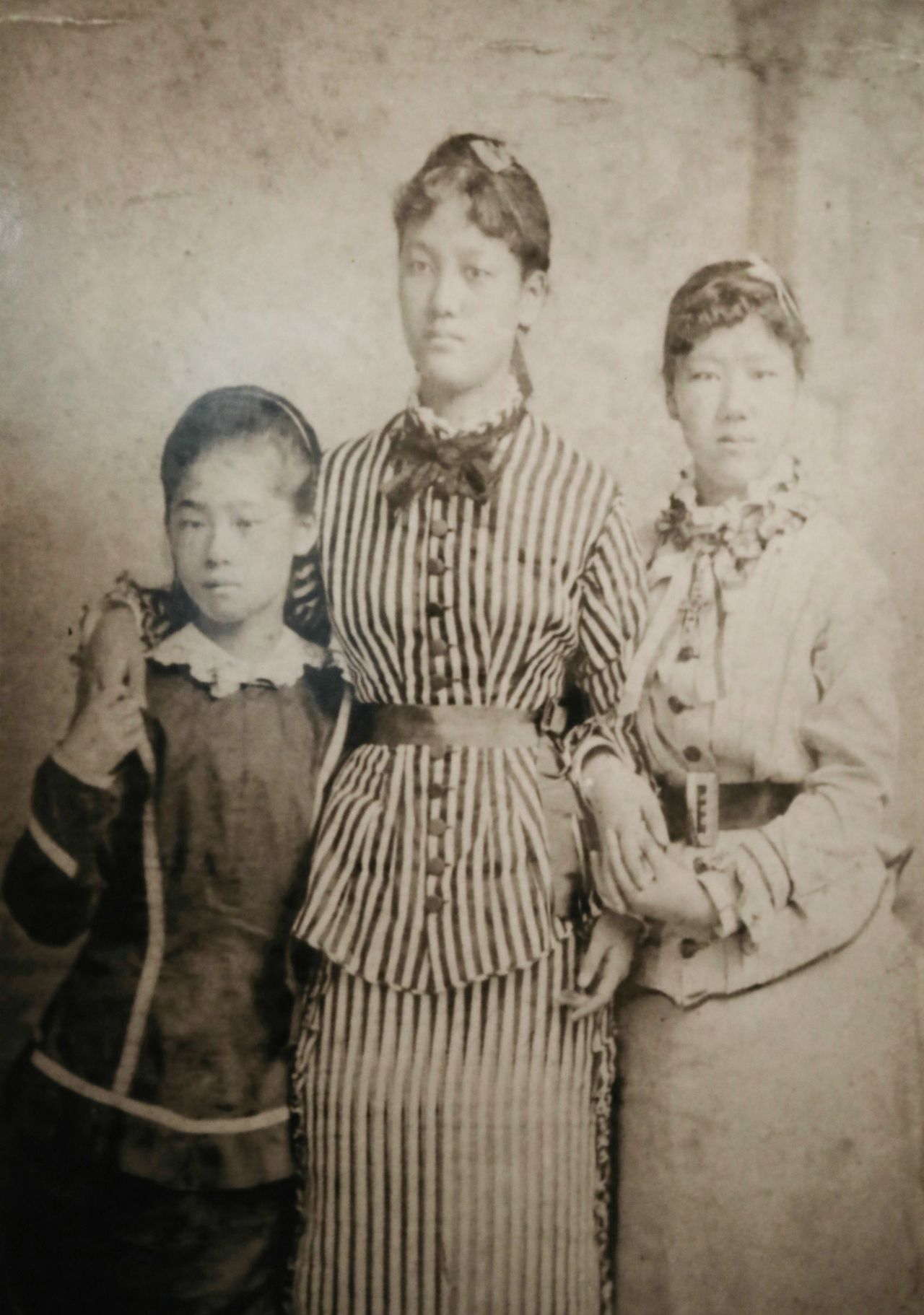
The delegation of female Japanese students, photographed at the Centennial Exposition in Philadelphia, 1876. From left to right, Tsuda Umeko, Yamakawa Sutematsu, Nagai Shigeko. (Courtesy Tsuda University; © Jiji)
While in Washington D.C., Tsuda had a significant meeting with Mori Arinori, who went on to become Japan’s first minister of education. No doubt she was influenced by his belief in Japan’s need to expand education in order to modernize, and she received support from him both directly and indirectly when she became an educator after returning to Japan.
Different Paths
Although Tsuda had mastered the English language, upon returning Japan, she struggled to find employment commensurate with her abilities. At best, she was hired as a part-time English teacher at a girls’ school, then employed as a tutor to the daughters of Itō Hirobumi, who she no doubt met on the Iwakura Mission, and who went on to become Japan’s first prime minister.
It is worth noting that Tsuda had some involvement in the world of politics through Itō. In those days, it was common for politicians to use the services of geisha, and she was dismayed at witnessing men treat women as playthings. She lost her trust in men, and this was perhaps one reason why she remained single throughout her life.
Tsuda came to believe that not being able to attend university had prevented her from advancing to a professional career. Ōyama (née Yamakawa) Sutematsu and Uryū (née Nagai) Shigeko, her fellow students on the Iwakura Mission, both undertook university studies in the United States, no doubt leaving Tsuda wishing she had too. The three became close friends, helping one another after their return, despite some rivalry between them.
Interestingly, the three took very different paths later in life. Sutematsu married army leader Ōyama Iwao and became a housewife, while Shigeko married naval commander Uryū Sotokichi, and continued working while she raised their children. Of the three, only Tsuda remained single, and spent her life as a career woman. The patterns of their respective lives can still be seen reflected in the lives of educated women in contemporary Japan.
Studies in Biology
Disenchanted with prospects in Japan, Tsuda returned to the United States on her own to realize her dream of university education. The Peeresses’ School (now Gakushūin), her employer at the time, allowed her to divert her income towards her study abroad, and she also received a partial scholarship at Bryn Mawr College, in Philadelphia. As in Japan at the time, higher education for women and men in the United States was segregated, and Bryn Mawr was one of the so-called Seven Sisters group of elite women’s colleges. Tsuda lived in the university dormitory, received a rigorous education, and graduated with flying colors.
It is noteworthy that, while she majored in education and English, she also followed in her father’s footsteps in studying biology. She even cowrote papers with her adviser, Dr. Thomas H. Morgan, a prominent academic who went on to receive the Nobel Prize in Physiology or Medicine in 1933. Had Tsuda continued her studies to postgraduate level, she might have led a very different life. Instead, she chose to return to Japan.
A University for Women
Tsuda returned to Japan in 1892, aged 28. She resumed her post teaching English at the Peeresses’ School, with a growing desire to found a school based on her ideals. At the time, the only higher educational institution for women in Japan was Tokyo Women’s Normal School (now Ochanomizu University), a national university. Tsuda hoped to found a private women’s university, but faced many hurdles to achieving this.
Her greatest obstacle was securing funding, as she was hampered by her low earning capacity as a woman. Around this time, Naruse Jinzō founded Japan Women’s University, thanks to funding he secured through the assistance of political and industrial giants such as Itō Hirobumi, Ōkuma Shigenobu, and Shibusawa Eiichi. However, it was not as easy for Tsuda to attract financial support. The best she could do was gather smaller donations from the United States through her church connections.
The second challenge she faced was the lack of demand for women’s education and difficulties in attracting potential students. Tsuda eventually managed to entice 10 graduates of church-operated mission schools for her school when it opened.
A third hurdle to realizing her dream was the difficulty in finding capable teachers due to the lack of educational institutions for women. Tsuda again used her connections to arrange to hire American educators including Alice Bacon and Anna Hartshorne.
After overcoming these and other obstacles, Tsuda finally opened Joshi Eigaku Juku in 1900 in a refurbished house in Kōjimachi, Tokyo. The school underwent repeated remodeling before relocating to the site of the Seishū Jogakkō three years later, thanks to the generosity of American donors. It was here that it finally took on the appearance of a real school.
The school’s main focus was English language studies, and the students excelled under the passionate training of Tsuda and the other faculty. In 1903, the Ministry of Education reorganized post-secondary schools into senmon gakkō (professional schools), and Joshi Eigaku Juku was approved as one of them. The school earned such a reputation for its teaching that graduates were exempted from the government examination for the English teaching certificate.
Tsuda’s Legacy
At the age of 53, Tsuda fell ill, which forced her to retire from her post of 20 years as the school principal two years later. Following her retirement, she continued to battle illness for many years. After she passed away in 1929, aged 64, the school was renamed Tsuda Eigaku Juku in her honor.
Tsuda University, as it is now known, remains a prominent force in women’s education in Japan. Although the university previously taught home economics, as was common at women’s schools, it has since done away with this. Today, it is a unique institution specializing in teaching and research in education studies and liberal arts, particularly English.
Tsuda Umeko remained single in a society where over 90% of the population got married. Her biographies show fleeting attractions to men. She was also encouraged to marry by those close to her, and was introduced to prospective partners, yet she chose to remain single. She may have believed that this way of life, unburdened by the responsibility of caring for a family, was best suited for achieving her dream of
津田梅子:独身を貫き、女性の高等教育に大きな足跡を残した高学歴女子の先駆者
社会 文化 教育 歴史 ジェンダー・性幼少期にアメリカへ留学
津田梅子は1864(元治1)年に農学者・津田仙の娘として幕末の江戸に生まれた。1871(明治4)年、日本で最初の女子留学生の一人として、岩倉使節団に参加して渡米。わずか7歳前後の少女が自分の意思で渡米を決められるはずもなく、父の決断によるところが大きい。女子教育の重要性を説き、政府に女子留学生の派遣を許可させた北海道開拓使次官の黒田清隆と仙は旧知の仲だった。そんな黒田が、仙の娘を候補に推してくれたのである。仙は江戸幕府時代にアメリカに滞在した経験があり、遅れた日本の発展にはアメリカを見聞する必要があるとつくづく考えていた。その考えを娘に半分押し付けたとも言える。
梅子はワシントンのランメン家に寄寓(きぐう)して初等・中等教育を受ける。本人の能力と努力のおかげで英語と基礎的な学問を習得する。大学進学を希望したが、滞米生活が10年に及んだことや、経済的な制約もあり、帰国を選択した。この滞米中に梅子は洗礼を受けてキリスト教信者になっている。
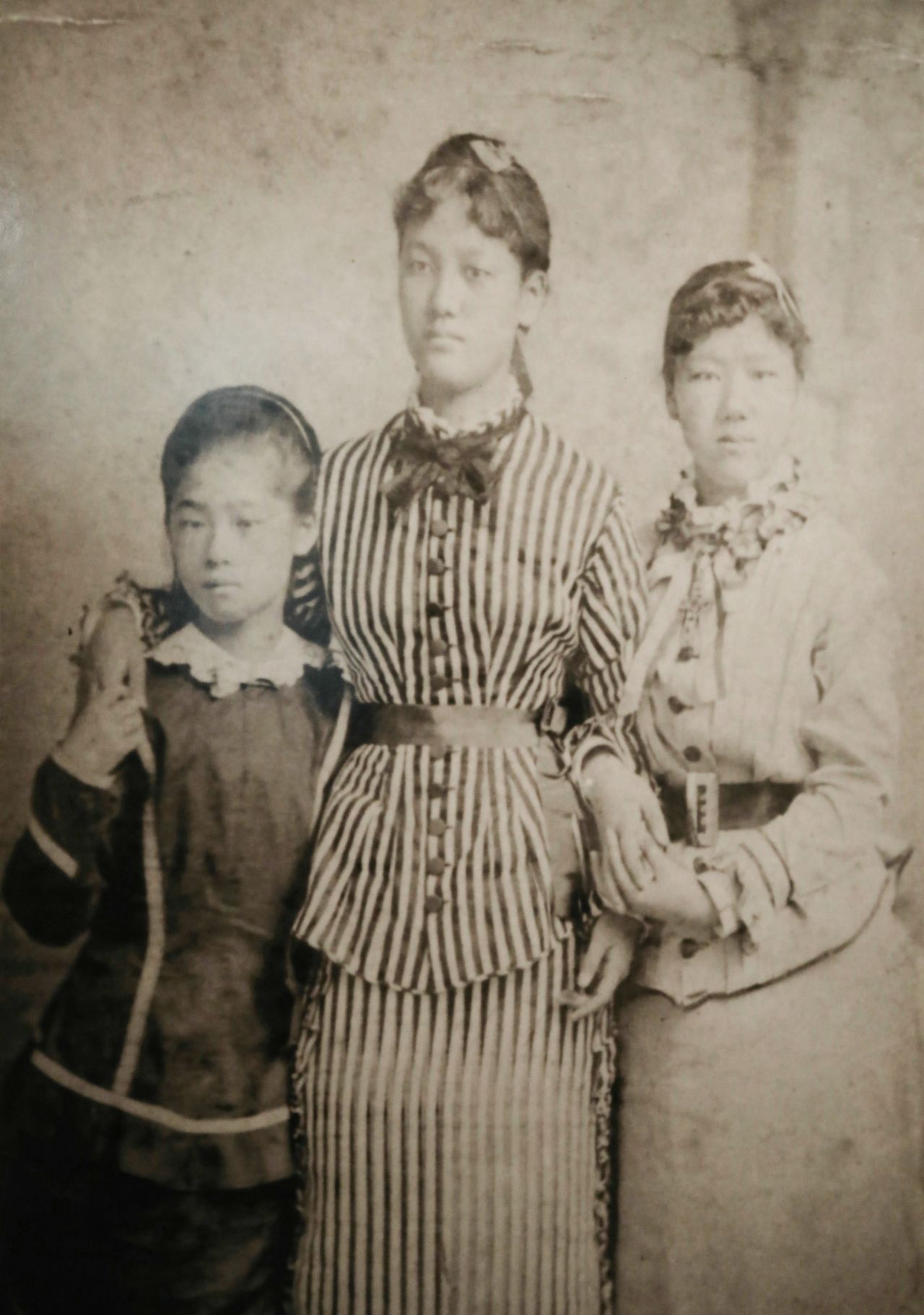
1876年フィラデルフィアで博覧会を見学した時の女子留学生たち。左から津田梅子、山川捨松、永井繁子(津田塾大学所蔵、時事)
梅子はワシントン滞在中に一人の日本人に出会う。それは後に初代文部大臣になる外交官の森有礼である。日本の発展のためには教育が不可欠と信じていた森の影響を受けたことは間違いなく、梅子が後に教育者となる礎となった。帰国後も直接間接に支援を受けることになる。
女子留学生の三者三様の生き方
英語をマスターした梅子であったが、日本ではなかなかいい定職がなかった。せいぜい女学校の英語の非常勤講師ぐらいであったが、後に首相になる伊藤博文の家に寄寓して、娘の家庭教師になった。伊藤は岩倉使節団の重要メンバーだったので、面識があったのであろう。
私は彼女が伊藤を通じて政治の世界を知ったことに着目したい。当時の政治家は夜な夜な芸者などと遊ぶのが常であり、女性が男性の遊び道具になっている姿に失望したし、男性不信の情を持ったのである。こうした経験が彼女をして生涯独身を貫く要因の一つになったのではないか。
同時に梅子は自分が大学教育を受けていないことが、独立した職業人として生きていけない理由ではないかと思うようになった。さらに岩倉使節団で同じ留学生であった大山(旧姓・山川)捨松と瓜生(旧姓・永井)繁子はアメリカで大学教育を受けたのであり、自分も彼女たちと同様に大学教育を受けたいと思ったに違いない。この三者は後に親しい友人としてお互いに助け合うが、微妙なライバル心もあった。
さらに彼女たちは、女性の生き方として三様の人生を歩んだことを強調したい。大山捨松は陸軍幹部の大山巌に嫁いで専業主婦、瓜生繁子は夫の海軍幹部・瓜生外吉との共働きで子育てにも励んだ。しかし梅子だけは結婚しないで、独身のキャリア女性としての人生を歩んだ。これら高学歴女性たちの生き方の違いは、現代の大卒女子の生き方にも当てはまるのではないか。
生物学者になった可能性も
日本で悶々(もんもん)としていた梅子は、単身で渡米して大学留学の夢を果たす。当時勤務していた華族女学校が給料を留学費に流用することを認めてくれたし、留学先のブリンマー大学も奨学金を支給してくれたからである。当時の日本と同様にアメリカでもほとんどの大学が男女別学であり、同大はセブンシスターズと称されるほどの名門女子大学であった。梅子は寄宿舎に入って、高い水準の大学教育を受けて、優秀な学生として卒業する。
ブリンマー時代の梅子に関して特筆すべきことは、主として教養科目や英語を学んでいたが、父・仙のDNAを引き継いで生物学をも学んでいて、担当教授のモーガンと共同論文をも書いた。彼は後にノーベル賞を受賞したほどの科学者だったので、梅子も生物学の研究を続けるべく大学院に進んでいれば、異なる人生を送ったかもしれない。しかし彼女はその道を選択せず日本に帰国した。
困難を乗り越えて女子英学塾を開校
梅子の帰国は1892(明治25)年で28歳の時であった。従来の勤務先である華族女学校で英語を教えながら、徐々に自分の理想とする学校を創設したい気になっていった。特に女子の高等教育は東京女子高等師範学校(現・お茶の水女子大学)に限られていたので、官立ではなく私学の女子高等教育校の設立を夢見ていた。
しかし、それにはいくつかの大きな壁があった。第一に、官立ではないので自己資金を用意しなくてはならなかった。それは当時、女性の細腕一本では至難の業であった。少ししてから成瀬仁藏が日本女子大学校(現・日本女子大学)を創設したが、彼は伊藤博文、大隈重信、渋沢栄一など当時の政財界の大物を動かして、多額の資金を集めてから学校を創設した。成瀬に比較すると、梅子の力では多額の資金を集めるのは困難であった。せいぜいキリスト教関係のコネで、アメリカから小額の寄付を集めるのが精いっぱいだった。
第二に、当時は女子の高等教育への需要は少なく、生徒集めもそう容易ではなかった。しかし当時はキリスト教関係の中等教育機関(高等女学校)にキリスト教の学校(いわゆるミッションスクール)があり、その卒業生から何とか10名の学生を集めた。
第三に、まだ女子教育機関が充実していなかったので、教師になる人材を確保するのが大変だった。そこで梅子は彼女自身のアメリカでのコネクションを活用して、アリス・ベーコンやアナ・ハーツホンなどアメリカ人女性の教師を個人のつながりで採用した。
さまざまな苦労はあったが、1900(明治33)年に女子英学塾は、麹町の一番町の民家を改造した質素な校舎で開校した。その後何度か校舎を改築し、3年後に麹町五番町の静修女学校跡に移った。ここで、ようやく学校らしい学校になったのである。移転の費用はアメリカの篤志家からの寄付で賄った。
学校でどのような科目を教えたのかといえば、校名通りに英語を中心にした科目を教えた。梅子をはじめ教師陣の熱心な指導で、生徒の英語力は飛躍的に向上した。1903(明治36)年、専門学校令によって国家の認める女子教育機関となり、1905(明治38)年には塾の卒業生は無試験で英語教員の資格を取得できるようになってさらに名声を高めた。
独身を貫き、大きな夢を実現
53歳の時に梅子は病気になり、その2年後に20年近く務めた塾長を辞任した。その後闘病生活を送り、1929(昭和4)年に64歳で死去し、校名は津田英字塾に変更された。
現代に至って津田塾大学は女子の名門大学として君臨しているが、一つ付言しておきたいことがある。それは女学校に特有な家政科を一時は設けたが、今はそれもなく英語を筆頭にしたリベラルアーツ、教養科目を中心に研究・教育をするユニークな女子大となっていることである。
最後に、梅子の人生について述べることがある。生涯独身を貫いたことに関してである。国民90%以上の皆婚社会の当時において、なぜ彼女が独身だったのか、その理由を述べておこう。詳細な伝記を読むと、若い頃に異性に淡い恋心を抱いたとの記述もある。まわりから結婚を勧められ(特に仲の良かった既婚者の大山捨松、瓜生繁子など)たし、見合いらしきことにも応じている。しかしなぜ独身だったのか。
伊藤博文ら政財界人の影響で梅子に男性不信の情のあったことは前述した。さらに言えば、女子高等教育で英語を教える学校を創設するという大きな夢を実現するためには、家族を持ってさまざまな苦労を経験するより、一人身でキャリアを貫き通すのが最適と考えたからではないだろうか。
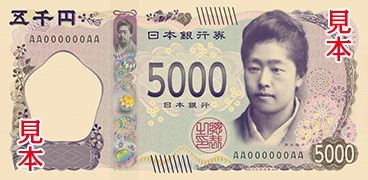
2024年に発行される、津田梅子の肖像画が採用された新五千円札の見本(財務省提供、時事)
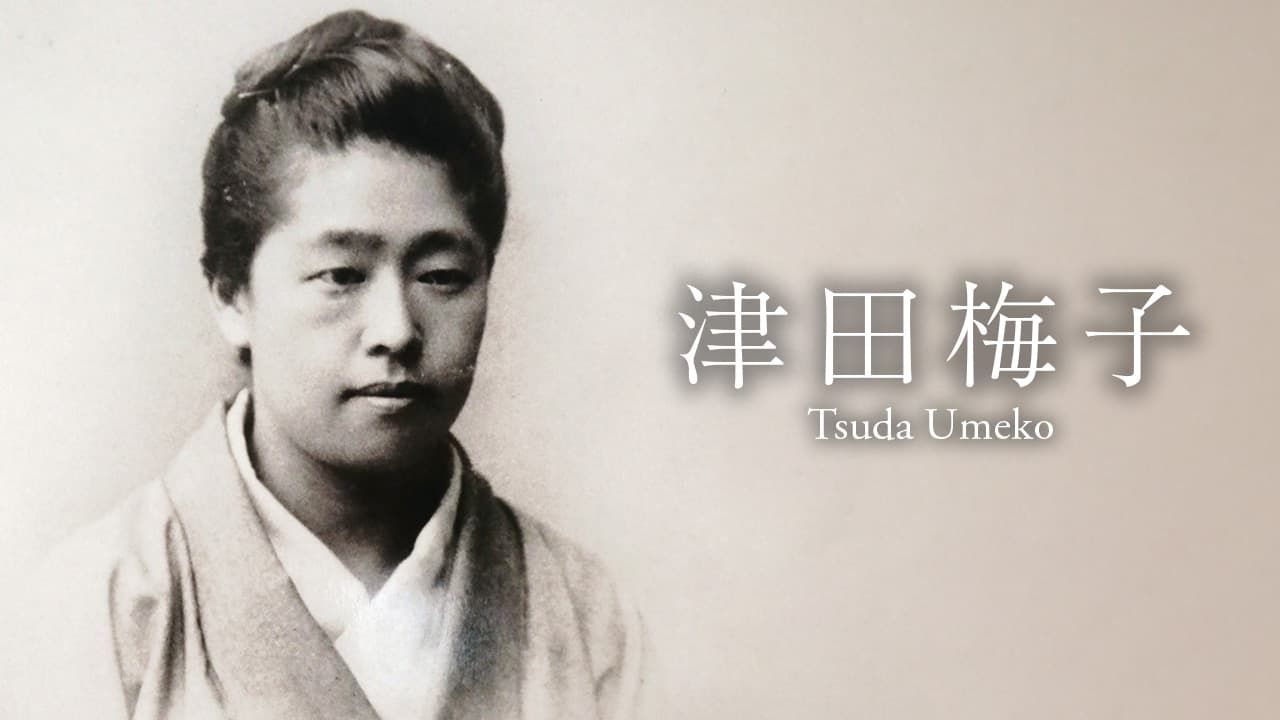
バナー写真=津田梅子の肖像写真(津田塾大学所蔵、時事)
この記事につけられたキーワード
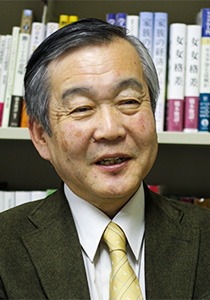
京都大学名誉教授。1943年兵庫県生まれ。Johns Hopkins University Ph.D. 仏米英独の大学、研究機関で研究・教育に従事後、京都大学経済学部教授を経て、同志社大学、京都女子大学で教鞭を執る。元日本経済学会会長。主な著書に、『格差社会:何が問題なのか』(岩波新書、2006年)、『女女格差』(東洋経済新報社、2008年)、『津田梅子』(平凡社新書、2022年)など。著書は編集を含めて、和文・英文で100冊以上。

No comments:
Post a Comment