Showing posts with label Gideon Levy. Show all posts
Showing posts with label Gideon Levy. Show all posts
2025-10-19
The Killing of Gaza Reports on a Catastrophe Gideon Levy
The Killing of Gaza Reports on a Catastrophe
Gideon Levy
VERSO 2024
—
Contents
Introduction: Catastrophe Report
PART I
2014
1. What Were We Thinking? July 10
2. Death to Arabs July 13
3. What Does Hamas Want? July 20
4. Go to Gaza, See for Yourself August 10
5. War, What War? September 18
2015
6. A Futile Report June 25
7. No Picnic, No Tragedy July 2
2016
8. It's Never Israel's Fault: Two Gazan Children Are Dead and Their Story
Goes Untold March 17
9. If Gazans Don't Fire, No One Listens June 1
10. Broken Families in Limbo July 8
2017
11. The Wall of Insanity August 13
12. Sacred Sovereignty November 2
2018
13. Strangling Gaza April 5
14. Bleeding in the Sand April 24
15. In the Fields of Philistia May 18
16. We Should Be Saluting the Gaza Strip July 15
2019
17. "It Would Be More Convenient If We'd Died" June 7
18. "My Future Turned Black" July 12
19. The Trial of "Inmate X" October 18
2020
20. Happy New Year, Gaza 2 January 21. Nobody Opposes the War May 16
2021
22. One Image, 2 Million People October 10
23. Congratulations: The Gaza Ghetto Now Has a Fence Around It December
2022
24. The Only Way March 31
25. The War of Change and Healing August 7
26. When Roger Waters Cried August 11
27. An Election for Whites Only October 30
2023
28. The People of Israel Will Remember Its Children April 23
29. I Was Wrong About Netanyahu May 11
30. Do You Really Want to Go On Living Like This? May 14
PART II
OCTOBER
31. Israel Can't Imprison Two Million Gazans Without Paying a Cruel Price
October 9
32. The Reckoning Must Be with Hamas, Not with All Gazans October 12
33. A Bloodcurdling Visit to Israel's South After the Hamas Attack Evokes
ISIS and Ukraine October 14
34. On Kibbutz Be'eri, Time Stood Still: Traces of the Life Before the Massacre October 19
35. It Is Forbidden to Even Empathize with Innocent Gazans October 26
36. Northern Inexposure: Former "Peace" on Lebanon Border Replaced by
Deathly Silence October 29
NOVEMBER
37. These Are the Children Extracted After the Bombardment of Gaza's
Jabalya Refugee Camp November 2
38. If We Can't See the Eyes of Gaza's Dead Children, Can We See Children at All? November 5
39. If Israel Resists Examining Its Own Failures, Another War Awaits Us
November 9
40. A Population Transfer Under the Cover of War: A Visit to the Forsaken Land of Settler Militias November 18
41. Giora Eiland's Monstrous Gaza Proposal Is Evil in Plain Sight November 23
42. Forty-Two Palestinians Killed in Seven Weeks: A Visit to a West Bank
City That Has Become a Firing Zone November 25
43. Is It Permissible to Rejoice in the Joy of Palestinians Released from
Israeli Prisons? November 26
DECEMBER
44. While War Rages in Gaza, Israeli Troops and Settlers Grow Trigger-Happy in Ramallah December 2
45. Israel Has Turned Its Back on the Hostages in Favor of Destroying Gaza
December 2
46. The Israeli Army's Incursions Are More Frequent and Violent; the Jenin Refugee Camp Is Now Little Gaza December 8
47. By Trying to Humiliate Gaza to Its Core, Israel Is the One Being Humiliated December 10
48. If Settler Violence Wasn't Enough, Israel Is Now Depriving Jordan
Valley Palestinians of Water December 16
49. Would Israel Be Any Different Without Netanyahu? December 21
50. A Disabled Palestinian Was Carrying a Bag of Lollipops When He Was
Shot by Israeli Troops December 23
51. When Israel Abuses the Hostages That It Holds December 23
52. There's No Way to "Explain" the Degree of Death and Destruction in
Gaza December 28
53. The Legitimization of Evil Will Remain with Israelis Long After the War in Gaza Ends December 31
2024
JANUARY
54. No Israeli Soldiers Have Stood Up and Refused to Participate in This
Evil War January 3
55. Someone in Israel's Army Decided to Bring This Quiet West Bank Area into the Circle of Violence January 5
56. Palestinians in Gaza Are Being Held Hostage by Israel and Hamas
January 11
57. If It Isn't a Genocide in Gaza, Then What Is It? January 14
58. The Gaza I Loved Will Never Be the Same January 24
59. Israel's Mainstream Brought Us to The Hague, Not Its Lunatic Fringes
January 28
FEBRUARY
60. Israel's Dignity Will Be Damaged, Hamas Will Be Crowned Winner, but the War Will End February 7
61. Israeli Border Police Killed a 4-Year-Old Palestinian Girl, Then Took 10
Days to Return Her Body February 10
62. An Israeli Incursion into Gaza's Rafah Will Be an Unprecedented
Humanitarian Catastrophe February 11
63. With the "Perfect" Hostage Rescue Operation, Israel's Dehumanization of Palestinians in Gaza Reached a New Low February 14
64. Palestinian Teens Are Writing Wills, and for Good Reason February 17
65. The World Must Force Peace on Israel February 18
66. Israel Is Blaming Everyone but Itself for Its Own Disgrace February 22
67. Israel Has No Real Alternative to Netanyahu February 25
MARCH
68. Gaza's Night of Death and Hunger March 3
69. After 150 Days of Death and Destruction in Gaza, Israel Is Neither Stronger Nor Safer March 7
70. Israeli Soldiers Shot Two Brothers to Death, a Third Is Wounded and a
Fourth Is Arrested March 8
71. When Israel Becomes Like Hamas March 10
72. Israeli Leftists, Shake Off the Shock of October 7 and Open Your Eyes to Gaza March 13
73. Every Person Killed in Gaza Has a Name March 20
APRIL
74. Four Black Dots in Khan Yunis, Gaza April 7
75. In Six Months in Gaza, Israel's Worst-Ever War Achieved Nothing but
Death and Destruction April 10
76. If Iran Attacks Israel, the Blame Lies on Israel's Irresponsible Decision-
Makers 12 April
77. Israel's Right-Wing Can Never Seem to Get Enough Death and
Destruction 21 April
78. Palestinian Released from Israeli Prison Describes Beatings, Sexual Abuse and Torture 28 April
MAY
79. Let Israel's Leaders Get Arrested for War Crimes May 5
80. What About the Palestinian Hostages? 16 May 81. At Last, Justice; but Will Israelis Start Waking Up? May 23
82. Obeying the ICJ Order Is Israel's Last Opportunity to Save Itself from
Becoming a Pariah State May 26
JUNE
83. Biden Wants Peace, but Israel Wants War June 2
84. Why Did Israel Conceal Hundreds of Gazans' Deaths in "Perfect"
Hostage Rescue Operation? June 12
Afterword
Acknowledgments

Gideon Levy: an Israeli journalist standing up for Gaza | VPRO Frontlinie
Gideon Levy: an Israeli journalist standing up for Gaza | VPRO Frontlinie
Frontlinie
84,785 views Oct 17, 2025 #frontlinie #gaza #interview
Gideon Levy is an award winning Israeli journalist who brings to light the injustices faced by the Palestinian people. Dutch journalist Bram Vermeulen spoke with Gideon Levy a few weeks before the ceasefire. They discuss the destruction of Gaza, recognition of Palestine by European countries, and the ways in which the genocide is denied through daily life in Tel Aviv - where people in the streets can hear the bombs but choose to ignore them.
In the VPRO series Frontlinie, Bram Vermeulen delivers in-depth foreign journalism. Subscribe to the Frontlinie newsletter and receive extra stories, background information and reading, viewing, and listening tips in your inbox every two weeks: https://www.vpro.nl/frontlinie (in Dutch.)
#frontlinie #gaza #interview #bramvermeulen #palestine #gideonlevy
==
Transcript
I'm Israeli like any other one and I
carry all the responsibility like any
other Israeli. There is no Palestinian
state and unfortunately I think there
will never be one. Israel in it is in
its worst condition ever go.
Actually, all the Israelis we spoke to
this week um are 100% behind the actions
of Israel inside Gaza. And they are even
saying that the images coming out of
Gaza are fake news.
That's a typical product of a very
efficient brainwash system
that the Israelis are unfortunately
exposed to. They choose it.
The media chooses not to tell Israelis
what's going on in Gaza. And the
Israelis are very happy about it. They
don't want to know. And instead, we are
still all of us on the 7th of October
with all the atrocities and crimes which
were horrible and the hostages which is
also a horrible scene. But what about
2.3 million people who are dying in
starvation, who are killed in dozens
every day systematically.
What about making Gaza an unlivable
place on a systematic basis? Every day.
Every day. Another neighborhood, another
village, another quarter. Yeah.
So, is that proof of that um the
citizens of this country are in complete
denial
or or does everyone know what is going
on?
Israel is in denial for many years
because they deny also the occupation.
For them, the occupation is a normal
phenomena. The fact that 5 million
people have no rights for them, for most
of the Israelis, it's normality.
not to speak about it that it is
legitimate.
And now the 7th of October also gave
them much more power to deny because all
of a sudden we are the victims. They are
comparing it to the Holocaust. They say
it's the second catastrophe after the
Holocaust as if it's comparable at all.
Right. But are you saying that Israel
has actually always been like that or
the 7th of October has radicalized?
Israel has both both are true. Israel
always lived in denial. By the way, ever
since it was born, ever since the first
lie about a people without a land which
arrives to a land without a people. This
was the first denial of Zionism. But it
lives in a denial. After the 7th of
October, we came out of the closet. Now
the deny is much deeper and also the
legitimacy to commit crimes is much
bigger because look what they have done
to us. So now we have the right to do
whatever we want.
Uh big countries like France, the UK,
Canada, Australia are now recognizing
the Palestinian state. Do you feel that
this is going to force the Israeli
government to change their course?
Even not for a second. It is a hollow
lip service. I've been yesterday to the
West Bank on the day of the declaration.
What do you think changed there? There
is no Palestinian state and
unfortunately I think there will never
be one because the only state which
counts for this is Israel and Israel
will never recognize a real viable
Palestinian state.
And those recognitions in the UN and the
initiative of France and others very
impressive but it is a hollow lip
service to show your public opinions
that you are doing something for Gaza.
It will not stop the war. It will not
promote a Palestinian state. We are
farer than ever from a Palestinian
state.
So who is this recognition for?
For their own public opinions, for their
own consciousness, for their own moral
thinking. Here we do something. There is
a genocide and here we do something. We
just don't sit and do nothing. We are
doing something. Nothing more than this.
Can you show on the map what is actually
left of the Palestinian state as it was
envisioned?
First of all, the Palestinian state was
the entire land
until 48. There was the the plan of of
dividing the land and the Palestinians
said no. You have to remember this.
Israel said yes. Yes. You can see it
maybe in my book. And what is left, what
is totally left is 25 around 25% of the
original Palestine. And now Israel is
not ready even over the 25. We want them
to compromise not over the whole land.
We want them to compromise over the 25%.
Even this we are not ready.
And there will be never a Palestinian
state here because in these 25% which
are left, namely the West Bank and Gaza.
But in the West Bank, there are 700,000
settlers. Who is going to evacuate them?
They are part of them very violent
people. It will be impossible that they
will live under Palestinian authority.
And if they are not evacuated, you don't
have a Palestinian state. We have to
change the discourse. We have to realize
that the Palestinian state is a train
that left the station and not continue
to talk about it while knowing that it
will never happen.
2025-06-04
Gideon Levy의 이스라엘 사회 비판
ChatGPT - 동아시아의 평화와 화해
이스라엘 저널리스트 Gideon Levy 의 이스라엘 사회 비판을 요약해주세요.
1] 제가 올린 자료 분석을 하되, 제가 올리지 않은 자료들을 총동원하여 분석해주세요.
2] 팔레스타인 문제에 대한 이스라엘 사회안의 다른 여러 그룹의 시각을 구별하고, 그들의 영향력을 고려해 주세요.
3] 이스라엘의 대 팔레스타인 정책의 진화 evelution, 그리고 prospect
4] 마지막으로 Gideon Levy 개인의 이스라엘과 팔레스타인에 대한 생각의 변화에 대해 요약해주세요.
위의 1-4를 그 순서대로 작업할 필요는 없습니다.
---
자료:
은서의 말:
Gideon Levy ChatGTP 요약
Gideon Levy 이 보는이스라엘과 팔레스타인 요약 부탁
---
이스라엘 저널리스트 Gideon Levy 의 이스라엘 사회 비판을 요약해주세요.
1] 제가 올린 자료 분석을 하되, 제가 올리지 않은 자료들을 총동원하여 분석해주세요.
2] 팔레스타인 문제에 대한 이스라엘 사회안의 다른 여러 그룹의 시각을 구별하고, 그들의 영향력을 고려해 주세요.
3] 이스라엘의 대 팔레스타인 정책의 진화 evelution, 그리고 prospect
4] 마지막으로 Gideon Levy 개인의 이스라엘과 팔레스타인에 대한 생각의 변화에 대해 요약해주세요.
위의 1-4를 그 순서대로 작업할 필요는 없습니다.
---
2025-06-03
My life, covering Israeli war crimes for decades | Gideon Levy | UNAPOLO...
My life, covering Israeli war crimes for decades | Gideon Levy | UNAPOLOGETIC
Middle East Eye
38,132 views Mar 26, 2025
UNAPOLOGETIC
===
In this episode of UNAPOLOGETIC, we speak with Gideon Levy, one of Israel’s most outspoken and controversial journalists. A longtime Haaretz journalist and columnist, Levy has spent decades documenting the occupation and challenging dominant Israeli narratives. We discuss Israel’s latest assault on Gaza, Netanyahu’s political calculations, and how Israeli society has responded. We also explore how the Israeli media and culture has eroded Israeli society, the future of Gaza and the West Bank, Palestinian leadership, and what a just resolution to the conflict might look like. Finally, Levy reflects on his own political transformation and what it has cost him to tell the truth in his society.
UNAPOLOGETIC is hosted by Ashfaaq Carim
-------------------------------
Chapters
00:00 Intro
02:30 Israel's latest escalation in Gaza
06:50 Israel was always going to break the ceasefire
09:30 Why is there no opposition to the war in Israel
19:30 Israeli society's future
21:30 The fate of the Palestinians
27:30 How Gideon's perceptions have changed
37:20 How covering the Intifada changed Gideon
43:10 Every Israeli government tried to undermine Oslo
50:05 Haaretz
58:05 Has Palestinian leadership failed
01:02:10 What's the path to Palestinian liberation
===
Intro
people so many of them are so convinced that after the sth of October Israel has
the right to do whatever it Wass Without Limits no moral limits no legal limits
nothing you and Israeli you obviously have kids who who live in Israel what's
what do you think is the future of the society going to be like if an Israel of
2025 to maintain a coalition you need to kill dozens and
hundreds and thousands and maybe tens of thousands of more Palestinians in Gaza
what did you think Israel will be be like in 2025 when you were working in in
in 1979 for Shimon pz we were told and on a systematic basis that we are the
David and the Arabs are the golad the question should be what kind of Israel
will be in 50 years and who wants to live in such an Israel is there anything else you want to you want to say
something I may not have asked you uh which you think is relevant I don't think that there is anything you didn't
ask in one hour and 10
minutes hi welcome to another episode of unapologetic I'm your host ashah kareim and I'm very pleased today to be
speaking to Gideon Levy Gideon welcome to the show thank you shag I'm very happy to be with you uh Gideon won't be
a stranger to many of our viewers Gideon Levy's been a journalist and a colonist for haret for decades uh before that he
actually started off his career as a a spokesperson for Shimon Perez before reporting in the in the West Bank and
occupied territories his journalism has been very brave and very divisive uh at
least in Israel um so Gideon thank you for your time thank you for having me uh
it's going to be a long discussion as usual uh we're going to be speaking about obviously Israel's latest escalation in Gaza what's driving that
and what the repercussions for that will be but we're also going to be looking back at the last 16 months uh Israel
Israeli society's response to what's occurring why that's happening um we're going to be talking about the future of
Gaza and the West Bank and Israel um and we're also going to be touching a little bit about you and your journey and and
and how your own perceptions uh have changed and and your observations um sort of throughout your career um so
yeah it's really really a pleasure to be speaking to you again thank you uh just just to start us off with so um just two
days ago uh Israel again Unleashed a lot of H on Gaza um this is after 16 days of
2025-06-02
The Punishment of Gaza by Gideon Levy

The Punishment of Gaza Kindle Edition
by Gideon Levy (Author) Format: Kindle Edition
4.7 4.7 out of 5 stars (123)
Israel's 2009 invasion of Gaza was an act of aggression that killed over a thousand Palestinians and devastated the infrastructure of an already impoverished enclave. The Punishment of Gaza shows how the ground was prepared for the assault and documents its continuing effects.
From 2005-the year of Gaza's "liberation"-through to 2009, Levy tracks the development of Israel policy, which has abandoned the pretense of diplomacy in favor of raw military power, the ultimate aim of which is to deny Palestinians any chance of forming their own independent state. Punished by Israel and the Quartet of international powers for the democratic election of Hamas, Gaza has been transformed into the world's largest open-air prison. From Gazan families struggling to cope with the random violence of Israel's blockade and its "targeted" assassinations, to the machinations of legal experts and the continued connivance of the international community, every aspect of this ongoing tragedy is eloquently recorded and forensically analyzed. Levy's powerful journalism shows how the brutality at the heart of Israel's occupation of Palestine has found its most complete expression to date in the collective punishment of Gaza's residents.
174 pages
=================================
Product description
Review
"There are more terrible atrocities in the world than what is being done to the caged prisoners of Gaza, but it is not easy to think of a more cruel and cowardly exhibition of human savagery, fully supported by the US, with Europe trailing politely behind. Gideon Levy's passionate and revealing account is an eloquent, even desperate, call to bring this shocking tragedy to an end, as can easily be done."--Noam Chomsky
"Levy has a way with words that leads him to some brilliant indictments of Israel."--Asa Winstanley, Electronic Intifada
"Levy has made it his exclusive mission ... to document the grim and brutal facts of the occupation, to tell the stories he knows Israelis do not want to hear ... To this shiny nation--democratic, prosperous, confident in its righteousness--Levy holds up Gaza like a mirror."--Ben Ehrenreich, Nation
"Gideon Levy is among a small group of Israeli journalists giving a face and a voice to Palestinians in the world's most intractable conflict."--Irwin Block, Montreal Gazette
"Levy ... deals with the politically and emotionally charged subject of the hardships of Palestinians living in the West Bank and Gaza, and their conflicts with the Israeli military and Jewish settlers."--Am Johal, Rabble.ca
"The story of Gideon Levy--and the attempt to deride, suppress or deny his words--is the story of Israel distilled. If he loses, Israel itself is lost."--Johann Hari, Independent
"An Israeli dedicated to saving his country's honour."--Nick Lezard, Guardian
About the Author
Described by Le Monde as a "thorn in Israel's flank", Gideon Levy is a prominent Israeli journalist. For over twenty years he has covered the Israel-Palestine conflict, in particular the occupation of Gaza and the West Bank, for the Israeli newspaper Ha'aretz in his column "Twilight Zone."
Product details
Publication date : 11 August 2014
Amazon.com.au:Customer reviews: The Punishment of Gaza
From 2005-the year of Gaza's "liberation"-through to 2009, Levy tracks the development of Israel policy, which has abandoned the pretense of diplomacy in favor of raw military power, the ultimate aim of which is to deny Palestinians any chance of forming their own independent state. Punished by Israel and the Quartet of international powers for the democratic election of Hamas, Gaza has been transformed into the world's largest open-air prison. From Gazan families struggling to cope with the random violence of Israel's blockade and its "targeted" assassinations, to the machinations of legal experts and the continued connivance of the international community, every aspect of this ongoing tragedy is eloquently recorded and forensically analyzed. Levy's powerful journalism shows how the brutality at the heart of Israel's occupation of Palestine has found its most complete expression to date in the collective punishment of Gaza's residents.
174 pages
=================================
Product description
Review
"There are more terrible atrocities in the world than what is being done to the caged prisoners of Gaza, but it is not easy to think of a more cruel and cowardly exhibition of human savagery, fully supported by the US, with Europe trailing politely behind. Gideon Levy's passionate and revealing account is an eloquent, even desperate, call to bring this shocking tragedy to an end, as can easily be done."--Noam Chomsky
"Levy has a way with words that leads him to some brilliant indictments of Israel."--Asa Winstanley, Electronic Intifada
"Levy has made it his exclusive mission ... to document the grim and brutal facts of the occupation, to tell the stories he knows Israelis do not want to hear ... To this shiny nation--democratic, prosperous, confident in its righteousness--Levy holds up Gaza like a mirror."--Ben Ehrenreich, Nation
"Gideon Levy is among a small group of Israeli journalists giving a face and a voice to Palestinians in the world's most intractable conflict."--Irwin Block, Montreal Gazette
"Levy ... deals with the politically and emotionally charged subject of the hardships of Palestinians living in the West Bank and Gaza, and their conflicts with the Israeli military and Jewish settlers."--Am Johal, Rabble.ca
"The story of Gideon Levy--and the attempt to deride, suppress or deny his words--is the story of Israel distilled. If he loses, Israel itself is lost."--Johann Hari, Independent
"An Israeli dedicated to saving his country's honour."--Nick Lezard, Guardian
About the Author
Described by Le Monde as a "thorn in Israel's flank", Gideon Levy is a prominent Israeli journalist. For over twenty years he has covered the Israel-Palestine conflict, in particular the occupation of Gaza and the West Bank, for the Israeli newspaper Ha'aretz in his column "Twilight Zone."
Product details
Publication date : 11 August 2014
Customer reviews
4.7 out of 5 stars
Chenoa
5.0 out of 5 stars Brilliant!
Reviewed in Australia on 13 April 2024
IMMEDIATELY bought it because of the 1 star reviews! Palestine will be FREE! 🇵🇸 🇵🇸 🇵🇸
2 people found this helpful
Helpful
Report
From other countries
=====
Kindle Customer
5.0 out of 5 stars Excellent and informative
Reviewed in the United Kingdom on 15 August 2024
Verified Purchase
The author knows at first hand what he is writing about.
He states that powerful countries support Palestinian oppression in Gaza. Should these arms suppliers stop their arms sales then Peace would soon follow. However arms sales for one major world power is King.
One person found this helpful
Report
Kelsey Quinn
5.0 out of 5 stars A Must Read
Reviewed in the United States on 28 February 2024
Verified Purchase
For the many people who back Israel unconditionally and have no concern for the Palestinian people, largely because they are so misunderstood due to being misrepresented in the news, this book is a must read. A real eye-opener, written by a Jewish person who speaks out truthfully, and he is well qualified to do so. He is also an excellent writer. I urge others to get a copy of this book and read it if they want to expand their knowledge and understanding of what has gone on for far too long in Gaza.
3 people found this helpful
Report
Alexandru Ersenie
5.0 out of 5 stars Augen aufmachen
Reviewed in Germany on 18 April 2013
Verified Purchase
Dass was uns täglich im Fernsehen gezeigt wird, ist nur eine Seite des Storys, und zwar die Seite die den "grossen" gut gefällt. Es geht hier um echte Journalismus, vom feinsten Art.
Es ist tatsächlich eine kronologische Zusammenfassung von Artikeln, die das Israel-Gaza Konflikt aus eine andere Perspektive darstellt....und die ist an manche stelle grausam...
Ein Buch voller Emotionen, sollte man jeder lesen der hinter Kulissen einen Einblick werfen möchte.
2 people found this helpful
Report
Translate review to English
Nobody
5.0 out of 5 stars What a book!
Reviewed in the United States on 3 January 2024
Verified Purchase
Gideon Levy doesn’t mince words much in this book. It’s a pretty easy and quick read and really gets to the heart of the matter. Chapters are concise and to the point.
This book not only accurately describes what happened during the time the book was written about, but I often caught myself saying “this could be describing the current situation” without changing anything but the dates.
A must read IMO
6 people found this helpful
Report
william beeby
5.0 out of 5 stars
A truly harrowing account of what happened in Gaza
Reviewed in the United Kingdom on 19 May 2011
Verified Purchase
Written by a self-described Israeli patriot this short book covers what happened in Gaza during the years 2006 to 2009 inclusively . Each essay-like chapter is dated to it`s one-day of narrative and covers an incident not only as it happens through the author`s eyes but also put into it`s historic perspective and context. The result of this is quite extraordinary in it`s depth and feeling of being close in each case to the Palestinian participants who are all named and detailed backgrounds are given.Surely it is unprecedented for a journalist from the opposition side to become so close to his subjects under some of the war conditions that prevail throughout these chapters in a seemingly endless recital.
A book I am glad to have purchased from Amazon and which has certainly enlightened me on many aspects of Israeli policy and pre-emptive actions towards the Gaza strip and it`s 1.5 million inhabitants. As Johann Hari says of the author Gideon Levy , he is perhaps the most heroic man in Israel today.
20 people found this helpful
Report
R. M. Peterson
4.0 out of 5 stars
"The only war in history against a strip of land enclosed by a fence"
Reviewed in the United States on 1 February 2011
That is how Gideon Levy characterizes the Gaza War of December 2008 and January 2009. Levy is a journalist for the Israeli newspaper "Haaretz". For twenty years he has covered the Israeli-Palestinian conflict, in particular the occupation of Gaza and the West Bank. This slim book is a collection of his columns on the Israeli treatment of the Gaza Strip after the withdrawal of Israeli forces (the supposed "liberation" of Gaza) in September 2005 through the summer of 2009.
I am somewhat ambivalent about the book. I value it as an alternative to the abysmal mainstream media coverage of the Israeli-Palestinian quagmire here in the U.S., but I sense that it too veers away, in the other direction, from sober objectivity (both in intent and effect).
In the U.S., the end of the Israeli military occupation of Gaza was much ballyhooed. But Levy, in THE PUNISHMENT OF PALESTINE, argues that Israeli withdrawal "did almost nothing to change the living conditions for the residents of the Strip":
"Gaza is still a prison, and its inhabitants are still doomed to live in poverty and oppression. Israel closes them off from the sea, the air and land, except for a limited safety valve at the Rafah crossing [into Egypt]. * * * Gaza has no chance of escaping its poverty under these conditions. Nobody will invest in it. Israel locked the cage, threw away the keys and left the residents to their bitter fate."
And matters then got worse, culminating in the Gaza War. Actually, as Levy points out, "war" is an example of Orwellian distortion of language in the interest of political misinformation. It certainly was not "an armed clash between armies." The staggering disparity in firepower is highlighted by the disparity in deaths - around 100 Palestinian deaths (about one-third of them children) for each of the thirteen Israelis who were killed. Although within Israel it was celebrated with all of the usual trappings of patriotic wars, in reality it was, as Levy quotes one senior officer, "a superb call-up and training exercise." And, in line with the title of Levy's book, it was one more step - a rather harsh one - in the punishment of Gaza.
Levy is at his best when he deals in the realm of facts, including the numerous accounts of the "collateral damage" - the children, women, and nose-to-the-grindstone apolitical men who have been killed or maimed simply because their unfortunate lot in life was to be among the caged Palestinians of Gaza. (Footnote: Israel made it much more difficult for Levy and his colleagues to report on those facts when it barred Israeli journalists from entering Gaza in late 2006.) Levy's political criticism is at its strongest when he rebukes Israel for ignoring or (at best) being disingenuous about that collateral damage. But, aside from the repeated injunction "STOP!", Levy does not really offer any proposals. And his moral outrage becomes shrill and even, I fear, unfair (as, for example, when he criticizes Amos Oz and David Grossman).
The book suffers somewhat from being a collection of forty newspaper columns. In a column, rhetorical overstatement and emotional appeals are both natural and expected. When repeated forty times in succession, however, that mode of discourse is rather mind-numbing. Still, Levy tells us things that have been ignored by most of the U.S. media and he gives us an idea of what life is like in Gaza - something anyone who deems herself a humanitarian should be familiar with, regardless of her views on which side is more to blame.
20 people found this helpful
Report
Jane Gibreel
4.0 out of 5 stars Four Stars
Reviewed in the United Kingdom on 12 March 2018
Verified Purchase
Good
Report
TP
5.0 out of 5 stars Purchased as a gift
Reviewed in the United Kingdom on 13 November 2023
Verified Purchase
The recipient read it quickly and informed me it was a really good book.
Report
Alisue
5.0 out of 5 stars Views of truth
Reviewed in the United States on 30 April 2024
Verified Purchase
Mr Levy does not only report but able to humanise the ‘justifiable aggressions’ perpetrated against people who are trying to live a quiet lives. When the bees are constantly been aggravated, dont fault if they come back to attack you.
Report
Gideon Levy hopes other Israelis will 'wake up soon' - ABC listen
Gideon Levy hopes other Israelis will 'wake up soon' - ABC listen
Program:Gideon Levy hopes other Israelis will 'wake up soon'
Source:ABC Radio National|Program:Late Night Live
Tue 12 Mar 2024 at 9:45pmTuesday 12 Mar 2024 at 9:45pm
Space to play or pause, M to mute, left and right arrows to seek, up and down arrows for volume.
0 seconds of 35 minutes, 31 secondsVolume 90%
00:57
35:31
Brought to you by
ABC Radio National
Presented by
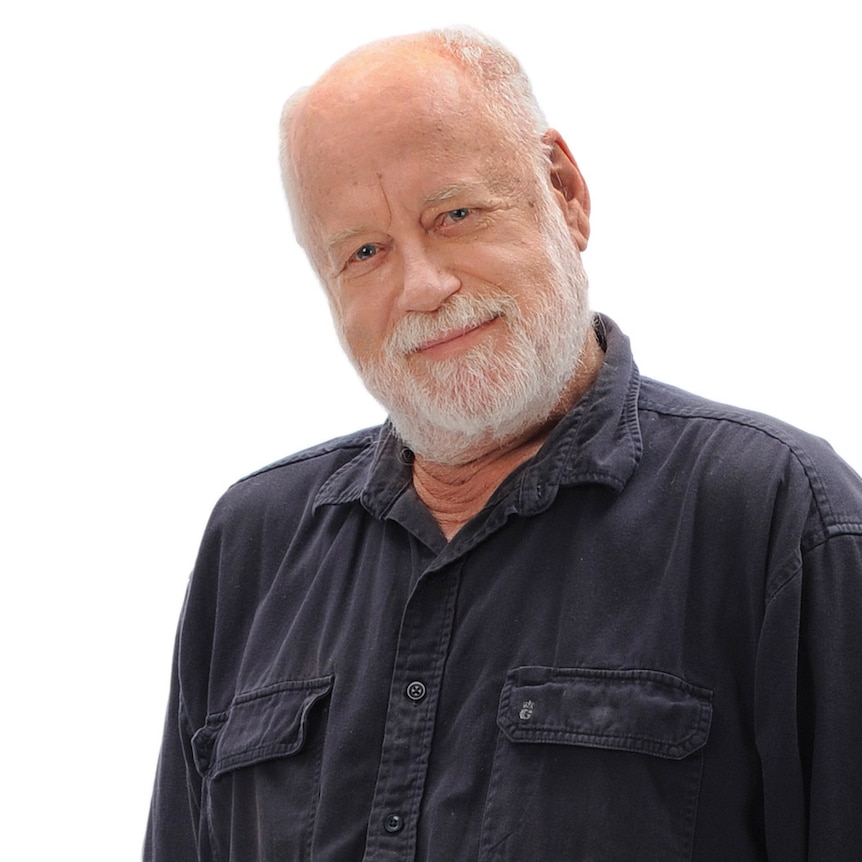 Phillip Adams
Prominent Israeli journalist Gideon Levy has received death threats and been shunned by some of his best friends for his coverage of Israel’s operations in Gaza. Yet he continues to strive to report fearlessly on the war and the toll it’s taking on both Gaza and Israel.
Guest: Gideon Levy - columnist for the newspaper Haaretz and member of its editorial board.
Program:Gideon Levy hopes other Israelis will 'wake up soon'
Source:ABC Radio National|Program:Late Night Live
Tue 12 Mar 2024 at 9:45pmTuesday 12 Mar 2024 at 9:45pm
Space to play or pause, M to mute, left and right arrows to seek, up and down arrows for volume.
0 seconds of 35 minutes, 31 secondsVolume 90%
00:57
35:31
Brought to you by
ABC Radio National
Presented by
Prominent Israeli journalist Gideon Levy has received death threats and been shunned by some of his best friends for his coverage of Israel’s operations in Gaza. Yet he continues to strive to report fearlessly on the war and the toll it’s taking on both Gaza and Israel.
Guest: Gideon Levy - columnist for the newspaper Haaretz and member of its editorial board.
Is Gideon Levy the most hated man in Israel or just the most heroic? | The Independent | The Independent
Is Gideon Levy the most hated man in Israel or just the most heroic? | The Independent | The Independent
Is Gideon Levy the most hated man in Israel or just the most heroic?
For three decades, the writer and journalist Gideon Levy has been a lone voice, telling his readers the truth about what goes on in the Occupied Territories.
Interview,Johann Hari
Friday 24 September 2010 Is Gideon Levy the most hated man in Israel or just the most heroic?
Show all 6


Gideon Levy is the most hated man in Israel – and perhaps the most heroic. This “good Tel Aviv boy” – a sober, serious child of the Jewish state – has been shot at repeatedly by the Israeli Defence Force, been threatened with being “beaten to a pulp” on the country’s streets, and faced demands from government ministers that he be tightly monitored as “a security risk.” This is because he has done something very simple, and something that almost no other Israeli has done. Nearly every week for three decades, he has travelled to the Occupied Territories and described what he sees, plainly and without propaganda. “My modest mission,” he says, “is to prevent a situation in which many Israelis will be able to say, ‘We didn’t know.’” And for that, many people want him silenced.
The story of Gideon Levy – and the attempt to deride, suppress or deny his words – is the story of Israel distilled. If he loses, Israel itself is lost.
I meet him in a hotel bar in Scotland, as part of his European tour to promote his new book, ‘The Punishment of Gaza’. The 57 year-old looks like an Eastern European intellectual on a day off – tall and broad and dressed in black, speaking accented English in a lyrical baritone. He seems so at home in the world of book festivals and black coffee that it is hard, at first, to picture him on the last occasion he was in Gaza – in November, 2006, before the Israeli government changed the law to stop him going.
He reported that day on a killing, another of the hundreds he has documented over the years. As twenty little children pulled up in their school bus at the Indira Gandhi kindergarten, their 20 year-old teacher, Najawa Khalif, waved to them – and an Israel shell hit her and she was blasted to pieces in front of them. He arrived a day later, to find the shaking children drawing pictures of the chunks of her corpse. The children were “astonished to see a Jew without weapons. All they had ever seen were soldiers and settlers.”
“My biggest struggle,” he says, “is to rehumanize the Palestinians. There’s a whole machinery of brainwashing in Israel which really accompanies each of us from early childhood, and I’m a product of this machinery as much as anyone else. [We are taught] a few narratives that it’s very hard to break. That we Israelis are the ultimate and only victims. That the Palestinians are born to kill, and their hatred is irrational. That the Palestinians are not human beings like us… So you get a society without any moral doubts, without any questions marks, with hardly public debate. To raise your voice against all this is very hard.”
So he describes the lives of ordinary Palestinians like Najawa and her pupils in the pages of Ha’aretz, Israel’s establishment newspaper. The tales read like Chekovian short stories of trapped people, in which nothing happens, and everything happens, and the only escape is death. One article was entitled “The last meal of the Wahbas family.” He wrote: “They’d all sat down to have lunch at home: the mother Fatma, three months pregnant; her daughter Farah, two; her son Khaled, one; Fatma’s brother, Dr Zakariya Ahmed; his daughter in law Shayma, nine months pregnant; and the seventy-eight year old grandmother. A Wahba family gathering in Khan Yunis in honour of Dr Ahmed, who’d arrived home six days earlier from Saudi Arabia. A big boom is heard outside. Fatma hurriedly scoops up the littlest one and tries to escape to an inner room, but another boom follows immediately. This time is a direct hit.”
In small biographical details, he recovers their humanity from the blankness of an ever-growing death toll. The Wahbas had tried for years to have a child before she finally became pregnant at the age of 36. The grandmother tried to lift little Khaled off the floor: that’s when she realised her son and daughter were dead.
Levy uses a simple technique. He asks his fellow Israelis: how would we feel, if this was done to us by a vastly superior military power? Once, in Jenin, his car was stuck behind an ambulance at a checkpoint for an hour. He saw there was a sick woman in the back and asked the driver what was going on, and he was told the ambulances were always made to wait this long. Furious, he asked the Israeli soldiers how they would feel if it was their mother in the ambulance – and they looked bemused at first, then angry, pointing their guns at him and telling him to shut up.
“I am amazed again and again at how little Israelis know of what’s going on fifteen minutes away from their homes,” he says. “The brainwashing machinery is so efficient that trying [to undo it is] almost like trying to turn an omelette back to an egg. It makes people so full of ignorance and cruelty.” He gives an example. During Operation Cast Lead, the Israel bombing of blockaded Gaza in 2008-9, “a dog – an Israeli dog – was killed by a Qassam rocket and it on the front page of the most popular newspaper in Israel. On the very same day, there were tens of Palestinians killed, they were on page 16, in two lines.”
At times, the occupation seems to him less tragic than absurd. In 2009, Spain’s most famous clown, Ivan Prado, agreed to attend a clowning festival on Ramallah in the West Bank. He was detained at the airport in Israel, and then deported “for security reasons.” Levy leans forward and asks: “Was the clown considering transferring Spain’s vast stockpiles of laughter to hostile elements? Joke bombs to the jihadists? A devastating punch line to Hamas?”
Yet the absurdity nearly killed him. In the summer of 2003, he was travelling in a clearly marked Israeli taxi on the West Bank. He explains: “At a certain stage the army stopped us and asked what we were doing there. We showed them our papers, which were all in order. They sent us up a road – and when we went onto this road, they shot us. They directed their fire to the centre of the front window. Straight at the head. No shooting in the air, no megaphone calling to stop, no shooting at the wheels. Shoot to kill immediately. If it hadn’t been bullet-proof, I wouldn’t be here now. I don’t think they knew who we were. They shot us like they would shoot anyone else. They were trigger-happy, as they always are. It was like having a cigarette. They didn’t shoot just one bullet. The whole car was full of bullets. Do they know who they are going to kill? No. They don’t know and don’t care.”
He shakes his head with a hardened bewilderment. “They shoot at the Palestinians like this on a daily basis. You have only heard about this because, for once, they shot at an Israeli.”
I “Who lived in this house? Where is he now?”
How did Gideon Levy become so different to his countrymen? Why does he offer empathy to the Palestinians while so many others offer only bullets and bombs? At first, he was just like them: his argument with other Israelis is an argument with his younger self. He was born in 1953 in Tel Aviv and as a young man “I was totally nationalistic, like everyone else. I thought – we are the best, and the Arabs just want to kill. I didn’t question.”
He was fourteen during the Six Day War, and soon after his parents took him to see the newly conquered Occupied Territories. “We were so proud going to see Rachel’s Tomb [in Bethlehem] and we just didn’t see the Palestinians. We looked right through them, like they were invisible,” he says. “It had always been like that. We were passing as children so many ruins [of Palestinian villages that had been ethnically cleansed in 1948]. We never asked: ‘Who lived in this house? Where is he now? He must be alive. He must be somewhere.’ It was part of the landscape, like a tree, like a river.” Long into his twenties, “I would see settlers cutting down olive trees and soldiers mistreating Palestinian women at the checkpoints, and I would think, ‘These are exceptions, not part of government policy.’”
Levy says he became different due to “an accident.” He carried out his military service with Israeli Army Radio and then continued working as a journalist, “so I started going to the Occupied Territories a lot, which most Israelis don’t do. And after a while, gradually, I came to see them as they really are.”
But can that be all? Plenty of Israelis go to the territories – not least the occupying troops and settlers – without recoiling. “I think it was also – you see, my parents were refugees. I saw what it had done to them. So I suppose... I saw these people and thought of my parents.” Levy’s father was a German Jewish lawyer from the Sudetenland. At the age of 26 – in 1939, as it was becoming inescapably clear the Nazis were determined to stage a genocide in Europe – he went with his parents to the railway station in Prague, and they waved him goodbye. “He never saw them or heard from them again,” Levy says. “He never found out what happened to them. If he had not left, he would not have lived.” For six months he lived on a boat filled with refugees, being turned away from port after port, until finally they made it to British Mandate Palestine, as it then was.
“My father was traumatised for his whole life,” he says. “He never really settled in Israel. He never really learned to speak anything but broken Hebrew. He came to Israel with his PhD and he had to make his living, so he started to work in a bakery and to sell cakes from door to door on his bicycle. It must have been a terrible humiliation to be a PhD in law and be knocking on doors offering cakes. He refused to learn to be a lawyer again. He became a minor clerk. I think this is what smashed him, y’know? He lived here sixty years, he had his family, had his happiness but he was really a stranger. A foreigner, in his own country… He was always outraged by things, small things. He couldn’t understand how people would dare to phone between two and four in the afternoon. It horrified him. He never understood what is the concept of overdraft in the bank. Every Israeli has an overdraft, but if he heard somebody was one pound overdrawn, he was horrified.”
His father “never” talked about home. “Any time I tried to encourage him to talk about it, he would close down. He never went back. There was nothing [to go back to], the whole village was destroyed. He left a whole life there. He left a fiancé, a career, everything. I am very sorry I didn’t push him harder to talk because I was young, so I didn’t have much interest. That’s the problem. When we are curious about our parents, they are gone.”
Levy’s father never saw any parallels between the fact he was turned into a refugee, and the 800,000 Palestinians who were turned into refugees by the creation of the state of Israel. “Never! People didn’t think like that. We never discussed it, ever.” Yet in the territories, Levy began to see flickers of his father everywhere – in the broken men and women never able to settle, dreaming forever of going home.
Then, slowly, Levy began to realise their tragedy seeped deeper still into his own life – into the ground beneath his feet and the very bricks of the Israeli town where he lives, Sheikh Munis. It is built on the wreckage of “one of the 416 Palestinian villages Israel wiped off the face of the earth in 1948,” he says. “The swimming pool where I swim every morning was the irrigation grove they used to water the village’s groves. My house stands on one of the groves. The land was ‘redeemed’ by force, its 2,230 inhabitants were surrounded and threatened. They fled, never to return. Somewhere, perhaps in a refugee camp in terrible poverty, lives the family of the farmer who plowed the land where my house now stands.” He adds that it is “stupid and wrong” to compare it to the Holocaust, but says that man is a traumatized refugee just as surely as Levy’s father – and even now, if he ended up in the territories, he and his children and grandchildren live under blockade, or violent military occupation.
The historian Isaac Deutscher once offered an analogy for the creation of the state of Israel. A Jewish man jumps from a burning building, and he lands on a Palestinian, horribly injuring him. Can the jumping man be blamed? Levy’s father really was running for his life: it was Palestine, or a concentration camp. Yet Levy says that the analogy is imperfect – because now the jumping man is still, sixty years later, smashing the head of the man he landed on against the ground, and beating up his children and grandchildren too. “1948 is still here. 1948 is still in the refugee camps. 1948 is still calling for a solution,” he says. “Israel is doing the very same thing now... dehumanising the Palestinians where it can, and ethnic cleansing wherever it’s possible. 1948 is not over. Not by a long way.”
II The scam of “peace talks”
Levy looks out across the hotel bar where we are sitting and across the Middle East, as if the dry sands of the Negev desert were washing towards us. Any conversation about the region is now dominated by a string of propaganda myths, he says, and perhaps the most basic is the belief that Israel is a democracy. “Today we have three kinds of people living under Israeli rule,” he explains. “We have Jewish Israelis, who have full democracy and have full civil rights. We have the Israeli Arabs, who have Israeli citizenship but are severely discriminated against. And we have the Palestinians in the Occupied Territories, who live without any civil rights, and without any human rights. Is that a democracy?”
He sits back and asks in a low tone, as if talking about a terminally ill friend: “How can you say it is a democracy when, in 62 years, there was not one single Arab village established? I don’t have to tell you how many Jewish towns and villages were established. Not one Arab village. How can you say it’s a democracy when research has shown repeatedly that Jews and Arabs get different punishments for the same crime? How can you say it’s a democracy when a Palestinian student can hardly rent an apartment in Tel Aviv, because when they hear his accent or his name almost nobody will rent to him? How can you say Israel is a democracy when… Jerusalem invests 577 shekels a year in a pupil in [Palestinian] East Jerusalem and 2372 shekels a year in a pupil from [Jewish] West Jerusalem. Four times less, only because of the child’s ethnicity! Every part of our society is racist.”
“I want to be proud of my country,” he says. “I am an Israeli patriot. I want us to do the right thing.” So this requires him to point out that Palestinian violence is – in truth – much more limited than Israeli violence, and usually a reaction to it. “The first twenty years of the occupation passed quietly, and we did not lift a finger to end it. Instead, under cover of the quiet, we built the enormous, criminal settlement enterprise,” where Palestinian land is seized by Jewish religious fundamentalists who claim it was given to them by God. Only then – after a long period of theft, and after their attempts at peaceful resistance were met with brutal violence - did the Palestinians become violent themselves. “What would happen if the Palestinians had not fired Qassams [the rockets shot at Southern Israel, including civilian towns]? Would Israel have lifted the economic siege? Nonsense. If the Gazans were sitting quietly, as Israel expects them to do, their case would disappear from the agenda. Nobody would give any thought to the fate of the people of Gaza if they had not behaved violently.”
He unequivocally condemns the firing of rockets at Israeli civilians, but adds: “The Qassams have a context. They are almost always fired after an IDF assassination operation, and there have been many of these.” Yet the Israeli attitude is that “we are allowed to bomb anything we want but they are not allowed to launch Qassams.” It is a view summarised by Haim Ramon, the justice minister at time of Second Lebanon War: “We are allowed to destroy everything.”
Even the terms we use to discuss Operation Cast Lead are wrong, Levy argues. “That wasn’t a war. It was a brutal assault on a helpless, imprisoned population. You can call a match between Mike Tyson and a 5 year old child boxing, but the proportions, oh, the proportions.” Israel “frequently targeted medical crews, [and] shelled a UN-run school that served as a shelter for residents, who bled to death over days as the IDF prevented their evacuation by shooting and shelling... A state that takes such steps is no longer distinguishable from a terror organisation. They say as a justification that Hamas hides among the civilian population. As if the Defence Ministry in Tel Aviv is not located in the heart of a civilian population! As if there are places in Gaza that are not in the heart of a civilian population!”
He appeals to anybody who is sincerely concerned about Israel’s safety and security to join him in telling Israelis the truth in plain language. “A real friend does not pick up the bill for an addict’s drugs: he packs the friend off to rehab instead. Today, only those who speak up against Israel’s policies – who denounce the occupation, the blockade, and the war – are the nation’s true friends.” The people who defend Israel’s current course are “betraying the country” by encouraging it on “the path to disaster. A child who has seen his house destroyed, his brother killed, and his father humiliated will not easily forgive.”
These supposed ‘friends of Israel’ are in practice friends of Islamic fundamentalism, he believes. “Why do they have to give the fundamentalists more excuses, more fury, more opportunities, more recruits? Look at Gaza. Gaza was totally secular not long ago. Now you can hardly get alcohol today in Gaza, after all the brutality. Religious fundamentalism is always the language people turn to in despair, if everything else fails. If Gaza had been a free society it would not have become like this. We gave them recruits.”
Levy believes the greatest myth – the one hanging over the Middle East like perfume sprayed onto a corpse – is the idea of the current ‘peace talks’ led by the United States. There was a time when he too believed in them. At the height of the Oslo talks in the 1990s, when Yitzhak Rabin negotiated with Yassir Arafat, “at the end of a visit I turned and, in a gesture straight out of the movies, waved Gaza farewell. Goodbye occupied Gaza, farewell! We are never to meet again, at least not in your occupied state. How foolish!”
Now, he says, he is convinced it was “a scam” from the start, doomed to fail. How does he know? “There is a very simple litmus test for any peace talks. A necessity for peace is for Israel to dismantle settlements in the West Bank. So if you are going to dismantle settlements soon, you’d stop building more now, right? They carried on building them all through Oslo. And today, Netanyahu is refusing to freeze construction, the barest of the bare minimum. It tells you all you need.”
He says Netanyahu has – like the supposedly more left-wing alternatives, Ehud Barak and Tzipip Livni – always opposed real peace talks, and even privately bragged about destroying the Oslo process. In 1997, during his first term as Israeli leader, he insisted he would only continue with the talks if a clause was added saying Israel would not have to withdraw from undefined “military locations” – and he was later caught on tape boasting: “Why is that important? Because from that moment on I stopped the Oslo accords.” If he bragged about “stopping” the last peace process, why would he want this one to succeed? Levy adds: “And how can you make peace with only half the Palestinian population? How can you leave out Hamas and Gaza?”
These fake peace talks are worse than no talks at all, Levy believes. “If there are negotiations, there won’t be international pressure. Quiet, we’re in discussions, settlement can go on uninterrupted. That is why futile negotiations are dangerous negotiations. Under the cover of such talks, the chances for peace will grow even dimmer... The clear subtext is Netanyahu’s desire to get American support for bombing Iran. To do that, he thinks he needs to at least pay lip-service to Obama’s requests for talks. That’s why he’s doing this.”
After saying this, he falls silent, and we stare at each other for a while. Then he says, in a quieter voice: “The facts are clear. Israel has no real intention of quitting the territories or allowing the Palestinian people to exercise their rights. No change will come to pass in the complacent, belligerent, and condescending Israel of today. This is the time to come up with a rehabilitation programme for Israel.”
III Waving Israeli flags made in China
According to the opinion polls, most Israelis support a two-state solution – yet they elect governments that expand the settlements and so make a two-state solution impossible. “You would need a psychiatrist to explain this contradiction,” Levy says. “Do they expect two states to fall from the sky? Today, the Israelis have no reason to make any changes,” he continues. “Life in Israel is wonderful. You can sit in Tel Aviv and have a great life. Nobody talks about the occupation. So why would they bother [to change]? The majority of Israelis think about the next vacation and the next jeep and all the rest doesn’t interest them any more.” They are drenched in history, and yet oblivious to it.
In Israel, the nation’s “town square has been empty for years. If there were no significant protests during Operation Cast Lead, then there is no left to speak of. The only group campaigning for anything other than their personal whims are the settlers, who are very active.” So how can change happen? He says he is “very pessimistic”, and the most likely future is a society turning to ever-more naked “apartheid.” With a shake of the head, he says: “We had now two wars, the flotilla – it doesn’t seem that Israel has learned any lesson, and it doesn’t seem that Israel is paying any price. The Israelis don’t pay any price for the injustice of the occupation, so the occupation will never end. It will not end a moment before Israelis understand the connection between the occupation and the price they will be forced to pay. They will never shake it off on their own initiative.”
It sounds like he is making the case for boycotting Israel, but his position is more complex. “Firstly, the Israeli opposition to the boycott is incredibly hypocritical. Israel itself is one of the world’s most prolific boycotters. Not only does it boycott, it preaches to others, at times even forces others, to follow in tow. Israel has imposed a cultural, academic, political, economic and military boycott on the territories. The most brutal, naked boycott is, of course, the siege on Gaza and the boycott of Hamas. At Israel's behest, nearly all Western countries signed onto the boycott with inexplicable alacrity. This is not just a siege that has left Gaza in a state of shortage for three years. It's a series of cultural, academic, humanitarian and economic boycotts. Israel is also urging the world to boycott Iran. So Israelis cannot complain if this is used against them.”
He shifts in his seat. “But I do not boycott Israel. I could have done it, I could have left Israel. But I don’t intend to leave Israel. Never. I can’t call on others to do what I will not do... There is also the question of whether it will work. I am not sure Israelis would make the connection. Look at the terror that happened in 2002 and 2003: life in Israel was really horrifying, the exploding buses, the suicide-bombers. But no Israeli made the connection between the occupation and the terror. For them, the terror was just the ‘proof’ that the Palestinians are monsters, that they were born to kill, that they are not human beings and that’s it. And if you just dare to make the connection, people will tell you ‘you justify terror ’ and you are a traitor. I suspect it would be the same with sanctions. The condemnation after Cast Lead and the flotilla only made Israel more nationalistic. If [a boycott was] seen as the judgement of the world they would be effective. But Israelis are more likely to take them as ‘proof’ the world is anti-Semitic and will always hate us.”
He believes only one kind of pressure would bring Israel back to sanity and safety: “The day the president of the United States decides to put an end to the occupation, it will cease. Because Israel was never so dependent on the United States as it is now. Never. Not only economically, not only militarily but above all politically. Israel is totally isolated today, except for America.” He was initially hopeful that Barack Obama would do this – he recalls having tears in his eyes as he delivered his victory speech in Grant Park – but he says he has only promoted “tiny steps, almost nothing, when big steps are needed.” It isn’t only bad for Israel – it is bad for America. “The occupation is the best excuse for many worldwide terror organisations. It’s not always genuine but they use it. Why do you let them use it? Why give them this fury? Why not you solve it once and for all when the, when the solution is so simple?”
For progress, “the right-wing American Jews who become orgiastic whenever Israel kills and destroys” would have to be exposed as “Israel’s enemies”, condemning the country they supposedly love to eternal war. “It is the right-wing American Jews who write the most disgusting letters. They say I am Hitler’s grandson, that they pray my children get cancer… It is because I touch a nerve with them. There is something there.” These right-wingers claim to be opposed to Iran, but Levy points out they vehemently oppose the two available steps that would immediately isolate Iran and strip Mahmoud Ahmadinejadh of his best propaganda-excuses: “peace with Syria and peace with the Palestinians, both of which are on offer, and both of which are rejected by Israel. They are the best way to undermine Iran.”
He refuses to cede Israel to people “who wave their Israeli flags made in China and dream of a Knesset cleansed of Arabs and an Israel with no [human rights organisation] B’Tselem.” He looks angry, indignant. “I will never leave. It’s my place on earth. It’s my language, it’s my culture. Even the criticism that I carry and the shame that I carry come from my deep belonging to the place. I will leave only if I be forced to leave. They would have to tear me out.”
IV A whistle in the dark
Does he think this is a real possibility – that his freedom could be taken from him, in Israel itself? “Oh, very easily,” he says. “It’s already taken from me by banning me from going to Gaza, and this is just a start. I have great freedom to write and to appear on television in Israel, and I have a very good life, but I don’t take my freedom for granted, not at all. If this current extreme nationalist atmosphere continues in Israel in one, two, three years time…” He sighs. “There may be new restrictions, Ha’aretz may close down – God forbid – I don’t take anything for granted. I will not be surprised if Israeli Palestinian parties are criminalized at the next election, for example. Already they are going after the NGOs [Non-Government Organizations that campaign for Palestinian rights]. There is already a majority in the opinion polls who want to punish people who expose wrong-doing by the military and want to restrict the human rights groups.”
There is also the danger of a freelance attack. Last year, a man with a large dog strutted up to Levy near his home and announced: “I have wanted to beat you to a pulp for a long time.” Levy only narrowly escaped, and the man was never caught. He says now: “I am scared but I don’t live on the fear. But to tell you that my night sleep is as yours... I’m not sure. Any noise, my first association is ‘maybe now, it’s coming’. But there was never any concrete case in which I really thought ‘here it comes’. But I know it might come.”
Has he ever considered not speaking the truth, and diluting his statements? He laughs – and for the only time in our interview, his eloquent torrents of words begin to sputter. “I wish I could! No way I could. I mean, this is not an option at all. Really, I can’t. How can I? No way. I feel lonely but my private, er, surrounding is supportive, part of it at least. And there are still Israelis who appreciate what I do. If you walk with me in the streets of Tel Aviv you will see all kinds of reactions but also very positive reactions. It is hard but I mean it’s…it’s…what other choice do I have?”
He says his private life is supportive “in part”. What’s the part that isn’t? For the past few years, he says, he has dated non-Israeli women – “I couldn’t be with a nationalistic person who said those things about the Palestinians” – but his two sons don’t read anything he writes, “and they have different politics from me. I think it was difficult for them, quite difficult.” Are they right-wingers? “No, no, no, nothing like that. As they get older, they are coming to my views more. But they don’t read my work. No,” he says, looking down, “they don’t read it.”
The long history of the Jewish people has a recurring beat – every few centuries, a brave Jewish figure stands up to warn his people they are have ended up on an immoral or foolish path that can only end in catastrophe, and implores them to change course. The first prophet, Amos, warned that the Kingdom of Israel would be destroyed because the Jewish people had forgotten the need for justice and generosity – and he was shunned for it. Baruch Spinoza saw beyond the Jewish fundamentalism of his day to a materialist universe that could be explained scientifically – and he was excommunicated, even as he cleared the path for the great Jewish geniuses to come. Could Levy, in time, be seen as a Jewish prophet in the unlikely wilderness of a Jewish state, calling his people back to a moral path?
He nods faintly, and smiles. “Noam Chomsky once wrote to me that I was like the early Jewish prophets. It was the greatest compliment anyone has ever paid me. But... well... My opponents would say it’s a long tradition of self-hating Jews. But I don’t take that seriously. For sure, I feel that I belong to a tradition of self-criticism. I deeply believe in self-criticism.” But it leaves him in bewildering situations: “Many times I am standing among Palestinian demonstrators, my back to the Palestinians, my face to the Israeli soldiers, and they were shooting in our direction. They are my people, and they are my army. The people I’m standing among are supposed to be the enemy. It is...” He shakes his head. There must be times, I say, when you ask: what’s a nice Jewish boy doing in a state like this?
But then, as if it has been nagging at him, he returns abruptly to an earlier question. “I am very pessimistic, sure. Outside pressure can be effective if it’s an American one but I don’t see it happening. Other pressure from other parts of the world might be not effective. The Israeli society will not change on its own, and the Palestinians are too weak to change it. But having said this, I must say, if we had been sitting here in the late 1980s and you had told me that the Berlin wall will fall within months, that the Soviet Union will fall within months, that parts of the regime in South Africa will fall within months, I would have laughed at you. Perhaps the only hope I have is that this occupation regime hopefully is already so rotten that maybe it will fall by itself one day. You have to be realistic enough to believe in miracles.”
In the meantime, Gideon Levy will carry on patiently documenting his country’s crimes, and trying to call his people back to a righteous path. He frowns a little – as if he is picturing Najawa Khalif blown to pieces in front of her school bus, or his own broken father – and says to me: “A whistle in the dark is still a whistle."
Gideon Levy’s book ‘The Punishment of Gaza’ is available from Verso Books. You can buy it HERE.
You can watch Johann’s speech to the Protest the Pope rally HERE.
You can follow Johann Hari’s updates on Israel and other issues HERE.
More aboutBombingMoralityPalestineTel Aviv
Is Gideon Levy the most hated man in Israel or just the most heroic?
For three decades, the writer and journalist Gideon Levy has been a lone voice, telling his readers the truth about what goes on in the Occupied Territories.
Interview,Johann Hari
Friday 24 September 2010 Is Gideon Levy the most hated man in Israel or just the most heroic?
Show all 6
Gideon Levy is the most hated man in Israel – and perhaps the most heroic. This “good Tel Aviv boy” – a sober, serious child of the Jewish state – has been shot at repeatedly by the Israeli Defence Force, been threatened with being “beaten to a pulp” on the country’s streets, and faced demands from government ministers that he be tightly monitored as “a security risk.” This is because he has done something very simple, and something that almost no other Israeli has done. Nearly every week for three decades, he has travelled to the Occupied Territories and described what he sees, plainly and without propaganda. “My modest mission,” he says, “is to prevent a situation in which many Israelis will be able to say, ‘We didn’t know.’” And for that, many people want him silenced.
The story of Gideon Levy – and the attempt to deride, suppress or deny his words – is the story of Israel distilled. If he loses, Israel itself is lost.
I meet him in a hotel bar in Scotland, as part of his European tour to promote his new book, ‘The Punishment of Gaza’. The 57 year-old looks like an Eastern European intellectual on a day off – tall and broad and dressed in black, speaking accented English in a lyrical baritone. He seems so at home in the world of book festivals and black coffee that it is hard, at first, to picture him on the last occasion he was in Gaza – in November, 2006, before the Israeli government changed the law to stop him going.
He reported that day on a killing, another of the hundreds he has documented over the years. As twenty little children pulled up in their school bus at the Indira Gandhi kindergarten, their 20 year-old teacher, Najawa Khalif, waved to them – and an Israel shell hit her and she was blasted to pieces in front of them. He arrived a day later, to find the shaking children drawing pictures of the chunks of her corpse. The children were “astonished to see a Jew without weapons. All they had ever seen were soldiers and settlers.”
“My biggest struggle,” he says, “is to rehumanize the Palestinians. There’s a whole machinery of brainwashing in Israel which really accompanies each of us from early childhood, and I’m a product of this machinery as much as anyone else. [We are taught] a few narratives that it’s very hard to break. That we Israelis are the ultimate and only victims. That the Palestinians are born to kill, and their hatred is irrational. That the Palestinians are not human beings like us… So you get a society without any moral doubts, without any questions marks, with hardly public debate. To raise your voice against all this is very hard.”
So he describes the lives of ordinary Palestinians like Najawa and her pupils in the pages of Ha’aretz, Israel’s establishment newspaper. The tales read like Chekovian short stories of trapped people, in which nothing happens, and everything happens, and the only escape is death. One article was entitled “The last meal of the Wahbas family.” He wrote: “They’d all sat down to have lunch at home: the mother Fatma, three months pregnant; her daughter Farah, two; her son Khaled, one; Fatma’s brother, Dr Zakariya Ahmed; his daughter in law Shayma, nine months pregnant; and the seventy-eight year old grandmother. A Wahba family gathering in Khan Yunis in honour of Dr Ahmed, who’d arrived home six days earlier from Saudi Arabia. A big boom is heard outside. Fatma hurriedly scoops up the littlest one and tries to escape to an inner room, but another boom follows immediately. This time is a direct hit.”
In small biographical details, he recovers their humanity from the blankness of an ever-growing death toll. The Wahbas had tried for years to have a child before she finally became pregnant at the age of 36. The grandmother tried to lift little Khaled off the floor: that’s when she realised her son and daughter were dead.
Levy uses a simple technique. He asks his fellow Israelis: how would we feel, if this was done to us by a vastly superior military power? Once, in Jenin, his car was stuck behind an ambulance at a checkpoint for an hour. He saw there was a sick woman in the back and asked the driver what was going on, and he was told the ambulances were always made to wait this long. Furious, he asked the Israeli soldiers how they would feel if it was their mother in the ambulance – and they looked bemused at first, then angry, pointing their guns at him and telling him to shut up.
“I am amazed again and again at how little Israelis know of what’s going on fifteen minutes away from their homes,” he says. “The brainwashing machinery is so efficient that trying [to undo it is] almost like trying to turn an omelette back to an egg. It makes people so full of ignorance and cruelty.” He gives an example. During Operation Cast Lead, the Israel bombing of blockaded Gaza in 2008-9, “a dog – an Israeli dog – was killed by a Qassam rocket and it on the front page of the most popular newspaper in Israel. On the very same day, there were tens of Palestinians killed, they were on page 16, in two lines.”
At times, the occupation seems to him less tragic than absurd. In 2009, Spain’s most famous clown, Ivan Prado, agreed to attend a clowning festival on Ramallah in the West Bank. He was detained at the airport in Israel, and then deported “for security reasons.” Levy leans forward and asks: “Was the clown considering transferring Spain’s vast stockpiles of laughter to hostile elements? Joke bombs to the jihadists? A devastating punch line to Hamas?”
Yet the absurdity nearly killed him. In the summer of 2003, he was travelling in a clearly marked Israeli taxi on the West Bank. He explains: “At a certain stage the army stopped us and asked what we were doing there. We showed them our papers, which were all in order. They sent us up a road – and when we went onto this road, they shot us. They directed their fire to the centre of the front window. Straight at the head. No shooting in the air, no megaphone calling to stop, no shooting at the wheels. Shoot to kill immediately. If it hadn’t been bullet-proof, I wouldn’t be here now. I don’t think they knew who we were. They shot us like they would shoot anyone else. They were trigger-happy, as they always are. It was like having a cigarette. They didn’t shoot just one bullet. The whole car was full of bullets. Do they know who they are going to kill? No. They don’t know and don’t care.”
He shakes his head with a hardened bewilderment. “They shoot at the Palestinians like this on a daily basis. You have only heard about this because, for once, they shot at an Israeli.”
I “Who lived in this house? Where is he now?”
How did Gideon Levy become so different to his countrymen? Why does he offer empathy to the Palestinians while so many others offer only bullets and bombs? At first, he was just like them: his argument with other Israelis is an argument with his younger self. He was born in 1953 in Tel Aviv and as a young man “I was totally nationalistic, like everyone else. I thought – we are the best, and the Arabs just want to kill. I didn’t question.”
He was fourteen during the Six Day War, and soon after his parents took him to see the newly conquered Occupied Territories. “We were so proud going to see Rachel’s Tomb [in Bethlehem] and we just didn’t see the Palestinians. We looked right through them, like they were invisible,” he says. “It had always been like that. We were passing as children so many ruins [of Palestinian villages that had been ethnically cleansed in 1948]. We never asked: ‘Who lived in this house? Where is he now? He must be alive. He must be somewhere.’ It was part of the landscape, like a tree, like a river.” Long into his twenties, “I would see settlers cutting down olive trees and soldiers mistreating Palestinian women at the checkpoints, and I would think, ‘These are exceptions, not part of government policy.’”
Levy says he became different due to “an accident.” He carried out his military service with Israeli Army Radio and then continued working as a journalist, “so I started going to the Occupied Territories a lot, which most Israelis don’t do. And after a while, gradually, I came to see them as they really are.”
But can that be all? Plenty of Israelis go to the territories – not least the occupying troops and settlers – without recoiling. “I think it was also – you see, my parents were refugees. I saw what it had done to them. So I suppose... I saw these people and thought of my parents.” Levy’s father was a German Jewish lawyer from the Sudetenland. At the age of 26 – in 1939, as it was becoming inescapably clear the Nazis were determined to stage a genocide in Europe – he went with his parents to the railway station in Prague, and they waved him goodbye. “He never saw them or heard from them again,” Levy says. “He never found out what happened to them. If he had not left, he would not have lived.” For six months he lived on a boat filled with refugees, being turned away from port after port, until finally they made it to British Mandate Palestine, as it then was.
“My father was traumatised for his whole life,” he says. “He never really settled in Israel. He never really learned to speak anything but broken Hebrew. He came to Israel with his PhD and he had to make his living, so he started to work in a bakery and to sell cakes from door to door on his bicycle. It must have been a terrible humiliation to be a PhD in law and be knocking on doors offering cakes. He refused to learn to be a lawyer again. He became a minor clerk. I think this is what smashed him, y’know? He lived here sixty years, he had his family, had his happiness but he was really a stranger. A foreigner, in his own country… He was always outraged by things, small things. He couldn’t understand how people would dare to phone between two and four in the afternoon. It horrified him. He never understood what is the concept of overdraft in the bank. Every Israeli has an overdraft, but if he heard somebody was one pound overdrawn, he was horrified.”
His father “never” talked about home. “Any time I tried to encourage him to talk about it, he would close down. He never went back. There was nothing [to go back to], the whole village was destroyed. He left a whole life there. He left a fiancé, a career, everything. I am very sorry I didn’t push him harder to talk because I was young, so I didn’t have much interest. That’s the problem. When we are curious about our parents, they are gone.”
Levy’s father never saw any parallels between the fact he was turned into a refugee, and the 800,000 Palestinians who were turned into refugees by the creation of the state of Israel. “Never! People didn’t think like that. We never discussed it, ever.” Yet in the territories, Levy began to see flickers of his father everywhere – in the broken men and women never able to settle, dreaming forever of going home.
Then, slowly, Levy began to realise their tragedy seeped deeper still into his own life – into the ground beneath his feet and the very bricks of the Israeli town where he lives, Sheikh Munis. It is built on the wreckage of “one of the 416 Palestinian villages Israel wiped off the face of the earth in 1948,” he says. “The swimming pool where I swim every morning was the irrigation grove they used to water the village’s groves. My house stands on one of the groves. The land was ‘redeemed’ by force, its 2,230 inhabitants were surrounded and threatened. They fled, never to return. Somewhere, perhaps in a refugee camp in terrible poverty, lives the family of the farmer who plowed the land where my house now stands.” He adds that it is “stupid and wrong” to compare it to the Holocaust, but says that man is a traumatized refugee just as surely as Levy’s father – and even now, if he ended up in the territories, he and his children and grandchildren live under blockade, or violent military occupation.
The historian Isaac Deutscher once offered an analogy for the creation of the state of Israel. A Jewish man jumps from a burning building, and he lands on a Palestinian, horribly injuring him. Can the jumping man be blamed? Levy’s father really was running for his life: it was Palestine, or a concentration camp. Yet Levy says that the analogy is imperfect – because now the jumping man is still, sixty years later, smashing the head of the man he landed on against the ground, and beating up his children and grandchildren too. “1948 is still here. 1948 is still in the refugee camps. 1948 is still calling for a solution,” he says. “Israel is doing the very same thing now... dehumanising the Palestinians where it can, and ethnic cleansing wherever it’s possible. 1948 is not over. Not by a long way.”
II The scam of “peace talks”
Levy looks out across the hotel bar where we are sitting and across the Middle East, as if the dry sands of the Negev desert were washing towards us. Any conversation about the region is now dominated by a string of propaganda myths, he says, and perhaps the most basic is the belief that Israel is a democracy. “Today we have three kinds of people living under Israeli rule,” he explains. “We have Jewish Israelis, who have full democracy and have full civil rights. We have the Israeli Arabs, who have Israeli citizenship but are severely discriminated against. And we have the Palestinians in the Occupied Territories, who live without any civil rights, and without any human rights. Is that a democracy?”
He sits back and asks in a low tone, as if talking about a terminally ill friend: “How can you say it is a democracy when, in 62 years, there was not one single Arab village established? I don’t have to tell you how many Jewish towns and villages were established. Not one Arab village. How can you say it’s a democracy when research has shown repeatedly that Jews and Arabs get different punishments for the same crime? How can you say it’s a democracy when a Palestinian student can hardly rent an apartment in Tel Aviv, because when they hear his accent or his name almost nobody will rent to him? How can you say Israel is a democracy when… Jerusalem invests 577 shekels a year in a pupil in [Palestinian] East Jerusalem and 2372 shekels a year in a pupil from [Jewish] West Jerusalem. Four times less, only because of the child’s ethnicity! Every part of our society is racist.”
“I want to be proud of my country,” he says. “I am an Israeli patriot. I want us to do the right thing.” So this requires him to point out that Palestinian violence is – in truth – much more limited than Israeli violence, and usually a reaction to it. “The first twenty years of the occupation passed quietly, and we did not lift a finger to end it. Instead, under cover of the quiet, we built the enormous, criminal settlement enterprise,” where Palestinian land is seized by Jewish religious fundamentalists who claim it was given to them by God. Only then – after a long period of theft, and after their attempts at peaceful resistance were met with brutal violence - did the Palestinians become violent themselves. “What would happen if the Palestinians had not fired Qassams [the rockets shot at Southern Israel, including civilian towns]? Would Israel have lifted the economic siege? Nonsense. If the Gazans were sitting quietly, as Israel expects them to do, their case would disappear from the agenda. Nobody would give any thought to the fate of the people of Gaza if they had not behaved violently.”
He unequivocally condemns the firing of rockets at Israeli civilians, but adds: “The Qassams have a context. They are almost always fired after an IDF assassination operation, and there have been many of these.” Yet the Israeli attitude is that “we are allowed to bomb anything we want but they are not allowed to launch Qassams.” It is a view summarised by Haim Ramon, the justice minister at time of Second Lebanon War: “We are allowed to destroy everything.”
Even the terms we use to discuss Operation Cast Lead are wrong, Levy argues. “That wasn’t a war. It was a brutal assault on a helpless, imprisoned population. You can call a match between Mike Tyson and a 5 year old child boxing, but the proportions, oh, the proportions.” Israel “frequently targeted medical crews, [and] shelled a UN-run school that served as a shelter for residents, who bled to death over days as the IDF prevented their evacuation by shooting and shelling... A state that takes such steps is no longer distinguishable from a terror organisation. They say as a justification that Hamas hides among the civilian population. As if the Defence Ministry in Tel Aviv is not located in the heart of a civilian population! As if there are places in Gaza that are not in the heart of a civilian population!”
He appeals to anybody who is sincerely concerned about Israel’s safety and security to join him in telling Israelis the truth in plain language. “A real friend does not pick up the bill for an addict’s drugs: he packs the friend off to rehab instead. Today, only those who speak up against Israel’s policies – who denounce the occupation, the blockade, and the war – are the nation’s true friends.” The people who defend Israel’s current course are “betraying the country” by encouraging it on “the path to disaster. A child who has seen his house destroyed, his brother killed, and his father humiliated will not easily forgive.”
These supposed ‘friends of Israel’ are in practice friends of Islamic fundamentalism, he believes. “Why do they have to give the fundamentalists more excuses, more fury, more opportunities, more recruits? Look at Gaza. Gaza was totally secular not long ago. Now you can hardly get alcohol today in Gaza, after all the brutality. Religious fundamentalism is always the language people turn to in despair, if everything else fails. If Gaza had been a free society it would not have become like this. We gave them recruits.”
Levy believes the greatest myth – the one hanging over the Middle East like perfume sprayed onto a corpse – is the idea of the current ‘peace talks’ led by the United States. There was a time when he too believed in them. At the height of the Oslo talks in the 1990s, when Yitzhak Rabin negotiated with Yassir Arafat, “at the end of a visit I turned and, in a gesture straight out of the movies, waved Gaza farewell. Goodbye occupied Gaza, farewell! We are never to meet again, at least not in your occupied state. How foolish!”
Now, he says, he is convinced it was “a scam” from the start, doomed to fail. How does he know? “There is a very simple litmus test for any peace talks. A necessity for peace is for Israel to dismantle settlements in the West Bank. So if you are going to dismantle settlements soon, you’d stop building more now, right? They carried on building them all through Oslo. And today, Netanyahu is refusing to freeze construction, the barest of the bare minimum. It tells you all you need.”
He says Netanyahu has – like the supposedly more left-wing alternatives, Ehud Barak and Tzipip Livni – always opposed real peace talks, and even privately bragged about destroying the Oslo process. In 1997, during his first term as Israeli leader, he insisted he would only continue with the talks if a clause was added saying Israel would not have to withdraw from undefined “military locations” – and he was later caught on tape boasting: “Why is that important? Because from that moment on I stopped the Oslo accords.” If he bragged about “stopping” the last peace process, why would he want this one to succeed? Levy adds: “And how can you make peace with only half the Palestinian population? How can you leave out Hamas and Gaza?”
These fake peace talks are worse than no talks at all, Levy believes. “If there are negotiations, there won’t be international pressure. Quiet, we’re in discussions, settlement can go on uninterrupted. That is why futile negotiations are dangerous negotiations. Under the cover of such talks, the chances for peace will grow even dimmer... The clear subtext is Netanyahu’s desire to get American support for bombing Iran. To do that, he thinks he needs to at least pay lip-service to Obama’s requests for talks. That’s why he’s doing this.”
After saying this, he falls silent, and we stare at each other for a while. Then he says, in a quieter voice: “The facts are clear. Israel has no real intention of quitting the territories or allowing the Palestinian people to exercise their rights. No change will come to pass in the complacent, belligerent, and condescending Israel of today. This is the time to come up with a rehabilitation programme for Israel.”
III Waving Israeli flags made in China
According to the opinion polls, most Israelis support a two-state solution – yet they elect governments that expand the settlements and so make a two-state solution impossible. “You would need a psychiatrist to explain this contradiction,” Levy says. “Do they expect two states to fall from the sky? Today, the Israelis have no reason to make any changes,” he continues. “Life in Israel is wonderful. You can sit in Tel Aviv and have a great life. Nobody talks about the occupation. So why would they bother [to change]? The majority of Israelis think about the next vacation and the next jeep and all the rest doesn’t interest them any more.” They are drenched in history, and yet oblivious to it.
In Israel, the nation’s “town square has been empty for years. If there were no significant protests during Operation Cast Lead, then there is no left to speak of. The only group campaigning for anything other than their personal whims are the settlers, who are very active.” So how can change happen? He says he is “very pessimistic”, and the most likely future is a society turning to ever-more naked “apartheid.” With a shake of the head, he says: “We had now two wars, the flotilla – it doesn’t seem that Israel has learned any lesson, and it doesn’t seem that Israel is paying any price. The Israelis don’t pay any price for the injustice of the occupation, so the occupation will never end. It will not end a moment before Israelis understand the connection between the occupation and the price they will be forced to pay. They will never shake it off on their own initiative.”
It sounds like he is making the case for boycotting Israel, but his position is more complex. “Firstly, the Israeli opposition to the boycott is incredibly hypocritical. Israel itself is one of the world’s most prolific boycotters. Not only does it boycott, it preaches to others, at times even forces others, to follow in tow. Israel has imposed a cultural, academic, political, economic and military boycott on the territories. The most brutal, naked boycott is, of course, the siege on Gaza and the boycott of Hamas. At Israel's behest, nearly all Western countries signed onto the boycott with inexplicable alacrity. This is not just a siege that has left Gaza in a state of shortage for three years. It's a series of cultural, academic, humanitarian and economic boycotts. Israel is also urging the world to boycott Iran. So Israelis cannot complain if this is used against them.”
He shifts in his seat. “But I do not boycott Israel. I could have done it, I could have left Israel. But I don’t intend to leave Israel. Never. I can’t call on others to do what I will not do... There is also the question of whether it will work. I am not sure Israelis would make the connection. Look at the terror that happened in 2002 and 2003: life in Israel was really horrifying, the exploding buses, the suicide-bombers. But no Israeli made the connection between the occupation and the terror. For them, the terror was just the ‘proof’ that the Palestinians are monsters, that they were born to kill, that they are not human beings and that’s it. And if you just dare to make the connection, people will tell you ‘you justify terror ’ and you are a traitor. I suspect it would be the same with sanctions. The condemnation after Cast Lead and the flotilla only made Israel more nationalistic. If [a boycott was] seen as the judgement of the world they would be effective. But Israelis are more likely to take them as ‘proof’ the world is anti-Semitic and will always hate us.”
He believes only one kind of pressure would bring Israel back to sanity and safety: “The day the president of the United States decides to put an end to the occupation, it will cease. Because Israel was never so dependent on the United States as it is now. Never. Not only economically, not only militarily but above all politically. Israel is totally isolated today, except for America.” He was initially hopeful that Barack Obama would do this – he recalls having tears in his eyes as he delivered his victory speech in Grant Park – but he says he has only promoted “tiny steps, almost nothing, when big steps are needed.” It isn’t only bad for Israel – it is bad for America. “The occupation is the best excuse for many worldwide terror organisations. It’s not always genuine but they use it. Why do you let them use it? Why give them this fury? Why not you solve it once and for all when the, when the solution is so simple?”
For progress, “the right-wing American Jews who become orgiastic whenever Israel kills and destroys” would have to be exposed as “Israel’s enemies”, condemning the country they supposedly love to eternal war. “It is the right-wing American Jews who write the most disgusting letters. They say I am Hitler’s grandson, that they pray my children get cancer… It is because I touch a nerve with them. There is something there.” These right-wingers claim to be opposed to Iran, but Levy points out they vehemently oppose the two available steps that would immediately isolate Iran and strip Mahmoud Ahmadinejadh of his best propaganda-excuses: “peace with Syria and peace with the Palestinians, both of which are on offer, and both of which are rejected by Israel. They are the best way to undermine Iran.”
He refuses to cede Israel to people “who wave their Israeli flags made in China and dream of a Knesset cleansed of Arabs and an Israel with no [human rights organisation] B’Tselem.” He looks angry, indignant. “I will never leave. It’s my place on earth. It’s my language, it’s my culture. Even the criticism that I carry and the shame that I carry come from my deep belonging to the place. I will leave only if I be forced to leave. They would have to tear me out.”
IV A whistle in the dark
Does he think this is a real possibility – that his freedom could be taken from him, in Israel itself? “Oh, very easily,” he says. “It’s already taken from me by banning me from going to Gaza, and this is just a start. I have great freedom to write and to appear on television in Israel, and I have a very good life, but I don’t take my freedom for granted, not at all. If this current extreme nationalist atmosphere continues in Israel in one, two, three years time…” He sighs. “There may be new restrictions, Ha’aretz may close down – God forbid – I don’t take anything for granted. I will not be surprised if Israeli Palestinian parties are criminalized at the next election, for example. Already they are going after the NGOs [Non-Government Organizations that campaign for Palestinian rights]. There is already a majority in the opinion polls who want to punish people who expose wrong-doing by the military and want to restrict the human rights groups.”
There is also the danger of a freelance attack. Last year, a man with a large dog strutted up to Levy near his home and announced: “I have wanted to beat you to a pulp for a long time.” Levy only narrowly escaped, and the man was never caught. He says now: “I am scared but I don’t live on the fear. But to tell you that my night sleep is as yours... I’m not sure. Any noise, my first association is ‘maybe now, it’s coming’. But there was never any concrete case in which I really thought ‘here it comes’. But I know it might come.”
Has he ever considered not speaking the truth, and diluting his statements? He laughs – and for the only time in our interview, his eloquent torrents of words begin to sputter. “I wish I could! No way I could. I mean, this is not an option at all. Really, I can’t. How can I? No way. I feel lonely but my private, er, surrounding is supportive, part of it at least. And there are still Israelis who appreciate what I do. If you walk with me in the streets of Tel Aviv you will see all kinds of reactions but also very positive reactions. It is hard but I mean it’s…it’s…what other choice do I have?”
He says his private life is supportive “in part”. What’s the part that isn’t? For the past few years, he says, he has dated non-Israeli women – “I couldn’t be with a nationalistic person who said those things about the Palestinians” – but his two sons don’t read anything he writes, “and they have different politics from me. I think it was difficult for them, quite difficult.” Are they right-wingers? “No, no, no, nothing like that. As they get older, they are coming to my views more. But they don’t read my work. No,” he says, looking down, “they don’t read it.”
The long history of the Jewish people has a recurring beat – every few centuries, a brave Jewish figure stands up to warn his people they are have ended up on an immoral or foolish path that can only end in catastrophe, and implores them to change course. The first prophet, Amos, warned that the Kingdom of Israel would be destroyed because the Jewish people had forgotten the need for justice and generosity – and he was shunned for it. Baruch Spinoza saw beyond the Jewish fundamentalism of his day to a materialist universe that could be explained scientifically – and he was excommunicated, even as he cleared the path for the great Jewish geniuses to come. Could Levy, in time, be seen as a Jewish prophet in the unlikely wilderness of a Jewish state, calling his people back to a moral path?
He nods faintly, and smiles. “Noam Chomsky once wrote to me that I was like the early Jewish prophets. It was the greatest compliment anyone has ever paid me. But... well... My opponents would say it’s a long tradition of self-hating Jews. But I don’t take that seriously. For sure, I feel that I belong to a tradition of self-criticism. I deeply believe in self-criticism.” But it leaves him in bewildering situations: “Many times I am standing among Palestinian demonstrators, my back to the Palestinians, my face to the Israeli soldiers, and they were shooting in our direction. They are my people, and they are my army. The people I’m standing among are supposed to be the enemy. It is...” He shakes his head. There must be times, I say, when you ask: what’s a nice Jewish boy doing in a state like this?
But then, as if it has been nagging at him, he returns abruptly to an earlier question. “I am very pessimistic, sure. Outside pressure can be effective if it’s an American one but I don’t see it happening. Other pressure from other parts of the world might be not effective. The Israeli society will not change on its own, and the Palestinians are too weak to change it. But having said this, I must say, if we had been sitting here in the late 1980s and you had told me that the Berlin wall will fall within months, that the Soviet Union will fall within months, that parts of the regime in South Africa will fall within months, I would have laughed at you. Perhaps the only hope I have is that this occupation regime hopefully is already so rotten that maybe it will fall by itself one day. You have to be realistic enough to believe in miracles.”
In the meantime, Gideon Levy will carry on patiently documenting his country’s crimes, and trying to call his people back to a righteous path. He frowns a little – as if he is picturing Najawa Khalif blown to pieces in front of her school bus, or his own broken father – and says to me: “A whistle in the dark is still a whistle."
Gideon Levy’s book ‘The Punishment of Gaza’ is available from Verso Books. You can buy it HERE.
You can watch Johann’s speech to the Protest the Pope rally HERE.
You can follow Johann Hari’s updates on Israel and other issues HERE.
More aboutBombingMoralityPalestineTel Aviv
Subscribe to:
Posts (Atom)