Showing posts with label A City of Sadness. Show all posts

2024-01-18

非情城市 지우펀에는 아직도 슬픔이 흐른다 < 김원곤 ,2023 주간조선

非情城市 지우펀에는 아직도 슬픔이 흐른다 < 문화/생활 < 기사본문 - 주간조선

非情城市 지우펀에는 아직도 슬픔이 흐른다
기자명김원곤 서울대 흉부외과 명예교수
입력 2023.04.01 06:00
호수 2752
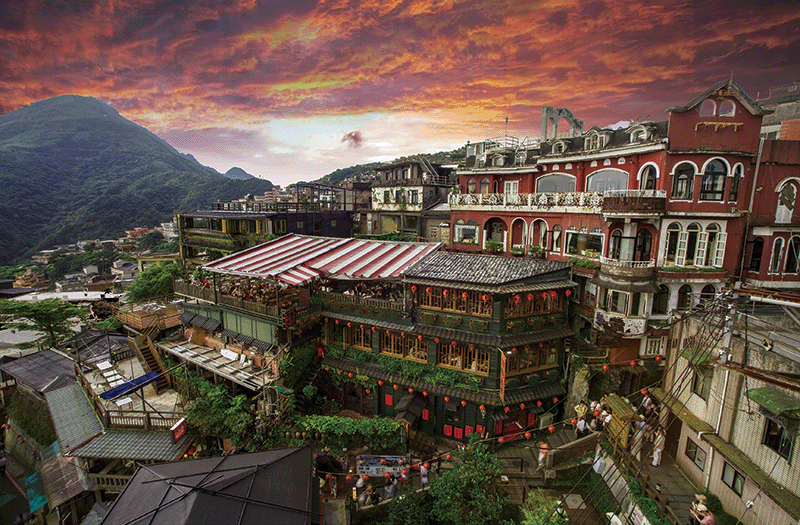

영화 ‘비정성시’의 무대인 지우펀. 2·28참사의 현장이기도 하다. 오랜 역사의 아메이찻집은 일본 유명 애니메이션 ‘센과 치히로의 행방불명’ 모델이 된 건물로 유명세를 탔다. photo 게티이미지

중국어 연수를 대만에서 하기로 결정하고 제일 먼저 한 일은 대만에 대한 관련 정보들을 검색하는 것이었다. 그중에서 역사 공부는 제1순위였다. 필자는 평생을 의과대학 교수로 재직한 사람이지만 평소 역사에 관심이 많아 이미 의학사 관련 서적 한 권과 다른 분야의 역사서 한 권 등을 집필한 바 있다.

그런데 대만의 역사를 공부하던 중 가장 눈길을 사로잡은 것은 역시 ‘2·28사건’이었다. 대만 역사상 최대의 비극으로 불리는 이 사건은 자료를 찾을 때마다 관심이 증폭되어 이 사건을 다룬 대표적 영화인 ‘비정성시’를 힘들게 찾아내 몇 번이고 돌려 보기도 했다. 지난 2월 말 대만에 도착한 후에도 제일 먼저 방문한 곳이 2·28평화기념공원과 기념관이었다.

영화 ‘비정성시’(非情城市·A City of Sadness)는 허우 샤오시엔(候孝賢·76) 감독의 작품으로 1945년 8월 일제 통치에서 벗어난 직후부터 1949년 12월 장제스의 국부천대(國府遷臺)까지의 대만을 배경으로 2·28 사건을 주요 소재로 다루고 있다. 1989년에 개봉되어 같은 해에 베네치아국제영화제 대상인 황금사자상을 수상하였는데 아시아 영화로는 31년 만이었다.


2·28사태 그린 영화 ‘비정성시’

우리나라에도 1990년에 수입 개봉되어 비록 흥행 면에서는 크게 저조했지만 주인공 문청 역을 맡았던 양조위(梁朝偉)라는 명배우가 국내에 알려지는 계기가 되었다. 이 영화 속에는 흥미롭게도 조선루(朝鮮樓)라는 이름의 술집 간판이 나온다. 아마도 일제강점기 때 조선에서 건너온 접대부들을 고용한 술집이 해방 후에도 계속 영업을 하고 있었던 당시 상황을 그리고 있는 것으로 보인다.

영화 ‘비정성시’의 주제이자 대만사 최고의 아픔인 2·28사건에 대해 좀 더 구체적으로 살펴보자. 2·28사건은 한마디로 1947년 2월 28일부터 대만에서 벌어진 당시 국민당 행정부에 대한 민중들의 대규모 봉기와, 이에 대응해 중국 대륙에서 파병된 무장군인들이 비무장 반정부 시민들을 무차별 대량 학살한 사건을 가리킨다.

1947년 2월 27일 오후 늦게 6명의 담배 전매국 직원들이 타이헤이쵸(太平町·지금의 타이베이 남경서로 부근) 지역에서 밀수 담배를 단속하고 있던 중 톈마찻집(天馬茶房) 앞에서 당시 40세의 과부 행상이었던 린장마이(林江邁)를 발견하고 팔고 있던 담배와 돈을 압수하려 하였다. 당시 담배는 엄격한 전매품으로 정부의 철저한 통제하에 있었다. 그런데 담배와 돈을 지키려고 저항하는 그녀에게 단속 직원 중 한 명이 권총으로 머리를 내려쳤고 그녀는 피를 흘리면서 실신하였다. 이를 지켜보고 있던 사람들이 과도한 단속에 흥분하여 항의하자 전매국 직원들이 도망가면서 목표 없이 발포한 총에 천원시(陳文溪)라는 학생이 그만 총격을 입는다. 더욱 흥분한 사람들은 경찰서와 헌병대로 몰려가 발포에 관련된 공무원의 처벌을 요구했으나 아무런 반응을 얻지 못했다.
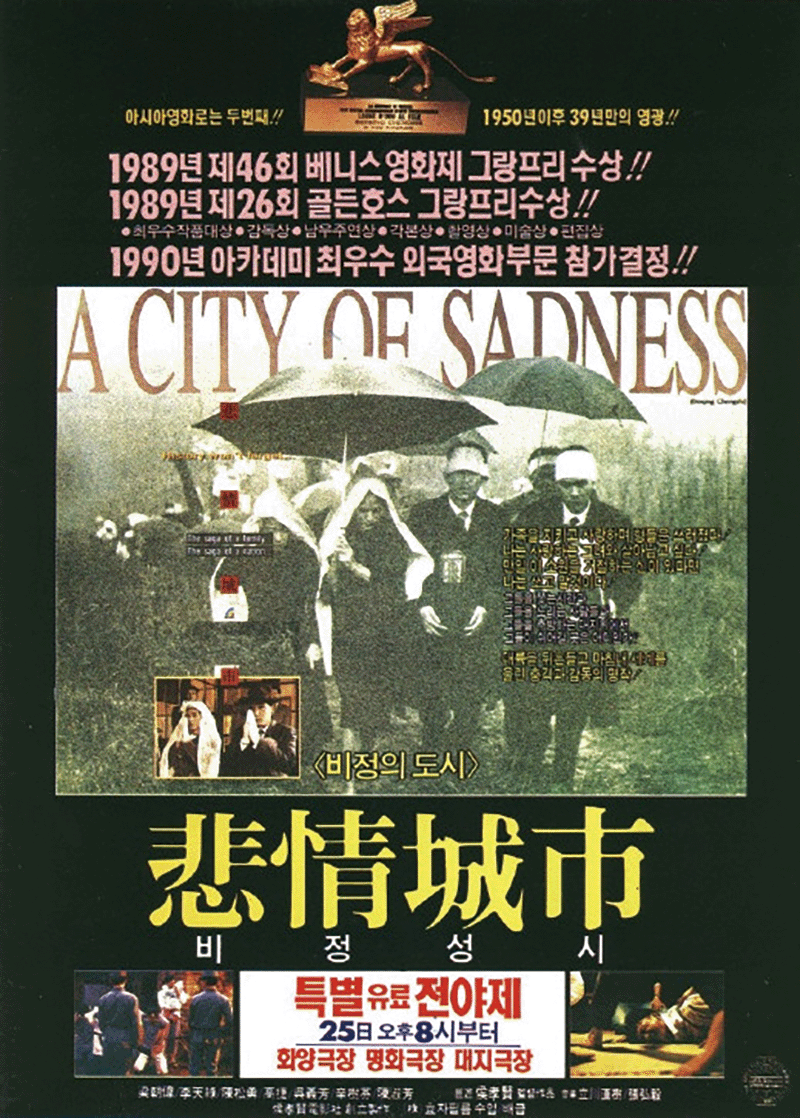
영화 ‘비정성시’ 포스터

학생 죽음 항의 시위대에 기관총 난사

그런데 다음 날인 2월 28일 총을 맞은 학생이 결국 사망했다는 소식을 듣고 극도로 분노한 군중들은 전매국에 몰려가 사무실 집기와 서류들을 거리에 꺼내어 태우고 직원들을 폭행했다. 그리고 그날 오후 행정장관 집무실로 몰려가 격렬한 항의 시위를 계속했다. 그러자 전혀 예상치도 못하게 건물 발코니에 있던 경비대가 군중들을 향해 기관총을 난사하면서 여러 명의 시위 군중이 사망하게 된다. 이때부터 시위는 폭동으로 변하면서 사태는 겉잡을 수 없이 악화되기 시작하였다. 시위대 청년들은 라디오 방송국(지금의 2·28기념관)을 장악하고 타이베이에서 일어난 사건의 진상을 전국에 알리면서 전 대만인들이 궐기할 것을 호소하자 일시에 대만 전역이 혼란의 소용돌이에 빠지게 된다. 당국도 즉각 계엄령을 발표했지만 이를 지탱할 충분한 병력이 없었기 때문에 제대로 효력을 발휘하지 못했다.

3월 1일에는 타이베이 시가지가 대혼란 상태에서 폭동이 확대되면서 상점도 모두 문을 닫고 학생들도 거리로 몰려나갔다. 대부분의 큰 도시와 마을에서는 성난 군중들이 경찰서와 관공서를 습격하고 외성인(外省人·1945년 이후 대륙에서 건너온 사람들)들을 공격했다. 대립은 점점 치열해지고 대만 본성인(本省人)들은 학생, 퇴역군인들을 중심으로 무장 세력을 조직하여 정부군에 맞섰다.

사실 이 비극의 씨앗은 이미 오래전부터 싹트고 있었다. 1945년 8월 15일 일본이 항복 선언을 하자 당시 대륙의 중화민국 정부는 정부 인사 중에서 일본 육사 출신이면서 대만통으로 알려진 천이(陳儀·1883~1950)를 행정장관 및 경비 총사령관으로 임명하였다. 그해 10월 대만의 타이베이에 도착한 천이는 일본의 대만 총독으로부터 공식적인 항복을 받아내고 대만인들의 열렬한 환영과 기대 속에서 업무를 시작했다.
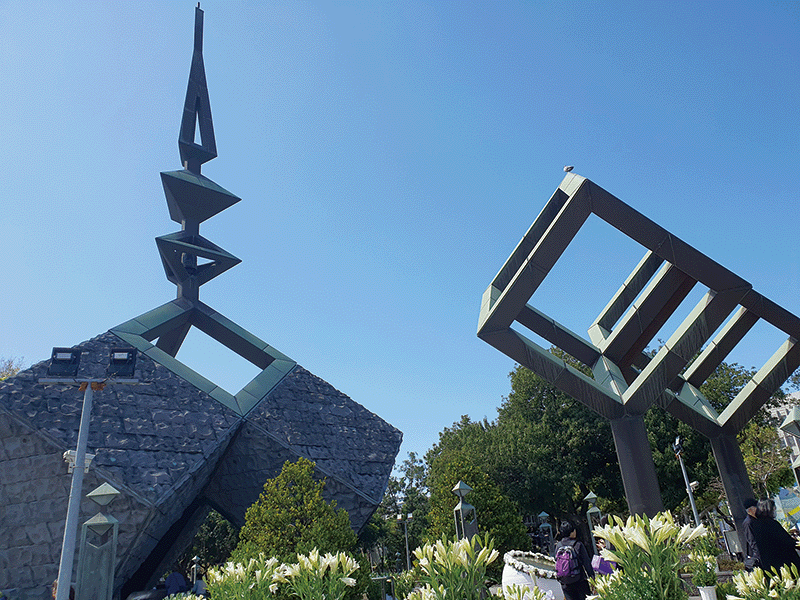
2·28공원의 추모 상징물.

‘개가 가고 나니 돼지가 왔다’


그러나 기대와는 달리 당시 국민당 정부는 대만에 대한 이해가 충분하지 못했고 심지어 정부 일각에서는 대만인들을 일제의 중국 침략에 협조한 잠재적 조력자 정도로 간주할 정도였다. 특히 전쟁이 끝나면서 징병 및 징용으로 해외로 떠났다가 다시 대만으로 귀국한 사람들에 대해서는 일본에 협력한 ‘매국노’로 몰면서 노골적인 탄압을 하기도 하였다. 게다가 대만 행정부의 요직뿐만 아니라 교사와 말단 공무원, 경찰, 군인까지 대륙에서 건너온 외성인들이 대부분 차지하였고 주민들에 대한 착취도 심했다.

경제 실정도 계속되어 실업률이 증가하고 쌀값이 몇백 배로 폭등하는 등 주민들의 삶도 갈수록 어려워졌다. 이렇게 대만 본성인들의 실망감이 점점 커지면서 국민당 정부의 대만 통치에 배신감까지 느끼게 되었다. 당시 유행했던 ‘개가 가고 나니 돼지가 왔다(狗去豬來)’라는 말이 당시 이들의 심정을 잘 대변해 주고 있다. ‘일본인은 개처럼 대만인들을 들볶기는 했지만 국민당은 돼지처럼 대만인들의 재산을 먹어치우고 있다’라는 뜻이었다. 사실 일제시대에는 원래 낙후되었던 대만의 경제와 기반시설이 개선되어 주민들의 생활 수준이 향상된 측면이 있었기 때문에 일본에 대해서는 감정이 나쁘지만은 않았다. 이런 대만인들의 당시 심정은 앞서 소개한 영화 ‘비정성시’에서도 잘 드러나고 있다.

상황을 더 어렵게 만든 것은 서로 사용 언어가 달라 기본적인 의사소통까지 문제가 있다는 점이었다. 당시 대만 본성인들이 외성인들을 색출할 때 사용한 식별법은 대만어(민남어)와 일본어의 구사 능력 여부였다. 만일 이 기준으로 외성인으로 판단되면 가차 없이 공격하여 죽였는데 영화 ‘비정성시’에서도 주인공 문청의 에피소드를 통해 잘 묘사되고 있다. 또 이 점을 이용하여 본성인들은 자기들의 비밀 보호를 위해 각종 저항 메시지를 일본어로 방송하기도 하였다. 결국 외성인들은 본성인을 일제에 협력한 매국노로, 그리고 본성인들은 외성인들은 탐욕스럽고 미개한 ‘짱꼴라(チャンコロ)’라고 부르며 서로 폄하하면서 적대감을 키워갔다.

이런 배경 속에서 2·28사건은 그야말로 불에 기름을 끼얹는 형국이 되고 말았지만, 그런 가운데서도 당시 대만의 지식인들과 의회 대표단은 2·28사건 처리위원회를 구성하고 3월 1일 행정장관 천이를 만나 사건의 원만한 수습과 언론, 집회, 결사의 자유 등 정치 개혁을 요구하였다. 천이도 그날 저녁 7시 라디오 방송을 통해 첫째 즉각적인 계엄 해제, 둘째 체포된 시민 석방, 셋째 군경의 발포 금지, 넷째 정부와 민간 단체로 구성된 진상조사위원회 구성 등의 4개항을 발표하게 된다. 2·28사건 처리위원회의 활약과 함께 군·경을 대신하여 학생과 청년들로 조직된 치안복무대까지 활동하면서 3월 4일 이후부터는 사태가 조금씩 진정 국면으로 들어서기 시작했다.

3월 5일에는 2·28사건 처리위원회의 전국적인 조직망도 구체화되었고 3월 7일에는 정치개혁과 동시에 대만 군대도 가능한 대만인들에게 맡기게 한다는 등의 ‘42개항 요구(四十二條要求)’를 하게 된다. 그동안 천이는 공식적으로는 위원회의 요구에 최대한의 립서비스를 아끼지 않았다. 정부 당국의 그 누구도 위원회 활동을 간섭하지 않을 것이며 그 자신도 사태의 원만한 수습을 위해 정부 인사를 선출제로 구성하겠으며, 관료 인사도 본성인 중심으로 하는 등 최선을 다하겠다고 약속했다.
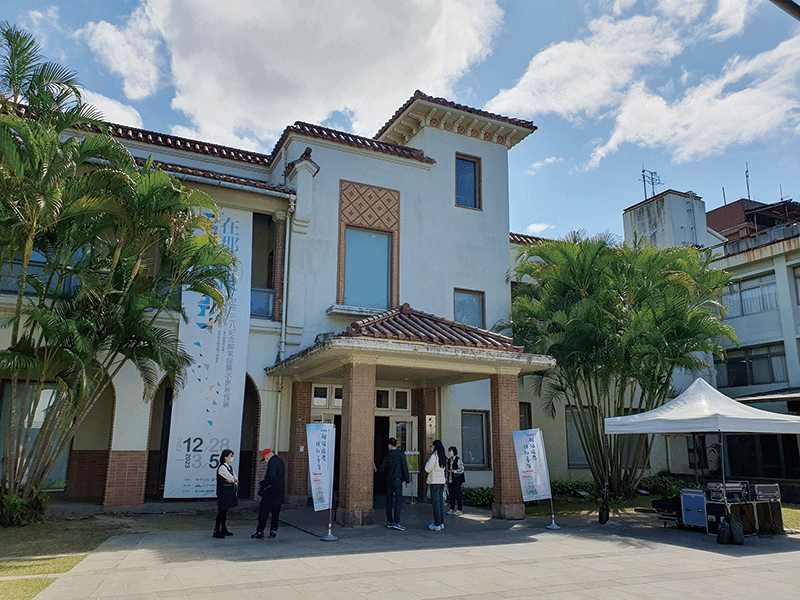
2·28기념관

본토서 건너온 장제스 군대의 무차별 학살

그러나 사실 당시 천이는 대만 내의 자체 병력으로는 2·28사건의 진압이 불가능하다고 판단하여 이미 중국 난징에 있던 중화민국 정부의 장제스(蔣介石·1887~1975)에게 파병 요청을 해놓은 상태였다. 그는 단지 시간을 끌기 위하여 2·28사건 처리위원회와 협상에 나선 것뿐이었다. 결국 장제스의 명령으로 국민당군 21사단이 진압군으로 결정되었고, 군대의 파견 결정을 알게 된 천이는 일시에 태도를 바꾸어 2·28사건 처리위원회를 불법단체로 규정하였다.

마침내 3월 8일 오후 대만 북부 해변의 지룽(基隆)에 진압군이 상륙하고 부두에서 일하던 인부들을 바로 무차별 살해하면서 대학살이 시작되었다. 이튿날인 3월 9일 타이베이에 입성한 진압군은 곧바로 남쪽으로 진격하면서 가는 곳마다 학살을 자행했다. 2·28사건 처리위원회 관련 인사들도 체포되어 상당수가 처형되었다. 그들은 모두 일본 통치 시절부터 활동하던 대만의 엘리트들이었기 때문에 대만 지식인 사회에도 큰 타격을 주었다. 3월 20일부터는 마을을 깨끗하게 한다는 이른바 청향(淸鄕) 캠페인이 시작되어, 각 마을마다 숨긴 무기를 내놓고 숨어 있는 폭도들을 고발할 것을 강압했다. 만일 이를 제대로 이행하지 않는다고 판단되면 가차 없이 체포 구금되어 고문을 받았고, 재판 없이 처형되었다.

학살과 약탈로 인해 대만 전역이 초토화되었고, 결국 시위는 강제 진압되었다. 당시 대학살 희생자의 정확한 숫자는 알 수가 없다. 폭동 가담자를 가려서 색출한 것도 아니었고 그냥 본성인과 외성인 여부만을 가린 후 본성인, 즉 대만인이면 무조건 학살했기 때문이다. 당시 진압군은 진압 과정에서 수상한 사람에게 중국 표준어로 말을 걸었고 대답하지 못하면 무자비하게 학살했다. 사건 발생 50주년에 나온 보고서에 따르면, 적게는 1만8000명에서 많게는 2만8000명이 사망한 것으로 되어 있고 외성인 역시 1000명 가까이 사망한 것으로 추정되고 있다. 이러한 학살은 3월 17일 바이충시(白崇禧·1893~1966)가 대만 지역의 군정장관으로 부임하여 2·28사건의 수습을 맡으면서 진정되기 시작하였다.

사건 이후 대만인들은 더욱 위축되었다. 51년간의 일제 통치 때 2등 시민으로서 느꼈던 자격지심이 2·28사건의 진압 과정에서 더욱 자조적으로 변했다. 그들은 개인의 안전을 위해서라면 정부의 통치에 그 어떤 소리도 내지 않는 쪽으로 변했다. 영화 ‘비정성시’의 표현대로 노예근성에 익숙해진 것이다. 정치에도 관심이 멀어져 훗날 오랫동안 국민당이 일당 독재를 하는 것에도 무관심해지는 주요한 원인이 되었다.

2·28사건 후인 5월 16일이 돼서야 이 사건으로 내려진 계엄령은 일단 해제되지만, 2년 후인 1949년 5월 20일 당시 국공내전 중이던 국민당 정부는 다시 대만 전역에 계엄령을 선포하였다. 계엄령에 따라 국공 평화회담을 주장하거나 민주화 등을 요구하면 용공분자, 친일파 또는 독립분자로 몰아 처벌하였다. 이어서 12월에는 국공내전에서 패한 국민당이 대만으로 아예 국부천대를 하게 되면서 그 후 계엄령이 1987년까지 무려 38년간 지속되었기 때문에 2·28사건은 그 자체를 언급하는 것조차 금지되었다. 이런 분위기 속에서 시간이 점차 흘러가면서 이 사건은 대중의 관심에서 철저하게 잊히고 만다.
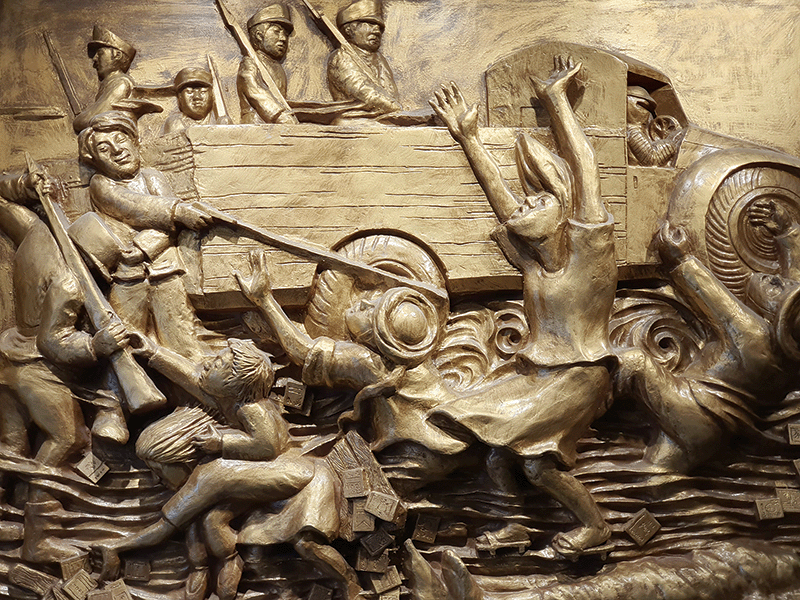
2·28기념관의 부조 작품. 본토에서 건너온 장제스 군대의 학살 장면을 묘사하고 있다. photo 김원곤

사건 발생 40년 만에야 재조명

오랜 시간이 지난 후 이 사건이 다시 수면 위로 떠오른 것은 사건 발생 40년이 지난 1987년 2월 28일 대만의 언론인이자 민주운동가인 정난룽(鄭南榕·1947~1989)이 최초의 2·28 관련 단체인 ‘2·28 평화일 촉진회’를 설립하면서부터였다. 이후 7월 15일에 대만 계엄령이 해제되고 1988년에는 최초의 대만 출신 총통인 리덩후이(李登輝·1923~2020)가 취임하면서 본격적인 정부 차원의 조사가 시작되었다. 오랜 논란 끝에 사건 발생 50주년인 1997년에 정부가 공식 사죄하고 타이베이 중정구에 2·28평화기념공원과 2·28기념관을 설치하였다. 사건 발생 60주년인 2007년에는 장제스가 이 사건의 학살을 지시했다는 연구 결과도 나왔다.

2·28사건은 오늘날 집권당인 민진당 성장의 중요한 바탕이 되었으며 야당인 국민당과의 역학 관계에도 큰 영향을 미치고 있다. 국민당 입장에서는 당을 이끌었던 장제스가 직접 연루된 사건이라, 아무래도 이슈가 크게 부각되는 것을 내심 원하지 않는 분위기다. 일례로 국민당 출신의 마잉주 전 총통은 재임 시절 2·28사건을 ‘일부 부패한 관료들의 탐욕과 실정에 맞선 민중 저항’으로 규정하며 장제스와 국민당 지도부 그리고 대만 독립 분위기와는 선을 긋기도 했다. 어쨌든 2월 28일은 현재 ‘평화기념일’이라는 명칭으로 대만의 국가공휴일로 지정되어 있는데, 2016년 취임한 민진당의 차이잉원(蔡英文·67) 총통은 이날 하루 동안은 학살의 배후로 지명된 장제스를 기리는 중정기념당을 정기휴일로 정하는 방침을 발표하였다.

참고로 사건의 원흉 중 한 명인 행정장관 천이는 사건이 끝나고 해임되었다가 1년 뒤인 1948년에 저장성 정부 주석으로 다시 등용되었다. 그러나 1949년 국공내전 와중에 공산당에 투항하려다가 적발되어 체포되었고, 이듬해인 1950년에 자신의 주도 아래 학살이 자행되었던 대만 땅에서 처형되었다.
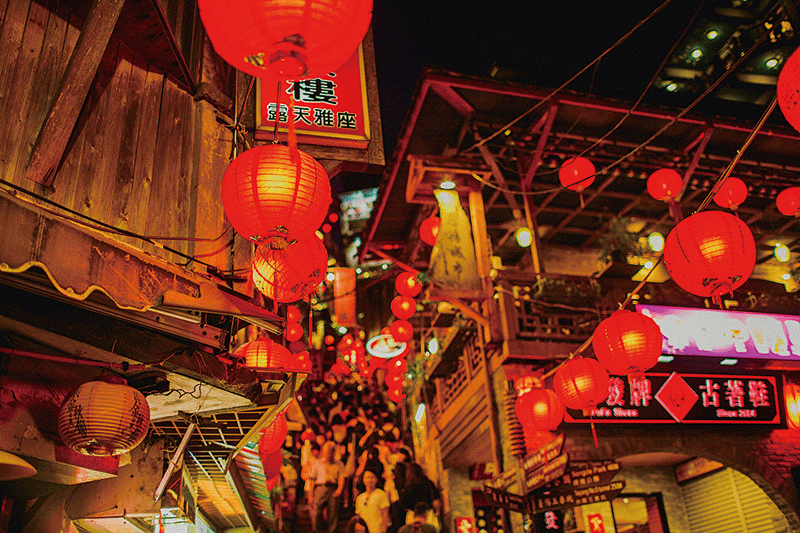
지우펀은 점포들이 다닥다닥 붙어 있는 골목길로 유명하다. photo 게티이미지

‘예스진지’ 관광 루트 지우펀

영화 ‘비정성시’의 무대는 수도 타이베이 북동쪽에 있는 도시 지우펀(九份)이다. 이곳에 지우펀이라는 이름이 붙은 데는 여러 가지 설이 있는데, 오래전 이곳에 살고 있던 아홉 가구가 필요한 물건들을 공동구매를 한 뒤 나누어 가졌다는 데서 붙여졌다고 하는 설이 가장 유력하다. 과거 일본 통치 시절에는 광산이 드문 대만에서 탄광으로 유명했던 곳으로, 지금까지 옛 탄광 유적이 남아 있는 인근의 진과스(金瓜石)보다 더 번화했던 곳이다. 당시 진과스는 일본 정부가 금 채굴을 직접 관리하였지만 지우펀에서는 일본 광업회사와 대만인에게 채굴권을 주는 형식을 취했기 때문이었다.

이 때문에 지우펀은 당시 대만 곳곳에서 사람들이 몰려들기 시작하면서 마을이 번성하였고 제2차 세계대전 패전 후 일본이 떠난 이후에도 한동안 광부들로 북적이던 마을이었다. 당시 광부들은 힘든 생활 중에서도 수중에 돈을 가지고 있었기 때문에 오락과 유흥생활에 쉽게 빠졌고 이들의 돈을 노린 주점과 식당, 오락시설 등이 잇달아 생기면서 화려한 홍등이 장식되었다. 그때의 화려한 모습을 비유해 지우펀을 ‘작은 상하이’ 또는 ‘작은 홍콩’으로 부르기도 하였다.

지우펀은 1970년대 탄광산업이 쇠락하면서 진과스와 함께 존재감이 거의 없어졌으나 1990년대 들어서 관광지로 다시 각광을 받기 시작하였다. 대만을 여행하는 한국 여행객들에게 널리 알려진 ‘예스진지’라는 국민 관광 루트가 바로 예류 지질공원, 스펀, 진과스와 함께 지우펀을 가리키는 말이다.

지우펀의 길게 이어진 골목길(九份老街)에는 수많은 점포들이 다닥다닥 붙어 있어 각종 길거리 음식들을 즐길 수 있는데, 그 정점에는 영화 ‘비정성시’의 무대이자 오르막길로 유명한 골목 수치루(竪崎路)에 있는 오랜 역사의 아메이찻집(阿妹茶樓)이 있다. 흔히 일본의 유명 애니메이션 ‘센과 치히로의 행방불명’의 모델이 되었다는 건물이지만 정작 작가(미야자키 하야오) 자신은 수차례의 인터뷰를 통해 지우펀을 방문한 적도 없고 애니메이션은 어느 특정 장소의 영감을 받아 만들어진 것이 아니라 그의 상상력의 산물이라고 이야기했다. 그럼에도 불구하고 작가가 작품을 만들기 이전에 아메이찻집에서 차를 마시며 구상을 했다는 등 그럴듯한 이야기가 잇달아 만들어지면서 관광객들의 또 다른 상상력을 부추기고 있는 것은 어쩔 수 없는 일일 것이다.


김원곤 서울대 흉부외과 명예교수

A City of Sadness - Reynaud, Berenice | Amazon.com.au | Books

A City of Sadness - Reynaud, Berenice | 9780851709307 | Amazon.com.au | Books

Kindle
$16.88


A City of Sadness Paperback – 1 June 2002
by Berenice Reynaud (Author)
4.5 4.5 out of 5 stars 2 ratings


Winner of the Golden Lion in Venice in 1989, A City of Sadness introduced Western audiences to the richness of New Taiwanese Cinema. Its director, Hou Hsiao-hsien is now recognised as one of the most profoundly original auteurs in contemporary cinema. A City of Sadness revisits a painful episode in recent Taiwanese history, creating an elliptical and impressionistic picture of Chiang Kai-shek's takeover of the island after the defeat of his Kuomintang army by Mao Zedong. Taiwan's politics and the suffering of her inhabitants are invoked by Hou in the story of an extended family of four brothers. The first Taiwanese film shot in direct sound, A City of Sadness echoes the forgotten voices of ordinary people facing political repression. Berenice Reynaud deciphers the complex social and historical threads that combine in the film while analysing its aesthetics in the context of Hou's entire career. His journey from being a commercial director to becoming the famed master of long takes and painterly compositions is referred to the history of Taiwanese cinema and the philosophy of forms in Chinese art.
Read less


From the Back Cover
Winner of the Golden Lion in Venice in 1989, A City of Sadness introduced Western audiences to the richness of New Taiwanese Cinema. Its director, Hou Hsiao-hsien is now recognised as one of the most profoundly original auteurs in contemporary cinema. A City of Sadness revisits a painful episode in recent Taiwanese history, creating an elliptical and impressionistic picture of Chiang Kai-shek's takeover of the island after the defeat of his Kuomintang army by Mao Zedong. Taiwan's politics and the suffering of her inhabitants are invoked by Hou in the story of an extended family of four brothers. The first Taiwanese film shot in direct sound, A City of Sadness echoes the forgotten voices of ordinary people facing political repression. Berenice Reynaud deciphers the complex social and historical threads that combine in the film while analysing its aesthetics in the context of Hou's entire career. His journey from being a commercial director to becoming the famed master of long takes and painterly compositions is referred to the history of Taiwanese cinema and the philosophy of forms in Chinese art.


About the Author
Berenice Reynaud is the author of Nouvelles Chines, nouveaux cinemas (1999) and has written extensively on Chinese cinema in a wide range of international publications. She teaches at the California Institute of the Arts.

Product details
Publisher ‏ : ‎ British Film Institute; 2002 edition (1 June 2002)
Language ‏ : ‎ English
Paperback ‏ : ‎ 96 pages

Dimensions ‏ : ‎ 13.36 x 0.8 x 19.23 cmCustomer Reviews:
4.5 4.5 out of 5 stars 2 ratings
=======

BFI Film Classics
A City of Sadness


Bérénice Reynaud

3.89
19 ratings6 reviews

This text introduces the Western audience to the richness of New Taiwanese Cinema. It revisits a painful episode in Taiwanese history, creating an elliptical and impressionistic picture of Chiang Kai-shek's takeover of the island after the defeat of his Kuomintang army by Mao Zedong.

GenresFilm


96 pages, Paperback

First published October 7, 2002
Book details & editions
Andrew Bishop
92 reviews13 followers

Follow
May 1, 2014
A very highly recommended book to lovers of history as well as cinema. A blend of analysis, theory, and history, this is an excellent reading of the Hou Hsiao-hsien film. Not only an introduction to Hou's cinema, but also the background of Chinese cinema as well as history (especially valuable to Wong Kar Wai fans). The discussion of the actors was quite welcome in this regard. Reynaud gives special attention to the soundtrack as the different dialects and languages tell their own story about the background history of the film's setting. The use of sound in general is also highlighted as one main character is deaf and Hou is keen to indicate the presence of sound as it relates to memory and history. Reynaud closes with an analysis of the last reel of the film that is quite moving as well as a testament to Hou's mastery as a director. A stimulating analysis and a comprehensive treatment of a film, Reynaud's fine work immediately pushed me to see the film.
film
1 like
Like
Comment


Jarvo
348 reviews7 followers

Follow
July 7, 2019
A City of Sadness is one of the richest and most profound films I've seen in the last decade: a meditation on the traumatic impact of history on a family whose misfortune it is to live in a place, Taiwan, oversahadowed by powerful and nosy neighbours, China and Japan. It is not an easy film: a Modernist collage which delivers the narrative elliptically, and to understand it it helps if you some prior knowledge of Taiwanese history.
This short book does an excellent job explaining the historical context of the film's story, and of the period in which it was made. It is a bit more patchy on the film craft - there is, for example, a section on traditional Chinese aesthetics which didn't, frankly, leave me much wiser. There are things going on in the film which I don't expect to fully understand, but then there is so much happening within the film that that doesn't really matter.

Like
Comment


Wayne Low
36 reviews2 followers

Follow
January 2, 2021
Good enough read.

Like
Comment


Patrick McCoy
970 reviews76 followers

Follow
November 17, 2013
A City Of Sadness (2002) by Berenice Reynaud is another fascinating book from BFI focusing on a single film. This time the 1989 Golden Lion winner at Venice in 1989 and Taiwanese historical epic from director Hou Hsiao-hsien is the subject. Reynaud organizes the book into five chapter: 1) Chinese History Is Made At Night, 2) A Family in the Wind of History, 3) A Polyphony of Voices, 4) Lost Spaces, and 5) An Aesthetic of the Fleeting Moment. Reynaud looks at the historical source material of the great shift from Japanese colony to refuge for Chiang Kai-shek after his defeat at the hands of Mao Zedong. She also discuses this film in the context of the other films he had mad up to 2002. I found the chapter "Lost Spaces" especially interesting since she talks about the influence of Ozu on Hou (he hadn't seen an Ozu film until the early 80s, but felt a strong connection with his work). Reynaud compares what she calls visual motif shots with what is known as Ozu's "pillow shots"--the most famous of which was the flower vase in Late Spring. The book is a well researched analysis of one of the great directors masterpieces.
criticism film
Like
Comment


Ken Hunt
167 reviews1 follower

Follow
January 2, 2017
My son is from Taiwan and I have many family friends from Taiwan so I have a strong interest in Taiwan's culture and history. As such I read books, watch documentary's, talk to people about Taiwan. This book is a cerebral and academic review of a famous Taiwanese movie, A City of Sadness, that tells a story of a family in Taiwan during a critical phase of transition of Taiwan from property of Japan to China post World War II and then taken over by the Nationalist Chinese after losing to Mao and the communists. The book and movie tell a compelling story for all, but particularly for those interested in Taiwan. I will say the book is a bit too academic and into the nuts and bolts of filmmaking, but that was its purpose. I read it for nuggets on Taiwan and greater texture on the movie A City of Sadness. Box checked.

Like
Comment


The Puppetmaster (film) - Wikipedia 戯夢人生

The Puppetmaster (film) - Wikipedia:

희몽 인생戯夢人生

출처 : 무료 백과 사전 "Wikipedia (Wikipedia)"
희몽 인생
제목 표기
번체戲夢 인생
간체카즈시 삶
늑대Xì mèng rén shēng
영제The Puppetmaster
각종 정보
감독侯孝賢(호우 승, 현 현)
각본우념진 중국어판 ) (우·니엔젠)
주천문 (주·티엔웬)
원작李天祿(이을 승, 옥돌 현)
제작저택복생 중국어판 ) (치우 푸션)
출연자李天祿(리 티룽 루, 린 강)
줄기
 (정 퀴천) 탁거
음악陳明章중국어판 ) (첸민장)
촬영李屏賓(이을 빈, 빈 빈)
편집廖慶松중국어 판 ) (야오 칭슨)
배급일본의 국기 프랑스 영화사
공개중국 국기1993년
프랑스 국기1993년 12월 8일
일본의 국기1993년 12월 11일
상영시간110분
제작국중국 국기 대만
언어대만어
일본어
템플릿 보기

희몽 인생』(기무진세이, 원제: 희몽 인생, 영어제: The Puppetmaster)은 1993년 제작의 대만 영화 .

개요 편집 ]

전작 『비정성시』를 제2부, 차작 『호남호녀』를 제3부로 하는 후우 샤오셴 감독의 대만 현대사 3부작의 제1부가 되는 작품으로, 대만이 일본 통치하에 있던 1895년부터, 1945년의 일본 패전에 의한 중화민국 진주까지의 시대를 배경으로, 후효현 영화의 단골이며, 또 대만의 전통 예능인 인형 연극·후부쿠로 희(대만어로 보테  , 베이징어로 푸타이시)의 국보적 명수이기도 한 이천상 (리 티엔루)의 반생을 그 자신의 회상을 바탕으로 그렸다. 이천포에 의한 이야기가 3분의 1을 차지하고 있으며, 세미 다큐멘터리 영화라고도 할 수 있는 작품.

1993년 제46회 칸 국제영화제 에서 심사위원상을 수상했다.

쿠로사와 아키라는 , 자작은 영화가 되고 있는 부분과 그렇지 않은 부분이 있는 것에 대해, 본작은 모두가 영화가 되고 있다고 후효현에게 말하고 있다(「대계 쿠로사와 아키라」 제4권, 후효 켄 와의 대화).

개요 편집 ]


1909년 이천상 은 이화( 홍류 )의 초손으로 태어났다. 아버지의 허몽동(蔡振南)은 대만 전통의 인형 연극· 후부 쿠로 희의 인형사였지만, 점쟁이의 판단으로, 열매의 부모를 「아저씨」 「아줌마」라고 불려, 할아버지의 밑에서 자랐다. 당시 대만은 일본 식민지 였지만 중국 본토에서는 1911년 청나라 가 중화민국이 되었다 . 차례차례로 가족을 잃고 계모의 내선(양려음 ) 에 차갑게 되어 매운 날들을 보내면서도 언젠가 봉투희를 기억하고 젊어서 인형극단을 가졌다. 1937년 노미조바시 사건이 ​​일어나 이불주머니는 금지되어 버려 리는 배우로서 순업을 하고 살고 있는 가운데 황민화 교육의 일환으로 반영미 정책의 인형극단으로 불린다 . 미군의 공습이 격렬함을 늘려 소개에 나선 날 일본이 항복한 것으로 알려졌다. 이천상은 고향으로 돌아와 후부쿠로희의 상연을 재개한 것이었다 [1] .

캐스트 편집 ]

주석 편집 ]

  1.  KINENOTE HP 희몽 인생 개요 참조

관련 항목 편집 ]

외부 링크 편집 ]

====

The Puppetmaster (film)

From Wikipedia, the free encyclopedia
The Puppetmaster
DVD cover
Chinese戲夢人生
Literal meaningDream life
Hanyu PinyinXìmèng rénshēng
Directed byHou Hsiao-hsien
Written byChu T’ien-wen
Wu Nien-jen
Produced byChiu Fu-sheng
StarringLim Giong
Li Tian-lu
Tsai Chen-nan
Narrated byLi Tian-lu
CinematographyMark Lee Ping-bin
Music byChen Ming-chang
Release date
1993
Running time
142 minutes
CountryTaiwan
LanguageHokkien

The Puppetmaster is a 1993 Taiwanese film directed by Hou Hsiao-hsien. Based on the memoirs of Li Tian-lu, Taiwan's most celebrated puppeteer, this story covers the years from Li's birth in 1909 to the end of Japan's fifty-year occupation of Taiwan in 1945.

Many consider The Puppetmaster a masterpiece of world cinema. In the British Film Institute's 2012 Sight & Sound poll, seven critics and three directors named it one of the greatest films ever made.[1]

Plot[edit]

The film tells the story of Li Tian-lu (1910-1998), who becomes a master puppeteer but is faced with demands to turn his skills to propaganda during the Japanese occupation of Taiwan in World War II. Scenes from his childhood and early adulthood are intercut with puppet performances and newly-filmed interviews of Li recounting his life as he's swept up in Taiwan's tumultuous history.[2][3]

The film is the second in Hou's trilogy of historical films about Taiwan in the 20th century. A City of Sadness (1989) covered the four years between the end of World War II and the retreat of the Kuomintang to Taiwan in 1949, when Taipei was declared the “temporary” capital of the Republic of China. Good Men, Good Women (1995) later covered forty additional years of Taiwanese history, from the 50s to the present.[4]

Cast[edit]

ActorRole
Li Tian-luHimself
Lim GiongLi Tian-lu (young)
Tsai Chen-nanKo Meng-dang (father)
Yang Li-yinLai Hwat (stepmother)
Vicky WeiLei Tzu

Production[edit]

The Puppetmaster was photographed in Fuzhou, the capital of southeastern China's Fujian province, and in Taiwan. The film is structured around a series of ellipsis, which Hou has compared to traditional Chinese opera: "It simply gives you a scene without much of a clear narrative, unlike Western drama where all the elements must be put in place. Ellipsis and other indirect narrative methods are, ironically, more clear-cut and to the point. It all depends on how you master these methods."[5]

For the shots showing Li himself, he usually appears at a particular location right after it has been introduced dramatically. The shifts between narrative and interview footage and between past and present are frequently accompanied by some narrative clarification that facilitates a change in the audience's perspective. Critic Jonathan Rosenbaum observed that "the only rough parallel I can think of in Hollywood filmmaking is the use of real-life 'witnesses' in Warren Beatty’s Reds, but here it's as if John Reed himself, not people remembering him, suddenly appeared on-screen."[4]

Hou has stated that through this film he was “exploring the values of traditional culture which [Taiwan has] lost...We have distanced ourselves from nature and man has become like a puppet – he has lost his power to be his own master. The Puppetmaster represents the lament which I feel for the loss of our culture."[5]

The Puppetmaster premiered in the U.S. at the New York Film Festival in 1993,[3] but like most of Hou’s films, it has never been commercially released in America. It was rarely screened until it anchored a comprehensive Hou Hsiao-Hsien retrospective that toured North American cinematheques and museums in the fall and winter of 2014.[6]

Reception[edit]

Jim Hoberman of The Village Voice hailed it as the best film of 1993 and one of the ten best of the 1990s,[7] writing later that "it was for The Puppetmaster that Taiwanese master filmmaker Hou Hsiao-hsien first developed a startlingly advanced form of montage that has been compared to the movement of clouds drifting across the sky."[6]

Jonathan Rosenbaum of The Chicago Reader also selected The Puppetmaster as one of the ten best films of the decade, adding that "The Puppermaster is only one of four masterpieces made by Hou in the 90s" and that Hou was "one of the two greatest working filmmakers in the world right now, along with [Abbas] Kiarostami."[8]

Critic and director Kent Jones also praised The Puppetmaster alongside Hou's 1990s work, writing that "the density of Hou’s concentration within any given shot is apparently infinite, and there’s no such thing as an 'insert' or a 'cutaway' in his work. Which is why a jump in time or a sudden juxtaposition can feel immense. Starting with The Puppetmaster, the logic of each film is built around the effects of these breaks and juxtapositions." Jones also discussed the lack of distribution for Hou's films, observing that "in America [Hou] seems to have become a marked man before making the transition from cult phenomenon to arthouse favorite...Prompting an artist of this magnitude to make his work more accessible is like asking [Karlheinz] Stockhausen to write catchier tunes, or asking John Ashbery to appeal to readers of USA Today. It doesn’t make any sense. Because right now, it doesn’t get much better than Hou Hsiao-hsien."[9] British Film Institute ranked the film at No. 11 on its list of "90 great films of the 1990s".[10]

Awards[edit]

The Puppetmaster was the first Taiwanese film to enter competition at Cannes where it won the Jury Prize at the 1993 Cannes Film Festival[2][11] and the FIPRESCI Prize at the Istanbul International Film Festival.[12]

References[edit]

  1. ^ ""Puppetmaster, The" (1993)". British Film Institute. Archived from the original on August 20, 2012. Retrieved June 3, 2015.
  2. Jump up to:a b "The Puppetmaster. 1993. Directed by Hou Hsiao-Hsien"moma.orgMuseum of Modern Art. Retrieved April 16, 2021.
  3. Jump up to:a b Canby, Vincent (October 6, 1993). "Review/Film Festival: A Taiwan Artist Tells His Island's Story Obliquely"The New York Times. Archived from the original on May 26, 2015. Retrieved 16 April 2021.
  4. Jump up to:a b Rosenbaum, Jonathan (December 3, 1993). "Searching for Taiwan"The Chicago Reader. Retrieved 16 April 2021.
  5. Jump up to:a b Chiao, Peggy Hsuing-ping (Autumn 1993). "History's Subtle Shadows". Cinemaya (21).
  6. Jump up to:a b Hoberman, Jim (September 19, 2014). "Taiwan's Master Timekeeper"The New York Review. Retrieved 16 April 2021. {{cite journal}}Cite journal requires |journal= (help)
  7. ^ "J. Hoberman's Top Ten Lists 1977-2006"Archived from the original on October 31, 2016. Retrieved April 16, 2021.
  8. ^ Rosenbaum, Jonathan (December 24, 1999). "The Decade's Finest [The Ten Best Movies of the 90s]"The Chicago Reader. Retrieved 16 April 2021.
  9. ^ Jones, Kent (September 1999). "Cinema With a Roof Over its Head"Film Comment. Retrieved 16 April 2021. {{cite journal}}Cite journal requires |journal= (help)
  10. ^ "90 great films of 1990s"bfi.org. 18 July 2019.
  11. ^ "Festival de Cannes: HSIMENG RENSHENG"festival-cannes.com. Retrieved April 16, 2021.
  12. ^ "13rd Istanbul International Film Festival". Retrieved April 16, 2021.

External links[edit]

=====