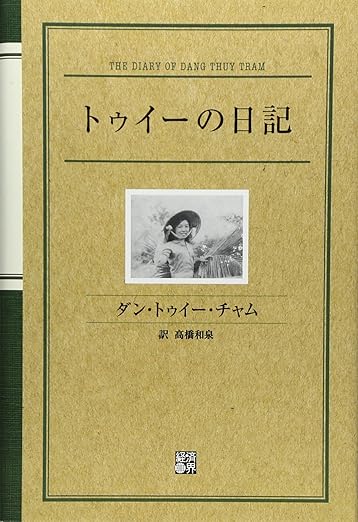
Product Details Publisher : 経済界 (July 22, 2008) Publication date : July 22, 2008 Language : Japanese Tankobon Hardcover : 240 pages -- Customer Reviews: 4.5 4.5 out of 5 stars (21)
== == From Japan
ときどき日乗 5.0 out of 5 stars .ベトナム戦争中亡くなった娘の日記が35年ぶりに親の元に届く。 Reviewed in Japan on August 15, 2020 Format: PaperbackVerified Purchase ベトナム戦争中亡くなった娘の日記が35年ぶりに親の元に届く。娘は1942年生まれで1970に戦死した。娘の日記を持ち帰った米兵が35年ぶりに日記を親に渡す。日記に曰く「もうすぐ、30歳、(中略)私の青春は戦火の中で過ぎた。戦争は若さと愛で一杯だった筈の幸福を奪っていった。20代なら誰でも青春を謳歌したい、輝いた瞳とつややかな唇でいたいと思う。しかし、今の20代は幸せになりたいという当たり前の願いすら捨て去らなければならないのだ。今の願いはアメリカを倒すこと。国の独立と自由を勝ち取ること」。母親の感慨はいかばかりのものであったろう。 困難な時代を生きた人の記録を読むと忘れていたことを突然思い出す。ベトナム戦争は私にとって同時代の戦争であった。ささやかな私の人生にも影響を与えた。1975年4月30日だっと思うが、サイゴンが陥落して、ときの外務大臣宮沢喜一が「民族主義は時代の流れ」等のコメントをした。私は大学受験に落ちて浪人になり、予備校の試験!にも落ちて気落ちしていた頃のことだ。新聞に北ベトナム軍が南下して、これに伴い逃げるために難民化した南ベトナムの人たちの写真があった。その中で小さな弟を連れた女の子の写真が強烈に印象に残っている。とても2人だけでは生きていけないと思った。理不尽で、憤りを感じさせる写真だった。そのことはずっと記憶の片隅に残った(もっとも、その時感じたことはその後の人生に生かされたか疑問だ)。 トゥイーの日記はまた、以前読んだ「ベトナム戦争の時代(清水知久)」の一節p155「われわれは数千年にわたる人間の創造の営みや苦しみや闘いによって生み出されたこれらの人間的な価値を守るために、闘い、そして死んでいるのです」という南ベトナム臨時政府のパリ在住のスポークスマン、リー バン サウの発言を反射的に思い出した。彼の言葉を裏付けるものとしても感銘深い。 以下とりあえず、読んだ範囲での抜き書き 訳者(高橋和泉)前書き 35年後、家族に日記を届けたアメリカ兵の執念にも、心打たれる。 心には心地よい音楽が流れていただろう。そのままの彼女の声を聞いて欲しい。 この日記を日本語にできる喜びをかみしめている。 前書き 勇敢であるがか弱く、理想を追い求めるが、時に迷い日々葛藤する普通の女性であった。 本文 年老いた母が自分の希望をすべて託し、その身を案じている大切な一人息子であるサンの命を、私は絶対に死に神に渡すことはできない。絶対に。私はサンの為に、そしてすべての患者のために全力を尽くさなければならない。それを成し遂げることが医師としての誇りではないだろうか。 私たちは正義のために戦うこと。そして戦うならば力を尽くし、考え抜き、個人の利益、時には人生さえも犠牲にしなければならない 妹の後書き この話が事実なのか、それとも姉を大切に思ってくれたドッグフォーの人たちが作り上げた武勇伝なのかそれはわからない。若くて、愛らしいハノイから来た医師が果敢に戦い、自分達の土地を守ろうとしてくれた姉を思い、また、次の世代に語り継ぎたい意思があったためかもしれない。 訳者後書き ベトナムの地方都市の、ごく当たり前の街並みであるが、ここでトウイーが短い生涯を遂げたかと思うと、この穏やかな風景は格別の意味を持って私に迫った。そして、目の前にあるこの平和な日常の営みがトウイーや多くの人たちの犠牲の上に成り立っていることを改めて理解した。 章の扉の所に生前のトウイーの写真が掲載されている。少女時代、学校時代、そして、最後の頁に墓の写真が載せられている。訳者の並々ならぬ情熱を感じる。自省的なトウイーの日記を読んで、期せずして思い出したのは、アウレニウスの自省録である。ともに私的な覚書で、誠実な人柄を感じさせる。 4 people found this helpful --
コープイン 4.0 out of 5 stars 一気に読んでしまいました。 Reviewed in Japan on May 15, 2009 Format: PaperbackVerified Purchase 一気に朝の2時までかかって読んでしまいました。実際の日記なので迫力と胸に迫るものがありました。読み終わった時の自分の顔は鬼気迫るものがあったかもしれません。高校時代ベトナム反戦運動をしていたものとしては、1960年代は忘れられない時代です。 9 people found this helpful ---
Amazon カスタマー 5.0 out of 5 stars 感動ものです。 Reviewed in Japan on June 27, 2016 Format: PaperbackVerified Purchase ベトナムについて、認識が深まり、悲しい歴史を垣間見れました。DVDも拝見しましたが、感動物でした。 One person found this helpful --
amazon 3.0 out of 5 stars ベトナム版アンネの日記 Reviewed in Japan on December 21, 2024 Format: PaperbackVerified Purchase アンネの日記と読み比べました。 --
ハチベエ@ウッカリ 5.0 out of 5 stars 利用された人た若き命 Reviewed in Japan on February 10, 2023 Format: Paperback 模範的な共産主義者に見える。
和木憲一 5.0 out of 5 stars とてもよかった Reviewed in Japan on September 27, 2013 Format: PaperbackVerified Purchase 今娘によませています。もう少し早く知っておれば授業などで取り上げたと思いますね。 One person found this helpful ---
たまどん 5.0 out of 5 stars 戦争や社会主義の知識で語るのは不要と言いたい。「トゥイーのようなベトナムの女の子と仲良くなりたい」というのでいいと思います。 Reviewed in Japan on July 16, 2017 Format: Paperback ギリシャ神話由来の「パンドラの箱」のエピソードは日本でも有名だ。 全能の神ゼウスが人間たちを創造して地上に下したあと、パンドラに渡されていた箱には、病気、憎しみ、嫉妬などのあらゆる厄災が封じ込まれていたが、誤って箱が開かれたばっかりに、地上に厄災の数々が自ら飛び散っていって人間たちに降りかかり、その際「希望」だけは箱に残っていた、という話。 私は年少のころ、ここがよくわからなかった。なぜ「希望」が厄災のなかに一緒になって入っていたのか?希望は人間にとって厄災ではなく、苦難に打ち勝つための未来を照らす“明るい要素”のはずじゃないのか?
私は読了後、Billie Holidayの“God Bless’ The Child”を思い出した。 歌詞の内容はシリアスでも、ビリーの虹色の歌声で聞かせられれば、夢の多い明るい歌に聞こえる。 彼女の日記からも、そう感じた。 2 people found this helpful --
ままあんどにーす 3.0 out of 5 stars 色々考えさせられるが Reviewed in Japan on June 26, 2009 Format: PaperbackVerified Purchase 日記をそのまま転記した本なので、迫力もあるし、胸に迫るものがある。 が、戦時下のほとんどの人がそうであったように、 政治的な扇動、スローガン、偏った見方に流され 本当の精神状態(例えば、自分の側の政府の情報は本当に全て真実なのか、といった素朴な疑問や、従軍への迷い・疑問、社会主義に対する知識矛盾など) はない。 単に「アメリカや資本主義を倒す」「私は国のために死ねる」 といった、当時ありがちだった「自分(たち)は正しい」という心理状況のみに留まる。
それが、普通だったと言われればそれまでだけど 主人公を取り巻いた人たちのその後や、彼らが今、自分達が是と信じてきた 社会主義もしくは共産主義がほぼ崩壊した現在、 どう思っているのか、聞いてみたいなあと思う。 5 people found this helpful ---
長 5.0 out of 5 stars 戦場のアン Reviewed in Japan on December 1, 2008 Format: PaperbackVerified Purchase 乙女心を垣間見た、そんな気持にさせてくれる本です。 そして、絶望的な状況はあるものの、 全体にわたって悲壮感がないのが、すばらしい。 芯の強い心とは、こういうものなのだと感じました。
人生に絶望感を感じている人に、お勧めです。 もちろん、平和について考えたい方にも。 11 people found this helpful --
===
트위의 일기 : 댄 트이 참, 다카하시 이즈미:
Amazon.co.jp:
트위의 일기 : 댄 트이 참, 다카하시 이즈미 :
Books 트위 의 일기 Publisher 2005년 4월, 갑자기 미국으로부터 보내져 온 것은, 35년전에 전쟁이 없어진 딸의 일기였다. 이 기적을 따르는 일기는 곧 출판되어 베트남에서는 공전의 히트작이 되었습니다. 전쟁의 일기이기 때문에, 물론 슬프지만, 전장 중에서도 자연의 아름다움에 마음 움직이는 그녀의 시적인 일면에 인간의 훌륭함을 느낍니다. 전쟁의 기록이라기보다 극한의 상태로 성장해 가는 한 여성의 마음 안을 느껴보세요. Review 2005년 4월, 갑자기 미국으로부터 보내져 온 것은, 35년전에 전쟁이 없어진 딸의 일기였다. 이 기적을 따르는 일기는 곧 출판되어 베트남에서는 공전의 히트작이 되었습니다. 전쟁의 일기이기 때문에, 물론 슬프지만, 전장 중에서도 자연의 아름다움에 마음 움직이는 그녀의 시적인 일면에 인간의 훌륭함을 느낍니다. 전쟁의 기록이라기보다 극한의 상태로 성장해 가는 한 여성의 마음 안을 느껴보세요. -- 출판사의 코멘트 Product Details Publisher : 경제계 (July 22 , 2008 ) Publication date (21)
== ==
From Japan
때때로 승마 5.0 out of 5 stars .
베트남 전쟁 중 죽은 딸의 일기가 35년 만에 부모에게 닿는다. Reviewed in Japan on August 15, 2020 Format: PaperbackVerified Purchase 베트남 전쟁 중 사망한 딸의 일기가 35년 만에 부모에게 닿는다. 딸은 1942년생으로 1970년에 전사했다. 딸의 일기를 가져온 미병이 35년 만에 일기를 부모에게 건네준다. 일기에 엎드려 “곧 30세, (중략) 내 청춘은 전화 속에서 지났다. 전쟁은 젊음과 사랑으로 가득했던 듯한 행복을 빼앗아갔다. 그런 입술로 하고 싶다. 그러나 지금의 20대는 행복해지고 싶다는 당연한 소원조차 버려야 하는 것이다. 어머니의 감개는 어느 정도였을 것이다. 어려운 시대를 살았던 사람의 기록을 읽으면 잊어버린 것을 갑자기 기억한다. 베트남 전쟁은 나에게 동시대의 전쟁이었다. 겸손한 내 인생에도 영향을 미쳤다. 1975년 4월 30일이라고 생각하지만, 사이공이 함락해, 때의 외무대신 미야자와 키이치가 「민족주의는 시대의 흐름」등의 코멘트를 했다. 나는 대학 수험에 빠져 낭인이되고 예비 학교 시험! 에도 떨어지고 기절했을 무렵의 일이다. 신문에 북베트남군이 남하하여 이에 따라 도망치기 위해 난민화한 남베트남 사람들의 사진이 있었다. 그 중 작은 동생을 데리고 온 소녀의 사진이 강렬하게 인상에 남아있다. 아주 두 사람만으로는 살 수 없다고 생각했다. 불합리해서 분노를 느끼게 하는 사진이었다. 그것은 계속 기억의 한쪽 구석에 남았다 (가장 그때 느낀 것은 그 후의 인생에 살려졌는지 의문이다). 트위의 일기는 또한 이전에 읽었던 '베트남 전쟁의 시대(시미즈 토모히사)'의 절 p155 '우리는 수천년에 걸친 인간의 창조의 영리와 고통과 싸움에 의해 만들어진 이러한 인간적인 가치를 지키기 위해 싸우고 죽은 것입니다'라는 남 베트남 사우의 발언을 반사적으로 생각해냈다. 그의 말을 뒷받침하는 것으로서도 감명 깊다. 이하 우선, 읽은 범위에서의 빼어 쓰기 번역자(다카하시 이즈미) 전서 35년 후, 가족에게 일기를 전달한 미국병의 집념에도, 마음을 쏟는다. 마음에는 기분 좋은 음악이 흐르고 있었을 것이다. 그대로 그녀의 목소리를 듣고 싶다. 이 일기를 일본어로 할 수 있는 기쁨을 물고 있다. 앞서 용감하지만 약하고 이상을 추구하지만, 때로는 헤매는 날마다 갈등하는 보통 여성이었다. 본문 연로한 어머니가 자신의 희망을 모두 맡기고 그 몸을 안고 있는 소중한 혼자 아들인 생의 생명을 나는 절대적으로 죽음으로 하나님께 넘길 수 없다. 절대로. 나는 산을 위해, 그리고 모든 환자를 위해 최선을 다해야 한다. 그것을 이루는 것이 의사로서의 자랑이 아닐까. 우리는 정의를 위해 싸우는 것. 그리고 싸우면 힘을 다하고, 생각을 빼고, 개인의 이익, 때로는 인생마저도 희생해야 한다 여동생의 후기 이 이야기가 사실인지, 아니면 누나를 소중히 생각해 준 독포의 사람들이 만들어낸 무용전인지는 모른다. 젊고, 사랑스러운 하노이에서 온 의사가 과감하게 싸워, 자신들의 토지를 지키려고 준 누나를 생각하고, 또, 다음 세대에 계승하고 싶은 의사가 있었기 때문일지도 모른다. 역자 후기 베트남의 지방도시의, 극히 당연한 거리 풍경이지만, 여기서 토위가 짧은 평생을 이루었을까 생각하면, 이 온화한 풍경은 각별한 의미를 가지고 나에게 다가갔다. 그리고 눈앞에 있는 이 평화로운 일상의 행위가 토위와 많은 사람들의 희생 위에 성립되어 있다는 것을 다시 이해했다. 장의 문 곳에 생전의 토우이의 사진이 게재되고 있다. 소녀시대, 학교시대, 그리고 마지막 페이지에 무덤의 사진이 실려 있다. 번역가의 늘어선 열정을 느낀다. 자성적인 토우이의 일기를 읽고, 예기치 않게 기억한 것은, 아우레니우스의 자성록이다. 함께 사적인 각서로 성실한 인품을 느끼게 한다. 4 people found this helpful -
코프 인
4.0 out of 5 stars 단번에 읽어 버렸습니다.
Reviewed in Japan on May 15, 2009
Format: PaperbackVerified Purchase
단번에 아침 2시까지 걸려 읽어 버렸습니다. 실제 일기이므로 박력과 가슴에 다가오는 것이있었습니다. 읽고 끝났을 때의 자신의 얼굴은 귀찮은 것이 있었을지도 모릅니다. 고등학교 시절 베트남 반전운동을 하고 있던 것으로는 1960년대는 잊을 수 없는 시대입니다.
9 people found this helpful
---
Amazon 고객
5.0 out of 5 stars 감동입니다.
Reviewed in Japan on June 27, 2016
Format: PaperbackVerified Purchase
베트남에 대한 인식이 깊어지고 슬픈 역사를 엿볼 수 있었습니다. DVD도 배견했지만 감동이었습니다.
One person found this helpful
--
amazon
3.0 out of 5 stars 베트남판 안네의 일기
Reviewed in Japan on December 21, 2024
Format: PaperbackVerified Purchase
안네의 일기와 비교해 보았습니다.
-- 하치베
에@우카리
5.0 out of 5 stars 이용된 사람 젊은 생명
Reviewed in Japan on February 10, 2023
Format: Paperback
모범적인 공산주의자로 보인다.
그러나 많은 베트남인 뿐만 아니라 애국심과 무지에 붙어 공산주의 혁명 전쟁에 이용된 인생이 아니었는가.
정말 적은 미국이었는가?
아니면 애국심이나 무지를 이용하여 세계 최강의 상대에게 궁극의 희생을 요구한 공산당이었던 것이 아닐까?
--
와키 겐이치 5.0
out of 5 stars 매우 좋았
습니다 좀 더 빨리 알고 있으면 수업 등에서 다루었다고 생각하네요. One person found this helpful
---
타마돈 5.0 out of 5 stars 전쟁이나 사회주의 지식으로 말하는 것은 불필요하다고 말하고 싶다. 「트위와 같은 베트남의 소녀와 사이가 좋아지고 싶다」라고 하기 때문에 좋다고 생각합니다. Reviewed in Japan on July 16, 2017 Format: Paperback 그리스 신화 유래의 「판도라의 상자」의 에피소드는 일본에서도 유명하다. 전능하신 하나님 제우스가 인간들을 창조하여 지상에 내린 뒤 판도라에게 건넜던 상자에는 질병, 증오, 질투 등 모든 귀찮음이 봉쇄되어 있었지만 , 실수로 상자가 열렸을 뿐, 지상에 귀찮은 것들이 스스로 흩어져 가서 인간들에게 내려 걸려, 그 때 「희망」만은 상자에 남아 있었다고 하는 이야기. 나는 어렸을 때 여기를 잘 몰랐다. 왜 '희망'이 귀찮은 곳에 함께 들어가 있었는지? 희망은 인간에게 어려움이 아니라 고난을 이기기 위한 미래를 비추는 "밝은 요소"의 것이 아닐까? 그러나, 이 책을 읽으면, 「희망」이 귀찮게 되어 있던 이유가 아플 정도로 알게 된다. 그녀는 일기에 「가족과의 편안한 생활로의 복귀」나 「추억자에게의 사모의 성취」나 「나라의 평화」라고 하는 「희망」을 표현을 바꾸면서도 되돌아 썼다. 그러나, 그녀의 생각대로 할 수 있는 일이 없다는 것이, 장래의 독자인 우리에게는 잔인할 때까지 알고 있다. '희망'은 때때로 인간을 괴롭히고 절망시키고 꿀벌의 회전유희처럼 끝이 없는 도로를 가져오는 것이다. 겉으로는 좋은 얼굴이면서도, 역시 귀찮음에는 변함이 없다는 것을, 판도라의 상자의 에피소드는 가르쳐 준다. 아무래도 붙여서 상자에 남아 있어도 어디까지나 귀찮고, 반대로 그렇게 해서 다른 귀재와는 다른 움직임을 하기 때문에, 불필요하게 이들이 나쁘다. 이렇게 쓰면 이 책은 비극적 내용으로 가득 찼는가 하면 완전히 다르다. 전쟁의 비참한 상황을 이어온 것이지만, 한 여성의 심리와 감정이 꽤 세세하게 그려져 있기 때문에 전기에 일종의 포만감을 갖고 있다고 상상할 수 있는 베트남 국민에게도 크게 사랑받고 있다는 것이다. 그래, 이 책에서 볼 수 있는 것은 「전쟁」 「적의」 「피와 땀」뿐이 아니다. 오히려 그들을 웃도는 '연애' '존경' '우정'이 독자인 우리의 뺨을 풀어 페이지를 넘기는 손가락을 멈추지 않는다. 특히 남성인 나에게 젊은 여성의 내면(특히 남성에 대한 생각)을 여기까지 세세하게 보여주면, 이쪽이 쑥스러워져 부끄러워지고, 오히려 자신의 여성 일반에 대한 무신경과 무원함에 다시 한번 깨달아 불행해 버린다. “1970년 4월 22일 오랜만에 투안에게서 편지가 닿았다. 하지만, 사랑의 모습은 때로는 빛나고, 때로는 (그것이 나타나지 말아야 할 때는) 조용히 몸을 가라앉히겠다고 생각하고 있다 . 나는 읽은 후 Billie Holiday의 "God Bless 'The Child"를 기억했다.
가사의 내용은 시리어스에서도 빌리의 무지개빛 가성으로 들려주면 꿈이 많은 밝은 노래로 들린다.
그녀의 일기에서도 그렇게 느꼈다.
2 people found this helpful
--
그대로 앤드니스
3.0 out of 5 stars 여러가지 생각하게 되지만
Reviewed in Japan on June 26, 2009
Format: PaperbackVerified Purchase
일기를 그대로 전기한 책이므로 박력도 있고 가슴에 다가오는 것이 있다.
하지만 전시하 대부분의 사람들이 그랬듯이
정치적 선동, 슬로건, 편향된 견해에 흘러
진정한 정신상태(예를 들면, 자신의 측 정부의 정보는 정말로 모두 진실한가 하는 소박한 의문이나 종군에 대한 헤매·의문, 사회주의에 대한 지식 모순 등)는
없다.
단순히 '미국과 자본주의를 쓰러뜨린다', '나는 나라를 위해 죽는다'
는 당시 흔한 경향이 있었던 '자신들은 옳다'는 심리 상황에만 머물러 있다.
시종, 친구나 좋아하는 사람에게의 기분이나
누구 그것이 죽은, 부상을 당한, 적이 공격해 온, 자기 반성이 부족한
등이 일기의 내용.
그것이, 보통이었다고 하면 그때까지이지만
주인공을 둘러싼 사람들의 그 후나, 그들이 지금, 자신들이 부디 믿어 온
사회주의 혹은 공산주의가 거의 붕괴한 현재,
어떻게 생각하고 있는지, 들어보고 싶다고 생각한다.
5 people found this helpful
---
길이
5.0 out of 5 stars 전장의 앤
Reviewed in Japan on December 1, 2008
Format: PaperbackVerified Purchase
처녀 마음을 엿볼 수 있는 그런 기분을 주는 책입니다.
그리고 절망적인 상황은 있지만,
전체에 걸쳐 비장감이 없는 것이 훌륭하다.
심의 강한 마음이란, 이런 것이라고 느꼈습니다.
인생에 절망감을 느끼고 있는 사람에게 추천입니다.
물론 평화에 대해 생각하고 싶은 분들도.
11 people found this helpful
--
==
일어번역책 서평의 요약과 평론 150 단어 써주세요.
일본어 번역판 **투이의 일기(トゥイーの日記)**에 대한 서평 요약과 평론이다.
요약: 전장의 비극 속에서 피어난 인간적 성찰
일본 독자들은 35년 만에 적군이었던 미군에 의해 가족에게 전달된 이 기록의 기적 같은 여정에 깊은 감동을 표한다. 서평자들은 당 투이 쩜을 투철한 공산주의자로 보면서도, 동시에 가족과 사랑, 자연의 아름다움을 갈구하는 평범하고 섬세한 20대 여성의 내면에 주목한다. 특히 전쟁이 앗아간 청춘의 고통과 죽음 앞에서도 의사로서 헌신하는 모습에서 보편적인 인간애를 발견하며, 이를 베트남판 안네의 일기나 전장의 안으로 묘사하기도 한다.
평론: 기록의 힘과 역사의 비극적 아이러니
이 책은 단순한 전쟁 사료를 넘어 극한 상황에서의 자아 성찰과 성장을 보여주는 문학적 가치를 지닌다. 평론적 관점에서 볼 때, 그녀의 희망이 결국 이루어지지 않았음을 아는 현대 독자들에게 그녀의 글은 더욱 잔혹하고도 아름답게 다가온다. 일부 비판적 시선은 그녀가 이데올로기적 선전에 이용된 측면이 있음을 지적하며, 체제 붕괴 이후를 사는 현재의 관점에서 그 희생의 의미를 되묻기도 한다. 결과적으로 이 일기는 전쟁의 비인간성을 고발하는 동시에, 시대적 광기 속에서도 파괴되지 않는 인간 영혼의 숭고함을 증명하는 강력한 텍스트로 평가받는다.
세진님, 일본어판의 제목이 トゥイーの日記로 되어 있어 찾기 어려우셨던 것 같습니다. 이 요약이 일어본을 이해하고 구하는 데 도움이 되기를 바랍니다. 추가로 궁금한 점이 있으신가요?
==
일어판 <トゥイーの日記> 서평들은 대체로 “전쟁기록”보다 <극한 속에서 성장하는 한 젊은 여성 의사>의 내면에 더 강하게 반응합니다. “35년 만에 돌아온 딸의 일기”라는 발견 서사가 독서의 문을 열고, 실제 일기라서 박력이 크며 “밤새 단숨에 읽었다”는 반응이 나옵니다. 특히 자연의 아름다움, 동료애, 사랑과 그리움 같은 정서가 참혹함을 압도해 “비장함만 남지 않는다”는 평가가 반복됩니다. 한편 비판도 분명합니다. 어떤 독자는 저자를 “모범적 공산주의자”로 보며, 진짜 적이 미국이었는지 오히려 당이 희생을 요구한 건 아닌지 묻습니다. 또 다른 독자는 “정치적 구호에 휩쓸린 단선성” 때문에, 체제·정보에 대한 소박한 의심이 거의 없다고 아쉬워합니다. 요컨대 일본 독자들은 이 일기를 <인간적 감정의 힘>으로 사랑하면서도, <이데올로기적 포획과 성녀화 위험>을 함께 경계합니다.
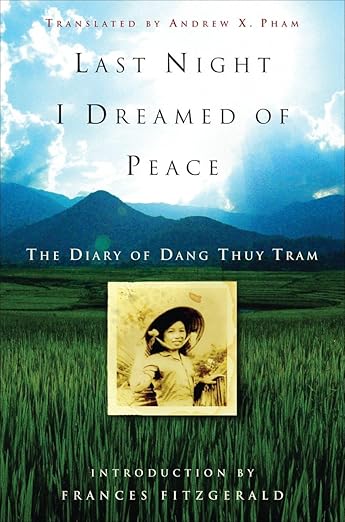
"Remarkable. . . . A gift from a heroine who was killed at twenty-seven but whose voice has survived to remind us of the humanity and decency that endure amid--and despite--the horror and chaos of war." --Francine Prose, O, The Oprah Magazine
Brutally honest and rich in detail, this posthumously published diary of a twenty-seven-year-old Vietcong woman doctor, saved from destruction by an American soldier, gives us fresh insight into the lives of those fighting on the other side of the Vietnam War. It is a story of the struggle for one's ideals amid the despair and grief of war, but most of all, it is a story of hope in the most dire circumstances.
"As much a drama of feelings as a drama of war." --Seth Mydans, New York Times
"A book to be read by and included in any course on the literature of the war. . . . A major contribution." --Chicago Tribune
"An illuminating picture of what life was like among the enemy guerrillas, especially in the medical community." --The VVA Veteran, official publication of Vietnam Veterans of America Read less
Review "Now available for the first time in English - faithfully translated by Pulitzer Prize-winning Vietnamese American journalist Pham - [LAST NIGHT I DREAMED OF PEACE] is witness to the unjust horrors and countless tragedies of war, a reminder made more pertinent every day." --The Bloomsbury Review
"Last Night I Dreamed of Peace is a book to be read by all and included in any course on the literature of war." --Chicago Tribune
"Remarkable. . . . A gift from a heroine who was killed at twenty-seven but whose voice has survived to remind us of the humanity and decency that endure amid--and despite--the horror and chaos of war." --Francine Prose, O, The Oprah Magazine
"As much a drama of feelings as a drama of war." --Seth Mydans, New York Times
"An illuminating picture of what life was like among the enemy guerrillas, especially in the medical community." --The VVA Veteran, official publication of Vietnam Veterans of America
"Idealistic young North Vietnamese doctor describes her labors in makeshift clinics and hidden hospitals during the escalation of the Vietnam War. Tram did not survive the war. On June 22, 1970, an American soldier shot her in the head while she was walking down a jungle pathway dressed in the conventional black pajamas of her compatriots. Judging by her diary, rescued from the flames by another American soldier and first published in Vietnam in 2005, she died with a firm commitment to the Communist Party, the reunion of Vietnam, her profession and her patients, many of whom she saved in surgeries conducted under the most primitive and dangerous conditions imaginable. In one of her first entries, on April 12, 1968, she characterizes herself as having 'the heart of a lonely girl filled with unanswered hopes and dreams.' This longing and yearning--especially for the lover she rarely sees, a man she names only as 'M' -- fills these pages and gives them a poignancy that is at times almost unbearable. Early on, Tram records her concerns about being accepted into the Party. She eventually--and gleefully--is, but one of her last entries reveals the results of an evaluation by her political mentors, who say she must battle her 'bourgeois' tendencies. It's a laughable adjective to apply to a young woman dedicating her life to the communists' political and military cause. Tram blasts the despised Americans over and over, calling them 'imperialist, ' 'invaders, ' 'bloodthirsty.' She notes with outrage the devastation wrought by bombs, artillery and defoliation. Describing her efforts to treat a young man burned by a phosphorous bomb, she writes, 'He looks as if he has been roasted in an oven.' Urgent, simple prose that pierces the heart." --Kirkus Reviews About the Author DANG THUY TRAM was a Vietnamese doctor who volunteered at the age of twenty-four to work in a Vietcong battlefield hospital in the Quan Ngai province. In the two years she worked in the hospital before her death in 1970, she recorded all she saw and felt in the pages of her diary.
FRANCES FITZGERALD covered the Vietnam War for The New Yorker. Her resulting book, Fire in the Lake, received the Pulitzer Prize.
5.0 out of 5 stars Important and moving readReviewed in the United States on 14 August 2013 Format: PaperbackVerified Purchase
Last Night I Dreamed of Peace is not a great read - it's a diary, after all - but it's an important and moving read. The notion of handing out stars for someone's personal diary seems very inappropriate, but five stars for Thùy's strength of spirit and her courage.
In theory, diaries are personal, and not meant for publication, but there are many diaries where you're pretty sure the author knew that the journal was a worthy document of the times. Samuel Pepys, for example, didn't write all of those words thinking they'd never be read. He probably even relished the thought of someone attempting to break the coded words. Most diarists over the age of twelve, I think, are writing to some extent for an imagined audience, even though they know they'll probably never have one, other than themselves. And in fact, they'd be horrified if anyone actually did read what they'd written. It's hard to say exactly where Ðặng Thùy Trâm's diary falls. It seems wise to treat it respectfully, as something entirely personal, that Thùy wrote with no expectation of publication, even though the style occasionally suggests otherwise.
It's a sad and disturbing book, on many levels. Most profoundly, it's horrible to think of a very young woman, barely out of medical school, pressed into service as a surgeon in a war zone. Even worse, she was the head of the clinic, also responsible for providing health care to the local population, and she was in a free-fire zone, which essentially meant if you showed your face, you'd likely be fired at.
And yet, her diary shows a woman striving valiantly to be upbeat, despite the death and maiming and horror. What sustains her? Love of country, and love for (and a sense of duty toward) the young men she has treated and who have subsequently been blasted to bits on the battlefield. And, love of the Party. That last one seems almost amazing to me today. It seems almost inconceivable to push one's self into horror and death because of your bedrock faith in a political movement. And it's a Party that doesn't always treat her particularly well. Thùy berates herself whenever she begins to feel sorry for herself, and pushes herself to always improve and eliminate bad, anti-Party thoughts, even when the Party looks down on her because of her bourgeois roots. The Party, its disdain for her bourgeois character notwithstanding, protects her as best it can, as she's a rare and valuable asset in wartime. A very disturbing and depressing situation.
It's a claustrophobic book at times, with the jungle and the Americans and the bullets often closing in, and Thùy and her staff and the wounded soldiers hiding in holes in the ground, or quickly abandoning the clinic to stay one step ahead of death. Throughout it all, Thùy manages to make fairly frequent contributions to the diary.
The content of the diary is not always easy to follow, even with the frequent editorial notes, as Thùy often refers to herself and to others (family, staff, soldiers, friends, boyfriend) in a way that is not at all second nature to a Westerner. The style is often rather declamatory, as though she is on a stage, reciting lines to herself, or to someone else. I've been studying Vietnamese for over two years now, and I'm increasingly aware of the fact that Vietnamese and Westerners express themselves in significantly different ways, but this book (even in translation) showed me yet another difference in the way we communicate. Read these lines and try to imagine a young doctor in Los Angeles in the mid-sixties writing them - in a diary! Amazing stuff to see in a diary.
Excellent book to help gain understanding about Vietnam, the war, the Party, Northern Vietnamese motivations and the ability of certain people to keep their head in a situation that would bring most (me included) to their knees.
5.0 out of 5 stars Book in excellent condition, eager to start reading it.Reviewed in Mexico on 11 August 2021 Format: PaperbackVerified Purchase
I haven't read the book yet, but the delivery was generally good; the book arrived in good condition. I'm just finishing reading the Diary of Anne Frank, so I'm looking forward to reading this other diary from a different event. Report
5.0 out of 5 stars excellent, insightful readReviewed in the United Kingdom on 2 December 2014 Format: KindleVerified Purchase
This is an excellent insight into a young woman's perspective of life in her role as comrade, friend, anti-American fighter and emerging adult. She introduces the reader to the reality of war at the most basic level. She has integrated typical girlhood dreams with those of her country and shows us the strength of character that so many people fighting for their life and country must possess.
Reviewed in the United Kingdom on 8 September 2016
Verified Purchase
i did enjoy this book,as it is written in diary form,which it was it is very personal and emotional,she was a well educated young doctor whose life was tragically ended far too young,
Report
timcon1964
5.0 out of 5 stars Life in a Communist Hospital in Vietnam During the War
Reviewed in the United States on 3 March 2019
Format: HardcoverVerified Purchase
What was life like in a Communist hospital in South Vietnam during the war—dealing with seriously wounded soldiers with limited resources and under constant threat of attack? And what were the thoughts and concerns of a doctor assigned to such a hospital? Dang Thuy Tram’s diary helps to answer these questions.
Thuy came from an intellectual family in Hanoi. After they lost their wealth in the revolution against the French, the family lived in a single-room cottage in the country, but eventually returned to Hanoi. Her father was a surgeon, her mother a pharmacist. Thuy attended an elite secondary school and was trained as a surgeon at Hanoi University Medical College. She had been selected for specialized training in surgical ophthalmology, but chose instead to take her medical skills to the South. From her diary, it appears that she was motivated by both her sense of patriotic duty, and a desire to be near her adolescent sweetheart, “M.”
Thuy began keeping a diary when she left Hanoi in December 1966. She was sent to a local hospital in Quang Ngai. The surviving portion of the diary does not indicate why Thuy was sent there rather than to a larger hospital further from the danger zone, with better equipment and more physicians. Quang Ngai province had a tradition of rebellion; neither the French, nor the Saigon government, nor the Americans had established control over it, but thousands of its residents had been relocated, most of its villages had been demolished, and much of the province had been designated as a free fire zone.
Diary entries from December 1966 through April 1968 have been lost, including whatever Thuy might have written about her trek down the Ho Chi Minh Trail, the TET offensive or the My Lai massacre. As she explained, “ . . . this diary is not only for my private life. It must also record the lives of my people and their innumerable sufferings, these folks of steel from their Southern land.” The diary contains allusions to Vietnamese and Soviet writers, and also to characters in Les Miserables.
Thuy’s principal duties related to surgery, confronting such conditions as broken bones, burns, internal hemorrhages appendicitis, and abdominal wounds. She probably had to work with a very limited range of surgical instruments and medicines. Operating facilities were primitive—one day she wrote, “Huge shrapnel shatters a tree in the middle of the operating room.” Apart from surgical work, Thuy was occasionally responsible for relocating the clinic and its patients, transporting supplies, and training field medical staff. Hospital staff also provided psychological support for patients. Thuy develops affectionate feelings for certain patients and colleagues, but she asserts that such feelings are “completely different from the romantic sensation between boys and girls.” Her feelings about “M” are different: “Why can everyone else love me so, but the man who has my faithful heart cannot?” Although Thuy often mentions “M,” the full nature of their relationship remains a mystery.
Thuy very much wanted to be admitted to the Communist Party; but for many months she was excluded. “I have come to the Party with a devoted and open heart, but it seems the Party has not treated me in kind.” “No matter how much effort you have shown through your achievements, as a bourgeoisie, you are still below a person of the labor class who has only just begun to comprehend Party ideals.” She was finally admitted to the party in the fall of 1968, and admonished herself to “keep safe the high values of a Party member,” and “Hold firmly the spirit of a communist.” Like others, she received an official evaluation from the party. Thanks to Ho Chi Minh, these evaluations included positive as well as negative observations. Regarding Thuy, officials commented, “persevering spirit, fearlessness in the face of danger, willingness to sacrifice,” “amiable behavior, liked by people,” but listed several weaknesses, including, “still has bourgeois attitude.” Thuy characterized Americans as, ”bandits” and “devils,” alluded to the President as “mad dog Nixon,” and wrote, “there is real life only when the American bandits are no longer here.”
The clinics seem to have been very well camouflaged. One was set up in a cave within half a mile of an American firebase. Thuy gives several accounts of American soldiers searching within a few yards of the underground shelter in which she was hiding. In less stressful times, the clinic staff relaxed, reading mail and listening to music on the radio. (Thuy liked classical music—she played violin and guitar.) But eventually each clinic came under attack and had to be relocated together with its patients (some on stretchers).
Thuy repeatedly expressed her willingness to die for the cause: “I have the feeling that one day I will fall for the future of our people. . . . I am proud to offer my entire life to the country.” On June 20, 1970, she wrote, “I am no longer a child. . . . I have passed trials of peril, but somehow, at this moment, I yearn deeply for Mom’s caring hand.” Two days later, she was killed. In her possession was the diary, a photograph of an army captain (presumably “M”) and poems to him. U.S. troops knew about the hospital, and may have known about its young female doctor. There have been accounts of helicopter loudspeakers urging Thuy to surrender; but the diary provides no evidence of this. That she was found with a bullet through her forehead may suggest that she was the victim of an execution rather than a gunfight.
That the diary is so well known today is due to a series of unlikely events. North Vietnamese authorities generally discouraged keeping of diaries. The U.S. intelligence officer who should have destroyed Thuy’s diary chose instead to keep it. And, for a long time, Thuy’s mother did not want to publish the diary. But once it was released, it caused a sensation in Viet Nam. Hundreds of thousands copies of the published version were sold; and it was translated into various languages. A television documentary was produced, and a Doc Phu hospital was named for her.
The book’s introduction includes Frances FitzGerald’s capsule biography of Thuy and description of how the diary was preserved and returned to Vietnam, as well as Andrew Pham’s explanation of how he translated it from Vietnamese. There are a map, 8 pages of black & white photographs, and footnotes providing information about Thuy’s family and friends, and life in Hanoi, as well as various places, organizations, aircraft, and weapons. Thuy’s medical journal has apparently survived (it is cited in the annotation), and might have been used to provide more details about Thuy’s surgical work and the hospitals where it occurred—their numbers, locations, sizes, equipment, staffing, and medicines.
11 people found this helpful
Report
Tom Dilberger
4.0 out of 5 stars A good fast read written by a person who lived that ...
Reviewed in the United States on 4 December 2015
Format: PaperbackVerified Purchase
A good fast read written by a person who lived that war. No bs talk. Just short thoughts put into print by a person going through what I was, but on the other side. There is no difference in thinking by the people on the lowest rung of the ladder no matter what side you're on. As we grunts ( C. Co.,1st Btn., 26th Marines) used to say, "sh*t flows downhill," and we're always at the bottom of the hill. Same thing on their side. I wish she had lived through it, but it wasn't to be. No matter, she lives through her words and thoughts. Real good work on the footnotes. I recommend it.
9 people found this helpful
Report
Lamda
3.0 out of 5 stars Three Stars
Reviewed in the United Kingdom on 16 October 2017
Verified Purchase
Quite emotional and explains an awful lot about the Viet Nam war that I was unaware of
Report
==
Kindle Customer
4.0 out of 5 stars I was in the army and not more than a ...
Reviewed in the United Kingdom on 26 January 2015
Verified Purchase
I was in the army and not more than a couple of hours flying away from Vietnam(1971) that war always fascinated me and this book was an interesting take on the war.
Report
B. Kivi
5.0 out of 5 stars Excellent book for those interested in VN war history
Reviewed in the United States on 5 September 2009
Format: HardcoverVerified Purchase
The writing style is sometimes hard to follow and the author was obviously not trying to make an accurate day by day account of the war. It was more a personal project of hers, just to record her thoughts and feelings. I found it very touching and enlightening, to be able to have the thoughts of one from the "other side". It really humanizes the people who suffered in the war, those in Vietnam who were caught in a situation they could not escape.
Having traveled in Vietnam recently, with ordinary people from all walks of life there, some who fought for the Hanoi government, you begin to realize what a tragedy the entire conflict was. Not only for the 54,000 Americans killed, but for the soldiers from both sides, all 3 sides really, in Vietnam who just wanted a peaceful and normal life.
A lack of cultural understanding, and fear of a people we had no reason to fear was the root cause of the conflict. Books such as this will help bridge that gap, and bring about a more peaceful and tolerant world. Dang Thuy Tram, in my mind, did not die in vain. We owe it to her to read her thoughts..
9 people found this helpful
Report
Peter taylor
3.0 out of 5 stars Poignant
Reviewed in the United Kingdom on 30 June 2019
Format: KindleVerified Purchase
Poignant but slow going.
Report
Thad Guyer
5.0 out of 5 stars Giving Voice to the Heart of a Ghost
Reviewed in the United States on 28 December 2015
Format: PaperbackVerified Purchase
To Andrew X. Pham, the translator of Last Night I Dreamed of Peace
Dear Andrew, I usually would not thank an author, even less a translator or interpreter like you, for an enriching work. But after reading your prologue, and knowing that translators make great financial sacrifice on literary projects like this, thank you is the right reaction for what you did in giving Thuy a voice the world otherwise would not have heard. As you mentioned, some may criticize you for not giving Thuy's words an exact translation. Those critics perhaps do not fully appreciate the difference between a translator and an interpreter. I do. Thuy's words would have been heard in translation, but not the voice from her heart. That could only have been the province of an interpreter, for her diary came from the heart. That is where her voice lay buried until you and your dad (who helped you interpret), rescued her from the silence. As a guy who spends a lot of time in Vietnam, you know that ghosts will not be silenced there. That is a land where ghosts are supposed to commuicate to the living. You and your dad made that possible.
I read the diary, and am reading your other works, partly so I can do a credible job in understanding what the US, and Vietnam veterans, did there. I moved to Saigon a year ago to get that understanding about something my own army platoon did. It's about a different dead girl, someone still without a voice whom we killed on one of those trails up in the central highlands in June 1970. As I got near the end of your translation, I had increasing anxiety that Thuy was who we killed there that month. I was relieved when I realized it was not Thuy. I was relieved that Andrew X. Pham was not the one interpreting the charges against me. Different dead girl, different killers, so my immunity remains intact. I still have the luxury of hearing my own confession in my words.
Thuy's story, and your interpretation of her diary, will influence me to be less self-aquiting in my own understandings. Her story would help any veteran from any war anywhere, move toward understanding, reconciliation and even forgiveness.
23 people found this helpful
Report
steve cliff
1.0 out of 5 stars Terrible its full of her dreams page after page nothing to do with whats going on at all.
Reviewed in the United Kingdom on 3 January 2022
Verified Purchase
Terrible book page after page of her thoughts, talking of her hundreds of brothers and sisters whom you just cant follow. Nothing to do with whats actually going on. It is a total bore.
Report
BOB J.
5.0 out of 5 stars A different view
Reviewed in the United States on 29 August 2012
Format: HardcoverVerified Purchase
I had purchased several books on the Vietnam war, a number of them by vets (I served there in 1968)as they experienced the war. I thought that reading something by the other side might be an interesting change. Since this was a diary it would certainly be fresh in memory as opposed to those written from some far away memory thought. I am glad I thought that way. What I sensed was someone from the upper class of North Vietnam that was indoctrinated and sent to the South as a doctor to carry out the views of the political leaders. The entries early on were of things that happened and thoughts of the action of that time with some memories of growing up in the North. Maybe a little homesick. After reading over half of the entries of the diary, the communist party structure aspirations started to become a goal of sorts, even if it was at the local level. As you left 1969 and continued into the end of her life, she seemed to have something going on that wasn't part of her writings. Once she became part of the party, I feel she had an unmentioned goal for higher party powers. Something was changing her. She also seemed to have thoughts of her demise as she got closer to her death as there were more thoughts of the good times in the North growing up with friends and family and her dreams. It is a shame that the early diaries have been long lost. They would have given more background to what was included here. You could also see the hate for "the American Bandits" and how it increased as time went on as the Americans were increasing the preasure on the battlefield to get better bargaining at the peace talks. A different perspective from the other side. Difficult to follow the brother/sister relations with Vietnamese customs and party afiliation. Basically a good read.
2 people found this helpful
Report
robert fabian
3.0 out of 5 stars I lived and worked four and a half years in ...
Reviewed in the United States on 11 September 2017
Verified Purchase
I lived and worked four and a half years in Vietnam in both the U.S. Army and as a civilian contractor for the U.S. Government. I gained a respect for both the North Vietnamese Army {NVA} and the Viet Cong {VC} as a military fighting force. We have made peace with and forgiven the North Vietnamese as they have forgiven us. On the other hand, we all found the South Vietnamese military {ARVN} to be thieves and despicable cowards that would run over women and children to avoid facing the enemy and defending their own country. This, we will never forgive or forget! This true story, told through her diary, about doctor Dang Thuy Tram depicts a small frail young woman practicing medicine under the most difficult circumstances that make her a true heroin. People meeting her can’t help both admiring and loving her for the person she is.
3 people found this helpful
Report
M. Lee Brokaw
5.0 out of 5 stars Humanity , so well told
Reviewed in the United States on 2 March 2021
Format: PaperbackVerified Purchase
I was taught to hate the Vietnamese by Drill Sargents in Ft. Benning, Ga., 1968, Falls Church, basic training. Fortunately I was in my middle twenties and the lesson didn't 'take' but never the less, our military taught us to hate.
I was luck to not go the 'Nam, thank God.
I can't remember how I found this book, but I'm glad I did.
The author is such a wonderful person who gave up the life of a doctor in N. Vietnam to administer to the Viet Cong in the tunnels of the battle fields of the south.
Any of my generation who did go, I would hope you will read this book. I think you'll find it healing.
I Saw Myself in My Enemy
They ran over us and took over our position Americans, Chinese and Koreans
All died within seconds,
Oddly enough, embracing each other
I searched thru their bodies and found on all
Letters from home and pictures of family
And it struck me
I saw myself in my enemy.
The color of their skin was different.
Shape of their eyes were not quite like mine.
But so "Much More" was just like me
Like a "thunder bolt" it struck me
Never again will my government convince me
That others are not like me
Because you see
I saw myself in my enemy
Jack Doxey,
Us Army 1952-1954
(1958)
4 people found this helpful
Report
Dan Cragg
2.0 out of 5 stars An Actor on the Stage of Life
Reviewed in the United States on 13 June 2010
Format: HardcoverVerified Purchase
Reading "Last Night I Dreamed of Peace," the diary of Dang Thuy Tram, a civilian doctor serving with the Viet Cong in South Vietnam's Quang Ngai province during 1968-1970, is somewhat like war itself: Long stretches of crushing boredom interspersed with moments of intense excitement.
It is easy to like this woman in spite of her cloying occupation with her own emotions, her saccharine writing style, and the constant parroting of communist party rhetoric. Unlike so many doctors in the West, Dr. Dang really cared for her patients and did her best to help them under the most primitive conditions, little anesthetic, no plasma, no X-ray machines, and constant moves to avoid detection from American search and destroy operations. Under these conditions it is not surprising men died; what is surprising is that any survived.
But not all communist medical facilities were as primitive as Dr. Dang's. Our research while writing "Inside the VC and the NVA" (Random House, 1992; Texas A&M Univ. Press, 2008) revealed quite a sophisticated medical system available to the VC/NVA. One, a hospital along the Ho Chi Minh Trail known as "Dan Ong Cu," was quite elaborate with as many as 80 beds to a ward, X-ray machines, and a large medical staff. The typical VC/NVA division had a field hospital that could treat up to 150 patients at a time; each regiment had a medical company consisting of 50-120 personnel. Dr. Dang was not the only selfless, dedicated physician among the Viet Cong. One VC medic described the physicians' role as "like mothers" to the soldiers, "The medical men lessened the pain where there was pain, gave solace where there was unhappiness, and acted as the men's confidants." So Dr. Dang's role was far from unique among our VC/NVA opponents in the jungles of Vietnam.
And it is easy to sympathize with Mr. Fred Whitehurst who is responsible for bringing these diaries to light. He saved them from the incinerator, held on to them for 35 years, and finally, in a great gesture of reconciliation, returned them to Dang's family in Vietnam. He is not the first to become infatuated with the ghost of an extraordinary woman. How else can you explain his statement quoted by David McNeill in "The Independent" that Dang Thuy Tram is "a Vietnamese Anne Frank"?
War diaries are among the most compelling personal narratives we have in any language. They range from terse one-line entries to lyrical descriptions of life and death in wartime. For most of us they provide a direct, immediate link to those who underwent a horrendous ordeal and wrote about it while it was still going on.
For the historian wartime diaries can be useful adjuncts to battle reports and oral histories recorded after the fact and they give valuable insights into what it was like to be a participant in historic events. Lee Lanning and I realized this when we wrote "Inside the VC and the NVA." We relied heavily on the captured diaries and letters written in the field by Viet Cong and North Vietnamese soldiers in our effort to understand what it was like to be in our erstwhile enemy's sandals.
Lee himself kept a journal of his time as a platoon leader with the 199th Light Infantry Brigade in Vietnam which later became his first book, "The Only War We Had," and the second, "Vietnam, 1969-1970, A Company Commander's Journal." Lee, like Dang Thuy Tram on the other side of the firing line, realized that he was also an "actor on the stage of life" as Dr. Dang wrote of herself in an entry dated 5 August 1969. Maybe that's why we keep diaries, to leave something of our all too short roles on the stage of life.
"Last Night I Dreamed of Peace" is heavily footnoted and these notes are worth reading by themselves. The Introduction was written by Frances Fitzgerald, author of "Fire in the Lake," a hymn to the Vietnamese Communist Party. The translation was done by Andrew X. Pham with help from his father, Thong Van Pham, and Dr. Dang's family. Mr. Pham is also the author of "Catfish and Mandala," a narrative of his travels in postwar Vietnam.
I wish that when we wrote our book we had access to Dr. Dang's diary since it tells us much about the morale of our enemy. But if you're interested in how Dr. Dang's clinic was organized and supplied, what her operating technique was, what instruments and drugs she had available, the nature of the wounds and injuries she treated, and the prognosis of her patients, look elsewhere. I wonder what she did with those who died. And since the U. S. mortuary affairs mission did not extend to the enemy dead, I wonder how Dr. Dang's remains were found and identified 11 years after she was killed on 22 June 1970 by an infantryman from D/4/21 of the Americal Division. It would also be interesting if someone who participated in that ambush could've been interviewed for this book, although the man who fired that fatal shot might not want to be identified as the one who killed the "Vietnamese Anne Frank."
And that leads me to what troubles me about this book, the hagiography that has grown up around the life of Dr. Dang. I understand someone is actually making a motion picture based on her life. We should never forget that Dang Thuy Tram was not the only "martyr" of the Vietnam War, not the only person to write poignantly about her experiences in that war. Plenty of anti-communist Vietnamese, ordinary people, not bloated bureaucrats, qualify as martyrs including those who lost their lives seeking freedom in small boats on the high seas. And while we may be guilty of manslaughter in Vietnam for "free fire zones," and indiscriminated bombing in the countryside, the communists committed murder and terrorism as a matter of policy. Feel-good books like "Last Night I Dreamed of Peace" should never be allowed to obscure that fact or wash away the tears shed for those who died fighting against her side.
11 people found this helpful
Report
Jim Defronzo
5.0 out of 5 stars Jim DeFronzo - Revolutions and Revolutionary Movements; The Iraq War
Reviewed in the United States on 17 September 2015
Format: PaperbackVerified Purchase
Last Night I dreamed of Peace is an extraordinarily moving diary of a young doctor from North Vietnam, Dang Thuy Tram, who volunteered to use her medical training at hidden locations in Ouang Ngai Province, South Vietnam to treat wounded North Vietnamese, National Liberation Front (Viet Cong) soldiers and local villagers. In constant danger from American and South Vietnamese government forces and longing for her family, her mother’s touch, and her boyfriend, from her point of view she was helping in the effort to reunify Vietnam. Her surgical skills and treatments saved lives and she provided comfort to those she could not save. The diary brings the reader intimate knowledge of Thuy’s life, emotions, and experiences and the multiple horrors and tragedies of war. Her diary, not much bigger than a pack of cigarettes, was found after she was shot and killed by soldiers of the Americal Division close to her forest hospital on June 22, 1970. After a translator explained the contents of the little handwritten book, a U.S. soldier kept it for some 35 years and then sought out and returned it to Thuy’s family in Vietnam.
11 people found this helpful
Report
==
5.0 out of 5 stars Extraordinary Book!
Reviewed in the United States on 9 November 2008
Format: HardcoverVerified Purchase
In October 2008 I listened to a program on NPR, "To the Best of Our Knowledge" about women in war. One of the audio articles was an interview with the U.S. soldier who saved Dang Thuy Tram's diary from being destroyed and who was instrumental in having the diary translated and published as "Last Night I Dreamed of Peace".
As a U.S. Navy veteran of the Vietnam War I am aware that I am one of the enemy Thuy hated with such passion, and someone who was in part responsible for the painful life she and her comrades experienced. This book brings a different perspective than most books on the Vietnam War, and portrays America as aggressive invaders of the country she loved. Thuy vividly describes the violence, anguish, dedication to duty and cause, and sadness associated with war. Happiness isn't included in the book, and the book does not have a happy ending. However, it is an honest and thought provoking study of the Vietnam War and the human affects of any war.
Peace.
4 people found this helpful
Report
Morgan Muldoon
5.0 out of 5 stars Essential for Anyone studying the war
Reviewed in the United States on 23 May 2019
Format: PaperbackVerified Purchase
This is an honest account from a female doctor who fought for the North in the Vietnam War. Not written for an audience, she goes in depth about her time on the front, her belief in the cause, and her feelings on the war. She also discusses her desire for love and her insecurities but also knows that she must fight for her country and for independence before she can worry about herself.
This book gives an account of the war that is rarely told. It is told during the time and not after the fact. It is an honest account of the war from the perspective of a Vietnamese Female doctor, a voice often silenced in the current narrative and society. Must read for anyone who is curious about the war or anyone in general.
One person found this helpful
Report
walter
5.0 out of 5 stars this is a war diary of a young vietnamise doctor and this is a masterpiece
Reviewed in the United States on 2 October 2013
Format: KindleVerified Purchase
Dang Thuy Tram is a young vietnamese doctor , who spent her first years of activity as MD in a field hospital during the Vietnam war, since April 8, 1968 untill June 1970, when she died, killed by American soldiers.
Every page is full of strength, intensity and poetry.
Thuy is a 27 year old, but she looks more aged because of her deep commitment to the patients, her involment in the hospital activity, despite her deep yearning of family and beloved parents, her loneliness . The idealism and a deep craving of justice and peace are her strenght and her greatness. She is sweet, loving music ( she play violin and guitar) and nature , sensitive and she take in the greatest consideration friendship and duty.
I strongly recommend this lecture to everybody, but more to the new generation, who doesn't know waht happened in Vietnam during the sixties ans seventies.
To conclude: this book is a masterpiece.
Report
travis
5.0 out of 5 stars Excellent condition--arrived quickly.
Reviewed in the United States on 2 November 2024
Format: HardcoverVerified Purchase
Thank you for taking care of this book. It arrived in excellent condition.
Report
Norm G
5.0 out of 5 stars Powerful and haunting.
Reviewed in the United States on 10 November 2021
Format: PaperbackVerified Purchase
The diary of an idealistic young doctor working on the front lines during the Vietnam War. Absolutely excellent: poignant, powerful, and inspiring for anyone who dreams of a more just and equitable world. This one will resonate for some time. Among the many memorable passages: “Our revolution is magical because it opens our hearts and eyes to a beautiful world; there the fire of love is brightly lit, even though today’s life is dangerous and painful.”
Report
Lynn A Brake
5.0 out of 5 stars This book presents a very heart felt interesting picture of ...
Reviewed in the United States on 23 December 2014
Format: PaperbackVerified Purchase
This book presents a very heart felt interesting picture of the struggle of the Vietnamese during the 'American War'. Tram's diary gives some valuable insights into what the Vietnamese were going through and what they were trying to achieve during the war. The book was written as a diary so really reads as a series of windows into the life of the young doctor. Her untimely death and the events between finding the diary and its translation and publication adds strength to the witness that it bears. I was most impressed because 'Last Night I Dreamed of Peace' provides such a stark contrast to books that document America's justification and role in the war. An important book about a disturbing time in our history.
One person found this helpful
Report
Ha Nguyen
5.0 out of 5 stars One of my favorite books of all the time
Reviewed in the United States on 23 January 2014
Format: PaperbackVerified Purchase
This is an amazing book. I read it once in Vietnamese when I was in 7th grade. It was a huge hit when it first came out in Vietnam. There were so many documentaries, news, articles about it and Dr. Dang Thuy Tram. The book itself is already a gift. But the story behind it is even greater.
Tram was a typical Vietnamese girl. She was the symbol of the Vietnamese women during the war. She stood up for what she believed in. She was brave and passionate. She lived and loved with all her heart.
Such a great book to read and to remember a time that passed...
One person found this helpful
Report
Tigger
5.0 out of 5 stars This story takes me back to a part of my ...
Reviewed in the United States on 14 February 2015
Format: HardcoverVerified Purchase
This story takes me back to a part of my personal history that has haunted me for over forty years.
The ghosts have never left me but I have over time become friends with most of them.
It is still difficult for me to visit the Viet Nam Memorial in D.C. because every panel dating from my High School graduation year of 1967 has the names of people I grew up with and cared about. There are only three of us left to visit the wall and we kind of have our High School reunion there.
2 people found this helpful
Report
Amazon Customer
5.0 out of 5 stars She was a very intelligent, courageous young woman who made a tremendous difference ...
Reviewed in the United States on 23 December 2016
Format: PaperbackVerified Purchase
Through her diary, you get to know a personal side of Dr Thuy Tram. Her idealism, hopes, fears, passion for her profession, loneliness, and anger towards the American enemy for the violence inflicted at her country and patients. She was a very intelligent, courageous young woman who made a tremendous difference for her comrades during the short time she served as a battlefield doctor. Her life is a reminder of the senseless and tragic human suffering forced upon oftentimes innocent people when America decides to invade a sovereign nation for very weak reasons.
One person found this helpful
Report
FlyBoy
5.0 out of 5 stars Absolutely Incredible Book
Reviewed in the United States on 12 August 2012
Format: PaperbackVerified Purchase
This book was written Dang Thuy Tram, a young woman who was a North Vietnamese doctor during the Vietnam war. She records her private thoughts about being in a war against the Americans. She talks about her feelings for a North Vietnamese Army officer she is attracted to, and describes what it is like to try to conform to the ideals of the Communist Party which she has just joined.
If you want to see what "the enemy" is really like, and deeply look into your own preconceptions, read this book!
One person found this helpful
Report
==
rom other countries
Somchai
5.0 out of 5 stars An eloquent, searingly emotional testament to bravery, idealism, and unrequited love
Reviewed in the United States on 3 December 2017
Format: PaperbackVerified Purchase
This book is a must read for anyone with even a passing interest in Vietnam, it's civil war, and the American conflagration there. It is also recommended as an exquisitely eloquent story of heroism in the face of almost unimaginable odds, a devotion to purpose, and a love of one's country. Ultimately a story of bravery and unrequited love, it is indeed one of the most beautifully written and moving books that I have ever read, in any genre.
3 people found this helpful
Report
Charles or Cheryl Kenlin
5.0 out of 5 stars The Vietnam War from the diary of a female VietCong Doctor.
Reviewed in the United States on 3 January 2018
Verified Purchase
Having read Thuy’s diaries, it is impossible to see the Vietnam War as written in our (USA) history books. She shares her love of family, Comrades and country with an unguarded honesty that transcends time. A healer and warrior with love in her heart for her injured countrymen, her worried family, her lost friends and her ravaged country... all while enduring self doubt but committed to freeing her people. It will change forever your outlook on War.
3 people found this helpful
Report
happyfoodieoc
5.0 out of 5 stars Book for class
Reviewed in the United States on 20 September 2023
Format: PaperbackVerified Purchase
Easy to read. Bring you back to war time. Recommended.
Report
Ralph L. Wahlstrom
5.0 out of 5 stars stunning
Reviewed in the United States on 8 February 2009
Format: PaperbackVerified Purchase
I grew up in a town where nearly everyone joined the service. I was in the Navy during Vietnam. Three of my four brothers were also in the military. I remember all too well the lies that got us in, and the lies that kept us there. Now, this young Viet Cong doctor has fleshed out the story for me. It is a heart-rending, beautiful, look into the eyes of war.
The Tao Of Writing: Imagine. Create. Flow.
6 people found this helpful
Report
Bernard Terway
5.0 out of 5 stars The other side
Reviewed in the United States on 25 January 2014
Format: PaperbackVerified Purchase
An interesting perspective on the war in Vietnam from the other side, something we don't often get to hear. The hardships this young doctor went through were heart rending and the harassment she got from the "devils" as she called them, seemed uncalled for. Unfortunately, she did not live to see how it ended, killed with only a bag of medication and a radion in her hand.
Report
AJ
5.0 out of 5 stars Visited Viet Nam and found the people wonderful and loyal
Reviewed in the United States on 1 December 2014
Format: KindleVerified Purchase
Visited Viet Nam and found the people wonderful and loyal. This book shows us the personality of an enemy who we considered unfeeling and unlike us but it shows that those enemies are just like us and feel just as strongly as we do. They love, are kind,considerate and most of all loyal to their country. Great read and I would like to see the originals.
Report
Tony Tran
4.0 out of 5 stars [...]
Reviewed in the United States on 15 February 2016
Format: HardcoverVerified Purchase
I have used this before when we stayed in Japan and were very satisfied. Happy to be able to buy it thru Amazon. Had had to ask friend in Tokyo to help.
Report
C. B. Albert
5.0 out of 5 stars A must read
Reviewed in the United States on 1 July 2021
Format: PaperbackVerified Purchase
Love the book. I spent 18 months in Vietnam. This book is a all new perspective.
Report
Gregory A. Land
4.0 out of 5 stars sad
Reviewed in the United States on 19 September 2013
Format: PaperbackVerified Purchase
I am married to a Vietnamese woman so I read alot to learn about her country. Almost all are sad. As usual though Andrew Pham did a very good job in the writing.
Report
G. Dormon
5.0 out of 5 stars Heroic humanitarian loving.
Reviewed in the United States on 20 September 2017
Verified Purchase
A moving to tribute to one of the millions who died in the struggle to build Viet Nam. They is revered not only for heroism in battle but also for her love of one person but her love for her fellow warriors.
Report
==
om other countries
OkEd
5.0 out of 5 stars Stunning
Reviewed in the United States on 19 March 2020
Format: HardcoverVerified Purchase
I was a US Army medic in Duc Pho in 1967. May have seen her in a village near the South China Sea.
2 people found this helpful
Report
Terry Foster
5.0 out of 5 stars War Effects
Reviewed in the United States on 26 May 2014
Format: HardcoverVerified Purchase
A North Vietnamese doctor's dairy of her experiences in the Vietnam War. You feel her feelings and see how she changes during the war. Plus in human life loss how wasteful war is. The Viet Cong were betrayed by the North Vietnamese and didn't achieve their goal for complete independence.
Report
Christopher Kox
4.0 out of 5 stars One speculates about the parallel between Ms Dang's unrequited love object and the Z
Reviewed in the United States on 9 June 2015
Verified Purchase
Very touching story. One speculates about the parallel between Ms Dang's unrequited love object and the Z.G. Li character in Lisa See's novels.
Report
Aud
3.0 out of 5 stars So I find out, the VC are romantic, long winded and self indulgent
Reviewed in the United States on 16 December 2013
Format: PaperbackVerified Purchase
I can't blame the translator.
It's a revealing look into the mind of a young VC doctor.
I'm sad she died so tragically young.
And I know I seem callous calling her long winded and self indulgent.
But, well, it's how she comes across.
Report
W. C. Head
5.0 out of 5 stars Vietnam Diary Gives Poignant Insight
Reviewed in the United States on 3 December 2016
Format: PaperbackVerified Purchase
This remarkable book gives Americans a stark and poignant view of how the Vietnamese people viewed America. Thank the man who brought it back from Vietnam, Fred Whitehurst, American hero.
William C. Head
Atlanta, GA
3 people found this helpful
Report
Katherine
1.0 out of 5 stars It's definitely not a history book.
Reviewed in the United States on 19 March 2020
Format: PaperbackVerified Purchase
You have to know what you're getting into if you want a shot of enjoying this book. I had to read this book for a class and I expected to get an in-depth view of what life was like in North Vietnam during the Vietnam war and what I got instead was an unbearably naive physician's self-reflections and pinings for a relationship that never came to fruition. It's a super slow read and I found it hard to get into it at all.
One person found this helpful
Report
Coordinator Clive
5.0 out of 5 stars Make Peace NOT War
Reviewed in the United States on 23 March 2014
Format: HardcoverVerified Purchase
Magic! Poetic!! Wonderful!!!
A Masterpiece that occupies 'Pride of Place on my bookshelves!
A book I will never part with and will read again and again!
Everynight I Dream of Peace and pray that Dang Thuy Tram's prayer' will become real!
One person found this helpful
Report
Alesha Nicholas
5.0 out of 5 stars An excellent look from the other side of the Vietnam War
Reviewed in the United States on 31 January 2017
Verified Purchase
An excellent read from the other side of the Vietnam War. This book truly captures the confusion and heartbreak of a Doctors struggle to fight for what she belives in.
Report
pacrimco
5.0 out of 5 stars A heart wrenching account of the Viet Nam War from ...
Reviewed in the United States on 6 November 2017
Format: HardcoverVerified Purchase
A heart wrenching account of the Viet Nam War from the perspective a young woman doctor from Hanoi. Hard to read, harder to put down.
2 people found this helpful
Report
willa
5.0 out of 5 stars There was another side
Reviewed in the United States on 10 September 2013
Verified Purchase
This book opens the window to the other side of the Vietnam War in relation to the people. Another culture of people whose perspective of the war was totally different from what Americans were told through the media.
One person found this helpful
==
Anthony Mihalevich
5.0 out of 5 stars I was in the area described in the book at ...
Reviewed in the United States on 26 February 2015
Format: PaperbackVerified Purchase
I was in the area described in the book at the time the diary was written . The book is an example of all solders losing when involved in conflict.
One person found this helpful
Report
Amazon Customer
3.0 out of 5 stars Three Stars
Reviewed in the United States on 11 May 2016
Format: HardcoverVerified Purchase
I was in the same area she wrote about in 1969-70
One person found this helpful
Report
rex d cobb
3.0 out of 5 stars more of love story than a war
Reviewed in the United States on 31 August 2014
Format: PaperbackVerified Purchase
Had trouble keeping up , more of love story than a war novel
Report
eagleeyepete
5.0 out of 5 stars The heart of the matter
Reviewed in the United States on 19 March 2013
Format: PaperbackVerified Purchase
It is marvelous. I read it several times. Every war monger, empire building freak should read it. She was a very young doctor, sensitive, intelligent, poetic murdered while strolling along jungle path at night.
Report
Amazon Customer
3.0 out of 5 stars Three Stars
Reviewed in the United States on 28 September 2015
Format: PaperbackVerified Purchase
Interesting account and perspective of the Vietnam war.
Report
Cristal Bollinger
5.0 out of 5 stars Good price for a school book
Reviewed in the United States on 28 January 2020
Format: PaperbackVerified Purchase
Good price for school book
Report
patarut panosot
2.0 out of 5 stars look like a copy
Reviewed in the United States on 15 January 2018
Format: PaperbackVerified Purchase
not genuine print.
you can tell by the quality of print, paper, etc. look like a copy.
Report
Gary L. Gruhl
5.0 out of 5 stars View from the other side
Reviewed in the United States on 14 October 2014
Format: HardcoverVerified Purchase
Great reading. It was very heartrending. I was in Viet Nam during the war. Very interesting to see the war from the other side
Report
Edward W. Marrs
5.0 out of 5 stars Great book about a North Vietnamese Woman Doctor who could ...
Reviewed in the United States on 1 March 2015
Verified Purchase
Great book about a North Vietnamese Woman Doctor who could not reason why the United States was bombing Vietnam and killing people.
One person found this helpful
Report
lyndon warby
5.0 out of 5 stars Book received as expected,am enjoying reading it. thank you.
Reviewed in the United States on 28 June 2014
Format: PaperbackVerified Purchase
Thank you for promptly sending the book. As an ex Vietnam vet I found it very emotional and it certainly brought back many memories,
Report
==
From other countries
Gloria J. Nielsen
5.0 out of 5 stars Will re read
Reviewed in the United States on 29 January 2020
Format: PaperbackVerified Purchase
Lovely story.
Report
Bonnie J. Stene
5.0 out of 5 stars Great
Reviewed in the United States on 23 March 2018
Format: PaperbackVerified Purchase
What a powerful book. Great seller
Report
Edward
1.0 out of 5 stars ... the war itself and was mostly about the woman's love life. As an old Vietnam vet her love ...
Reviewed in the United States on 21 December 2014
Format: PaperbackVerified Purchase
Book had little to do with the war itself and was mostly about the woman's love life. As an old Vietnam vet her love life didn't interest me.
One person found this helpful
Report
Robert H. Hibbs
5.0 out of 5 stars From an RVN vet.
Reviewed in the United States on 9 August 2016
Format: HardcoverVerified Purchase
An interesting perspective from the other side.
One person found this helpful
Report
Amazon Customer
5.0 out of 5 stars Five Stars
Reviewed in the United States on 23 June 2016
Format: PaperbackVerified Purchase
Provides a different perspective of the war.
One person found this helpful
Report
James Konoplisky
5.0 out of 5 stars sad and beautiful
Reviewed in the United States on 18 February 2018
Format: HardcoverVerified Purchase
moving
One person found this helpful
Report
david rice
5.0 out of 5 stars Five Stars
Reviewed in the United States on 31 July 2017
Format: HardcoverVerified Purchase
Excellent!
One person found this helpful
Report
A. Van Tine
5.0 out of 5 stars another view...
Reviewed in the United States on 21 April 2009
Format: PaperbackVerified Purchase
It is good to be sympathetic to "the enemy". Excellent book for any person interested in history!
One person found this helpful
Report
===
요청하신 <지난밤 나는 평화로운 꿈을 꾸었다>(Last Night I Dreamed of Peace: The Diary of Dang Thuy Tram)에 대한 요약과 평론이다.
1. 요약: 전선의 한복판에서 피어난 인간애와 기록
삶과 죽음의 경계, 꽝응아이 성의 일기
이 책은 베트남 전쟁 당시 북베트남군(NVA) 소속 군의관으로 활동했던 젊은 여성 의사 당 투이 쩜(Dang Thuy Tram)이 1968년부터 1970년 전사하기 직전까지 기록한 일기다. 하노이의 인텔리 가문에서 태어나 엘리트 교육을 받은 그녀는 자원하여 가장 치열한 전선 중 하나였던 꽝응아이(Quang Ngai) 성의 야전 병원으로 파견된다. 그녀의 일기는 참혹한 전쟁의 실상과 그 안에서 겪는 개인적인 고뇌, 그리고 조국 해방에 대한 열망을 가감 없이 담고 있다.
부족함 속의 헌신과 동료애
야전 병원의 환경은 처참했다. 기본적인 의약품과 수술 도구조차 부족한 상황에서 투이 쩜은 밀려드는 부상병들을 치료한다. 일기 속에서 그녀는 마취제도 없이 수술을 집도해야 하는 고통스러운 심경을 토로하며, 자신이 살려내지 못한 젊은 병사들의 죽음 앞에 자책하고 오열한다. 그녀에게 환자들은 단순한 피치료자가 아니라 형제이자 동료였으며, 그들을 향한 무조건적인 사랑은 전쟁이라는 극한 상황을 견디게 하는 유일한 힘이었다.
고독과 그리움, 그리고 공산주의적 이상
투이 쩜은 전선에서의 외로움과 하노이에 남겨진 가족에 대한 그리움을 일기에 빼곡히 적었다. 그녀는 때때로 자신이 '쁘띠 부르주아'적인 감수성을 가졌다는 비판을 당 내부에서 받으며 괴로워하기도 한다. 그러나 그녀의 내면을 지탱하는 것은 확고한 혁명 정신과 평화에 대한 갈망이다. 그녀가 꿈꾸는 평화는 단순히 총성이 멈추는 것이 아니라, 외세의 침략이 없는 독립된 조국에서 사랑하는 사람들과 함께하는 소박한 일상이었다.
일기의 생환: 적군의 손에서 세계로
1970년 6월, 투이 쩜은 미군과의 교전 중 27세의 나이로 전사한다. 그녀의 일기는 미군 정보장교 프레드 화이트허스트(Fred Whitehurst)에 의해 발견된다. "이 안에 불이 있으니 태우지 말라"는 베트남인 통역사의 조언에 따라 화이트허스트는 이 일기를 보관했고, 35년이 지난 2005년이 되어서야 유가족에게 전달되어 세상에 빛을 보게 되었다.
2. 평론: 이데올로기를 넘어선 보편적 인간의 목소리
전쟁 문학의 새로운 지평
<지난밤 나는 평화로운 꿈을 꾸었다>는 승리자의 기록도, 패배자의 변명도 아니다. 이는 죽음을 앞둔 한 개인이 남긴 가장 정직한 내면의 고백이다. 기존의 전쟁 문학이 전략이나 전투의 영웅담에 집중했다면, 이 일기는 전쟁이라는 거대한 기계 장치 속에서 마모되어가는 '인간성'의 원형을 보존하려는 처절한 몸부림을 보여준다.
적대적 타자성을 허무는 힘
이 책의 가장 놀라운 점은 일기가 발견되고 출판되는 과정 그 자체에 있다. 적군이었던 미군 장교가 이 일기를 버리지 못하고 수십 년간 간직했던 이유는, 일기 속에서 적이 아닌 '꿈꾸고 고뇌하는 한 인간'을 발견했기 때문이다. 투이 쩜의 글은 이데올로기의 장벽을 넘어 적대적인 관계조차 인간적인 연민으로 묶어버리는 강력한 보편성을 획득한다.
여성 전사의 서사와 감수성
투이 쩜은 강인한 혁명 전사인 동시에 지극히 섬세한 감수성을 지닌 여성이다. 그녀는 빗소리에 눈물을 흘리고, 피어난 꽃 한 송이에서 희망을 찾는다. 이러한 감수성은 전쟁의 비인간성을 더욱 극명하게 대비시킨다. 그녀의 일기는 베트남 전쟁을 남성 중심의 전투 서사에서 끌어내어, 생명을 돌보고 보존하려는 여성적 가치가 전쟁이라는 파괴적 속성과 어떻게 충돌하고 저항하는지를 보여주는 중요한 텍스트다.
미완의 기록이 주는 울림
일기는 그녀의 전사와 함께 갑작스럽게 끊긴다. 이 비극적인 단절은 독자에게 전쟁의 허망함을 직접적으로 전달한다. 그녀가 갈구하던 '평화로운 꿈'은 결국 사후에야 타인들의 손을 통해 이루어졌다. 이 책은 과거의 역사를 박제하는 데 그치지 않고, 오늘날에도 여전히 반복되는 갈등과 전쟁 속에서 우리가 지켜야 할 가치가 무엇인지 묵직한 질문을 던진다.
결론
당 투이 쩜의 일기는 비극적인 시대가 낳은 한 편의 서사시이자, 인간의 영혼은 그 어떤 폭력으로도 굴복시킬 수 없음을 증명하는 증거물이다. 그녀의 목소리는 꽝응아이의 정글을 넘어 전 세계 독자들에게 평화의 진정한 의미를 일깨워준다.
이 책의 역사적 배경이나 당시 베트남 전쟁의 구체적인 전개 과정에 대해 더 궁금한 점이 있으면 말해달라. 도와주겠다.
===
<한국어 1,000단어 요약+평론>
<요약> <Last Night I Dreamed of Peace>는 베트남 전쟁(베트남에서는 흔히 ‘미국전쟁’으로 불림) 시기, 하노이 출신의 젊은 의사 당 투이 쩜(Đặng Thùy Trâm)이 1968~1970년에 남긴 일기를 엮은 책이다. 그녀는 20대 중반에 중부 꽝응아이(Quảng Ngãi) 지역(특히 득포 Đức Phổ로 알려짐)의 전장(戰場) 의료 현장에서 활동했고, 일기는 그 기간의 피로, 공포, 연대, 사랑, 신념, 흔들림을 매우 사적인 언어로 기록한다.
일기의 중심에는 ‘의료’라는 전쟁의 다른 얼굴이 놓여 있다. 총과 작전의 서사보다, 피 흘리는 환자와 약품 부족, 수술·처치의 연속, 밤낮 없는 이동과 은폐, 동료들의 부상과 죽음이 반복된다. 쩜은 전장의 의료진으로서 한 사람이라도 더 살리려는 의무감과, 더는 감당하기 어려운 탈진 사이를 오간다. 동시에 그녀는 자신이 속한 조직과 동료들에게서 ‘모범적인 혁명 주체’가 되기를 요구받는 분위기 속에서, 스스로를 다잡고 점검하는 내면 독백을 멈추지 않는다.
그렇다고 이 일기가 선전물처럼 단선적인 영웅담으로 굳어지지는 않는다. 쩜은 가족에 대한 그리움, 하노이에 남겨둔 일상에 대한 향수, 젊은 여성으로서의 사랑과 질투, 인정받고 싶은 욕망을 숨기지 않는다. 그녀는 ‘혁명’이라는 대의가 자신을 지탱해주기도 하지만, 바로 그 대의가 개인의 감정을 죄책감으로 바꾸는 순간도 경험한다. 이 흔들림은 일기를 읽는 독자에게, 당시 젊은 엘리트 혁명 세대의 윤리(헌신·자기규율·집단 우선)가 개인의 감정생활과 어떻게 충돌했는지를 보여준다.
또 다른 축은 ‘관계’다. 일기 속 동료들은 이름과 습관, 사소한 말투로 살아 움직이며, 누군가는 끝내 돌아오지 못한다. 쩜은 슬픔을 다 기록하면서도 “기운을 내라” “울지 말자” 같은 문장으로 스스로를 다시 전장으로 밀어 넣는다. 이 반복은 전쟁이 개인에게 요구하는 감정의 관리(자기검열, 자기동원)의 리듬을 생생하게 드러낸다.
이 책이 세계적으로 읽히게 된 배경 자체도 ‘전쟁 이후의 관계’를 상징한다. 일기는 1970년 무렵 미군 정보요원이던 프레드 화이트허스트가 현장에서 발견했지만 한 베트남 통역의 “태우지 말라”는 말로 파기되지 않았고, 35년가량을 거쳐 2005년에 가족에게 돌아간 뒤 베트남에서 큰 반향을 일으켰다. 이후 영어판은 번역가 앤드루 X. 팜이 번역하고, 프랜시스 피츠제럴드가 서문을 맡아 2007년경 출간되었다.
<평론> 이 책의 가장 큰 힘은 ‘적/아군’이라는 전쟁의 1차 분류를 무너뜨리는 데 있다. 쩜의 일기는 정치적 입장과 무관하게, 전쟁이 한 개인에게서 무엇을 빼앗고 무엇을 강요하는지를 구체적 감각으로 전달한다. 전쟁 서사가 흔히 승패·전략·지도자·이념의 언어로 구성되는 반면, 이 일기는 붕대, 말라리아, 피, 굶주림, 잠, 편지 한 장, 동료의 손, 짧은 웃음 같은 ‘미시적 현실’로 전쟁을 복원한다. 그 결과 독자는 전쟁을 “누가 옳았나”의 토론 이전에 “이런 삶이 가능했나”라는 질문으로 먼저 마주하게 된다.
둘째, 젠더와 감정의 관점에서 매우 중요한 기록이다. 여성 의사의 노동(돌봄·수술·간호·장례)이 전장 체제에서 어떤 방식으로 ‘헌신’으로 호출되는지, 또 사랑과 욕망 같은 개인적 감정이 어떻게 ‘혁명적 순수성’의 시험대에 오르는지 드러난다. 이 지점에서 쩜은 단지 희생자도, 단지 영웅도 아니다. 그녀는 스스로 선택했고, 동시에 선택의 언어가 허락하지 않는 감정들을 끌어안고 괴로워했다. 이 복합성은 오늘날에도 충분히 낯설고, 그래서 강력하다.
셋째, 이 책은 ‘기억 정치’의 재료이기도 하다. 베트남에서의 폭발적 반향은 개인의 진솔함이 국가적 상징으로 흡수되는 과정과 맞닿아 있다(‘베트남의 안네 프랑크’라는 비교가 종종 등장한 이유도 여기 있다). 독자로서는 두 층을 분리해 읽을 필요가 있다. (1) 일기라는 사적 기록의 떨림, (2) 그 기록이 사후에 공적 신화로 재배치되는 방식. 이 구분을 유지할수록, 우리는 쩜을 ‘국가가 필요로 하는 표상’이 아니라 ‘살아 있는 개인’으로 더 정확히 만날 수 있다.
마지막으로 번역·편집의 문제도 짚어야 한다. 일기는 원래 특정한 독자를 상정하지 않은 사적 텍스트다. 그런데 출판 과정에서 주석과 서문, 번역의 어휘 선택이 독자의 ‘도덕적 해석’을 어느 방향으로든 유도할 수 있다. 그렇다고 이 점이 책의 가치를 깎지는 않는다. 오히려 우리는 이 책을, 전쟁 경험이 ‘텍스트’로 이동할 때 생기는 윤리적 질문(누가 말하는가, 누가 편집하는가, 무엇이 강조/삭제되는가)을 함께 사유하게 만드는 사례로 읽을 수 있다.
정리하면, <Last Night I Dreamed of Peace>는 전쟁을 거대담론에서 꺼내 개인의 몸과 감정, 노동과 관계의 자리로 되돌려놓는 일기다. “평화를 꿈꿨다”는 제목은 아이러니가 아니라, 전쟁의 한가운데서도 인간이 끝내 포기하지 못하는 정상성(사랑, 가족, 고요한 하루)에 대한 증언으로 남는다.
<English ~1,000-word Summary + Commentary>
<Summary> <Last Night I Dreamed of Peace> brings together the wartime diaries of Đặng Thùy Trâm, a young Vietnamese doctor from Hanoi who volunteered for frontline medical service in central Quảng Ngãi province (often associated with the Đức Phổ area). The entries cover roughly 1968–1970, tracing the daily reality of a battlefield hospital: constant shortages, exhausting surgeries and triage, improvised shelters, malaria and hunger, and the steady rhythm of injury and death. :contentReference[oaicite:5]{index=5}
The diary’s narrative engine is not strategy or geopolitics but medical labor under extreme conditions. Trâm writes as someone tasked with keeping others alive while her own body and mind fray from fatigue. Patients arrive in waves; supplies vanish; the hospital must move, hide, and rebuild; and the boundary between professional duty and personal breakdown becomes dangerously thin. What emerges is a war seen from the clinic and the operating table rather than from command posts.
Yet the diary is not only about medical work. It is also an intensely personal record of longing and self-scrutiny. Trâm misses her family, remembers the life she left in Hanoi, and writes openly about romantic attachment, jealousy, and the desire to be loved. At the same time, she measures herself against the moral expectations of a revolutionary environment—discipline, sacrifice, ideological steadiness—often turning the page into a place where she both confesses vulnerability and attempts to re-mobilize her will. The tension between private emotion and public virtue runs through the entire text.
Relationships form the diary’s second core. Colleagues appear as distinct personalities rather than as anonymous “comrades,” and their deaths are felt not as abstract loss but as a tearing of daily life. Trâm mourns, then forces herself back into function—using the diary as a tool to regulate grief, to reaffirm purpose, and to keep moving. This recurring pattern reveals something crucial about war: it does not only injure bodies; it trains emotions, demanding that sorrow be processed quickly enough to return to work.
The story of the diary’s survival is itself part of the book’s meaning. An American serviceman, Frederic Whitehurst, found the diaries in 1970, and—reportedly urged by a Vietnamese interpreter not to burn them—kept them for decades. Copies reached Trâm’s family in 2005, after which the diaries became a major publishing phenomenon in Vietnam. The English edition was translated by Andrew X. Pham and includes an introduction by Frances FitzGerald, with additional notes framing the historical setting.
<Commentary> This book’s primary achievement is how effectively it disrupts the first, blunt sorting mechanism of war: “us” versus “them.” Trâm’s writing is not neutral—she is embedded in one side’s world—but the diary’s power comes from its insistence on the ordinary: bandages, fevers, hunger, exhaustion, friendship, and fear. In doing so, it shifts the reader’s attention from arguments about legitimacy to a more basic confrontation: what war asks of a human being, day after day. That shift is ethically significant because it makes empathy possible without requiring agreement.
A second strength is the gendered and emotional texture of the narrative. Battlefield medicine is a form of care-work carried out inside a system of violence. Trâm’s diary shows how such labor is praised as “sacrifice,” while the inner life of the caregiver—desire, loneliness, the need for tenderness—can become morally suspect or must be disciplined into silence. The result is not a simple portrait of a saintly figure, nor a cynical deconstruction of ideology, but a complex account of a young woman trying to live up to ideals while remaining fully human.
Third, the diary is inseparable from the politics of memory. Its spectacular reception in Vietnam, and frequent comparisons to iconic wartime diaries elsewhere, point to a familiar process: a private voice becomes a public symbol. Readers can honor the diary while also noticing how easily a nation (or any community) can recruit an intimate text into a usable narrative. The best reading practice here is double-vision: to hear Trâm as an individual, and simultaneously to watch how publishing, framing, and public celebration can reshape what her individuality “means.”
Finally, there is the inevitable issue of mediation—translation, editorial selection, notes, and introductory framing. A diary was not written for us; it was written for survival, confession, and self-command. When it becomes a book, those private functions change. Word choices in translation and the scaffolding provided by introductions can subtly steer moral interpretation. This does not undermine the diary’s value; it deepens it by inviting a more literate ethical stance: to ask who speaks, who edits, what is emphasized, and what kinds of meanings readers are encouraged to draw.
Taken as a whole, <Last Night I Dreamed of Peace> is a frontline diary that returns war to the scale of the body and the heart. The title is not sentimental decoration—it names a stubborn human insistence that even in a landscape organized around injury and death, the imagination keeps reaching for ordinary peace: a quiet night, a letter from home, a life in which care does not have to be performed under fire.
===
이 책에 상당하는 한국/해방전쟁에서의 북한군에 의한 글/책이 있는가요?
===
<당 투이 쩜의 일기>처럼 북측(인민군)의 시각에서 전쟁의 비극과 인간적 고뇌를 세밀하게 기록하여 대중적으로 널리 알려진 서구권 출판물 형태의 책은 한국에서 찾기가 쉽지 않다. 이는 분단 국가라는 특수성 때문에 북측 인사의 기록이 남한 내에서 자유롭게 유통되기 어려웠던 역사적 배경 탓이 크다.
그러나 당 투이 쩜의 기록이 가진 '전쟁의 참혹함', '이데올로기를 넘어선 인간애', **'기록의 발견 과정'**이라는 측면에서 그 궤를 같이하거나 참고할 만한 문헌들을 정리했다.
1. 당 투이 쩜의 일기와 유사한 성격의 기록물
역사 앞에서 (김성칠 저)
북한군 장교의 글은 아니지만, 인민군 점령 치하의 서울에서 역사학자 김성칠이 쓴 일기다.
유사점: 당 투이 쩜의 일기가 적군(미군)에 의해 발견되어 인간적 울림을 주었듯, 이 책 역시 지식인의 시선으로 전쟁의 광기 속에서 민족의 비극을 응시한다.
특징:국군과 인민군 어느 쪽의 선전도 아닌, 전쟁터가 된 서울 한복판에서 평범한 인간들이 겪는 고통을 가장 정직하게 기록한 6.25 전쟁의 대표적 일기다.
포로 수용소 및 전향자들의 수기
인민군으로 참전했다가 포로가 되었거나, 후에 남한으로 전향한 이들의 기록이 당 투이 쩜의 일기와 유사한 정서를 담고 있는 경우가 많다.
<나의 삶 나의 길> (이학구 등 포로 출신들의 증언록): 전쟁의 소용돌이에 휘말려 인민군이 되었던 젊은이들이 겪은 내면의 갈등과 전장의 공포를 다룬다. 당 투이 쩜이 느꼈던 '조국과 혁명 사이의 고뇌'와 유사한 결을 찾을 수 있다.
2. 문학적 형상화를 통한 '북측의 목소리'
실제 일기는 아니지만, 북측 군인의 시각과 인간성을 당 투이 쩜의 일기처럼 복원해낸 중요한 문학 작품들이 있다.
태백산맥 (조정래 저)
내용: 빨치산과 좌익 세력의 시각을 본격적으로 다룬 소설이다.
연관성: 당 투이 쩜이 베트남 정글에서 겪었던 고립감, 혁명에 대한 순수한 열정, 그리고 죽음에 대한 공포가 이 소설 속 인물들을 통해 형상화되어 있다. 북측을 단순한 '적'이 아닌 '서사를 가진 인간'으로 묘사했다는 점에서 유사하다.
손님 (황석영 저)
내용: 황해도 신천 학살 사건을 배경으로 한 소설이다.
연관성: 전쟁이 개인의 삶과 가족을 어떻게 파괴하는지, 그리고 그 상처를 어떻게 치유해야 하는지를 다룬다. 당 투이 쩜의 일기가 전후 화해의 단초가 되었듯, 이 소설 역시 비극의 기록을 통한 위령(慰靈)의 성격을 띤다.
3. 최근의 발견: '북한군판 당 투이 쩜'의 가능성
최근 우크라이나 전쟁 등에 파병된 북한군의 일기나 소지품이 발견되었다는 외신 보도가 종종 들려온다.
2025년 발견된 북한군 일기: 우크라이나 전선에서 전사한 북한군 소지품 중 "최고사령관을 위해 목숨을 바치겠다"는 충성 맹세와 함께 "가족에 대한 그리움"이 적힌 일기가 발견되기도 했다.
이러한 기록들은 먼 훗날 당 투이 쩜의 일기처럼 전쟁의 비극을 증언하는 사료가 될 가능성이 크다.
결론 및 제언
세진님, <당 투이 쩜의 일기>에 필적할 만큼 북측 시각에서 쓰인 '순수한 개인의 기록'은 한국 현대사의 아픔 때문에 아직은 베일에 가려져 있는 경우가 많습니다. 만약 당 투이 쩜이 보여준 **'전쟁 속 인간의 실존적 고민'**에 관심이 있으시다면, **김성칠의 <역사 앞에서>**를 가장 먼저 추천드리고 싶습니다. 비록 인민군은 아니었으나, 그가 기록한 '인민군 치하의 삶'은 당 투이 쩜의 일기가 주는 정직한 고통과 매우 닮아 있습니다.
혹시 김성칠의 일기나 다른 한국전쟁 관련 기록물에 대해 더 상세한 요약을 원하시면 말씀해 주세요. 도와드리겠습니다.
===
네, <완전히 같은 성격의 “북한군 군의관 개인 일기”>가 대중적으로 널리 유통되는 사례는 거의 없습니다. 다만 “북한군(또는 북한 측) 1인칭 전쟁 기록”은 몇 갈래로 <부분적으로> 찾을 수 있습니다.
<1> 북한(조선노동당)에서 낸 ‘참전용사 회상기’ 선집
가장 “북한군이 쓴 전쟁 경험담”에 가까운 건, 북한에서 공식 출판한 참전용사 증언집(회상기) 계열입니다. 대표적으로
<조국 해방 전쟁 참가자들 의 회상기> (여러 권/시리즈) KCNA(조선중앙통신)에도 이 회상기 시리즈(예: 2016년 제2권 출판)가 소개됩니다. <장점> 북한 내부의 ‘전승 서사’와 병사/지휘관의 모범담을 북한어법으로 읽을 수 있음 <한계> 개인의 흔들림·모순까지 드러내는 “당 투이 쩜식 일기”보다는, <출판 가능한 범위로 정제된 회고담> 성격이 강할 가능성이 큼
<2> 북한군으로 ‘징집/동원’됐다가 남쪽으로 넘어온 사람의 1인칭 회고
정확히 “북한군이 썼다”기보다, <북한군을 겪은 당사자>의 기록입니다.
<Lonesome Hero: Memoir of a Korea War POW> (T. I. Han, 2011): 목차에 “Drafted to North Korean Army”가 명시돼 있고, 본문에서도 북한군 동원 과정과 경험을 서술합니다.
<Voices from the Korean War> (University Press of Kentucky, 2004): “미국/한국/중국(그리고 북한 측 포함) 병사들의 개인 서사”를 모은 구술·회고 선집으로 소개됩니다. <장점> 개인의 생활감·공포·동원·생존이 비교적 생생 <한계> 출간 시점·정체성(반공/망명/POW 경험 등)이 서술 톤을 크게 바꿈
<3> ‘북한군 전투일지/일기’는 존재 흔적은 있으나, 공개본은 희귀
학술문헌에서는 북한군 부대가 <Daily War Diary(일일 전쟁일지)> 같은 기록을 남겼다는 단서가 보이는데, 이것이 책 형태로 널리 풀린 경우는 드뭅니다. 예컨대 한국전 개전 전후 “전쟁일지” 기록을 인용하는 연구가 있습니다. <의미> “북한군 내부 일지·일기”가 아예 없었던 게 아니라, <접근·공개가 어렵다>는 쪽에 가깝습니다.
English (brief)
A widely available “North Korean combat medic’s personal diary” comparable to Đặng Thùy Trâm’s is <rare>. Closest options are:
DPRK-published veteran reminiscence series like <Choguk Haebang Chŏnjaeng Ch’amgajadŭl ŭi Hoesanggi> (multi-volume).
First-person memoirs by people drafted into the NKPA and later becoming POW/defectors (e.g., T. I. Han’s memoir) and multi-side oral history collections (e.g., <Voices from the Korean War>).
Academic references suggest NKPA units kept “daily war diaries,” but public book-form diaries are hard to access.
원하시면, 제가 위 <1> 회상기 시리즈(권수/목차/입수 경로가 보이는 범위)와 <2> 영어권 회고록 중 “의료/후방 병원/위생병·군의관”에 가까운 것들을 더 좁혀서 목록으로 정리해드릴게요.
===
서평들의 요약_평론 600 단어 써주세요.
===
세진님, 요청하신 업로드된 파일 내 서평들을 바탕으로 한 요약과 평론입니다.
<지난밤 나는 평화로운 꿈을 꾸었다> 서평 요약 및 평론
1. 요약: 적군의 일기에서 발견한 보편적 인간성
이 책은 베트남 전쟁 당시 북베트남군 의사였던 당 투이 쩜의 일기로, 전쟁의 참혹함 속에서도 꺾이지 않는 인간의 존엄성과 희망을 담고 있다. 27세의 나이로 전사한 그녀의 목소리는 미군 병사에 의해 구조되어 35년 만에 세상에 공개되었으며, 적대적인 관계조차 초월하는 깊은 울림을 준다.
서평자들은 공통적으로 이 책이 <반대편>의 시각을 제공한다는 점에 주목한다. 특히 베트남 참전 용사들은 자신들이 <적>으로 간주했던 이들이 사실은 자신들과 똑같이 가족을 그리워하고, 조국을 사랑하며, 평화를 갈구하는 인간이었다는 사실에 깊은 충격을 받았다. 투이 쩜은 열악한 야전 병원에서 마취제도 부족한 상태로 수술을 집도하면서도 환자들을 형제처럼 아꼈으며, 공산주의 이데올로기에 대한 헌신과 동시에 가족 및 연인 <M>에 대한 지극히 개인적인 갈망 사이에서 고뇌했다.
비록 일부 독자들은 반복되는 감정 토로나 정치적 수사가 지루하다고 지적하기도 했으나 , 대다수의 독자는 이 일기가 전쟁의 비인간성을 고발하고 화해와 이해의 가교 역할을 하는 <마스터피스>라는 점에 동의한다.
2. 평론: 이데올로기의 갑옷 속에 감춰진 부드러운 살결
당 투이 쩜의 일기에 쏟아진 서평들을 분석해 보면, 이 기록이 단순한 전쟁 사료를 넘어 하나의 <인간 선언>으로 기능하고 있음을 알 수 있다.
첫째, <타자의 인간화>이다. 서평 중 많은 이들이 "적에게서 내 모습을 보았다"고 고백한다. 이는 전쟁이 규정하는 <피아 식별>의 논리가 얼마나 허구적인지를 보여준다.독자들은 그녀의 일기를 통해 이데올로기라는 딱딱한 껍데기 아래 숨겨진, 외로움에 떨고 사랑을 꿈꾸는 한 청년의 부드러운 내면을 발견한다.
둘째, <기록의 진실성>이 주는 힘이다. 이 글은 출판을 목적으로 다듬어진 글이 아니기에, 당시의 공포와 고립감이 날것 그대로 전달된다. 그녀가 당의 검열을 의식하면서도 자신의 <부르주아적 감성>을 버리지 못해 괴로워하는 대목은 역설적으로 그녀의 인간적인 매력을 배가시킨다. 이는 거창한 혁명 구호보다 한 개인의 소박한 꿈이 전쟁의 광기를 더 효과적으로 무력화할 수 있음을 증명한다.
셋째, <화해의 도구로서의 문학>이다. 미군 장교가 이 일기를 태우지 않고 35년간 간직했다가 가족에게 돌려준 일련의 과정은 그 자체로 하나의 드라마이며, 전쟁의 상처를 치유하는 강력한 상징이 된다. 이 일기는 베트남인들에게는 민족적 자긍심의 상징이 되었고, 서구 독자들에게는 자신들의 역사를 되돌아보게 하는 거울이 되었다.
결론적으로 당 투이 쩜의 일기는 죽음이 지배하는 전장에서 피어난 가장 아름답고도 슬픈 꽃이다. 그녀는 전사했으나 그녀의 목소리는 살아남아, 우리에게 전쟁이 앗아가는 것이 단순한 숫자가 아니라 수많은 <평화로운 꿈>임을 끊임없이 상기시킨다.
이 요약과 평론이 세진님의 공부에 도움이 되기를 바랍니다. 추가로 이 책의 특정 챕터나 배경에 대해 더 알고 싶은 내용이 있으신가요?
===
8s 동안 생각함
이 PDF에 모인 서평들은 크게 <(1) “적의 목소리”를 들려주는 전쟁 일기라는 가치>와 <(2) 일기 형식 특유의 난점·이데올로기 언어에 대한 불편> 사이에서 갈립니다. 다수의 호평은 이 책이 “전쟁을 현장에서 겪는 의료인의 눈”으로 보여준다는 점을 가장 크게 칩니다. 총·전술이 아니라 <은폐된 야전병원, 부족한 마취제와 장비, 끝없는 부상자, 이동과 공포>가 전쟁의 실체로 제시되고, 그 과정에서 젊은 여성 의사가 느끼는 <그리움·사랑·자기검열·신념>이 뒤섞여 “전쟁의 감정 드라마”로 읽힌다는 평가가 반복됩니다. 특히 “다른 쪽(other side)의 인간성을 체감하게 해준다”, “미국 독자에게 시야를 교정한다”, “치유와 화해에 도움이 된다”는 반응이 눈에 띕니다. 어떤 베트남전 참전/비참전 미국 독자들은 이 일기가 자신들이 배운 ‘적군 이미지’를 무너뜨리고, “편지와 가족사진을 품은 병사”라는 보편적 인간상을 통해 공감의 통로를 열었다고 말합니다. 번역·주석·서문(프랜시스 피츠제럴드, 앤드루 X. 팜)의 역할도 자주 언급되는데, “주석이 훌륭하다”, “번역이 단순 정확성보다 목소리를 살렸다”는 식으로 편집 장치가 독서 경험을 떠받친다고 봅니다.
반면 비판은 두 갈래입니다. 첫째, “일기라서” 생기는 읽기 어려움입니다. 인물 호칭(‘형제·자매’), 관계망, 선언적 문장, 반복되는 자기독려가 서사적 쾌감을 떨어뜨리고, 어떤 독자에겐 “지루하고 따라가기 힘든” 텍스트가 됩니다. “전쟁사를 기대했는데 연애·감정 독백이 과하다”는 불만도 여기에 붙습니다. 둘째, 이데올로기 문제입니다. 저자가 미국을 “악마/강도”로 부르는 표현, 당(黨) 가입 열망과 ‘부르주아 성향’ 평가 같은 대목은 어떤 독자에게는 “시대의 언어”로 이해되지만, 다른 독자에게는 “당 선전의 앵무새”처럼 거슬립니다. 한 비판적 서평은 이 책을 둘러싼 “성녀화(하agiography)”를 경계하며, 공산측 폭력과 테러가 지워지는 ‘기분 좋은 화해 서사’로 소비될 위험을 지적합니다. 동시에 그 서평은 역설적으로 이 일기의 사료적 가치를 인정하되, 독자가 기대하는 “의료체계의 구체(장비·약품·수술기술·처치 과정)”는 충분히 얻기 어렵다고 선을 긋습니다.
종합하면, 서평들은 이 책을 <전쟁을 ‘사람’의 단위로 되돌리는 강력한 증언>으로 높이 평가하면서도, <일기 형식의 파편성 + 혁명 언어의 밀도>가 독자층을 가른다는 점을 분명히 보여줍니다. 그래서 이 책의 최적 독자는 “정치적 정답”을 찾는 사람이 아니라, 전쟁의 인간학(감정, 노동, 돌봄, 자기동원)을 읽고 싶은 사람입니다. 같은 텍스트가 어떤 이에게는 화해의 다리이고, 어떤 이에게는 불편한 미화로 보인다는 사실 자체가, 이 일기의 ‘전후(戰後)적’ 운명을 말해줍니다.