SEOUL, Dec 19 (Reuters) - South Korea's nuclear power plant operator Korea Hydro & Nuclear Power (KHNP) said on Thursday its consortium had won a project worth about 1.9 billion euros ($2 billion) to refurbish a nuclear power plant in Romania. KHNP said in a statement it had signed the contract to refurbish Cernavoda Nuclear Power Plant's Unit 1, which aims to ensure the operation of the unit for another lifecycle. The consortium which will start work in February 2025, consists of the original supplier of the unit's reactor technology, Candu Energy, Ansaldo Nucleare S.p.A, as well as KHNP, which will oversee the execution including replacement of major components and construction of infrastructure such as a radioactive waste storage facility.
Kindle $10.42 Paperback $37.42 Other New from $37.42
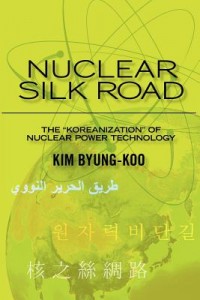
Nuclear Silk Road: Koreanization of Nuclear Power Technology Paperback – 5 August 2011 by Kim Byung-Koo (Author) 4.5 4.5 out of 5 stars (4)
The news out of Abu Dhabi on Dec. 27, 2009 was the direct motivation to write this book. South Korean consortium has just won the largest single nuclear power plant construction project in recent years to deliver four state-of-the-art Generation III pressurized water reactors to the United Arab Emirates. This book will bring to life the agonizing process of pursuing peaceful nuclear energy in South Korea during the last half-century for the "Atoms for Peace" dream from a poor developing country. Particular focus is placed on the localization process of nuclear power technology since 1980 from an insider's view. This case study on the Korean nuclear power technology could shed some light for other nations as they enter the brave new world of nuclear renaissance. Once on the Silk Road countries like China, India, UAE and Turkey show the most active nuclear power programs together with Japan and Korea today. After all, history repeats itself as new technologies transfer through
About the Author Kim Byung-koo ("BK") studied at the Seoul National University and the University of Michigan before receiving his doctorate in applied mechanics from the California Institute of Technology. Upon graduation, Dr. Kim worked as a test engineer at Jet Propulsion Laboratory in Pasadena, California until he returned to Korea when the country was embarking on its first nuclear power project. He served as the project manager of the nation's first nuclear power reactor system design project at the Korea Atomic Energy Research Institute in the 1980s. He then served as a Director of Technical Cooperation at the International Atomic Energy Agency in Vienna, assisting many developing countries to promote their peaceful uses of nuclear energy. After retirement, he currently lives in Daejeon, Korea. Nuclear Silk Road is his first book.
Product details Publisher : Createspace Independent Publishing Platform (5 August 2011) Language : English Paperback : 306 pages ISBN-10 : 1456422588 ISBN-13 : 978-1456422585 Dimensions : 15.24 x 1.93 x 22.86 cmCustomer Reviews: 4.5 4.5 out of 5 stars (4)
Top reviews from other countries
Bongani Motsa
4.0 out of 5 stars A book for developing countries aiming for first world statusReviewed in the United Kingdom on 18 May 2015 Verified Purchase
This book lays out the difference between countries that are perpetually stuck in the developmental stage and those that pull themselves out of poverty. Having selfless leaders; education; collaborating with other countries; setting up institutions; thorough record keeping; and ensuring knowledge and technological transfer, are among some of the ingredients.
5.0 out of 5 stars An Inside View of South Korea's Nuclear Power DevelopmentReviewed in the United States on 15 September 2011 Verified Purchase
First, a disclaimer, I worked as a startup test engineer on the Yonggwang 3/4 project that is described in the book. That said, I found this book a good historical narrative on South Korea's nuclear power program and a firsthand account of the first technology transfer projects which built the infrastructure that Korea would use to both build its nuclear industry and to win the UAE nuclear power contract. Many of those involved in those first projects such as Yonggwang 3/4 remain in the leadership of the nuclear profession and provide their expertise to countries such as China and the UAE.
The major strength of this book is that it is written for the layperson rather than being an academic treatise or policy exposition. It is quite readable and easy to follow. I fully agree with Dr. Kim in that the successes of the Korean nuclear power prgram were the result less of genius than of simple "elbow grease". This book provides a useful and straightforward introduction to nuclear development in South Korea and is valuable to anyone studying how developing countries can develop their nuclear power industries.
As part of the team that supported the startup of Yonggwang-3 and -4 (South Korea's first nuclear units, built in a technology transfer program with Combustion Engineering), I thought it long overdue to see a book that chronicled South Korea's journey from an impoverished nation to one of the world's leading players in the nuclear industry (e.g., South Korea has 21 operating reactors versus Germany's 17).
The book, "Nuclear Silk Road," is an effective historical narrative on South Korea's nuclear power program that combines official reports, pertinent interviews, and personal recollections with a focus on the country's technology transfer program with Combustion Engineering (now a part of Westinghouse).
The author, Dr. B. K. Kim, a former project manager for the Yonggwang-3 and -4 system design, invokes the metaphor of the Silk Road, which brought commerce across Asia, the Middle East, and Europe, as the majority of nuclear new build is geographically situated along this same historic pathway.
Kim
Kim's book is divided in two parts. Part 1 describes the political challenges in establishing the policies and organizations required to construct and operate nuclear energy facilities. This description includes the decisions of South Korea's first presidents and the country's key nuclear pioneers. Nuclear industry veterans will enjoy Kim's depiction of a semi-surreptitious nightshift measurement of new fuel assemblies at Wolsong in 1981 (often, the interesting events occur on nightshift).
Part 2 chronicles how these organizations evolved from being a receiver and operator of foreign turnkey reactor projects to that of a national industry that could independently design, construct, and operate nuclear power plants. The country's domestic industry then went global with the recent sale of four nuclear plants to the UAE (Braka Units 1 through 4) and the sale of a research reactor to Jordan. Kim details how South Korea was able to capitalize on the Chernobyl accident to negotiate a comprehensive technology transfer arrangement for the Yonggwang-3 and -4 plants. He discusses many of the primary Korean nuclear experts involved, and even provided interesting anecdotes such as how the first group of Koreans sent to Combustion Engineering in Windsor, Conn., were given one-way plane tickets.
A major strength of this book is that it is written as a basic narrative rather than an academic treatise or policy exposition. It is readable and easy to follow. My own experience on the Yonggwang-3 and -4 project matched Kim's contention that the successes of the South Korean nuclear power program were the result less of genius than of simple "elbow grease." Several places in the book describe the long hours worked and the dedication of the engineers, policymakers, operators, and craftsmen who navigated through the crucial points where the South Korean nuclear program might have foundered. The nuclear industry is well-known for its continual thirst for operating experience (OE) on events that have challenged equipment and personnel resulting in unexpected issues.
Kim's book also provides important OE. In this case, it is the experience of how dedication, hard work, and ability to see otherwise hidden opportunity can be leveraged to develop a successful nuclear power program. These lessons continue to be valuable as the nuclear profession charts a way forward across the globe in this new century.
_____________
Robert Margolis, PE is a nuclear engineer with more than 24 years of experience as a reactor engineer, startup test engineer, project engineer, and safety analyst. Margolis supported the Yonggwang-3 and -4 startup from 1993 through 1996. ===
It takes an odd sort of courage to state that the tragic Chernobyl accident of 1986 “turned out to be a blessing for Korea.” But that is what nuclear engineer and author Dr. Kim Byung-koo does in this book about his country’s rise to prominence in the controversial nuclear power industry.
Byung-koo knows what he is writing about because he was present for much of the history he is relating. When “BK,” as the author likes to be called, mentions a dizzying myriad of names, he is not simply giving readers a litany of the players who created and continue to advance Korea’s nuclear power industry, he is also sharing the contents of his address book. These politicians, scientists, bureaucrats, professors, and corporate executives are more than names—they are BK’s bosses, benefactors, mentors, colleagues, and in many cases, friends.
Much of Nuclear Silk Road reads like congratulatory homage from a mutual-admiration society, yet to dismiss it as such would be unfair. BK is immensely proud of what he and his comrades have accomplished, and, as he explains in great detail, they have every right to be.
The Republic of Korea is one of the premier designers, builders, and exporters of nuclear power plants. The path it took to get there, writes the author, is a “shining example of how an inexperienced but well motivated and educated” people overcame great hardship. BK says he hopes to not only “demystify” what some call “a miracle story,” but also to offer hope and provide a blueprint for “other developing countries with nuclear power ambitions” that he believes “could benefit from the Korean lessons.”
Parts of this book are good, solid, by-the-numbers, history. The who, what, why, where, when, and how of Korea’s progress from war-ravaged backwater to economic powerhouse is clearly presented. There are heroes and villains aplenty, and these sections are organized and explained in a simple and concise manner. However, there are chapters that are decipherable only to readers already thoroughly versed in the topic and familiar with the mind-boggling acronyms of the organizations involved.
Fortunately for the lay reader, the author can also write for a more general audience when he chooses to do so, and it is in these sections the book truly shines. When BK explains how Korea took advantage of the “nuclear dark age” that arose in reaction to the Chernobyl accident, he does so with honesty and candor. He admits it is “ironic that the Korean nuclear power technology owes a lot to the Chernobyl accident,” yet also notes quite jauntily that this is “a classical example of turning crisis into opportunity.”
Overall, the book’s positive attributes outweigh its weak points. Dr. Kim Byung-koo has done his colleagues, his country, and the world a service in providing a candid insider’s view of the rise of the Korean nuclear power industry.
Reviewed by Mark G. McLaughlin
October 11, 2011
Disclosure: This article is not an endorsement, but a review. The publisher of this book provided free copies of the book and paid a small fee to have their book reviewed by a professional reviewer. Foreword Reviews and Clarion Reviews make no guarantee that the publisher will receive a positive review. Foreword Magazine, Inc. is disclosing this in accordance with the Federal Trade Commission’s 16 CFR, Part 255.
South Korea has the raw materials and equipment to produce a nuclear weapon. However, it has not opted to make one.[1] South Korea has continued on a stated policy of non-proliferation of nuclear weapons since 2004 and has adopted a policy to maintain a nuclear-free Korean Peninsula. South Korea also allows the United States to maintain nuclear weapons on its territories, which the US first brought to the peninsula in January 1958. North Korea has and is developing additional nuclear weapons.
In August 2004, South Korea revealed the extent of its highly secretive and sensitive nuclear research programs to the International Atomic Energy Agency (IAEA), including some experiments which were conducted without the obligatory reporting to the IAEA called for by South Korea's safeguards agreement.[2] The IAEA Secretariat reported the failure to report to IAEA Board of Governors.[3] However, the IAEA Board of Governors decided to not make a formal finding of noncompliance.[4]
When the United States notified the South Korean administration of its plan to withdraw USFK in July 1970, South Korea first considered the possibility of an independent nuclear program. Under the direction of South Korea's Weapons Exploitation Committee, the country attempted to obtain plutoniumreprocessing facilities following the pullout of the 26,000 American soldiers of the 7th Infantry Division in 1971.[5]
After South Vietnam had fallen in April 1975, then South Korean presidentPark Chung Hee first mentioned its nuclear weapons aspiration during the press conference on 12 June 1975.[6] However, under pressure from the United States, France eventually decided not to deliver a reprocessing facility to South Korea in 1975.[5] South Korea's nuclear weapons research program effectively ended on April 23, 1975, with its ratification of the Nuclear Non-Proliferation Treaty.[5]
In 1982, scientists at the Korean Atomic Energy Research Institute performed an experiment in which they extracted several milligrams of plutonium. Although plutonium has uses other than the manufacture of weapons, the United States later insisted that South Korea not attempt to reprocess plutonium in any way. In exchange, the US agreed to transfer reactor technology and give financial assistance to South Korea's nuclear energy program. It was revealed in 2004 that some South Korean scientists continued some studies; for example, in 1983 and 1984 Korea Atomic Energy Research Institute was conducting chemical experiments related to the handling of spent fuel that crossed the reprocessing boundary.[7]
Later, in an experiment at the same facility in 2000, scientists enriched 200 milligrams of uranium to near-weapons grade (up to 77 percent) using laser enrichment.[7][8] The South Korean government claimed that this research was conducted without its knowledge.[9] While uranium enriched to 77 percent is usually not considered weapons-grade, it could theoretically be used to construct a nuclear weapon.[10][11]Highly enriched uranium with a purity of 20% or more is usable in a weapon, but this route is less desirable as far more material is required to obtain critical mass.[12]
These events went unreported to the IAEA until late 2004.[7]
Following Seoul's disclosure of the above incidents, the IAEA launched a full investigation into South Korea's nuclear activities. In a report issued on November 11, 2004, the IAEA described the South Korean government's failure to report its nuclear activities a matter of "serious concern", but accepted that these experiments never produced more than very small amounts of weaponizeable fissile material. The Board of Governors decided to not make a formal finding of noncompliance, and the matter was not referred to the Security Council.[4]
Pierre Goldschmidt, former head of the department of safeguards at the IAEA, has called on the Board of Governors to adopt generic resolutions which would apply to all states in such circumstances and has argued "political considerations played a dominant role in the board's decision" to not make a formal finding of non-compliance.[13]
Duration: 49 seconds.0:49Subtitles available.CCDeployment of US atomic weapons in Korea in 1958
The US first deployed nuclear weapons to South Korea in 1958,[14] and numbers peaked in the late 1960s at close to 950, including a mix of tactical and strategic weapons.[15][16]
Following its accession to the Nuclear Non-Proliferation Treaty in 1985, the government of North Korea had cited the presence of US tactical nuclear weapons in South Korea as a reason to avoid completing a safeguards agreement with the International Atomic Energy Agency.[17] In 1991, President George H W Bush announced the withdrawal of all naval and land-based tactical nuclear weapons deployed abroad, including approximately 100 such weapons based in South Korea.[18] In January 1992, the governments of North and South Korea signed a Joint Declaration of the Denuclearization of the Korean Peninsula, and in January 1992, the North concluded a comprehensive safeguards agreement with the IAEA.[17] Implementation meetings for the Joint Declaration took place in 1992 and 1993, but no agreement could be found, so consequently the declaration never entered into force.[19][20]
Yoon Suk-yeol, the incumbent President of South Korea, stated in 2021 that he would ask that the United States redeploy tactical nuclear weapons in South Korea.[23]
In 2023, South Korea agreed not to develop nuclear weapons in exchange for American deployment of nuclear-armed submarines in South Korea.[24]
In the late 1990s, a notable minority of South Koreans supported the country's effort to reprocess materials, although only a small number called for the government to obtain nuclear weapons.[25]
With the escalation of the 2017 North Korea crisis, amid worries that the United States might hesitate to defend South Korea from a North Korean attack for fear of inviting a missile attack against the United States, public opinion turned strongly in favour of a South Korean nuclear arsenal, with polls showing that 60% of South Koreans supported building nuclear weapons.[26]
In a 2023 poll, over 76% of South Koreans support the indigenous development of nuclear weapons.[27][28][29]
Although currently, South Korea is under the US nuclear umbrella of protection, it could very well break away and try to develop its own nuclear weapons if necessary. Like Japan, South Korea has the raw materials, technology, and resources to create nuclear weapons. Previous incidents show the Republic of Korea (ROK) to be able to possess nuclear weapons in anywhere from one to three years if necessary. The ROK has been shown before to create enriched uranium up to 77%, which, although not particularly powerful, shows that South Korea has the potential to make nuclear weapons with more highly enriched uranium. South Korea does not have any intercontinental ballistic missiles but possesses a wide range of short-range and medium-range ballistic missiles through the Hyunmoo series of ballistic/cruise missiles currently fielded by the ROK Army. The Hyunmoo series of ballistic missiles works similarly to the American Tomahawk Missile, which can be armed with the W80 and W84 nuclear warheads. Theoretically, if needed, the 500 kg conventional warhead could be replaced by a small nuclear warhead. The Hyunmoo missiles can already cover the entire range of North Korea and would drastically change the North's disposition if the South had nuclear-armed MRBMs. Even though the ROK could procure nuclear weapons, currently, like Japan, it sees no reason to do so with the protection of the American nuclear arsenal. However, if a conflict erupts with the North, South Korea could quickly evolve into a nuclear-armed state and pose even with the North with the support of the US.[30] According to Suh Kune-yull, a professor of nuclear engineering at Seoul National University, “If we decide to stand on our own feet and put our resources together, we can build nuclear weapons in six months”.[31]
South Korean president Yoon Suk Yeol stated in January 2023 that if the security situation regarding the threat from North Korean nuclear weapons deteriorates further, South Korea would consider building their own nuclear weapons to deter the North or request that the United States deploy nuclear weapons in South Korea. In 1991 the United States removed all of its nuclear weapons from South Korea. The statements from the South Korean president came during a policy briefing by his foreign and defense ministries; the comments are the first time South Korea has officially acknowledged they would consider developing its own nuclear arsenal in response to North Korean nuclear weapons. In 2022 South Korea announced it had developed submarine-launched ballistic missiles; South Korea is the only nation with SLBMs that does not possess nuclear weapons.[32][33][34]
South Korea missile development originates in 1970 with creation of Defense Ministry's research arm the Agency of Defense Development with development starting in 1971 under orders of then president Park Chung Hee. In 19708090 was allowed to service Hawk and Nike Hercules surface-to-air missiles under agreement with maintenance facility under the supervision of the U.S. which was set up in the country with South Korean engineers receiving training from the Raytheon and U.S. military involving improvement of the missiles. South Korea in 1975 purchased mixer for missiles solid fuel propellant from Lockheed along with some equipment imported later on in 1978 with first successful ballistic missile test of first South Korean short range ballistic missile NHK-1(also known as White/Polar Bear) conducted the same year on September 26 demonstrating 160 km range with maximum range of 180 to 200 km. NHK-1 was by South Korea touted as completely indigenous development though in fact some of the technology was supplied and obtained from the United States. Seoul agreed to not extended range of the missile beyond 180 km under South Korea Ballistic Missile Range Guidelines with the U.S. with development of its successor NHK-2 that was tested in October 1982 with development being halted in 1984 until resumption couple years later with completion in 1987 when it entered service, its guidance system was supplied by United Kingdom. In 1995 South Korea requested permission to have 300 km range missiles from the US in line with MTCR with request in 1999 for expansion to 500 km.[42] Development of 300 km range Hyunmoo-2 started in mid to late 1990s with first test in April 1999 with entering service in 2008 as Hyunmoo-2A after restrictions were lifted from previous agreement to limitation comparable to MTCR,[43] Hyunmoo-2B entered service in 2009 with range under MTCR-like restriction and range restriction under South Korea Ballistic Missile Range Guidelines renegotiated in 2012 with the US from 300 km to 800 km with reduced payload from 997 kg to 500 kg.[44] Cap on missile warhead weight was lifted in 2017.[45] On May 21, 2021, the decades-old South Korea Ballistic Missile Range Guidelines was scrapped, allowing South Korea to develop and possess any type of missile, including intercontinental ballistic missiles (ICBMs) and advanced submarine-launched ballistic missiles (SLBMs).[46][47]
Weapons-grade uranium—also known as highly-enriched uranium, or HEU—is around 90 percent (technically, HEU is any concentration over 20 percent, but weapons-grade levels are described as being in excess of 90 percent).
A state selecting uranium for its weapons must obtain a supply of uranium ore and construct an enrichment plant because the U-235 content in natural uranium is over two orders of magnitude lower than that found in weapons grade uranium (>90 percent U-235 U).
^Carlin, Robert (13 July 2016). "North Korea Said It's Willing to Talk Denuclearization (But No One Noticed)". The Diplomat. Retrieved 21 April 2018. That the 1992 N-S joint declaration didn't work is beside the point; in fact, it never even got through the stage of setting up implementation arrangements, the fault of both sides.