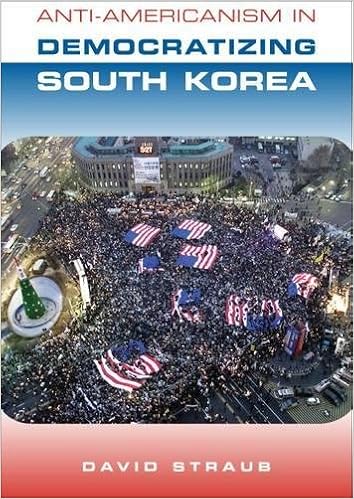
Anti-Americanism in Democratizing South Korea Paperback – July 20, 2015
by David Straub (Author)
3.9 out of 5 stars 8 ratings
=
Although most South Koreans profess to holdfavorable views of the United States, the phenomenon of anti-Americanism in this "pro-American" country is wellknown. David Straub, who served as the head of the political section at the U.S. embassy in Seoul for three years, analyzes the arc of increasing anti-American sentiment from 1999 that climaxed in 2002 in massive demonstrations over the accidental killing of two schoolgirls by a vehicle driven by American soldiers. Straub argues—using case studies of major incidents during the period—that anti-Americanism was not simply a reaction to U.S. actions, but was powerfully embedded in a longstanding Korean national narrative of victimization at the hands of great powers, magnified by the election of a left-national government and media dynamics in the Internet age.
Contents
1. Introduction: South Korea's Anti-American Eruption
2. The Catalyst: Revisiting the Nogun-ri Massacre
3. Poisoning the Relationship: Agent Orange and Formaldehyde
4. Fairness and Equality: Maehyang-ri and SOFA Revision
5. Bushwhacked: North Korea Policy
6. Not Sporting: The Short-Track Racing Incident
7. Climax: The Highway 56 Tragedy
8. Conclusion: Lessons for Americans and Koreans
Read less
Print length
280 pages
==
Editorial Reviews
About the Author
David Straub is the Sejong-LS Fellow at The Sejong Institute in South Korea. Straub served as a career U.S. diplomat for thirty years. From 2008 to 2016 he was associate director of the Korea Program at Stanford University's Shorenstein Asia-Pacific Research Center.
Product details
Publisher : Shorenstein Asia-Pacific Research Center (July 20, 2015)
Language : English
Paperback : 280 pages
=
Follow
David Straub
David Straub is an expert on the North Korea problem and the U.S.-South Korean alliance. He is currently the inaugural Sejong-LS Fellow at The Sejong Institute, a leading Korean think tank on the North Korea problem and other foreign and security challenges facing South Korea. Previously, Straub served nearly a decade as associate director of Stanford University's Korea Program in the Walter H. Shorenstein Asia-Pacific Research Center. He retired from the U.S. State Department in 2006 as a Senior Foreign Service Officer after a thirty-year career there. Straub participated in the Six Party Talks and "New York channel" dialogue with the North Koreans, and accompanied former President Bill Clinton to Pyongyang in 2009 to meet Kim Jong Il and bring home two imprisoned American journalists.
==
Customer reviews
3.9 out of 5 stars
3.9 out of 5
8 global ratings
5 star 41%
4 star 32%
3 star 0% (0%)
0%
2 star 26%
1 star 0% (0%)
0%

John A. Cushing
5.0 out of 5 stars A useful study of a contentious timeReviewed in the United States on September 26, 2017
Verified Purchase
This is a thorough and comprehensive narrative of a series of events and incidents that culminated in the tragic deaths of two young girls, roiling relations between the United States and the Republic of Korea. The author approaches the events in a thoughtful and even-handed manner. Well worth reading.
One person found this helpful
HelpfulReport abuse
Former FSO
5.0 out of 5 stars and is therefore an excellent introduction to this nation for both serious studentsReviewed in the United States on December 4, 2015
Verified Purchase
This is a superlative look at anti-Americanism in Korea, and a cautionary tale about how near the surface it constantly lurks in Korean society. The author's approach is both scholarly and conversational, and is therefore an excellent introduction to this nation for both serious students, as well as casual readers. I would put this among a core of three or four books that one must read to understand contemporary Korean politics and sociology with regard to US-Korean relations.
2 people found this helpful
HelpfulReport abuse
Ben
2.0 out of 5 stars Politicized, Sloppy, Stay AwayReviewed in the United States on June 22, 2017
Verified Purchase
Unfortunately, I had to stop reading this book at page 20. The author has a strong tendency to make sweeping statements and judgments which are not justified by his level of insight. Here are a few examples:
He makes this wild claim that "the twentieth century was, if anything, even more traumatic [for Korea] than that of China and Europe." Okay so we all know about the Cultural Revolution, and the Rape of Nanking, the Holocaust, and Stalin's oppression of Poland, so what happened in Korea exactly that I didn't hear about? Wait for it... "Koreans by the millions were dragooned into supporting the Japanese war effort, including working in munitions factories and serving in low-level positions in the imperial military." Oh, the horror! Perhaps Straub is ignorant of history beyond Korea and didn't realize the enormity of the claim he was making. Or maybe he doesn't care. But to make such a claim he would have done well to explain the reasoning, instead of immediately undermining his own argument.
There is also a hidden but unmistakable anti-American bias (not totally surprising given he worked in the State Department), "Unfortunately for Korea, when in 1854 the United States forced Japan to establish Western-style diplomatic relations, Japan quickly adopted both the West's technology as well as its imperialist ways." Wow really? The US influenced Japan so strongly in 1854 that we forced them to be imperialists? What is the evidence for that? Straub's claim is all the more striking given that just a page earlier he stated Korea had a relatively peaceful history before the 20th century with the exception of a wildly bloody Japanese invasion in the 16th century. So if America is behind Japanese imperialism that harmed Korea, America was behind the Japanese attack of 1592 too, or something.
Here is one final example which shows either sloppy imprecise language, or, once again, anti-Western bias, "In 1904-1905 Japan fought yet another war for control over Korea, but this time against Russia. In its stunning military victory in the Russo-Japanese War, Japan showed that it could beat the West at its own imperialist game." Honestly, this is the first time I have ever read Russia described as "the West." What a peculiar definition of The West. Coming within the context of his writings, one cannot help but feel he uses the term "the West" to associate-and-smear America for imperialistic wars over Korea that America actually had nothing at all to do with.
The prose is readable. And there are enough facts in here to make this book worthwhile if you need to learn about Korea and have no other options, so I won't give it one star. But for a casual reader like me, who wanted an enjoyable read and the facts about Korea, this State Department official is just not up to the task of producing an objective fact-based book.
3 people found this helpful
HelpfulReport abuse
B. Martin
5.0 out of 5 stars A diplomat's nightmareReviewed in the United States on July 28, 2016
In this important and compelling book the author relates how his posting to head the political section in the U.S. Embassy in Seoul coincided with the beginning of a three year period during which the South Korean news media engaged in “what seemed to be competitive reporting” to cast United States Forces Korea “in the worst possible light.” First came widespread media and public outrage in response to a 1999 American Associated Press investigation that documented panicked U.S. Army soldiers’ mass killing of suspected North Korean infiltrators in civilian clothing – who turned out to be innocent South Korean civilian refugees – in the early days of the Korean War 49 years earlier.
“Thereafter, almost every week seemed to bring a new Korean report of some fresh American outrage, usually involving USFK,” Straub writes. The list of grievances – some of them blown far out of proportion, according to Straub’s account – grew to include even a fatal traffic accident in which GIs were involved. “Each new story about alleged USFK wrongdoings provoked the public and in turn spurred the media to discover, exaggerate and sometimes invent other examples of American disrespect and disregard for the Korean people,” writes Straub, who offers a very useful chapter-length case study of each major grievance.
Americans were accused of poisoning, with the chemical defoliant Agent Orange, South Korean allied troops sent to help them in Vietnam in the 1960s and other Korean soldiers serving back home on the Demilitarized Zone. Another charge, in 2000, was that Americans were “dumping toxins into the Han River, poisoning the drinking water of the people of Seoul.” Korean villagers complained of bombing practice runs near their village. The Americans drew further attacks when they resisted changes in the Status of Forces Agreement that would permit trial of offending GIs under Korean law.
“There is no evidence that the behavior of USFK and American military personnel toward Korea or Koreans worsened during this period,” Straub concludes. If that sounds as if he felt many Koreans had chips on their shoulders, he doesn’t put it precisely in those terms but does suggest that “the Korea narrative about the 1999-2002 period was a construct that said more about Korea, at least at that time, than it did about actual U.S. behavior during the period.”
“The dominant media narrative that arose during the period from 1999 to 2002 was that Americans, and especially USFK, had no respect for the Korean people,” Straub writes. “Koreans felt (with good reason) that they had lifted themselves up by their bootstraps to build a modern, economically and politically developed country. . . . Yet Americans still looked down on them!” Where did such hyper-sensitivity come from? “Koreans see their nation’s history, especially in the modern era, as one of victimization at the hands of powerful foreign countries,” notes Straub. “Koreans prefer the United States to China, Japan and Russia, but few would trust it implicitly.”
Their “profound sense of national victimization,” he adds, has had not only negative but positive consequences – “inspiring Koreans to make tremendous efforts and sacrifices to defend and develop their country.”
The especially intense 1999-2002 bout of anti-American media coverage ended suddenly, Straub relates. He suggests that part of the reason, at least, was a negative turn in North-South Korean relations that thwarted an indirect campaign by a leftist South Korean minority attempting through NGOs and the media to undermine and ultimately dismantle the U.S.-South Korean alliance. The episode ended, he says, when Korean leaders, not least of them the newly elected progressive President Roh Moo-hyun, were sobered by the realization they were in danger of alienating American politicians and voters and losing the U.S. troop presence that helped to deter North Korea from undertaking another invasion.
“It is not clear whether the alliance might have fractured had such problems continued many years longer,” Straub writes. “The United States does indeed have major interests in Korea,” he adds, but “those interests are grounded at least as much in American history and politics as in grand strategy. For that reason, if the United States were truly rejected by the people of South Korea, a U.S. withdrawal from Korea would not only be possible, it would most likely be inevitable,” Straub writes, pointing to the example of the closure a decade earlier of US bases in the Philippines.
Another flare-up in the future is not out of the question, he writes. The US alliance could be tested by disagreements over policy toward North Korea, China or Japan. (The book was published before Republican presidential nominee Donald Trump threatened troop withdrawal if Seoul doesn’t contribute more to the costs of U.S. presence.) However, Straub, currently a researcher at Stanford’s Shorenstein Center, believes that “South Korean attitudes today are largely pro-American.” Indeed, he argues, “South Koreans are not fundamentally or by nature anti-American.”
2 people found this helpful
ANTI-AMERICANISM IN DEMOCRATIZING SOUTH KOREA | By David Straub
Stanford, CA: Walter H. Shorenstein Asia-Pacific Research Center, Stanford University, 2015. xv, 246 pp. US$18.95, paper. ISBN 978-1-931368-38-4.
Many were astonished by the massive anti-American candlelight vigils that occurred in front of Seoul City Hall in the winter of 2002. This phenomenon triggered policy and scholarly research on anti-Americanism in Korea, and predictions of a perpetually strained ROK-US alliance. Although Korea soon returned to being among the world’s most pro-American countries, few researchers examined why their predictions turned out to be inaccurate.
In the midst of the current “better than ever” alliance, David Straub, a career diplomat who spent the tumultuous years of 1999 to 2002 as political section director at the American Embassy in Seoul, has revisited this question after fifteen years. His book offers a rich overview of the historical background of Korea-US relations, followed by vivid, specific, and well-documented narration of several cases, including the Nogun-ri killings; American use of Agent Orange and formaldehyde; Status of Forces Agreement (SOFA) revision; policy fissures on North Korea; the Korean short-track speed skater’s disqualification for interfering with his American rival at the 2002 Winter Olympics in Salt Lake City; and the Highway 56 tragedy, where two Korean school girls were accidentally run over and killed by a US military armored vehicle culminating in mass anti-American street protests.
The author expresses his enormous frustration as an American embassy official at seeing little room for his government to ease public unrest at the time. Straub identifies four major sources of this unrest: Korean nationalism coupled with feelings of victimization at the hands of major powers; fierce media competition leading to sensationalist reporting that galvanized such nationalism; criticism of the US by so-called “386 Generation” reporters and editors, due to their conviction of American complicity in the 1980 Gwangju incident; and the empowerment of progressives and the 386 Generation to express anti-American sentiments, something that had been censored during the pre-democratization period in Korea (the term 386 Generation refers to those who were in their 30s at the time the term was coined, were university students in the 1980s, and were born in the 1960s).
The book concludes with a discussion of three salient policy issues: North Korea’s nuclear program, the Korea-Japan conflict, and the rise of China. The author also suggests that “the risk to the alliance would be greater if progressives were in power in Seoul” (218), while not completely precluding such a risk under a conservative government.
Anyone interested in anti-Americanism in Korea and elsewhere will appreciate Straub’s tremendous efforts to produce a relatively objective documentation of events, worthwhile not only as a record but also as a basis for further research regardless of ideological perspective. Although valuable in itself, subjective narration is much enhanced when communicated alongside other interpretations to ensure inter-subjectivity. This book review grants a privileged opportunity for dialogue between observers using two different lenses.
As a former Blue House staff member under Korean President Roh Moo-hyun, I could not agree more with Straub on two things: the sensational media distortion carried out by both conservative and progressive camps, and the potential for a resurgence of anti-American sentiment under a progressive Korean government—although chances of this are quite limited. However, while our conclusions are similar, Straub and I employ different logic to reach them (Kisuk Cho, “The Rise and Decline of South Korean anti-American Sentiment,” Korea Observer vol. 46, no. 2 [2015]).
I personally believe that the US government could have better mitigated anti-American sentiment had it been aware of the rising public voice and consequent importance of public relations, even in new democracies. Nonetheless, the US government cannot be blamed as it was not ready to conduct successful public diplomacy until after the redirection of foreign policy following the 9-11 attacks.
We are witnessing a paradigm shift from professional to public diplomacy due to the widespread democratization of communications technology. However, the Bush Administration was unpopular around the world during the period covered by this book, when American diplomats and military personnel were unequipped to deal with angry publics, particularly in a low-trust society like Korea. Further, diplomats had never previously needed such skills because Korea had been predominantly pro-American regardless of American policy directions.
It was US Ambassador Christopher Hill who first started using social media to communicate directly with the Korean public, with subsequent ambassadors following suit. After the 2002 protests, Koreans felt heard by Washington even in appointments of American ambassadors to Korea, and polls showed an ever-increasing favourability toward the US among Koreans.
Straub aptly identifies potential issues in the rise of anti-American sentiment in Korea, but an issue with even more detrimental potential could be THAAD (Terminal High-Altitude Area Defense), even under the current conservative Korean government and in the context of the North Korean sinking of the South Korean Navy corvette Cheonan. If a progressive Korean government were to take power, people would likely demand an investigation into the real cause behind the sinking of the Cheonan and the role of the US government, as they do not trust the South Korean government’s claim of North Korean culpability. This does not mean a progressive Korean government would provoke anti-American sentiment among Koreans, as the author implies. Rather, the progressive party would find it difficult to defy its principles of democracy and transparency in dealing with such issues.
It is regrettable that the author views former president Roh through the lens of the partisan Korean media, even after criticizing its vicious sensationalism, and makes two mistaken assertions regarding Roh. First, the claim that “the anti-American mood was a decisive factor in Roh’s narrow victory,” has been refuted by Byong-Kuen Jhee (“Anti-Americanism and Electoral Politics in Korea,” Political Science Quarterly vol. 123, no. 2 [2008]).
Second, his ascription of “the end of the anti-American eruption” to “President Roh’s weaknesses as a leader” (207) ignores the fact that protests abruptly died down after President Bush’s informal apology. He also states that “Roh was a ‘progressive,’ famous for being highly critical of the United States,” who “seemed to consider it a badge of honor that he had never set foot in the country” (4), but the truth is more nuanced. Critics insisted that candidate Roh was unqualified to be president because he was inexperienced in foreign relations as he had never set foot in the US, and thus Roh rebutted: “I will not visit the US to take a picture with high-ranking officials,” a statement meant to ridicule the critics, not the US. He stated that pro-Americanism and anti-Americanism were different sides of the same coin, stemming from a lack of self-confidence and toadyism.
As the author admits, “[i]ronically, however, Korean attitudes began to improve dramatically even as Presidents Bush and Roh were still in office” (5). President Roh always claimed the alliance should be based on mutual interests, in line with Straub’s position. This book triggers genuine dialogue between different viewpoints on the Korea-US alliance, which I am certain will foster better understanding and mutual cooperation.
Kisuk Cho
Ewha Womans University, Seoul, South Korea
pp. 158-160
Last Revised: May 31, 2018
Open Menu on Past Book Reviews
Pacific Affairs
Vancouver Campus
376-1855 West Mall
Vancouver, BC Canada V6T 1Z2
Tel 604 822 6508
Fax 604 822 9452
Email enquiry@pacificaffairs.ubc.ca

No comments:
Post a Comment