President Joe Biden said that the U.S. economy was growing “because we welcome immigrants” and that other countries were held back economically by anti-immigration policies.
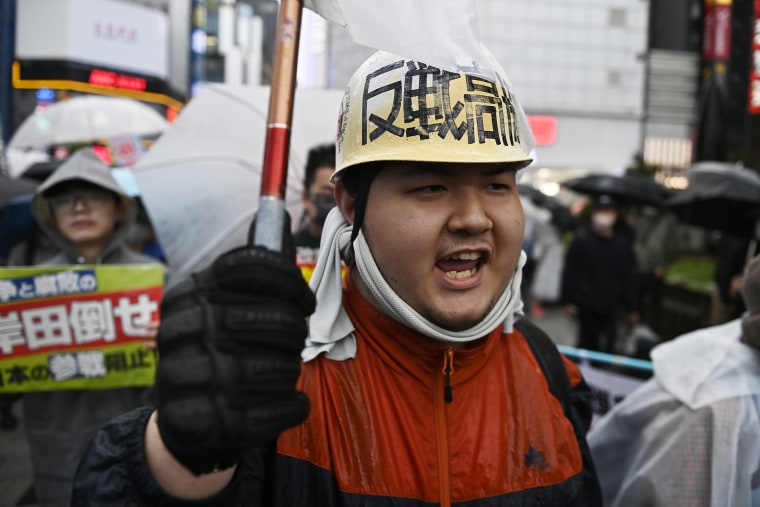 A May Day rally marking International Workers’ Day in Tokyo on Wednesday.David Mareuil / Anadolu via
 May 2, 2024
By Jennifer Jett
HONG KONG — President Joe Biden said Wednesday that U.S. ally Japan was struggling economically because of xenophobia, along with other countries, including China and Russia.
Speaking at a campaign fundraiser in Washington that marked the start of Asian American, Native Hawaiian and Pacific Islander Heritage Month, Biden said the U.S. economy was growing in part “because we welcome immigrants.”
“Think about it,” he said. “Why is China stalling so bad economically? Why is Japan having trouble? Why is Russia?”
“Because they’re xenophobic,” he said. “They don’t want immigrants.”
Japan is a longtime U.S. ally in the Asia-Pacific, and Biden has been strengthening security ties with Tokyo to counter China in the region, having hosted Prime Minister Fumio Kishida for a summit and state dinner in Washington last month.
There was no immediate reaction Thursday from Japan, which is largely on holiday this week.
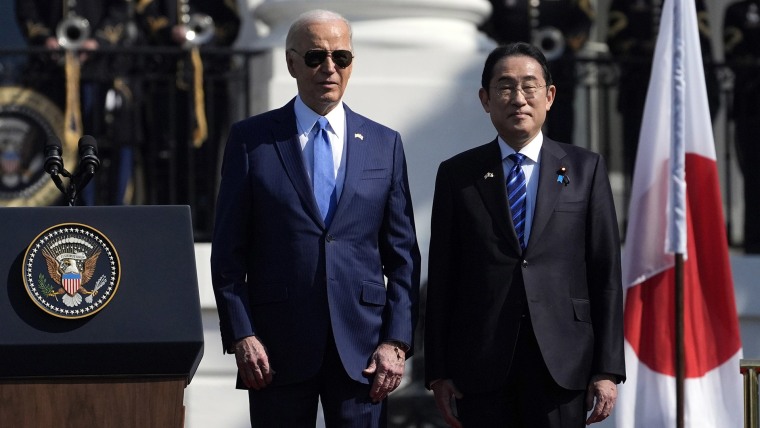
Biden thanks Japanese prime minister for his commitment to 'monumental alliance'
01:14
While many experts would agree with Biden’s statement, “it’s not something diplomatic to say about one of America’s closest allies, especially because America has its own problems with xenophobia that Japanese are seeing on the news all the time,” said Jeffrey Hall, Japanese studies lecturer at Kanda University of International Studies in Chiba, Japan. “So it just strikes me as something that was unnecessary to say in this context,” he told NBC News.
“It will sound like America is once again talking down to the Japanese,” Hall said, “and that’s not really an effective way of getting Japan to fix various problems with its society that even Japanese people would agree are problems.”
Like many other countries in Asia, Japan is grappling with demographic issues, including an aging and declining population.
The country of 125 million people has been trying to attract more foreign workers but is hampered by restrictive immigration laws that make it difficult to gain permanent residency.
In March, the Japanese Cabinet approved legislation that would more than double the cap on foreign skilled workers to more than 800,000 and replace an internship program with a training system for unskilled foreign workers that could provide for medium- to long-term residency, local media reported.
To maintain economic growth, the country will need 6.74 million foreign workers by 2040, the Japan International Cooperation Agency said in a 2022 report, up from 2.05 million in the country as of October. About a quarter of Japan’s foreign workers come from Vietnam, followed by China at 19% and the Philippines at 11%, the labor ministry said in January.
Japan ranked 35th out of 56 countries in the 2020 Migrant Integration Policy Index, which categorized the country’s approach as “immigration without integration.” Researchers said foreign nationals in Japan were denied equal opportunities and several basic rights, especially protection from discrimination, putting it far behind other developed countries.
“Japan’s current policies encourage the public to see immigrants as subordinates and not their neighbors,” the report said.
Recommended

No comments:
Post a Comment