2019-01-31

10 Facts About Famine in North Korea | The Borgen Project


10 Facts About Famine in North Korea | The Borgen Project


08APR2018

10 Facts About Famine in North Korea

North Korea is one of the most mysterious and reclusive countries in the world. It is well known for its repressive government and the abhorrent living conditions its citizens endure. Nowhere is this suffering more apparent than in the facts about famine in North Korea, which has further repressed the country’s citizens and fueled Kim Jong Un’s pursuit of a dangerous nuclear program. These 10 facts about famine in North Korea show just how brutal life in the country really is.
10 Facts About Famine in North Korea
Numbers Are Scarce
Although the Food Security and Information Network (FSIN) acknowledged a major famine in North Korea in its 2017 report, the group also noted that statistics showing the scale of the famine are hard to find due to the repressive nature of the Kim regime as well as its efforts to convey the illusion of prosperity.
The Problem Requires External Assistance
FSIN also noted that North Korea needs foreign assistance to recover from the famine. Given the country’s poor economy, it will be difficult if not impossible for the country to recover on its own.
But External Assistance Is Unlikely
However, due to rising tensions between the United States, the United Nations and North Korea over the development of nuclear weapons, tighter economic sanctions have been placed on the country, further weakening its economy and deepening the current famine. If any country were to grant economic support to North Korea, it would face an immense backlash from both the U.S. and the U.N.
The Famine Is Significant
According to a 2017 report by the United Nations, which made estimates based on satellite images and economic data, roughly two out of five citizens are malnourished. It has identified more than 13 million North Koreans in need of economic assistance who are likely struggling to survive in the current conditions.
The Kim Regime Is Focused on Military Development Instead
Due to fears of a regime change by the United States military, Kim Jong Un has largely focused the scarce resources of North Korea on the development of conventional and nuclear weaponry. This furthers the problem, as the regime has largely ignored the plight of its own people.
Economic Reforms Have Largely Failed
According to an op-ed by Roberta Cohen for Brookings, economic reforms put in place by the late Supreme Leader Kim Jong Il and current leader Kim Jong Un have failed to revitalize the North Korean economy, including its faltering agricultural industry, leading to a continuation of the famine. This has led Kim Jong Un to dedicate even more resources to military development and repression of citizens to avoid a revolt should the population grow more dissatisfied with his leadership.
Weather and Geography Are Also to Blame
The weather and geography of North Korea contribute to the famine. North Korea is sandwiched between several other countries, and has a climate that is generally not conducive to agriculture. This could be addressed by importing goods, but due to current global conflicts, there are strict sanctions on the nation.
The Famine Is Behind the Repression of North Korean Citizens
Many have wondered why the Kim regime is so focused on the creation of a totalitarian state unforgiving of criticism and driven to propaganda. Yet, should the regime abandon this set of ideals, the public would quickly turn on the government for malnourishing them and not promoting change. It is easier for Kim to tighten his political grip and shift blame to the United States than acknowledge his failure to supply his own citizens with basic needs.
Sanctions Have Contributed to the Famine
Though the United States government places most of the blame for North Korea’s poor living conditions on the Kim regime, according to the New York Times, the strict sanctions it has imposed in recent years have further contributed to the nation’s economic downfall. Though an argument could be made that sanctions are necessary to stop the development of nuclear weapons, it would be wrong to deny their role in the famine crisis.
The Current Famine Could Get Worse
The citizens of North Korea are often regarded as a brainwashed mass, but they possess the same basic needs as any people. Their suffering has been accelerated by the famine, and should the United States and North Korea become involved in a second war, the situation could devolve into a severe humanitarian crisis. Even disregarding the loss of life from direct military conflict, the chaos caused by war would further disrupt agriculture, cripple the already poor North Korean economy and lead to a refugee crisis that could claim hundreds of thousands of lives.

These 10 facts about famine in North Korea show the brutal underbelly of life in North Korea and a major humanitarian crisis in the making, a reality that is often overlooked in our haste to parody a struggling and repressed nation.

– Shane Summers
Photo: Flickr

World Hunger: Twelve Myths (22): Frances Moore Lappe, Joseph Collins, Peter Rosset, Luis Esparza: 9780802135919: Amazon.com: Books

World Hunger: Twelve Myths (22): Frances Moore Lappe, Joseph Collins, Peter Rosset, Luis Esparza: 9780802135919: Amazon.com: Books


World Hunger: Twelve Myths (22) Subsequent Edition
by Frances Moore Lappe (Author), Joseph Collins (Author), Peter Rosset (Author), Luis Esparza (Author)
4.4 out of 5 stars 22 customer reviews


ISBN-13: 978-0802135919
ISBN-10: 9780802135919Why is ISBN important?

Have one to sell?Sell on Amazon

Add to ListAdd to Wedding Registry
Share Facebook Twitter Pinterest <Embed>


Kindle
from $25.63


In this completely revised and updated edition of the most authoritative book on world hunger, three of our foremost experts on food and agriculture expose and explode the myths that prevent us from effectively addressing the problem. Drawing on and distilling the extensive research of the Institute for Food and Development Policy (Food First), Lappé, Collins, and Rosset examine head-on the policies and politics that have kept hungry people from feeding themselves around the world, in both Third and First World countries, as well as the misconceptions that have obscured our own national, social, and humanitarian interests. 


Written in a straightforward, easy-to-read style, World Hunger: Twelve Myths shakes many tenaciously held beliefs; but most important, it convinces readers that by standing together with the hungry we can advance not only humanitarian interests, but our own well-being.


Editorial Reviews

From the Back Cover


The Revised and Updated Edition of the Classic on World Hunger from the Internationally Recognized Institute for Food and Development Policy/Food First.

The completely revised Second Edition includes:

o Substantial new material on hunger in the aftermath of the Cold War

o Global food production vs. population growth

o Changing demographics and falling birth rates around the world

o The shifting focus of foreign assistance in the new world order

o Structural adjustment and other budget-slashing policies

o Trade liberalization and free trade agreements

o Famine and humanitarian interventions

o The Third Worldization of First World nations

In this completely revised and updated edition of the most authoritative book on world hunger, three of our foremost experts on food and agriculture expose and explode the myths that prevent us from effectively addressing the problem. Drawing on and distilling the extensive research of the Institute for Food and Development Policy (Food First), Lapp, Collins, and Rosset examine head-on the policies and politics that have kept hungry people from feeding themselves around the world, in both Third and First World countries, as well as the misconceptions that have obscured our own national, social, and humanitarian interests. Written in a straightforward, easy-to-read style, World Hunger: Twelve Myths shakes many tenaciously held beliefs; but most important, it convinces readers that by standing together with the hungry we can advance not only humanitarian interests, but our own well-being.

"World Hunger addresses problems of enormous human significance with valuable and often surprising information, much insight, sound common sense, and fundamental decency. It should become not only a book for study, but a guide to action."-Noam Chomsky, MIT

"A marvelously lucid message: the most important cause of death and disease is hunger; the remedy is food; the remedy exists. Their message swiftly demolishes the myths and powerfully arms us for the political task of ending hunger, here and throughout the world."-Dr. Barry Commoner
---------------------
Frances Moore Lapp is the author of twelve books including the international bestseller, Diet for a Small Planet, and co-director of the Center for Living Democracy in Brattleboro, Vermont. In 1975, she and Joseph Collins founded the Oakland-based Institute for Food and Development Policy. Dr. Collins' many books include Food First: Beyond the Myth of Scarcity, and Aid as Obstacle: Twenty Questions About Our Foreign Aid and the Hungry (both with Lapp, as well as No Free Lunch: Food and Revolution in Cuba, and Chile's Free Market Miracle: A Second Look. An author, lecturer and consultant on international development issues, Collins makes his home in Santa Cruz, California. Peter Rosset is the Executive Director of the Institute for Food and Development Policy. Dr. Rosset's many books include A Cautionary Tale: Failed U.S. Development Policy in Central America, The Greening of the Revolution: Cuba's Experiment with Organic Agriculture, and Agroecology. Dr. Luis Esparza is a Geographer from the National Autonomous University of Mexico (UNAM).
Read less


Product details

Series: 22

Paperback: 224 pages
Publisher: Grove Press; Subsequent edition (September 24, 1998)
Language: English
ISBN-10: 9780802135919
ISBN-13: 978-0802135919
ASIN: 0802135919
Product Dimensions: 5.8 x 0.8 x 9.2 inches
Shipping Weight: 14.4 ounces (View shipping rates and policies)
Average Customer Review: 4.4 out of 5 stars 22 customer reviews
Amazon Best Sellers Rank: #575,296 in Books (See Top 100 in Books)
#123 in Books > Science & Math > Agricultural Sciences > History
#678 in Books > Politics & Social Sciences > Social Sciences > Poverty
#1640 in Books > Textbooks > Social Sciences > Political Science > Public Policy


Would you like to tell us about a lower price?
If you are a seller for this product, would you like to suggest updates through seller support?


Related Video Shorts (0)Upload your video

Be the first videoYour name here


More about the authorsDiscover books, learn about writers, read author blogs, and more.

Frances Moore Lappe
Follow

Joseph Collins
Follow


22 customer reviews

4.4 out of 5 stars
4.4 out of 5 stars

Showing 1-8 of 22 reviews
Top Reviews

M. A. Krul

5.0 out of 5 starsEssential introductory primer on global food issuesNovember 7, 2008
Format: PaperbackVerified Purchase

Lappé et al.'s "World Hunger: Twelve Myths", a production of the Institute for Food and Development Policy, does exactly what it promises: it mentions and then subsequently refutes twelve often held false beliefs about global food issues and worldwide hunger.

Although most of the material in this book will be familiar to anyone who has made some study of development issues, economic theory, and Third World politics, it is nonetheless an excellent primer for those who do not. The accessible and simple writing style, the useful examples, the systematic approach to all the relevant issues in food policy, and the historical awareness in the book all combine to make it the best introduction to the world problematic of agriculture that one could give to family, friends and so forth.

The twelve myths addressed are familiar: that the world is overpopulated, that hunger is caused by absolute lack of food, that food production cannot be both efficient and good for the environment, that biotechnology will solve the problem for us (or has), that free trade or free markets will solve the food issue, that foreign aid is the best way to address it, and so forth. Though the authors of the book shy away from any too radical conclusions in their refutations of the above, and they are sometimes quite naive in their appeal to people's interests (particularly in the part where they argue that the American working class has broadly the same interests as the Third World poor), nonetheless their facts and arguments are correct and to the point, and the conclusions the authors do not wish to draw are no less obvious for that. Lappé et al. can even help refute misconceptions about food widely held among the left, such as a distaste for organic production as inefficient or elitist, or the idea that as long as you eat vegetarian, you're not contributing to food or environmental problems.

In summary, although one should not take all the conclusions the authors draw at face value, this book is an excellent primer and introduction to global agriculture issues when it comes to the facts.
Read less

3 people found this helpful

HelpfulComment Report abuse

David May

4.0 out of 5 starsYou should read this bookFebruary 15, 2010
Format: PaperbackVerified Purchase

This one really makes you rethink your ideas about humger. The authors take each of the presumed causes and presumed cures for hunger and show why they are not accurate and will not work. Each chapter in well documented, making it a little harder to read, but easier to believe. Toward the end, it begins to feel like a science fiction novel in the vein of 1984. A little scary in that respect.

They assert that the free trade legislation, agricultural trade laws, and even hunger relief efforts go to support the acquisition of more land by the big international corporations, reducing the land owned by individual families. Even when a smaller country is exporting huge amounts of food products, local people are still starving, because it is the international corporations that are doing the exporting, and sending the money out of the country.

The only solutiions, they say, are rather dramatic. They call for land redistribution, and greater sharing by the big international agricultural giants. They call for a balance between the free market and government regulation, in the interest of everyone having a way to produce enough to eat.

I recommend this one for everyone

A Call to Arms! Out of the Pews and Into the Streets
Read less

One person found this helpful

HelpfulComment Report abuse

Jose Rivera

5.0 out of 5 starsFive StarsJanuary 25, 2017
Format: PaperbackVerified Purchase

Exactly what I wanted.


HelpfulComment Report abuse

Rafter

5.0 out of 5 starsGood overviewDecember 6, 2013
Format: PaperbackVerified Purchase

Great overview of issues relating to chronic poverty. There are plenty of endnotes to support what the authors are saying and provide avenues for further investigation. I read a lot of development literature and books. Easy to read, great intro type book.


Nataliya Apanovich

5.0 out of 5 starsHighly recommend it.April 2, 2015
Format: PaperbackVerified Purchase

This is one of the most comprehensive books on the true causes of world hunger written by distinguished people in the field. Highly recommend it.


HelpfulComment Report abuse


Back to search results for "World Hunger (12 Myths)"


Buying Options

Kindle Price: $35.69
includes tax, if applicable

Buy now with 1-Click ®
Subscribe to Kindle Daily Deals to save at least 70% everyday on top-rated Kindle Books. You will be added to the mailing list after you complete the purchase.


Deliver to:Sejin's 2nd iPad

Send a free sample


Deliver to:Sejin's 2nd iPad


Redeem a promotion code or gift card
Share Facebook Twitter Pinterest <Embed>


World Hunger (12 Myths) 2nd Edition, Kindle Edition
by Joseph Collins (Author)


Kindle
$35.69Read with Our Free App
Paperback
$54.92
9 New from $44.16

Read less


Length: 284 pages Word Wise: Enabled Enhanced Typesetting:Enabled
Page Flip: Enabled Language: English

Product details

Format: Kindle Edition
File Size: 1229 KB
Print Length: 284 pages
Simultaneous Device Usage: Up to 4 simultaneous devices, per publisher limits
Publisher: Routledge; 2 edition (4 February 2014)
Sold by: Amazon Australia Services, Inc.
Language: English
ASIN: B00IOPWAC4
Text-to-Speech: Enabled


Most helpful customer reviews on Amazon.com
Amazon.com: 4.4 out of 5 stars 22 reviews

M. A. Krul
5.0 out of 5 starsEssential introductory primer on global food issues
7 November 2008 - Published on Amazon.com
Verified Purchase
Lappé et al.'s "World Hunger: Twelve Myths", a production of the Institute for Food and Development Policy, does exactly what it promises: it mentions and then subsequently refutes twelve often held false beliefs about global food issues and worldwide hunger.

Although most of the material in this book will be familiar to anyone who has made some study of development issues, economic theory, and Third World politics, it is nonetheless an excellent primer for those who do not. The accessible and simple writing style, the useful examples, the systematic approach to all the relevant issues in food policy, and the historical awareness in the book all combine to make it the best introduction to the world problematic of agriculture that one could give to family, friends and so forth.

The twelve myths addressed are familiar: that the world is overpopulated, that hunger is caused by absolute lack of food, that food production cannot be both efficient and good for the environment, that biotechnology will solve the problem for us (or has), that free trade or free markets will solve the food issue, that foreign aid is the best way to address it, and so forth. Though the authors of the book shy away from any too radical conclusions in their refutations of the above, and they are sometimes quite naive in their appeal to people's interests (particularly in the part where they argue that the American working class has broadly the same interests as the Third World poor), nonetheless their facts and arguments are correct and to the point, and the conclusions the authors do not wish to draw are no less obvious for that. Lappé et al. can even help refute misconceptions about food widely held among the left, such as a distaste for organic production as inefficient or elitist, or the idea that as long as you eat vegetarian, you're not contributing to food or environmental problems.

In summary, although one should not take all the conclusions the authors draw at face value, this book is an excellent primer and introduction to global agriculture issues when it comes to the facts.
Read less3 people found this helpful.

Sandy Penny
5.0 out of 5 starsThe Politics of Food
27 February 2014 - Published on Amazon.com
Verified Purchase
Frances Moore Lappe is a political and social visionary. The author of Diet for a Small Planet, in World Hunger, she points out how food is wrongly being used as a political tool. She gives us hope and guidance for making it better, in a voice that anyone can understand. She has dedicated her life to making sure that people get fed, that food is grown safely, and that we make cautious decisions about how we handle our food supply. I highly respect her opinions and recommend her books to anyone interested in the politics of food and how it affects our future.

David May
4.0 out of 5 starsYou should read this book
16 February 2010 - Published on Amazon.com
Verified Purchase
This one really makes you rethink your ideas about humger. The authors take each of the presumed causes and presumed cures for hunger and show why they are not accurate and will not work. Each chapter in well documented, making it a little harder to read, but easier to believe. Toward the end, it begins to feel like a science fiction novel in the vein of 1984. A little scary in that respect.

They assert that the free trade legislation, agricultural trade laws, and even hunger relief efforts go to support the acquisition of more land by the big international corporations, reducing the land owned by individual families. Even when a smaller country is exporting huge amounts of food products, local people are still starving, because it is the international corporations that are doing the exporting, and sending the money out of the country.

The only solutiions, they say, are rather dramatic. They call for land redistribution, and greater sharing by the big international agricultural giants. They call for a balance between the free market and government regulation, in the interest of everyone having a way to produce enough to eat.

I recommend this one for everyone

A Call to Arms! Out of the Pews and Into the Streets
Read lessOne person found this helpful.

Jose Rivera
5.0 out of 5 starsFive Stars
26 January 2017 - Published on Amazon.com
Verified Purchase
Exactly what I wanted.

Rafter
5.0 out of 5 starsGood overview
7 December 2013 - Published on Amazon.com
Verified Purchase
Great overview of issues relating to chronic poverty. There are plenty of endnotes to support what the authors are saying and provide avenues for further investigation. I read a lot of development literature and books. Easy to read, great intro type book.


1901 중국 농촌의 변신, 신新향촌건설운동 – 웹진 「대산농촌문화」

중국 농촌의 변신, 신新향촌건설운동 – 웹진 「대산농촌문화」

중국 농촌의 변신, 신新향촌건설운동
1 일 전에 by 김유익


중국 푸젠성 롱옌시의 페이티엔Peitian마을. 800년 된 객가마을로 다양한 역사문화 자원을 보유하고 있다. 푸젠성 신향촌건설운동의 프로젝트 기지로 다양한 교육 및 체험사업, 마을 축제 복원의 현장이 되었다. ⓒ대산농촌재단

중국산 농산물이 우리 밥상을 점령한 지 이미 오래다. 그러고 보면, 세계 최고의 인구 대국에 사는 중국 사람들은 먹고사는 걱정은 없을 것 같다. 지금 중국에서는 굶는 사람도 별로 없다는데, 그 많은 이들을 먹이고도 음식이 남아돌아 이렇게 이웃 나라에 엄청나게 수출하는 것을 보면 말이다. 그래서 중국 농촌을 상상하면, 공중에서 내려다본, 끝도 없이 펼쳐진 대평원에서 트랙터가 옥수수를 수확하는 미국 농촌의 이미지를 떠올릴지도 모르겠다. 아, 인구가 많으니 기계 대신 인해전술로?

여기서 질문 세 가지만 던져보자. 중국에도 귀농·귀촌인이 있을까? 생태적 농사는 지을까? 그곳에도 민간 사회운동 영역의 NGO 활동가와 자원봉사자가 있을까? 정답은 모두 ‘그렇다’이다. 이 질문을 엮다 보면 ‘신향촌건설운동’을 이야기하지 않을 수 없다. 신新향촌건설운동이라 했으니, 향촌건설운동이 먼저 있을법한데, 중국의 역사를 살펴보자. 올해가 2019년으로 3.1운동 100주년인데 이 굴곡 많은 동아시아 근대화 여정의 초입에 벌어졌던 이웃 나라의 이야기니 우리와도 무관하지 않다.

향촌건설운동, 아래로부터의 변화를 꾀하다

량수밍 선생. ⓒ바이뚜백과사전
---
100여 년 전 중국에도 근대화를 고민하던 기라성 같은 선각자들이 있었는데, 그중에는 ‘마지막 유학자’로 불리는 량수밍梁漱溟(1893~1988) 선생이 있다. 그는 20대에 명문 베이징대학의 철학과 교수가 됐지만 그 좋은 자리를 박차고 농촌으로 갔다. ‘농민의 나라’ 중국은 농업을 기반으로 핵심 문화가 이뤄졌기에, 자각적 근대는 농민의 자각과 농촌의 변화를 통해서만 이룰 수 있다고 생각한 것이다.

또 량수밍은 불교철학과 신유학의 대가다. 제諸 문명의 사상을 깊이 연구해 서구사상, 인도철학, 중국의 사유를 비교한 역저 『동서문화와 철학』을 남겼다. 그는 동양 고유의 정신과 문화, 제도와 사회구조를 기반으로 어떻게 중국의 근대를 만들어나갈 수 있을까 고민했다. 행동하는 지식인이었던 량수밍은 상아탑 안에만 안주하지 않고 직접 농촌으로 들어갔다.
그와 같은 중국의 지식인과 계몽 청년들은 향촌을 기반으로 저마다 중국의 전역에서 근대화 개혁 실험을 진행했다. 그 시작은 동아시아인들에게 많은 영향을 끼친, 특히 한국과 중국에는 통한의 시간이었던 1894년 갑오농민전쟁과 후속 청일전쟁 직후다. 굴욕적인 패전과 막대한 손실이, 중국인들을 움직인 것이다.

당시 대다수 지식인은 ‘부국강병’의 꿈을 이루기 위해서 위로부터의 계몽을 통한 서구적 민주와 과학의 근대 혁명을 역설했다. 반면 또 다른 일군의 지식인들은 아래로부터의 변화를 꾀하며 향촌으로 뛰어들었다. 하지만 이들의 노력은 1937년 중일전쟁이 발발하면서 대부분 중단되었다. 일제의 패망, 국공내전을 거쳐서 1949년 중화인민공화국이 탄생했을 때, 량수밍과 같은 향촌건설운동 활동가들은 자연스럽게 새로운 국가 건설에 참여했다.
중국 공산당의 승리는 마르크스, 레닌이 서유럽의 상황에서 이론적으로 설파한 것과 달랐다. 도시 노동자가 주축이 된 것이 아니라, 농민들의 지지를 바탕으로 한 것이었기 때문이다.


중국의 귀농청년들. ⓒ원톄쥔

신향촌건설운동, 다시 농촌에서 꽃피는 변화

원톄쥔 선생. ⓒ풀무학교

이제 현재형 중국 농촌에 대해서 이야기해보자. 필자는 2015년부터 매년 중국 CSA(Community Supported Agriculture, 공동체지원농업) 대회를 참관했다. 한국의 전국여성농민회총연합, 한살림, 홍성의 풀무학교 공동체와 같은 단체들이 대회에 초청받도록 다리 놓는 역할을 했기 때문이다. 이번에도 중국 각지에서 1,000여 명 이상의 국내외 농민과 활동가, 학자들이 행사에 참여했다. 이 대회는 이번이 10회차였고, 중국 최초 CSA 농장이라고 일컬어지는 베이징 교외의 ‘작은당나귀 농장’도 마침 설립 10주년을 맞았다. 국내에는 ‘채소 꾸러미’로 더 잘 알려진 CSA 개념을 실천하는 농장들이 중국 전역에 2,000개 이상 있는 것으로 추정된다.
그러면 누가 이런 농장을 운영하고 있을까? 이들 대부분이 바로 중국에서 반향청년返乡青年이라 불리는 귀농 청년이다. 농장은 소농, 가족농장, 우리로 치면 영농조합법인 정도의 중소농 규모를 유지하고 있다. 소비자가 얼굴을 아는 생산자를 만나는 것이 CSA의 핵심 요건 중 하나임을 고려하면 당연한 결과다. 또 친구나 가족 같은 소비자의 신뢰를 얻기 위해서 필연적으로 안전한 먹거리를 생산해야 한다. 그래서 이들은 생태농업, 즉 유기농과 자연농을 경작 방법으로 택했다. 이것이 바로 신향촌건설운동의 성과인 것이다.

그럼 대체 누가 왜 신향촌건설운동을 제창하고 참여해왔을까? 민간 조직의 NGO 활동가들과 함께하는 ‘깨인’ 생산자와 소비자들이다. 그리고 100여 년 전 향촌건설운동에 량수밍이 있었다면, 신향촌건설운동에는 인민대학의 원톄쥔溫鐵軍 선생이 있다. 그는 중국 삼농三農(농민·농업·농촌) 문제의 최고 권위자 중 한 명이며, 자신을 이 운동의 견결한 자원활동가로 칭한다.
원톄쥔은 중국 근대화에 대한 독창적인 분석으로 중국을 연구하는 전 세계 학자들에게 널리 알려진 지식인이다. 국내에도 그의 대표적 저작인 『100년의 급진』 등이 소개됐다. 그는 단순히 뛰어난 학자가 아니라, 량수밍이 그러했듯이 사회운동가로도 활약했다. 시진핑 시대에서 중국 지식인들이 관변화 되거나 독립적인 목소리를 잃어가는 가운데, 그는 정부와의 마찰은 피하면서도 사회의 진보를 위해 계속 노력하고 있다.

1980년대부터 현장을 발로 뛰면서 농촌 문제를 연구하다가 2001년 신향촌건설운동의 기치를 내걸었다. 대학에서 출발한 학자가 아니라 연구 관료 출신인 그는, 정책 제안을 통한 위로부터의 개혁만으로 목표하는 변화를 끌어낼 수 없다고 생각했다. 원톄쥔은 대학생들과 함께 농촌으로 들어가서 농민과 연대하기 시작했다. 그는 청소년 시절 문화대혁명기의 상산하향上山下鄕(문화대혁명 당시 지식 청년을 농촌에 내려보내 청년 실업문제를 해결한 군중 운동) 경험을 통해 11년간 기층 농민의 생활을 체험한 적 있다. 이를 개인적 트라우마로 남기지 않고, 자기 수행과 사회 변혁의 재료와 동기로 삼아 향촌과 중국의 변화에 헌신하고자 했다.


공동화되어가는 중국 농촌. ⓒ중국 인민대학교 ZHOU Li 교수

바링허우 세대가 농촌으로 돌아간 이유

방학 기간 ‘농활’로 출발해 2003년 허베이성河北省성에 설립한 ‘옌양추농민학교’의 운영에 참여했던 ‘바링허우’(1980년대 출생) 대학생들과 이에 영향을 받은 젊은 농민들이 있다. 이들은 지금 중국 각지 농촌에서 유기농 농장을 운영하거나, 도시에서 학계, NGO, 사회적기업 활동을 통해 소비자와 생산자를 잇는 역할을 하고 있다. 신향촌건설운동에 매진하고 있는, 30대의 핵심일꾼들이다.
이들이 사명감으로 이 운동에 임하게 된 것은 중국 농촌이 90년대에 겪은 파괴적 변화를 경험한 당사자기 때문이다. 1978년에 시작된 중국의 개혁 개방의 시발점은 사실 우리가 상상하는 베이징이나 상하이가 아니라, 농가책임경영제(大包干)를 처음 실행한 안휘성 봉양鳳陽의 한 시골 마을이었다. 국가가 개별 농가의 생계를 책임지지 않는 대신 개인 노력의 성과를 인정해주겠다는 계약에, 18명의 농민이 수결로 합의했다. 생산성이 향상된 농업은 당시 농촌지역 공동체에 기반한 제조업체인 ‘향진鄕鎭 기업’ 육성과 함께, 농촌과 도시의 소득 격차를 줄이는데 기여하여 80년대 중국 농촌의 르네상스를 가져왔다.

하지만 1989년 인플레이션을 동반한 산업자본의 화폐화, 연안 지역을 중심으로 한 도시화, 수출 제조업 중심의 공업화, WTO 가입을 계기로 세계 자본주의 체제에 적극적으로 편입하기 위한 금융화 흐름이 진행됐다. 농촌은 환경 파괴와 더불어 인력과 자본의 심각한 유출로 공동체가 해체되는 순서를 밟게 된다. 국가 현대화의 비용을 농업, 농촌, 농민에게 전가하는 ‘삼농 문제’가 최악의 상태로 치달은 것이다. 결국, 앞서 언급한 젊은이들은 유년 시절 가난했지만 먹고살만했던 아름다운 농촌을 기억하는 동시에, 그 쇠락의 과정을 생생히 지켜본 마지막 세대가 됐다.


옥토공방, 옥토농경학교, 슈미분원 등을 운영하는 하오관후이 대표는 ‘옌양추농민학교’ 출신의 ‘바링허우’로 신향촌건설운동의 대표 주자이다. 급속한 경제성장과 농촌의 붕괴를 동시에 경험한 젊은 세대가 앞으로 중국 농촌을 위해 어떤 고민과 노력을 펼쳐갈지 주목된다. ⓒ대산농촌재단
-----------
삼농 문제 해결, 선택이 아닌 필수

중국이 농민들의 지지 속에 성공한 공산혁명 후에도 농민과 농촌의 희생을 요구했던 것은 이때가 처음이 아니었다. 1949년 신중국 건국 직후 발생한 한국 전쟁의 참화 속에서, 중국은 적대국인 미국과 공산권의 라이벌 맹주인 소련에 맞서기 위한 전쟁 무기 생산 기술과 자본이 긴요했다. 마오쩌둥은 농민 노동력을 시초 자본 축적의 도구로 삼았다. 이때 량수밍은 공식 회의 석상에서 “농민을 배신하지 말라”며 마오쩌둥에게 항의했고, 때문에 정치 일선에서 물러나게 된 것은 하나의 전설이 되었다.

21세기의 원톄쥔은 현대화를 추구하는 발전주의가 농민들의 삶과 농촌을 피폐하게 만든 것에 대해서 다시 문제를 제기했다. 이를 수용한 중국 공산당 정부는 2005년부터 중국판 새마을운동인 ‘신농촌건설’을 시작했다. 2012년부터 ‘생태문명건설’이라는 목표를 헌법에 명시했으며, 2018년에는 ‘향촌진흥’ 정책을 대대적으로 추진하게 된다. 이 안에는 생태 농업과 6차 산업 육성 등을 통한 농촌의 환경 및 경제적 삶의 질 개선 정책이 모두 포함되어 있다.

중국 정부가 삼농 문제를 중시하게 된 것은 ‘농민혁명정부’라는 대의명분을 위함이 아니다. 환경오염 문제, 먹거리 주권과 안전 문제, 도시화의 문제가 체제의 안정을 심각하게 위협하고 있기 때문이다. 2007년 중국 정부는 중국의 제1환경 오염원이 도시나 공업이 아니라 농업임을 공식적으로 천명했다. 항생제와 촉진제, 그리고 첨가물 범벅인 중국의 농·축·수산물 문제는 더 이상 스캔들 축에도 들지 못한다. 중국의 도시화율은 60%에 이르고, 실제 생산에 참여하는 농민은 2~3억 명도 안 될지 모른다고 많은 이들이 걱정한다. 농기계, 화학비료, 농약 등 과도한 에너지 사용에 기반한 관행농이 아니면, 소수의 농민이 그 많은 인구를 어떻게 먹여 살릴 것인가? 이전 세기 서구 열강처럼 해외 식민지를 갖고 있지 않으면서, 한국같이 농민 인구가 5% 미만으로 줄어들거나, 식량 자급률이 20%대로 떨어지는 것을 감당할 수 있는 ‘강대국’은 역사 속에 존재한 적이 없다.


페이티엔마을 주민 악단과 2018년도 대산농촌재단 중국 방문단이 함께한 기념사진. 중국-한국 농민과 농촌간의 교류와 협력을 기대한다. ⓒ대산농촌재단
----
중국, 지속 가능한 발전을 향한 여정의 길동무

2018년 12월, 해외농업연수 사전답사팀은 이런 흐름 속에 놓인 중국 광동성과 푸젠성의 다양한 실천 현장을 방문했다. 귀농 청년들이 먹거리를 근심하는 소비자 친구들의 요청으로 만든 생태농장, 귀농인 생산자를 육성하는 유기농 소매 사회적기업, 이들이 함께 만들어나가는 식농교육농장, 생태학교와 생태마을 등을 찾았다. 젊은 활동가들은 마을 주민들과 연대해 아름답고 유서 깊은 향촌마을의 전통문화와 자원의 가치를 되살리고 있다.

열정적인 20~30대 중국 청년들이 주도하는 현장 속에서, 격동의 80~90년대 한국이 떠오른다. 답사팀이 돌아본 중국 농촌은 낯설면서도 어쩐지 익숙한 우리의 과거 혹은 현재의 모습과 닮아있어, 기시감마저 불러일으킨다. 이는 본디 같은 뿌리를 가진 소농, 가족농 중심의 수천 년 된 동방 농경문화를 공유하고 있기 때문이다. 비록 정치 체제는 달라졌지만, 질곡 많은 근대를 절룩거리며 걸어온 농민과 농촌의 사연 또한 동병상련의 정을 불러일으킨다.

다시 농업이 우리의 미래이고, 농촌이 우리의 희망이라는 대산농촌재단의 구호가 신향촌건설운동의 정신과 많이 겹쳐 보인다. 요즘 한국 사회 각 영역에서 후회 없는 다음 100년을 준비하려는 토론과 움직임이 매우 활발하다. 우리 밥상을 지배한 침략군의 얼굴로만 떠올리던 중국 농업도 다시 한번 살펴보면 어떨까. 농촌과 농업이 되살아나 농민이 행복한 나라, 농민뿐 아니라 우리 모두 지속 가능한 문화에 기반한 새로운 문명을 건설해나가는, 오래된 미래를 향한 여정의 길동무로 재발견해보자.

※ 필자 김유익: 화&동 청춘초당和&同 青春草堂 대표. 부지런히 쏘다니며 주로 다른 언어, 문화, 생활 방식을 가진 이들을 짝지어주는 중매쟁이 역할을 하며 살고 있다. 중국 광저우의 도시와 농촌이 공존하는 오래된 마을에 거주하고 있으며, 젊은이들이 함께 공부, 노동, 놀이를 통해서 어울릴 수 있는 작은 공간을 만드는 것이 꿈이다. 여생의 모토는 “시시한 일을 즐겁게 오래 하며 살자”이다.

원광대 조성환 박사, ‘한국은 하나의 철학이다’ 한글판 출간

원광대 조성환 박사, ‘한국은 하나의 철학이다’ 한글판 출간


원광대 조성환 박사, ‘한국은 하나의 철학이다’ 한글판 출간
일본의 한류 관련 인문학 베스트셀러로 20년 만에 한국어로 출간
이태영 기자(=익산)
2018.01.08 10:15:38
원광대 조성환 박사, ‘한국은 하나의 철학이다’ 한글판 출간


ⓒ원광대원광대학교 원불교사상연구원 조성환 박사가 지난 20년간 일본에서 한류 관련 인문학 분야 베스트셀러였던 ‘한국은 하나의 철학이다’ 한글판을 출간했다.

‘한국은 하나의 철학이다’는 일본 교토대학 대학원 인간환경학연구과에서 한국철학을 강의하는 오구라 기조(小倉紀藏) 교수가 1998년 일본어판을 출간한 이래 20년 만에 한글판이 나왔다.

원저자 오구라 기조 교수는 현대일본에서 한국철학이나 한국사상을 연구하는 학회 또는 연구회가 존재하지 않는 현실을 ‘이상(異常)한 상태’라고 지적하고 있으며, 일본 사회에서 한국철학을 비롯한 한국학(韓國學) 연구 및 활성화를 견인하는 대표적인 지한파(知韓派) 학자로 유명하다.

또한, 현존하는 일본인 학자 가운데 거의 유일할 정도로 한국철학에 대한 관심이 높은 오구라 기조 교수는 ‘한국, 사랑과 사상의 여행(2004)’, ‘마음으로 아는 한국(2005)’, ‘한류 핸드북(2007)’, ‘하이브리드화하는 한일(2010)’, ‘조선사상전사(2017)’ 등 수준 높은 한국학 저서를 지속적으로 출간했으며, ‘한국은 하나의 철학이다’는 그의 출세작이기도 하다.

오구라 기조 교수는 현대한국에서 민주화 시위로 가장 ‘뜨거웠던’ 시대인 1980년대 서울대 대학원 철학과에 진학해 8년 동안 학생들과 최루탄 연기를 함께 마시며 한국철학을 공부하고, 이어령, 김용옥 교수, 김지하 시인 등 한국의 대표적 지성들을 두루 찾아 ‘깊은 공부’를 거듭함으로써 한국학에 대한 학문적 연구가 매우 깊고 넓음을 보여주고 있다.

특히 본국에 귀국한 오구라 교수는 일본 공영방송 NHK 한글강좌를 담당하면서 1990년대 후반부터 일본에서 일기 시작한 ‘한류’ 봄 조성에도 크게 기여한 가운데 1998년 출판된 ‘한국은 하나의 철학이다’는 주자학의 핵심 개념인 ‘이(理)’와 ‘기(氣)’라는 개념을 축으로 삼아 현대한국을 분석한 것으로 한국 사람들이 미처 주목하지 못했던 현대한국의 다양한 문제를 한국과 일본을 오가며 촌철살인(寸鐵殺人)의 자세로 분석하고 있다.

한편, 현대 일본인들의 한국인식에도 중대한 영향을 끼친 것으로 알려진 이 책은 드라마나 영화, 가요 등 대중문화 중심의 ‘한류’(韓流)’ 붐을 한국철학이나 한국역사, 한국 전통문화 쪽으로 관심을 변화시킬 만큼 일본인들에게 큰 ‘지적 충격’을 던져준 것으로 평가됐지만, 저자의 개인사정 등으로 한국어판 출간이 쉽게 허락되지 않던 중 오구라 교수와 인연이 있는 조성환 박사가 다년간 힘을 들여 한국어판이 빛을 보게 됐다.

“원저가 나온 지 20년이 지났지만, 이 책이 시사하는 내용은 여전히 현재진행형”이라고 밝힌 원광대 원불교사상연구원장 박맹수 교수는 “한국철학 전문 연구자의 손에 의해 번역된 덕분에 내용이 정확하면서도 유려하고, 이 책을 통해 현대 한국인들이 ‘우리 철학, 우리 학문, 우리 문화, 우리 종교’ 등 한국학 전반에 대한 관심과 공부가 깊어지는 계기가 될 것”이라며, “원불교사상연구원에서는 앞으로도 오구라 교수의 한국학 저서를 지속적으로 번역 출간할 예정”이라고 말했다.


Publish Post

World Hunger: 10 Myths eBook: Frances Moore Lappé, Joseph Collins: Amazon.com.au: Kindle Store


World Hunger: 10 Myths eBook: Frances Moore Lappé, Joseph Collins: Amazon.com.au: Kindle Store


Kindle Price: $15.23
includes tax, if applicable


World Hunger: 10 Myths Kindle Edition
by Frances Moore Lappé (Author),‎ Joseph Collins (Author)


Be the first to review this item


See all 3 formats and editions

Kindle
$15.23Read with Our Free App
Paperback
$24.99
10 New from $24.99

“The definitive solutions-based book for all those questioning why hunger still exists when there is such an abundance of food” (The Huffington Post, “Food Tank’s 2015 Recommended Fall Reading List”).

From bestselling authors Frances Moore Lappé and Joseph Collins comes the twenty-first century’s authoritative book on world hunger. Lappé and Collins refute the myths that prevent us from addressing the root causes of hunger across the globe. World Hunger: Ten Myths draws on extensive new research to offer fresh, often startling, insights about tough questions—from climate change and population growth to genetically modified organisms (GMOs) and the role of US foreign aid, and more.

Brimming with little-known but life-changing examples of solutions to hunger worldwide, this myth-busting book argues that sustainable agriculture can feed the world, that we can end nutritional deprivation affecting one-quarter of the world’s people, and that most in the Global North have more in common with hungry people than they thought. For novices and scholars alike, World Hunger: Ten Myths will inspire a whole new generation of hunger-fighters.

“World Hunger . . . should become not only a book for study, but a guide to action.” —Noam Chomsky


Product description

Review

One of Food Tank's favorite books of the year"World Hunger addresses problems of enormous human significance with valuable and often surprising information, much insight, sound common sense, and fundamental decency. It should become not only a book for study, but a guide to action."--Noam Chomsky
"Like its predecessors, this brilliant book distills the truth about the state of global hunger so accessibly and urgently, that you're left not just wiser, but armed and ready for the fight to make the world better."--Raj Patel, author Stuffed and Starved; fellow at Food First; research professor, Lyndon B Johnson School of Public Affairs, University of Texas at Austin
"A must-read from the world's most trustworthy guides to how we can end hunger. With great clarity, Lappé and Collins not only discredit widespread misconceptions but provide persuasive evidence of what's needed to meet the challenge."--Hilal Elver, United Nations Special Rapporteur on the Right to Food
"Chapter by chapter, Frances Moore Lappé and [Joseph Collins] demolish the myths that have long prevented us from addressing hunger, and examine the policies that keep people from feeding themselves . . . Ultimately, the book's strength is in the clarity of its message. World Hunger is concise, straightforward, hard-hitting . . . Lappé and her co-authors don't just bust long-standing myths and preempt counter-arguments with an armory of research, they build enough nuance into their narrative to provoke you into questioning your own personal beliefs about hunger. And then they tell you what you can do about it. When it comes down to it, that is where its power lies: World Hunger is a manifesto for change, and its call to action has never been more urgent."--Policy Innovations
"The definitive solutions-based book for all those questioning why hunger still exists when there is such an abundance of food. The book takes on difficult issues such as climate change and world population growth, drawing on years of extensive research to create attainable solutions."--Huffington Post, "Food Tank's 2015 Recommended Fall Reading List"

Product Description

“The definitive solutions-based book for all those questioning why hunger still exists when there is such an abundance of food” (The Huffington Post, “Food Tank’s 2015 Recommended Fall Reading List”).

From bestselling authors Frances Moore Lappé and Joseph Collins comes the twenty-first century’s authoritative book on world hunger. Lappé and Collins refute the myths that prevent us from addressing the root causes of hunger across the globe. World Hunger: Ten Myths draws on extensive new research to offer fresh, often startling, insights about tough questions—from climate change and population growth to genetically modified organisms (GMOs) and the role of US foreign aid, and more.

Brimming with little-known but life-changing examples of solutions to hunger worldwide, this myth-busting book argues that sustainable agriculture can feed the world, that we can end nutritional deprivation affecting one-quarter of the world’s people, and that most in the Global North have more in common with hungry people than they thought. For novices and scholars alike, World Hunger: Ten Myths will inspire a whole new generation of hunger-fighters.

“World Hunger . . . should become not only a book for study, but a guide to action.” —Noam Chomsky


Read less


Length: 396 pages Word Wise: Enabled Enhanced Typesetting:Enabled
Page Flip: Enabled Language: English


Product details

Format: Kindle Edition
File Size: 1791 KB
Print Length: 396 pages
Publisher: Grove Press (6 October 2015)
Sold by: Amazon Australia Services, Inc.
Language: English
ASIN: B00XAQ1R12
Text-to-Speech: Enabled
X-Ray:
Not Enabled
Word Wise: Enabled


Most helpful customer reviews on Amazon.com
Amazon.com: 4.3 out of 5 stars 17 reviews
-----------------------------
Amazon Customer
5.0 out of 5 starsWorld Hunger: 10 Myths
6 January 2016 - Published on Amazon.com
Verified Purchase
Below is a review just published by the Carnegie Council. [...]
"World Hunger: Ten Myths" by Frances Moore Lappé and Joseph Collins

By Amrita Gupta | January 4, 2016,World Hunger: 10 Myths Carnegie Council

This is a review of the 2015 version of the book World Hunger: Ten Myths.

World Hunger was first published in 1977. Its relevance, nearly 40 years and many iterations later, is testament to its place in the canon of food systems literature. Chapter by chapter, Frances Moore Lappé and her co-authors demolish the myths that have long prevented us from addressing hunger, and examine the policies that keep people from feeding themselves. The arguments, revised and updated as they are, are just as valid today.

At its core, World Hunger is not a book about food, or the absence of food. It is a book about politics. The premise of the book is this: How we think about hunger impedes our actions towards ending it. Indeed, some of the most compelling arguments made in the book outline how actions that were supposedly designed to help—international aid, or the Green Revolution, to name just two—have actually exacerbated the problem.

Hunger, counter to agri-business fear mongering, isn't about the scarcity of grain or land. In fact—and Lappé lists several examples to underscore her point—many of the countries in which hunger is rampant are net exporters of food.
By the authors' definition, hunger is a "scarcity of democracy." It is wrought by political, social, and economic inequality. Hunger, then, will exist for as long as people continue to be made powerless—not just in the international arena, but even at the national level, in the village, or within the household.

Nor is hunger about overpopulation. Nowhere in the research, they write, can they find a direct correlation between population density and hunger. Hunger is driven by inequality and poverty; the rest is politics. And that 9 billion by 2050 we keep reading about? According to the research Lappé presents, the population will stabilize thereafter, and will remain well within the planet's carrying capacity.

Hunger cannot be blamed on climate change or natural disasters, either. Floods, famines, and droughts have always been weathered by resilience. What makes people more vulnerable to these events? The short answer: disruptions to their resilience. Again, Lappé offers examples spanning continents and centuries—time and again, from Ireland to Bangladesh to Ethiopia, the root of the problem is socially constructed. The real killers, World Hunger reveals, are monoculture, hoarding, conflict, and debt.

It is heartening that World Hunger dismisses the widely held notion that attempting to feed the world's hungry will destroy the environment. Lappé makes a convincing case for agro-ecology as the solution. Her claim that environmentally sustainable agriculture can be more productive than our current industrial system—or indeed, GMOs—is backed by very encouraging numbers.

Perhaps the most insightful and profoundly disturbing chapters are the ones devoted to the myths that the free market can end hunger. In actuality, Lappé writes, the market is blind to externalities, it responds only to money, and it leads to concentration of power. For all these reasons, it directly contributes to the causes of hunger. World Hunger thus reveals one of the very tenets of neoliberalization to be founded on a falsehood. The authors do outline ways that the market and government can work together to end hunger, but add that this won't happen as long as buying power remains in the hands of a limited few.

Several of the arguments made in World Hunger would have been astonishing when they were first made decades ago; some will be surprising to many still. Globalization and free trade, like the free market, is revealed to be far from the panacea that it was touted to be. World Hunger outlines, in excruciating detail, the disastrous impact that structural adjustment, imposed by the IMF and the World Bank, had on the welfare of the people and environment in developing countries. Trade agreements like NAFTA, and more recently, the TTP and TTIP, Lappé argues, are a race to the bottom; a search for the lowest wages, the most lenient regulations, and the least protected resources. What that inevitably translates to is hunger in the countries providing them.

Ultimately, the book's strength is in the clarity of its message. World Hunger is concise, straightforward, hard-hitting. A book this easy to read won't be lost in the mire of policy wonks or academia. But it is also no blunt instrument. Lappé and her co-authors don't just bust long-standing myths and preempt counter-arguments with an armory of research, they build enough nuance into their narrative to provoke you into questioning your own personal beliefs about hunger. And then they tell you what you can do about it. When it comes down to it, that is where its power lies: World Hunger is a manifesto for change, and its call to action has never been more urgent. After all, if hunger is human-made, it is also reversible.

[...]
Read less2 people found this helpful.

Sasha Alyson
5.0 out of 5 starsPassionate, clear, and eye-opening.
2 August 2018 - Published on Amazon.com
Verified Purchase
"Africa will never feed itself without buying patented seeds from Monsanto, DuPont, and Syngenta." "We need to ship them more American food." Myths like these, and many others, are being pushed by Big Agriculture, with help from many directions, including the Gates Foundation. Lappe and Collins make it clear that many of the companies that claim to offer the solution, are actually causing the problem.

Joe Nehme
4.0 out of 5 starsVery informative
2 March 2018 - Published on Amazon.com
Verified Purchase
It was a great book. Lots of valuable information. Makes you rethink the problems. Everything I thought i knew was wrong. I am dummy. I hate myself. I don't deserve love.

알라딘: 굶주리는 세계 - 식량에 관한 열두 가지 신화


알라딘: 굶주리는 세계 - 식량에 관한 열두 가지 신화


굶주리는 세계 - 식량에 관한 열두 가지 신화

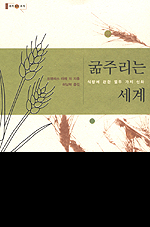
프란시스 무어 라페, 조지프 콜린스, 피터 로쎗, 루이스 에스빠르사, 식량과발전정책연구소 (지은이), 허남혁 (옮긴이) | 창비 | 2003-10-15 | 원제 World Hunger: Twelve Myths (1998년)
공유
URL


정가 15,000원
판매가 14,250원 (5%, 750원 할인) | 무이자 할부
마일리지
750점(5%) + 멤버십(3~1%) + 5만원이상 구매시 2,000점

세액절감액 650원 (도서구입비 소득공제 대상 및 조건 충족 시)


추가혜택 카드/간편결제 할인


이 책의 전자책 : 출간된 전자책이 없습니다.
출간알림 신청


반양장본 | 384쪽 | 152*223mm (A5신) | 538g | ISBN : 9788936485207


배송료 무료
수령예상일 지금 택배로 주문하면 2월 1일 출고

100.0% 최근 1주 확률
(중구 중림동 )


주문수량


장바구니 담기
바로구매
선물하기
보관함 담기


구매


8.2

Sales Point : 1,465


읽고 싶어요 (11명)
읽고 있어요 (2명)
읽었어요 (23명)


100자평 (3편)

리뷰 (10편)


알라딘에 팔기
회원에게 팔기

중고 등록 알림 신청

내 블로그에 상품정보 복사
1:1 문의


육식의 종말


더보기


- 2월 특별 선물! 알라딘 파우치 2019 Edition!
- 이 시간, 알라딘 굿즈 총집합!


국내도서 > 사회과학 > 사회문제 > 빈곤/불평등문제
국내도서 > 추천도서 > 외부/전문기관 추천도서 > 문화체육관광부 추천도서 > 2004년 > 사회과학


"누가할 수 있나? 빈민이 직접!"
"분명 먹을 것이 모자라서는 아니다.
지금 세계는 먹을 것으로 가득하다. 자연재해 탓도 아니다.
굶주림의 원인은 식량과 토지의 부족이 아니라 민주주의의 부족이다."

'푸드퍼스트'(Food First)라는 별칭으로 더 잘 알려진 식량과발전정책연구소(Institute for Food and Development Policy)에서 펴낸 세계의 빈곤문제를 지적한 책이다. 초판은 1986년에 출간되었고, 1998년에 개정판이 나왔다. 한국어판은 개정판을 번역한 것이다.

한국어판 서문에서 공동 저자인 피터 로쎗은 멕시코 깐쿤에서 스스로 생을 마감한 故 이경해 씨를 추모하고 있다. WTO 협상 결렬이라는 믿기지 않는 승리를 안겨 준 그의 희생은 굶주림을 종식시키려는 전세계 투쟁에 활력을 불어넣었다는 말도 함께 전하고 있다.

이 책은 굶주림의 원인으로 오해되곤 하는 12가지 국제적 변명에 대해서 조목조목 비판하고 있다. 자연재해나, 인구증가, 절대 식량 부족 때문에 굶주림이 발생하는 것은 아니며, 자유시장, 자유무역, 미국의 원조, 녹색혁명이 굶주림을 해결하지도 못한다고 지적한다.

가령, 미국의 경제원조는 몇 개 국가에 집중되어 있고, 대부분은 제3세계의 구조조정 정책을 강제하기 위한 수단으로 사용된다. 간혹 식량원조도 하지만 굶주림 해결을 위해서가 아니라 개발 용도로 재판매하는 조건일 때만 가능하다. 또 식량원조보다 더 빈번하게 행해지는 군사원조는 전세계의 무력분쟁에 간섭할 기회로 이용하며 이를 통해 '선량한 척' 온갖 악행은 다한다.

그렇다면, 굶주림의 진짜 원인은 무엇일까? 책은 말한다. "굶주림의 원인은 식량과 토지의 부족이 아니라 민주주의의 부족이다"고. 그 예로 멕시코를 들고 있다. 멕시코는 캐나다, 미국과 북미자유무역협정(NAFTA)을 맺은 이후 전통 작물인 옥수수의 생산력이 반으로 줄고, 농민들은 자신의 땅을 잃어버렸다.

또한 NAFTA 협정에 따라 취약 작물에 대한 정부 지원이 중단되어 울며 겨자먹기로 너나 할 것 없이 커피를 생산하게 되었는데 갑자기 늘어난 커피 생산량 때문에 커피값은 땅에 떨어지고, 옥수수 값은 천정부지로 솟았다. 예전에는 굶주리지 않았던 원주민들은 지금은 커피를 옆에 쌓아둔 채 배를 곯고 있다.

이 책을 읽어보면, 인구학자들이 그토록 우려하는 식량위기는 인구 증가 때문도 아니고 자유무역주의자들이 말하듯이 농산물을 개방된다고 해서 해결되는 것은 아님을 알게 된다. 또 경제가 성장한다고 해서 굶는 사람이 줄어드는 것도 아님을, 인구가 적다고 해서 굶는 사람이 없는 것도 아님을 깨닫게 된다.

수십 년간의 연구 끝에 굶주림의 원인을 밝혀낸 용기있는 '푸드퍼스트'(Food First) 활동가들이 아니었다면, '빈민 구제는 나랏님도 못한다'는 말을 지금까지 되뇌였을지 모른다. 분명, 굶주림은 구조적인 문제이며 자원의 민주적 배분의 문제이다.

이 책이 굶주림을 해결할 대안으로 '빈민들의 단결'을 제시하는 것은 사회구조의 문제는 당사자가 직접 제기할 수밖에 없음을 강조하기 위해서다. 국가의 복지 정책, 해외 원조 등은 일시적인 구조책일 뿐 영원히 굶주림으로부터 벗어나게 하지 못한다는 주장이 설득력있게 다가온다.

[빚을 내던져라! Drop the Debt]란 음반에서 세자리아 에보라와 떼오필루 쌍트르는 '껨 뽀데(누가할 수 있나?)'란 곡에서 이렇게 노래했다. "살아남으려 빵부스러기를 찾거나 / 사치 속에 사는 이들의 양심의 가책을 덜어주려 나온 / 얼마 안되는 자선에 매달리면서...... / 그래서 모든 사람은 스스로를 위하지만 / 하나님은 누구도 못 돌봐주는 것인가?"

세자리아 에보라가 이 책을 읽었다면, 굶주림의 탓을 하나님에게 돌리지 않고 빈민들이 스스로 타계해야 한다고 노래했을지도 모를 일이다. 다시 말하지만, 굶주림은 자원부족 때문이 아니다. 자원의 민주적 분배와 식량에 대한 접근성에 문제가 생길 때 일어난다. 문제를 제대로 파악할 때만이 해법도 있다.

ps. [빚을 내던져라!] 음반에는 짐바브웨 올리버 므투쿠드치의 '무리미 무누(농부)'란 듣기 좋은 곡도 있다. 가사는 아래와 같다.

"나라는 땅이야 농부는 사람이지 / 땅은 땅이라구 / 나라는 땅이야 땅이 나라를 만들지 / 농부는 사람이지 땅은 땅이야 / 농부 아저씨 괭이를 드세요 / 물도 주고 씨도 뿌리세요 / 농부 아저씨 괭이를 드세요..." - 최성혜(2003-10-16)


굶주림의 원인이 식량과 토지의 부족, 인구의 과잉이 아니라 민주주의 부족임을 치밀하게 분석한 책이다. 기근의 정치적.경제적 맥락을 해설하고 나아가 구체적인 대안까지 제시하고 있다. 또한 거대하고 복잡한 식량문제에 좀더 쉽게 접근할 수 있도록 흥미로운 형식으로 문제를 제기한다.

굶주림과 식량에 대해 잘못 알고 있는 상식, 즉 '신화'를 하나하나 설명하고 반박한다(부제는 '식량에 관한 열두 가지 신화'). 그중 가장 일반적인 신화는 굶주림이 자연재해 때문에 발생한다는 것이다. 그러나 기근은 식량에 대한 접근성에 문제가 생길 때 일어난다. 이처럼 기근이 인재라는 사실은 매우 중요하다. 빈민 자신이 문제해결을 위해 나설 수 있기 때문이다.


한국어판 서문
영문판 서문
일러두기

죄책감과 공포를 넘어서
첫번째 신화|식량이 충분치 않다
두번째 신화|자연 탓이다
세번째 신화|인구가 너무 많다
네번째 신화|식량이냐 환경이냐
다섯번째 신화|녹색혁명이 해결책이다
여섯번째 신화|정의냐 생산이냐
일곱번째 신화|자유시장이 굶주림을 끝낼 수 있다
여덟번째 신화|자유무역이 해답이다
아홉번째 신화|너무 굶주려서 저항할 힘도 없다
열번째 신화|미국의 원조가 굶주림 해결에 도움이 된다
열한번째 신화|그들이 굶주리면 우리가 이득을 본다
열두번째 신화|식량이냐 자유냐
굶주림에 대한 신화를 넘어서

출처와 참고문헌
참고도서 및 관련단체
옮긴이의 말
찾아보기


이 책을 추천한 다른 분들 :
중앙일보
- 중앙일보 2012년 11월 24일자 '책과 지식'



지은이 : 프란시스 무어 라페 (Frances Moore Lappe')
저자파일
최고의 작품 투표
신간알리미 신청
최근작 : <살아 있는 민주주의>,<희망의 경계>,<굶주리는 세계> … 총 34종 (모두보기)
소개 :
젊은 시절 세계에 식량이 넘쳐나는데도 굶주리는 사람들이 사라지지 않는 부조리에 대해 깨달은 뒤, 줄곧 ‘풍요로운 세계의 빈곤과 굶주림’에 관해 연구해 왔다. 그가 쓴 열여섯 권의 책은 20개가 넘는 언어로 번역되었고, 수많은 대학에서 교재로 읽힌다.
창립 32주년을 맞은 “푸드 퍼스트”와 “아메리칸 뉴스 서비스”의 공동 창립자며, “살아 있는 민주주의 센터”를 세웠다. “세계 미래 위원회”의 창립위원이며, 대안 노벨상으로 알려진 “올바른 삶을 기리는 상The Right Livelihood Award”을 받기도 했다. 2008년 ...


지은이 : 조지프 콜린스 (Joseph Collins)
저자파일
최고의 작품 투표
신간알리미 신청
최근작 : <굶주리는 세계> … 총 72종 (모두보기)
소개 : 국제발전문제 전문가이며 지은 책으로 <푸드퍼스트: 희소성의 신화를 넘어서>, <더이상 공짜 점심은 없다: 꾸바에서의 식량과 혁명>, <칠레의 자유시장 기적> 등이 있다.


지은이 : 피터 로쎗 (Peter Rosset)
저자파일
최고의 작품 투표
신간알리미 신청
최근작 : <식량주권>,<굶주리는 세계> … 총 12종 (모두보기)
소개 : 식품권리 운동가이자 농환경 보호론자며, 농촌지역개발 전문가다. 멕시코 농촌지역변화 연구소의 연구원으로 멕시코에 살고 있으며, LRAN(토지연구활동연대)의 책임자기도 하다. 또 미대륙연구소의 국제대안제휴위원이며 UC버클리의 환경과 학정책경영학부 초빙연구교수기도 하다.
지은 책으로 <조심스런 이야기: 중앙아메리카에서 미국의 발전정책의 실패>, <혁명의 녹화: 꾸바의 유기농업 혁명> 등이 있다.


지은이 : 루이스 에스빠르사 (Luis Esparza)
저자파일
최고의 작품 투표
신간알리미 신청
최근작 : <굶주리는 세계>
소개 : 멕시코국립자치대학 출신 지리학자로 UC 버클리 방문교수를 역임했으며 다수의 지리학 교과서를 집필했다.


지은이 : 식량과발전정책연구소 (Institute for Food and Development Policy)
저자파일
최고의 작품 투표
신간알리미 신청
최근작 : <굶주리는 세계>
소개 : 푸드퍼스트(Food First)로 잘 알려진 비영리 연구, 교육기관으로 1975년 미국 캘리포니아에 설립되어 미국과 전세계의 굶주림과 빈곤의 원인을 탐구하고, 이 문제를 대중과 정책결정자들에게 교육하는 일을 하고 있다.


옮긴이 : 허남혁
저자파일
최고의 작품 투표
신간알리미 신청
최근작 : <내가 먹는 것이 바로 나> … 총 22종 (모두보기)
소개 : 농업과 먹거리를 둘러싼 글로벌한 관계와 로컬에서의 대안에 관심을 쏟으며 연구하는 지리학자다. 지은 책으로 《내가 먹는 것이 바로 나: 사람·자연·사회를 살리는 먹거리 이야기》가 있고, 《로컬푸드》(공역) 《학교 급식 혁명》(공역) 《농업생명공학의 정치경제》 《먹거리정책》(공역) 등을 우리말로 옮겼다.




창비
도서 모두보기
신간알리미 신청
최근작 : <한 사람의 닫힌 문>,<노는 거라면 자다가도 벌떡>,<날마다 도서관을 상상해>등 총 2,434종
대표분야 : 국내창작동화 1위 (브랜드 지수 1,560,418점), 청소년 소설 1위 (브랜드 지수 632,260점), 여성학/젠더 1위 (브랜드 지수 125,885점)


읽고 싶어요 (11)
읽고 있어요 (2)
읽었어요 (23)


100자평

카테고리
스포일러 포함


현재 0 / 280byte (한글 140자 이내)
등록

글 작성 유의사항

구매자 (3)
전체 (3)

별점순
최신순
공감순

bookshelf 2009-08-13
굶주림에 대한 정확한 이야기.'빈곤'에 대한 좀더 정확한 이야기를 알고싶다면 일독 추천.
공감(5) 댓글(0)
오마르 2014-02-06
그동안 몰랐기때문에 충격적인 이야기는 아니다. 다만 애써 모르는척 하고 싶어지는 거기에 더해 해법을 알고 있지만 고치기 어렵다는 사실이 충격적인...
공감(0) 댓글(0)
africanist 2019-01-31
약 30페이지 읽으면서 숨이 턱턱 막혔다. 저자의 굶주리는 세계에 대한 적나라한 폭로 때문이 아닌 역자의 번역 때문이다. 번역 당시(10년도 더 전) 역자의 학력과 경력을 보았을 때 번역을 함에 있어 큰 고통이 따르지 않았을까...
공감(0) 댓글(0)
구매자 기준은


마이리뷰
쓰기

구매자 (2)
전체 (10)

별점순
최신순
공감순

죄책감과 공포를 넘어서
낮달 2006-01-04


죄책감과 공포를 넘어서


'세상에서 가장 비싼 책'은 '사서 읽지 않고 서가에 모셔 놓은 책'이라 한다. 그런 뜻에서라면 지난 연말에야 마저 읽게 된 책, "굶주리는 세계"의 값은 꽤나 나가는 셈이다. 책을 사면 속표지의 여백에다 구입한 날짜와 서명을 해 두는 것은 오래된 습관인데, 거기엔 '040127'이라 적혀 있으니, 이 책을 다 읽는 데는 한 달이 모자라는 2년이 걸렸다.


'식량에 관한 열두 가지 신화'라는 부제를 단 이 책의 저자는 '미국과 전세계의 굶주림과 빈곤의 원인을 탐구하고 이 문제를 대중과 정책결정자에게 교육하는 일을 하고 있는, 푸드퍼스트(Food First)로 잘 알려진 비영리 연구·교육기관'인 식량과 발전정책 연구소(Institute for Food and Development Policy)와 이 기관 소속이거나 관련 연구를 하고 있는 학자들이다.


'죄책감과 공포를 넘어서'라는 제목을 단 서장에서 현재 거의 8억에 가까운 사람들이 고통 받고 있는 '굶주림'을 '불가능한 선택이 주는 고통'으로 정의하면서 그것은 '굴욕적인 삶'이며, '공포'를 강요한다고 지적한다. 그리고 '풍요로운 세계에 굶주리는 사람이 존재하는 이유'를 찾아왔지만, '가장 기본적인 문제, 즉 누구나 살아가는 데 필요한 먹을 것을 어떻게 보장할 것인가 하는 문제를 해결하기 전에는 우리 스스로를 완전한 인간으로 간주할 수 없다'고 역설한다. 적어도 굶주림의 문제를 해결하지 못하면서 인간은 그 윤리에 대해서 말할 자격이 없다고 보고 있는 것이다.


이 책은 미국을 비롯, 전세계에 만연하고 있는 빈곤과 굶주림의 원인을 다음과 같이 명쾌하게 분석한다.

"분명 먹을 것이 모자라서는 아니다. 지금 세계는 먹을 것으로 가득하다. 자연재해 탓도 아니다. 굶주림의 원인의 식량과 토지의 부족이 아니라 민주주의의 부족이다."

그러면서 굶주림의 원인과 현상을 기술하는 데 있어서 '몇몇은 편파적이고 사실이 아니'며 '현실적 해법을 찾는 데 장애가 된'다고 보면서 이러한 '잘못된 원리'를 '신화'라고 부른다. 그리고 그 신화는 대체로 열두 가지로 압축되는데(1986년 초판에서는 '열 가지 신화') 그것을 거칠게 정리하면 아래와 같이 요약할 수 있다.

첫 번째 신화 식량이 충분치 않다

식량을 생산할 수 있는 가용자원이 한계에 달해 충분한 식량을 공급할 수 없다는 주장인 바, 오늘날 세계는 지구상의 모든 사람들에게 하루에 3,500칼로리를 공급할 수 있을 만큼의 곡물을 생산한다. 개발도상국에서 영양실조에 걸린 5세 이하 어린이들 중 78%가 식량이 남아도는 나라에 살고 있다. 세계에서 가장 부유한 국가, 미국에는 3천만 명이 넘는 사람들이 건강한 식사를 감당할 힘이 없다. 미국 어린이 중 8.5%가 실제로 굶주리고 있으며, 20.1%는 굶주림의 위협에 처해 있다.

두 번째 신화 자연 탓이다

가뭄, 홍수 등 인간의 통제력을 벗어난 자연재해들이 기근을 발생시킨다는 주장이다. '감자 대기근'으로 1백만 명의 희생자를 낸 아일랜드는 그 당시 식량수출국이었다. 자연에 대한 통제력을 늘여나간 현재에 오히려 그 전 시대보다 재해의 취약성이 더 커지고 있다. 자연재해가 원인이 아니라, 다만 그것은 굶주린 사람들에게 최후의 일격을 날릴 뿐이다.


▲ Food First의 홈페이지


세 번째 신화 인구가 너무 많다

멜서스 이래 많은 학자들이 '인구폭발'로 인한 재앙을 경고했지만, 현실은 역설적으로 진행되었다. 실제 굶주림이 상존하는 제3세계를 대상으로 한 연구에서도 '급속한 인구 증가가 굶주림을 발생시킨다'는 어떠한 증거도 찾지 못했다. 그러나 그것은, 굶주림과 마찬가지로 다수 빈곤층, 특히 아이를 적게 낳겠다는 선택에 필요한 안정과 경제적 기회를 여성에게서 빼앗아가는 사회적 불평등의 결과이다. 높은 출생률은 강요된 빈곤에 대한 방어적 대응이다.

네 번째 신화 식량이나 환경이냐

굶주리는 사람들을 먹여 살리기 위해서 토양침식이 우려되는 한계토지에서까지 농작물과 가축을 생산하고 열대우림을 파괴하며, 농약으로 환경을 파괴하고 있다는 주장이다. 그러나 왜 농민들이 생산성이 좋은 농지를 두고 경작되어서는 안 될 땅과 열대우림으로 옮겨가는가, 농약은 누구에 의해 확산되는가에 대한 질문은 생략되어 있다. 정답은 거대 사업자들. 필리핀과 니카라과를 비극의 땅으로 만든 건 다국적 기업 돌(Dole)과 미국 농장주들이었다.

다섯 번째 신화 녹색혁명이 해결책이다

생산증대에만 협소하게 초점을 맞추면 토지에 대한 접근성과 구매력에 관한 집중구조를 바꾸지 못하기 때문에 굶주림을 줄일 수 없다. 기술의 혜택을 어떻게 배분할 것인가 하는 사회문제를 해결하지 않고 새로운 농업기술을 도입하는 것은 불평등만 심화될 뿐이다. 식량을 생산할 토지나 구입할 돈이 없는 사람에게는 굶주림은 해결될 수 없는 것이다.

여섯 번째 신화 정의냐 생산이냐

토지개혁은 대규모 생산자들의 식량 수확을 줄어들게 할 것이며, 결국은 굶주린 사람들을 더욱 어렵게 만들 것이라는 논리다. 그러나 '정의'와 '생산'은 서로 경쟁하는 목표가 아니라 상호보완적이다. 주장과 달리 '소농들이 대농들보다 더 집약적으로 작업하기 때문에 생산성이 더 높다.' 전통적인 영농체계는 생산에 소비된 칼로리당 5~15배의 칼로리를 생산하는 반면에, 미국 같은 자본집약적 체계에서는 10칼로리를 써서 1칼로리만을 생산해 낸다. 브라질의 무토지 농민운동(MST)은 아래로부터 시작된 토지개혁에 대한 요구운동이다.


▲ 브라질 무토지 농민운동 MST(Movimento dos Trabalhadores Rurais Sem Terra)의 깃발

일곱 번째 신화 자유시장이 굶주림을 끝낼 수 있다

그러나 내버려 두면 시장은 단지 부와 소득의 불평등을 반영할 따름이다. 시장은 개인의 필요에 반응하는 게 아니라 돈에 반응하고, 생산에 드는 사회적 비용과 자원비용에 대해 무관심하다. 시장은 먹을 것을 가장 절실히 필요로 하는 사람들에게 그것을 전달하지 않는 것이다.

여덟 번째 신화 자유무역이 해답이다

수출로 번 돈으로 빈곤을 줄일 수 있는 물건을 수입할 수 있다는 주장이다. 그러나 수출이 굶주림을 끝내지는 않는다. 수출에서 이윤을 얻는 사람들은 가난하지 않고, 가난한 이들을 위해 자신의 이익을 쓰지 않으며, 수출 농업이 식량 작물을 대체하면서 식량작물을 재배하는 소농들을 몰아내 버리기 때문이다. 미국 소비자가 온두라스의 멜론에 지출하는 1달러 가운데 9센트가 온두라스에 돌아오는데 그 중 농민들의 손에 들어가는 것은 2센트도 안 된다. 가장 큰 이익은 보는 것은 미국에 근거를 둔 중개업자, 도소매업자들인 것이다.

아홉 번째 신화 너무 굶주려서 저항할 힘도 없다

빈민들은 자신을 억압하는 현실에 무지하고 수동적인 상태에 놓여 있어 변화를 일으킬 수 없다는 논리다. 그러나 빈민들은 '경제체제의 작동에 대하여 알고 있으며 착취가 일어나는 과정(임금 착취, 정치차금 공여, 뇌물, 가격 차별)을 상세히 설명할 수 있다.' 그들은 수동적이고 무력하지 않을 뿐 아니라, 자신들보다는 덜 가난하지만 역시 불공평하고 비민주적인 경제정책으로 고통받고 있는 사람들에게 손을 뻗치고 이들을 변혁의 대열에 동참시키고 있다.' 멕시코의 사파티스타 민족해방군의 활동이나 브라질의 무토지 농민운동은 그 본보기다.


▲ 브라질 무토지 농민운동

열 번째 신화 미국의 원조가 굶주림 해결에 도움이 된다

그러나 미국 대외원조의 목표는 '공산주의의 위협에 맞서 자유를 수호하는 것'이었고, 나중에는 '자유시장과 자유무역의 증진'으로 옮겨갔다. 그리고 미국의 식량 원조는 굶주림의 해결을 목표로 하지 않으며, 90년대 총원조의 5%만이 긴급구호용이었다. 원조는 실제 농업발전을 저해하기도 했다. 보조금을 등에 업은 값싼, 혹은 공짜 미국 곡물은 지역에서 생산된 식량 가격을 떨어뜨림으로써 지역 농민들을 농토에서 도시로 내모는 역할을 한다. 한국에 대한 미국의 원조는 한국을 세계 제 3위의 미국농산물 수입국이 되게 하고, 밀에 대한 수요를 창출해 한국인들의 식습관을 급격하게 바꾸어 놓았다.

열한 번째 신화 그들이 굶주리면 우리가 이득을 본다

굶주린 사람들이 저임금 노동에 종사해야 우리가 커피, 바나나에서 배터리와 컴퓨터에 이르는 모든 물건을 헐값에 살 수 있다는 논리이다. 그러나 실제는 정반대이다. 우리의 복지를 위협하는 것은 굶주림을 개선하는 것이 아니라 굶주린 사람들이 계속 궁핍한 상태에 있는 것이다.


▲ 멕시코 사파티스타의 노전사

열두 번째 신화 식량이냐 자유냐

굶주림의 종식을 위해서는 사회에 급진적 변화가 일어날 수밖에 없는데, 그럴 경우 사람들의 자유가 줄어들 것이라는 논리이다. 그러나 시민적 자유가 보호되는 사회에서 더 쉽게 굶주림을 끝낼 수 있다. 여기서 자유란 '다른 사람은 아랑곳하지 않고 하고 싶은 대로 하는 것'이 아니라, '우리의 생각을 말하고 함께 뭉치고, 억압과 착취, 부당한 차별에서 벗어나고 굶주림에서 해방되는 것'이어야 한다. "우리 사회가 생계권을 보호하지 못한다는 것은 사회의 모든 구성원들이 빈곤과 굶주림으로 고통받고 있는 사람들의 지적 발전, 정신적 통찰, 음악적 재능, 육체적 성취를 박탈하고 있는 것"이다.


이 책은 결론적으로 '자본주의와 국가주의라는 거대 이념의 경제적 독단'을 캐묻는다. 그리하여 "두 이념은 독단이 되어 우리가 간직하고 있는 가장 근본적인 인간적 가치들을 타락시킨다. 도처에 널린 굶주림은 이러한 타락을 보여주는 가장 비극적인 증거 "라고 일갈한다. 그리고 "자유를 사랑하는 모든 사람들이 존엄하게 사는 데 필요한 자원에 대한 권리를 확립하고 나아가 자유를 더 확산시키기"를 우리의 책임으로 이해한다.


근 2년에 걸쳐 찔끔찔끔 읽다가 간신히 완독한 책이지만, 책을 덮으면서 이 책이 가진 문제의식과 그에 대한 집요한 천착, 그리고 결론을 이끌어내는 도덕적, 윤리적 논리 앞에서 놀라움을 금할 수 없었다. 정말 놀라운 책이야, 그런데 왜 난 이걸 붙들고 2년이나 씨름을 한 거지?


모두 384쪽의 만만찮은 두께 탓은 아니었던 듯하다. 아마 처음 이 책을 펴면서 나는 그것을 관념과 이론의 문제로만 바라보지 않았던가 싶다. 사회과학 서적을 펼 때마다 가슴을 짓누르는 압박감 탓도 있었으리라. 모든 모순은 그것 자체로 존재하는 것이 아니라 한 시대와 사회의 존재 방식과 밀접하게 관련되어 있다는 것을 확인하는 것은 씁쓸하다.


이 책의 미덕은 각 장마다 별지로 우리의 농업 현실과 과제들을 자료 등의 방식으로 삽입하고 있다는 점에도 있다. 재생지로 만들어서 아주 가볍다는 것도 미덕이다. 중요한 대목마다 푸른색 펜으로 밑줄을 그을 때 펜이 잘 미끄러지지 않는 점은 별로지만 안방에 큰 대 자로 누워 읽어도 팔이 아프지 않는 점은 그걸 상쇄하고도 남는다.


▲ 경찰의 폭력에 의해 희생된 두 농민. 인터넷에서 가져온 사진이다.

이 책의 한국어판 서문은 "한국의 농민들과 고 이경해 씨에게 바친다."로 시작되고, '그의 정신은 굶주림을 종식시키려는 전세계의 투쟁에 활력을 불어넣고 있다'며, "우리는 이 한국어판 서문을 이 투쟁에 삼가 바치고자 한다."로 끝난다. 고 이경해 씨는 2003년 멕시코 칸쿤에서 신자유주의와 무역자유화 정책에 항의하면서 스스로 목숨을 끊은 농민운동가이다.


그리고 2005년 한국에서는 농민들의 격렬한 반대에도 불구하고 '쌀 관세화 유예협상 비준동의안'이 국회를 통과했고 이에 항의, 시위를 벌이던 두 농민이 경찰의 폭력에 희생되었다. 그에 대한 여론의 질타 앞에 경찰청장이 사퇴했는데, 이를 두고 한 논객은 "한 인간의 존엄이나 생명의 가치는 대한민국 모든 고위공직자의 자리를 합해놓은 것보다 훨씬 무겁다."고 말했다.

세계 십몇 위의 경제력을 자랑한다고 하지만, 오늘의 우리 농업과 농촌 문제는 여전히 현재 진행형이고 그 앞에 우리는 한없이 왜소해지기만 하고 있다.


< 2006. 1. 4 >


공감(22) 댓글(5)
신자유주의는 농민들의 피를 빨고 자란다 - 굶주리는 세계
한깨짱 2010-06-28


앞선 리뷰 'MB노믹스를 까고 싶다면 이 책을 봐라 - 장하준의 나쁜 사마리아인'편에서 나는 이미 신자유주의의 요점과 그것이 개발도상국의 경제를 지배하는 수법에 대해 설명한 바 있다. '굶주리는 세계'는 그 중에서도 농업과 관계맺는 점들을 살펴 그 폐해를 밝히는 책으로 신자유주의 체제하에서 개발도상국의 국민들이 실제로 겪는 신체적, 경제적 착취를 설명하는데 초점이 맞춰져 있다.

따라서 신자유주의에 대한 거시적 관점은 '나쁜 사마리아인'에서, 실제 피해 사례와 고통의 규모를 파악하는데는 '굶주리는 세계'를 읽는 것이 신자유주의에 대한 폭넓은 이해를
가능하게 한다고 볼 수 있다.

신자유주의 체제하에서 농업국들의 피해는 참혹하다. 정확히 말하면 농업국의 피해가 아니라 농업국에 살고 있는 농민들의 피해다. 문제의 요점을 살펴보자.

신자유주의는 농업국을 농업국으로, 공업국을 공업국으로 영원히 유지하려는 목표를 갖고 있다. 그런데 농업국이 농업 수출국이 되기위해선 팔리는 작물을 심어야 한다. 이것을 환금 작물이라 부른다. 한편 이 환금 작물은 주로 대규모로 재배된다. 어떤 산업이든 규모의 경제를 유지해야 가격 경쟁력을 갖출 수 있기 때문이다.

그런데 이런 대규모 사업은 일반 농부들이 할 수 있는 것이 아니다. 당연 대지주나 대기업, 즉 소수의 부자들만이 가능한 사업이다. 바로 여기서 농민들의 비극이 시작된다.

신자유주의 이전의 시대에는 자영농이나 혹은 소작농들이 식량으로 쓸 수 있는 곡물들을 재배하며 그나마 먹고 사는 것이 가능했다. 그러나 신자유주의 체제가 들어서고 대기업과 지주들이 토지를 독점하게 되면 땅은 더이상 먹을 것과 입을 것을 마련해 주던 삶의 터전이 아니다. 기업의 관심은 오로지 단위 면적당 이익이다. 그들에겐 팔리지 않는 곡물을 심어 땅을 낭비할 여유가 없는 것이다. 그래서 온 국토의 논과 밭은 환금 작물로 도배된다. 이 과정에서 땅을 잃거나 더이상 농사로 삶을 유지하기 힘든 농민들은 전부 일용직 노동자가 되어 대기업들의 농장에서 하루 종일 착취 당한다.

그러나 그들이 얻는 노동의 대가는 말하기 민망할 정도다. 자녀들의 교육 문화 비용을 감당하기는 커녕 천정 부지로 오른 곡물 값 때문에 식량을 구하기조차 힘들다. 농토가 환금 작물로 도배되는 바람에 주식이 되는 곡물들이 씨가 마른 탓이다. 수입 곡물을 사먹으면 된다는 말은 빵대신 고기를 먹자는 마리 앙투와네트의 말만큼 무심하다.

재앙이 여기서 그친다면 행복한 일이다. 농사를 짓기 위해선 많은 양의 비료와 농약이 필요하다. 그리고 이 농업국들에게 비료와 농약을 제공하는 것이 바로 선진국의 화학 기업들이다. 개발도상국의 농장은 선진국의 화학 기업들에게 값싸며 문제를 만들지 않는 실험장이다. 온갖 독극물로 제조된 농약들은 개도국으로 운반되고 이것들은 변변한 보호장구도 없이 사람에 의해 뿌려진다. 막대한 화학 물질에 맨 몸이 노출 되는 것은 물론 일용직 노동자가 된 농민들이다.

이제 굶주리는 세계는 농민들의 피로 범람한다. 신자유주의는 그 피를 양분으로 무럭무럭 자라나는 지옥의 대마왕이다.

'굶주리는 세계'는 이 땅에 한 끼 밥 조차 챙겨 먹지 못하는 빈자들이 넘치는 이유를 다양한 사례를 들어 제시한다. 그곳엔 무의미한 외침과 선언, 이데올로기가 아니라 정확한 통계와 구체적 수치가 존재한다. 그 수치 속에서 우리가 알아낼 수 있는 것은 굶주림이란 결국 우리가 스스로 만들어 낸 것이라는 사실. 그러므로 그 해결 또한 우리의 손에 달려 있다는 것이다.

만약 이 모든 것들이 현재의 당신과 아무런 관계가 없다고 믿는다면 조만간 농약 앞에 서게 될 사람은 제 3세계의 농민들이 아니라 당신 자신이 될 것이다. 부자들의 톱니바퀴는 이 세상의 모든 사람들을 밟아 없앨때까지 결코 멈추지 않을 테니까.