
Fox Girl Paperback – 25 March 2003
by Nora Okja Keller (Author)
4.8 out of 5 stars 31 ratings
Paperback
$30.26
11 New from $28.98
Nora Okja Keller, the acclaimed author of Comfort Woman, tells the shocking story of a group of young people abandoned after the Korean War. At the center of the tale are two teenage girls--Hyun Jin and Sookie, a teenage prostitute kept by an American soldier--who form a makeshift family with Lobetto, a lost boy who scrapes together a living running errands and pimping for neighborhood girls. Both horrifying and moving, Fox Girl at once reveals another layer of war's human detritus and the fierce love between a mother and daughter.
Read less
Print length
336 pages
======
Product description
Review
In words that pulse with life, Keller illuminates the lives of children caught between two worlds with a vividness that lightens their dark circumstances. --The Miami Herald
[Keller's] lyricism makes even the most disturbing scenes eerily beautiful, and gives women who continue to suffer the cruelest fates a much-needed voice. --San Francisco Chronicle
About the Author
Nora Okja Keller was born in Seoul, Korea, and now lives in Hawaii with her husband and two daughters. She received the Pushcart Prize in 1995 for Mother Tongue, a piece from her first novel, Comfort Woman, winner of a 1998 American Book Award.
Customer reviews
4.8 out of 5 stars
======
BOOKSHELF
A powerful though gently paced story that will be forgiven for occasionally falling into melodrama.
BY NORA OKJA KELLER ‧
RELEASE DATE: APRIL 1, 2002
Keller (the much-lauded Comfort Woman, 1997) follows the fortunes of two teenaged girls dragged into prostitution in an American Town ghetto created to service GIs in the wake of the Korean War.
Hyun Jin and Sookie are best girlfriends in late-’60s Chollak, Korea, united by their ugliness, whether physical or moral: one side of Hyun Jin’s face is marked by a disfiguring birthmark, bringing her derision despite the relative financial security that her parents’ sweets shop affords; and Sookie is the fatherless daughter of a local hard-going prostitute whose fortunes only improve when she secures an American “uncle” from the local base.
While Hyun Jin works hard to be first in school, enjoying the favor of her father, Sookie scavenges the much-coveted American junk food left over by her mother’s “darkies.” When her mother disappears, leaving Sookie without money or protection, the girls skip school to search for her, first at Dr. Pak’s Love Clinic No. 5, where the prostitutes must check in for VD exams, then at the notorious Monkey House, where the more serious cases are sent to get “fixed up.”
From here, the slide into prostitution is predictably heart-wrenching, since Sookie has nowhere to go but the clubs where GIs are entertained, and Hyun Jin, thrown out of her home, takes refuge with her childhood friend-turned-pimp, Lobetto, who still hopes pathetically that his African-American father will return to claim him and his mother. Keller creates a tight, unself-pitying microcosm of outcasts so bedazzled by American culture that even rape and infanticide are tolerated on the way to a better life. Hyun Jin is a strong, capable character, and the reader is continually appalled by her misjudgments, hoping somehow she will escape her “bad blood” origins and transform herself into the “fox girl” of Korean legend.
A powerful though gently paced story that will be forgiven for occasionally falling into melodrama.
Pub Date: April 1, 2002
Review Posted Online: May 20, 2010
Kirkus Reviews Issue: Feb. 1, 2002
===
Cold comfort
Nora Okja Keller's haunting evocation of life in Korea, Fox Girl, leaves Maureen Freely wanting more
Fox Girl by Nora Okja Keller
A fox girl is a Korean vampire who uses a dead girl's skin to turn herself into a beautiful woman that no man can resist. After seducing her victims, she sucks out their blood. The standard accounts don't ask why, but according to Duk Hee, a "comfort woman" servicing American GIs, the fox girl is hunting for the "clean-faced boy" who robbed her of the jewel she kept hidden under her tongue. She is prepared to do anything to get it back.
A daunting task - especially in America Town, where hundreds of desperate women work the snakes and ladders of organised prostitution. The lucky ones find GIs who want to marry them. Others set up house with their American lovers and bear them children, only to be abandoned. "Young sexies" who don't find a way out before they turn into older sexies end up in the "fishtanks" bordering the clubs.
Sooner or later, most women do time at the Monkey House. All prostitutes are registered and subjected to weekly health checks. If they're found to have VD they're carted straight off to a hospital that could pass for a prison. When Duk Hee's visit to Dr Pak's Love Clinic No 5 ends in this fashion, no one worries about Sookie, her 14-year-old daughter, who takes up with her mother's GI boyfriend in order to survive. Duk Hee emerges from the Monkey House to find she's lost her flat and her meal ticket. Off she goes to find herself a fishtank.
All this is related by Hyun Jin, Sookie's appalled best friend. Hyun Jin has prospects - her parents are married shopowners - but then they disown her, and before long she, too, is down at the Club Fox a, "honeymooning" GIs in the back booths and doing just about anything the customers want on stage.
This is not, in other words, the Korea you got to know and love in M*A*S*H . As a portrait of a nation occupied and ravaged by a friendly foreign army, Fox Girl is subtle and devastating. It is strongest in its early chapters, when Hyun Jin and Sookie are astute child-observers of their strange world. They are already in thrall to American consumer culture: they, too, crave Cokes and chocolate chip cookies, and the more processed miracles they see, the more they want. This larger view vanishes once Hyun Jin becomes a prostitute. She survives by dissociating, which seems a plausible response, but it weakens her as a narrator. Her real self is elsewhere, and not even a happy ending will bring her back.
Comfort Woman, Nora Okja Keller's first novel (described by her publishers as "very autobiographical"), begins where this one ends. The people aren't the same, but the main character is a comfort woman who is haunted by the ghost of her former self. It made it on to the Orange prize longlist, as has Fox Girl. Both novels deserve the honour, and not just because they describe a world that American writers have, as some tactful critics put it, left "underdescribed".
Salvation, in both books, means finding a way into the United States. But what does it mean to be saved by the very people who exploited you? This is the under-articulated question haunting Keller's every line. For all its virtues, her second novel has the aura of a stalling device. It's as if she has gone deeper into the past to put off writing the larger, more dangerous novel that will make or break her. I hope she finds the courage to write that book next.
· Maureen Freely's books include The Parent Trap (Virago)
===
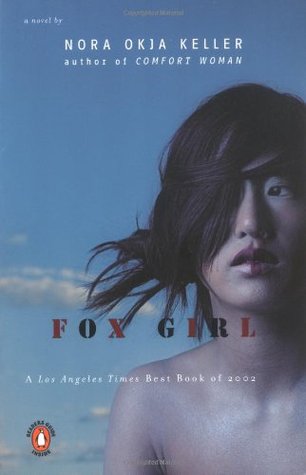
Fox Girl
by Nora Okja Keller
Fox Girl
by Nora Okja Keller
3.74 · Rating details · 696 ratings · 80 reviews
Nora Okja Keller, the acclaimed author of Comfort Woman, tells the shocking story of a group of young people abandoned after the Korean War. At the center of the tale are two teenage girls—Hyun Jin and Sookie, a teenage prostitute kept by an American soldier—who form a makeshift family with Lobetto, a lost boy who scrapes together a living running errands and pimping for n ...more

Read this for school.
It was kind of all over the place; I felt like I was reading the script to a soap opera. Everyone in my class was saying that the book was harrowing and they were disturbed, but I just ?? ??? did not feel anything. I hated all the characters as well, who were all just horrible to each other, even when there was no reason to be.
And the ending. The ending just didn't match the rest of the book at all, and it felt like the stereotypical western "happy ending." (less)
It was kind of all over the place; I felt like I was reading the script to a soap opera. Everyone in my class was saying that the book was harrowing and they were disturbed, but I just ?? ??? did not feel anything. I hated all the characters as well, who were all just horrible to each other, even when there was no reason to be.
And the ending. The ending just didn't match the rest of the book at all, and it felt like the stereotypical western "happy ending." (less)

Oh, my god.
This book was rough. I don't mean it was bad--quite the opposite. It was heavy. Soul-heavy. You know those books that seem to rip at the fiber of your being and remind you that humanity maybe isn't the best thing ever? Like you read it and it's so gritty you kinda just want to take a shower? I raise you Fox Girl.
Fox Girl is a novel set in Korea in the 60s. It follows a cast of characters in America Town - a slum outside of an army base - and painstakingly details just what it was like, from the prevalence of alcoholism and prostitution to the complexity of racism and class struggle.
As I read this book, I kept thinking back to Pachinko, by Min Jin Lee. Although they're written nearly 14 years apart and the books take place in different countries, I feel like these two novels could be sister works and I think my reception of this book would have been very different if I hadn't read Pachinko first.
If you've haven't heard of or read Pachinko, let me give you a quick synopsis: it's a dynastic tale starting back when Japan was colonizing Korea, and ending in 1989. It follows a Korean family who emigrates to Japan and details all of their struggles. Like Fox Girl, it's an amazing story and I recommend both works. What separates the two novels is that in Pachinko, the really gory details are glossed over and left out. There's 2 characters who are rumored to be taken as comfort girls, but it's never even confirmed that's there fate.
Fox Girl is the perfect mirror. There's characters who make it out of America Town and into something better, but you never see them firsthand. Instead, you're painted a crystal-clear image of the awful situation within the slum. From the trip to the Monkey House to seeing Duk Hee in the windowed room barely able to recognize her own daughter, Fox Girl doesn't hold back. I would almost argue it's transgressive lit: instead of upholding humanity, instead of displaying hope or saying "here's the good thing about us" it tells the raw truth. Racism is ingrained. Cycles are repeated. People can harbor deeply-rooted hatred and do wicked things without batting an eye. Sometimes there isn't a happy ending. Sometimes, we're selfish and we choose to turn a blind eye or steal from those who are truly in need.
I think it's an important lesson to hear and an important story to read. Is it a bitter pill to swallow? Absolutely. Does it fill you with hope and wholesomeness like Pachinko will? Not really. But I think this book makes for perfect follow up reading. And if you've read this but haven't read the other, I'd recommend that, too. There's something to be learned from reading about the dark underbelly of things. (less)
This book was rough. I don't mean it was bad--quite the opposite. It was heavy. Soul-heavy. You know those books that seem to rip at the fiber of your being and remind you that humanity maybe isn't the best thing ever? Like you read it and it's so gritty you kinda just want to take a shower? I raise you Fox Girl.
Fox Girl is a novel set in Korea in the 60s. It follows a cast of characters in America Town - a slum outside of an army base - and painstakingly details just what it was like, from the prevalence of alcoholism and prostitution to the complexity of racism and class struggle.
As I read this book, I kept thinking back to Pachinko, by Min Jin Lee. Although they're written nearly 14 years apart and the books take place in different countries, I feel like these two novels could be sister works and I think my reception of this book would have been very different if I hadn't read Pachinko first.
If you've haven't heard of or read Pachinko, let me give you a quick synopsis: it's a dynastic tale starting back when Japan was colonizing Korea, and ending in 1989. It follows a Korean family who emigrates to Japan and details all of their struggles. Like Fox Girl, it's an amazing story and I recommend both works. What separates the two novels is that in Pachinko, the really gory details are glossed over and left out. There's 2 characters who are rumored to be taken as comfort girls, but it's never even confirmed that's there fate.
Fox Girl is the perfect mirror. There's characters who make it out of America Town and into something better, but you never see them firsthand. Instead, you're painted a crystal-clear image of the awful situation within the slum. From the trip to the Monkey House to seeing Duk Hee in the windowed room barely able to recognize her own daughter, Fox Girl doesn't hold back. I would almost argue it's transgressive lit: instead of upholding humanity, instead of displaying hope or saying "here's the good thing about us" it tells the raw truth. Racism is ingrained. Cycles are repeated. People can harbor deeply-rooted hatred and do wicked things without batting an eye. Sometimes there isn't a happy ending. Sometimes, we're selfish and we choose to turn a blind eye or steal from those who are truly in need.
I think it's an important lesson to hear and an important story to read. Is it a bitter pill to swallow? Absolutely. Does it fill you with hope and wholesomeness like Pachinko will? Not really. But I think this book makes for perfect follow up reading. And if you've read this but haven't read the other, I'd recommend that, too. There's something to be learned from reading about the dark underbelly of things. (less)

Apr 06, 2011Emma Deplores Goodreads Censorship rated it liked it
Shelves: south-korea, world-books-challenge, 3-stars, op-ed-books, korea
Fox Girl is a brilliant "awareness novel", transporting the reader to 1960s Korea, where women trapped in a culture of prostitution struggle to survive in "America Town," serving the American soldiers on the local base. Narrated by the teenage Hyun Jin and focusing mainly on herself and friends Sookie and Lobetto, it shows how multiple generations are trapped into a cycle of exploitation, especially children of prostitutes and American soldiers. The characters and their lives are realistic; clearly, the author knows of what she writes.
Still, an exposé doesn't automatically make a great novel, and there were a few problems that prevent me from recommending it wholeheartedly. The most irritating while I was reading was the problem of time: the story covers several years, during which the lead female characters become involved in prostitution, get pregnant, etc... and we never know how old they are at any given time! The prologue presents Sookie's age at a couple of key moments, but this information doesn't fit with the amount of time that seems to have elapsed in the text, and it's unclear how old everyone else is in relation to Sookie--she and Hyun Jin appear to be the same age at the beginning, until about 1/3 of the way in, when we discover that Sookie is two years older... although she claims to remember Hyun Jin's birth, which she could not have if she was two. And so forth. This was a problem for me throughout the book, although other readers might not be bothered.
Then there was the fact that all the main characters were just plain unlikable. Now, I know, they were prostitutes and pimps, they were leading rough lives, and they seemed quite realistic as they were. Still, the author seemed to be going out of her way to make them seem unpleasant, which made it hard for me to care about their struggles; I would have had more sympathy for Hyun Jin if the author hadn't spent the first 100 pages showing us what an insensitive friend she was and how she bullied other kids. And the early scene where her parents kicked her out seemed random and contrived. There were some other minor issues as well: Korean words were used without any translation, and continuity problems (Hyun Jin commenting on the relationship between Sookie and Lobetto only to be surprised later on by what she already knew, etc.).
I've written a lot criticizing this book, but I agree with a lot of the things the positive reviewers have stated: if you're looking for a gritty, realistic book (and I mean seriously gritty; expect group sex, bestiality, etc., to be described in some detail) about the lives of Korean prostitutes, this is your book. Just don't say I didn't warn you. (less)
Still, an exposé doesn't automatically make a great novel, and there were a few problems that prevent me from recommending it wholeheartedly. The most irritating while I was reading was the problem of time: the story covers several years, during which the lead female characters become involved in prostitution, get pregnant, etc... and we never know how old they are at any given time! The prologue presents Sookie's age at a couple of key moments, but this information doesn't fit with the amount of time that seems to have elapsed in the text, and it's unclear how old everyone else is in relation to Sookie--she and Hyun Jin appear to be the same age at the beginning, until about 1/3 of the way in, when we discover that Sookie is two years older... although she claims to remember Hyun Jin's birth, which she could not have if she was two. And so forth. This was a problem for me throughout the book, although other readers might not be bothered.
Then there was the fact that all the main characters were just plain unlikable. Now, I know, they were prostitutes and pimps, they were leading rough lives, and they seemed quite realistic as they were. Still, the author seemed to be going out of her way to make them seem unpleasant, which made it hard for me to care about their struggles; I would have had more sympathy for Hyun Jin if the author hadn't spent the first 100 pages showing us what an insensitive friend she was and how she bullied other kids. And the early scene where her parents kicked her out seemed random and contrived. There were some other minor issues as well: Korean words were used without any translation, and continuity problems (Hyun Jin commenting on the relationship between Sookie and Lobetto only to be surprised later on by what she already knew, etc.).
I've written a lot criticizing this book, but I agree with a lot of the things the positive reviewers have stated: if you're looking for a gritty, realistic book (and I mean seriously gritty; expect group sex, bestiality, etc., to be described in some detail) about the lives of Korean prostitutes, this is your book. Just don't say I didn't warn you. (less)

Nov 22, 2017Ming rated it liked it
This book has some beautiful writing. The story is one depressing reading experience. Absolutely a downer.
Professor Elaine Kim asserted that the first significant waves of Korean immigrants to the U.S. were able to immigrate because of their connections (often, in marriages) to members of the U.S. military. Given this story and what these women had to do to "avail" themselves to U.S. soldiers (and to possibly become wives), I'm all the more depressed.
Two quotes:
"In a way, Sookie did move in with us. Something like her shadow breathed through the empty spaces of our home. Her presence was felt in the absence of small foodstuffs, in the secrets and suspicions left unsaid, in the guilt that caused my father to boil eggs two at a time."
"And then it was as if those long-limbed vines in the hothouses burst through the seams, whipped around my head, and yanked. Eye rolling up in to my head, I dropped on all fours, ears pressed to earth, and heard the world singing like crickets, with that in-and-out beat of the tides, of the blood in our veins, and I knew that it was all over." (less)
Professor Elaine Kim asserted that the first significant waves of Korean immigrants to the U.S. were able to immigrate because of their connections (often, in marriages) to members of the U.S. military. Given this story and what these women had to do to "avail" themselves to U.S. soldiers (and to possibly become wives), I'm all the more depressed.
Two quotes:
"In a way, Sookie did move in with us. Something like her shadow breathed through the empty spaces of our home. Her presence was felt in the absence of small foodstuffs, in the secrets and suspicions left unsaid, in the guilt that caused my father to boil eggs two at a time."
"And then it was as if those long-limbed vines in the hothouses burst through the seams, whipped around my head, and yanked. Eye rolling up in to my head, I dropped on all fours, ears pressed to earth, and heard the world singing like crickets, with that in-and-out beat of the tides, of the blood in our veins, and I knew that it was all over." (less)

Jul 11, 2009Erin rated it liked it
After living in Korea for almost 2 years I thought I should read this book. I must say I wasn't happy with that decision until the very end.
This book shows a very different view of Korea right after the "end" of the Korean War and how American's GIs treated the locals. In some parts the book got so dark and descriptive that it made me uncomfortable and sad. I kept reading it hoping that somehow there would be a resolve to all the wretchedness.
Keller is definitely a talented writer and I must say I'm very curious about her other books, especially the one that is supposed to come after Fox Girl. (less)
This book shows a very different view of Korea right after the "end" of the Korean War and how American's GIs treated the locals. In some parts the book got so dark and descriptive that it made me uncomfortable and sad. I kept reading it hoping that somehow there would be a resolve to all the wretchedness.
Keller is definitely a talented writer and I must say I'm very curious about her other books, especially the one that is supposed to come after Fox Girl. (less)

cw in book: rape, assault, domestic abuse, prostitution, childhood sexual abuse, anti-blackness in korea, abandonment, etc
dang. keller took on a helluva load to write this book. the intensity in which she moves through difficult moment to difficult moment to a heart-wrenching moment to a moment that i had to pull away from, at times, to pace around the house, caught in a daze of triggering scene-after-scene that catapulted me into my own traumas—i, phew. take pause while reading this. it is about the effect of the american military's occupation of korea in the 60s. the way it shaped families. every colonial space is a violent and loud interchange of histories. this was an easy but hard read. it felt very very alive. the way it was written bothered me slightly. at times i have a difficult time reading things that seem to re-traumatize for the sake of re-traumatizing, without a holding ground for the reader to fall back onto. or rather — sometimes the prose moved in such a way that the language itself felt traumatizing—the language itself felt invasive. which i guess i understand. but i think this book should definitely come with a list of content warnings. to tread lightly into it, for it is carrying a world of hurt. (less)
dang. keller took on a helluva load to write this book. the intensity in which she moves through difficult moment to difficult moment to a heart-wrenching moment to a moment that i had to pull away from, at times, to pace around the house, caught in a daze of triggering scene-after-scene that catapulted me into my own traumas—i, phew. take pause while reading this. it is about the effect of the american military's occupation of korea in the 60s. the way it shaped families. every colonial space is a violent and loud interchange of histories. this was an easy but hard read. it felt very very alive. the way it was written bothered me slightly. at times i have a difficult time reading things that seem to re-traumatize for the sake of re-traumatizing, without a holding ground for the reader to fall back onto. or rather — sometimes the prose moved in such a way that the language itself felt traumatizing—the language itself felt invasive. which i guess i understand. but i think this book should definitely come with a list of content warnings. to tread lightly into it, for it is carrying a world of hurt. (less)

May 22, 2021Ursula rated it it was amazing
Shelves: l-korean, z-print, g-historical-fiction, 2021, a-5-star-book, years-25-and-older
22 May 2021. Finished Fox Girl by Nora Okja Keller.
Rating - 5 stars
Genre - Historical Fiction
Audience - Adult
Original Language - Korean
This book is set in a military camp town in Korea in the 1960's. During the Korean war, some American soldiers would sleep with local women, and this would sometimes result in children that were half-Korean, half foreign.
When the American soldiers were sent home, they would often times, knowingly or unknowingly, leave these children behind. The fatherless, half-foreign children would grow up being ostracized for being half-foreign, as well as likely they would often grow up poor because they were raised by a single parent, and some of them would grow up shamed for being the children of prostitutes in addition to the rest. To make matters worse, the children who's mothers were prostitutes would often end up forced into the same work to survive.
The story follows three children as they grow into adults. Hyun Jin is full-Korean, but was born with a large birthmark on her face. Her best friend is Sookie, who is the half-black, half-Korean daughter of a prostitute, and Lobetto, the local bully, is a half-black, half-Korean son of a prostitute. The three of them experience ostracizing, Hyun Jin for her looks, manners, and choice of friends, and the other two for their half-foreign appearance and their mother's professions. The three struggle in poverty, their lack of education, and their lack of social connections. The three have different paths, which are sometimes overlapping, but none of those paths are easy.
It's a dark tale that is fictional, but has historical roots.
Recommended for 18 +. Trigger warnings - rape and sexual violence.
Quotes:
pg. 1 - I dream of her still.
It's been years since I've her, my oldest friend and truest enemy, but she drifts through my sleep almost nightly. Though her face is usually hidden, my heart recognizes her. "Sookie," I call out, voiceless as if underwater. She turns and all I can see are her teeth gleaming white in the blackness.
pg. 2 - I indulge the child to make up for the beginning of her life, watching her carefully for signs of developmental delays, erratic behavior, eccentricities that could be blamed on me. I am the only mother Maya knows, but for me, in the shadows, there will always be another.
pg. 2 - One day, when it is safe, I would like to see Sookie again, once more, face-to-face, so that I can reconcile her in my memory and banish her from my dreams. Maybe after enough time has passed, I could see her clearly, without money or love or other people's vision clouding my eyes.
pg. 9 - Always, they were stories of transformation, of ugliness turning into beauty. Sometimes as he talked, I thought he looked at my birthmark with remorse, but when I would turn sharply to confront him, his eyes were filled not with guilt or shame but with bright laughter.
pg. 27 - She dusted powder across our faces, and when the cloud evaporated, settling on the oils of our skin, I began to understand how makeup could be worn as a disguise. It felt like one, a shield over tender skin. And the face I saw across from mine was Sookie's but not Sookie's. It was instead an ageless mask, cool and deadly, capable of swallowing the jewel of a man's soul.
pg. 51 - In a way, though, Sookie did move in with us. Something like her shadow breathed through the empty spaces of our home. Her presence was felt in the absence of small foodstuffs, in the secrets and suspicions left unsaid, in the guilt that caused my father to boil eggs two at a time.
pg. 219 - Then I held the photograph next to Myu Myu, wanting to be able to see what part of the baby was Sookie, what was me, what was neither, what was both us. I saw Myu Myu only as herself. I folded the picture until it was small enough to slip into the money envelope. That way, she would have something to remember me, her second mother, by.
pg. 251-252 - "You think money is going to make everything better?" Sookie shook her head and without glancing back, walked out of Duk Hee's cubicle.
"Sometimes that's all a person has to give," Duk Hee whispered.
pg. 277 - Maybe you never realized what I was willing to give because you were too busy trying to think of what you could take. (less)
Rating - 5 stars
Genre - Historical Fiction
Audience - Adult
Original Language - Korean
This book is set in a military camp town in Korea in the 1960's. During the Korean war, some American soldiers would sleep with local women, and this would sometimes result in children that were half-Korean, half foreign.
When the American soldiers were sent home, they would often times, knowingly or unknowingly, leave these children behind. The fatherless, half-foreign children would grow up being ostracized for being half-foreign, as well as likely they would often grow up poor because they were raised by a single parent, and some of them would grow up shamed for being the children of prostitutes in addition to the rest. To make matters worse, the children who's mothers were prostitutes would often end up forced into the same work to survive.
The story follows three children as they grow into adults. Hyun Jin is full-Korean, but was born with a large birthmark on her face. Her best friend is Sookie, who is the half-black, half-Korean daughter of a prostitute, and Lobetto, the local bully, is a half-black, half-Korean son of a prostitute. The three of them experience ostracizing, Hyun Jin for her looks, manners, and choice of friends, and the other two for their half-foreign appearance and their mother's professions. The three struggle in poverty, their lack of education, and their lack of social connections. The three have different paths, which are sometimes overlapping, but none of those paths are easy.
It's a dark tale that is fictional, but has historical roots.
Recommended for 18 +. Trigger warnings - rape and sexual violence.
Quotes:
pg. 1 - I dream of her still.
It's been years since I've her, my oldest friend and truest enemy, but she drifts through my sleep almost nightly. Though her face is usually hidden, my heart recognizes her. "Sookie," I call out, voiceless as if underwater. She turns and all I can see are her teeth gleaming white in the blackness.
pg. 2 - I indulge the child to make up for the beginning of her life, watching her carefully for signs of developmental delays, erratic behavior, eccentricities that could be blamed on me. I am the only mother Maya knows, but for me, in the shadows, there will always be another.
pg. 2 - One day, when it is safe, I would like to see Sookie again, once more, face-to-face, so that I can reconcile her in my memory and banish her from my dreams. Maybe after enough time has passed, I could see her clearly, without money or love or other people's vision clouding my eyes.
pg. 9 - Always, they were stories of transformation, of ugliness turning into beauty. Sometimes as he talked, I thought he looked at my birthmark with remorse, but when I would turn sharply to confront him, his eyes were filled not with guilt or shame but with bright laughter.
pg. 27 - She dusted powder across our faces, and when the cloud evaporated, settling on the oils of our skin, I began to understand how makeup could be worn as a disguise. It felt like one, a shield over tender skin. And the face I saw across from mine was Sookie's but not Sookie's. It was instead an ageless mask, cool and deadly, capable of swallowing the jewel of a man's soul.
pg. 51 - In a way, though, Sookie did move in with us. Something like her shadow breathed through the empty spaces of our home. Her presence was felt in the absence of small foodstuffs, in the secrets and suspicions left unsaid, in the guilt that caused my father to boil eggs two at a time.
pg. 219 - Then I held the photograph next to Myu Myu, wanting to be able to see what part of the baby was Sookie, what was me, what was neither, what was both us. I saw Myu Myu only as herself. I folded the picture until it was small enough to slip into the money envelope. That way, she would have something to remember me, her second mother, by.
pg. 251-252 - "You think money is going to make everything better?" Sookie shook her head and without glancing back, walked out of Duk Hee's cubicle.
"Sometimes that's all a person has to give," Duk Hee whispered.
pg. 277 - Maybe you never realized what I was willing to give because you were too busy trying to think of what you could take. (less)

Apr 20, 2019Brianna rated it really liked it
I got through half of the book in a day, and knocked out the rest in another two. There really isn't a book I can think of as gritty as this, something that makes you feel physically dirty. It's not for the faint of heart, or those with traumatic past experiences of rape/sexual assault, abortion, alcoholism... yeah. Keller doesn't hold back when going into detail, capturing the true horrors of the lengths Korean women went to just to make sure they didn't die on the streets. Keller's aim is to make you uncomfortable, to go through less than a small fraction of what the characters did, and boy does she succeed. This is a book without a real protagonist and antagonist, as all the characters are generally unlikable save for a few moments where they care for each other in their own weird ways. The timing felt a bit fast, understandable for something that takes place over a decade, and their ages are only outright stated in the intro chapter (and the part where Lobetto says he's almost nineteen, from what I can remember). It's not hard to guess what stage they're at, though, through context clues. What I liked most is there's no romanticizing. Not once did Keller attempt to paint a beautiful love story between the GI's and the girls, or Lobetto and Sookie/Hyunjin for that matter. The only ounce of love you get from their relationships is the one between Hyunjin and Myu. And if you're looking for a happy ending, this isn't the book for you. Its sequence is one terrible event after another, hope a small speck in the distance that only rarely gets brighter. Some have said it had a 'stereotypical happy ending', but I beg to differ. There is nothing uplifting about this book, except for the last chapter, which isn't really labeled a chapter at all. Though the characters are unlikable, you can find yourself worrying for them at the end, maybe relating in some ways (I know I saw myself in Hyunjin more than once).
It's so unsatisfying you *wish* Keller had written a continuation, just to give a glimpse for how they developed, what they learned, where they are now. Did they survive? Did they make it out? Overall, I enjoyed-if that's the right word-this read. It's a breath of fresh air to see something so heartbreaking and raw compared to the normal YA lit. If you can handle your heartstrings being tugged at, not only with anger, but despair and uncertainty, I recommend this. (less)

Jan 20, 2020Dave Thompson rated it it was amazing
Unforgettable.
I can’t universally recommend the book. It’s VERY gritty, and contains triggers for nearly anyone who’s suffered any kind of abuse or difficult relationships, and plenty of people who haven’t.
But it’s highly moving and one of the most gut-wrenching books I’ve ever read. Perhaps if you’re not a very empathetic person you won’t connect with the characters - they can be unnecessarily mean and sniping at times, or they can be unrealistically calm and congenial at times you’d think the situation would call for more angst or even violence.
But they all come from dark backgrounds with significant trauma, and I disagree that this makes them unlikable. They’re pitiful, pathetic characters, but so are many of the people we pass in the street every day. We might call them ugly, undesirable, whores, idiots, any pejoratives our mind automatically settles on, without ever comprehending the trauma that could be in their past. The thesis of the book comes in one sentence more than 2/3 of the way through: “I didn’t care if she was ugly for the rest of her life; I knew how to love the unlovable.”
Some complain about the quick jumps in time and ages being unclear, but if those are issues they’re minor ones, and potentially even helpful in understanding the horror or the timeless nature of living the life these characters lived. Sometimes you read and think a year mist have passed, then you realize it was only a few days. Are these girls 24, 20, 16? What’s happening in the outside world? None of it matters to them, immersed in the filthy underworld where their grimy, gritty lives consist only of wringing every won they can from their young bodies with the hope of having enough food to eat and luxuries like beaded necklaces and GIs who will buy them candy.
My only real complaint is probably that it’s not gritty enough. The author’s optimism shines through a bit unrealistically at points - while some of the circumstances are certainly possible, I fully expected far more tragedy in places (don’t get me wrong - this book is a smack in the face with a nail-ridden 2x4, but I fully expected to be decapitated at the end too). Maybe the few brief respites are just there to keep readers from jumping off a tall building.
That minor critique aside, it’s a superlative book, and one I won’t ever forget.
(less)
I can’t universally recommend the book. It’s VERY gritty, and contains triggers for nearly anyone who’s suffered any kind of abuse or difficult relationships, and plenty of people who haven’t.
But it’s highly moving and one of the most gut-wrenching books I’ve ever read. Perhaps if you’re not a very empathetic person you won’t connect with the characters - they can be unnecessarily mean and sniping at times, or they can be unrealistically calm and congenial at times you’d think the situation would call for more angst or even violence.
But they all come from dark backgrounds with significant trauma, and I disagree that this makes them unlikable. They’re pitiful, pathetic characters, but so are many of the people we pass in the street every day. We might call them ugly, undesirable, whores, idiots, any pejoratives our mind automatically settles on, without ever comprehending the trauma that could be in their past. The thesis of the book comes in one sentence more than 2/3 of the way through: “I didn’t care if she was ugly for the rest of her life; I knew how to love the unlovable.”
Some complain about the quick jumps in time and ages being unclear, but if those are issues they’re minor ones, and potentially even helpful in understanding the horror or the timeless nature of living the life these characters lived. Sometimes you read and think a year mist have passed, then you realize it was only a few days. Are these girls 24, 20, 16? What’s happening in the outside world? None of it matters to them, immersed in the filthy underworld where their grimy, gritty lives consist only of wringing every won they can from their young bodies with the hope of having enough food to eat and luxuries like beaded necklaces and GIs who will buy them candy.
My only real complaint is probably that it’s not gritty enough. The author’s optimism shines through a bit unrealistically at points - while some of the circumstances are certainly possible, I fully expected far more tragedy in places (don’t get me wrong - this book is a smack in the face with a nail-ridden 2x4, but I fully expected to be decapitated at the end too). Maybe the few brief respites are just there to keep readers from jumping off a tall building.
That minor critique aside, it’s a superlative book, and one I won’t ever forget.
(less)

Aug 18, 2020N.R Blasquez rated it it was amazing
In the harrowing novel Fox Girl written by Korean writer Nora Okla Keller, the social cost of war is shown in graphic, heartbreaking detail through the eyes of three “throwaway Korean” children. The overriding theme of the book is that in a cold ruthless world, the only way to survive is to become cold and ruthless, like a fox who is only concerned with survival.
The setting is a military camp town in 1960s Korea called America Town, where the cult of Americanization, along with its high buying power, twists Korean culture into something horrific, where state-sponsored prostitution is the order of the day and warm bottles of Coca-Cola are the ultimate status symbol. The main character is Hyun Jin, head of her class and possessing the arrogance of someone born into status, in this case, being the daughter of a shopkeeper. Her best and only friend Sookie is another main character, the daughter of a “GI Girl” which is a Korean who sexually pleasures Black American soldiers, these women occupy “the lowest rung of America Town’s social hierarchy” yet, the abandoned children created from these unions are invisible, not existing on the social ladder at all (“Fox Girl,” 2020). The other main character is Lobbatto, a mixed-race teenager forced to support himself and his mother by any means necessary, which include running black market goods and playing the role of pimp for his friends and even his own mother. This novel is a coming of age story “in a seemingly dead-end world of poverty, vice, and despair” (“Fox Girl,” 2020).
(less)
The setting is a military camp town in 1960s Korea called America Town, where the cult of Americanization, along with its high buying power, twists Korean culture into something horrific, where state-sponsored prostitution is the order of the day and warm bottles of Coca-Cola are the ultimate status symbol. The main character is Hyun Jin, head of her class and possessing the arrogance of someone born into status, in this case, being the daughter of a shopkeeper. Her best and only friend Sookie is another main character, the daughter of a “GI Girl” which is a Korean who sexually pleasures Black American soldiers, these women occupy “the lowest rung of America Town’s social hierarchy” yet, the abandoned children created from these unions are invisible, not existing on the social ladder at all (“Fox Girl,” 2020). The other main character is Lobbatto, a mixed-race teenager forced to support himself and his mother by any means necessary, which include running black market goods and playing the role of pimp for his friends and even his own mother. This novel is a coming of age story “in a seemingly dead-end world of poverty, vice, and despair” (“Fox Girl,” 2020).
(less)

Heartbreaking, gut wrenching, and impossible to look away. This novel gripped me by the throat and wouldn't let go even during the moments that the characters were all highly unlikable, the occasional moments when the timeline seemed to get confused, and the ultimately unsatisfying ending.
The book tells, in harsh and unrelenting detail, the story of Korean girls and women living as prostitutes in America Town, a GI camp toward the end of the Korean War. The book doesn't shy from the segregation and racism existed within the G.I. camp nor does it let the reader escape the uncomfortable and often harsh realities of life for the children chronicled here.
The beginning of the book explains that the chapters are written as letters that perhaps one character will one day deliver to the other. This allows the chapters to be related but somewhat disjointed, a mechanism that the author couldn't always control completely.
I liked this book enough to want to seek out the author's other work. (less)
The book tells, in harsh and unrelenting detail, the story of Korean girls and women living as prostitutes in America Town, a GI camp toward the end of the Korean War. The book doesn't shy from the segregation and racism existed within the G.I. camp nor does it let the reader escape the uncomfortable and often harsh realities of life for the children chronicled here.
The beginning of the book explains that the chapters are written as letters that perhaps one character will one day deliver to the other. This allows the chapters to be related but somewhat disjointed, a mechanism that the author couldn't always control completely.
I liked this book enough to want to seek out the author's other work. (less)

Aug 19, 2019Rumeysa Dür rated it liked it
Though its not my first time reading about women prostitution in korea before and after the korean war it's still hard to digest. Especially when you know there is no happy ending to this kind of stories. Fox Girl in that sense has no happy ending and in my opinion no clear ending at all. The story itself reads more like a patchwork of scripts the author thought about but failing to connect the pieces and making a whole story out of this. Not that it bothered me while reading the book, but as other readers mentioned, there have been informations that just dont fit to the story. As for me I couldnt sympathize with any character in the book though its kind of understandable the line of action the characters take. For instance girls choosing to become prostitutes and some of them willing to sell their children for money. The book isnt only telling the story of some mere characters but the struggles of one lost generation after the Korean war. The destruction of the society through poverty and the gradual dysfunction of families. (less)

Jul 02, 2021Linda rated it it was amazing · review of another edition
Because I've been researching the prostitutes made available in the clubs in the camptowns established by the U.S. government and the South Korean government for the American G.I.s, Fox Girl was on my list of books to read. It's a fictional account of a young Korean girl who is disowned by her father and ends up being a military prostitute in a club in America Town, a camptown servicing G.I.s stationed at Kunsan Air Base. My research focuses on the women who are prostitutes in the clubs (actually they are brothels) in the camptowns. Fox Girl is a realistic portrayal of the day-to-day life of a military prostitute. My opinion is based on my research which has included reading interviews with former military prostitutes. It's a gritty, sad story that some readers will be repulsed by and most likely won't believe. Anyone interested in the U.S. government's part in continuing to support the brothels in the camptowns for entertainment of the American G.I.s will find Fox Girl though-provoking. (less)

Jul 18, 2018Cristina rated it really liked it
A breathtaking and brutally human tale about the image and place of korean women in the post-war "America Town" Korea.
Historical novels about the struggles of humans, either make me want to puke convulsively or punch every person I see on the street. I'm too naive to realize what it's like to live under a war, to see your reality change in a second, turning the most basic human rights into nothing, 'till you forget you're a person that deserves to live and not just survive.
The atrocities that people testified never fail to leave me horrified and scared, because I know I'm reading this in the past tense but shit like this won't ever extinguish, just like ill-minded people won't ever stop making them happen..
This was not a review but a lament, I guess. (less)
Historical novels about the struggles of humans, either make me want to puke convulsively or punch every person I see on the street. I'm too naive to realize what it's like to live under a war, to see your reality change in a second, turning the most basic human rights into nothing, 'till you forget you're a person that deserves to live and not just survive.
The atrocities that people testified never fail to leave me horrified and scared, because I know I'm reading this in the past tense but shit like this won't ever extinguish, just like ill-minded people won't ever stop making them happen..
This was not a review but a lament, I guess. (less)

More like 2.5.
I'm giving this rating not because it's a bad book, but because it leaves you feeling grimy all over. Which - to reiterate - is not a bad thing, but it's similar to Mad Max: Fury Road where I can objectively recognize that it was a fantastic piece of art and yet never want to watch it again. All of the characters in this book endure horrible things and then turn around and do horrible things to other characters. There's abuse, rape, trauma, racism, you name it. Most of the characters dream of making it to "America," but you know that the vast majority of them never will; Duk Hee's fate is especially depressing. (less)
I'm giving this rating not because it's a bad book, but because it leaves you feeling grimy all over. Which - to reiterate - is not a bad thing, but it's similar to Mad Max: Fury Road where I can objectively recognize that it was a fantastic piece of art and yet never want to watch it again. All of the characters in this book endure horrible things and then turn around and do horrible things to other characters. There's abuse, rape, trauma, racism, you name it. Most of the characters dream of making it to "America," but you know that the vast majority of them never will; Duk Hee's fate is especially depressing. (less)

May 30, 2021isaac rated it really liked it · review of another edition
Okay, I had to sit on this for a while before reviewing but I think I’ve got my thoughts gathered. This novel was tragic and insightful. I learned a lot about the reality people, and especially women, had to face in a time of war. It hurt to see our main characters navigate a world that didn’t care for them in a time threatening their existence. The torturous things they had to do just to get by were devastating and I don’t blame them for the morally gray areas they entered. Overall the second half of the book was my favorite part as we got a little more hope for our girls (although not by much) and even got to meet one (1) ☝🏼 halfway decent man.
read this book!
but TW: Misogyny, SA, R*pe, attempted murder, racism, sexism, homophobia, and xenophobia 💀 my goodness this book was heavy. (less)
read this book!
but TW: Misogyny, SA, R*pe, attempted murder, racism, sexism, homophobia, and xenophobia 💀 my goodness this book was heavy. (less)

Currently taking a course in Asian-American Women Writers and this book was one of the required readings. With that being said, it has been a long time since I actually enjoyed a book I (had) to read.
Extremely thrilling and informative of the harsh realities of kiji'chons. Character development of Hyun Jin, Sookie, and Lobetto is incredible. I still have scenes from the book in my mind. Would be very interested to see this being turned into a movie. And being from Hawaii, I whole heartedly appreciate the ending of the novel. (less)
Extremely thrilling and informative of the harsh realities of kiji'chons. Character development of Hyun Jin, Sookie, and Lobetto is incredible. I still have scenes from the book in my mind. Would be very interested to see this being turned into a movie. And being from Hawaii, I whole heartedly appreciate the ending of the novel. (less)

Excellent portrayal of modern slavery; prejudice; sexual exploitation of children, youth and women; and poverty. It's well written, with fully developed characters and a strong plot. It was simultaneously hard to put down and emotionally gut-wrenching. Graphic descriptions of gang rape, the reality of being forced to live on the fringes of society and the amazing resilience of strong women. Not planning to read it a second time. ...more

Aug 06, 2019Lisa rated it really liked it
One of the most powerful and upsetting books I've read in a long time. Struggled with it from beginning to end, the layers of cruelty the characters keep heaving onto one another. I couldn't stop reading it, as morbid and tragic as it was. I couldn't look away and appreciate getting even the slightest glimpse into what many women had to endure during/after the war.
This book will be deeply triggering for some, proceed with caution. A highly worthwhile read but devistating and difficult (less)
This book will be deeply triggering for some, proceed with caution. A highly worthwhile read but devistating and difficult (less)

Oct 28, 2020Sam rated it liked it
This review has been hidden because it contains spoilers. To view it, click here.

I think I will love it

Oct 03, 2018Arielle rated it really liked it
Heart wrenching and raw. Eye opening, excellent read. I felt for these young girls.
Aug 09, 2019Kim Anne added it
i think it is interesting to read

Enjoyable is a very stark and startling way, but the end really spoiled the book for me.

First thing's first: why are y'all complaining that this book depressed you- that's a fairweather reading attitude right there. I like feeling good as much as the next person, but if I wanted to enjoy myself every time I picked up a book, I would just read Pippi Longstocking over and over. Talk about Astrid Lingerin' (you like that pun?)
This book is not a feel-good book. If you're uncomfortable, you're supposed to be. That's called effective writing. Not all books have a light at the end of the tunnel, and not all books about awful parts of history actually manage to stoke the empathy of its readers. This one horrifies you? Good- that's called empathy. It's out of fashion, I know... but it's a good thing.
Now that I've grumped at you, here are some reasons I thought this was "good writing."
-It reflects aspects of history readers don't necessarily know about and didn't learn about in their high school classes on the Korean War
-It doesn't glorify or fetishize what was a terrible facet of history, there are plenty of other narratives out there that can do that for you if you're into junky nostalgia
-It reflects the experiences of members of society who don't usually get more than a single sentence in a standard history book
-Rape and disturbing sexual scenes in this book, while graphic, are written in a way I felt was not for shock value, but to develop the emotional landscape of the character who is the victim and challenge readers to try to stomach what was (and is) a brutal reality (basically, you can't stomach this, it's freaking awful and it has to stop)
-The characters are difficult to like, but because they are difficult to like, they challenge the reader to grapple with trying to understand why they behave like assholes and stick with them until the (literal) bitter end
-Terrible stuff like this happened, and IT STILL HAPPENS so if we are going to be supportive of our various armed forces, and if we want to be proud of them and what they do, then we should also be ready to consider how their behavior impacts the lives of the citizens of the areas they are occupying or protecting
Basically, if you want to think the same 5 thoughts your whole life, then don't read this book- and maybe reconsider your penchant for reading period.
This book is not a feel-good book. If you're uncomfortable, you're supposed to be. That's called effective writing. Not all books have a light at the end of the tunnel, and not all books about awful parts of history actually manage to stoke the empathy of its readers. This one horrifies you? Good- that's called empathy. It's out of fashion, I know... but it's a good thing.
Now that I've grumped at you, here are some reasons I thought this was "good writing."
-It reflects aspects of history readers don't necessarily know about and didn't learn about in their high school classes on the Korean War
-It doesn't glorify or fetishize what was a terrible facet of history, there are plenty of other narratives out there that can do that for you if you're into junky nostalgia
-It reflects the experiences of members of society who don't usually get more than a single sentence in a standard history book
-Rape and disturbing sexual scenes in this book, while graphic, are written in a way I felt was not for shock value, but to develop the emotional landscape of the character who is the victim and challenge readers to try to stomach what was (and is) a brutal reality (basically, you can't stomach this, it's freaking awful and it has to stop)
-The characters are difficult to like, but because they are difficult to like, they challenge the reader to grapple with trying to understand why they behave like assholes and stick with them until the (literal) bitter end
-Terrible stuff like this happened, and IT STILL HAPPENS so if we are going to be supportive of our various armed forces, and if we want to be proud of them and what they do, then we should also be ready to consider how their behavior impacts the lives of the citizens of the areas they are occupying or protecting
Basically, if you want to think the same 5 thoughts your whole life, then don't read this book- and maybe reconsider your penchant for reading period.

No comments:
Post a Comment