China Rising Radio Sinoland
AB Abrams Talks About His Book
“Power And Primacy-History Of Western Intervention In Asia - Pacific”
Source article with all the images and hyperlinks: chinarising.puntopress.com/2019/09/08/…and-190908/
Much more at www.chinarising.puntopress.com, chinarising.puntopress.com/2018/06/30/…aiting-for/ and apps.monk.ee/tyrion
===
A.B. ABRAMS TALKS ABOUT HIS BOOK, “POWER AND PRIMACY-THE HISTORY OF WESTERN INTERVENTION IN THE ASIA PACIFIC. CHINA RISING RADIO SINOLAND 190908
September 8, 2019
| 4 Comments
NOW IN 22 DIFFERENT LANGUAGES. CLICK ON THE LOWER LEFT HAND CORNER “TRANSLATE” TAB TO FIND YOURS!


By Jeff J. Brown
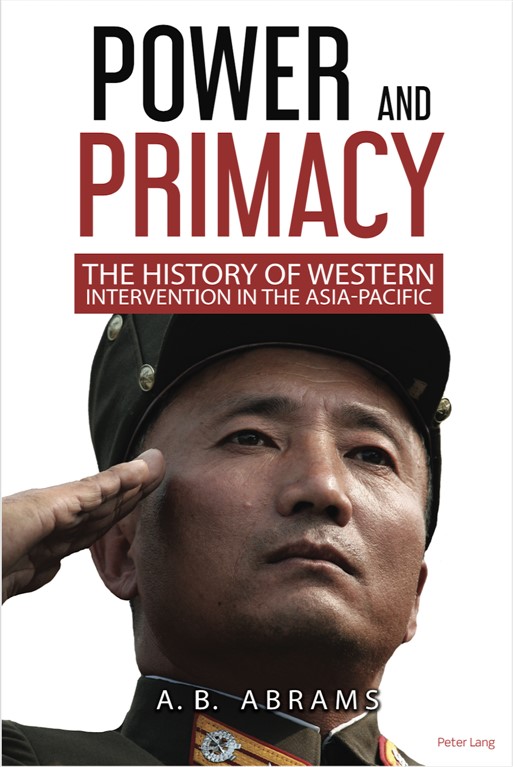
Pictured above: the front cover of A.B. Abrams incredibly informative book, “Power and Primacy: The History of Western Intervention in the Asia-Pacific”.
Thousands of dollars are needed every year to pay for expensive anti-hacking systems, controls and monitoring. This website has to defend itself from tens of expert hack attacks every day! It’s never ending. So, please help keep the truth from being censored and contribute to the cause.
Paypal to jeff@brownlanglois.com. Thank you.

Do your friends, family and colleagues a favor to make sure they are Sino-smart:
Journalism: https://chinarising.puntopress.com/blog-2/
Books: http://chinarising.puntopress.com/2017/05/19/the-china-trilogy/ and
https://chinarising.puntopress.com/2018/06/18/praise-for-the-china-trilogy-the-votes-are-in-it-r-o-c-k-s-what-are-you-waiting-for/
Website: www.chinarising.puntopress.com
Twitter: https://twitter.com/44_Days
Facebook: https://www.facebook.com/44DaysPublishing
VK: https://vk.com/chinarisingradiosinoland
Mobile phone app: http://apps.monk.ee/tyrion
About me: https://chinarising.puntopress.com/about-the-author/
Live from the streets of China, Jeff
Downloadable SoundCloud podcast (also at the bottom of this page), YouTube video, as well as being syndicated on iTunes, Stitcher Radio, RUvid and Ivoox (links below),
Introduction
A.B. Abrams contacted me about his new book, “Power and Primacy – The History of Western Intervention in the Asia-Pacific”, and I was intrigued, since it is about Asian history as a whole and not about a particular time period or country. I’m glad I did, because it is a helluva good read. It really puts the headlines into proper perspective and what they mean behind all the mainstream propaganda spin.
“Power and Primacy” is one of the most thoroughly researched books I’ve ever read, with over 1,000 references, which A.B. lists at the end of each chapter. It is so informative and surprising that I took pages of notes and will surely be citing his book in my future writings.
He can be emailed at: abramspowerandp@yahoo.com
His book can be had here,
https://www.peterlang.com/view/title/68124?format=HC
https://www.amazon.co.uk/Power-Primacy-History-Intervention-Asia-Pacific/dp/1788746120/
Please join me in a fascinating look into the long and shocking role the West has played in Asia, going back centuries. Below is our written interview. For audio-visual fans, I also recorded our questions and answers as YouTube and SoundCloud podcasts.
Our Interview
Jeff Question 1: A.B., please tell us about yourself, your origins, generation growing up, educational and professional life.
A.B. Answer 1: My primary field of expertise is the politics and history of the Asia-Pacific region. I have spent time in all countries of northeast Asia and many in Southeast Asia, and speak the four major languages of the region. East Asian politics and recent history were my primary focuses throughout my academic years and since.
Q2: Is “Power and Primacy” your first published book? If not, what other books have you written? Was it your idea or were you approached by your editor to write it? The research you put into “Power and Primacy” is phenomenal. It must have taken you a while to finish it. Tell us a little about your writing process. Was it all online, or did you go to some sources to see for yourself?
A2: This is my first book. I have published widely in the past under a number of pseudonyms, but usually as articles or papers. A second book with a more narrow geographical focus will be coming early next year.
I began this work because I felt there was a significant gap in existing scholarship in the field, namely that while individual cases of Western intervention in the Asia-Pacific such as the Korean and Vietnam wars have been covered extensively in isolation, an assessment of wider trends in Western intervention and consistencies over time have not been made. This is vital to understanding the nature of Western actors in the region and their intentions towards Asian nations and peoples, which I believe is particularly essential today in light of the ‘Pivot to Asia’ initiative and the growing focus on the region in Europe and North America.
The research for this book took well over a year, and involved extensive readings from a wide range of sources in multiple languages, visits to a number of key historical sites and a number of interviews.
Q3: I learned much new information about Asia and the West’s 500-year history in the region. Was what you learned a surprise? Were you shocked about some of the events that took place? I know I was.
A3: It is widely known that conflicts took place in East Asia between Western powers and Asian nationalist and socialist states, but information on the way these wars were waged and the context in which they took place can certainly change one’s outlook, especially when placed in a wider context of multiple Western interventions in the region. Certainly researching this work there were a number of surprises, but from the beginning it was expected that the events covered would naturally be rather scandalous.
Q4: Your description of the Chinese civil war and the role it played in World War II was riveting. As I was reading, especially after Japan surrendered in 1945 and then its remaining forces were used by the Guomindang (GMD/KMT) and United States to try to wipe out the Communist revolution, my admiration for Mao Zedong, the People’s Liberation Army (PLA) and their heroic citizens increased exponentially. I knew they fought against terrible odds, but your book shows that it was really one of the great underdog stories of modern history, from the CPC/PLA being almost extinguished on several occasions to governing the most populous nation on Earth, to this day. As you wrote your book, did you feel the same way? Any comments?
A4: Certainly I would agree that this conflict was one of the most pivotal in the history of the 20th century, and other than the Second World War, it may well be seen as the most pivotal by future generations. This is particularly true considering what we know now about the long-term consequences for East Asia and the entire world of the establishment of a Chinese People’s Republic under the CCP. The only supporter of the PLA in the harshest years of this conflict, from 1945-1947 was North Korea, which considering the billions of dollars and substantial equipment provided to the Guomindang, and its vast manpower, supplemented by tens of thousands of U.S. Marines, American air units and even rearmed Japanese troops, does appear to be a victory against all odds. I felt it was important to assess this conflict in which the United States was an active participant because it was the foundation of the Sino-American relationship with consequences for decades to come. It is interesting to contemplate how drastically different the world would be today had the U.S. and its client government in China prevailed. China’s regaining of its full independence and beginning of its rise may otherwise not have been a historical inevitability, and the world would certainly look very different today if a Western client government had been in power from 1949.
Q5: You really showed how the Sino-Soviet split in 1959-60 not only really hurt China in the immediate time frame, but gave the United States the “divide and rule” scenario it needed to dramatically influence the course of the Southeast Asian/Vietnam War in NATO’s favor. Close your eyes and imagine for a moment that the split never happened and the USSR and China worked arm-in-arm against global capitalism and Western empire from the 1960s onward. How might have world history played out?
A5: It is very difficult to say, but much of the advantage the Western Bloc was able to gain from the 1960s were derived from domestic changes in the Soviet Union under the premiership of Nikita Khrushchev, with the decline of relations with China largely a result of this. Assuming a best case for the two powers in which the status-quo before 1953 remained, we could see continued technology transfers and economic assistance to China to accelerate its economic growth and both states presenting a joint front in a number of theatres. The Vietnam War for example could have played out very differently if the Soviet Union had not been restricted in its assistance to the Viet Minh by Chinese fears of Soviet influence on its southern border, and we may have seen the North Vietnamese equipped with weapons systems a generation ahead of anything they previously had and quite possibly many more Soviet troops in North Vietnam. Multiple other conflicts, from Afghanistan to Angola, could have ended very differently, had Beijing and Moscow worked together rather than against one other.
Q6: You wrote about the Allied forces during the Korean War slaughtering up to 100,000 South Korean refugees. It makes no military or strategic sense to do so, with vast military resources burned up and spent on innocent non-combatants – mostly women, elderly and children. Why? What gives?
A6: I believe the figure was closer to 200,000, but also included political prisoners and their families, and those thought to have pro-North Korean or leftist sympathies. The decision by the U.S. military leadership and by servicemen to massacre South Korean refugees cannot be attributed to a single factor, but to multiple complementary factors. Under the Presidency of Rhee Syngman the U.S. aligned government in Seoul was extremely unpopular, and North Korean forces were widely welcomed into the south. The Americans were well aware of this, and widely suspected North Korean sympathies and support for North Korea. This had a complementary effect to the conditioning of U.S. soldiers, which was relatively consistent in the Philippine-American War, the Pacific War, the Korean War and later the Vietnam War. The enemy was defined by their racial qualities, which not only dehumanised the adversary but also facilitated to brutal mistreatment of Asian civilians and indiscriminate killings in all cases. Interviews with American soldiers who participated in the massacres, and eyewitness sources such as the memoirs of British writer Elizabeth Comber, as well as the testimonies of Korean survivors, all give testament to this.
The value attributed to the Korean or East Asian life was extremely low at the time in the United States – which had just five years prior killed over 100,000 Japanese civilians in a single night during the firebombing of Tokyo for no apparent material gain other than the psychological impact it would have on the population. At times the military ordered the killing of civilians for fear that they may be sheltering guerrillas or North Korean soldiers. Similar conduct was observed towards South Vietnamese civilians in the 1960s. Given the consistency of this conduct, how can we expect civilians of supposedly allied East Asian states to be treated should there be another major war in the region?
Q7: I am a founding member of the Bioweapon Truth Commission (BWTC – www.bioweapontruth.com), which likely has the largest collection of printed and multimedia documentation on this subject, on the internet. It does contain some information about the early use of chemical weapons, including the West, going back to World War I. But, my eyes widened when you wrote about the US not only using bioweapons in Korea and China, but also chemical weapons during the Korean War. Please tell us about that.
A7: Conflict with Chinese and North Korean forces and defeats at their hands came as a major shock to the Western world – arguably a greater shock than Russia’s defeat by Japan 45 years prior which was entirely unexpected for similar reasons. It was previously widely believed that East Asian peoples and the Chinese in particular were incompetent militarily, and that they would turn and run at the first sight of Western soldiers. This was far from the case, and against overwhelming odds North Korean forces forced the U.S. and its allies into a three-month long retreat southwards – with the Americans alone taking an estimated 20,000 casualties. With the Chinese entry into the war, the U.S. no longer outnumbered their enemy and the number of troops on the front was largely equalised. Seeking a means to kill more of their enemies more efficiently, extensive research was undertaken by the Chemical Corps in particular, into new means of killing larger numbers of enemies more efficiently – using weapons such as sarin gas. Sarin was mass produced for the U.S. Military for this express purpose, but reports indicate it was not ready before the war’s end. Some reports by international commissions indicate that chemical weapons were used on a limited scale, perhaps experimentally, but this remains uncertain. Chemical weapons have been termed the ‘poor man’s nuclear bomb,’ and any possible employment was overshadowed by very significant evidence and widespread use of biological weapons, the U.S.’s very near use of nuclear weapons and the brutalities of the firebombing campaign – spraying incendiaries such as napalm indiscriminately over population centres.
Q8: Close your eyes and imagine NATO attacking North Korea. In one scenario, the West does not use tactical nuclear weapons. In the second, it does. What do you think China and Russia would do in both cases?
A8: The answer would depend on the time period, but it is something I have covered extensively in my upcoming work in relation to Beijing and Moscow’s responses to a growing willingness by the United States to launch military action in 2016 and 2017. Both parties took extensive moves to prevent such an attack, including deploying long range air defence assets to their Korean borders with coverage over the peninsula and carrying out large scale naval and amphibious drills very near to the Korean Peninsula. It was also reported that China flew its new J-20 stealth fighters into South Korean airspace undetected, and later announced it to emphasise the vulnerability of U.S. bases there. Even the Chinese and Russian approval for U.S. drafted sanctions against North Korea was interpreted by some as a measure to prevent military action – providing the Western Bloc with an alternative avenue to put pressure on Pyongyang which undermined calls for an offensive.
There are indications that no matter what kind of weapons are used, both neighbouring states would intervene jointly to protect North Korea – something Chinese state media has reiterated Beijing’s commitment to see through. What matters most is to deter U.S. and allied military action by emphasizing their commitment to Korea’s defence, as even a symbolic ‘bloody nose’ strike on the DPRK would most likely escalate into a total war. Military exercises near the peninsula at times of high tension and deployment of military assets to respond to a potential attack are critical to this. While this was particularly vital in 2017, prospects for a U.S. led attack on North Korea today remain slim, with Pyongyang in a stronger position vis-à-vis the United States than ever before in its history due to successes in economic modernisation and the development of a viable and diverse nuclear and missile deterrent capability. The ability of a small state to hold a superpower’s cities in the firing line with thermonuclear weapons is historically unprecedented, and has allowed Pyongyang to increasingly stand up for itself militarily.
Q9: You write much about the West’s “interests” in trying to control all the Asian countries, but you never associate it with global capitalism, that being exploiting natural and human resources on the cheap. Was that intentional? Where do you think capitalism fits into the West’s “full spectrum dominance” to maintain its “postwar order”?
A9: The work primarily focuses on the nature of Western-led order, and the moves the Western Bloc takes to undermine threats to both its regional and global position of primacy which have primarily emanated from the Asia-Pacific. This had been the case for several centuries, long before Adam Smith and before capitalism in its current form existed. Where capitalism fits into this depends on how capitalism may be defined. Imperial Japan and the Asian Tiger economies are widely considered capitalist states, but they were quashed quite brutally on separate occasions when they challenged the primacy of the Western capitalists. Indeed, Western socialists and leftists have often been as vocal in their calls for a coercive and forceful Western led order and the interventionism needed to see it through as capitalists have, with the benefits of hegemony benefitting Western economies for centuries – benefits shared by the working classes. Detailing the role of ideology and of capitalism in interventionism may be something worth further researching in future.
Q10: Your book reminds me of Jeff Kaye’s investigation into several “suicides”, in his book, Cover-up at Guantanamo and parts of my China Trilogy. At times, they are all hard to read, because they rip the façade of whitewashed propaganda off Western empire, to expose some very unsettling, shocking, and at times gut-wrenching truths. How do you respond to people who complain about this or try to justify the West’s real history, often with the moral equivalence of, “Well, everybody else does it too”?
A10: Moral equivalence is very often a last resort of those found to have committed atrocities, but I make an effort to rule out options for this by directly comparing the conduct of Western and East Asian powers in my work. Moral equivalence can often result from cognitive dissonance – people may not want to believe a certain party are the ‘bad guys’ so attempt to portray them as a lesser of two evils or their misconduct as part of the nature of war or politics. I strongly refute these claims in my work, and can do so more effectively by showing the consistencies in Western conduct towards East Asian nations over a period of several decades. In the cases of Western conduct towards civilians in the Korean War, and separately the comfort women system established by the U.S. Military in South Korea, the work makes direct comparisons with the conduct of East Asian parties and shows a very stark contrast.
Q11: Do you have any other books in the hopper? What are your literary and writing ambitions, looking into the future?
A11: I have a second edition of this work scheduled to come out by early October, and have a second book which has been drafted and is coming soon. I hope to continue my research into this subject in the coming years.
Jeff: Thank you, A.B, for participating in this interview today…
Why and How China works: With a Mirror to Our Own History

44 Days Backpacking in China

China Rising: Capitalist Roads, Socialist Destinations

China Is Communist, Dammit! Dawn of the Red Dynasty
ABOUT JEFF BROWN

JEFF J. BROWN, Editor, China Rising, and Senior Editor & China Correspondent, Dispatch from Beijing, The Greanville Post
Jeff J. Brown is a geopolitical analyst, journalist, lecturer and the author of The China Trilogy. It consists of 44 Days Backpacking in China – The Middle Kingdom in the 21st Century, with the United States, Europe and the Fate of the World in Its Looking Glass (2013); Punto Press released China Rising – Capitalist Roads, Socialist Destinations (2016); and for Badak Merah, Jeff authored China Is Communist, Dammit! – Dawn of the Red Dynasty (2017). As well, he published a textbook, Doctor WriteRead’s Treasure Trove to Great English (2015). Jeff is a Senior Editor & China Correspondent for The Greanville Post, where he keeps a column, Dispatch from Beijing and is a Global Opinion Leader at 21st Century. He also writes a column for The Saker, called the Moscow-Beijing Express. Jeff writes, interviews and podcasts on his own program, China Rising Radio Sinoland, which is also available on YouTube, Stitcher Radio, iTunes, Ivoox and RUvid. Guests have included Ramsey Clark, James Bradley, Moti Nissani, Godfree Roberts, Hiroyuki Hamada, The Saker and many others. [/su_spoiler]
Jeff can be reached at China Rising, jeff@brownlanglois.com, Facebook, Twitter, Wechat (Jeff_Brown-44_Days) and Whatsapp: +86-13823544196.
Read it in your language • Lealo en su idioma • Lisez-le dans votre langue • Lies es in deniner Sprache • Прочитайте это на вашем языке • 用你的语言阅读
===
LOOK WHO IS PRAISING THE CHINA TRILOGY: THE VOTES ARE IN – IT R-O-C-K-S! WHAT ARE YOU WAITING FOR?
June 30, 2018
| 14 Comments

Pictured above: Front covers of the much-acclaimed China Trilogy. You will NEVER figure out what’s behind today’s headlines, until you understand China. The China Trilogy is your key to cracking the code of 21st century mainstream media.
Downloadable SoundCloud podcast (also at the bottom of this page), as well as being syndicated on iTunes and Stitcher Radio (links below),
China Trilogy author-direct sale – WORLDWIDE!
Get all three autographed and dedicated books for ¥299=$47/€40 plus cheap tracked shipping anywhere in the world!
Great news! I am selling The China Trilogy – that’s right – all three books – signed and dedicated just for you, for the author-direct sale price of only ¥299 (±$47/€40) + low cost tracked shipping and handling (click on the first link below for all the details).
http://chinarising.puntopress.com/2018/05/05/china-trilogy-summer-clearance-sale-worldwide/
https://youtu.be/jr0XWEh3THQ
https://soundcloud.com/44-days/china-trilogy-summer-clearance-sale-worldwide
Don’t take it from me, listen to the experts:
Praise for “The China Trilogy” (http://chinarising.puntopress.com/2017/05/19/the-china-trilogy/)…
“Jeff J. Brown’s dispatches are a bracing antidote to the western media’s groupthink on China.”
 — John Pilger (http://johnpilger.com/), Emmy (http://johnpilger.com/videos/cambodia-the-betrayal) and BAFTA (https://m.imdb.com/name/nm0683400/awards) Award winning film director.
“Few voices can match Jeff J Brown when it comes to explaining China to foreigners, especially Americans, their minds still very much imprisoned by their own country’s gargantuan propaganda machine. An Okie by birth, Brown, a longtime resident of China, and a spellbinding narrator, is an inspiring example of personal transformation, from firm believer in America’s exceptionalist religion, to authoritative critic of its policies and multitude of self-serving myths. His China trilogy is simply indispensable to fully understand the re-emergence of this great nation, whose values represent an auspicious turning point for humanity.”
 — Patrice Greanville, Editor, The Greanville Post (www.greanvillepost.com)
“Jeff J. Brown’s amazing trilogy about China is a must read for anyone wanting to learn something about the true China. It is very different from the China described by the mainstream media and by Western politicians. BIG Red Book on China is particularly useful as a reference for understanding modern Chinese society.”
 — Peter Man (https://stone-man.weebly.com), author of The Unconquered: Children of the Divine Fire (https://www.amazon.com/Unconquered-Children-Divine-Romance-Kingdom-ebook/dp/B07NYZS48F)
“Jeff has done a great job in countering the unrelenting lies and hatred against China (20% of humanity) by the agenda-based presstitudes. His work is VERY IMPORTANT for the survival of humanity in the 21st century.
If the learning of history is of any benefit to humanity, I hope that the warmonger elitists in the West would realise that the rise and fall of a civilisation is an inevitable process: the Roman Empire did not last forever, the Crusaders were unable to hold on to Jerusalem, Spain was unable to prevent the rise of Britain, and Britain was unable to prevent the independence of America.
21st century is a nuclear weaponries century, it is a century for cooperation, not confrontation. The war on the Korea peninsula, Vietnam, Iraq and Afghanistan already proven that, the combination of the world’s richest countries and advanced military forces failed to crash the will of the weaker people they oppressed. With the help of technology, all weaponries are lethal including those that are belted around the human body.
The world has to learn to work towards similarity and accept each other’s differences. The behaviour of the crusaders and the colonial masters is no longer workable and acceptable in the 21st century. All nations should learn to trade with each other for raw materials, finished products and services in a fair and mutually beneficial way – not bombs, missiles and economic sanctions. No single nation can solve the problem of global warming without the cooperation of the others. Military aggression did not make the West any safer.”
 — Wei Ling Chua (http://outcastjournalist.com), author of Democracy: What the West can learn from China (http://outcastjournalist.com/index_files/democracy_what_the_west_can_learn_from_China.htm) and Tiananmen Square “Massacre”? The Power of Words v Silent Evidence (http://outcastjournalist.com/index_files/tiananmen_square_massacre_power_of_words_vs_silent_evidence.htm)
“BIG Red Book on China” (https://www.amazon.com/dp/1673322719):
“Of the three books in Jeff J. Brown’s BIG Red Book on China is my favorite. I give it to curious (even hostile) friends secure in the knowledge that they’ll learn enough about China’s history, geography, politics, governance, art and society to see through the nonsense we read every day in our media. BIG Red Book on China is solace for the socialist soul in time of need and a bracing defense of a country that is resuming world leadership after a – by its standards – brief break of two hundred years. Highly recommended, dammit!”
 — Godfree Roberts, author of HOW CHINA WORKS – And Why It’s Winning (http://howchinaworks.org)
“China is serious business…. Thankfully, today we can finally access authors like Jeff J. Brown, who have compiled superb, comprehensive scholarship to allow today’s readers to grant China the seriousness and honesty it deserves. And the John K. Fairbank’s of the Western world are everywhere else…providing copy and rubber-stamping diplomas.”
 — Ramin Mazaheri (https://thesaker.is/tag/ramin-mazaheri/), chief correspondent in Paris for PressTV (http://www.presstv.com/)
“Jeff J. Brown has done a masterful job, creating a highly readable, marvelously engaging, truly exciting opus, at the same time maintaining the highest level of scholarship. Much of what the reader will discover here will be uncomfortable, most of it will be unfamiliar. Thanks to the Western disinformation machine of the U.S. Deep State with full complicity of corporate media the national conversation is saturated with malignant, vitriolic propaganda, the truth nowhere to be found. So … if you are fed up with self-serving lies of the capitalist neoliberal establishment and looking for a reality-based, factually-objective, thoroughly-researched, unassailably accurate portrayal of China, and the prospects it offers humankind for not just surviving the current raft of existential challenges, but for a world built on cooperation, mutual trust, and reciprocal advantage, there is no comparable work available today. Read BIG Red Book on China, then keep it handy. It will be one of your most valuable reference books for many years to come.”
 — John Rachel (https://jdrachel.com), author of The Peace Dividend (https://jdrachel.com/books/) and An Unlikely Truth (https://jdrachel.com/an-unlikely-truth/)
“Jeff Brown has written a gorgeous text. His prose is lucid, clear, humane and approachable. He writes with the conviction of a convert and the generosity of a saint, though he does not pull punches. He attacks the vicious propaganda lies that have enveloped modern China since its founding in 1949 and beyond, taking his reader back to ancient times to assess the modern day import of Confucianism, the Silk Roads, and the Heavenly Mandate. This book is a primer on many fronts, including Chinese governance, philosophy, history and art. Yet it is also a courageous telling of the author’s own decoupling from the very lies of which he has the proper grace and temerity to forewarn his reader. For those who find themselves irritated and downright suspicious of the bulk of Western treatments of China, BIG Red Book on China is the veritable push-off point for understanding China in the English language–from a chastened English-language speaker to boot.”
 — Dr. Amir Khan, Associate Professor of English, Dalian Maritime University; Managing editor, Conversations: The Journal of Cavellian Studies; Author, Comedies of Nihilism
“China Is Communist Dammit – Dawn of the Red Dynasty is perhaps the best book written about this country in years. Jeff Brown produced a masterpiece, and many more will undoubtedly follow!”
 — Andre Vltchek (http://andrevltchek.weebly.com/), author of “Aurora” (https://www.amazon.com/Aurora-Andre-Vltchek/dp/6027354364/) and “Exposing Lies Of The Empire” (https://www.amazon.com/Exposing-Lies-Empire-Andre-Vltchek/dp/6027005866).
“China Rising – Capitalist Roads, Socialist Destinations” (https://www.amazon.com/China-Rising-Capitalist-Socialist-Destinations/dp/0996487042/):
“I just finished Jeff J. Brown’s insightful book, ‘China Rising’. I found it fluid and forthright . . . Bravo!”
 — James Bradley (http://www.jamesbradley.com/), author of “The China Mirage” (https://www.barnesandnoble.com/w/the-china-mirage-james-bradley/1118620112?ean=9780316196666#/) and “Flags of Our Fathers” (https://www.barnesandnoble.com/w/flags-of-our-fathers-james-bradley/1100303084?ean=9780553384154#/).
“Sooner or later, certainly while you are deep into this book, say when you reach the part that explains what makes Xi Jinping run, you gotta ask yourself a question: why should I rely on a gaggle of pompous, redundant, ideologically impaired U.S. scholars self-billed as China ‘experts’, when I can get my Sino-kicks with Jeff?”
 — Pepe Escobar (http://www.atimes.com/writer/pepe-escobar/), author of “2030” (https://www.amazon.com/2030-Pepe-Escobar/dp/1608880354) and “Empire of Chaos” (https://www.amazon.com/Empire-Chaos-Pepe-Escobar/dp/1608881644)
“44 Days Backpacking in China- The Middle Kingdom in the 21st Century, with the United States, Europe and the Fate of the World in Its Looking Glass” (https://www.amazon.com/44-Days-Backpacking-China-Kingdom/dp/1484939999/):
“What if Alexis de Tocqueville were fluent in Mandarin and traveling through China by backpack and bullet train? Oklahoma’s latter-day Tocqueville, Jeff J. Brown, is one heck of a good story teller, and traveling with him deep into China is an adventure not to be missed.”
 — Thomas A. Bass (http://www.thomasbass.com/), author of “The Spy Who Loved Us” (http://www.thomasbass.com/the_spy_who_loved_us_78725.htm) and “Vietnamerica-The War Comes Home” (http://www.thomasbass.com/vietnamerica__the_war_comes_home_1258.htm).
“44 Days is a delightful romp through a changing China and Jeff J. Brown is an excellent guide.”
 — John Pomfret (http://www.johnpomfret.org/), author of “Chinese Lessons: Five Classmates and the Story of the New China” (http://www.johnpomfret.org/chinese-lessons/) and “The Beautiful Country and The Middle Kingdom” (http://www.johnpomfret.org/the-book).
“Reading 44 Days is like taking a trip through China with a very funny and articulate friend. This is entertainment. 44 Days is worth its weight in gold based sheerly on comedic value. However, the book has a far more reaching purpose. It’s an honorary degree in International Studies. 44 Days should be taught in high school social studies classes.”
 — Prairie Boulmier-Darden, International Educator-Director
“44 Days is an entertaining tale told by someone with a good eye for the absurd, a sense of history and the ability to appreciate a journey’s simple pleasures.”
 — William Kazer, Wall Street Journal
“I could feel the heat of the desert, the toxic air of large, congested cities and the crisp brilliance of a sunny day high on a glacier. Jeff Brown is an intelligent, articulate and entertaining writer and 44 Days is absolutely fascinating. I highly recommend it.”

— Mick Winter, author of Cuba for the Misinformed: Facts from the Forbidden Island (https://www.amazon.com/dp/0965900096/) and Peak Oil Prep: Prepare for Peak Oil, Climate Change and Economic Collapse (https://www.amazon.com/gp/product/0965900045/)
http://www.mickwinter.com
“Jeff discovers himself and ponders refreshing perspectives on the human condition. 44 Days is a terrific read for thinkers, travelers and otherwise.”

— Deena Stryker, author of Lunch with Fellini, Dinner with Fidel (https://www.amazon.com/Lunch-Fellini-Dinner-Fidel-Illustrated/dp/1479103217/) and A Taoist Politics: The Case for Sacredness (https://www.amazon.com/gp/product/1419676059/)
http://otherjonesii.blogspot.com
So, what are you waiting for?
Get all three autographed and dedicated books for ¥299= ±$47/€40 plus cheap tracked shipping anywhere in the world!
If you find China Rising Radio Sinoland‘s work useful and appreciate its quality, please consider making a donation. Money is spent to pay for Internet costs, maintenance, the upgrade of our computer network, and development of the site.
Why and How China works: With a Mirror to Our Own History
44 Days Backpacking in China: The Middle Kingdom in the 21st Century, with the United States, Europe and the Fate of the World in Its Looking Glass
China Rising: Capitalist Roads, Socialist Destinations
BIG Red Book on China: Chinese History, Culture and Revolution
ABOUT JEFF BROWN
JEFF J. BROWN, Senior Editor & China Correspondent, Dispatch from Beijing
Jeff J. Brown is a geopolitical analyst, journalist, lecturer and the author of The China Trilogy. It consists of 44 Days Backpacking in China – The Middle Kingdom in the 21st Century, with the United States, Europe and the Fate of the World in Its Looking Glass (2013); Punto Press released China Rising – Capitalist Roads, Socialist Destinations (2016); and BIG Red Book on China (2020). As well, he published a textbook, Doctor WriteRead’s Treasure Trove to Great English (2015). Jeff is a Senior Editor & China Correspondent for The Greanville Post, where he keeps a column, Dispatch from Beijing. He also writes a column for The Saker, called the Moscow-Beijing Express. Jeff interviews and podcasts on his own program, China Rising Radio Sinoland, which is also available on SoundCloud, YouTube, Stitcher Radio and iTunes.
In China, he has been a speaker at TEDx, the Bookworm and Capital M Literary Festivals, the Hutong, as well as being featured in an 18-part series of interviews on Radio Beijing AM774, with former BBC journalist, Bruce Connolly. He has guest lectured at the Beijing Academy of Social Sciences (BASS) and various international schools and universities.
More on Jeff
Jeff can be reached at China Rising, jeff@brownlanglois.com, Facebook, Twitter, Wechat (Jeff_Brown-44_Days) and Whatsapp: +86-13823544196.
For Jeff J Brown’s Books, Radio Sinoland & social media outlets
CHINA RISING OUTLETS AND RESOURCES CLICK HERE
Signup for our special China Rising bulletin (FREE)
Best news and commentary on China on the web! Guaranteed.
Subscribe
A.B. ABRAMS TALKS ABOUT HIS BOOK, “POWER AND PRIMACY-THE HISTORY OF WESTERN INTERVENTION IN THE ASIA PACIFIC. CHINA RISING RADIO SINOLAND 190908
September 8, 2019
| 4 Comments
NOW IN 22 DIFFERENT LANGUAGES. CLICK ON THE LOWER LEFT HAND CORNER “TRANSLATE” TAB TO FIND YOURS!
By Jeff J. Brown
Pictured above: the front cover of A.B. Abrams incredibly informative book, “Power and Primacy: The History of Western Intervention in the Asia-Pacific”.
Thousands of dollars are needed every year to pay for expensive anti-hacking systems, controls and monitoring. This website has to defend itself from tens of expert hack attacks every day! It’s never ending. So, please help keep the truth from being censored and contribute to the cause.
Paypal to jeff@brownlanglois.com. Thank you.
Do your friends, family and colleagues a favor to make sure they are Sino-smart:
Journalism: https://chinarising.puntopress.com/blog-2/
Books: http://chinarising.puntopress.com/2017/05/19/the-china-trilogy/ and
https://chinarising.puntopress.com/2018/06/18/praise-for-the-china-trilogy-the-votes-are-in-it-r-o-c-k-s-what-are-you-waiting-for/
Website: www.chinarising.puntopress.com
Twitter: https://twitter.com/44_Days
Facebook: https://www.facebook.com/44DaysPublishing
VK: https://vk.com/chinarisingradiosinoland
Mobile phone app: http://apps.monk.ee/tyrion
About me: https://chinarising.puntopress.com/about-the-author/
Live from the streets of China, Jeff
Downloadable SoundCloud podcast (also at the bottom of this page), YouTube video, as well as being syndicated on iTunes, Stitcher Radio, RUvid and Ivoox (links below),
Introduction
A.B. Abrams contacted me about his new book, “Power and Primacy – The History of Western Intervention in the Asia-Pacific”, and I was intrigued, since it is about Asian history as a whole and not about a particular time period or country. I’m glad I did, because it is a helluva good read. It really puts the headlines into proper perspective and what they mean behind all the mainstream propaganda spin.
“Power and Primacy” is one of the most thoroughly researched books I’ve ever read, with over 1,000 references, which A.B. lists at the end of each chapter. It is so informative and surprising that I took pages of notes and will surely be citing his book in my future writings.
He can be emailed at: abramspowerandp@yahoo.com
His book can be had here,
https://www.peterlang.com/view/title/68124?format=HC
https://www.amazon.co.uk/Power-Primacy-History-Intervention-Asia-Pacific/dp/1788746120/
Please join me in a fascinating look into the long and shocking role the West has played in Asia, going back centuries. Below is our written interview. For audio-visual fans, I also recorded our questions and answers as YouTube and SoundCloud podcasts.
Our Interview
Jeff Question 1: A.B., please tell us about yourself, your origins, generation growing up, educational and professional life.
A.B. Answer 1: My primary field of expertise is the politics and history of the Asia-Pacific region. I have spent time in all countries of northeast Asia and many in Southeast Asia, and speak the four major languages of the region. East Asian politics and recent history were my primary focuses throughout my academic years and since.
Q2: Is “Power and Primacy” your first published book? If not, what other books have you written? Was it your idea or were you approached by your editor to write it? The research you put into “Power and Primacy” is phenomenal. It must have taken you a while to finish it. Tell us a little about your writing process. Was it all online, or did you go to some sources to see for yourself?
A2: This is my first book. I have published widely in the past under a number of pseudonyms, but usually as articles or papers. A second book with a more narrow geographical focus will be coming early next year.
I began this work because I felt there was a significant gap in existing scholarship in the field, namely that while individual cases of Western intervention in the Asia-Pacific such as the Korean and Vietnam wars have been covered extensively in isolation, an assessment of wider trends in Western intervention and consistencies over time have not been made. This is vital to understanding the nature of Western actors in the region and their intentions towards Asian nations and peoples, which I believe is particularly essential today in light of the ‘Pivot to Asia’ initiative and the growing focus on the region in Europe and North America.
The research for this book took well over a year, and involved extensive readings from a wide range of sources in multiple languages, visits to a number of key historical sites and a number of interviews.
Q3: I learned much new information about Asia and the West’s 500-year history in the region. Was what you learned a surprise? Were you shocked about some of the events that took place? I know I was.
A3: It is widely known that conflicts took place in East Asia between Western powers and Asian nationalist and socialist states, but information on the way these wars were waged and the context in which they took place can certainly change one’s outlook, especially when placed in a wider context of multiple Western interventions in the region. Certainly researching this work there were a number of surprises, but from the beginning it was expected that the events covered would naturally be rather scandalous.
Q4: Your description of the Chinese civil war and the role it played in World War II was riveting. As I was reading, especially after Japan surrendered in 1945 and then its remaining forces were used by the Guomindang (GMD/KMT) and United States to try to wipe out the Communist revolution, my admiration for Mao Zedong, the People’s Liberation Army (PLA) and their heroic citizens increased exponentially. I knew they fought against terrible odds, but your book shows that it was really one of the great underdog stories of modern history, from the CPC/PLA being almost extinguished on several occasions to governing the most populous nation on Earth, to this day. As you wrote your book, did you feel the same way? Any comments?
A4: Certainly I would agree that this conflict was one of the most pivotal in the history of the 20th century, and other than the Second World War, it may well be seen as the most pivotal by future generations. This is particularly true considering what we know now about the long-term consequences for East Asia and the entire world of the establishment of a Chinese People’s Republic under the CCP. The only supporter of the PLA in the harshest years of this conflict, from 1945-1947 was North Korea, which considering the billions of dollars and substantial equipment provided to the Guomindang, and its vast manpower, supplemented by tens of thousands of U.S. Marines, American air units and even rearmed Japanese troops, does appear to be a victory against all odds. I felt it was important to assess this conflict in which the United States was an active participant because it was the foundation of the Sino-American relationship with consequences for decades to come. It is interesting to contemplate how drastically different the world would be today had the U.S. and its client government in China prevailed. China’s regaining of its full independence and beginning of its rise may otherwise not have been a historical inevitability, and the world would certainly look very different today if a Western client government had been in power from 1949.
Q5: You really showed how the Sino-Soviet split in 1959-60 not only really hurt China in the immediate time frame, but gave the United States the “divide and rule” scenario it needed to dramatically influence the course of the Southeast Asian/Vietnam War in NATO’s favor. Close your eyes and imagine for a moment that the split never happened and the USSR and China worked arm-in-arm against global capitalism and Western empire from the 1960s onward. How might have world history played out?
A5: It is very difficult to say, but much of the advantage the Western Bloc was able to gain from the 1960s were derived from domestic changes in the Soviet Union under the premiership of Nikita Khrushchev, with the decline of relations with China largely a result of this. Assuming a best case for the two powers in which the status-quo before 1953 remained, we could see continued technology transfers and economic assistance to China to accelerate its economic growth and both states presenting a joint front in a number of theatres. The Vietnam War for example could have played out very differently if the Soviet Union had not been restricted in its assistance to the Viet Minh by Chinese fears of Soviet influence on its southern border, and we may have seen the North Vietnamese equipped with weapons systems a generation ahead of anything they previously had and quite possibly many more Soviet troops in North Vietnam. Multiple other conflicts, from Afghanistan to Angola, could have ended very differently, had Beijing and Moscow worked together rather than against one other.
Q6: You wrote about the Allied forces during the Korean War slaughtering up to 100,000 South Korean refugees. It makes no military or strategic sense to do so, with vast military resources burned up and spent on innocent non-combatants – mostly women, elderly and children. Why? What gives?
A6: I believe the figure was closer to 200,000, but also included political prisoners and their families, and those thought to have pro-North Korean or leftist sympathies. The decision by the U.S. military leadership and by servicemen to massacre South Korean refugees cannot be attributed to a single factor, but to multiple complementary factors. Under the Presidency of Rhee Syngman the U.S. aligned government in Seoul was extremely unpopular, and North Korean forces were widely welcomed into the south. The Americans were well aware of this, and widely suspected North Korean sympathies and support for North Korea. This had a complementary effect to the conditioning of U.S. soldiers, which was relatively consistent in the Philippine-American War, the Pacific War, the Korean War and later the Vietnam War. The enemy was defined by their racial qualities, which not only dehumanised the adversary but also facilitated to brutal mistreatment of Asian civilians and indiscriminate killings in all cases. Interviews with American soldiers who participated in the massacres, and eyewitness sources such as the memoirs of British writer Elizabeth Comber, as well as the testimonies of Korean survivors, all give testament to this.
The value attributed to the Korean or East Asian life was extremely low at the time in the United States – which had just five years prior killed over 100,000 Japanese civilians in a single night during the firebombing of Tokyo for no apparent material gain other than the psychological impact it would have on the population. At times the military ordered the killing of civilians for fear that they may be sheltering guerrillas or North Korean soldiers. Similar conduct was observed towards South Vietnamese civilians in the 1960s. Given the consistency of this conduct, how can we expect civilians of supposedly allied East Asian states to be treated should there be another major war in the region?
Q7: I am a founding member of the Bioweapon Truth Commission (BWTC – www.bioweapontruth.com), which likely has the largest collection of printed and multimedia documentation on this subject, on the internet. It does contain some information about the early use of chemical weapons, including the West, going back to World War I. But, my eyes widened when you wrote about the US not only using bioweapons in Korea and China, but also chemical weapons during the Korean War. Please tell us about that.
A7: Conflict with Chinese and North Korean forces and defeats at their hands came as a major shock to the Western world – arguably a greater shock than Russia’s defeat by Japan 45 years prior which was entirely unexpected for similar reasons. It was previously widely believed that East Asian peoples and the Chinese in particular were incompetent militarily, and that they would turn and run at the first sight of Western soldiers. This was far from the case, and against overwhelming odds North Korean forces forced the U.S. and its allies into a three-month long retreat southwards – with the Americans alone taking an estimated 20,000 casualties. With the Chinese entry into the war, the U.S. no longer outnumbered their enemy and the number of troops on the front was largely equalised. Seeking a means to kill more of their enemies more efficiently, extensive research was undertaken by the Chemical Corps in particular, into new means of killing larger numbers of enemies more efficiently – using weapons such as sarin gas. Sarin was mass produced for the U.S. Military for this express purpose, but reports indicate it was not ready before the war’s end. Some reports by international commissions indicate that chemical weapons were used on a limited scale, perhaps experimentally, but this remains uncertain. Chemical weapons have been termed the ‘poor man’s nuclear bomb,’ and any possible employment was overshadowed by very significant evidence and widespread use of biological weapons, the U.S.’s very near use of nuclear weapons and the brutalities of the firebombing campaign – spraying incendiaries such as napalm indiscriminately over population centres.
Q8: Close your eyes and imagine NATO attacking North Korea. In one scenario, the West does not use tactical nuclear weapons. In the second, it does. What do you think China and Russia would do in both cases?
A8: The answer would depend on the time period, but it is something I have covered extensively in my upcoming work in relation to Beijing and Moscow’s responses to a growing willingness by the United States to launch military action in 2016 and 2017. Both parties took extensive moves to prevent such an attack, including deploying long range air defence assets to their Korean borders with coverage over the peninsula and carrying out large scale naval and amphibious drills very near to the Korean Peninsula. It was also reported that China flew its new J-20 stealth fighters into South Korean airspace undetected, and later announced it to emphasise the vulnerability of U.S. bases there. Even the Chinese and Russian approval for U.S. drafted sanctions against North Korea was interpreted by some as a measure to prevent military action – providing the Western Bloc with an alternative avenue to put pressure on Pyongyang which undermined calls for an offensive.
There are indications that no matter what kind of weapons are used, both neighbouring states would intervene jointly to protect North Korea – something Chinese state media has reiterated Beijing’s commitment to see through. What matters most is to deter U.S. and allied military action by emphasizing their commitment to Korea’s defence, as even a symbolic ‘bloody nose’ strike on the DPRK would most likely escalate into a total war. Military exercises near the peninsula at times of high tension and deployment of military assets to respond to a potential attack are critical to this. While this was particularly vital in 2017, prospects for a U.S. led attack on North Korea today remain slim, with Pyongyang in a stronger position vis-à-vis the United States than ever before in its history due to successes in economic modernisation and the development of a viable and diverse nuclear and missile deterrent capability. The ability of a small state to hold a superpower’s cities in the firing line with thermonuclear weapons is historically unprecedented, and has allowed Pyongyang to increasingly stand up for itself militarily.
Q9: You write much about the West’s “interests” in trying to control all the Asian countries, but you never associate it with global capitalism, that being exploiting natural and human resources on the cheap. Was that intentional? Where do you think capitalism fits into the West’s “full spectrum dominance” to maintain its “postwar order”?
A9: The work primarily focuses on the nature of Western-led order, and the moves the Western Bloc takes to undermine threats to both its regional and global position of primacy which have primarily emanated from the Asia-Pacific. This had been the case for several centuries, long before Adam Smith and before capitalism in its current form existed. Where capitalism fits into this depends on how capitalism may be defined. Imperial Japan and the Asian Tiger economies are widely considered capitalist states, but they were quashed quite brutally on separate occasions when they challenged the primacy of the Western capitalists. Indeed, Western socialists and leftists have often been as vocal in their calls for a coercive and forceful Western led order and the interventionism needed to see it through as capitalists have, with the benefits of hegemony benefitting Western economies for centuries – benefits shared by the working classes. Detailing the role of ideology and of capitalism in interventionism may be something worth further researching in future.
Q10: Your book reminds me of Jeff Kaye’s investigation into several “suicides”, in his book, Cover-up at Guantanamo and parts of my China Trilogy. At times, they are all hard to read, because they rip the façade of whitewashed propaganda off Western empire, to expose some very unsettling, shocking, and at times gut-wrenching truths. How do you respond to people who complain about this or try to justify the West’s real history, often with the moral equivalence of, “Well, everybody else does it too”?
A10: Moral equivalence is very often a last resort of those found to have committed atrocities, but I make an effort to rule out options for this by directly comparing the conduct of Western and East Asian powers in my work. Moral equivalence can often result from cognitive dissonance – people may not want to believe a certain party are the ‘bad guys’ so attempt to portray them as a lesser of two evils or their misconduct as part of the nature of war or politics. I strongly refute these claims in my work, and can do so more effectively by showing the consistencies in Western conduct towards East Asian nations over a period of several decades. In the cases of Western conduct towards civilians in the Korean War, and separately the comfort women system established by the U.S. Military in South Korea, the work makes direct comparisons with the conduct of East Asian parties and shows a very stark contrast.
Q11: Do you have any other books in the hopper? What are your literary and writing ambitions, looking into the future?
A11: I have a second edition of this work scheduled to come out by early October, and have a second book which has been drafted and is coming soon. I hope to continue my research into this subject in the coming years.
Jeff: Thank you, A.B, for participating in this interview today…
Why and How China works: With a Mirror to Our Own History
44 Days Backpacking in China
China Rising: Capitalist Roads, Socialist Destinations
China Is Communist, Dammit! Dawn of the Red Dynasty
ABOUT JEFF BROWN

JEFF J. BROWN, Editor, China Rising, and Senior Editor & China Correspondent, Dispatch from Beijing, The Greanville Post
Jeff J. Brown is a geopolitical analyst, journalist, lecturer and the author of The China Trilogy. It consists of 44 Days Backpacking in China – The Middle Kingdom in the 21st Century, with the United States, Europe and the Fate of the World in Its Looking Glass (2013); Punto Press released China Rising – Capitalist Roads, Socialist Destinations (2016); and for Badak Merah, Jeff authored China Is Communist, Dammit! – Dawn of the Red Dynasty (2017). As well, he published a textbook, Doctor WriteRead’s Treasure Trove to Great English (2015). Jeff is a Senior Editor & China Correspondent for The Greanville Post, where he keeps a column, Dispatch from Beijing and is a Global Opinion Leader at 21st Century. He also writes a column for The Saker, called the Moscow-Beijing Express. Jeff writes, interviews and podcasts on his own program, China Rising Radio Sinoland, which is also available on YouTube, Stitcher Radio, iTunes, Ivoox and RUvid. Guests have included Ramsey Clark, James Bradley, Moti Nissani, Godfree Roberts, Hiroyuki Hamada, The Saker and many others. [/su_spoiler]
Jeff can be reached at China Rising, jeff@brownlanglois.com, Facebook, Twitter, Wechat (Jeff_Brown-44_Days) and Whatsapp: +86-13823544196.
Read it in your language • Lealo en su idioma • Lisez-le dans votre langue • Lies es in deniner Sprache • Прочитайте это на вашем языке • 用你的语言阅读
===
LOOK WHO IS PRAISING THE CHINA TRILOGY: THE VOTES ARE IN – IT R-O-C-K-S! WHAT ARE YOU WAITING FOR?
June 30, 2018
| 14 Comments
Pictured above: Front covers of the much-acclaimed China Trilogy. You will NEVER figure out what’s behind today’s headlines, until you understand China. The China Trilogy is your key to cracking the code of 21st century mainstream media.
Downloadable SoundCloud podcast (also at the bottom of this page), as well as being syndicated on iTunes and Stitcher Radio (links below),
China Trilogy author-direct sale – WORLDWIDE!
Get all three autographed and dedicated books for ¥299=$47/€40 plus cheap tracked shipping anywhere in the world!
Great news! I am selling The China Trilogy – that’s right – all three books – signed and dedicated just for you, for the author-direct sale price of only ¥299 (±$47/€40) + low cost tracked shipping and handling (click on the first link below for all the details).
http://chinarising.puntopress.com/2018/05/05/china-trilogy-summer-clearance-sale-worldwide/
https://youtu.be/jr0XWEh3THQ
https://soundcloud.com/44-days/china-trilogy-summer-clearance-sale-worldwide
Don’t take it from me, listen to the experts:
Praise for “The China Trilogy” (http://chinarising.puntopress.com/2017/05/19/the-china-trilogy/)…
“Jeff J. Brown’s dispatches are a bracing antidote to the western media’s groupthink on China.”
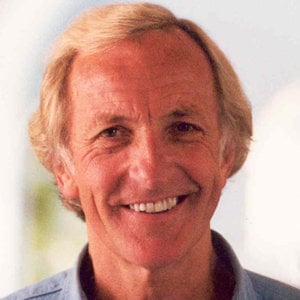 — John Pilger (http://johnpilger.com/), Emmy (http://johnpilger.com/videos/cambodia-the-betrayal) and BAFTA (https://m.imdb.com/name/nm0683400/awards) Award winning film director.
“Few voices can match Jeff J Brown when it comes to explaining China to foreigners, especially Americans, their minds still very much imprisoned by their own country’s gargantuan propaganda machine. An Okie by birth, Brown, a longtime resident of China, and a spellbinding narrator, is an inspiring example of personal transformation, from firm believer in America’s exceptionalist religion, to authoritative critic of its policies and multitude of self-serving myths. His China trilogy is simply indispensable to fully understand the re-emergence of this great nation, whose values represent an auspicious turning point for humanity.”
 — Patrice Greanville, Editor, The Greanville Post (www.greanvillepost.com)
“Jeff J. Brown’s amazing trilogy about China is a must read for anyone wanting to learn something about the true China. It is very different from the China described by the mainstream media and by Western politicians. BIG Red Book on China is particularly useful as a reference for understanding modern Chinese society.”
 — Peter Man (https://stone-man.weebly.com), author of The Unconquered: Children of the Divine Fire (https://www.amazon.com/Unconquered-Children-Divine-Romance-Kingdom-ebook/dp/B07NYZS48F)
“Jeff has done a great job in countering the unrelenting lies and hatred against China (20% of humanity) by the agenda-based presstitudes. His work is VERY IMPORTANT for the survival of humanity in the 21st century.
If the learning of history is of any benefit to humanity, I hope that the warmonger elitists in the West would realise that the rise and fall of a civilisation is an inevitable process: the Roman Empire did not last forever, the Crusaders were unable to hold on to Jerusalem, Spain was unable to prevent the rise of Britain, and Britain was unable to prevent the independence of America.
21st century is a nuclear weaponries century, it is a century for cooperation, not confrontation. The war on the Korea peninsula, Vietnam, Iraq and Afghanistan already proven that, the combination of the world’s richest countries and advanced military forces failed to crash the will of the weaker people they oppressed. With the help of technology, all weaponries are lethal including those that are belted around the human body.
The world has to learn to work towards similarity and accept each other’s differences. The behaviour of the crusaders and the colonial masters is no longer workable and acceptable in the 21st century. All nations should learn to trade with each other for raw materials, finished products and services in a fair and mutually beneficial way – not bombs, missiles and economic sanctions. No single nation can solve the problem of global warming without the cooperation of the others. Military aggression did not make the West any safer.”
 — Wei Ling Chua (http://outcastjournalist.com), author of Democracy: What the West can learn from China (http://outcastjournalist.com/index_files/democracy_what_the_west_can_learn_from_China.htm) and Tiananmen Square “Massacre”? The Power of Words v Silent Evidence (http://outcastjournalist.com/index_files/tiananmen_square_massacre_power_of_words_vs_silent_evidence.htm)
“BIG Red Book on China” (https://www.amazon.com/dp/1673322719):
“Of the three books in Jeff J. Brown’s BIG Red Book on China is my favorite. I give it to curious (even hostile) friends secure in the knowledge that they’ll learn enough about China’s history, geography, politics, governance, art and society to see through the nonsense we read every day in our media. BIG Red Book on China is solace for the socialist soul in time of need and a bracing defense of a country that is resuming world leadership after a – by its standards – brief break of two hundred years. Highly recommended, dammit!”
 — Godfree Roberts, author of HOW CHINA WORKS – And Why It’s Winning (http://howchinaworks.org)
“China is serious business…. Thankfully, today we can finally access authors like Jeff J. Brown, who have compiled superb, comprehensive scholarship to allow today’s readers to grant China the seriousness and honesty it deserves. And the John K. Fairbank’s of the Western world are everywhere else…providing copy and rubber-stamping diplomas.”
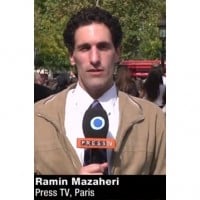 — Ramin Mazaheri (https://thesaker.is/tag/ramin-mazaheri/), chief correspondent in Paris for PressTV (http://www.presstv.com/)
“Jeff J. Brown has done a masterful job, creating a highly readable, marvelously engaging, truly exciting opus, at the same time maintaining the highest level of scholarship. Much of what the reader will discover here will be uncomfortable, most of it will be unfamiliar. Thanks to the Western disinformation machine of the U.S. Deep State with full complicity of corporate media the national conversation is saturated with malignant, vitriolic propaganda, the truth nowhere to be found. So … if you are fed up with self-serving lies of the capitalist neoliberal establishment and looking for a reality-based, factually-objective, thoroughly-researched, unassailably accurate portrayal of China, and the prospects it offers humankind for not just surviving the current raft of existential challenges, but for a world built on cooperation, mutual trust, and reciprocal advantage, there is no comparable work available today. Read BIG Red Book on China, then keep it handy. It will be one of your most valuable reference books for many years to come.”
 — John Rachel (https://jdrachel.com), author of The Peace Dividend (https://jdrachel.com/books/) and An Unlikely Truth (https://jdrachel.com/an-unlikely-truth/)
“Jeff Brown has written a gorgeous text. His prose is lucid, clear, humane and approachable. He writes with the conviction of a convert and the generosity of a saint, though he does not pull punches. He attacks the vicious propaganda lies that have enveloped modern China since its founding in 1949 and beyond, taking his reader back to ancient times to assess the modern day import of Confucianism, the Silk Roads, and the Heavenly Mandate. This book is a primer on many fronts, including Chinese governance, philosophy, history and art. Yet it is also a courageous telling of the author’s own decoupling from the very lies of which he has the proper grace and temerity to forewarn his reader. For those who find themselves irritated and downright suspicious of the bulk of Western treatments of China, BIG Red Book on China is the veritable push-off point for understanding China in the English language–from a chastened English-language speaker to boot.”
 — Dr. Amir Khan, Associate Professor of English, Dalian Maritime University; Managing editor, Conversations: The Journal of Cavellian Studies; Author, Comedies of Nihilism
“China Is Communist Dammit – Dawn of the Red Dynasty is perhaps the best book written about this country in years. Jeff Brown produced a masterpiece, and many more will undoubtedly follow!”
 — Andre Vltchek (http://andrevltchek.weebly.com/), author of “Aurora” (https://www.amazon.com/Aurora-Andre-Vltchek/dp/6027354364/) and “Exposing Lies Of The Empire” (https://www.amazon.com/Exposing-Lies-Empire-Andre-Vltchek/dp/6027005866).
“China Rising – Capitalist Roads, Socialist Destinations” (https://www.amazon.com/China-Rising-Capitalist-Socialist-Destinations/dp/0996487042/):
“I just finished Jeff J. Brown’s insightful book, ‘China Rising’. I found it fluid and forthright . . . Bravo!”
 — James Bradley (http://www.jamesbradley.com/), author of “The China Mirage” (https://www.barnesandnoble.com/w/the-china-mirage-james-bradley/1118620112?ean=9780316196666#/) and “Flags of Our Fathers” (https://www.barnesandnoble.com/w/flags-of-our-fathers-james-bradley/1100303084?ean=9780553384154#/).
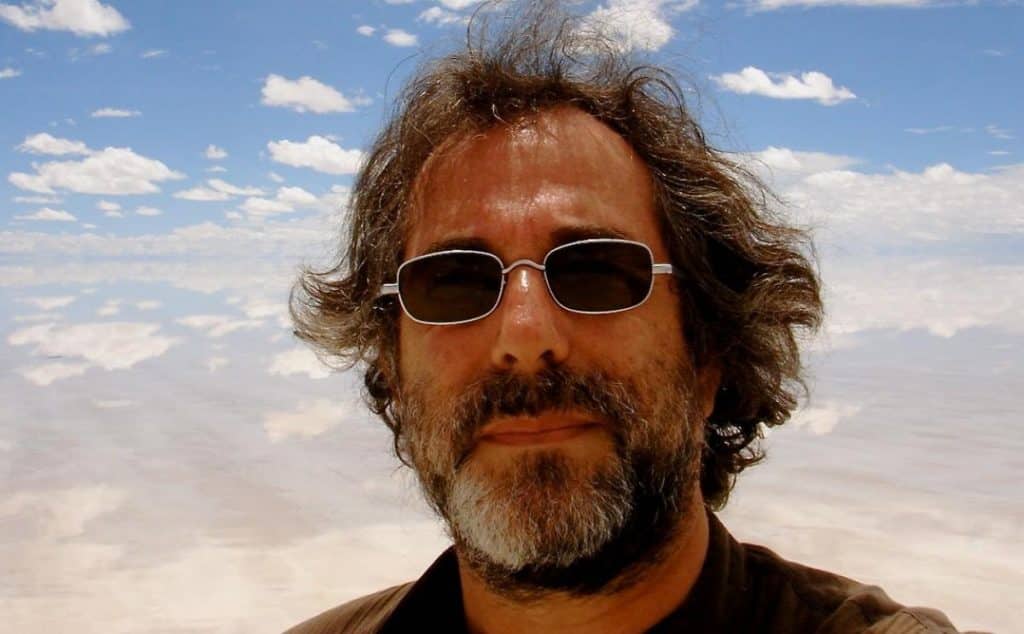
“Sooner or later, certainly while you are deep into this book, say when you reach the part that explains what makes Xi Jinping run, you gotta ask yourself a question: why should I rely on a gaggle of pompous, redundant, ideologically impaired U.S. scholars self-billed as China ‘experts’, when I can get my Sino-kicks with Jeff?”
 — Pepe Escobar (http://www.atimes.com/writer/pepe-escobar/), author of “2030” (https://www.amazon.com/2030-Pepe-Escobar/dp/1608880354) and “Empire of Chaos” (https://www.amazon.com/Empire-Chaos-Pepe-Escobar/dp/1608881644)
“44 Days Backpacking in China- The Middle Kingdom in the 21st Century, with the United States, Europe and the Fate of the World in Its Looking Glass” (https://www.amazon.com/44-Days-Backpacking-China-Kingdom/dp/1484939999/):
“What if Alexis de Tocqueville were fluent in Mandarin and traveling through China by backpack and bullet train? Oklahoma’s latter-day Tocqueville, Jeff J. Brown, is one heck of a good story teller, and traveling with him deep into China is an adventure not to be missed.”
 — Thomas A. Bass (http://www.thomasbass.com/), author of “The Spy Who Loved Us” (http://www.thomasbass.com/the_spy_who_loved_us_78725.htm) and “Vietnamerica-The War Comes Home” (http://www.thomasbass.com/vietnamerica__the_war_comes_home_1258.htm).
“44 Days is a delightful romp through a changing China and Jeff J. Brown is an excellent guide.”
 — John Pomfret (http://www.johnpomfret.org/), author of “Chinese Lessons: Five Classmates and the Story of the New China” (http://www.johnpomfret.org/chinese-lessons/) and “The Beautiful Country and The Middle Kingdom” (http://www.johnpomfret.org/the-book).
“Reading 44 Days is like taking a trip through China with a very funny and articulate friend. This is entertainment. 44 Days is worth its weight in gold based sheerly on comedic value. However, the book has a far more reaching purpose. It’s an honorary degree in International Studies. 44 Days should be taught in high school social studies classes.”
 — Prairie Boulmier-Darden, International Educator-Director
“44 Days is an entertaining tale told by someone with a good eye for the absurd, a sense of history and the ability to appreciate a journey’s simple pleasures.”
 — William Kazer, Wall Street Journal
“I could feel the heat of the desert, the toxic air of large, congested cities and the crisp brilliance of a sunny day high on a glacier. Jeff Brown is an intelligent, articulate and entertaining writer and 44 Days is absolutely fascinating. I highly recommend it.”

— Mick Winter, author of Cuba for the Misinformed: Facts from the Forbidden Island (https://www.amazon.com/dp/0965900096/) and Peak Oil Prep: Prepare for Peak Oil, Climate Change and Economic Collapse (https://www.amazon.com/gp/product/0965900045/)
http://www.mickwinter.com
“Jeff discovers himself and ponders refreshing perspectives on the human condition. 44 Days is a terrific read for thinkers, travelers and otherwise.”

— Deena Stryker, author of Lunch with Fellini, Dinner with Fidel (https://www.amazon.com/Lunch-Fellini-Dinner-Fidel-Illustrated/dp/1479103217/) and A Taoist Politics: The Case for Sacredness (https://www.amazon.com/gp/product/1419676059/)
http://otherjonesii.blogspot.com
So, what are you waiting for?
Get all three autographed and dedicated books for ¥299= ±$47/€40 plus cheap tracked shipping anywhere in the world!
If you find China Rising Radio Sinoland‘s work useful and appreciate its quality, please consider making a donation. Money is spent to pay for Internet costs, maintenance, the upgrade of our computer network, and development of the site.
Why and How China works: With a Mirror to Our Own History
44 Days Backpacking in China: The Middle Kingdom in the 21st Century, with the United States, Europe and the Fate of the World in Its Looking Glass
China Rising: Capitalist Roads, Socialist Destinations
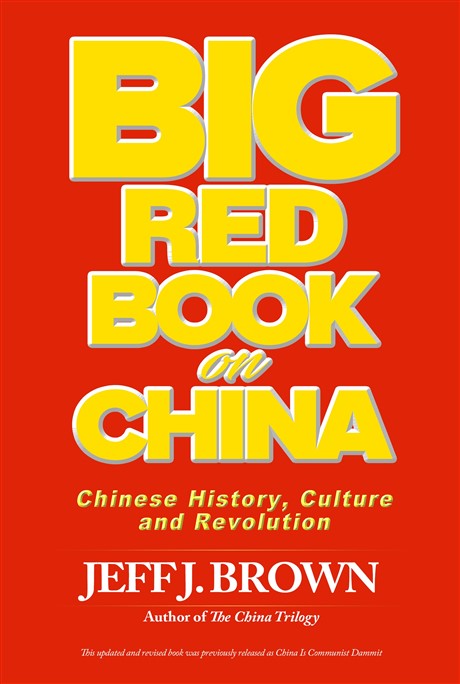
BIG Red Book on China: Chinese History, Culture and Revolution
ABOUT JEFF BROWN
JEFF J. BROWN, Senior Editor & China Correspondent, Dispatch from Beijing
Jeff J. Brown is a geopolitical analyst, journalist, lecturer and the author of The China Trilogy. It consists of 44 Days Backpacking in China – The Middle Kingdom in the 21st Century, with the United States, Europe and the Fate of the World in Its Looking Glass (2013); Punto Press released China Rising – Capitalist Roads, Socialist Destinations (2016); and BIG Red Book on China (2020). As well, he published a textbook, Doctor WriteRead’s Treasure Trove to Great English (2015). Jeff is a Senior Editor & China Correspondent for The Greanville Post, where he keeps a column, Dispatch from Beijing. He also writes a column for The Saker, called the Moscow-Beijing Express. Jeff interviews and podcasts on his own program, China Rising Radio Sinoland, which is also available on SoundCloud, YouTube, Stitcher Radio and iTunes.
In China, he has been a speaker at TEDx, the Bookworm and Capital M Literary Festivals, the Hutong, as well as being featured in an 18-part series of interviews on Radio Beijing AM774, with former BBC journalist, Bruce Connolly. He has guest lectured at the Beijing Academy of Social Sciences (BASS) and various international schools and universities.
More on Jeff
Jeff can be reached at China Rising, jeff@brownlanglois.com, Facebook, Twitter, Wechat (Jeff_Brown-44_Days) and Whatsapp: +86-13823544196.
For Jeff J Brown’s Books, Radio Sinoland & social media outlets
CHINA RISING OUTLETS AND RESOURCES CLICK HERE
Signup for our special China Rising bulletin (FREE)
Best news and commentary on China on the web! Guaranteed.
Subscribe

No comments:
Post a Comment