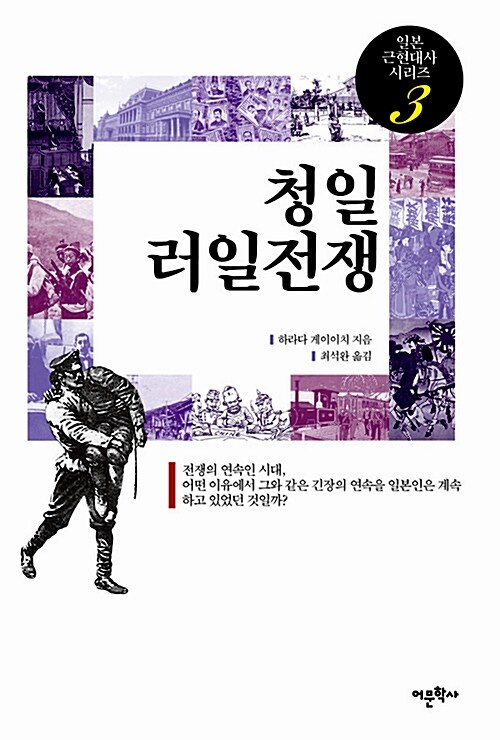
청일.러일전쟁 | 일본 근현대사 3 | 하라다 게이이치 | 알라딘청일.러일전쟁 |
일본 근현대사 3하라다 게이이치 (지은이),
최석완 (옮긴이)
어문학사2012









미리보기
책소개
'일본 근현대사' 시리즈 3권. 입헌 국가가 된 일본은, 청일전쟁, 의화단의 난, 러일전쟁과 거의 5년마다 큰 전쟁을 반복해, 대만과 조선이라고 하는 두 개의 식민지를 획득했다. 제국 의회가 열린 국내에서는, 번의 파벌 정부와 민당의 분쟁이 계속되는 한편, 국민 통합의 움직임도 볼 수 있다. 훌륭한 메이지 상을 되물으면서, 대일본 제국이 모습을 나타낸 세기 전환기의 20년을 그린다.
목차
머리말-일본으로, 아시아로 5
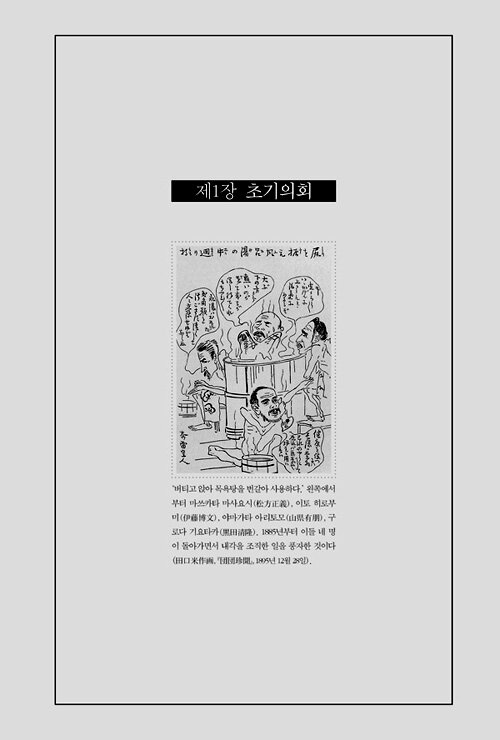
제1장 초기의회 15
1. 헌법 실시의 단행 16
2. 제1의회의 공방 26
3. 적극주의로의 전환 35
제2장 조약개정 45
1. 시베리아철도와 일본 46
2. 계속되는 의회와의 대립 53
3. 이토 히로부미와 자유당의 모색 60
4. 조약개정과 제국의회 67
제3장 청일전쟁 77
1. 협조로부터의 이탈 78
2. 조선과 일본의 민중 82
3. 개전 91
4. 전쟁의 실상 104
5. 종전에서 전후로 118
제4장 대만 정복 전쟁 131
1 가혹한 정복 132
2. ‘외지’의 탄생 142
3. 팽창의 역류 152
제5장 청일 전후와 국민 통합 157
1. ‘전후경영’의 출발 158
2. 근대 법체계 168
3. ‘전후경영’의 정치 172
4. 국민 통합의 진전 187
제6장 민우사와 평민사 203
1. 전쟁과 하층사회 204
2. 문학과 사회 218
3. 저널리즘의 성숙 223
제7장 러일전쟁과 한국병합 237
1. 열려진 문 238
2. 러일전쟁 261
3. 강화의 모색 271
4. 전쟁의 기억 281
5. 한국병합 287
맺음말-‘빛나는 메이지’론과 내셔널리즘 299
저자 후기 306
역자 후기 308
연표 311
참고문헌 315
색인 323
접기

저자 및 역자소개
하라다 게이이치 (原田敬一) (지은이)
저자파일 신간알림 신청
1948년 오카야마 시(岡山市) 출생. 1982년 오사카대학(大坂大學) 대학원 문학연구과 박사후기과정 수료. 일본 근대사 전공. 2012년 현재 불교대학(佛敎大學) 문학부 교수.
<저서>
<日本近代都市史硏究』(思文閣出版),『國民軍の神話-兵士になるということ』(吉川弘文館),『帝國議會 誕生』(文英堂)
<편서>
『日淸戰爭の社會史』(共編, フォ-ラム·A) 등
<논문>
「慰靈の政治學」<小森陽一·成田龍一編 『日露戰爭スタディ-ズ』>(紀伊國屋書店) 등
최근작 :
<청일.러일전쟁> … 총 18종
(모두보기)===
出典: フリー百科事典『ウィキペディア(Wikipedia)』
経歴
日本近現代史研究者として
1991年、佛教大学文学部史学科助教授に就いた。1996年、学位論文『日本近代都市史研究』を大阪大学に提出して文学博士号を取得[1]。2010年から2012年には、同大学歴史学部歴史文化学科教授。2013年からは学科名称変更に伴い、同歴史学科教授。2019年に佛教大学を退任し、名誉教授となった。
===
최석완 (옮긴이)
대진대학교 국제지역학부 일본학전공 교수로 재직하고 있으며 도쿄대학에서 학위논문 「日本大国家化研究序説」로 문학박사 학위를 받았다. 대표 저 · 역서로는 『日清戦争への道程』, 『청일·러일전쟁』(原田敬一)이 있다.
최근작 :
<장소 철학 2>,
<장소 철학 1>,
<한눈에 익히는 초.중급 일본어 한자> … 총 17종
(모두보기)출판사 제공 책소개
‘가족이나 군대의 모습, 식민지의 움직임까지 고려하면서
막말에서 현재에 이르는 일본의 발자취를 좇아가는 새로운 통사
<일본 근현대사 시리즈(전 10권, 원제 シリ?ズ日本近現代史)>는 2007년 이와나미서점에서 간행한 역사 시리즈로, 19세기 중반의 외국 함선 내항으로부터, 21세기의 현재까지, 대략 150년의 역사를 아우르고 있다. 근현대의 일본은 무엇을 요구해 어떠한 걸음을 진행시켜 왔으며, 지금부터 어디로 가고자 하는 것인가에 대한 물음을 제기하여, ‘막말·유신’에서 ‘포스트 전후 사회’까지를 9개의 시대로 구분해, 각 시기마다 학계에서 두각을 나타내고 있는 중견 연구자들의 전문적인 지식을 활용한 통사로서 간행되었다.
<1권 막말·유신>(이노우에 가쓰오), <2권 민권과 헌법>(마키하라 노리오), <3권 청일·러일전쟁>(하라다 게이이치), <4권 다이쇼 데모크라시>(나리타 류이치), <5권 만주사변에서 중일전쟁으로>(가토 요코), <6권 아시아·태평양전쟁>(요시다 유타카), <7권 점령과 개혁>(아메미야 쇼이치), <8권 고도성장>(다케다 하루히토), <9권 포스트 전후 사회>(요시미 슌야)의 9권으로 분권되어 있는 본 역사 시리즈에는 각 시대 분야에 정통한 한국의 번역자 9명이 담당하여, 본 <일본 근현대사 시리즈>(어문학사)가 출간되는 데 힘을 모았다. 이 번역 작업은 일본사뿐만 아니라 사회학, 정치학, 사상사 등에서 일본과 관련된 내용을 전공하고 있는 한국의 연구자들에게 이전에 보지 못한 방대하면서도 체계적인 내용을 제공한다는 측면에서도 대단히 의미 있다. 각 권마다 ‘역자 후기’를 덧붙여 한국의 역사학자들이 바라본 시대 의식, 한국 사회에 남겨진 과제 등을 생각해볼 수 있도록 하였다.
본 시리즈가 주목받는 데에는 21세기 현대의 일본이 과거의 역사를 어떻게 새롭게 재구성하고 있으며, 어떠한 역사적인 맥락을 거쳐서 앞으로 어디를 향해 가고자 하는 것인지에 대한 탐구를 담고 있기 때문일 것이다. 통사를 그린 집필자 9명은 각 시대의 일본을 이해하는 데 있어서 빠뜨릴 수 없는 물음을 내걸어 거기에 대답하면서 총정리를 행하고 있다. 곧 이러한 문제를 생각하기 위해 시작한 <일본 근현대사 시리즈>는 정치, 경제, 사회, 문화의 흐름을 되짚어 보면서 그중에서도 군대와 가족, 식민지의 현실을 탐구하는 것을 통해 ‘근현대 일본’이란 무엇인가를 밝히는 작업을 목적으로 하고 있다.
<1권 막말·유신>을 쓴 이노우에 가쓰오는 시리즈의 마지막 10권에서 이렇게 밝히고 있다.
“21세기에 들어와 역사학에서 생겨난 커다란 변화는 구미 중심의 역사관에서, 예전에는 주변부라고 인식되었던 아시아, 아프리카, 라틴 아메리카를 중심으로 한 역사가 새롭게 서술되기 시작했다는 것입니다. 문화권의 배치도가 세계적으로 대변동을 맞이하고 있습니다. 원래 세계 자본주의와 제국주의의 산업 시스템은 아시아, 아프리카, 라틴 아메리카 지역의 풍부한 자원과 방대한 시장에 의해서 번영을 누려왔던 것입니다. 아시아, 아프리카를 중심으로 거대한 기지개를 켜는 소리가 들려오는 것은 당연한 것이라고 생각합니다.”
새로운 역사의식으로 구성되어 재해석을 시작한 이 통사가 한국 사회에 시사하는 바는 크다. 한국의 국민 역시 한국의 새로운 역사 주체 형성은 누가 될 것이며, 어떻게 만들어가야 할 것인가에 대한 질문에 직면해 있으며, 이러한 질문에 대한 근원적인 답을 찾아야 할 시기가 찾아왔다. 일본의 사회 변화와 비슷한 과정을 겪고 있는 한국으로서는 이 통사의 흐름이 보여주는 현실을 면밀히 주시할 필요가 있으며, 앞으로 한국 사회가 나아갈 미래의 방향을 숙고하는 데 도움이 될 수 있을 것이라 본다.
<제3권 청일·러일전쟁> 소개
이 책은 1890년의 의회 개설에서 1910년의 한국병합에 이르기까지의 근대 일본의 역사를 개관한 개설서이다. 근대 일본은 청일전쟁과 러일전쟁을 거치면서 사회 전반에 걸쳐 어떠한 변화를 겪었던 것인지, 또 전후는 어떠한 과정을 거쳐 또 하나의 전전이 되어 갔던 것인지를 자세히 확인할 수 있다.
저자는 정치외교사 이외에도 군부(軍夫)와 군대, 육해군 묘지제도, 저널리즘 등 사회문화사적 관점에서 청일전쟁의 실상과 영향을 검토하는 연구를 진행해 왔다. 후기에서 밝혔듯이 최근에는 지난 20년간의 일본 역사학계의 연구 성과를 정리하여 개설서로 만드는 일에 몰두하고 있다. 이 책과 함께 2008년에도 청일전쟁 관련 개설서인 『일청전쟁(日???)』(吉川弘文館, 2008년)을 출판하였다.
이 책은 여러 가지 면에서 종래의 개설서와 다르지만 특히 다음의 두 가지 점에서 주목된다. 하나는 군부, 전병사자, 저널리즘, 국민생활, 내셔널리즘, 문학, 하층사회, 기념비 등 전쟁의 영향을 사회 전반의 문제와 관련시켜 서술한 점이다. 전후 일본 역사학계의 통설적 견해가 정착하던 1960, 70년대의 개설서(문고본), 예컨대 『일청전쟁(日???)』(藤村道生, 岩波新書, 1973년), 『일러전쟁(日露??)』(古屋哲夫, 中公新書, 1966년), 『일한병합소사(日韓?合小史)』(山?健太?, 岩波新書, 1966년) 등이 주로 정치, 외교, 군사 문제에 초점을 맞추던 것과는 차이가 있다.
다음으로 더욱 주목할 것은 근대 일본의 대외 정책을 팽창주의 일변도로 해석하는 종래의 전통적인 시각에서 벗어난 점이다. 일본의 대외 팽창주의를 비판하면서도, 조선의 지배를 놓고 벌어진 준비된 전쟁, 청일전쟁과 러일전쟁이라는 시각은 찾아보기 어렵다. 천진조약은 조선 불가침과 영토 보전에 관한 청일의 양해가 성립했음을 의미하며 따라서 일본이 적극적으로 조선 침투를 도모하지 않는 한 청일전쟁의 가능성은 낮았다는 것이다. 또 러일전쟁과 관련해서도 일본은 마지막까지 영일동맹과 러일협상을 동시에 성립시키는 다각 동맹·협상망의 성립을 포기하지 않았다고 설명하였다. 같은 맥락에서 ‘외교정략론’을 극히 예외적인 군사모험주의로 평가하고, 러일전쟁 중의 조선보호권 획득 문제를 전쟁의 장기화에 대비한 포석으로 해석하였다.
지난 20년 동안 한일 양국은 역사 교과서 문제를 놓고 대립을 계속해 왔다. 우익의 목소리가 커지는 배경에는 보수주의 역사학의 연구가 있다. 이 책은 최근의 일본 역사학계의 보수화 경향이 개설의 단계에서도 급격히 흡수될 정도로 영향력을 증대시키고 있다는 사실을 확인케 해준다. 그런 의미에서 한번쯤 읽어볼 가치가 있다고 생각한다.
-역자 후기 중에서- 접기
마이리뷰
구매자 (1)
전체 (1)
리뷰쓰기
공감순


청일 러일 전쟁 / 하라다 게이이치


영일통상항해조약(1894.7.16)은 후쿠자와 유키치가 '탈아론'(1885)에서 주장하던 주요 목표 중 하나를 이루어냈다. 그것은 "자국 영토를 법으로 지배하는 근대 국가의 주권을 제한"하던 치외법권의 철폐이다. 치외법권의 철폐는 일본이 "구미와 대등한 주권 국가로 승인되었음을 의미한다."(73) 이로써 일본은 서구 열강을 따라잡는 행보를 맹렬하게 진행시킨다. 야마가타 아리토모 수상은 제국의회에서 열린 시정 방침 연설(1890.12.6)에서 '주권선'의 안위와 밀접한 관계가 있는 구역으로 ‘이익선’이라는 용어를 사용하는데, 이는 "식민지 대만과 세력권 조선을 발판으로 이후의 50년 동안을 군사력 확대와 전쟁으로 채색한다. 그 전환점이 청일전쟁이다."(79)
1894년 조선에서 갑오농민전쟁이 벌어지자 중의원의 내각 탄핵 상주안에 시달리던 이토 내각은 '이익선'에서 벌어진 외부 사태를 구실로 중의원 해산과 조선 파병을 결의하였다. 이토의 상주를 받은 천황은 "오야마 이와오 육상 등에게 '조선에 거류 중인 우리 국민을 보호하기 위해 병대를 파견하고자 한다'는 칙어를 내렸다."(85) 그러나 6월 11일 전주화약이 성립되어 농민군이 조기에 해산하자, 무쓰 외상은 "만약 무슨 일도 하지 않은 채 또는 아무 곳으로도 가지 못한 채 끝내 그곳에서 허무하게 귀국하게 된다면, 몹시 체면이 서지 않을 뿐만 아니라 정책이 달성되지 못한 것이라면서, 한성에 진출한 군대가 '무슨 일'인가를 해줄 것을 강하게 요구하였다."(91)
이와 함께, 6월 15일 각의는 "1) 조선의 내정을 청일이 공동으로 개량하기 위해 양국에서 상설위원을 파견하여 지도한다. 2) 청국이 거부한다면 일본이 단독으로 개혁을 지원한다"는 내부 방침을 세우고 조선 문제에 적극 개입하기 시작한다. "공사관 및 거류민의 보호라는 당초의 파병 목적을 변경하여, 청일 간의 교섭에 새로운 과제를 끼워 넣는 작전으로 전환한 것이다."(92) 오토와 스기무라는 조선정부로부터 "조선은 자주국이며, 청군은 조선의 요청으로 온 원병이므로 퇴거를 요구할 수 없다"는 회답이 올 경우에 자주국 조선에 청군이 간섭하는 것은 부당한 행위라는 구실로 개전한다는 계획을 세워두었다.(93)
※ 청일 전쟁의 전개 양상
한성전신국 절단 및 경복궁 공격(1894.7.23) - 풍도 앞바다 해전에서 청나라 함대 격파(7.25) - 청일 양국 선전포고(8.1) - 평양함락(9.16) - 일본의 황해 해전 완승(9.17) - 압록강 너머로 진출(10.25) - 여순 공략 개시(11.21) - 산동성 공략 및 위해위 요새 점령(1895.2.2) - 북양해군 항복(2.12) - 시모노세키 조약 조인(4.17) [조약 내용 : 조선 독립 승인 / 요동반도와 대만 할양 / 은 2억량 배상]
일본의 침략 야욕을 목도한 동학 농민군은 '녹두장군' 전봉준을 맹주로 삼아 10월 9일 2차 무장 봉기를 일으킨다. 일본은 1894년 11월부터 다음 해 4월 초순까지 동학 농민군을 본격적으로 탄압했다. "탄압 부대의 주력은 11월 초순에 도착한 후비 보병 독립 제19대대 등 2,700명의 일본군이었으며, 여기에 2,800명의 조선 정부군과 각지의 양반 사족 및 토호 등이 조직한 반동적인 민보군이 가담하였다." 촌 구석구석까지 몰아붙이는 섬멸 작전에 맞서, "5개월 동안 농민군이 치른 전투는 46차례이고, 농민군 참가 인원은 연 13만 4,750명으로 추정된다. 또 하나의 청일전쟁이었다."(103)
"청일전쟁은 청의 군사력이 약체라는 사실을 세계에 폭로하는 계기가 되었고, 동시에 열강에 대항할 수 있는 군사력이 아시아에 존재하지 않는다는 것"을 확인시켜 주었다. 결국, "19세기 말 이후에 찾아온 아시아의 위기는 청일전쟁에 의해 생겨난 것이다."(122) 구미 열강이 사태 수습에 개입하자, 일본 정부와 군부는 청일전쟁 후의 정세를 감안하여, 남진론의 거점인 대만을 열강에게 넘겨주어선 안 된다는 합의를 도출한다. 이에 따라 일본은 말레이반도와 남양제도 진출의 근거지인 "대만을 사전 점령하고 청국의 할양을 요구"하는 화평조약을 모색한다. "마쓰카타는 이 의견서를 '천하 유식자의 공론'이라 하였고, 이토 히로부미도 '동감·동정'의 뜻을 전하였다."(132-3)
일본은 "7만 6천 명의 병력(군인 4만 9,835명, 일본인 군부 2만 6,216명)을 투입하여, 일본군 사상자 5,320명(전사자 164명, 전병사자 4,642명, 부상자 514명)을 내고, 중국인 병사와 주민 1만 4천 명을 살해한 끝에 대만을 획득하였다."(138) 진정으로 대만을 일본의 일부로 만들고자 했던 이사와 슈지(대만총독부 초대 학무부장)는 대만인들의 '정신을 정복'하는 일에 주력했다. 이사와의 구상은 본국에 재수입되어, 이념으로서의 '국어' 개념을 만들어낸다. 우에다 가즈토시는 "일본 전국에서 통하는 언어를 만들어 내는 일"을 당면 과제로 삼는 동시에 "조선인, 미국인을 가리지 않고 누구나 알아야 할 '동양 전체의 보통어'를 목표로 해야 한다고 선언하였다."(156)
"청일전쟁 후 아시아의 군사적 긴장은 무역과 금융 면에서 서구와 미국에 대해 러시아와 일본이라는 거대한 구매자를 제공했다는 의미도 갖는다. 이에 따라 구미는 1873년 이래의 대大불황에서 간신히 벗어났고 독일(1893년~), 영국(1895년~), 미국(1897년~)은 차례로 호황을 맞이하였다. 또 일본이 영국에 대량 주문한 군함과 대포는 영국에서의 동형함 제조 비용을 낮추었고, 실험 연구비도 일본에 전가시키는 효과를 가져왔다. 청일전쟁 배상금의 46%에 해당하는 1,753만 파운드가 런던에서 해외 지불 기금으로 이용되었으며, 그 대부분은 해외 군비 확장비로 쓰였다. 청일전쟁의 열매를 가장 잘 맛본 것은 대영제국이었다."(165-6)
청일전쟁 배상금에 시달리던 청국은 "1895년 7월 프랑스와 러시아의 공동 차관을 받아들였다(36년간 변제). 이어서 다음 해에는 영국과 독일도 1,600만 파운드의 공동 차관을 제공했다(36년간 변제). 재정 파탄에 이르게 된 청국은 일본에 갚아야 할 2억량의 배상금 때문에 여러 열강의 금융에 의존하는 구조로 변해 갔다."(244) 한편, 러시아 정부는 의화단 세력과의 충돌을 구실로 삼아, "1900년 7월 만주 파병을 개시하고 10월에는 전 만주를 점령하였다." 그러자 일본 정부는 러시아와 "한국 문제만을 교섭해 온 방침을 버리고, 만주 문제와 한국 문제를 한 세트로 만들어(滿韓不可分) 서로가 만주와 한국을 완전히 확보한다는(滿韓交換) 새로운 방침"을 수립한다.(253)
1904년 러일전쟁이 시작되고, 만주의 요양, 사하, 봉천 등지에서 벌어진 육상전투는 일본의 우세로 끝났지만 대규모 병력 손실이 불가피했다. 봉천회전에서 퇴각하는 러시아군을 추격할 여력이 없던 일본 정부는 지구전이 될 "러일전쟁을 앞으로도 수행하기 위한 근거지 및 병참지로서 한국을 이용하기 위하여, 내정까지도 장악하는 보호국화가 필요"하다고 생각한다.(277) 마침내 1905년 5월 동해 해전을 승리로 이끈 일본은 포츠머스 강화조약을 맺어 러시아로부터 사할린을 할양 받고, 조선에 매진한다. 3차에 걸친 한일협약을 통해 조선의 내정, 외교권을 박탈한 일본은 이토 히로부미 암살(1909.10)을 계기로 병합을 가속화하고 마침내 한국병합조약(1910.8.22)을 조인한다.
- 접기
nana35 2017-07-03 공감(3)
댓글(0)Thanks to
공감
===
23 customer reviews
Translate all reviews to English
From Japan
salmon
5.0 out of 5 stars 第二次世界大戦が起きた背景を知る上で読んだ方がいい書籍。
Reviewed in Japan on October 1, 2025
Format: Paperback ShinshoVerified Purchase
第二次世界大戦を考えるうえで、日清・日露戦争は無視できない出来事です。何故このような戦争が起きたのか、詳しく書かれている本だと思います。
Helpful
Report
Translate review to English
甘口
4.0 out of 5 stars 「戦後文学」のあたりに読み応えあり
Reviewed in Japan on March 2, 2023
Format: Paperback ShinshoVerified Purchase
日清戦争の取材をきっかけに新しい文学が成長していく様子の叙述がおもしろいですね。泉鏡花もそこに登場します。東京の貧民窟を探訪するルポルタージュも、社会的正義を追求するジャーナリズムも発達していく2つの戦争の間のあたりをぜひ読んだ方がいいです。本の半分を過ぎたところですから、それまでに政治史の正確なのだろうけど退屈な記述に疲れてしまうかもしれませんが、そこをがまんして。
この本に限りませんけど、評価で☆1つだけつけてコメントなし、てのをよく見ます。低い評価をするのなら、その理由をレビューに書いてくれないと、商品を選ぶ参考になりません。レビューを書かずに低い評価ができないように、アマゾンはシステムを改善してもらえないでしょうか。
ちなみにこの本が☆1つなど、あり得ない低評価です。
6 people found this helpful
Helpful
Report
Translate review to English
ぶんぶっち
5.0 out of 5 stars 貴重な本
Reviewed in Japan on March 26, 2015
Format: Paperback ShinshoVerified Purchase
原田先生が渾身を振り絞って書いた、日本近代史の戦争という暗い側面を描いた名著である。
11 people found this helpful
Helpful
Report
Translate review to English
たつた
3.0 out of 5 stars 難しかった
Reviewed in Japan on March 11, 2012
Format: Paperback Shinsho
日清・日露戦争の頃の日本の様子を知りたくて購入した。
本書の内容は政治的側面が多くかつ登場人物も多いので、あまり歴史的背景を知らない自分にとっては難しく感じた。
特に政治的な内容が多く当時の庶民の様子はあまりわからなかった。
歴史的に深く知りたい人向けの一冊であると感じた。
3 people found this helpful
Helpful
Report
Translate review to English
snowman
5.0 out of 5 stars 日本近現代史を理解したい人にお薦めします。
Reviewed in Japan on September 17, 2013
Format: Paperback ShinshoVerified Purchase
本書籍シリーズは全10巻で構成されていますが、今回第3巻から第6巻までを購入しました。近頃、日中・日韓で歴史認識をめぐって論争されています。中・高校で飛ばされてきた時代を知りたくて今回購入しました。自分としては本書籍は様々な資料を基に記述されていて、少々難しい言葉で書かれていますが、当時の日本・中国・韓国の事情が理解できる良い書籍だと思いました。
中古品を購入しましたが、送られてきた時の包装が、本を傷つけないように、とても丁寧で驚きました。本も新品のようにきれいでした。出品者の方はとても本を愛されている様に感じられました。また買いたくなりました。今回はとても満足しています。
8 people found this helpful
Helpful
Report
Translate review to English
kohhy
5.0 out of 5 stars 日清・日露を問い直す
Reviewed in Japan on February 24, 2012
Format: Paperback ShinshoVerified Purchase
歴史小説、映画、テレビドラマなどで、日清、日露の両戦役を含めて明治という時代はフィクションとなり、多分に美化されがちである。しかし、実際はどうであったのかー? 日清戦争で清から台湾を奪い植民地としたのが、この戦本来の目的だった。同様に、独立国であった韓国を日本帝国に併合し、植民地となすことが日露戦争である。植民地支配とは、如何に本国が資本投下しようと、それは本国の繁栄のためであって、逆ではない。立憲国家となった日本が、日清、北清事変、日露とほぼ5年ごとに大きな戦争を繰り返し、台湾と朝鮮を植民地として獲得。帝国議会が開かれた国内では、潘閥政府と民党とのせめぎあいが続く一方、国民統合の動きも見られる。輝かしい明治像を根本から問い直し、「大日本帝国」が姿を現した転換期の20年を描いてゆく。本書は、原田敬一氏による、鋭く、誠実な分析と考察の重要な成果といえるだろう。
15 people found this helpful
Helpful
Report
Translate review to English
ブルーローズ2
4.0 out of 5 stars 改めて再度学習
Reviewed in Japan on July 18, 2020
Format: Paperback ShinshoVerified Purchase
日清日露戦争の背景、概要、その前後の日本の富国強兵政策、日韓併合など考えるうえでコンパクトにまとめられていると感じます
7 people found this helpful
Helpful
Report
Translate review to English
石川善弘
2.0 out of 5 stars 中身が難しかった
Reviewed in Japan on December 1, 2023
Format: Paperback ShinshoVerified Purchase
途中で読むのをあきらめた。
Helpful
Report
Translate review to English
Amazon カスタマー
4.0 out of 5 stars 一気に読めます。
Reviewed in Japan on November 23, 2016
Format: Paperback ShinshoVerified Purchase
このシリーズはわりと気に入って全シリーズ読んでいます。
若干左寄りです。
6 people found this helpful
Helpful
Report
Translate review to English
Amazon カスタマー
4.0 out of 5 stars わかりやすい本
Reviewed in Japan on August 26, 2016
Format: Paperback ShinshoVerified Purchase
見出しがたくさんあってわかりやすいです。すごく読みやすかったです
3 people found this helpful
Helpful
Report
Translate review to English
Translate all reviews to English
ヒデボン
5.0 out of 5 stars ま、司馬遼太郎が先やね
Reviewed in Japan on February 18, 2021
Format: Paperback Shinsho
日清戦争と日露戦争、特に日露戦争については、その戦争自体の動きについては司馬遼太郎の”坂の上の雲”を読んだほうが、当然ながら、よくわかるし、面白い、これってあったりまえ
で、本書では、なんで二つの戦争が起こったのか?っていうか、起こさせた当時の政治的事情のほうに重点が置かれている。著者はどちらの戦争も、やる必要のなかった戦争!って言ってる。というより、今後、日本が起こさせたしょうむない戦争が、どれもこれもが”やる必然性のなかった戦争”であって、そのとっかかりのような戦争っていうか、戦争”ごっこ”だったんだなって気がする。そう、それだけの戦争だったんですよ。
3 people found this helpful
Helpful
Report
Translate review to English
曇り雨のち晴れ
4.0 out of 5 stars 遅れてきた帝国主義日本の姿
Reviewed in Japan on September 16, 2019
Format: Paperback Shinsho
単に戦争だけでなく、他に時代背景も多く記述されており、当時の日本社会、政治状況もとらえることが出来、記述としては優れている。特に「終わりに」に記述されていること、この時代は1945年まで戦後ではなく戦間というか戦前というか、次の戦争に向けて軍拡を進め虎視眈々と他の領土を植民地化していく膨張主義が明確に日本を覆っていく時代と位置付けられ、遅れてきた帝国主義国・日本がさらに遅れているとみなす国や地域を奪っていく姿、意識が良く分かる。何で時のえらい人は人のものを奪うことに一生懸命になるのでしょうね。泥棒よりひどい醜い姿の強盗として。
2 people found this helpful
Helpful
Report
Translate review to English
おさる
2.0 out of 5 stars 社会史的側面に重点を置いた1890~1910年の歴史の本
Reviewed in Japan on October 9, 2019
Format: Paperback Shinsho
日清戦争に関する記述が薄く、日露戦争は戦争自体にはほとんど触れないくらい、という内容の本で意外でした。当時の社会風俗はどうなっていたのか、どのような自由を味わっていたのか、文化人はどのような動きをしていたのか、労働運動や平和運動はどこで生まれてどうなっていったのかなど、社会史的な側面の強い本だったと思いました。
日清戦争・日露戦争について詳しく学んでみようと考えて購入した本でしたが、タイトルとは異なり、戦争自体についてはかなりあっさり書かれ、それほど文章も割かれていない本でした。
当時の日本の立ち位置に批判的であろうという姿勢を感じましたが、行き過ぎて偏っている印象も受けました。
One person found this helpful
Helpful
Report
Translate review to English
yasq di Fontana
4.0 out of 5 stars 歴史の曲がり角である方向が選ばれるのはかなり偶然・・
Reviewed in Japan on June 2, 2018
Format: Paperback Shinsho
1890-1910。ほぼ100年前の日本の20年間。藩閥政治ー元老政治ー元勲政治とすすんできて政党政治へとうまく進化できず軍人政治になっていくのか?本巻だけでは読み取れないが。
予想外の戦争の勝利で誤った万能感があったんだろうな、政府にも軍部にも大衆にも。琉球領有ー日清戦争ー台湾征服ー日露戦争ー韓国併合。琉球長男・台湾次男・朝鮮三男という上から目線での大日本帝国の完成。
以外にスムーズにすすんでいくのは軍人養成(軍)・帝国大学(政治・産業)・中学(一般人)と教育にたいする目配りがきいているからだろう。結局国力は人間力・・と思いつつ、ここから1945年にどう向かっていくのか。先を急ぐ。
3 people found this helpful
Helpful
Report
Translate review to English
kaizen
5.0 out of 5 stars 中途半端に習っている日本史
Reviewed in Japan on March 22, 2010
Format: Paperback Shinsho
中学、高校では、中途半端な日本史しか習っていない。
日清、日露戦争の動向は、形式的なことしか知らない。
本書では、学校でならうことがなかった部分にも切り込んでいく準備ができる。
4 people found this helpful
Helpful
Report
Translate review to English
Amazon カスタマー
5.0 out of 5 stars 満足
Reviewed in Japan on May 4, 2016
Format: Paperback Shinsho
思ったよりシワなどはありましたが
シミなどはなくとても満足しています!!
One person found this helpful
Helpful
Report
Translate review to English
青木星斗
4.0 out of 5 stars 膨張の開始
Reviewed in Japan on March 25, 2010
Format: Paperback Shinsho
日清戦争は日本国内のいざこざを、外地に向けて発散してごまかす戦争だった。それでいて、清国の犠牲に関しては、「世界の文明進歩のためにその妨害物を排除せんとするに多少の殺風景を演ずるは到底免れざるの数なれば・・・」と言っているのが現実である。安彦良和の「王道の狗」などを読んでほしい。それは司馬史観にばかり信用をおいてはいけないことを教えてくれる。旅順では虐殺もあったようだ。
朝鮮や中国に対する侮蔑を引き起こしたのは、現地の不潔さであったというのも面白いところだ。それは近代を経験した日本人としては当たり前でもあり、おそらく西洋人も似たような感情を世界中で抱いたのだろう。
植民地を有した日本人は、それと内地との引き裂かれで自分の首を絞めているようだ。
この時期の日本人にもメンツにとらわれない人たちもいるが、多くは国というメンツにとらわれて、結果無意味な軋轢を生み出してしまっている。おそらく今の日本人とて(世界全体でそうなのだろう)未来の人間から見れば無意味なことで悩んでいる。それは半永久的に続くのかもしれない。
7 people found this helpful
Helpful
Report
Translate review to English
おがよし@CSS
3.0 out of 5 stars 日本が列強の一員になるまで
Reviewed in Japan on September 20, 2007
Format: Paperback Shinsho
明治維新後から太平洋戦争敗戦までというのは、司馬遼太郎が日本の歴史のなかで前後の時代と断絶してしまっていると評した時期。本来なら、学校教育(特に義務教育)で戦後とならんで子供たちに最も教えなければならない時代だと思います。議会や政党、内閣のあり方や靖国問題など、現代の課題に通じる事柄も多く、学ぶべきことが多い時代。それゆえに、新書形式でシリーズ化して取り上げた企画そのものを評価したいと思います。
さて、第3巻である本書。
本の範囲は、帝国議会発足から韓国併合までの約20年です。日本が国のカタチを整えつつ、外交(もちろん戦争も含めた)によって列強の一員になっていくプロセスを淡々と解説します。
歴史上重要な事柄(絶対に抑えておくべき事件)とそうでもないものの表現のメリハリがあまり利いてなく、予備知識なしで読んでいくのはかなりしんどいと思います。また、文章も客観的な(冷静な)表現に終始しており、歴史的事実と筆者の主観的意見が見極めにくい点には注意が必要です。それだけに、単純にこの頃の歴史をなんとなく知りたい、という人には情報が多すぎ、偏った歴史観をもたないよう、読者にそれなりの知識と読解力が求められると思います。(著者が語る歴史観が至極偏っているという訳ではないので、気にすることもないとは思いますが)
本書の内容については、タイトルの割に「日清・日露戦争とは(日本にとって)なんだったのか」という点について掘り下げが足りないように思いましたが、新書という限られた紙幅と近現代史を一気に振り返るというシリーズのコンセプトからすればやむなしといえましょう。
本シリーズで関心事を見つけて、類書で掘り下げていく、という読み方がいいのだろうと思います。
27 people found this helpful
Helpful
Report
Translate review to English
ishilinguist
4.0 out of 5 stars 「輝かしい明治」の象徴たる日清日露戦争を問い直す
Reviewed in Japan on February 21, 2007
Format: Paperback Shinsho
岩波新書の近現代シリーズ第一弾、第二弾において、薩長藩閥政府の国民統合、憲法制定を見てきたが、いよいよ本書では明治日本のハイライトである日清・日露戦争について取り扱うこととなる。またこれの一連の対外戦争の目標の達成をみた日韓併合までも含まれる。
日清・日露戦争というのは、司馬遼太郎に代表される素朴保守的な近代史観や、保守・右派的な史観では、日本の安全保障上の脅威からの自存自衛戦争であり、「輝かしい」「近代の成功」を象徴するものであり、時には「アジア諸国民の独立運動を勇気づけた」などと肯定的に語られることが多い。
しかし本書ではこのような観点はとらず、一連の対外戦争を通じて、日本が植民地を獲得し、これらの地域・国民を統合し、いかに「大日本帝国」への道をたどっていったかを示していく。また、近年の「台湾・朝鮮に『極悪な植民地支配』をしたわけではない」という「言い訳」は、近年の研究によると「一笑に付される低い水準」のものだとしている。
新書という形式上、十分掘り下げた議論は難しいが、当然これらの見方に対しては猛烈な反発が予想される。いずれにしても、「岩波的」「進歩的」なこの時期の研究の成果が凝縮された一冊であるといえよう。
25 people found this helpful
Helpful
Report
Translate review to English
小僧
5.0 out of 5 stars 興味深かった
Reviewed in Japan on September 9, 2007
Format: Paperback Shinsho
岩波新書のシリーズ日本近現代史の第三作である本書が描き出すものは、1890年の第一回帝国議会から1910年の韓国併合に至る20年間である。「日清から日露戦争へ」のこの時期を、単なる政治・外交・軍事史の枠組みに止まることなく、経済や社会の変容までをも射程に捉えて描く見事な通史である。
本書において特に興味深い視点は、「狭義の日清戦争」に加え、朝鮮との「7月23日戦争」及び、下関講和条約後の台湾征服戦争までをも含めた「広義の日清戦争」という枠組みを設定しているところにある。そのような視点の設定により、日清戦争を、「大日本帝国VS清」という大国間戦争としてのみならず、日本が朝鮮・台湾の植民地化を進めていった帝国主義戦争として把握させてくれる。
そのような視点は日露戦争についても一貫している。著者はポーツマス条約で筆を下ろさずに1910年の韓国併合までを検討対象にしているがそのことは、息せき切って先進国に追いつこうとした日本が超大国ロシアの侵略に懸命に対抗し、打ち破ったとする「司馬史観」に対するアンチテーゼを提供してくれるものである。
本書で描き出されているように、戦争という外圧、軍隊という内圧は着実に日本社会を変容させていった。また、戦争に伴った人々の移動は、各地に「外地」社会を成立させ、外部の中国人、朝鮮人社会を従えるヒエラルキー構造が徐々に形成されていった。その結果、「民衆の帝国意識」が醸成されていったのだと著者は指摘している。後に日本がアジア太平洋戦争へと突き進んでいく過程では、民衆が熱狂的に戦争を支持するという構図が見られたが、その原点が、まさにこの「日清・日露戦争」の時期に準備されていたといえるのではないだろうか。であるとするならば、やはりこの時代は「輝かしい明治」としてではなく、批判的に再検討されるべきものではないだろうか。そんなことを改めて確認させてくれる良書だった。
28 people found this helpful
Helpful
Report
Translate review to English
Translate all reviews to English
モチヅキ
5.0 out of 5 stars 国際関係を踏まえ、多様な可能性に配慮した歴史叙述
Reviewed in Japan on February 3, 2010
Format: Paperback Shinsho
本書は1948年生まれの日本近代史研究者が2007年に刊行した本であり、1890年の帝国議会開会から1910年の韓国併合までを扱う。帝国議会は藩閥政治家と民党との対抗の場であったが、前者も後者も一枚岩ではなく、予算案や条約改正をめぐって合従連衡を繰り返していた。政府の苦境を救ったのが日清戦争である。近代化をめぐる朝鮮の苦闘が甲午農民戦争を引き起こすと、日本は大兵を派遣し、全州和約や清の戦争回避の努力にもかかわらず朝鮮の内政改革を要求し、朝鮮王宮占領によって日清戦争を開始した。日本軍の軍人や軍夫は気候や病気に悩まされながらも清に勝利し、朝鮮の「独立」と台湾割譲を勝ち取り、台湾征服戦争を遂行する(この頃に朝鮮王妃も殺害)。この日清戦争は日本において、軍拡と経済発展、借金財政、戦争報道や記念碑の発展、在郷軍人会等の組織化、外地の超憲法的支配、「国語」の洗練、社会小説の登場などをもたらしたが、他方で帝国主義諸列強による東アジア分割競争に火を点けた。それに対抗する中国の義和団事件を、8カ国連合軍(そのうち半数は日本軍)は武力で鎮圧し、中国に各国の駐兵権を認めさせた。この事件は日英同盟と日露対立激化のきっかけとなり、実際には満韓交換論など交渉の余地があったにもかかわらず、日露戦争が勃発する。非戦論も見られた中、日本は戦力と国力の枯渇の危機にさらされながら、何とか戦闘で勝利をおさめ、そのための兵站基地として朝鮮(韓国)の保護国化を狙った。日本海海戦で戦争に決着をつけた日本では、戦後戦勝を記念する記念日や記念碑が相次いで成立した。また、朝鮮独立という大義名分も捨てられ、義兵運動を鎮圧しながら韓国併合が一歩一歩進められてゆく。こうして、日本は朝鮮や台湾に見られた自生的発展の芽を摘み、帝国化してゆくと共に、軍国主義と満州侵略への道に進んでいく。
12 people found this helpful
Helpful
Report
Translate review to English
ib_pata
5.0 out of 5 stars シリーズ3冊目はなかなか面白いし、読ませてくれます
Reviewed in Japan on March 2, 2007
Format: Paperback Shinsho
「はじめに」での《1894年からの10年間で戦争を三回経験する日本近代は、戦争という外圧と軍隊という内圧で国家と社会を変える経過を当然視するようになる》《近代日本が、欧米文化の学習で優等生だったことが、1945年の破滅を呼ぶことになる》というあたりが問題意識か。本文ではあまり触れられてないが、江戸時代から《日本が、世界を把握できたのは、まずヨーロッパ語を中国で漢訳したものを通じてであった》として『世界地理書』や『職方外紀』の地球、地中海、紅海、熱帯、病院、大学、文科、理科、幾何、代数、方程式、微分、積分、摂氏、華氏などの言葉を今でも使われているとして、維新後に日本製新造漢語が大量につくられ輸出されたことばかりが語られすぎていると批判しています。ここを読んでも、司馬史観に代表される「輝かしい明治」というテーゼを学術的に壊しておこう、という明確な意図が感じられます。
日清戦争の始まった1894年の朝鮮の夏は暑かったそうです。猛暑の中を18kgもの背嚢と武器・弾薬を装備して行軍した日本の兵士たちについて《日本の軍隊は、日清戦争からアジア・太平洋戦争終了まで50年間、アジアを歩き続けたと言っても過言ではない。その始まりである。アジアを歩き続けて私たちは何を見てきたのか、歴史を問う意味がここにもある》(pp.74-75)と書いてあるあたりは名文。また、食糧・衣類・弾薬・病人を運ぶために臨時採用された軍夫たちが軍人の数の10〜20%もいたとは知りませんでした。彼らは笠をかぶり、浅黄木綿の筒袖の上に、○○組と染められた法被と股引を着、草鞋履きだったそうです。
28 people found this helpful
Helpful
Report
Translate review to English
日の入りのテツ
2.0 out of 5 stars 研究書の一種?
Reviewed in Japan on September 19, 2007
Format: Paperback Shinsho
このシリーズは、幕末から現在に至る日本の歩みをたどる通史で、政治・経済・社会・文化にとどまらず、家族や軍隊のあり方にも目配りをする、と宣伝されている。しかし、各巻の記述に一貫性はなく、各著者が「持ち味を生かし」自由に書いている。従って、趣旨に合いかつ興味深い指摘を含む巻、また独自の関心事に集中した巻もある。後者では、歴史的事実(実際には歴史的事実は一定でないはずだが)の記述は少なく、それ(?)を前提に著者の整理の仕方を示す研究書の感じがする。本巻の日露戦争には、戦争の経過の記述無く、日本海海戦もバルチック艦隊もない。政治家・外交家・軍参謀の思惑・国際的駆け引きの記述が多く国民は不在の感(それが歴史?)。歴史に詳しい人はともかく、現代史を学ばなかったので読んでみようという人にはこのシリーズは向かないのでないか? 全巻、索引があるのは良い。
17 people found this helpful
Helpful
Report
Translate review to English
===
23 customer reviews
Translated by Amazon
See original
From Japan
salmon
5.0 out of 5 stars It's a good book to read to learn about the background of the outbreak of World War II.
Reviewed in Japan on October 1, 2025
Format: Paperback ShinshoVerified Purchase
When considering World War II, the Sino-Japanese War is an event that cannot be ignored. I think it's a book that details why this kind of war occurred.
Helpful
Report
Translated from Japanese by Amazon
See original ·Report translation
甘口
4.0 out of 5 stars The area around “post-war literature” is worth reading
Reviewed in Japan on March 2, 2023
Format: Paperback ShinshoVerified Purchase
The description of how new literature grew in the wake of coverage of the Sino-Japanese War is interesting. Izumi Kyoka will also appear there. Be sure to read the area between the two wars, where a reportage exploring slums in Tokyo and journalism pursuing social justice develop. I've just passed half of the book, so it's probably accurate by then, but you might get tired of boring descriptions of political history, but don't mind that.
It's not limited to this book, but I often read it with only 1 ☆ as an evaluation and no comments. If you give a low review the reason, it won't be helpful when choosing a product. Could Amazon improve their system so that they can't get a low rating without writing a review?
Incidentally, this book has an unbelievably low rating, such as ☆ 1.
6 people found this helpful
Helpful
Report
Translated from Japanese by Amazon
See original ·Report translation
ぶんぶっち
5.0 out of 5 stars Valuable books
Reviewed in Japan on March 26, 2015
Format: Paperback ShinshoVerified Purchase
It is a masterpiece depicting the dark side of war in modern Japanese history, written with all his heart by Professor Harada.
11 people found this helpful
Helpful
Report
Translated from Japanese by Amazon
See original ·Report translation
たつた
3.0 out of 5 stars It was difficult
Reviewed in Japan on March 11, 2012
Format: Paperback Shinsho
I bought it because I wanted to know the state of Japan during the Sino-Japanese War.
The content of this book has many political aspects and many characters, so I felt that it was difficult for me who didn't know much about the historical background.
There was a lot of political content in particular, and I didn't really understand the state of the common people at that time.
I felt that it was a book for people who wanted to know history in depth.
3 people found this helpful
Helpful
Report
Translated from Japanese by Amazon
See original ·Report translation
snowman
5.0 out of 5 stars I recommend it to anyone who wants to understand modern Japanese history.
Reviewed in Japan on September 17, 2013
Format: Paperback ShinshoVerified Purchase
This book series consists of 10 volumes in total, but I bought volumes 3 to 6 this time. Recently, there have been disputes between Japan, China, Japan, and South Korea over historical recognition. I bought it this time because I wanted to know the days when they were skipped in middle and high school. For me, this book is written based on various materials, and although it is written in slightly difficult terms, I thought it was a good book that allowed me to understand the circumstances of Japan, China, and Korea at that time.
I bought a used item, but I was surprised that the packaging when it was sent was so careful not to damage the book. The book was as beautiful as new. I felt that the sellers loved the book very much. I want to buy it again. I'm very happy with this time.
8 people found this helpful
Helpful
Report
Translated from Japanese by Amazon
See original ·Report translation
kohhy
5.0 out of 5 stars Requesting Nissin, Japan, and Russia
Reviewed in Japan on February 24, 2012
Format: Paperback ShinshoVerified Purchase
In historical novels, movies, TV dramas, etc., the Meiji period, which includes both the Sino-Japanese and Japan-Russia battles, became fiction, and probably tends to be glorified. But what was it actually like? The original purpose of this war was to take Taiwan from Qing in the Sino-Japanese War and made it a colony. Similarly, the Russo-Japanese War annexed Korea, which was an independent country, to the Japanese Empire and made it a colony. Colonial rule means that no matter how the home country invests capital, it is for the prosperity of the home country, not the other way around. Japan, which became a constitutional nation, repeated major wars with the Sino-Japanese Incident, and Japan and Russia almost every 5 years, and acquired Taiwan and Korea as colonies. Within the country where the Imperial Diet has been held, the feud between the Pan-batsu government and the Democratic Party continues, while movements of national integration are also being seen. It re-examines the glorious Meiji statue from the ground up, and depicts 20 years during the turning point when the “Empire of Japan” appeared. This book can be said to be an important result of sharp and honest analysis and discussion by Mr. Keiichi Harada.
15 people found this helpful
Helpful
Report
Translated from Japanese by Amazon
See original ·Report translation
ブルーローズ2
4.0 out of 5 stars Learn again and again
Reviewed in Japan on July 18, 2020
Format: Paperback ShinshoVerified Purchase
I feel that it has been compactly summarized in considering the background and outline of the Japan-Sino-Japanese War, Japan's policy of strengthening the military before and after, and the annexation of Japan and Korea
7 people found this helpful
Helpful
Report
Translated from Japanese by Amazon
See original ·Report translation
石川善弘
2.0 out of 5 stars What's inside was difficult
Reviewed in Japan on December 1, 2023
Format: Paperback ShinshoVerified Purchase
I gave up reading halfway through.
Helpful
Report
Translated from Japanese by Amazon
See original ·Report translation
Amazon カスタマー
4.0 out of 5 stars I can read it all at once.
Reviewed in Japan on November 23, 2016
Format: Paperback ShinshoVerified Purchase
I really liked this series and read all of them.
It's slightly leaning to the left.
6 people found this helpful
Helpful
Report
Translated from Japanese by Amazon
See original ·Report translation
Amazon カスタマー
4.0 out of 5 stars A book that is easy to understand
Reviewed in Japan on August 26, 2016
Format: Paperback ShinshoVerified Purchase
There are lots of headings and it's easy to understand. It was really easy to read
3 people found this helpful
Helpful
Report
Translated from Japanese by Amazon
See original ·Report translation
Translated by Amazon
See original
ヒデボン
5.0 out of 5 stars ま、司馬遼太郎が先やね
Reviewed in Japan on February 18, 2021
Format: Paperback Shinsho
日清戦争と日露戦争、特に日露戦争については、その戦争自体の動きについては司馬遼太郎の”坂の上の雲”を読んだほうが、当然ながら、よくわかるし、面白い、これってあったりまえ
で、本書では、なんで二つの戦争が起こったのか?っていうか、起こさせた当時の政治的事情のほうに重点が置かれている。著者はどちらの戦争も、やる必要のなかった戦争!って言ってる。というより、今後、日本が起こさせたしょうむない戦争が、どれもこれもが”やる必然性のなかった戦争”であって、そのとっかかりのような戦争っていうか、戦争”ごっこ”だったんだなって気がする。そう、それだけの戦争だったんですよ。
3 people found this helpful
Helpful
Report
Translate review to English
曇り雨のち晴れ
4.0 out of 5 stars 遅れてきた帝国主義日本の姿
Reviewed in Japan on September 16, 2019
Format: Paperback Shinsho
単に戦争だけでなく、他に時代背景も多く記述されており、当時の日本社会、政治状況もとらえることが出来、記述としては優れている。特に「終わりに」に記述されていること、この時代は1945年まで戦後ではなく戦間というか戦前というか、次の戦争に向けて軍拡を進め虎視眈々と他の領土を植民地化していく膨張主義が明確に日本を覆っていく時代と位置付けられ、遅れてきた帝国主義国・日本がさらに遅れているとみなす国や地域を奪っていく姿、意識が良く分かる。何で時のえらい人は人のものを奪うことに一生懸命になるのでしょうね。泥棒よりひどい醜い姿の強盗として。
2 people found this helpful
Helpful
Report
Translate review to English
おさる
2.0 out of 5 stars 社会史的側面に重点を置いた1890~1910年の歴史の本
Reviewed in Japan on October 9, 2019
Format: Paperback Shinsho
日清戦争に関する記述が薄く、日露戦争は戦争自体にはほとんど触れないくらい、という内容の本で意外でした。当時の社会風俗はどうなっていたのか、どのような自由を味わっていたのか、文化人はどのような動きをしていたのか、労働運動や平和運動はどこで生まれてどうなっていったのかなど、社会史的な側面の強い本だったと思いました。
日清戦争・日露戦争について詳しく学んでみようと考えて購入した本でしたが、タイトルとは異なり、戦争自体についてはかなりあっさり書かれ、それほど文章も割かれていない本でした。
当時の日本の立ち位置に批判的であろうという姿勢を感じましたが、行き過ぎて偏っている印象も受けました。
One person found this helpful
Helpful
Report
Translate review to English
yasq di Fontana
4.0 out of 5 stars 歴史の曲がり角である方向が選ばれるのはかなり偶然・・
Reviewed in Japan on June 2, 2018
Format: Paperback Shinsho
1890-1910。ほぼ100年前の日本の20年間。藩閥政治ー元老政治ー元勲政治とすすんできて政党政治へとうまく進化できず軍人政治になっていくのか?本巻だけでは読み取れないが。
予想外の戦争の勝利で誤った万能感があったんだろうな、政府にも軍部にも大衆にも。琉球領有ー日清戦争ー台湾征服ー日露戦争ー韓国併合。琉球長男・台湾次男・朝鮮三男という上から目線での大日本帝国の完成。
以外にスムーズにすすんでいくのは軍人養成(軍)・帝国大学(政治・産業)・中学(一般人)と教育にたいする目配りがきいているからだろう。結局国力は人間力・・と思いつつ、ここから1945年にどう向かっていくのか。先を急ぐ。
3 people found this helpful
Helpful
Report
Translate review to English
kaizen
5.0 out of 5 stars 中途半端に習っている日本史
Reviewed in Japan on March 22, 2010
Format: Paperback Shinsho
中学、高校では、中途半端な日本史しか習っていない。
日清、日露戦争の動向は、形式的なことしか知らない。
本書では、学校でならうことがなかった部分にも切り込んでいく準備ができる。
4 people found this helpful
Helpful
Report
Translate review to English
Amazon カスタマー
5.0 out of 5 stars 満足
Reviewed in Japan on May 4, 2016
Format: Paperback Shinsho
思ったよりシワなどはありましたが
シミなどはなくとても満足しています!!
One person found this helpful
Helpful
Report
Translate review to English
青木星斗
4.0 out of 5 stars 膨張の開始
Reviewed in Japan on March 25, 2010
Format: Paperback Shinsho
日清戦争は日本国内のいざこざを、外地に向けて発散してごまかす戦争だった。それでいて、清国の犠牲に関しては、「世界の文明進歩のためにその妨害物を排除せんとするに多少の殺風景を演ずるは到底免れざるの数なれば・・・」と言っているのが現実である。安彦良和の「王道の狗」などを読んでほしい。それは司馬史観にばかり信用をおいてはいけないことを教えてくれる。旅順では虐殺もあったようだ。
朝鮮や中国に対する侮蔑を引き起こしたのは、現地の不潔さであったというのも面白いところだ。それは近代を経験した日本人としては当たり前でもあり、おそらく西洋人も似たような感情を世界中で抱いたのだろう。
植民地を有した日本人は、それと内地との引き裂かれで自分の首を絞めているようだ。
この時期の日本人にもメンツにとらわれない人たちもいるが、多くは国というメンツにとらわれて、結果無意味な軋轢を生み出してしまっている。おそらく今の日本人とて(世界全体でそうなのだろう)未来の人間から見れば無意味なことで悩んでいる。それは半永久的に続くのかもしれない。
7 people found this helpful
Helpful
Report
Translate review to English
おがよし@CSS
3.0 out of 5 stars 日本が列強の一員になるまで
Reviewed in Japan on September 20, 2007
Format: Paperback Shinsho
明治維新後から太平洋戦争敗戦までというのは、司馬遼太郎が日本の歴史のなかで前後の時代と断絶してしまっていると評した時期。本来なら、学校教育(特に義務教育)で戦後とならんで子供たちに最も教えなければならない時代だと思います。議会や政党、内閣のあり方や靖国問題など、現代の課題に通じる事柄も多く、学ぶべきことが多い時代。それゆえに、新書形式でシリーズ化して取り上げた企画そのものを評価したいと思います。
さて、第3巻である本書。
本の範囲は、帝国議会発足から韓国併合までの約20年です。日本が国のカタチを整えつつ、外交(もちろん戦争も含めた)によって列強の一員になっていくプロセスを淡々と解説します。
歴史上重要な事柄(絶対に抑えておくべき事件)とそうでもないものの表現のメリハリがあまり利いてなく、予備知識なしで読んでいくのはかなりしんどいと思います。また、文章も客観的な(冷静な)表現に終始しており、歴史的事実と筆者の主観的意見が見極めにくい点には注意が必要です。それだけに、単純にこの頃の歴史をなんとなく知りたい、という人には情報が多すぎ、偏った歴史観をもたないよう、読者にそれなりの知識と読解力が求められると思います。(著者が語る歴史観が至極偏っているという訳ではないので、気にすることもないとは思いますが)
本書の内容については、タイトルの割に「日清・日露戦争とは(日本にとって)なんだったのか」という点について掘り下げが足りないように思いましたが、新書という限られた紙幅と近現代史を一気に振り返るというシリーズのコンセプトからすればやむなしといえましょう。
本シリーズで関心事を見つけて、類書で掘り下げていく、という読み方がいいのだろうと思います。
27 people found this helpful
Helpful
Report
Translate review to English
ishilinguist
4.0 out of 5 stars 「輝かしい明治」の象徴たる日清日露戦争を問い直す
Reviewed in Japan on February 21, 2007
Format: Paperback Shinsho
岩波新書の近現代シリーズ第一弾、第二弾において、薩長藩閥政府の国民統合、憲法制定を見てきたが、いよいよ本書では明治日本のハイライトである日清・日露戦争について取り扱うこととなる。またこれの一連の対外戦争の目標の達成をみた日韓併合までも含まれる。
日清・日露戦争というのは、司馬遼太郎に代表される素朴保守的な近代史観や、保守・右派的な史観では、日本の安全保障上の脅威からの自存自衛戦争であり、「輝かしい」「近代の成功」を象徴するものであり、時には「アジア諸国民の独立運動を勇気づけた」などと肯定的に語られることが多い。
しかし本書ではこのような観点はとらず、一連の対外戦争を通じて、日本が植民地を獲得し、これらの地域・国民を統合し、いかに「大日本帝国」への道をたどっていったかを示していく。また、近年の「台湾・朝鮮に『極悪な植民地支配』をしたわけではない」という「言い訳」は、近年の研究によると「一笑に付される低い水準」のものだとしている。
新書という形式上、十分掘り下げた議論は難しいが、当然これらの見方に対しては猛烈な反発が予想される。いずれにしても、「岩波的」「進歩的」なこの時期の研究の成果が凝縮された一冊であるといえよう。
25 people found this helpful
Helpful
Report
Translate review to English
小僧
5.0 out of 5 stars 興味深かった
Reviewed in Japan on September 9, 2007
Format: Paperback Shinsho
岩波新書のシリーズ日本近現代史の第三作である本書が描き出すものは、1890年の第一回帝国議会から1910年の韓国併合に至る20年間である。「日清から日露戦争へ」のこの時期を、単なる政治・外交・軍事史の枠組みに止まることなく、経済や社会の変容までをも射程に捉えて描く見事な通史である。
本書において特に興味深い視点は、「狭義の日清戦争」に加え、朝鮮との「7月23日戦争」及び、下関講和条約後の台湾征服戦争までをも含めた「広義の日清戦争」という枠組みを設定しているところにある。そのような視点の設定により、日清戦争を、「大日本帝国VS清」という大国間戦争としてのみならず、日本が朝鮮・台湾の植民地化を進めていった帝国主義戦争として把握させてくれる。
そのような視点は日露戦争についても一貫している。著者はポーツマス条約で筆を下ろさずに1910年の韓国併合までを検討対象にしているがそのことは、息せき切って先進国に追いつこうとした日本が超大国ロシアの侵略に懸命に対抗し、打ち破ったとする「司馬史観」に対するアンチテーゼを提供してくれるものである。
本書で描き出されているように、戦争という外圧、軍隊という内圧は着実に日本社会を変容させていった。また、戦争に伴った人々の移動は、各地に「外地」社会を成立させ、外部の中国人、朝鮮人社会を従えるヒエラルキー構造が徐々に形成されていった。その結果、「民衆の帝国意識」が醸成されていったのだと著者は指摘している。後に日本がアジア太平洋戦争へと突き進んでいく過程では、民衆が熱狂的に戦争を支持するという構図が見られたが、その原点が、まさにこの「日清・日露戦争」の時期に準備されていたといえるのではないだろうか。であるとするならば、やはりこの時代は「輝かしい明治」としてではなく、批判的に再検討されるべきものではないだろうか。そんなことを改めて確認させてくれる良書だった。
28 people found this helpful
Helpful
Report
Translate review to English
Translated by Amazon
See original
モチヅキ
5.0 out of 5 stars 国際関係を踏まえ、多様な可能性に配慮した歴史叙述
Reviewed in Japan on February 3, 2010
Format: Paperback Shinsho
本書は1948年生まれの日本近代史研究者が2007年に刊行した本であり、1890年の帝国議会開会から1910年の韓国併合までを扱う。帝国議会は藩閥政治家と民党との対抗の場であったが、前者も後者も一枚岩ではなく、予算案や条約改正をめぐって合従連衡を繰り返していた。政府の苦境を救ったのが日清戦争である。近代化をめぐる朝鮮の苦闘が甲午農民戦争を引き起こすと、日本は大兵を派遣し、全州和約や清の戦争回避の努力にもかかわらず朝鮮の内政改革を要求し、朝鮮王宮占領によって日清戦争を開始した。日本軍の軍人や軍夫は気候や病気に悩まされながらも清に勝利し、朝鮮の「独立」と台湾割譲を勝ち取り、台湾征服戦争を遂行する(この頃に朝鮮王妃も殺害)。この日清戦争は日本において、軍拡と経済発展、借金財政、戦争報道や記念碑の発展、在郷軍人会等の組織化、外地の超憲法的支配、「国語」の洗練、社会小説の登場などをもたらしたが、他方で帝国主義諸列強による東アジア分割競争に火を点けた。それに対抗する中国の義和団事件を、8カ国連合軍(そのうち半数は日本軍)は武力で鎮圧し、中国に各国の駐兵権を認めさせた。この事件は日英同盟と日露対立激化のきっかけとなり、実際には満韓交換論など交渉の余地があったにもかかわらず、日露戦争が勃発する。非戦論も見られた中、日本は戦力と国力の枯渇の危機にさらされながら、何とか戦闘で勝利をおさめ、そのための兵站基地として朝鮮(韓国)の保護国化を狙った。日本海海戦で戦争に決着をつけた日本では、戦後戦勝を記念する記念日や記念碑が相次いで成立した。また、朝鮮独立という大義名分も捨てられ、義兵運動を鎮圧しながら韓国併合が一歩一歩進められてゆく。こうして、日本は朝鮮や台湾に見られた自生的発展の芽を摘み、帝国化してゆくと共に、軍国主義と満州侵略への道に進んでいく。
12 people found this helpful
Helpful
Report
Translate review to English
ib_pata
5.0 out of 5 stars シリーズ3冊目はなかなか面白いし、読ませてくれます
Reviewed in Japan on March 2, 2007
Format: Paperback Shinsho
「はじめに」での《1894年からの10年間で戦争を三回経験する日本近代は、戦争という外圧と軍隊という内圧で国家と社会を変える経過を当然視するようになる》《近代日本が、欧米文化の学習で優等生だったことが、1945年の破滅を呼ぶことになる》というあたりが問題意識か。本文ではあまり触れられてないが、江戸時代から《日本が、世界を把握できたのは、まずヨーロッパ語を中国で漢訳したものを通じてであった》として『世界地理書』や『職方外紀』の地球、地中海、紅海、熱帯、病院、大学、文科、理科、幾何、代数、方程式、微分、積分、摂氏、華氏などの言葉を今でも使われているとして、維新後に日本製新造漢語が大量につくられ輸出されたことばかりが語られすぎていると批判しています。ここを読んでも、司馬史観に代表される「輝かしい明治」というテーゼを学術的に壊しておこう、という明確な意図が感じられます。
日清戦争の始まった1894年の朝鮮の夏は暑かったそうです。猛暑の中を18kgもの背嚢と武器・弾薬を装備して行軍した日本の兵士たちについて《日本の軍隊は、日清戦争からアジア・太平洋戦争終了まで50年間、アジアを歩き続けたと言っても過言ではない。その始まりである。アジアを歩き続けて私たちは何を見てきたのか、歴史を問う意味がここにもある》(pp.74-75)と書いてあるあたりは名文。また、食糧・衣類・弾薬・病人を運ぶために臨時採用された軍夫たちが軍人の数の10〜20%もいたとは知りませんでした。彼らは笠をかぶり、浅黄木綿の筒袖の上に、○○組と染められた法被と股引を着、草鞋履きだったそうです。
28 people found this helpful
Helpful
Report
Translate review to English
日の入りのテツ
2.0 out of 5 stars 研究書の一種?
Reviewed in Japan on September 19, 2007
Format: Paperback Shinsho
このシリーズは、幕末から現在に至る日本の歩みをたどる通史で、政治・経済・社会・文化にとどまらず、家族や軍隊のあり方にも目配りをする、と宣伝されている。しかし、各巻の記述に一貫性はなく、各著者が「持ち味を生かし」自由に書いている。従って、趣旨に合いかつ興味深い指摘を含む巻、また独自の関心事に集中した巻もある。後者では、歴史的事実(実際には歴史的事実は一定でないはずだが)の記述は少なく、それ(?)を前提に著者の整理の仕方を示す研究書の感じがする。本巻の日露戦争には、戦争の経過の記述無く、日本海海戦もバルチック艦隊もない。政治家・外交家・軍参謀の思惑・国際的駆け引きの記述が多く国民は不在の感(それが歴史?)。歴史に詳しい人はともかく、現代史を学ばなかったので読んでみようという人にはこのシリーズは向かないのでないか? 全巻、索引があるのは良い。
17 people found this helpful
Helpful
Report
Translate review to English
===
23 customer reviews
Translated by Amazon
See original
From Japan
salmon
5.0 out of 5 stars It's a good book to read to learn about the background of the outbreak of World War II.
Reviewed in Japan on October 1, 2025
Format: Paperback ShinshoVerified Purchase
When considering World War II, the Sino-Japanese War is an event that cannot be ignored. I think it's a book that details why this kind of war occurred.
Helpful
Report
Translated from Japanese by Amazon
See original ·Report translation
甘口
4.0 out of 5 stars The area around “post-war literature” is worth reading
Reviewed in Japan on March 2, 2023
Format: Paperback ShinshoVerified Purchase
The description of how new literature grew in the wake of coverage of the Sino-Japanese War is interesting. Izumi Kyoka will also appear there. Be sure to read the area between the two wars, where a reportage exploring slums in Tokyo and journalism pursuing social justice develop. I've just passed half of the book, so it's probably accurate by then, but you might get tired of boring descriptions of political history, but don't mind that.
It's not limited to this book, but I often read it with only 1 ☆ as an evaluation and no comments. If you give a low review the reason, it won't be helpful when choosing a product. Could Amazon improve their system so that they can't get a low rating without writing a review?
Incidentally, this book has an unbelievably low rating, such as ☆ 1.
6 people found this helpful
Helpful
Report
Translated from Japanese by Amazon
See original ·Report translation
ぶんぶっち
5.0 out of 5 stars Valuable books
Reviewed in Japan on March 26, 2015
Format: Paperback ShinshoVerified Purchase
It is a masterpiece depicting the dark side of war in modern Japanese history, written with all his heart by Professor Harada.
11 people found this helpful
Helpful
Report
Translated from Japanese by Amazon
See original ·Report translation
たつた
3.0 out of 5 stars It was difficult
Reviewed in Japan on March 11, 2012
Format: Paperback Shinsho
I bought it because I wanted to know the state of Japan during the Sino-Japanese War.
The content of this book has many political aspects and many characters, so I felt that it was difficult for me who didn't know much about the historical background.
There was a lot of political content in particular, and I didn't really understand the state of the common people at that time.
I felt that it was a book for people who wanted to know history in depth.
3 people found this helpful
Helpful
Report
Translated from Japanese by Amazon
See original ·Report translation
snowman
5.0 out of 5 stars I recommend it to anyone who wants to understand modern Japanese history.
Reviewed in Japan on September 17, 2013
Format: Paperback ShinshoVerified Purchase
This book series consists of 10 volumes in total, but I bought volumes 3 to 6 this time. Recently, there have been disputes between Japan, China, Japan, and South Korea over historical recognition. I bought it this time because I wanted to know the days when they were skipped in middle and high school. For me, this book is written based on various materials, and although it is written in slightly difficult terms, I thought it was a good book that allowed me to understand the circumstances of Japan, China, and Korea at that time.
I bought a used item, but I was surprised that the packaging when it was sent was so careful not to damage the book. The book was as beautiful as new. I felt that the sellers loved the book very much. I want to buy it again. I'm very happy with this time.
8 people found this helpful
Helpful
Report
Translated from Japanese by Amazon
See original ·Report translation
kohhy
5.0 out of 5 stars Requesting Nissin, Japan, and Russia
Reviewed in Japan on February 24, 2012
Format: Paperback ShinshoVerified Purchase
In historical novels, movies, TV dramas, etc., the Meiji period, which includes both the Sino-Japanese and Japan-Russia battles, became fiction, and probably tends to be glorified. But what was it actually like? The original purpose of this war was to take Taiwan from Qing in the Sino-Japanese War and made it a colony. Similarly, the Russo-Japanese War annexed Korea, which was an independent country, to the Japanese Empire and made it a colony. Colonial rule means that no matter how the home country invests capital, it is for the prosperity of the home country, not the other way around. Japan, which became a constitutional nation, repeated major wars with the Sino-Japanese Incident, and Japan and Russia almost every 5 years, and acquired Taiwan and Korea as colonies. Within the country where the Imperial Diet has been held, the feud between the Pan-batsu government and the Democratic Party continues, while movements of national integration are also being seen. It re-examines the glorious Meiji statue from the ground up, and depicts 20 years during the turning point when the “Empire of Japan” appeared. This book can be said to be an important result of sharp and honest analysis and discussion by Mr. Keiichi Harada.
15 people found this helpful
Helpful
Report
Translated from Japanese by Amazon
See original ·Report translation
ブルーローズ2
4.0 out of 5 stars Learn again and again
Reviewed in Japan on July 18, 2020
Format: Paperback ShinshoVerified Purchase
I feel that it has been compactly summarized in considering the background and outline of the Japan-Sino-Japanese War, Japan's policy of strengthening the military before and after, and the annexation of Japan and Korea
7 people found this helpful
Helpful
Report
Translated from Japanese by Amazon
See original ·Report translation
石川善弘
2.0 out of 5 stars What's inside was difficult
Reviewed in Japan on December 1, 2023
Format: Paperback ShinshoVerified Purchase
I gave up reading halfway through.
Helpful
Report
Translated from Japanese by Amazon
See original ·Report translation
Amazon カスタマー
4.0 out of 5 stars I can read it all at once.
Reviewed in Japan on November 23, 2016
Format: Paperback ShinshoVerified Purchase
I really liked this series and read all of them.
It's slightly leaning to the left.
6 people found this helpful
Helpful
Report
Translated from Japanese by Amazon
See original ·Report translation
Amazon カスタマー
4.0 out of 5 stars A book that is easy to understand
Reviewed in Japan on August 26, 2016
Format: Paperback ShinshoVerified Purchase
There are lots of headings and it's easy to understand. It was really easy to read
3 people found this helpful
Helpful
Report
Translated from Japanese by Amazon
See original ·Report translation
Translated by Amazon
See original
ヒデボン
5.0 out of 5 stars Well, Shiba Ryotaro came first
Reviewed in Japan on February 18, 2021
Format: Paperback Shinsho
As for the Sino-Japanese War and the Russo-Japanese War, especially the Russo-Japanese War, it is better to read Shiba Ryotaro's “Saka no Ue no Kumo” about the movements of the war itself, of course, and this is interesting, so why did the two wars happen in this book?
I mean, the emphasis is on the political situation at the time that caused it to happen. The author wrote that both wars were wars that didn't need to be fought! I'm saying that. Or rather, all of the inevitable wars that Japan caused in the future were all “wars where there was no inevitability to be carried out,” and I feel that they were “pretending” wars that seemed like a starting point. Yes, that was all the war.
3 people found this helpful
Helpful
Report
Translated from Japanese by Amazon
See original ·Report translation
曇り雨のち晴れ
4.0 out of 5 stars The state of imperialist Japan that has been delayed
Reviewed in Japan on September 16, 2019
Format: Paperback Shinsho
In addition to simply war, many other historical backgrounds are described, and it is possible to capture Japanese society and political conditions at that time, and it is an excellent description. In particular, what is described in “At the End,” this era was positioned until 1945 as an era where expansionism advanced arms expansion and aggressively colonized other territories for the next war clearly covered Japan, and the imperialist country Japan, which had been delayed, took countries and regions regarded as being further delayed, clearly understood. I wonder why people with great times work so hard at stealing things from people. As an ugly looking robber who is worse than a thief.
2 people found this helpful
Helpful
Report
Translated from Japanese by Amazon
See original ·Report translation
おさる
2.0 out of 5 stars A history book from 1890 to 1910 with an emphasis on social historical aspects
Reviewed in Japan on October 9, 2019
Format: Paperback Shinsho
The description of the Sino-Japanese War is scarce, and it was surprising that the Russo-Japanese War hardly touched on the war itself. I thought it was a book with a strong social historical aspect, such as what social customs were like at the time, what kind of freedom they enjoyed, what kind of movements cultural figures were doing, and where were labor movements and peace movements born and how they became.
It was a book I bought with the intention of learning more about the Sino-Japanese War and the Russo-Japanese War, but unlike the title, it was a book that was written quite simply about the war itself, and not that many sentences were split.
I felt that the attitude was critical of Japan's position at the time, but I also got the impression that it went too far and was biased.
One person found this helpful
Helpful
Report
Translated from Japanese by Amazon
See original ·Report translation
yasq di Fontana
4.0 out of 5 stars It is quite a coincidence that the direction that is a turning point in history was chosen...
Reviewed in Japan on June 2, 2018
Format: Paperback Shinsho
1890-1910. 20 years in Japan almost 100 years ago. Has it progressed along with the feudal feudal government - veteran government - genkun government, and not successfully evolved into a party government, and became a military government? I can't read this volume alone, though.
The government, the military, and the public probably had a false sense of versatility due to an unexpected victory in the war. Ryukyu Territory - Sino-Japanese War - Conquest of Taiwan - Russo-Japanese War - annexation of Korea. The completion of the Empire of Japan from above: the eldest son of Ryukyu, the second son of Taiwan, and the third son of Korea.
Other than that, the reason it is progressing smoothly is probably because attention is being paid to military personnel training (military), imperial university (politics/industry), and middle school (general public) and education. After all, while thinking that national power is human power... how will it move from here to 1945? Hurry ahead.
3 people found this helpful
Helpful
Report
Translated from Japanese by Amazon
See original ·Report translation
kaizen
5.0 out of 5 stars Studying Japanese history half-heartedly
Reviewed in Japan on March 22, 2010
Format: Paperback Shinsho
In middle school and high school, I only learned half-hearted Japanese history.
I only know the trends in the Sino-Japanese and Russo-Japanese wars in formal terms.
In this book, I'm ready to cut into parts I didn't get along with at school.
4 people found this helpful
Helpful
Report
Translated from Japanese by Amazon
See original ·Report translation
Amazon カスタマー
5.0 out of 5 stars satisfying
Reviewed in Japan on May 4, 2016
Format: Paperback Shinsho
There were more wrinkles than I expected, but there were no stains and I am very satisfied!!
One person found this helpful
Helpful
Report
Translated from Japanese by Amazon
See original ·Report translation
青木星斗
4.0 out of 5 stars Start of expansion
Reviewed in Japan on March 25, 2010
Format: Paperback Shinsho
The Sino-Japanese War was a war where trouble within Japan was deceived by diverting trouble overseas. Still, when it comes to the sacrifices of the Qing dynasty, the reality is that they say, “If there is no escape from performing some murderous scenes in an attempt to eliminate those obstructions in order to advance the world's civilization...” I want you to read “The Dog of the Royal Road” etc. by Yoshikazu Yasuhiko. It tells me that we shouldn't just trust Shiba's view of history. There also seems to have been a massacre in Lushun.
It is also interesting that it was the local filth that caused contempt for Korea and China. This is natural for Japanese people who have experienced modern times, and Westerners probably had similar feelings all over the world.
The Japanese, who had colonies, seem to be strangling themselves by being torn between them and the mainland.
There are Japanese people in this period who are not bound by mentality, but most of them are caught up in the mentality of a country, and as a result, meaningless conflicts have arisen. Today's Japanese people are probably worried about things that are meaningless when viewed from the perspective of future people (which is probably the case in the world as a whole). It may go on for a semi-permanent period.
7 people found this helpful
Helpful
Report
Translated from Japanese by Amazon
See original ·Report translation
おがよし@CSS
3.0 out of 5 stars Until Japan became a member of the Great Powers
Reviewed in Japan on September 20, 2007
Format: Paperback Shinsho
The period from after the Meiji Restoration to defeat in the Pacific War was a period in Japanese history that Shiba Ryotaro commented that it had broken with the period before and after. Originally, I think it was an age where school education (especially compulsory education) must be taught the most to children, along with the post-war period. It is an age where there are many matters leading to modern issues, such as the state of parliament, political parties, and the cabinet, and the Yasukuni issue, and there are many things to learn. Therefore, I would like to evaluate the project itself, which was taken up in a series in the form of a new book.
Well, this book is volume 3.
The scope of the book is approximately 20 years from the inauguration of the Imperial Diet to the annexation of Korea. I will bluntly explain the process of Japan becoming a member of the great powers due to diplomacy (including war, of course) while preparing the shape of a country.
I think it's quite difficult to read without prior knowledge because there isn't much balance between important historical events (incidents that should definitely be kept in check) and things that aren't. Also, it is important to note that the sentences are objective (calm) expressions from beginning to end, and it is difficult to discern historical facts and the author's subjective opinions. For that reason, I think readers are required to have a certain level of knowledge and reading comprehension so that people who simply want to know the history of this period somehow have too much information and do not have a biased view of history. (It's not that the author's view of history is extremely biased, so I don't think there's anything to worry about) As for the content of this book, I thought there wasn't enough depth in terms of “what was the Sino-Japanese War (for Japan)” in spite of the title, but it's unavoidable from the limited paper width of a new book and the concept of a series that looks back on modern and contemporary history all at once.
I think it would be better to read it by finding an interest in this series and delving into it with similar books.
27 people found this helpful
Helpful
Report
Translated from Japanese by Amazon
See original ·Report translation
ishilinguist
4.0 out of 5 stars Requesting the Sino-Japanese War, which is a symbol of the “glorious Meiji era”
Reviewed in Japan on February 21, 2007
Format: Paperback Shinsho
In the first and second installments of the modern series of Iwanami Shinsho, we have looked at the national integration and constitution enactment of the Satsuma Clan government, but finally this book deals with the Sino-Japanese War, which is a highlight of Meiji Japan. It also includes the annexation of Japan and South Korea, which saw the achievement of the goals of this series of foreign wars.
The Sino-Japanese War is a simple conservative modern historical view represented by Shiba Ryotaro, and a conservative/right-wing historical view, a self-defense war from Japan's security threats, symbolizes “brilliant” and “modern success,” and is sometimes spoken positively of “encouraging the independence movements of Asian nations.”
However, this book does not take this point of view, and shows how Japan acquired colonies through a series of foreign wars, integrated these regions and peoples, and followed the path to the “Empire of Japan.” Also, according to recent research, the “excuse” that “Taiwan and Korea were not subject to 'heinous colonial control'” is a “low level that can be laughed at.”
In the form of a new book, it is difficult to have a thorough discussion, but of course, a fierce backlash against these views is expected. In any case, it can be said that it is a book that condenses the results of “Iwanami” and “progressive” research during this period.
25 people found this helpful
Helpful
Report
Translated from Japanese by Amazon
See original ·Report translation
小僧
5.0 out of 5 stars That was interesting
Reviewed in Japan on September 9, 2007
Format: Paperback Shinsho
This book, which is the third work in the Iwanami Shinsho series on modern Japanese history, depicts the 20 years from the first Imperial Diet in 1890 to the annexation of Korea in 1910. It is a splendid general history that depicts this period “from Sino-Japanese to the Russo-Japanese War” by capturing economic and social changes in a firing range, not just a framework of political, diplomatic, and military history.
A particularly interesting point of view in this book is that in addition to the “Sino-Japanese War in the narrow sense,” a framework called the “Sino-Japanese War in a broad sense,” including the “July 23 War” with Korea and even the war of conquest of Taiwan after the Shimonoseki Peace Treaty, has been established. By setting such a point of view, it is possible to grasp the Sino-Japanese War not only as a war between major powers called “Empire of Japan vs. Qing,” but also as an imperialist war in which Japan proceeded with the colonization of Korea and Taiwan.
This point of view is consistent with the Russo-Japanese War. The author did not write down in the Portsmouth Treaty and is considering until the annexation of Korea in 1910, which provides an antithesis to the “Shiba Historical View,” which says that Japan, which held out of breath and tried to catch up with developed countries, worked hard against and defeated the invasion of superpower Russia.
As depicted in this book, the external pressure of war and the internal pressure of the military steadily transformed Japanese society. Also, the movement of people associated with the war established “foreign” societies in various places, and hierarchical structures that followed external Chinese and Korean societies gradually formed. As a result, the author points out that “the people's sense of empire” was fostered. In the process where Japan later advanced into the Asia-Pacific War, a composition was seen in which the people enthusiastically supported the war, and I think it can be said that the origin of this was exactly what was being prepared during this “Sino-Japanese War” period. If that is the case, I think this era should be critically re-examined, not as a “brilliant Meiji.” It was a good book that made me confirm that once again.
28 people found this helpful
Helpful
Report
Translated from Japanese by Amazon
See original ·Report translation
Translated by Amazon
See original
モチヅキ
5.0 out of 5 stars Historical narration that takes into consideration diverse possibilities based on international relations
Reviewed in Japan on February 3, 2010
Format: Paperback Shinsho
This book was published in 2007 by a modern Japanese history researcher born in 1948, and covers the period from the opening of the Imperial Diet in 1890 to the annexation of Korea in 1910. The Imperial Diet was a place of confrontation between feudal feudal politicians and the Democratic Party, but neither the former nor the latter were monolith, and they repeatedly complied with each other over budget plans and treaty revisions. It was the Sino-Japanese War that saved the government's predicament. When Korea's struggles over modernization led to the Ko-go Peasants' War, Japan dispatched large soldiers, demanded internal affairs reform in Korea despite the Jeonju Peace Treaty and the Qing dynasty's efforts to avoid war, and began the Sino-Japanese War due to the occupation of the Korean Royal Palace. Soldiers and military men of the Japanese army won against the Qing dynasty even though they were plagued by climate and illness, won the “independence” of Korea and the cession of Taiwan, and carried out the war of conquest of Taiwan (the Queen of Korea was also killed around this time). This Sino-Japanese War brought about arms expansion and economic development, debt finance, development of war reports and monuments, organization of local military associations, etc., super constitutional control of foreign countries, refinement of “national languages,” the introduction of social novels, etc., but on the other hand, it ignited the division competition of East Asia by various imperialist powers. The eight United Nations coalition forces (half of which are Japanese military) suppressed the Chinese Boxer Incident in opposition to it with force, and China recognized each country's right to garrison troops. This incident triggered the intensification of the Japan-UK alliance and the Japan-Russia confrontation, and the Russo-Japanese War broke out even though there was actually room for negotiations such as the Man-Korean exchange theory. While non-war arguments were also seen, Japan managed to win in battle while facing a risk of exhaustion of military power and national power, and aimed to protect Korea (Korea) as a logistics base for that purpose. In Japan, where the war was settled in the Battle of the Sea of Japan, anniversaries and monuments commemorating victory after the war were established one after another. Also, the cause of Korean independence was abandoned, and the annexation of Korea progressed step by step while suppressing the volunteer movement. Thus, Japan picked the shoots of spontaneous development seen in Korea and Taiwan, became an empire, and advanced on the path of militarism and the invasion of Manchuria.
12 people found this helpful
Helpful
Report
Translated from Japanese by Amazon
See original ·Report translation
ib_pata
5.0 out of 5 stars The third book in the series is quite interesting and makes me read it
Reviewed in Japan on March 2, 2007
Format: Paperback Shinsho
In “Introduction,” “Modern Japan, which experienced wars three times in the 10 years from 1894, came to take for granted the process of changing the nation and society due to external pressure called war and internal pressure called the military” and “the fact that modern Japan was an honor student in learning Western culture led to the ruin of 1945” is a problem awareness. It's not often mentioned in the text, but it was criticized that words such as Earth, Mediterranean, Red Sea, Tropics, hospitals, universities, liberal arts, science, geometry, algebra, equations, differentiation, integral, Celsius, Fahrenheit, etc. are still used today as “Japan was able to grasp the world first through the Chinese translation of European language into Chinese,” and it was criticized that words such as Earth, Mediterranean, Red Sea, Tropics, Hospitals, Algebra, Equations, Differential, Integral, Celsius, Fahrenheit, etc. in “World Geographic Book” and “Jukho Gaiki” are still used today, and it was criticized that a large number of neologic Chinese words made in Japan were created and exported after the Meiji Restoration I'm doing it. Even if you read this, you can feel a clear intention to academically destroy the thesis of “The Brilliant Meiji,” which is represented by Shiba Historical View.
It seems that the summer in Korea in 1894, when the Sino-Japanese War began, was hot. Regarding the Japanese soldiers who marched in the intense heat equipped with 18-kg backpacks and weapons and ammunition, “It is no exaggeration to say that the Japanese military continued to walk in Asia for 50 years from the Sino-Japanese War to the end of the Asia-Pacific War. This is the beginning. The area where it says “There is also a meaning here to ask about history, what have we seen by continuing to walk through Asia” (pp. 74-75) is a famous sentence. Also, I didn't know that there were 10-20% of the number of military personnel who were temporarily employed to carry food, clothing, ammunition, and sick people. It seems that they were wearing hats, on top of light yellow cotton tube sleeves, a puff dyed with a ○○ pair and crotch, and were wearing sandals.
28 people found this helpful
Helpful
Report
Translated from Japanese by Amazon
See original ·Report translation
日の入りのテツ
2.0 out of 5 stars A kind of research book?
Reviewed in Japan on September 19, 2007
Format: Paperback Shinsho
This series is a general history that traces the history of Japan from the end of the Edo period to the present, and it is advertised that it looks not only at politics, economy, society, and culture, but also at the state of the family and military. However, there is no consistency in the descriptions of each volume, and each author writes freely “making use of their characteristics.” Therefore, there are volumes that match the purpose and contain interesting indications, and there are also volumes that concentrate on unique concerns. In the latter, there are few descriptions of historical facts (although in reality historical facts should not be constant), and that (?) It feels like a research book showing how to organize authors based on the premise. In the main volume of the Russo-Japanese War, there is no description of the progress of the war, and there is no Battle of the Sea of Japan or the Baltic Fleet. There are many descriptions of speculations and international bargaining by politicians, diplomats, and military staff officers, and there is a feeling that citizens are absent (is that history?). Apart from people who are familiar with history, isn't this series suitable for people who haven't learned modern history and want to read it? It's good that the entire volume has an index.
17 people found this helpful
Helpful
Report
===
하라다 게이이치(原田敬一)의 저서 <청일·러일전쟁>(원제: 日清・日露戦争, 이와나미신서 2007년 간행 / 한국어판 어문학사 2012년 출간)에 대한 요약과 비평
<청일·러일전쟁 요약 및 평론>
<1. 책의 문제의식과 배경>
하라다 게이이치는 이와나미신서 <시리즈 일본근현대사>의 제3권으로 기획된 <청일·러일전쟁>에서, 19세기 말부터 20세기 초까지 동아시아의 판도를 뒤흔든 두 전쟁을 단절된 개별 사건이 아니라 하나의 연속적인 <10년 전쟁>이자 침략 체제의 구축 과정으로 파악한다.
전통적인 군사사나 외교사가 전쟁의 명분, 조약의 체결, 장군들의 전술적 승패와 제국주의 열강 간의 세력 균형에 초점을 맞추었다면, 저자는 전선의 실상과 국가 내부의 변용이라는 <전쟁의 사회사>를 전면에 내세운다. 저자는 일본이 어떻게 근대적 <국민>을 전쟁 동원의 도구로 주형해 냈는지, 그리고 그 과정에서 한반도와 중국 대륙의 민중에게 어떠한 구조적 폭력이 자행되었는지를 집요하게 추적한다.
<2. 핵심 요약>
<전쟁의 성격: 한반도 침탈과 식민지 지배로의 연속선>
책은 청일전쟁(1894~1895)과 러일전쟁(1904~1905)의 본질이 일본이 주장하던 <조선의 독립 보호>나 <동양 평화>가 아니라, 명백한 한반도 지배권 확보와 만주로의 팽창이었음을 명시한다. 청일전쟁 발발 직전의 경복궁 점령, 농민군 학살, 그리고 러일전쟁 개전과 동시에 강요된 한일의정서 등은 두 전쟁이 처음부터 조선의 주권을 유린하면서 성립된 침략전쟁이었음을 실증한다. 러일전쟁의 승리는 단지 러시아의 남진을 저지한 방어적 성공이 아니라, 청일전쟁 이후 10년간 추진된 식민지 제국화의 직접적 귀결이었다.
<전장과 민중: 총후(銃後)와 전선의 실상>
저자는 대본영 발표나 영웅화된 서사 이면의 병사들과 민간인의 삶을 복원한다.
병참과 물류의 한계: 일본군은 보급 체계의 미비로 인해 현지 약탈과 징발에 의존했다. 이는 조선과 중국 민중에게 막대한 기아와 경제적 파탄을 초래했다.
사상자와 병마: 전사자보다 각기병과 전염병으로 사망한 병사가 압도적으로 많았던 비참한 현실을 통계와 사료를 통해 드러낸다.
총후(본국 사회)의 형성: 전쟁을 계기로 일본 국내에서는 전사자에 대한 야스쿠니 신사 합사와 애국 부인회 등의 조직화가 이루어졌으며, 민간 사회 전체가 침략을 뒷받침하는 병참기지화되었다.
<국민 형성의 명암: 배타적 내셔널리즘과 언론의 궤도 이탈>
청일전쟁 승리는 일본인들에게 아시아에 대한 멸시감과 서구 열강 대열에 합류했다는 오만한 선민의식을 심어주었다. 신문과 잡지, 대중 매체는 전쟁의 참상을 은폐하고 군국주의적 열기를 부추겼으며, 이는 히비야 방화사건(1905년 포츠머스 조약에 불만을 품은 군중 폭동)과 같은 맹목적이고 폭력적인 제국주의 대중 운동으로 표출되었다. 근대적 <주권자>로 성장해야 할 국민이 전쟁을 계기로 <천황의 신민>이자 타민족 억압을 지지하는 침략의 주체로 포섭된 것이다.
<3. 비평과 의의>
<피해-가해의 입체적 규명>
하라다의 서술은 전후 일본 진보 역사학이 축적한 실증주의적 성과의 정수를 보여준다. 그는 교전국 간의 외교 문서에 머무르지 않고 일기, 종군기, 지방 행정 문서, 전염병 통계까지 샅샅이 검토하여 전쟁의 비인간성을 드러낸다. 특히 일본 군대가 한반도에서 자행한 잔혹 행위와 동학농민군 진압 과정의 민간인 학살을 객관적 사료를 통해 가감 없이 기술함으로써, 일본 내 일각에 여전히 잔존하는 <시바 료타로식 메이지 낭만주의>(즉, 청일·러일전쟁까지는 건강한 자위전쟁이었고 쇼와 시대에 이르러서야 군국주의로 탈선했다는 논리)를 정면으로 해체한다.
<근대 국민국가에 대한 근본적 회의>
이 책의 가장 뛰어난 통찰은 <근대화>와 <전쟁>의 공생 관계를 밝혀낸 점이다. 징병제, 의무교육, 철도망, 위생 행정 등 일본이 서구로부터 수입한 근대적 제도들은 궁극적으로 효율적인 전쟁 수행을 위한 부속품으로 작동했다. 국가는 교육과 언론을 통해 국민의 신체를 훈육하고 내셔널리즘을 주입했으며, 민중은 피억압자인 동시에 아시아 타자를 멸시하고 착취하는 가해자로 변모했다.
<한계: 구조적 비판과 체제의 연원>
다만 이와나미신서 특유의 대중적 요약성과 분량의 제약으로 인해, 메이지 헌법 체제가 내포한 구조적 결함(군 통수권 독립 문제, 메이지 과두정의 파벌 갈등)이 전쟁 결정 과정에 구체적으로 어떤 영향을 미쳤는가에 대한 심층적 제도 분석은 다소 평면적이다. 또한 서구 열강의 묵인과 영일동맹, 미국 금융 자본의 역할 등 글로벌 제국주의 네트워크 속에서 일본이 수행한 대리전적 성격에 대한 거시적 조망보다는, 일본 국내 사회사와 동아시아 현장 중심의 서술에 치중되어 있다는 점은 보완적 독서가 필요한 지점이다.
<결론>
하라다 게이이치의 <청일·러일전쟁>은 승리의 신화로 미화된 근대 일본의 기원을 철저히 해부한 명저이다. 국가주의가 어떻게 인간성을 마비시키고 국민을 전쟁의 공범으로 옭아매는지, 그리고 한 국가의 '근대적 도약'이 어떻게 이웃 민족의 파멸 위에서 구축되었는지를 차분하고 날카로운 필치로 증명한다.
===
하라다 게이이치 <청일·러일전쟁> — 1,000단어 요약 평론
하라다 게이이치(原田敬一)의 <日清・日露戦争>은 2007년 이와나미서점의 <일본근현대사 시리즈> 제3권으로 출간되었고, 한국어판은 최석완 번역으로 2012년 어문학사에서 나왔다. 일본어판이 1890년 제국의회 개설부터 1910년 한국병합까지 약 20년을 다루는 데서 알 수 있듯이, 제목과 달리 두 전쟁의 군사사만을 서술하는 책이 아니다. 저자의 질문은 더 크다. “입헌국가 일본은 어떻게 불과 20년 사이에 전쟁을 반복하는 제국 일본으로 변했는가?”이다. 실제 장 구성도 <초기 의회―조약 개정―청일전쟁―대만 정복전쟁―청일전후와 국민통합―민우사와 평민사―러일전쟁과 한국병합>으로 이어지고, 결론은 <‘빛나는 메이지’론과 내셔널리즘>을 비판적으로 검토한다.
이 책의 가장 중요한 특징은 청일전쟁과 러일전쟁을 각각 독립된 사건으로 보지 않는다는 데 있다. 청일전쟁의 “전후”가 러일전쟁의 “전전”이 되고, 러일전쟁의 승리가 다시 한국의 보호국화와 병합으로 이어진다. 전쟁과 전쟁 사이의 평화기는 사실 다음 전쟁과 제국 확대를 준비하는 기간이었다. 그러므로 1894년부터 1905년까지의 역사를 “두 번의 승리”로 요약하는 전통적인 메이지 성공담은 이 책에서는 해체된다. 일본은 청일전쟁·북청사변·러일전쟁을 거의 5년 간격으로 반복하면서 대만과 조선을 식민지로 만들었으며, 그 과정에서 국내적으로도 새로운 형태의 국민국가가 형성되었다.
1. 전쟁 이전에 이미 만들어지고 있던 ‘제국 일본’
하라다는 1894년부터 이야기를 시작하지 않고 1890년 제1회 제국의회에서 출발한다. 이것이 중요하다. 메이지 일본의 입헌정치 발전과 제국주의적 팽창을 서로 반대되는 과정으로 보지 않기 때문이다.
메이지 정부와 민당은 예산과 군비를 놓고 격렬하게 대립했다. 그러나 대외문제가 등장하면서 국내 정치의 대립구조는 달라졌다. 불평등조약 개정, 국가의 독립과 위신, 조선 문제 등이 결합하면서 정부 비판세력도 점차 강경한 대외정책을 요구하게 되었다. 즉 민주적 의회정치가 발전하면 자연스럽게 평화주의가 성장했다는 이야기가 아니다. 오히려 의회정치와 언론의 성장 자체가 대외적 민족주의를 강화하는 통로가 되기도 했다.
이 점이 하라다의 중요한 통찰이다. 일본 제국주의를 단순히 “군부와 몇몇 번벌 지도자들이 국민을 끌고 간 결과”로 설명할 수 없다는 것이다. 언론, 정당, 지식인, 지역사회, 국민적 감정이 전쟁 수행에 점차 결합되어 갔다.
2. 청일전쟁 — 일본의 국민전쟁이자 제국전쟁
청일전쟁의 직접적인 무대는 조선이었다. 1894년 동학농민전쟁을 계기로 청과 일본이 조선에 군대를 파견했고, 일본은 조선 정부와 경복궁을 군사적으로 장악한 뒤 청과 전쟁을 시작했다.
하라다가 주목하는 것은 군사작전 자체만이 아니다. 전쟁이 일본사회 전체를 어떻게 바꾸었느냐이다. 전쟁 이전 정부와 대립했던 정치세력까지 국가적 전쟁에 협력하면서 일본 내부의 정치적 균열이 급속히 봉합된다. 신문과 대중문화는 전쟁을 국민적 사건으로 만들고, “문명 일본 대 야만적 청국”이라는 이미지가 확산된다.
따라서 청일전쟁은 일본이 외부의 적과 싸운 전쟁인 동시에 내부적으로 “일본 국민”을 만들어낸 전쟁이었다.
그러나 이 국민통합에는 중요한 반대편이 있었다. 일본 국민의 통합은 조선인·중국인·대만인을 외부의 열등한 타자로 구성하는 과정과 함께 진행되었다. 이것은 훗날 일본 제국의 식민주의적 위계를 만드는 중요한 정신적 기반이 된다.
3. ‘대만 정복전쟁’이라는 독립된 장
이 책에서 특히 눈에 띄는 것은 청일전쟁 뒤에 제4장 전체를 <대만 정복전쟁(台湾征服戦争)>에 할애한다는 점이다.
시모노세키조약에서 청으로부터 대만을 할양받았다고 해서 대만 사람들이 일본 통치를 받아들인 것은 아니었다. 대만 주민들은 무장저항을 벌였고 일본군은 대규모 군사작전을 통해 이를 진압해야 했다. 하라다가 이를 단순히 “대만 영유”나 “대만 통치의 시작”이 아니라 ‘정복전쟁’이라고 부르는 것은 의도적이다. 실제로 그는 이 용어를 사용해 1895년의 무력적 식민지화를 부각한다.
여기에서 청일전쟁의 성격이 선명해진다. 전쟁은 시모노세키조약으로 끝난 것이 아니다. 대외전쟁이 곧 식민지 정복전쟁으로 전환되었다. 일본은 대만을 통해 최초의 본격적인 식민통치를 경험했고, ‘내지’와 ‘외지’로 구성되는 제국의 공간적 질서가 만들어지기 시작한다.
4. 승리는 일본사회를 어떻게 바꾸었는가
청일전쟁의 승리는 일본에 배상금과 국제적 위신만 가져온 것이 아니었다. 전쟁 이후 군비 확대, 산업화, 국가제도의 정비가 진행되고 사회의 국민적 통합도 더욱 강화되었다.
여기서 하라다가 전쟁사를 정치사·사회사와 결합하는 장점이 드러난다. 그는 전쟁터에서 벌어진 전투만 보는 것이 아니라, 군대를 보내는 사회가 어떻게 변화하는가를 본다.
전쟁은 학교교육, 군대, 언론, 천황제, 국가적 의례와 연결되면서 일상생활 속으로 들어온다. 전쟁에서 죽은 사람을 어떻게 추모할 것인가, 국가를 위해 죽는다는 것을 어떻게 의미화할 것인가 하는 문제도 중요해진다. 이렇게 만들어진 전쟁의 기억은 다음 전쟁을 가능하게 하는 사회적 자원이 된다.
그래서 하라다에게 중요한 것은 “전쟁 → 평화 → 전쟁”이라는 단순한 순환이 아니다.
청일전쟁 → 국민통합과 군비확장 → 제국의 확대 → 러시아와의 충돌 → 러일전쟁
이라는 누적적 과정이다.
5. 그러나 모두가 전쟁에 동의했던 것은 아니다
제6장 <민우사와 평민사>는 이 책의 또 다른 장점이다. 일본사회가 하나의 목소리로 제국주의를 지지했던 것처럼 그리지 않는다.
도쿠토미 소호를 중심으로 한 민우사, 사회주의자와 반전론자들이 참여한 평민사 등의 언론·지식인 세계를 통해 하라다는 메이지 일본 내부에 존재했던 여러 가능성을 보여준다. 특히 러일전쟁을 앞두고 고토쿠 슈스이, 사카이 도시히코 등은 전쟁에 반대했다.
따라서 일본의 제국주의가 필연적이었다고 말하는 것도 하라다의 역사관은 아니다. 전쟁을 찬양한 사람도 있었고, 전쟁에 저항한 사람도 있었으며, 처음에는 자유주의적·민권적 성향을 가졌던 사람들이 국가주의로 이동하기도 했다. 역사는 여러 갈림길 가운데 특정한 길이 승리한 과정이다.
6. 러일전쟁 — ‘조국방위전쟁’만으로 읽을 수 없는 이유
일본의 대중적 역사기억에서 러일전쟁은 흔히 거대한 러시아 제국에 작은 일본이 맞서 승리한 전쟁으로 기억된다. 쓰시마해전, 여순공방전, 도고 헤이하치로, 노기 마레스케가 영웅서사의 중심에 자리한다.
하라다는 이 기억을 상대화한다. 러시아와 일본이 싸웠지만 그 전쟁의 핵심 공간 가운데 하나가 조선과 만주였다는 것이다. 다시 말해 일본 입장에서 “러시아의 위협”을 이야기하는 것만으로는 충분하지 않다. 일본 역시 조선에 대한 지배권과 만주에서의 권익을 확대하려 했다.
그리고 하라다가 제7장의 제목을 단순히 <러일전쟁>이 아니라 <러일전쟁과 한국병합>이라고 한 것은 매우 중요하다.
1905년 포츠머스조약에서 이야기를 끝내면 일본은 러시아를 격파한 신흥국가가 된다. 그러나 이야기를 1910년까지 계속하면 모습이 달라진다.
러일전쟁의 승리
→ 한국에 대한 일본의 우월권 국제적 승인
→ 을사조약과 통감부
→ 한국군 해산과 저항
→ 1910년 한국병합
이라는 식민지화의 연속성이 드러나기 때문이다.
바로 이 지점에서 “러일전쟁은 일본의 국권을 지킨 전쟁이었다”는 설명은 절반의 진실이 된다. 일본이 자신의 독립과 안전을 지키려 했던 측면이 있었더라도, 그 과정에서 조선의 독립을 빼앗았다는 다른 절반을 제외할 수 없다.
7. 평론 — 이 책의 진짜 주제는 ‘전쟁’보다 ‘제국의 탄생’이다
<청일·러일전쟁>의 가장 큰 장점은 두 전쟁을 승패와 전투 중심으로 설명하지 않는 데 있다. 하라다가 실제로 쓰고 있는 것은 1890~1910년의 ‘대일본제국 형성사’라고 해도 좋다.
그 과정은 다음처럼 요약할 수 있다.
입헌국가의 탄생
→ 대외 민족주의의 성장
→ 청일전쟁
→ 국민통합
→ 대만 식민지화
→ 군비확장과 제국의식
→ 러일전쟁
→ 조선 지배
→ 한국병합
따라서 메이지 일본의 “성공”과 “침략”은 서로 별개의 이야기가 아니다. 산업화·입헌정치·국민교육·언론의 발전이라는 근대화의 밝은 면과 군사동원·식민지 지배·제국주의라는 어두운 면이 동일한 역사과정에서 성장했다는 것이 핵심이다.
이 때문에 마지막 장의 <‘빛나는 메이지’론과 내셔널리즘>이라는 제목이 책 전체를 압축한다. 저자가 문제 삼는 것은 메이지 시대가 성공했느냐 실패했느냐가 아니라, 무엇을 기준으로 “빛났다”고 말하는가이다. 일본 국내의 근대화와 열강 진입만 본다면 성공이다. 그러나 조선·대만과 중국의 입장에서 같은 20년을 보면 일본 제국주의의 탄생기다.
8. 나카쓰카 아키라와 함께 읽으면 무엇이 보이는가
최근 논의한 나카쓰카 아키라(中塚明)의 <동학농민전쟁과 일본>, <일본인의 메이지관을 바로잡는다>와 비교하면 두 학자는 매우 가까우면서도 초점이 다르다.
나카쓰카는 현미경에 가깝다. 그는 특히 1894년 조선에서 일본군이 실제로 무엇을 했는지, 일본의 공문서와 군사자료 속에서 삭제·은폐·왜곡된 사실이 무엇인지를 집요하게 추적한다. 동학농민군 진압과 경복궁 점령을 복원함으로써 “청일전쟁은 청국과 일본 사이의 전쟁이었다”는 일본 중심 서술을 무너뜨린다.
하라다는 망원경에 가깝다. 1890~1910년 일본사 전체를 바라보면서 왜 일본사회가 반복되는 전쟁을 받아들이게 되었는지 설명한다.
둘을 결합하면 상당히 강력한 그림이 나온다.
나카쓰카: 일본은 조선에서 실제로 무엇을 했는가?
하라다: 그러한 전쟁을 수행할 수 있는 일본사회는 어떻게 만들어졌는가?
이 둘은 상호보완적이다.
9. 무쓰 무네미쓰의 <건건록>과 정반대 방향에서 읽기
그리고 무쓰 무네미쓰의 <건건록(蹇蹇録)>과 비교하면 차이는 더욱 흥미롭다.
무쓰는 정책결정자의 내부에서 역사를 쓴다. 그에게 청일전쟁은 외교적 선택과 국가이익, 청·러시아·영국 등 열강 사이에서 일본이 어떻게 움직였는가의 문제다. 일본은 기본적으로 ‘행위의 주체’다.
하라다는 백여 년 뒤 그 국가 중심 서술의 프레임 자체를 넓힌다.
무쓰가 묻는 것은
“일본은 어떻게 이 전쟁을 수행하고 승리했는가?”
라면, 하라다는 사실상
“그 승리가 일본과 동아시아를 어떤 사회로 만들었는가?”
라고 묻는다.
그리고 나카쓰카는 한 걸음 더 나아가
“그 승리의 기록에서 지워진 조선인의 경험은 무엇인가?”
라고 묻는다.
그래서 세 책을 함께 놓으면 매우 좋은 삼각형이 만들어진다.
| 저자 | 중심 시선 | 청일전쟁의 핵심 |
|---|
| 무쓰 무네미쓰 | 일본 정부·외교 엘리트 | 국익과 외교전략 |
| 하라다 게이이치 | 일본 정치·사회와 제국 형성 | 전쟁이 국민국가와 제국을 만드는 과정 |
| 나카쓰카 아키라 | 조선 현장과 은폐된 기록 | 일본의 조선 침략과 동학농민군 진압 |
결국 하라다의 책에서 가장 기억할 문장은 책 제목 자체가 아니라 다음 명제로 압축할 수 있다.
<청일전쟁에서 러일전쟁에 이르는 20년은 일본이 근대국가가 완성된 시기가 아니라, 근대국가와 식민제국이 동시에 만들어진 시기였다.>
바로 이 점에서 이 책은 지금까지 함께 살펴본 <건건록>과 나카쓰카 아키라의 저작 사이를 이어주는 데 특히 유용하다. 무쓰가 보여주는 ‘제국을 만드는 사람들의 자기인식’과 나카쓰카가 보여주는 ‘그 제국에 의해 침략당한 조선의 현실’ 사이에서, 하라다는 그 두 세계를 가능하게 만든 일본 국내 정치와 사회의 변화를 설명하기 때문이다.
따라서 세진님의 최근 독서 흐름에서는 <청일·러일전쟁>을 독립적으로 읽기보다
<무쓰 무네미쓰의 건건록 → 나카쓰카 아키라의 동학농민전쟁과 일본 → 하라다 게이이치의 청일·러일전쟁>
의 세 층위로 겹쳐 읽는 것이 특히 효과적이다. 첫째는 제국의 자기설명, 둘째는 그 자기설명에서 지워진 조선의 경험, 셋째는 그러한 제국주의를 생산한 일본 사회 전체의 구조를 보여준다.
이 세 사람에 신복룡의 <전봉준 평전>과 함재봉의 ‘동학란’ 해석까지 넣으면, 이제 핵심 쟁점은 훨씬 선명해진다. 즉 <1894년을 ‘청일전쟁’의 해로 볼 것인가, ‘동학농민전쟁과 일본의 조선 개입’의 해로 볼 것인가, 아니면 ‘조선 국가체제 붕괴의 결정적 전환점’으로 볼 것인가>라는 문제다. 이 다섯 시각을 한 표에 놓고 비교하면 지금까지의 논의가 상당히 잘 정리될 것이다.
===
 日本 岡山県岡山市
No comments:
Post a Comment