Shinzo Abe, key advocate for resolution of abduction issue, dead at 67
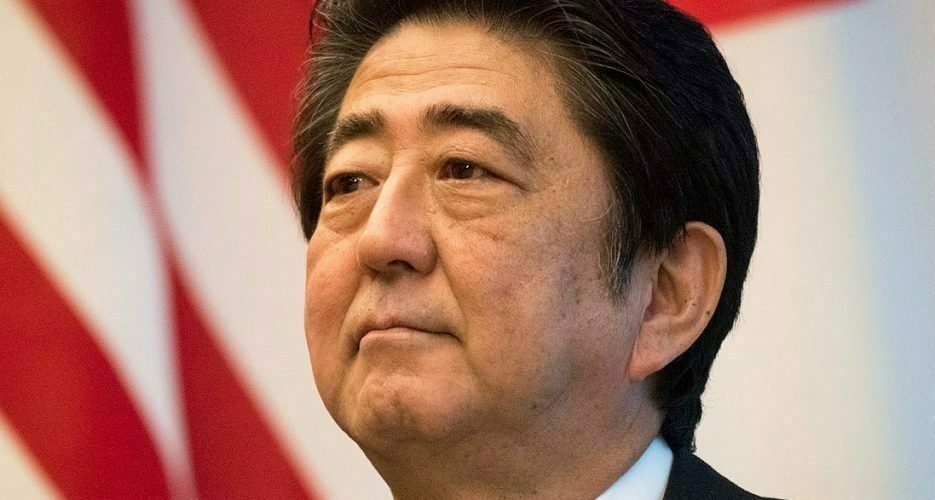
Former Japanese Prime Minister Shinzo Abe, who brought international attention to North Korea’s abduction of Japanese nationals, died on Friday after he was shot in the city of Nara, Japan.
Abe was fired on while giving a public speech in support of the ruling Liberal Democratic Party (LDP) candidates late Friday morning. According to a source familiar with the incident but not authorized to speak to the media, the former prime minister suffered from bleeding on the right side of his neck, as well as subcutaneous bleeding (bleeding into the skin) from the left side of his chest.
Abe was Japan’s longest-serving prime minister, in the position for around 7 years and 8 months from Dec. 2012 to Sept. 2020. He also served as prime minister from Sept. 2006 to Sept. 2007. He used his time in office to bring international attention to North Korea’s abduction of several Japanese nationals in the 1970s and 1980s, some of whom Tokyo claims have never been accounted for.
Abe also visited North Korea as part of then-Prime Minister Junichiro Koizumi’s delegation to Pyongyang and participated in the first North Korea-Japan summit in Sept. 2002.
Abe had built a reputation by then as a major proponent of the abductee issue. As a member of parliament, he raised the issue in the Diet after meeting with the family of one of the victims, Akihiro Arimoto. As prime minister, he repeatedly called for North Korea to return Japanese abductees back home.
“The Abe administration was successful in raising concerns and interests over the abduction issues domestically and internationally,” Sachio Nakato, professor of International Politics at Ritsumeikan University, told NK News. There was little progress made towards resolving the issue during Abe’s time in office, Nakato added, however.
North Korea admitted to kidnapping 13 Japanese nationals during the 2002 summit, and allowed five to return. The Abe government and its successors have maintained that North Korea abducted even more Japanese, however, and rejected alternative explanations from Pyongyang.
In his resignation speech, Shinzo Abe apologized for not being able to solve abduction issues, saying it remains a “source of regret.”
“After Koizumi’s visit to North Korea, the abduction issue was taken very strongly in Japan, and Abe was indeed the one who raised his voice the most at the front line,” Choi Eun-mi, a Japan expert at the Asan Institute for Policy Studies, told NK News, assessing that abduction issues later became a “political asset” for Abe.
“But there has not been any progress in North Korea and Japan’s relations … since the Stockholm summit in 2014,” she added. At that meeting, Pyongyang agreed to reopen investigations into missing Japanese nationals, while Japan agreed to lift part of its autonomous measures against North Korea when it established the Special Investigation Committee and starts the investigations.
Consultations with the Special Investigation Committee between the two countries took place until 2016, when North Korea carried out a nuclear test in January and Japan imposed new sanctions against the DPRK.
TRILATERAL COOPERATION
Meanwhile, Abe was cynical of South Korea’s outreach campaign to North Korea under President Moon Jae-in, Choi explained.
“[Japan] did not agree with the Moon administration’s North Korea policy and its stance toward reunification,” she said. Abe wanted to maintain the status quo of the region, as he saw it as better for Japanese security and the U.S. alliance, Choi said.
“Given Japan’s national interest, there was no such thing as clearing up North Korea issues without having abduction issues resolved,” she added
Nakato of Ritsumeikan University said Abe leaned on the U.S.-Japan alliance in order to press Japan’s disarmament goals when it came to North Korea.
“Prime Minister Abe was fully aware that Japan alone cannot deal with the North Korean missile and nuclear program,” he told NK News. “So he properly promoted security cooperation with the U.S. and tried to build defense capability for Japan itself.”
During his term, Abe focused on bolstering Japan’s self-defense capabilities in different stages, including enacting new security laws allowing the defense of allies and pledging to strengthen the country’s missile-defense capabilities against Pyongyang’s nuclear and missile threats.
Abe also imposed unilateral sanctions against North Korea, a part of Tokyo’s efforts to “keep pressuring North Korea in coordination with the U.S., South Korea, and other countries.”
South Korea’s Yoon Suk-yeol on Friday expressed his condolences to the family of Abe and the people of Japan, adding that the shooting is an “unacceptable crime.”
Oliver Jia contributed to this report. Edited by Arius Derr

No comments:
Post a Comment