Melissa Steinberg Brodsky ·
Follow
pedSonostr5t4ccu mm fm:0ag1rfm51e3aaa008im62405ruuyibl0ia F5 ·
Whenever the history of 1948 is written, the focus almost exclusively lands on the Palestinian refugees.
And it's true that during the war, Arabs lost homes and fields.
Many fled the violence, while others were encouraged to leave by Arab leaders with the promise that they’d return quickly once the Jews were defeated.
It’s important to remember that in the middle of that war, Israel actually extended a hand of peace.
The Declaration of Independence explicitly called on Arab residents to maintain peace and participate in building the state on the basis of full and equal citizenship. It promised appropriate representation in all institutions.
But while this offer was on the table in Israel, a very different reality was unfolding across the rest of the Middle East.
Here, it seems, is where history has a massive blind spot.
There was another exodus. Another mass erasure of property that's almost never discussed.
In the mid-20th century, over a million Jews lived in Muslim countries across North Africa, the Middle East, and the Persian Gulf.
They weren't just passing through. These were ancient communities. But following the establishment of the State of Israel, these Jews were targeted for violence and subjected to discriminatory laws.
Between 1948 and the early 1970s, roughly 900,000 Jews were expelled or fled. As they left, the trap snapped shut behind them.
This wasn't just random looting by angry mobs, though that happened. This was bureaucratic, state-sponsored theft.
Governments implemented legal frameworks to freeze bank accounts, securities, and real estate. In Iraq, a 1951 law forced Jews to forfeit their assets as a condition of leaving. In Egypt, "sequestration" laws allowed the state to simply seize businesses and homes. Families who’d built empires of trade over generations were given 24 hours to pack one suitcase.
We aren't just talking about private homes. We’re talking about community assets like schools, hospitals, and ancient synagogues that were confiscated and transferred to the state.
The result is absolutely staggering. Of the nearly one million Jews who lived in the region, less than 3% remain today. Jewish property, estimated to be worth billions of dollars, was left behind.
These refugees didn't sit in camps for seventy-eight years waiting for the world to give them their keys back. They went to Israel, France, and America, and started over from zero.
But let’s be clear about the ledger of history. The Jewish people didn't leave these Muslim countries because they were poor.
They left empty-handed because they were robbed.
And unlike other refugee populations, they never received a single dime of compensation from the governments that took everything.
#jewish #amyisraelchai
 AuthorMelissa Steinberg Brodsky
References:
https://en.wikipedia.org/.../Jewish_exodus_from_the...
https://www.jimena.org/arab-states-are-claiming-the.../
https://www.jewishrefugees.org.uk/.../how-arabs-stole...

EN.WIKIPEDIA.ORG
Jewish exodus from the Muslim world - Wikipedia
Jewish exodus from the Muslim world - Wikipedia
Jewish exodus from the Muslim world

| Part of a series on |
| Jewish exodus from the Muslim world |
|---|
 |
| Background |
| Antisemitism in the Arab world |
| Exodus by country |
| Remembrance |
| Related topics |
| Part of a series on |
| Aliyah |
|---|
 |
| Concepts |
| Pre-Modern Aliyah |
| Aliyah in modern times |
| Absorption |
| Organizations |
| Related topics |
Approximately 900,000 Jews migrated, fled, or were expelled from Muslim-majority countries throughout Africa and Asia in the 20th century, primarily as a consequence of the establishment of the State of Israel. Large-scale migrations were also organized, sponsored, and facilitated by Zionist organizations such as Mossad LeAliyah Bet, the Jewish Agency, and the Hebrew Immigrant Aid Society. The mass movement mainly transpired from 1948 to the early 1970s, with one final exodus of Iranian Jews occurring shortly after the Islamic Revolution in 1979–1980. An estimated 650,000 (72%) of these Jews resettled in Israel.[1]
A number of small-scale Jewish migrations began across the Middle East in the early 20th century, with the only substantial aliyot (Jewish immigrations to the Land of Israel) coming from Yemen and Syria.[2] Few Jews from Muslim countries immigrated during the British Mandate for Palestine.[3] Prior to Israel's independence in 1948, approximately 800,000 Jews were living on lands that now make up the Arab world. Of these, just under two-thirds lived in the French- and Italian-controlled regions of North Africa, 15–20% lived in the Kingdom of Iraq, approximately 10% lived in the Kingdom of Egypt, and approximately 7% lived in the Aden Colony, Aden Protectorate and the Kingdom of Yemen. A further 200,000 Jews lived in the Imperial State of Iran and the Republic of Turkey. The first large-scale exoduses took place in the late 1940s and early 1950s, primarily from Iraq, Yemen, and Libya. In these cases, over 90% of the Jewish population left, leaving their assets and properties behind.[4] Between 1948 and 1951, 250,000 Jews immigrated to Israel from Arab countries.[5] In response, the Israeli government implemented policies to accommodate 600,000 immigrants over four years, doubling the country's Jewish population.[6] Reactions in the Knesset were mixed; in addition to some Israeli officials, there were those within the Jewish Agency who opposed promoting a large-scale emigration movement among Jews whose lives were not in immediate danger.[6]
Later waves peaked at different times in different regions over the subsequent decades. The exodus from Egypt peaked in 1956, following the Suez Crisis; emigrations from other North African countries peaked in the 1960s. Lebanon's Jewish population temporarily increased due to an influx of Jews from other Arab countries, before it dwindled by the mid-1970s. 600,000 Jews from Arab and Muslim countries had relocated to Israel by 1972,[7][8][9][10] while another 300,000 migrated to France, the United States and Canada. Today, the descendants of Jews who immigrated to Israel from other Middle Eastern lands (known as Mizrahi Jews and Sephardic Jews) constitute more than half of all Israelis.[11] The Jewish Agency for Israel estimated that the total number of Jews in Arab and Muslim countries in 2023 was 27,000, with Turkey having 14,200 Jewish residents and Iran having 9,100.[12]
The reasons for the exoduses include: pull factors such as the desire to fulfill Zionism, better economic prospects and security, and the Israeli government's "One Million Plan" to accommodate Jewish immigrants from Arab- and Muslim-majority countries;[13] and push factors such as violent and other forms of antisemitism in the Arab world, political instability,[14] poverty,[14] and expulsion. The history of the exodus has been politicized, given its proposed relevance to the historical narrative of the Arab–Israeli conflict.[15][16] Those who view the Jewish exodus as analogous to the 1948 Palestinian expulsion and flight generally emphasize the push factors and consider those who left to have been refugees, while those who oppose that view generally emphasize the pull factors and consider the Jews to have been willing immigrants.[17]
North Africa
French colonial rule
In the 19th century, Francization of Jews in the French colonial North Africa, due to the work of organizations such as the Alliance Israelite Universelle[18] and French policies such as the Algerian citizenship decree of 1870,[19] resulted in a separation of the community from the local Muslims.[18][20]
France began its conquest of Algeria in 1830. The following century had a profound influence on the status of the Algerian Jews; following the 1870 Crémieux Decree, they were elevated from the protected minority dhimmi status to French citizens.[21][22] The decree began a wave of Pied-Noir-led anti-Jewish protests (such as the 1897 anti-Jewish riots in Oran[23]), which the Muslim community did not participate in, to the disappointment of the European agitators.[24] Though there were also cases of Muslim-led anti-Jewish riots, such as in Constantine in 1934 when 34 Jews were killed.[25]
Neighbouring Husainid Tunisia began to come under European influence in the late 1860s and became a French protectorate in 1881. Since the 1837 accession of Ahmed Bey,[26] and continued by his successor Muhammed Bey,[27] Tunisia's Jews were elevated within Tunisia society with improved freedom and security, which was confirmed and safeguarded during the French protectorate."[28] Around a third of Tunisian Jews took French citizenship during the protectorate.[29]
Morocco, which had remained independent during the 19th century, became a French protectorate in 1912. However, during less than half a century of colonization, the equilibrium between Jews and Muslims in Morocco was upset, and the Jewish community was again positioned between the colonisers and the Muslim majority.[30] French penetration into Morocco between 1906 and 1912 created significant Morocco Muslim resentment, resulting in nationwide protests and military unrest. During the period a number of anti-European or anti-French protests extended to include anti-Jewish manifestations, such as in Casablanca, Oujda and Fes in 1907–08 and later in the 1912 Fes riots.[31]
The situation in colonial Libya was similar; as in the French North African countries, the Italian influence in Libya was welcomed by the Jewish community, increasing their separation from the non-Jewish Libyans.[32][33]
The Alliance Israélite Universelle, founded in France in 1860, set up schools in Algeria, Morocco and Tunisia as early as 1863.[34][35][36]
World War II
During World War II, Morocco, Algeria, Tunisia and Libya came under Nazi or Vichy French occupation and their Jews were subject to various forms of persecution. In Libya, the Axis powers established labor camps to which many Jews were forcibly deported.[37] In other areas Nazi propaganda targeted Arab populations to incite them against British or French rule.[38] National Socialist propaganda contributed to the transfer of racial antisemitism to the Arab world and is likely to have unsettled Jewish communities.[39] An anti-Jewish riot took place in Casablanca in 1942 in the wake of Operation Torch, where a local mob attacked the Jewish mellah. (Mellah is the Moroccan name for a Jewish ghetto.)[40] However, according to the Hebrew University of Jerusalem's Dr. Haim Saadon, "Relatively good ties between Jews and Muslims in North Africa during World War II stand in stark contrast to the treatment of their co-religionists by gentiles in Europe."[41]
From 1943 until the mid-1960s, the American Jewish Joint Distribution Committee was an important foreign organization driving change and modernization in the North African Jewish community.[42] It had initially become involved in the region whilst carrying out relief work during World War II.[42]
Morocco

The migration of Moroccan Jews to Israel was sponsored, facilitated and administered by Zionist organizations, notably through Cadima (1949–1956) and Operation Yachin (1961–1964).[43] As in Tunisia and Algeria, Moroccan Jews did not face large scale expulsion or outright asset confiscation or any similar government persecution during the period of exile, and Zionist agents were relatively allowed freedom of action to encourage emigration.[44]
In Morocco, the Vichy regime during World War II passed discriminatory laws against Jews; for example, Jews were no longer able to get any form of credit, Jews who had homes or businesses in European neighborhoods were expelled, and quotas were imposed limiting the percentage of Jews allowed to practice professions such as law and medicine to no more than two percent.[45][disputed – discuss] King Mohammed V expressed his personal distaste for these laws, assuring Moroccan Jewish leaders that he would never lay a hand "upon either their persons or property". While there is no concrete evidence of him actually taking any actions to defend Morocco's Jews, it has been argued that he may have worked on their behalf behind the scenes.[46][47]
In June 1948, soon after Israel was established and in the midst of the first Arab–Israeli war, violent anti-Jewish riots broke out in Oujda and Djerada, leading to deaths of 44 Jews. In 1948–49, after the massacres, 18,000 Moroccan Jews left the country for Israel. Later, however, Jewish migration from Morocco slowed to a few thousand a year. Following Moroccan independence in 1956, a new wave of Moroccan Jews emigrated from the country towards South America, Israel, France, and Spain.[48]
Cadima
The Caisse d’Aide aux Immigrants Marocains[49] or Cadima (Hebrew: קדימה, 'forward'[50]) was the clandestine[50] Zionist apparatus that arranged and oversaw the mass migration of Moroccan Jews to Israel from 1949 to 1956, during the final years of French colonial rule in Morocco.[51][52][53][54]: 164 Cadima was administered by Jewish Agency and Mossad Le'Aliyah agents sent from Israel, with assistance from local Moroccan Zionists.[52] It was based out of an office in Casablanca and operated cells in large cities as well as a transit camp along the road to al-Jadida, from which Jewish migrants would depart for Israel via Marseille.[51]
Through the early 1950s, Zionist organizations encouraged immigration, particularly in the poorer south of the country, seeing Moroccan Jews as valuable contributors to the Jewish State:
— Yehuda Grinker, The Emigration of Atlas Jews to Israel[55]

Incidents of anti-Jewish violence continued through the 1950s, although French officials later stated that Moroccan Jews "had suffered comparatively fewer troubles than the wider European population" during the struggle for independence.[56] In August 1953, riots broke out in the city of Oujda and resulted in the death of four Jews, including an 11-year-old girl.[57] In the same month, French security forces prevented a mob from breaking into the Jewish mellah of Rabat.[57] In 1954, a nationalist event in the town of Petitjean (known today as Sidi Kacem) turned into an anti-Jewish riot and resulted in the death of 6 Jewish merchants from Marrakesh.[58] However, according to Francis Lacoste, French Resident-General in Morocco, "the ethnicity of the Petitjean victims was coincidental, terrorism rarely targeted Jews, and fears about their future were unwarranted."[59]
In 1955, a mob broke into the Jewish mellah in Mazagan (known today as El Jadida) and caused its 1,700 Jewish residents to flee to the European quarters of the city. The houses of some 200 Jews were too badly damaged during the riots for them to return.[60] In 1954, Mossad had established an undercover base in Morocco, sending agents and emissaries within a year to appraise the situation and organize continuous emigration.[61] The operations were composed of five branches: self-defense, information and intelligence, illegal immigration, establishing contact, and public relations.[62] Mossad chief Isser Harel visited the country in 1959 and 1960, reorganized the operations, and created a clandestine militia named the "Misgeret" ("framework").[63]
Jewish emigration to Israel jumped from 8,171 people in 1954 to 24,994 in 1955, increasing further in 1956. Between 1955 and independence in 1956, 60,000 Jews emigrated.[61] On 7 April 1956, Morocco attained independence. Jews occupied several political positions, including three parliamentary seats and the cabinet position of Minister of Posts and Telegraphs. However, that minister, Leon Benzaquen, did not survive the first cabinet reshuffling, and no Jew was appointed again to a cabinet position.[64] Although the relations with the Jewish community at the highest levels of government were cordial, these attitudes were not shared by the lower ranks of officialdom, which exhibited attitudes that ranged from traditional contempt to outright hostility.[65] Morocco's increasing identification with the Arab world, and pressure on Jewish educational institutions to Arabize and conform culturally added to the fears of Moroccan Jews.[65] Between 1956 and 1961, emigration to Israel was prohibited by law;[61] clandestine emigration continued, and a further 18,000 Jews left Morocco.[66]
On 10 January 1961 the Egoz, a Mossad-leased ship carrying Jews attempting to emigrate undercover, sank off the northern coast of Morocco. According to Tad Szulc, the Misgeret commander in Morocco, Alex Gattmon, decided to precipitate a crisis on the back of the tragedy,[67] consistent with Mossad Director Isser Harel's scenario that "a wedge had to be forced between the royal government and the Moroccan Jewish community and that anti-Hassan nationalists had to be used as leverage as well if a compromise over emigration was ever to be attained".[68] A pamphlet agitating for illegal emigration, supposedly by an underground Zionist organization, was printed by Mossad and distributed throughout Morocco, causing the government to "hit the roof".[69] These events prompted King Mohammed V to allow Jewish emigration, and over the three following years, more than 70,000 Moroccan Jews left the country,[70] primarily as a result of Operation Yachin.[citation needed]
In June 1961, reports surfaced regarding the continued removal of Jewish officials from prominent positions within the Moroccan government. M. Zaoui, the director of Conservation Fonciere in the Moroccan Finance Ministry, was dismissed without a specified reason.[citation needed] The extremist Muslim journal Al Oumal then launched a campaign against him, accusing him of Zionist affiliations. Earlier in the year, Meyer Toledano had also been removed from his role as judicial counselor to the Moroccan Foreign Ministry. Simultaneously, uneasiness arose among Moroccan Jews as they examined the 17 articles of the new "Fundamental Law" signed by King Hassan on 2 June. Article 15, in particular, raised concerns, emphasizing Morocco's commitment to the Arab League and the intention to strengthen ties with it. Although the new law did not revoke the equal rights of Jews and Muslims in Morocco, it notably omitted the term "Jew," and the first two articles underscored Morocco as an Arab and Muslim country with Islam as the official state religion.[71]
Operation Yachin
Operation Yachin was fronted by the New York-based Hebrew Immigrant Aid Society (HIAS),[72] who financed approximately $50 million of costs.[73] HIAS provided an American cover for underground Israeli agents in Morocco, whose functions included organizing emigration, arming of Jewish Moroccan communities for self-defense and negotiations with the Moroccan government.[74] By 1963, the Moroccan Interior Minister Colonel Oufkir and Mossad chief Meir Amit agreed to swap Israeli training of Moroccan security services and some covert military assistance for intelligence on Arab affairs and continued Jewish emigration.[75]
By 1967, only 50,000 Jews remained.[76] The 1967 Six-Day War led to increased Arab–Jewish tensions worldwide, including in Morocco, and significant Jewish emigration out of the country continued. By the early 1970s, the Jewish population of Morocco fell to 25,000; however, most of the emigrants went to France, Belgium, Spain, and Canada, rather than Israel.[76]
According to Esther Benbassa, the migration of Jews from the North African countries was prompted by uncertainty about the future.[77] In 1948, 250,000[78]–265,000[79] Jews lived in Morocco. By 2001, an estimated 5,230 remained.[citation needed]
Despite their dwindling numbers, Jews continue to play a notable role in Morocco; the King retains a Jewish senior adviser, André Azoulay, and Jewish schools and synagogues receive government subsidies. Despite this, Jewish targets have sometimes been attacked (notably the 2003 bombing attacks on a Jewish community center in Casablanca), and there is sporadic antisemitic rhetoric from radical Islamist groups. Tens of thousands of Israeli Jews with Moroccan heritage visit Morocco every year, especially around Rosh Hashana or Passover,[80] although few have taken up the late King Hassan II's offer to return and settle in Morocco.[citation needed]
Algeria


As in Tunisia and Morocco, Algerian Jews did not face large scale expulsion or outright asset confiscation or any similar government persecution during the period of exile, and Zionist agents were relatively allowed freedom of action to encourage emigration.[44]
Jewish emigration from Algeria was part of a wider ending of French colonial control and the related social, economic and cultural changes.[81]
The Israeli government had been successful in encouraging Morocco and Tunisian Jews to emigrate to Israel, but were less so in Algeria. Despite offers of visa and economic subsidies, only 580 Jews moved from Algeria to Israel in 1954–55.[82]
Emigration peaked during the Algerian War of 1954–1962, during which thousands of Muslims, Christians and Jews left the country,[83] particularly the Pied-Noir community. In 1956, Mossad agents worked underground to organize and arm the Jews of Constantine, who comprised approximately half the Jewish population of the country.[84] In Oran, a Jewish counter-insurgency movement was thought to have been trained by former members of Irgun.[85]
As of the last French census in Algeria, taken on 1 June 1960, there were 1,050,000 non-Muslim civilians in Algeria, constituting 10 percent of the total population; this included 130,000 Algerian Jews.[86] After Algeria became independent in 1962, about 800,000 Pieds-Noirs (including Jews) were evacuated to mainland France while about 200,000 chose to remain in Algeria. Of the latter, there were still about 100,000 in 1965 and about 50,000 by the end of the 1960s.[87]
As the Algerian Revolution intensified from the late 1950s onward, most of Algeria's 140,000 Jews began to leave.[88] The community had lived mainly in Algiers and Blida, Constantine, and Oran.[citation needed]
Between late 1961 and late summer 1962, 130,000 of Algeria's approximately 140,000 Jews left for France, while about 10,000 of them emigrated to Israel.[89] Their "repatriation" represents a unique case in the history of Jewish migration given that even though they were psychologically uprooted, they "returned" to France as citizens and not as refugees.[90]
The Great Synagogue of Algiers was consequently abandoned after 1994.[citation needed]
Jewish migration from North Africa to France led to the rejuvenation of the French Jewish community, which is now the third largest in the world.[citation needed]
Tunisia

As in Morocco and Algeria, Tunisian Jews did not face large scale expulsion or outright asset confiscation or any similar government persecution during the period of exile, and Jewish emigration societes were relatively allowed freedom of action to encourage emigration.[44]
In 1948, approximately 105,000 Jews lived in Tunisia.[91] About 1,500 remain today,[when?][vague] mostly in Djerba, Tunis, and Zarzis. Following Tunisia's independence from France in 1956 emigration of the Jewish population to Israel and France accelerated.[91] After attacks in 1967, Jewish emigration both to Israel and France accelerated. There were also attacks in 1982, in 1985 following Israel's Operation Wooden Leg,[92][93] and most recently in 2002 when a bombing in Djerba took 21 lives (most of them German tourists) near the local synagogue, a terrorist attack claimed by Al-Qaeda.[citation needed]
Libya
According to Maurice Roumani, a Libyan emigrant who was previously the executive director of WOJAC,[94] the most important factors that influenced the Libyan Jewish community to emigrate were "the scars left from the last years of the Italian occupation and the entry of the British Military in 1943 accompanied by the Jewish Palestinian soldiers".[95]
Zionist emissaries, so-called shlichim, had begun arriving in Libya in the early 1940s, with the intention to "transform the community and transfer it to Palestine".[96] In 1943, Mossad LeAliyah Bet began to send emissaries to prepare the infrastructure for the emigration of the Libyan Jewish community.[97]
In 1942, German troops fighting the Allies in North Africa occupied the Jewish quarter of Benghazi, plundering shops and deporting more than 2000 Jews across the desert. Sent to work in labor camps like Giado, more than one-fifth of that group of Jews perished. At the time, most Libyan Jews lived in the cities of Tripoli and Benghazi; there were smaller numbers in Bayda and Misrata.[37] Following the Allied victory at the Battle of El Agheila in December 1942, German and Italian troops were driven out of Libya. The British assigned as garrison in Cyrenaica the Palestine Regiment. This unit later became the core of the Jewish Brigade, which was later also stationed in Tripolitania. The pro-Zionist soldiers encouraged the spread of Zionism throughout the local Jewish population.[98][99][100]
Following the liberation of North Africa by Allied forces, antisemitic incitements were still widespread. The most severe racial violence between the start of World War II and the establishment of Israel erupted in Tripoli in November 1945. Over a period of several days more than 140 Jews (including 36 children) were killed, hundreds were injured, 4,000 were displaced and 2,400 were reduced to poverty. Five synagogues in Tripoli and four in provincial towns were destroyed, and over 1000 Jewish residences and commercial buildings were plundered in Tripoli alone.[101] Gil Shefler writes that "As awful as the pogrom in Libya was, it was still a relatively isolated occurrence compared to the mass murders of Jews by locals in Eastern Europe."[41] The same year, violent anti-Jewish violence also occurred in Cairo, which resulted in 10 Jewish victims.
In 1948, about 38,000 Jews lived in Libya.[79][102] The pogroms continued in June 1948, when 15 Jews were killed and 280 Jewish homes destroyed.[103] In November 1948, a few months after the events in Tripoli, the American consul in Tripoli, Orray Taft Jr., reported that: "There is reason to believe that the Jewish Community has become more aggressive as the result of the Jewish victories in Palestine. There is also reason to believe that the community here is receiving instructions and guidance from the State of Israel. Whether or not the change in attitude is the result of instructions or a progressive aggressiveness is hard to determine. Even with the aggressiveness or perhaps because of it, both Jewish and Arab leaders inform me that the inter-racial relations are better now than they have been for several years and that understanding, tolerance and cooperation are present at any top level meeting between the leaders of the two communities."[104][105]
Immigration to Israel began in 1949, following the establishment of a Jewish Agency for Israel office in Tripoli. According to Harvey E. Goldberg, "a number of Libyan Jews" believe that the Jewish Agency was behind the riots, given that the riots helped them achieve their goal.[106] Between the establishment of the State of Israel in 1948 and Libyan independence in December 1951 over 30,000 Libyan Jews emigrated to Israel.
On 31 December 1958, the President of the Executive Council of Tripolitania ordered the dissolution of the Jewish Community Council and the appointment of a Muslim commissioner nominated by the Government. A law issued in 1961 required Libyan citizenship for the possession and transfer of property in Libya, a requirement that was met by only six Libyan Jews. Jews were banned from voting, attaining public offices and from serving in the army or in police.[citation needed]
In 1967, during the Six-Day War, the Jewish population of over 4,000 was again subjected to riots in which 18 were killed and many more injured. The pro-Western Libyan government of King Idris tried unsuccessfully to maintain law and order. On 17 June 1967, Lillo Arbib, leader of the Jewish community in Libya, sent a formal request to Libyan prime minister Hussein Maziq requesting that the government "allow Jews so desiring to leave the country for a time, until tempers cool and the Libyan population understands the position of Libyan Jews, who have always been and will continue to be loyal to the State, in full harmony and peaceful coexistence with the Arab citizens at all times."[107]
According to David Harris, the executive director of the Jewish advocacy organization AJC, the Libyan government "faced with a complete breakdown of law and order ... urged the Jews to leave the country temporarily", permitting them each to take one suitcase and the equivalent of $50. Through an airlift and the aid of several ships, over 4,000 Libyan Jews were evacuated to Italy by the Italian Navy, where they were assisted by the Jewish Agency for Israel. Of the Jews evacuated, 1,300 subsequently immigrated to Israel, 2,200 remained in Italy, and most of the rest went to the United States. A few scores remained in Libya. Some Libyan Jews who had been evacuated temporarily returned to Libya between 1967 and 1969 in an attempt to recover lost property.[108][109] In September 1967 only 100 Jews remained in Libya,[107] falling to less than 40 five years later in 1972 and just 16 by 1977.[110]
On 21 July 1970 the Libyan government issued a law which confiscated assets of the Jews who had previously left Libya,[111] issuing in their stead 15-year bonds. However, when the bonds matured in 1985 no compensation was paid.[112] Libyan leader Muammar Gaddafi later justified this on the grounds that "the alignment of the Jews with Israel, the Arab nations' enemy, has forfeited their right to compensation."[112]
Although the main synagogue in Tripoli was renovated in 1999, it has not reopened for services. In 2002, Esmeralda Meghnagi, who was thought to be the last Jew in Libya, died. However, that same year, it was discovered that Rina Debach, an 80-year old Jewish woman who was thought to be dead by her family in Rome, was still alive and living in a nursing home in the country. With her subsequent departure for Rome, there were no more Jews left in Libya.
Israel is home to a significant population of Jews of Libyan descent, who maintain their unique traditions. Jews of Libyan descent also make up a significant part of the Italian Jewish community. About 30% of the registered Jewish population of Rome is of Libyan origin.[113]
Middle East
Iraq
1930s and early 1940s
The British mandate over Iraq came to an end in June 1930, and in October 1932 the country became independent. The Iraqi government response to the demand of Assyrian autonomy (the Assyrians being the indigenous Eastern Aramaic-speaking Semitic descendants of the ancient Assyrians and Mesopotamians, and largely affiliated to the Assyrian Church of the East, Chaldean Catholic Church and Syriac Orthodox Church), turned into a bloody massacre of Assyrian villagers by the Iraqi army in August 1933.[114]
This event was the first sign to the Jewish community that minority rights were meaningless under the Iraqi monarchy. King Faisal, known for his liberal policies, died in September 1933, and was succeeded by Ghazi, his nationalistic anti-British son. Ghazi began promoting Arab nationalist organizations, headed by Syrian and Palestinian exiles. With the 1936–39 Arab revolt in Palestine, they were joined by rebels, such as the Grand Mufti of Jerusalem. The exiles preached pan-Arab ideology and fostered anti-Zionist propaganda.[114]
Under Iraqi nationalists, Nazi propaganda began to infiltrate the country, as Nazi Germany was anxious to expand its influence in the Arab world. Dr. Fritz Grobba, who resided in Iraq since 1932, began to vigorously and systematically disseminate hateful propaganda against Jews. Among other things, Arabic translation of Mein Kampf was published and Radio Berlin had begun broadcasting in Arabic language. Anti-Jewish policies had been implemented since 1934, and the confidence of Jews was further shaken by the growing crisis in Palestine in 1936. Between 1936 and 1939 ten Jews were murdered and on eight occasions bombs were thrown on Jewish locations.[115]

In 1941, immediately following the British victory in the Anglo-Iraqi War, riots known as the Farhud broke out in Baghdad in the power vacuum following the collapse of the pro-Axis government of Rashid Ali al-Gaylani while the city was in a state of instability. 180 Jews were killed and another 240 wounded; 586 Jewish-owned businesses were looted and 99 Jewish houses were destroyed.[116]

In some accounts the Farhud marked the turning point for Iraq's Jews.[117][118][119] Other historians, however, see the pivotal moment for the Iraqi Jewish community much later, between 1948 and 1951, since Jewish communities prospered along with the rest of the country throughout most of the 1940s,[120][121][122] and many Jews who left Iraq following the Farhud returned to the country shortly thereafter and permanent emigration did not accelerate significantly until 1950–51.[121][123]
Either way, the Farhud is broadly understood to mark the start of a process of politicization of the Iraqi Jews in the 1940s, primarily among the younger population, especially as a result of the impact it had on hopes of long term integration into Iraqi society. In the direct aftermath of the Farhud, many joined the Iraqi Communist Party in order to protect the Jews of Baghdad, yet they did not want to leave the country and rather sought to fight for better conditions in Iraq itself.[124] At the same time the Iraqi government that had taken over after the Farhud reassured the Iraqi Jewish community, and normal life soon returned to Baghdad, which saw a marked betterment of its economic situation during World War II.[125][126]

April 1951.
Shortly after the Farhud in 1941, Mossad LeAliyah Bet sent emissaries to Iraq to begin to organize emigration to Israel, initially by recruiting people to teach Hebrew and hold lectures on Zionism. In 1942, Shaul Avigur, head of Mossad LeAliyah Bet, entered Iraq undercover in order to survey the situation of the Iraqi Jews with respect to immigration to Israel.[127] During the 1942–43, Avigur made four further trips to Baghdad to arrange the required Mossad machinery, including a radio transmitter for sending information to Tel Aviv, which remained in use for 8 years.[128]
In late 1942, one of the emissaries explained the size of their task of converting the Iraqi community to Zionism, writing that "we have to admit that there is not much point in [organizing and encouraging emigration]. ... We are today eating the fruit of many years of neglect, and what we didn't do can't be corrected now through propaganda and creating one-day-old enthusiasm."[129] It was not until 1947 that legal and illegal departures from Iraq to Israel began.[130] Around 8,000 Jews left Iraq between 1919 and 1948, with another 2,000 leaving between mid-1948 to mid-1950.[123]
1948 Arab–Israeli War
In 1948, there were approximately 150,000 Jews in Iraq. The community was concentrated in Baghdad and Basra.
A few months before the UN vote on partition of Palestine, Iraq's prime minister Nuri al-Said told British diplomat Douglas Busk that he had nothing against the Iraqi Jews who were a long established and useful community. However, if the United Nations solution was not satisfactory, the Arab League might decide on severe measures against the Jews in Arab countries, and he would be unable to resist the proposal.[131][132] In a speech at the General Assembly Hall at Flushing Meadow, New York, on Friday, 28 November 1947, Iraq's Foreign Minister, Fadel Jamall, included the following statement: "Partition imposed against the will of the majority of the people will jeopardize peace and harmony in the Middle East. Not only the uprising of the Arabs of Palestine is to be expected, but the masses in the Arab world cannot be restrained. The Arab–Jewish relationship in the Arab world will greatly deteriorate. There are more Jews in the Arab world outside of Palestine than there are in Palestine. In Iraq alone, we have about one hundred and fifty thousand Jews who share with Moslems and Christians all the advantages of political and economic rights. Harmony prevails among Moslems, Christians and Jews. But any injustice imposed upon the Arabs of Palestine will disturb the harmony among Jews and non-Jews in Iraq; it will breed inter-religious prejudice and hatred."[133]
On 19 February 1949, al-Said acknowledged the bad treatment that the Jews had been victims of in Iraq during the recent months. He warned that unless Israel would behave itself, events might take place concerning the Iraqi Jews.[134] Al-Said's threats had no impact at the political level on the fate of the Jews but were widely published in the media.[135]
In 1948, the country was placed under martial law, and the penalties for Zionism were increased. Courts martial were used to intimidate wealthy Jews, Jews were again dismissed from civil service, quotas were placed on university positions, Jewish businesses were boycotted (E. Black, p. 347) and Shafiq Ades, one of the most important Jewish businessmen in the country (who was non-Zionist) was arrested and publicly hanged for allegedly selling goods to Israel, shocking the community.[citation needed] The Jewish community's general sentiment was that if a man as well connected and powerful as Ades could be eliminated by the state, other Jews would not be protected any longer.[136]
Additionally, like most Arab League states, Iraq forbade any legal emigration of its Jews after the 1948 war on the grounds that they might go to Israel and could strengthen that state. At the same time, increasing government oppression of the Jews fueled by anti-Israeli sentiment together with public expressions of antisemitism created an atmosphere of fear and uncertainty.
However, by 1949 Jews were escaping Iraq at about a rate of 1,000 a month.[137] At the time, the British believed that the Zionist underground was agitating in Iraq in order to assist US fund-raising and to "offset the bad impression caused by the Jewish attitudes to Arab refugees".[138]
The Iraqi government took in only 5,000 of the approximately 700,000 Palestinians who became refugees in 1948–49, "despite British and American efforts to persuade Iraq" to admit more.[139] In January 1949, the pro-British Iraqi Prime Minister Nuri al-Said discussed the idea of deporting Iraqi Jews to Israel with British officials, who explained that such a proposal would benefit Israel and adversely affect Arab countries.[140][141][142] According to Meir-Glitzenstein, such suggestions were "not intended to solve either the problem of the Palestinian Arab refugees or the problem of the Jewish minority in Iraq, but to torpedo plans to resettle Palestinian Arab refugees in Iraq".[143]
In July 1949 the British government proposed to Nuri al-Said a population exchange in which Iraq would agree to settle 100,000 Palestinian refugees in Iraq; Nuri stated that if a fair arrangement could be agreed, "the Iraqi government would permit a voluntary move by Iraqi Jews to Palestine."[144] The Iraqi-British proposal was reported in the press in October 1949.[145]
On 14 October 1949 Nuri al-Said raised the exchange of population concept with the economic mission survey.[146] At the Jewish Studies Conference in Melbourne in 2002, Philip Mendes summarised the effect of al-Said's vacillations on Jewish expulsion as: "In addition, the Iraqi Prime Minister Nuri al-Said tentatively canvassed and then shelved the possibility of expelling the Iraqi Jews, and exchanging them for an equal number of Palestinian Arabs."[17]
Temporary legalization of Jewish immigration to Israel


In March 1950, Iraq reversed their earlier ban on Jewish emigration to Israel and passed a law of one-year duration allowing Jews to emigrate on the condition of relinquishing their Iraqi citizenship. According to Abbas Shiblak, many scholars state that this was a result of American, British and Israeli political pressure on Tawfiq al-Suwaidi's government, with some studies suggesting there were secret negotiations.[147] According to Ian Black,[148] the Iraqi government was motivated by "economic considerations, chief of which was that almost all the property of departing Jews reverted to the state treasury"[148] and also that "Jews were seen as a restive and potentially troublesome minority that the country was best rid of."[148] Israel mounted an operation called "Operation Ezra and Nehemiah" to bring as many of the Iraqi Jews as possible to Israel.
The Zionist movement at first tried to regulate the amount of registrants until issues relating to their legal status were clarified. Later, it allowed everyone to register. Two weeks after the law went into force, the Iraqi interior minister demanded a CID investigation over why Jews were not registering.[citation needed] A few hours after the movement allowed registration, four Jews were injured in a bomb attack at a café in Baghdad.
Immediately following the March 1950 Denaturalisation Act, the emigration movement faced significant challenges. Initially, local Zionist activists forbade the Iraqi Jews from registering for emigration with the Iraqi authorities, because the Israeli government was still discussing absorption planning.[149] However, on 8 April, a bomb exploded in a Jewish cafe in Baghdad, and a meeting of the Zionist leadership later that day agreed to allow registration without waiting for the Israeli government; a proclamation encouraging registration was made throughout Iraq in the name of the State of Israel.[150] However, at the same time immigrants were also entering Israel from Poland and Romania, countries in which Prime Minister David Ben-Gurion assessed there was a risk that the communist authorities would soon "close their gates", and Israel therefore delayed the transportation of Iraqi Jews.[151] As a result, by September 1950, while 70,000 Jews had registered to leave, many selling their property and losing their jobs, only 10,000 had left the country.[152] According to Esther Meir-Glitzenstein, "The thousands of poor Jews who had left or been expelled from the peripheral cities, and who had gone to Baghdad to wait for their opportunity to emigrate, were in an especially bad state. They were housed in public buildings and were being supported by the Jewish community. The situation was intolerable." The delay became a significant problem for the Iraqi government of Nuri al-Said (who replaced Tawfiq al-Suwaidi in mid-September 1950), as the large number of Jews "in limbo" created problems politically, economically and for domestic security.[153] "Particularly infuriating" to the Iraqi government was the fact that the source of the problem was the Israeli government.
As a result of these developments, al-Said was determined to drive the Jews out of his country as quickly as possible.[154][155][156][157] On 21 August 1950 al-Said threatened to revoke the license of the company transporting the Jewish exodus if it did not fulfill its daily quota of 500 Jews,[failed verification] and in September 1950, he summoned a representative of the Jewish community and warned the Jewish community of Baghdad to make haste; otherwise, he would take the Jews to the borders himself.[158][159]
Two months before the law expired, after about 85,000 Jews had registered, a bombing campaign began against the Jewish community of Baghdad. The Iraqi government convicted and hanged a number of suspected Zionist agents for perpetrating the bombings, but the issue of who was responsible remains a subject of scholarly dispute. All but a few thousand of the remaining Jews then registered for emigration. In all, about 120,000 Jews left Iraq. Historian Esther Meir-Glitzenstein disputed the claim that these bombings were the primary motive for the emigration of Iraqi Jews, noting that most accounts by these Jews did not mention the bombings as a cause for immigration.[160]
According to Gat, it is highly likely that one of Nuri as-Said's motives in trying to expel large numbers of Jews was the desire to aggravate Israel's economic problems (he had declared as such to the Arab world), although Nuri was well aware that the absorption of these immigrants was the policy on which Israel based its future.[161] The Iraqi Minister of Defence told the U.S. ambassador that he had reliable evidence that the emigrating Jews were involved in activities injurious to the state and were in contact with communist agents.[162]
Between April 1950 and June 1951, Jewish targets in Baghdad were struck five times. Iraqi authorities then arrested 3 Jews, claiming they were Zionist activists, and sentenced two — Shalom Salah Shalom and Yosef Ibrahim Basri—to death. The third man, Yehuda Tajar, was sentenced to 10 years in prison.[163] In May and June 1951, arms caches were discovered that allegedly belonged to the Zionist underground, allegedly supplied by the Yishuv after the Farhud of 1941.[citation needed] There has been much debate as to whether the bombs were planted by the Mossad to encourage Iraqi Jews to emigrate to Israel or if they were planted by Muslim extremists to help drive out the Jews. This has been the subject of lawsuits and inquiries in Israel.[164]
The emigration law was to expire in March 1951, one year after the law was enacted. On 10 March 1951, 64,000 Iraqi Jews were still waiting to emigrate, the government enacted a new law blocking the assets of Jews who had given up their citizenship, and extending the emigration period.[165]
The bulk of the Jews leaving Iraq did so via Israeli airlifts named Operation Ezra and Nehemiah with special permission from the Iraqi government.[166]
After 1951
![[icon]](https://en.wikipedia.org/wiki/File:Wiki_letter_w_cropped.svg)
A small Jewish community remained in Iraq following Operation Ezra and Nehemiah. Restrictions were placed on them after the Ba'ath Party came to power in 1963, and following the Six-Day War, persecution greatly increased. Jews had their property expropriated and bank accounts frozen, their ability to do business was restricted, they were dismissed from public positions, and were placed under house arrest for extended periods of time. In 1968, scores of Jews were imprisoned on charges of spying for Israel. In 1969, about 50 were executed following show trials, most infamously in a mass public hanging of 14 men including 9 Jews, and a hundred thousand Iraqis marched past the bodies in a carnival-like atmosphere.[167] Jews began sneaking across the border to Iran, from where they proceeded to Israel or the UK. In the early 1970s, the Iraqi government permitted Jewish emigration and the majority of the remaining community left Iraq. By 2003, it was estimated that this once-thriving community had been reduced to 35 Jews in Baghdad and a handful more in Kurdish areas of the country.
Egypt


Anti-Jewish sentiment
Although there was a small indigenous community, most Jews in Egypt in the early twentieth century were recent immigrants to the country,[failed verification] who did not share the Arabic language and culture.[168] Many were members of the highly diverse Mutamassirun community, which included other groups such as Greeks, Armenians, Syrian Christians and Italians, in addition to the British and French colonial authorities.[169] Until the late 1930s, the Jews, both indigenous and new immigrants, like other minorities tended to apply for foreign citizenship in order to benefit from a foreign protection.[170] The Egyptian government made it very difficult for non-Muslim foreigners to become naturalized. The poorer Jews, most of them indigenous and Oriental Jews, were left stateless, although they were legally eligible for Egyptian nationality.[171] The drive to Egyptianize public life and the economy harmed the minorities, but the Jews had more strikes against them than the others. In the agitation against the Jews of the late thirties and the forties, the Jew was seen as an enemy[168] The Jews were attacked because of their real or alleged links to Zionism. Jews were not discriminated because of their religion or race, like in Europe, but for political reasons.[172]
The Egyptian Prime Minister Mahmoud an-Nukrashi Pasha told the British ambassador: "All Jews were potential Zionists [and] ... anyhow all Zionists were Communists."[173] On 24 November 1947, the head of the Egyptian delegation to the United Nations General Assembly, Muhammad Hussein Heykal Pasha, said, "the lives of 1,000,000 Jews in Moslem countries would be jeopardized by the establishment of a Jewish state."[174] On 24 November 1947, Dr Heykal Pasha said: "if the U.N decide to amputate a part of Palestine in order to establish a Jewish state, ... Jewish blood will necessarily be shed elsewhere in the Arab world ... to place in certain and serious danger a million Jews." Mahmud Bey Fawzi (Egypt) said: "Imposed partition was sure to result in bloodshed in Palestine and in the rest of the Arab world."[175]
The exodus of the foreign mutamassirun ("Egyptianized") community, which included a significant number of Jews, began following the First World War, and by the end of the 1960s the entire mutamassirun was effectively eliminated. According to Andrew Gorman, this was primarily a result of the "decolonization process and the rise of Egyptian nationalism".[176][177]
The exodus of Egyptian Jews was impacted by the 1945 Anti-Jewish Riots in Egypt, though such emigration was not significant as the government stamped the violence out and the Egyptian Jewish community leaders were supportive of King Farouk. In 1948, approximately 75,000 Jews lived in Egypt. Around 20,000 Jews left Egypt during 1948–49 following the events of the 1948 Arab–Israeli War (including the 1948 Cairo bombings).[123] A further 5,000 left between 1952 and 1956, in the wake of the Egyptian Revolution of 1952 and later the false flag Lavon Affair.[123] The Israeli invasion as part of the Suez Crisis caused a significant upsurge in emigration, with 14,000 Jews leaving in less than six months between November 1956 and March 1957, and 19,000 further emigrating over the next decade.[123]
1956 Suez Crisis

In October 1956, when the Suez Crisis erupted, the position of the mutamassirun, including the Jewish community, was significantly impacted.[178]
1,000 Jews were arrested and 500 Jewish businesses were seized by the government. A statement branding the Jews as "Zionists and enemies of the state" was read out in the mosques of Cairo and Alexandria.[179][180] Jewish bank accounts were confiscated and many Jews lost their jobs. Lawyers, engineers, doctors and teachers were not allowed to work in their professions. Thousands of Jews were ordered to leave the country and told that they may be sent to concentration camps if they stayed.[179] They were allowed to take only one suitcase and a small sum of cash, and forced to sign declarations "donating" their property to the Egyptian government. Foreign observers reported that members of Jewish families were taken hostage, apparently to insure that those forced to leave did not speak out against the Egyptian government. Jews were expelled or left, forced out by the anti-Jewish feeling in Egypt.[181] Some 25,000 Jews, almost half of the Jewish community left, mainly for Europe, the United States, South America and Israel, after being forced to sign declarations that they were leaving voluntarily, and agreed with the confiscation of their assets. Similar measures were enacted against British and French nationals in retaliation for the invasion. By 1957 the Jewish population of Egypt had fallen to 15,000.
1960s and 1970s
In 1960, the American embassy in Cairo wrote of Egyptian Jews that: "There is definitely a strong desire among most Jews to emigrate, but this is prompted by the feeling that they have limited opportunity, or from fear for the future, rather than by any direct or present tangible mistreatment at the hands of the government."[182][183]
In 1967, Jews were detained and tortured, and Jewish homes were confiscated.[184][185] The vast majority of Jewish men without foreign passports were detained.[185][186] Following the Six Day War, the community fell to 2,500 members and by the 1970s practically ceased to exist, with the exception of a few remaining families.[187] As of 2015, an estimated 30 Jews remained in Egypt, most of them elderly.[184]
Yemen
.jpg)
The Yemeni exodus began in 1881, seven months prior to the more well-known First Aliyah from Eastern Europe.[188] The exodus came about as a result of European Jewish investment in the Mutasarrifate of Jerusalem, which created jobs for labouring Jews alongside local Muslim labour thereby providing an economic incentive for emigration.[189] This was aided by the reestablishment of Ottoman control over the Yemen Vilayet allowing freedom of movement within the empire, and the opening of the Suez canal, which reduced the cost of travelling considerably. Between 1881 and 1948, 15,430 Jews had immigrated to Palestine legally.[190]
In 1942, prior to the formulation of the One Million Plan, David Ben-Gurion described his intentions with respect to such potential policy to a meeting of experts and Jewish leaders, stating that "It is a mark of great failure by Zionism that we have not yet eliminated the Yemen exile [diaspora]."[191]
If one includes Aden, there were about 63,000 Jews in Yemen in 1948. In 1947, rioters killed at least 80 Jews in Aden, a British colony in southern Yemen. In 1948 the new Zaydi Imam Ahmad bin Yahya unexpectedly allowed his Jewish subjects to leave Yemen, and tens of thousands poured into Aden. The Israeli government's Operation Magic Carpet evacuated around 44,000 Jews from Yemen to Israel in 1949 and 1950.[192] Emigration continued until 1962, when the civil war in Yemen broke out. A small community remained until 1976, though it has mostly immigrated from Yemen since. In March 2016, the Jewish population in Yemen was estimated to be about 50.[193]
Lebanon and Syria
Background
The area now known as Lebanon and Syria was the home of one of the oldest Jewish communities in the world, dating back to at least 300 BCE.
Lebanon
.JPG)
In November 1945, fourteen Jews were killed in anti-Jewish riots in Tripoli.[194] Unlike in other Arab countries, the Lebanese Jewish community did not face grave peril during the 1948 Arab–Israel War and was reasonably protected by governmental authorities. Lebanon was also the only Arab country that saw a post-1948 increase in its Jewish population, principally due to the influx of Jews coming from Syria and Iraq.[195]
The 1932 national census puts the country's Jewish population at around 3,500.[196] In 1948, there were approximately 5,200 Jews in Lebanon.[197] Their number increased after the first Arab-Israeli war to roughly 9000 in 1951, including an estimated 2,000 Jewish asylum seekers.[197] The largest communities of Jews in Lebanon were in Beirut, and the villages near Mount Lebanon, Deir al Qamar, Barouk, Bechamoun, and Hasbaya. While the French mandate saw a general improvement in conditions for Jews, the Vichy regime placed restrictions on them. The Jewish community actively supported Lebanese independence after World War II and had mixed attitudes toward Zionism.[citation needed]
However, negative attitudes toward Jews increased after 1948, and, by 1967, most Lebanese Jews had emigrated—to Israel, the United States, Canada, and France. In 1971, Albert Elia, the 69-year-old Secretary-General of the Lebanese Jewish community, was kidnapped in Beirut by Syrian agents and imprisoned under torture in Damascus, along with Syrian Jews who had attempted to flee the country. A personal appeal by the U.N. High Commissioner for Refugees, Prince Sadruddin Aga Khan, to the late President Hafez al-Assad failed to secure Elia's release.
The remaining Jewish community was particularly hard hit by the civil war in Lebanon, and by the mid-1970s, the community collapsed. In the 1980s, Hezbollah kidnapped several Lebanese Jewish businessmen, and in the 2004 elections, only one Jew voted in the municipal elections. There are now only between 20 and 40 Jews living in Lebanon.[198][199]
Syria


In 1947, rioters in Aleppo burned the city's Jewish quarter and killed 75 people.[200] As a result, nearly half of the Jewish population of Aleppo opted to leave the city,[5] initially to neighbouring Lebanon.[201]
In 1948, there were approximately 30,000 Jews in Syria. In 1949, following defeat in the Arab–Israeli War, the CIA-backed March 1949 Syrian coup d'état installed Husni al-Za'im as the President of Syria. Za'im permitted the emigration of large numbers of Syrian Jews, and 5,000 left to Israel.[201]
The subsequent Syrian governments placed severe restrictions on the Jewish community, including barring emigration.[201] In 1948, the government banned the sale of Jewish property and in 1953 all Jewish bank accounts were frozen. The Syrian secret police closely monitored the Jewish community. Over the following years, many Jews managed to escape, and the work of supporters, particularly Judy Feld Carr,[202] in smuggling Jews out of Syria, and bringing their plight to the attention of the world, raised awareness of their situation.
Although the Syrian government attempted to stop Syrian Jews from exporting their assets, the American consulate in Damascus noted in 1950 that "the majority of Syrian Jews have managed to dispose of their property and to emigrate to Lebanon, Italy, and Israel".[203][204] In November 1954, the Syrian government temporarily lifted its ban on Jewish emigration.[205] The various restrictions that the Syrian government placed on the Jewish population were severe. Jews were legally barred from working for the government or for banks, obtaining driver's licenses, having telephones in their homes or business premises, or purchasing property.[citation needed]
In March 1964, the Syrian government issued a decree prohibiting Jews from traveling more than three miles from the limits of their hometowns.[206] In 1967, in the aftermath of the Six-Day War, antisemitic riots broke out in Damascus and Aleppo. Jews were allowed to leave their homes only for few hours daily. Many Jews found it impossible to pursue their business ventures because the larger community was boycotting their products. In 1970, Israel launched Operation Blanket, a covert military and intelligence operation to evacuate Syrian Jews, managing to bring a few dozen young Jews to Israel.[207]
Clandestine Jewish emigration continued, as Jews attempted to sneak across the borders into Lebanon or Turkey, often with the help of smugglers, and make contact with Israeli agents or local Jewish communities. In 1972, demonstrations were held by 1,000 Syrian Jews in Damascus, after four Jewish women were killed as they attempted to flee Syria. The protest surprised Syrian authorities, who closely monitored Jewish community, eavesdropped on their telephone conversations, and tampered with their mail.[207]
Following the Madrid Conference of 1991, the United States put pressure on the Syrian government to ease its restrictions on Jews, and during Passover in 1992, the government of Syria began granting exit visas to Jews on condition that they did not emigrate to Israel. At that time, the country had several thousand Jews. The majority left for the United States—most to join the large Syrian Jewish community in South Brooklyn, New York—although some went to France and Turkey, and 1262 Syrian Jews who wanted to immigrate to Israel were brought there in a two-year covert operation.[208]
In 2004, the Syrian government attempted to establish better relations with its emigrants, and a delegation of a dozen Jews of Syrian origin visited Syria in the spring of that year.[208] As of December 2014, only 17 Jews remain in Syria, according to Rabbi Avraham Hamra; nine men and eight women, all over 60 years of age.[209]
Transjordan and Jordanian-annexed West Bank
Depopulation of local Jewish communities
Following the 1948 Arab–Israeli War and the 1949 Armistice Agreements, all Jewish communities in Transjordan, the Jordanian-annexed West Bank, and the Egyptian-occupied Gaza Strip were depopulated.[210][211]
The communities and localities affected included the Jerusalem Jewish Quarter, Hebron, Ein Tzurim, Masu'ot Yitzhak, Revadim, Beit HaArava, Kalya, Kfar Etzion, Atarot, Kfar Darom, Neve Yaakov, and Tel Or.[212][213]
In many cases, these depopulations represented final stages of earlier evacuations begun in response to both the 1929 Palestine riots and 1936–1939 Arab Revolt.[214] The Hebron Jewish Community, already having lost a majority of its population as a result of mandatory British evacuation following the 1929 Hebron Massacre, lost its sole remaining Jewish resident Ya'akov Ben Shalom Ezra during the war.[215][216] Kfar Darom, the last of the Gaza Jewish communities following mandatory evacuations in 1929, was itself ultimately abandoned following a three-month siege by the Egyptian army in 1948.[217]
In the case of Dead Sea-region kibbutzim of Beit HaArava and Kalya, negotiations with Transjordan's King Abdullah were conducted in an attempt for residents to remain. When those talks failed, the villagers fled by boat to an Israeli military post at Mount Sodom.[218]
Judean settlements Kfar Etzion, a kibbutz established southwest of Bethlehem, and Jerusalem adjascent Atarot and Neve Yaakov fared less peacefully during the conflict. All three villages were besieged by a combined force of Arab Legion and local irregulars, resulting in complete evacuation of Atarot and Neve Yaakov, and massacre of 127 of Etzion's defending force and citizens.[219]
The village of Tel Or had the distinction of being the only Jewish locality permitted in Transjordan proper at the time. Established in 1930 in the vicinity of the Naharayim hydroelectric power plant, the village of was built as a housing compound for Jewish crews operating the power plant, and their families.[220] Following a prolonged battle between Yishuv forces and the Arab Legion in the area, the residents of Tel Or were given an ultimatum to surrender or leave the village.[citation needed]
Depopulation of Jerusalem's Jewish Quarter
The largest depopulation during the war occurred in Jerusalem's Jewish Quarter, where its entire population of about 2,000 Jews were besieged and ultimately forced to leave en masse. The defenders surrendered on 28 May 1948.[221][222]

The Jordanian commander is reported to have told his superiors: "For the first time in 1,000 years not a single Jew remains in the Jewish Quarter. Not a single building remains intact. This makes the Jews' return here impossible."[223][224]
Bahrain
Bahrain's tiny Jewish community, mostly the Jewish descendants of immigrants who entered the country in the early 20th century from Iraq, numbered between 600 and 1,500 in 1948. In the wake of 29 November 1947 U.N. Partition vote, demonstrations against the vote in the Arab world were called for 2–5 December. The first two days of demonstrations in Bahrain saw rock-throwing against Jews, but on 5 December, mobs in the capital of Manama looted Jewish homes and shops, destroyed the synagogue, beat any Jews they could find, and murdered one elderly woman.[225]
As a result, many Bahraini Jews fled Bahrain. Some remained behind, but after riots broke out following the Six-Day War, the majority left. Bahraini Jews emigrated mainly to Israel (where a particularly large number settled in Pardes Hanna-Karkur), the United Kingdom, and the United States. As of 2006, only 36 Jews remained.[226]
Iran
The exodus of Iran's Jews[227] refers to the emigration of Persian Jews from Pahlavi Iran in the 1950s and a later migration wave from Iran during and after the Iranian Revolution of 1979. At the time of Israeli independence in 1948, there were an estimated 140,000 to 150,000 Jews in Iran. Between 1948 and 1953, about one-third of Iranian Jews immigrated to Israel.[228] Between 1948 and 1978, an estimated 70,000 Iranian Jews immigrated to Israel.[227]
1979 Islamic Revolution
In 1979, the year of the Islamic Revolution, there were about 80,000 Jews in Iran. In the aftermath of the revolution, emigration reduced the community to less than 20,000.[227] The migration of Persian Jews after Iranian Revolution was mainly due to fear of religious persecution,[227] economic hardships and insecurity after the deposition of the Shah regime and consequent internal violence and the Iran–Iraq War. In the years following the Islamic Revolution, about 31,000 Jews emigrated from Iran, of whom about 36,000 went to the United States, 20,000 to Israel, and 5000 to Europe.[citation needed]
While antisemitism in Iran is not as severe as in Europe and the Arab world, the strong anti-Zionist policy of the Islamic Republic of Iran created a tense and uncomfortable situation for Iranian Jews, who became vulnerable to accusations of alleged collaboration with Israel. In total, more than 80% of Iranian Jews fled or migrated from the country between 1979 and 2006.[227]
Turkey
When the Republic of Turkey was established in 1923, Aliyah was not particularly popular among Turkish Jewry; migration from Turkey to Palestine was minimal in the 1920s.[229]
During 1923–1948, approximately 7,300 Jews emigrated from Turkey to Palestine.[230] After the 1934 Thrace pogroms following the 1934 Turkish Resettlement Law, immigration to Palestine increased; it is estimated that 521 Jews left for Palestine from Turkey in 1934 and 1,445 left in 1935.[231] Immigration to Palestine was organized by the Jewish Agency and the Palestine Aliya Anoar Organization. The Varlık Vergisi, a capital tax established in 1942, was also significant in encouraging emigration from Turkey to Palestine; between 1943 and 1944, 4,000 Jews emigrated."[232]
The Jews of Turkey reacted very favorably to the creation of the State of Israel. Between 1948 and 1951, 34,547 Jews immigrated to Israel, nearly 40% of the Jewish population at the time.[233] Immigration was stunted for several months in November 1948, when Turkey suspended migration permits as a result of pressure from Arab countries.[234]
In March 1949, the suspension was removed when Turkey officially recognized Israel, and emigration continued, with 26,000 emigrating within the same year. The migration was entirely voluntary, and was primary driven by economic factors given the majority of emigrants were from the lower classes.[235] In fact, the migration of Jews to Israel is the second largest mass emigration wave out of Turkey, the first being the population exchange between Greece and Turkey.[236]
After 1951, emigration of Jews from Turkey to Israel slowed materially.[237]
In the mid-1950s, 10% of those who had moved to Israel returned to Turkey. A new synagogue, the Neve Şalom, was constructed in Istanbul in 1951. Generally, Turkish Jews in Israel have integrated well into society and are not distinguishable from other Israelis.[238] However, they maintain their Turkish culture and connection to Turkey, and are strong supporters of close relations between Israel and Turkey.[239]
Even though historically speaking populist antisemitism was rarer in the Ottoman Empire and Anatolia than in Europe,[citation needed] historic antisemitism still existed in the empire, started from the maltreatment of Jewish Yishuv prior to World War I, but most notably, the 1917 Tel Aviv and Jaffa deportation, which was considered as the first anti-Semitic act by the empire.[240] Since the establishment of the state of Israel in 1948, there has been a rise in anti-Semitism. On the night of 6–7 September 1955, the Istanbul pogrom was unleashed. Although primarily aimed at the city's Greek population, the Jewish and Armenian communities of Istanbul were also targeted to a degree. The caused damage was mainly material — more than 4,000 shops and 1,000 houses belonging to Greeks, Armenians and Jews were destroyed - but it deeply shocked minorities throughout the country[241]
Since 1986, increased attacks on Jewish targets throughout Turkey impacted the security of the community, and urged many to emigrate. The Neve Shalom Synagogue in Istanbul has been attacked by Islamic militants three times.[242] On 6 September 1986, Arab terrorists gunned down 22 Jewish worshippers and wounded 6 during Shabbat services at Neve Shalom. This attack was blamed on the Palestinian militant Abu Nidal.[243][244][245] In 1992, the Lebanon-based Shi'ite Muslim group of Hezbollah carried out a bombing against the synagogue, but nobody was injured.[243][245] The synagogue was hit again during the 2003 Istanbul bombings alongside the Bet Israel Synagogue, killing 20 and injuring over 300 people, both Jews and Muslims.[citation needed]
With the increasing anti-Israeli[246] and anti-Jewish attitudes in modern Turkey, especially under the Turkish government of Recep Tayyip Erdoğan, the country's Jewish community, while still believed to be the largest among Muslim countries, declined from about 26,000 in 2010[247] to about 17,000–18,000 in 2016.[248][249]
Other Muslim-majority countries
Afghanistan
The Afghan Jewish community declined from about 40,000 in the early 20th century to 5,000 by 1934 due to persecution. Many Afghan Jews fled to Persia, although some came to Palestine.[250]
Following the Kazakh famine of 1930–1933, a significant number of Bukharan Jews crossed the border into the Kingdom of Afghanistan as part of the wider famine-related refugee crisis; leaders of the communities petitioned Jewish communities in Europe and the United States for support.[251] In total, some 60000 refugees had fled from the Soviet Union and reached Afghanistan.[252][253] In 1932, Mohammed Nadir Shah signed a border treaty with the Soviets in order to prevent asylum seekers from crossing into Afghanistan from Soviet Central Asia.[252][253] Later that year, Afghanistan began deporting Soviet-origin refugees either back to the Soviet Union or to specified territories in China. Soviet Jews who were already present in Afghanistan with the intent to flee further south were detained in Kabul, and all Soviet Jews who were apprehended at the border were immediately deported. All Soviet citizens, including these Bukharan Jews, were suspected by both the Afghan and British government officials of conducting espionage with the intention to disseminate Bolshevik propaganda.[254]
From September 1933, many of these ex-Soviet Jewish refugees in northern Afghanistan were forcibly relocated to major cities such as Kabul and Herat,[255][256][257] but continued to live in under restrictions on work and trade.[255] Whilst it has been claimed that the November 1933 assassination of Mohammad Nadir Shah made the situation worse, this is likely to have had only limited impact.[258] In 1935, the Jewish Telegraph Agency reported that "Ghetto rules" had been imposed on Afghan Jews, requiring them to wear particular clothes, that Jewish women stay out of markets, that no Jews live within certain distances of mosques and that Jews did not ride horses.[259]
From 1935 to 1941, under Prime Minister Mohammad Hashim Khan (uncle of the King) Germany was the most influential country in Afghanistan.[260] The Nazis regarded the Afghans (like the Iranians) as Aryans.[261] In 1938, it was reported that Jews were only allowed to work as shoe-polishers.[250][262]
Contact with Afghanistan was difficult at this time and with many Jews facing persecution around the world, reports reached the outside world after a delay and were rarely researched thoroughly. Jews were allowed to emigrate in 1951 and most moved to Israel and the United States.[263] By 1969, some 300 remained, and most of these left after the Soviet invasion of 1979, leaving 10 Afghan Jews in 1996, most of them in Kabul. As of 2007, more than 10,000 Jews of Afghan descent were living in Israel and over 200 families of Afghan Jews lived in New York City.[263]
Evacuation of the last Afghan Jew
In 2001 it was reported that two Jews were left in Afghanistan, Ishaq Levin and Zablon Simintov, and that they did not talk to each other.[264] Levin died in 2005, leaving Simintov as the last Jew living in Afghanistan. Simintov left on 7 September 2021, leaving no known Jews in the country.[265]
Malaysia
Penang was historically home to a Jewish community of Baghdadi origin that dated back to colonial times. Much of this community emigrated overseas in the decades following World War II, and the last Jewish resident of Penang died in 2011, making this community extinct.[266]
Pakistan
At the time of Pakistani independence in 1947, some 1,300 Jews remained in Karachi, many of them Bene Israel Jews, observing Sephardic Jewish rites.[267] A small Ashkenazi population was also present in the city. Some Karachi streets still bear names that hark back to a time when the Jewish community was more prominent; such as Ashkenazi Street, Abraham Reuben Street (named after the former member of the Karachi Municipal Corporation), Ibn Gabirol Street, and Moses Ibn Ezra Street—although some streets have been renamed, they are still locally referred to by their original names.[268] Bani Israel Graveyard - a small Jewish cemetery - still exists in the vast Mewa Shah Graveyard near the shrine of a Sufi saint.[citation needed]
The neighbourhood of Baghdadi in Lyari Town is named for the Baghdadi Jews who once lived there.[269] A community of Bukharan Jews was also found in the city of Peshawar, where many buildings in the old city feature a Star of David as exterior decor as a sign of the Hebrew origins of its owners. Members of the community settled in the city as merchants as early as the 17th century, although the bulk arrived as refugees fleeing the advance of the Russian Empire into Bukhara, and later the Russian Revolution in 1917. Today, there are virtually no Jewish communities remaining in Karachi or Peshawar.[citation needed]
The exodus of Jews from Pakistan to Bombay and other cities in India came just prior to the creation of Israel in 1948, when anti-Israeli sentiments rose. By 1953, fewer than 500 Jews were reported to reside in all of Pakistan.[270] Anti-Israeli sentiment and violence often flared during ensuing conflicts in the Middle East, resulting in a further movement of Jews out of Pakistan. Presently, a large number of Jews from Karachi live in the city of Ramla in Israel.[271]
Sudan
The Jewish community in Sudan was concentrated in the capital Khartoum, and had been established in the late 19th century. At its peak between 1930 and 1950, the community had about 800 to 1,000 members, mainly Jews of Sephardi and Mizrahi backgrounds from North Africa, Syria, and Iraq, though some came from Europe in the 1930s. The community had constructed a synagogue a club at its peak. Between 1948 and 1956, some members of the community left the country. Following independence in 1956 hostility against the Jewish community began to grow, and from 1957 many Sudanese Jews began to leave for Israel, the United States, and Europe, particularly the UK and Switzerland. By the early 1960s the Sudanese Jewish community had been greatly depleted.[272][273]
In 1967, anti-semitic attacks began to appear in Sudanese newspapers following the Six-Day War, advocating the torture and murder of prominent Jewish community leaders, and there was a mass arrest of Jewish men.[274][275] Jewish emigration intensified as a result. The last Jews of Sudan left the country in the early 1970s. About 500 Sudanese Jews went to Israel and the rest to Europe and the US.[citation needed]
Bangladesh
The Jewish population in East Bengal was 200 at the time of the Partition of India in 1947. They included a Baghdadi Jewish merchant community that settled in Dhaka during the 17th century. A prominent Jew in East Pakistan was Mordecai Cohen, who was a Bengali and English newsreader on East Pakistan Television. By the late 1960s, much of the Jewish community had left for Calcutta.[276][277]
Table of the Jewish population in Muslim countries
In 1948, there were between 758,000 and 881,000 Jews (see table below) living in communities throughout the Arab world. Today, there are fewer than 8,600. In some Arab states, such as Libya, which was about 3% Jewish, the Jewish community no longer exists; in other Arab countries, only a few dozen to a few hundred Jews remain.[citation needed]
| Country or territory | 1948 Jewish population | 1972 Jewish population | Recent estimates |
|---|---|---|---|
| Morocco | 250,000[78]–265,000[79] | 31,000[278] | 2,100 (2019) |
| Algeria | 140,000[78][79] | 1,000[278] | 50–200 (2021)[279][280] |
| Tunisia | 50,000[78]–105,000[79] | 8,000[278] | 1,000 (2019)[281][unreliable source] |
| Libya | 35,000[78]–38,000[79] | 50[278] | 0 (2014)[282][unreliable source] |
| North Africa Total | ~500,000 | ~40,000 | ~3,000 |
| Iraq | 135,000[79]–140,000[78] | 500[278] | 3 (2025)[282] |
| Egypt | 75,000[79]–80,000[78] | 500[278] | 3 (2024)[282] |
| Yemen and Aden | 53,000[78]–63,000[79] | 500[278] | 50 (2016)[283] |
| Syria | 15,000[78]–30,000[79] | 4,000[278] | 6 (2024)[282] |
| Lebanon | 5,000[79]–20,000 | 2,000[278] | 100 (2012)[284][unreliable source] |
| Bahrain | 550–600 | 36 (2007)[285] | |
| Sudan | 350[272] | 0 | |
| Middle East (excluding Palestine/Israel) Total | ~300000 | ~7,500 | ~200 |
| Afghanistan | 5,000 | 500[278] | 0 (2021)[265] |
| Bangladesh | Unknown | 75–100 (2012)[286] | |
| Iran | 65,232 (1956)[287] | 62,258 (1976)[287][288] - 80000[278] | 9,000–20,000 (2022)[289] |
| Pakistan | 2,000–2,500[290] | 250[278] | >900 (2017)[291] |
| Turkey | 80,000[292] | 30,000[278] | 12,000–16,000 (2022)[293] |
| Non-Arab Muslim Countries Total | ~150,000 | ~100,000 | ~24,000 |
Absorption

Of the 900,000 Jewish emigrants, around 650,000 emigrated to Israel,[1] and 235,000 to France. The remainder went to other countries in Europe as well as to the Americas.[294] About two thirds of the exodus was from the North Africa region, of which Morocco's Jews went mostly to Israel, Algeria's Jews went mostly to France, and Tunisia's Jews departed for both countries.[295]
Israel

The majority of Jews in Arab countries eventually immigrated to the modern State of Israel.[296] Hundreds of thousands of Jews were temporarily settled in the numerous immigrant camps throughout the country. Those were later transformed into ma'abarot (transit camps), where tin dwellings were provided to house up to 220,000 residents. The ma'abarot existed until 1963. The population of transition camps was gradually absorbed and integrated into Israeli society. Many of the North African and Middle-Eastern Jews had a hard time adjusting to the new dominant culture, change of lifestyle and there were claims of discrimination.[citation needed]
France
France was a major destination. About 50% (300,000 people) of modern French Jews have roots from North Africa. In total, it is estimated that between 1956 and 1967, about 235,000 North African Jews from Algeria, Tunisia and Morocco immigrated to France due to the decline of the French Empire and following the Six-Day War.[297]
United States
The United States was a destination of many Egyptian, Lebanese and Syrian Jews.
Advocacy groups
Advocacy groups acting on behalf of Jews from Arab countries include:
- World Organization of Jews from Arab Countries (WOJAC) seeks to secure rights and redress for Jews from Arab countries who suffered as a result of the Arab–Israeli conflict.[298][299]
- Justice for Jews from Arab Countries[300]
- JIMENA (Jews Indigenous to the Middle East and North Africa) publicizes the history and plight of the 850,000 Jews indigenous to the Middle East and North Africa who were forced to leave their homes and abandon their property, who were stripped of their citizenship[301]
- HARIF (UK Association of Jews from the Middle East and North Africa) promotes the history and heritage of Jews from the Arab and Muslim world[302]
- Historical Society of the Jews from Egypt[303] and International Association of Jews from Egypt[304]
- Babylonian Jewry Heritage Center[305]
WOJAC, JJAC and JIMENA have been active in recent years in presenting their views to various governmental bodies in the US, Canada and UK,[306] among others, as well as appearing before the United Nations Human Rights Council.[307]
Views on the exodus
American government
In 2003, H.Con.Res. 311 was introduced into the House of Representatives by congresswoman Ileana Ros-Lehtinen. In 2004 simple resolutions H.Res. 838 and S.Res. 325 were issued into the House of Representatives and Senate by Jerrold Nadler and Rick Santorum, respectively. In 2007, simple resolutions H.Res. 185 and S.Res. 85 were issued into the House of Representatives and Senate. The resolutions had been written together with lobbyist group Justice for Jews from Arab Countries,[164] whose founder Stanley Urman described the resolution in 2009 as "perhaps our most significant accomplishment".[308]
The House of Representatives resolution was sponsored by Jerrold Nadler, who followed the resolutions in 2012 with House Bill H.R. 6242. The 2007–08 resolutions proposed that any "comprehensive Middle East peace agreement to be credible and enduring, the agreement must address and resolve all outstanding issues relating to the legitimate rights of all refugees, including Jews, Christians and other populations displaced from countries in the Middle East", and encourages President Barack Obama and his administration to mention Jewish and other refugees when mentioning Palestinian refugees at international forums. The 2012 bill, which was moved to committee, proposed to recognize the plight of "850,000 Jewish refugees from Arab countries", as well as other refugees, such as Christians from the Middle East, North Africa, and the Persian Gulf.
Jerrold Nadler explained his view in 2012 that "the suffering and terrible injustices visited upon Jewish refugees in the Middle East needs to be acknowledged. It is simply wrong to recognize the rights of Palestinian refugees without recognizing the rights of nearly 1 million Jewish refugees who suffered terrible outrages at the hands of their former compatriots."[309][310][311] Critics have suggested the campaign is simply an anti-Palestinian "tactic",[312] which Michael Fischbach explains as "a tactic to help the Israeli government deflect Palestinian refugee claims in any final Israeli–Palestinian peace deal, claims that include Palestinian refugees' demand for the 'right of return' to their pre-1948 homes in Israel."[313]
Israeli government
The issue of comparison of the Jewish exodus with the Palestinian exodus was raised by the Israeli Foreign Ministry as early as 1961.[314]
In 2012, a special campaign on behalf of the Jewish refugees from Arab countries was established and gained momentum. The campaign urges the creation of an international fund that would compensate both Jewish and Palestinian Arab refugees, and would document and research the plight of Jewish refugees from Arab countries.[315] In addition, the campaign plans to create a national day of recognition in Israel to remember the 850,000 Jewish refugees from Arab countries, as well as to build a museum that would document their history, cultural heritage, and collect their testimony.[316]
On 21 September 2012, a special event was held at the United Nations to highlight the issue of Jewish refugees from Arab countries. Israeli ambassador Ron Prosor asked the United Nations to "establish a center of documentation and research" that would document the "850,000 untold stories" and "collect the evidence to preserve their history", which he said was ignored for too long. Israeli Deputy Foreign Minister Danny Ayalon said that "We are 64 years late, but we are not too late." Diplomats from approximately two dozen countries and organizations, including the United States, the European Union, Germany, Canada, Spain, and Hungary attended the event. In addition, Jews from Arab countries attended and spoke at the event.[315]
"Jewish Nakba" narrative
Comparison with the Palestinians' Nakba
In response to the Palestinian Nakba narrative, the term "Jewish Nakba" is sometimes used to refer to the exodus of Jews from Arab countries in the years and decades following the creation of the State of Israel. Israeli columnist Ben Dror Yemini, himself a Mizrahi Jew, wrote:[317]
Professor Ada Aharoni, chairman of The World Congress of the Jews from Egypt, argues in an article entitled "What about the Jewish Nakba?" that exposing the truth about the exodus of the Jews from Arab states could facilitate a genuine peace process, since it would enable Palestinians to realize they were not the only ones who suffered, and thus their sense of "victimization and rejectionism" will decline.[318]
Additionally, Canadian MP and international human rights lawyer Irwin Cotler has referred to the "double Nakba". He criticizes the Arab states' rejectionism of the Jewish state, their subsequent invasion to destroy the newly formed nation, and the punishment meted out against their local Jewish populations:[319]
Israeli criticism of the Jewish Nakba narrative
Iraqi-born Ran Cohen, a former member of the Knesset, said: "I have this to say: I am not a refugee. I came at the behest of Zionism, due to the pull that this land exerts, and due to the idea of redemption. Nobody is going to define me as a refugee." Yemeni-born Yisrael Yeshayahu, former Knesset speaker, Labor Party, stated: "We are not refugees. [Some of us] came to this country before the state was born. We had messianic aspirations." And Iraqi-born Shlomo Hillel, also a former speaker of the Knesset, Labor Party, claimed: "I do not regard the departure of Jews from Arab lands as that of refugees. They came here because they wanted to, as Zionists."[15]
Historian Tom Segev stated: "Deciding to emigrate to Israel was often a very personal decision. It was based on the particular circumstances of the individual's life. They were not all poor, or 'dwellers in dark caves and smoking pits'. Nor were they always subject to persecution, repression or discrimination in their native lands. They emigrated for a variety of reasons, depending on the country, the time, the community, and the person."[320]
Iraqi-born Israeli historian Avi Shlaim, speaking of the wave of Iraqi Jewish migration to Israel, concludes that, even though Iraqi Jews were "victims of the Israeli-Arab conflict", Iraqi Jews are not refugees, saying "nobody expelled us from Iraq, nobody told us that we were unwanted."[321] He restated that case in a review of Martin Gilbert's book, In Ishmael's House.[322]
Yehuda Shenhav has criticized the analogy between Jewish emigration from Arab countries and the Palestinian exodus. He also says "The unfounded, immoral analogy between Palestinian refugees and Mizrahi immigrants needlessly embroils members of these two groups in a dispute, degrades the dignity of many Mizrahi Jews, and harms prospects for genuine Jewish-Arab reconciliation." He has stated that "the campaign's proponents hope their efforts will prevent conferral of what is called a 'right of return' on Palestinians, and reduce the size of the compensation Israel is liable to be asked to pay in exchange for Palestinian property appropriated by the state guardian of 'lost' assets."[15]
Ella Shohat has described the Zionist master narrative of the migration of Jews from Muslim lands to Israel as a discourse in which "European Zionism 'saved' Sephardi Jews from the harsh rule of their Arab 'captors'" and "took them out of 'primitive conditions' of poverty and superstition and ushered them gently into a modern Western society characterized by tolerance, democracy, and 'humane values.'"[323] She cites the impression of Israeli journalist Arye Gelblum in Haaretz in 1949:
Israeli historian Yehoshua Porath has rejected the comparison, arguing that while there is a superficial similarity, the ideological and historical significance of the two population movements are entirely different. Porath points out that the immigration of Jews from Arab countries to Israel, expelled or not, was the "fulfilment of a national dream". He also argues that the achievement of this Zionist goal was only made possible through the endeavors of the Jewish Agency's agents, teachers, and instructors working in various Arab countries since the 1930s. Porath contrasts this with the Palestinian Arabs' flight of 1948 as completely different. He describes the outcome of the Palestinian's flight as an "unwanted national calamity" that was accompanied by "unending personal tragedies". The result was "the collapse of the Palestinian community, the fragmentation of a people, and the loss of a country that had in the past been mostly Arabic-speaking and Islamic. "[324]
Alon Liel, a former director-general of the Foreign Ministry says that many Jews escaped from Arab countries, but he does not call them "refugees".[325]
Palestinian criticism of the Jewish Nakba narrative
On 21 September 2012, at a United Nations conference, the issue of Jewish refugees from Arab countries was criticized by Hamas spokesman, Sami Abu Zuhri, who stated that the Jewish refugees from Arab countries were in fact responsible for the Palestinian displacement and that "those Jews are criminals rather than refugees."[326] In regard to the same conference, Palestinian politician Hanan Ashrawi has argued that Jews from Arab lands are not refugees at all and that Israel is using their claims in order to counterbalance to those of Palestinian refugees against it.[327] Ashrawi said that "If Israel is their homeland, then they are not 'refugees'; they are emigrants who returned either voluntarily or due to a political decision."[327]
Property losses and compensation
In Libya, Iraq and Egypt many Jews lost vast portions of their wealth and property as part of the exodus because of severe restrictions on moving their wealth out of the country.[328][329]
In other countries in North Africa, the situation was more complex. For example, in Morocco emigrants were not allowed to take more than $60 worth of Moroccan currency with them, although generally they were able to sell their property prior to leaving,[330] and some were able to work around the currency restrictions by exchanging cash into jewelry or other portable valuables.[330] This led some scholars to speculate the Moroccan and Algerian Jewish populations, comprising a large percentage of the exodus, on the whole did not suffer large property losses.[331]
Yemeni Jews were usually able to sell what property they possessed prior to departure, although not always at market rates.[332]
Estimated financial value
Various estimates of the value of property abandoned by the Jewish exodus have been published, with wide variety in the quoted figures from a few billion dollars to hundreds of billions.[333]
The World Organization of Jews from Arab Countries (WOJAC) estimated in 2006, that Jewish property abandoned in Arab countries would be valued at more than $100 billion, later revising their estimate in 2007 to $300 billion. They also estimated Jewish-owned real-estate left behind in Arab lands at 100,000 square kilometers (four times the size of the state of Israel).[7][334][335][336]
The type and extent of linkage between the Jewish exodus from Arab countries and the 1948 Palestinian exodus has also been the source of controversy. Jewish advocacy group JJAC has suggested that there are strong ties between the two processes and that decoupling the two issues is unjust.[17][better source needed]
Holocaust restitution expert Sidney Zabludoff, writing for the Israeli-advocacy group Jerusalem Center for Public Affairs, suggests that the losses sustained by the Jews who fled Arab countries since 1947 amounts to $700 million at period prices based on an estimated per capita wealth of $700 multiplied by one million refugees, equating to $6 billion today, assuming that the entire exodus left all of their wealth behind.[334]
Israeli position
The official position of the Israeli government is that Jews from Arab countries are considered refugees, and it considers their rights to property left in countries of origin as valid and existent.[337]
In 2008, the Orthodox Sephardi party, Shas, announced its intention to seek compensation for Jewish refugees from Arab states.[338]
In 2009, Israeli lawmakers introduced a bill into the Knesset to make compensation for Jews from Arab and Muslim countries an integral part of any future peace negotiations by requiring compensation on behalf of current Jewish Israeli citizens, who were expelled from Arab countries after Israel was established in 1948 and leaving behind a significant amount of valuable property. In February 2010, the bill passed its first reading. The bill was sponsored by MK Nissim Ze'ev (Shas) and follows a resolution passed in the United States House of Representatives in 2008, calling for refugee recognition to be extended to Jews and Christians similar to that extended to Palestinians in the course of Middle East peace talks.[339]
Films and documentaries
- I Miss the Sun (1984), USA, produced and directed by Mary Halawani. Profile of Halawani's grandmother, Rosette Hakim. A prominent Egyptian-Jewish family, the Halawanis left Egypt in 1959. Rosette, the family matriarch, chose to remain in Egypt until every member of the large family was free to leave.
- The Dhimmis: To Be a Jew in Arab Lands (1987), director Baruch Gitlis and David Goldstein a producer. Presents a history of Jews in the Middle East.
- The Forgotten Refugees (2005) is a documentary film by The David Project, describing the events of the Jewish exodus from Arab and Muslim countries
- The Silent Exodus (2004) by Pierre Rehov. Selected at the International Human Rights Film Festival of Paris (2004) and presented at the UN Geneva Human Rights Annual Convention (2004).
- The Last Jews of Libya (2007) by Vivienne Roumani-Denn. Describes how European colonialism, Italian fascism and the rise of Arab nationalism contributed to the disappearance of Libya's Sephardic Jewish community.
- "From Babylonia To Beverly Hills: The Exodus of Iran's Jews" Documentary.[340]
- Goodbye Mothers. A Moroccan film inspired by the sinking of the Egoz
Memorialization in Israel

9 May 2021, the first physical memorialization in Israel of the Departure and Expulsion of Jews from Arab Lands and Iran was placed on the Sherover Promenade in Jerusalem. It is titled the Departure and Expulsion Memorial following the Knesset law for the annual recognition of the Jewish experience held annually on 30 November.[341][342]
The text on the Memorial reads;[343]
The sculpture is the interpretive work of Sam Philipe, a fifth-generation Jerusalemite.
See also

- Day to Mark the Departure and Expulsion of Jews from the Arab Countries and Iran
- Arab Jews, History of the Jews under Muslim rule
- Jewish population by country
- Jews outside Europe under Axis occupation
- 1948 Palestinian expulsion and flight
- Ma'abarot, Development town, Refugee camp
- After Saturday comes Sunday, Christian emigration, Muhajir (Muslim exodus)
- Jewish refugees, Palestinian refugees, Sahrawi refugees, Greek refugees, Kurdish refugees
- Cicurel family
- Pallache family
- Palestinian expulsion from Kuwait
References
Citations
- Beker 2005, p. 4.
- Simon, Laskier & Reguer 2003, p. 327: "Before the 1940s only two communities, Yemen and Syria, made substantial aliyah."
- Picard 2018, p. 4: "In fact, few Jews from Muslim countries immigrated to Palestine during the years of the British Mandate.
- Aharoni, Ada (2003). "The Forced Migration of Jews from Arab Countries". Peace Review: A Journal of Social Justice. 15 (1). Routledge: 53–60. doi:10.1080/1040265032000059742. ISSN 1040-2659. S2CID 145345386.
- Shindler, Colin. A History of modern Israel. Cambridge University Press 2008. pp. 63–64.
- Hakohen, Devorah (2003). Immigrants in Turmoil: Mass Immigration to Israel and Its Repercussions in the 1950s and After. Syracuse University Press. p. 46. ISBN 978-0-8156-2969-6.
After independence, the government presented the Knesset with a plan to double the Jewish population within four years. This meant bringing in 600,000 immigrants in a four-year period, or 150,000 per year. Absorbing 150,000 newcomers annually under the trying conditions facing the new state was a heavy burden indeed. Opponents in the Jewish Agency and the government of mass immigration argued that there was no justification for organizing large-scale emigration among Jews whose lives were not in danger, particularly when the desire and motivation were not their own.
- Schwartz, Adi (4 January 2008). "All I Wanted was Justice". Haaretz. Archived from the original on 20 March 2016. Retrieved 14 November 2010.
- Malka Hillel Shulewitz, The Forgotten Millions: The Modern Jewish Exodus from Arab Lands, Continuum 2001, pp. 139 and 155.
- Ada Aharoni "The Forced Migration of Jews from Arab Countries Archived 13 February 2012 at the Wayback Machine, Historical Society of Jews from Egypt website. Accessed 1 February 2009.
- Yehuda Zvi Blum (1987). For Zion's Sake. Associated University Presse. p. 69. ISBN 978-0-8453-4809-3.
- Tucker, Spencer C.; Roberts, Priscilla (12 May 2008). The Encyclopedia of the Arab-Israeli Conflict: A Political, Social, and Military History [4 volumes]: A Political, Social, and Military History. ABC-CLIO. ISBN 978-1-85109-842-2 – via Google Books.
- "Jewish Population Rises to 15.7 Million Worldwide in 2023", Jewish Agency for Israel, September 15, 2023. Accessed November 30, 2025. "About 27,000 Jews live in Arab and Muslim countries, of which 14,200 live in Turkey, 9,100 in Iran, 2,100 in Morocco, 1,000 in Tunisia, and 500 in the Emirates."
- Picard 2018, p. 4-5: "There were two major changes in Zionist aliya policy in the first half of the 1940s. The first was the replacement of the preference for selective aliya by support for mass aliya. In 1944, Ben-Gurion called for bringing a million Jews to Palestine, even if public soup kitchens had to be set up to feed them... The second change was the decision to extend the aliya net to include the Jews of Muslim countries. It had become clear that they, too, would be needed to create a Jewish majority in Palestine... Independence and the removal of the British restrictions on Jewish immigration made it possible to implement these policy changes. The large-scale aliya of the next few years was the product of these two changes: it was mass aliya and it included Jews from Muslim countries."
- Parfitt 1996, p. 285: "... economic straits as their traditional role was whittled away, famine, disease, growing political persecution and increased public hostility, the state of anarchy after the murder of Yahya, a desire to be reunited with family members, incitement and encouragement to leave from [Zionist agents who] played on their religious sensibilities, promises that their passage would be paid to Israel and that their material difficulties would be cared for by the Jewish state, a sense that the Land of Israel was a veritable Eldorado, a sense of history being fulfilled, a fear of missing the boat, a sense that living wretchedly as dhimmis in an Islamic state was no longer God-ordained, a sense that as a people they had been flayed by history long enough: all these played a role. ... Purely religious, messianic sentiment too, had its part but by and large this has been overemphasised."
- Yehuda, Shenhav (15 August 2003). "Hitching a Ride on the Magic Carpet". Haaretz. Retrieved 11 May 2011.
Any reasonable person, Zionist or non-Zionist, must acknowledge that the analogy drawn between Palestinians and Mizrahi Jews is unfounded. Palestinian refugees did not want to leave Palestine. Many Palestinian communities were destroyed in 1948, and some 700000 Palestinians were expelled, or fled, from the borders of historic Palestine. Those who left did not do so of their own volition. In contrast, Jews from Arab lands came to this country under the initiative of the State of Israel and Jewish organizations. Some came of their own free will; others arrived against their will. Some lived comfortably and securely in Arab lands; others suffered from fear and oppression.
- Yehouda Shenhav 'Arab Jews, population Exchange, and the Palestinian Right of Return,' in Ann M. Lesch, Ian S. Lustick (eds.), Exile and Return: Predicaments of Palestinians and Jews, University of Pennsylvania Press, 2008, ISBN 978-0-812-22052-0, pp. 225–244, p. 225: "In July 2000, U.S. President Bill Clinton announced that an agreement had been reached at the Camp David summit to recognize the Jews from Arab countries as "refugees" and that an international fund would provide compensation for the property they left behind when they immigrated to Israel during the 1950s. The immediate political significance of this declaration was to help Israel's prime minister at the time, Ehud Barak, to mobilize Shas's voters (the majority of whom are of Arab descent) in support of the peace process. However, the underlying logic – defining the Jews from Arab countries as refugees-responded to a deeper political theory that was developed in Israel in the 1950s to counterbalance the collective rights of the Palestinian refugees. It is not surprising, therefore, that Palestinians around the world reacted with dismay and rage to this announcement. In its contemporary garb, this "population exchange" theory was proposed to abdicate Israel's responsibility for the expulsion of Palestinians in 1948 and to alleviate demands to compensate the Palestinian refugees, and serve as a bargaining chip against their right of return. For all practical purposes, the population exchange initiative was used to legitimate Israel's wrongdoing with regard to the transfer of the Palestinian refugees in 1948."
- Mendes, Philip (2002). The Forgotten Refugees: the causes of the post-1948 Jewish Exodus from Arab Countries. 14th Jewish Studies Conference Melbourne March 2002.
–"The Forgotten Refugees". Archived from the original on 13 January 2013. Retrieved 12 June 2007 – via MEFacts.com.
–"The Forgotten Refugees". Archived from the original on 22 October 2012. Retrieved 21 October 2010 – via Palestine Remembered. - Laskier 1994.
- Debrauwere-Miller, Nathalie (2011), Israeli-Palestinian Conflict in the Francophone World, Routledge, p. 3, ISBN 978-1-135-84387-8
- Shaked, Edith Haddad. "On the State of being (Jewish) between 'Orient' and 'Occident'" in Bat-Ami Bar On and Tessman, Lisa, eds. Jewish Locations: Traversing Racialized Landscapes. (City: Rowman & Littlefield 2002), "Quite many observers have noted that it is remarkable how quickly Tunisian Jews shifted their identification and leapt from a way of life quite similar to that of the Muslim Arab population into a new European cultural world, following the establishment of the French Protectorate in Tunisia in 1882. Under the French Protectorate, the Jews had a different position, "one small notch above the Muslims on the pyramid which is the basis of all colonial societies." ... For the generation born under the protectorate, the French language replaced Judeo-Arabic as the Tunisian Jews' mother tongue.... Under French colonial rule, the Jews of Tunisia deconstructed many aspects of their "Oriental" selves, and experienced an image shift, from resembling the "Oriental" colonized Arabs to resembling the "Occidental" French colonizers, through their rapid adaptation to the French language, customs, and culture. Since the French administrators strongly encouraged the French acculturation of Tunisian Jews through many educational and economic opportunities, their "Oriental" past started just to fade away. As a result, a new society of French-assimilated Jews emerged. When Tunisia gained its independence from France and emerged as a Muslim Arab country, Tunisian Jews were not let to forget that after all, they were French-acculturated Jews."
- Chouraqui 2002, p. 149.
- Mendelsohn, Ezra (2004). Studies in Contemporary Jewry: Volume XIX: Jews and the State: Dangerous Alliances and the Perils of Privilege. Oxford University Press. p. 93. ISBN 978-0-19-534687-9.
- Algeria, 1830–2000: A Short History. Cornell University Press. 2004. p. 10. ISBN 978-0-8014-8916-7.
- Chouraqui 2002, p. 152: "A number of factors finally led to the defeat of the anti-Semitic party in Algeria and to its disappearance in 1902.... Most important perhaps was the refusal of the Moslems of Algeria to allow themselves to be drawn into the anti-Jewish manifestations, thus confounding the hopes and plans of the agitators. This phenomenon is a telling proof that the assertions regarding the so-called axiomatic hatred of the Moslems for the Jews were utterly unfounded."
- Vance, Sharon (10 May 2011). The Martyrdom of a Moroccan Jewish Saint. BRILL. p. 182. ISBN 978-90-04-20700-4.
Muslim anti Jewish riots in Constantine in 1934 when 34 jews were killed
- Chouraqui 2002, p. 158: "Although the French Protectorate was established only in 1881, the occupation of Algeria in 1830 exerted a profound influence on Tunisia's rulers and on the life of the Jews there. The accession of Ahmed Bey to the throne in 1837 marked a turning point in the evolution of Tunisia, and during his eighteen-year reign the Jews had a foretaste of the security and freedom that they were to enjoy under the Protectorate."
- Chouraqui 2002, p. 159: "Immediately after [Mohammed Bey's 1855] accession, he abolished the corvee duty to which Jews were still subjected under the old laws for the dhimmis, and he made the Jews subject to the same fiscal laws as Moslems."
- Chouraqui 2002, p. 165: "But for the Jews of Tunisia [the 1881 French Protectorate] did not signify the revolutionary change ... [but] rather, to confirm and safeguard through the French presence the existing liberal tendencies which had characterized the Regency since the reign of Ahmed Bey."
- Chouraqui 2002, p. 170: "Altogether, 7,311 Jews were granted French nationality in Tunisia between 1911 and the end of the Protectorate. These, with their descendants, eventually made up one-third of the Jewish population of Tunisia."
- Chouraqui 2002, p. 174: "[Moroccan] Jews became a monolithic block poised between Europeans and Moslems, not fully accepted by either group.... The equilibrium in which the Jews and Moslems had lived, for better or worse, for twelve centuries was upset by the introduction into Morocco of the third and henceforth most powerful force—the French.... Morocco's Jews found themselves, at the end of fifty years, alienated from both societies on whose perimeters they lived."
- Laskier 2012, p. 42: "But the worst was yet to come, for the systematic French penetration after Algeciras brought Moroccan Muslim resentment to the boiling point. The resentment was manifested in the form of popular protests and tribal and military unrest throughout the country. The French proceeded by occupying Oujda; and following anti-European manifestations in Marrakesh and riots in Casablanca (1907), resulting in the killing of Europeans, the French government sent to Casablanca's coast the cruiser Galilee and a French expeditionary force. French troops were now in Casablanca whereas major portions of the adjacent Chaouia plain were occupied under the command of Generals Drude and d'Amade. In 1907–1908 anti-European feelings extended to include anti-Jewish manifestations in Oujda, Casablanca, and Fez."
- Ahmida, Ali Abdullatif (1994). The Making of Modern Libya, Ali Abdullatif Ahmida, p 111. SUNY Press. ISBN 978-0-7914-1761-4. Retrieved 13 November 2014.
- Ariel 2013, p. 160: "Moreover, the Libyan Jewish community benefited economically from Ottoman rule. As a result, there was little Jewish emigration during this period. At the same time, however, as European powers increased their economic influence in Libya, Jews increasingly became middlemen between them and the local population. More and more they were seen by Muslim Libyans as aligned with foreign powers. Italian rule soon made this partnership more overt. The colonial rule then further increased Muslim-Jewish conflict, eventually leading to both collective violence and migration. By the end of the Italian period, the Jewish community of Libya was no longer willing to accept a traditional subordinate place in a Muslim society, and in fact was unprepared to live in an independent Arab Muslim state."
- Laskier 2012.
- Chouraqui 2002, p. 173: "Alliance Israelite Universelle['s first school in Morocco] was opened in 1862 at Tetuan."
- Chouraqui 2002, p. 164: "In 1863, a committee of the Alliance Israelite Universelle was set up in Tunisia ... and intervened effectively whenever an official measure was taken that might have discriminated against the Jews."
- History of the Jewish Community in Libya Archived 18 July 2006 at the Wayback Machine. Retrieved 1 July 2006
- Herf, Jeffrey (2006). The Jewish Enemy: Nazi Propaganda during World War II and the Holocaust. Harvard Belknap. Archived from the original on 21 June 2010. Retrieved 2 February 2009.
- Jewish Political Studies Review 17:1–2 (Spring 2005) "National Socialism and Anti-Semitism in the Arab World", Matthias Küntzel
- Daniel Schroeter; Yaron Tsur; Mohammed Hatimi. "Morocco". Encyclopedia of Jews in the Islamic World. Executive Editor Norman A. Stillman. Brill Online, 2014
- "Jewish-Muslim ties in Maghreb were good despite Nazis" by Gil Shefler, 24 January 2011, The Jerusalem Post
- Yehuda Bauer (1981). American Jewry and the Holocaust: The American Jewish Joint Distribution Committee, 1939-1945. Wayne State University Press. p. 224. ISBN 978-0-8143-1672-6.
In 1943, JDC increased its involvement in North Africa, a decision made in response to new conditions. First, it appeared that for the time being there was little that JDC could do in Europe except in France. Second, the Anglo-American invasion had suddenly uncovered a big Jewish population whose economic social, and educational condition was appalling. An association now began that was to continue for more than twenty years and that was to make JDC into one of the chief forces behind change and modernization in the North African Jewish community.
- Gottreich, Emily (2021). Jewish Morocco: a history from pre-Islamic to postcolonial times. I.B. Tauris. ISBN 978-1-83860-361-8.
- Laskier 1994, p. 349: "... the policies adopted by Nasser's Egypt or Syria such as internment in prison camps, sequestration, or even outright confiscation of assets, and large-scale expulsions (as was the case with Egyptian Jews in 1956-57), were never implemented by Muhammad V, Hasan II, Bourguiba, or the FLN. The freedom of action granted in Algeria, Morocco (since 1961), and Tunisia to Jewish emigration societies... was unparalleled elsewhere in the Arab world. These organizations enjoyed greater legality than government opponents who were Muslims ... albeit managed by foreigners and financed from abroad."
- Stillman 2003, pp. 127–128.
- Stillman 2003, pp. 128–129.
- Xavier Cornut, Jerusalem Post, 2009, The Moroccan connection: Exploring the decades of secret ties between Jerusalem and Rabat., "During World War II, King Muhammad V had refused to apply the anti-Semitic laws of the protectorate imposed by the Vichy regime in France, prompting fidelity from Moroccan Jewry. ... In the late Fifties, before his coronation, he had shocked people during a visit in Lebanon by arguing that the only solution for the enduring conflict was to make peace and incorporate Israel in the Arab League. The king was fascinated by the idea of the "reconciliation of the Semitic brotherhood", although he never expressed it in the early years of his reign, aligning his country with the anti-Israeli alliance."
- Vagni, Juan José (2021). "El colonialismo español en Marruecos y las migraciones árabes y sefardíes en el Cono Sur: primeros contactos a principios del siglo XX" [The Spanish Colonialism in Morocco and Arab and Sephardic migrations in the Southern Cone: first contacts at the beginning of the 20th century]. Nuevo Mundo Mundos Nuevos (in Spanish). doi:10.4000/nuevomundo.85403. ISSN 1626-0252.
- Johnston, P. Nacik, Lhaj Mohamed (ed.). "The Emigration of Moroccan Jews to Palestine After the Six-Day War" (PDF). Hespéris-Tamuda.
- Moreno, Aviad (February 2020). "Beyond the Nation-State: A Network Analysis of Jewish Emigration from Northern Morocco to Israel". International Journal of Middle East Studies. 52 (1): 1–21. doi:10.1017/S0020743819000916. ISSN 0020-7438.
- Hatimi, Mohammed. "Cadima (Morocco)". Encyclopedia of Jews in the Islamic World Online. doi:10.1163/1878-9781_ejiw_sim_0004780. Retrieved 9 September 2024.
- Laskier, Michael M. (1990). "Developments in the Jewish Communities of Morocco 1956-76". Middle Eastern Studies. 26 (4): 465–505. doi:10.1080/00263209008700832. ISSN 0026-3206. JSTOR 4283394.
- Wyrtzen, Jonathan (18 December 2015), "Negotiating Morocco's Jewish Question", Making Morocco, Cornell University Press, pp. 179–218, doi:10.7591/cornell/9781501700231.003.0007, ISBN 978-1-5017-0023-1, retrieved 13 September 2024
- Gottreich, Emily (2020). Jewish Morocco: A History from Pre-Islamic to Postcolonial Times. I.B. Tauris. doi:10.5040/9781838603601.ch-006. ISBN 978-1-78076-849-6.
- Yehuda Grinker (an organizer of Jewish emigration from the Atlas), The Emigration of Atlas Jews to Israel, Tel Aviv, The Association of Moroccan Immigrants in Israel, 1973. Rickgold.home.mindspring.com Archived 12 November 2006 at the Wayback Machine
- Mandel 2014, p. 37a: "In fall 1955, foreign ministry officials asserted that Jews had suffered comparatively fewer troubles than the wider European population."
- |Jews Killed in Morocco Riots; Raid on Jewish Quarter Repulsed, JTA, 24 August 1953.
- North Africa (1955), American Jewish Committee Archives, p. 445.
- Mandel 2014, p. 37: "In August 1954, just after the first anniversary of Frances exile of Morocco's Sultan Muhammad V to Madagascar for his nationalist sympathies, seven Jews were killed in the town of Petitjean. Part of the wider violence associated with challenging French rule in the region, the murders reflected the escalating nature of the conflict... In the opinion of Francis Lacoste, Morocco's resident general, the ethnicity of the Petitjean victims was coincidental, terrorism rarely targeted Jews, and fears about their future were unwarranted."
- Moroccan Jewish Leaders Leave for the Aix-les-bains Peace Talks, JTA, 26 August 1955.
- Xavier Cornut, Jerusalem Post, 2009, The Moroccan connection: Exploring the decades of secret ties between Jerusalem and Rabat., "In 1954, Mossad head Isser Harel decided to establish a clandestine base in Morocco. An undercover agent named Shlomo Havilio was sent to monitor the conditions of Jews in the country. His report was alarming: The Jews feared the departure of the French colonial forces and the growing hostility of pan-Arabism; Jewish communities could not be defended and their situation was likely to worsen once Morocco became independent. Havilio had only one solution: a massive emigration to Israel. Harel agreed. Less than a year after his report, the Mossad sent its first agents and emissaries to Morocco to appraise the situation and to organize a nonstop aliya. About 90000 Jews had emigrated between 1948 and 1955, and 60000 more would leave in the months preceding Morocco's independence. Then, on September 27, 1956, the Moroccan authorities stopped all emigration, declaring it illegal. From then until 1960 only a few thousand left clandestinely each year."
- Szulc 1991, p. 236-37: "The clandestine North African operation was composed of five branches. The first one was self-defense, and from this force Havillio chose commanders for the other branches. The second branch was information and intelligence in support of Framework's own operations: it had to know everything it could about the Jewish communities, Moroccan government decision-making, and the activities of Moroccan police and security organs. The third branch was illegal immigration. In the fourth branch, young Moroccan Zionists worked in the underground with the Mossad. Their main function, Havillio explained, was to establish the first contact with Jewish families to ask them if they [were] ready and willing to go. The fifth branch was public relations aimed at obtaining secret support from key members of the Jewish Community. This branch, which included an underground medical organization and maintained contacts with foreign diplomats and the press, would approach community members and say, for example, "You have industries, you can help us organize a secret stock of arms."
- Xavier Cornut, Jerusalem Post, 2009, The Moroccan connection: Exploring the decades of secret ties between Jerusalem and Rabat., "When Isser Harel visited Morocco in 1959 and 1960, he was convinced the Jews were ready to leave en masse to return to Zion. Soon after, Harel replaced Havilio with Alex Gatmon as Mossad head in Morocco. A clandestine militia was created, the "Misgeret" ("framework"), with central command in Casablanca and operatives recruited across the kingdom. Its goal was to defend the Jewish communities and organize departures clandestinely."
- Stillman 2003, pp. 172–173.
- Stillman 2003, p. 173.
- Pennell, C. R. (2000). Morocco Since 1830: A History. NYU Press. ISBN 978-0-8147-6677-4.
- Szulc 1991, p. 258: "After the sinking of the Egoz in January 1961, Gattmon decided to precipitate a crisis. He felt that given the degree of risk, illegal emigration could not continue much longer. An agreement with the Moroccans was vital, but he also knew that the Moroccans had to be pushed, and the Jews had to be reassured that the Egoz tragedy did not mean the end of all departures for Israel."
- Szulc 1991, p. 259: "Gattmon's pamphlet corresponded to Harel's scenario - that a wedge had to be forced between the royal government and the Moroccan Jewish community and that anti-Hassan nationalists had to be used as leverage as well if a compromise over emigration was ever to be attained."
- Szulc 1991, p. 258-259: "Consequently, he arranged for the clandestine printing of 10000 copies of a pamphlet declaring that no Jew and no Zionist who wanted to leave Morocco for Israel would be kept against his will in the kingdom; despite the sinking of the Egoz, illegal emigration would continue. It was also intended to convince the king that he should not keep people against their volition in order to foster the belief that Morocco was a tolerant country. The pamphlet, supposedly printed by an underground Zionist organization, was circulated throughout Morocco, and the government hit the roof. The Moroccan ambassador to the United States, Mehdi Ben Aboud, said in a speech before an American Jewish audience in Washington that the wreck of the Egoz had "brought to light [the] clandestine immigration operation... which has been exploited in a premeditated press campaign of distortion intended to serve Zionist purposes... We have had no Jewish problem in Morocco in the past, and we do not have a Jewish problem in Morocco today. Al-Istiqlal magazine, speaking for the nationalist opposition party, wrote that the pamphlets "were distributed by adventurers, hired by the Zionist state.""
- Stillman 2003, p. 174.
- "Removal of Jewish Officials from High Posts Continues in Morocco". Jewish Telegraphic Agency. 15 June 1961. Retrieved 6 January 2024.
- Szulc 1991, p. 209a: "History seemed to repeat itself on a steamy day in August 1961 when an emissary from Jerusalem and the head of the principal private American Jewish immigration agency shook hands in New York on a secret agreement to cooperate in negotiating and organizing departures of Jews from Morocco to Israel, both legally and illegally, in the largest postwar enterprise of its kind. The handshake was between Jewish Agency representative Baruch Duvdvani, a sixty-five-year-old veteran of Palestinian illegal immigration operations, and Murray I. Gurfein, a fifty-four-year-old noted American jurist and president of the United HIAS Service."
- Szulc 1991, p. 210: "Under the 1961 arrangement between HIAS and the Jewish Agency, over 100000 Moroccan Jews, including entire villages in the Atlas Mountains, were directly helped by the Americans in emigrating to Israel; thousands more were later indirectly assisted by HIAS in leaving the country. The cost to HIAS, which relied on contributions from American Jewry, was close to $50 million."
- Szulc 1991, p. 209b: "The essence of their agreement, an oral one, as was customary in such cases, was that HIAS would provide an American cover for the activities of underground Israeli agents in Morocco, which included organizing Jewish emigration from the North African kingdom, the arming of Jewish Moroccan communities for self-defense and a variety of other clandestine programs, in addition to highly discreet negotiations with the Moroccan government to facilitate the Jewish exodus."
- Szulc 1991, p. 275: "By mid-1963, Operation Yakhin had become virtually routine. Colonel Oufkir, the new Interior Minister in Morocco, and Meir Amit, the new chief of the Mossad, concluded a secret pact that year providing for the training of Moroccan security services by the Israelis and limited covert military assistance in exchange for a flow of intelligence on Arab affairs and continued free departures of Jews. In 1965, the Mossad rendered Oufkir the shocking and sinister service of tracking down Mehdi Ben-Barka, the leader of the leftist opposition in Morocco, whom both the king and his Interior Minister wished dead. Amit agreed to locate Ben-Barka, and Mossad agents persuaded him to come to Paris from Geneva under false pretenses. Near a restaurant, French plainclothesmen arrested Ben-Barka and handed him over to Oufkir's agents. They then took him to the countryside, killed him and buried him in a garden. Investigations by the French government uncovered the truth, and the Ben-Barka affair became a political scandal in France, Morocco and Israel."
- Stillman 2003, p. 175.
- Benbassa, Esther (2001). The Jews of France: A History from Antiquity to the Present. Princeton University Press. p. 187. ISBN 978-0-691-09014-6.
- Stearns, Peter N. (ed.). Encyclopedia of World History (6th ed.). The Houghton Mifflin Company/Bartleby.com.
Citation
, p. 966. - Avneri, Aryeh L. (1984). The claim of dispossession: Jewish land-settlement and the Arabs, 1878–1948. Yad Tabenkin Institute. p. 276. ISBN 978-0-87855-964-0.
- Barnett, Sue (6 March 2020). "After mass exodus, Morocco celebrates its Jewish heritage – J." J. Retrieved 19 August 2020.
- Mandel 2014, p. 38a: "Indeed, although the French premier, Pierre Mendes-France, proposed granting greater autonomy for Tunisia and gradual internal reforms for Morocco in 1954, the early 1950s were characterized by widespread nationalist resistance and concomitant economic, political, and social breakdown. Likewise, in Algeria, the outbreak of anti-French agitation in November 1954, ultimately pitting Front de liberation nationals terrorism against the French military's ruthless tactics, undermined the lives of many residents. In response, thousands of Muslims, Christians, and Jews left the region, often for France but also for Canada, South America, Israel, and elsewhere in Europe. Jewish migration was very much a part of this wider collapse of colonial control and the social, economic, and cultural change that followed.
- Choi 2015, p. 84: "While obtaining a fair level of success in gaining émigrés from Morocco and Tunisia, the government of David Ben-Gurion detected only minimal enthusiasm in Algeria. With the offer of visas and economic subsidies, 580 Jews ended up relocating in Israel between 1954 and 1955."
- Mandel 2014, p. 38b.
- Choi 2015, p. 85: "Taking serious interest in the possible stakes raised by Arab nationalism in Algeria, the Israeli government did not limit its intervention to consular affairs. In 2005, the Israeli daily newspaper, the Maariv, carried a story about the historical activities of the Mossad in Algeria during the war of independence. The article cited interviews with former Mossad agents who recounted working underground and arming the young Jews of Constantine during the Algerian War to rout the ALN. Two former Mossad members, Shlomo Havilio and "agent" Avraham Barzilai, now 78, spoke openly about having been sent by Israeli special services to Algeria in 1956 to organize underground Jewish cells. They had in fact crossed into Algeria from Egypt where they had taken part in organizing armed resistance against Egyptian president Gamal Nasser."
- Choi 2015, p. 86: "Constantine was not the only region in which there was active militant intervention on the part of Israeli organizations. French sources concerning the surveillance of Israeli military activity in Algeria are not open to public viewing, but documents issued by the Information services in La Rocher allude strongly (laissé entendre) to the active presence in Oran of former Irgun (the Israeli national military Organization) members and to their training of Algerian Jewish commandos. In fact, French intelligence reports refer repeatedly to persistent rumors about a Jewish counter-insurgency movement consisting solely of Oranais Jewish youth who had come back from Israel where they received military training. No other evidence was given in the French surveillance reports save for mention that the tactics used by the Constantine Jewish militants resembled those once used by the Irgun."
- Cook, Bernard A. (2001). Europe Since 1945: An Encyclopedia. New York: Garland. p. 398. ISBN 978-0-8153-4057-7.
- "Pieds-noirs": ceux qui ont choisi de rester, La Dépêche du Midi, March 2012 (in French)
- Fischbach 2008, p. 95.
- Katz, Ethan (2015). The Burdens of Brotherhood Jews and Muslims from North Africa to France. Harvard University Press. p. 212. ISBN 978-0-674-08868-9.
- Ilan Troen, S.; Pinkus, Benjamin (2020). Organizing Rescue Jewish National Solidarity in the Modern Period. Routledge. p. 322. ISBN 978-10-0004361-7.
- "Israel's advent altered outlook for Middle East Jews". Reuters. 5 May 2008. Archived from the original on 22 December 2015. Retrieved 30 November 2013.
- "France's Chief Rabbi Protests to Tunisian Envoy over Attacks on Jewish Homes and Shops". Jewish Telegraphic Agency. 7 October 1982. Retrieved 30 November 2013.
- "Netanyahu Tells UN Assembly That Israel's Attack on PLO Bases in Tunisia Was Act of Self-defense". JTA. 4 October 1985. Retrieved 30 November 2013.
- Yehouda Shenhav. Ethnicity and National Memory: The World Organization of Jews from Arab Countries (WOJAC) in the Context of the Palestinian National Struggle. British Journal of Middle Eastern Studies. Volume 29, Issue 1, 2002, Pages 27 - 56.
- Roumani 2009, p. 133 #1"As stated above, many factors influenced and strengthened the determination of the Jewish community in Libya to emigrate. Most important were the scars left from the last years of the Italian occupation and the entry of the British Military in 1943 accompanied by the Jewish Palestinian soldiers. These soldiers played an instrumental role in reviving Zionism in the community and turning it into a pragmatic program to fulfill the dream of immigrating to Israel. Moreover, the rise of nationalism and preparations for independence made many members of the community suspicious and apprehensive about their future in Libya. The difficulties raised by the British in allowing Libyan Jews to immigrate dampened the enthusiasm of many, however."
- Simon, Rachel (Spring 1997). "Shlichim from Palestine in Libya" (PDF). Jewish Political Studies Review. 9 (1–2): 50.
- Roumani 2009, p. 133 #2"The Jewish Agency and the Mossad Le Aliyah Bet (the illegal immigration agency) realized the potential of this immigration and decided as early as the summer of 1943 to send three clandestine emissaries—Yair Doar, Zeev (Vilo) Katz and Naftali Bar-Ghiora—to prepare the infrastructure for aliyah of the Libyan Jewish community. These emissaries played a crucial role in establishing the immigration infrastructure that would later, in a more advanced form, facilitate the mass of immigration of Libyan Jews."
- Ariel 2013, p. 150.
- Beckman, Morris (2010). Jewish Brigade: An Army with Two Masters 1944–45. The History Press. pp. 42–52. ISBN 978-0-7524-6241-7.
- Yoav Gelber, Jewish Palestinian Volunteering in the British Army during the Second World War, Vol. III. The Standard Bearers - The Mission of the Volunteers to the Jewish People, (Hebrew, Yad Izhak Ben-Zvi, Jerusalem 1983).
- Stillman 2003, p. 145.
- Stillman 2003, pp. 155–156.
- Harris 2001, pp. 149–150.
- Fischbach 2008, p. 68.
- NARA RG 84, Libya— Tripoli, General Records 1948–49; file 800–833, Taft to Secretary of State (23 November 1948)
- Goldberg 1990, p. 156: "Immigration began when the British authorities granted permission to the Jewish Agency to set up an office in Tripoli and organize the operation. As an indication of how the causes of events can be reinterpreted in terms of their results, a number of Libyan Jews have told me that their guess is that the Jewish Agency was behind the riots, for they clearly had the effect of bringing the Jews to Israel."
- De Felice, Renzo (1985). Jews in an Arab land: Libya, 1835-1970. Austin: University of Texas Press. pp. 277–279. ISBN 978-0-292-74016-7. OCLC 10798874.
The Libyan government, like the Tripoli and Benghazi news papers, tried to minimize the seriousness of the riots... Though the Libyan government had good intentions, it was unable to restore security or even enable funerals to be held for the victims. It is not surprising, then, that for the vast majority of Jews the only possible solution seemed to be to leave Libya and seek refuge in a safe country... The first official step was taken by Lillo Arbib on June 17. He sent a message to Prime Minister Hussein Mazegh asking him "to allow Jews so desiring to leave the country for a time, until tempers cool and the Libyan population understands the position of Libyan Jews, who have always been and will continue to be loyal to the State, in full harmony and peaceful coexistence with the Arab citizens at all times." The government quickly agreed: the emigration office started work on June 20 preparing the documents necessary for departure. The exodus took a little more than a month. By September there were just over 100 Jews left in Libya, all of whom were in Tripoli except 2 in Benghazi. The vast majority—just over 4,100—went to Italy.
- Harris 2001, pp. 155–156, "Finally, faced with a complete breakdown of law and order, the Libyan government urged the Jews to leave the country temporarily. Whereas, in the past, Jews had had considerable difficulty obtaining travel documents, Libyan officials were now visiting Jewish homes and issuing such documents on the spot. Escorts were provided to the airports. But departing Jews were permitted only one suitcase and the equivalent of $50. ... Predictably, the so-called temporary exodus in 1967 became permanent. A few score of Jews remained in Libya, while others managed, in the two years prior to Qaddhafi's coup d'état in September 1969, to return briefly in an attempt to regain their possessions."
- Simon 1992, pp. 3–4.
- De Felice, p. 286. "A few months after the military coup, there were only about a hundred left, mostly old people without relatives. The number was destined to diminish even more during the next few years, reaching less than forty in 1972 and sixteen in 1977. [Footnote: By 1982 there were only about ten Jews left, including one family (Raffaello Fellah, personal communication)]"
- {De Felice, pp. 288 and 290. "The last step in the process of practical elimination of the Jews from Libya was taken by Qadhdhafi on July 21, 1970. On that day the RCC passed three laws marking a radical turning point in Libyan history. In the first law the RCC, "in the firm conviction of the Libyan people that the time has come to recover the wealth of its sons and ancestors usurped during the despotic Italian government, which oppressed the country in a dark period of its glorious history, when murder, dispersion, and desecration constituted the only basis on which the Italian colonizers stole the people's wealth and controlled its resources," stipulated "notwithstanding the fact that the State instead of the people is requesting compensation for damages suffered during the Italian occupation... restitution to the people of all immovable assets of any sort and of movable assets attached to them owned by Italian citizens." The second law prohibited (except with special approval of the council of ministers) the issuing of further "licenses, permits, or authorizations to Italians to practice commerce, industry, any trade or craft, or any other activity or work" even by renewing those already in force. These two laws were put into force in record time, by October of the same year. Through them, all Italians living in Libya were deprived without compensation of all their assets and expelled from Libya, even if they had been living there for decades or had been born there. A third law of the same date was intended to close the books on the Jews. All their funds and properties already "under sequestration" (and those of fourteen Arabs and Catholics) were subject to "restitution to the people". What made the measure against the Jews — whatever their citizenship — different from those against Italians was the absence of a "historical" preamble... Italians were subject to expropriation without compensation with the explicit claim that Libya should get compensation from Italy. The Jews suffered expropriation but were promised compensation. The official explanation lies in the "historical" preamble to the measure against Italians which, significantly, does not exist in the one against Jews. On a "historical" plane then, the RCC did not consider the Libyan Jews to be identified with colonialism. It recognized in practice that they were a component of Libyan reality prior to colonization and independent of it. The reference to the law of March 21, 1961, established a clear connection, not only juridical but also political, between the measure itself and the Israel boycott, thus with the Arab-Israeli conflict. Such a connection is doubly significant. It protected the measure from any accusation of racism or anti- Semitism, clarifying the meaning of the letter which el-Huni had sent two months before to the Libyan Jews who had taken refuge in Italy and preparing the ground for the declaration by which, three years later, Qadhdhafi "opened the doors" of Libya to Libyan Jews and Jews from other Arab countries who had emigrated to Israel."
- Harris 2001, p. 157.
- "50 year anniversary of the arrival of the Lybian Jews". Jews Travel Rome. 18 June 2015.
- Gat 1997, p. 17.
- Gat 1997, p. 18.
- Levin 2001, p. 6.
- Encyclopedia of Jews in the Islamic World ("Either way, the farhūd was a significant turning-point for the Jewish community. In addition to its effect on relations between Iraqi Muslims and Jews, it exacerbated the tensions between the pro-British Jewish notables and the younger elements of the community, who now looked to the Communist Party and Zionism and began to consider emigration.")
- Simon, Laskier & Reguer 2003, p. 350.
- Meir-Glitzenstein 2004, p. 213.
- Bashkin 2012.
- Gat 1997, pp. 23, 28, Quote(1): "[as a result] of the economic boom and the security granted by the government. ... Jews who left Iraq immediately after the riots, later returned." Quote(2): "Their dream of integration into Iraqi society had been dealt a severe blow by the farhud but as the years passed self-confidence was restored, since the state continued to protect the Jewish community and they continued to prosper." Quote(3): Quoting Enzo Sereni: "The Jews have adapted to the new situation with the British occupation, which has again given them the possibility of free movement after months of detention and fear."
- London Review of Books, Vol. 30 No. 21 • 6 November 2008, pages 23–25, Adam Shatz, "Yet Sasson Somekh insists that the farhud was not 'the beginning of the end'. Indeed, he claims it was soon 'almost erased from the collective Jewish memory', washed away by 'the prosperity experienced by the entire city from 1941 to 1948'. Somekh, who was born in 1933, remembers the 1940s as a 'golden age' of 'security', 'recovery' and 'consolidation', in which the 'Jewish community had regained its full creative drive'. Jews built new homes, schools and hospitals, showing every sign of wanting to stay. They took part in politics as never before; at Bretton Woods, Iraq was represented by Ibrahim al-Kabir, the Jewish finance minister. Some joined the Zionist underground, but many more waved the red flag. Liberal nationalists and Communists rallied people behind a conception of national identity far more inclusive than the Golden Square's Pan-Arabism, allowing Jews to join ranks with other Iraqis – even in opposition to the British and Nuri al-Said, who did not take their ingratitude lightly."
- Mike Marqusee, "Diasporic Dimensions" in If I am Not for Myself, Journey of an Anti-Zionist Jew, 2011
- Bashkin 2012, p. 141–182.
- Gat 1997, pp. 23–24.
- Hillel, Shlomo (1988). Operation Babylon. Translated by Friedman, Ina. London: Collins. ISBN 978-0-00-217984-3.
- Szulc 1991, p. 206: "Even as Schwartz spoke, the Joint was secretly underwriting and helping organize Jewish emigration from Yemen, Aden and Iraq. In late 1946, the Mossad launched Operations Ezra and Nehemiah (known together as Operation Babylon) to save Jews from successive regimes in Iraq. This was really the second phase of an operation that dated back to March 1942, when Avigur smuggled himself into Iraq. Ephraim Krasner Dekel, the head of the Shai, had introduced Avigur to a Jewish sergeant in a British Army transport company which ran regular routes between Tel Aviv and Baghdad. Avigur disguised himself as the assistant driver of a military truck - it was the only time in his life he ever wore any military uniform - and went to survey the situation of the Iraqi jewish community of some 150000, one of the oldest Jewish communities in the world. After crossing the Syrian desert in unbearable heat, Avigur wasted no time in Baghdad contacting Jewish community leaders."
- Szulc 1991, p. 208a: "During 1942 and 1943, Avigur made four more secret trips to Baghdad to set up the Mossad machinery, including the installation of a clandestine radio transmitter that broadcast daily to Tel Aviv headquarters for eight years."
- Meir-Glitzenstein 2004, p. 64–65: Sereni's letter stated "If we thought before we came here and when we started our work that our main task would be to organize and encourage—today we have to admit that there is not much point in either of these activities. ... We are today eating the fruit of many years of neglect, and what we didn't do can't be corrected now through propaganda and creating one-day-old enthusiasm. ... We have to prepare for the future, to educate a generation of young people, to prepare a young guard that can do our work here. Forming a Zionist organization, a youth movement, a vanguard are the main tasks of the hour."
- Szulc 1991, p. 208b: "But Jewish departures, legal and illegal, did not start from Iraq until 1947, when enough pressures and bribery finally moved the royal government to let the Jews go, albeit gradually."
- Burdett, Anita L. P.; Great Britain. Foreign Office; Great Britain. Colonial Office (1995). The Arab League: 1946-1947. The Arab League: British Documentary Sources 1943-1963. Archive Editions. p. 519. ISBN 978-1-85207-610-8. LCCN 95130580.
- Telegram 804, Busk to Foreign Office, 12 September 1947 [1].
- U.N General Assembly, A/PV.126,28 November 1947, discussion on the Palestinian question, archived from the original on 16 October 2013, retrieved 15 October 2013
- United Nations Conciliation Commission for Palestine, A/AC.25/SR/G/9, 19 February 1949, Meeting Between the Conciliation Commission and Nuri Es Said, Prime Minister of Iraq, archived from the original on 20 October 2013, retrieved 15 October 2013,
It would also be necessary to put an end to the bad treatment that the Jews had been victims of in Iraq during the recent months. The Prime Minister referred to the increasing difficulty of assuring the protection of the Jews resident in Iraq, under the present circumstances. In answer to an observation by Mr. de Boisanger, who wondered whether Tel Aviv was interested in the fate of the Jews of Iraq, the Prime Minister explained that he was not thinking in terms of persecution; he did not wish the Commission to receive a false impression with regard to his personal sentiments towards the Jews. But if the Jews continued to show the bad faith that they had demonstrated until the present moment, events might take place. (The Prime Minister did not clarify this warning)
- Meir-Glitzenstein 2004, p. 206 #1: "Although Nuri's threats had no impact on the fate of the Jews on the political level, they were prominently publicized in the media."
- Bashkin 2012, p. 90: "the general sentiment was chat if a man as well connected and powerful as Adas could he eliminated by the state, other Jews would not be protected any longer."
- Simon, Laskier & Reguer 2003, p. 365.
- Shiblak 1986: "In a confidential telegram sent on 2 November 1949, the British ambassador to Washington explained ... the general view of officials in the State Department is that the [Zionist] agitation has been deliberately worked up for two reasons:
(a) To assist fund-raising in the United States
(b) To create favourable sentiments in the United Nations Assembly to offset the bad impression caused by the Jewish attitudes to Arab refugees. They suggest that the Israeli Government is fully aware of the Iraqi Jews, but is prepared to be callous towards the community, the bulk of which, as Dr Elath admitted, has no wish to transfer its allegiance to Israel." - Meir-Glitzenstein 2004, p. 296: "Throughout that time (1948–1949), Iraq took in only about 5000 refugees and consistently refused to admit any more, despite British and American efforts to persuade Iraq and Syria to do more to solve the problem."
- Shenhav 1999, p. 610: "Shortly after his government assumed power in January 1949, Nuri al-Said toyed with the idea of deporting the Iraqi Jews to Israel. However, the British ambassador in Palestine warned him that such an act could have serious unanticipated repercussions. Israel, the ambassador explained, would welcome the arrival of cheap Jewish labor and would demand that in return the Arab states assimilate Palestinian refugees. In February 1949, the Foreign Office instructed the British ambassador in Baghdad, Sir Henry Mack, to caution Nuri al-Said against expelling the Jews, as this would adversely affect the position of the Arab states."
- Gat 2013, p. 119, 124, 125, 127.
- Morris 2008, p. 413.
- Meir-Glitzenstein 2004, p. 297a: "Nuri's proposals for a forced population exchange were not intended to solve either the problem of the Palestinian Arab refugees or the problem of the Jewish minority in Iraq, but to torpedo plans to resettle Palestinian Arab refugees in Iraq. He knew that Britain and the United States would not condone the deportation of Iraqi Jews to Israel."
- Shenhav 1999, p. 613: "In July 1949, the British government put forward a proposal for a population transfer and tried to persuade Nuri al-Said to settle 100000 Palestinian refugees in Iraq. A letter sent by the British Foreign Office to its legations in the Middle East spoke of an "arrangement whereby Iraqi Jews moved into Israel, received compensation for their property from the Israeli government, while the Arab refugees were installed with the property in Iraq". The British Foreign Office believed that "the Israeli government would find it hard to resist an opportunity of bringing a substantial number of Jews to Israel." In return, Nuri al-Said demanded that half the Palestinian refugees be settled in the territory of Palestine and the rest in the Arab states. If the refugee arrangement were indeed fair, he said, the Iraqi government would permit a voluntary move by Iraqi Jews to Palestine. Under the terms of the plan, an international committee was to assess the value of the property left behind by the Palestinian refugees who would be settled in Iraq, and they would receive restitution drawn from the property of the Iraqi Jews who would be sent to Palestine.... In October 1949, the world and Israeli press reported the Iraqi-British plan for a population exchange (e.g., Davar, 16 October 1949). The publicity embarrassed the other Arab leaders and caused a stir in the refugee camps of the West Bank and the Gaza Strip. In a message to the Foreign Office, Henry Mack, the British ambassador to Iraq, said that the Palestinian refugees would not agree to settle in Iraq."
- "Anglo U.S split on policy aggravated by Iraq offer". The Palestine Post, Jerusalem. 19 October 1949.
- Jacob Tovy (5 March 2014). Israel and the Palestinian Refugee Issue: The Formulation of a Policy, 1948–1956. Routledge. p. 163. ISBN 978-1-317-81077-3.
On Oct 1949 ... Al Said raised the exchange of population concept with them (the economic mission survey)
- Shiblak 1986, p. 79: "Many studies, however, while not rejecting all the official Iraqi justifications out of hand, see the law as the result of continuous pressure on Iraq from the British, American, and Israeli governments. Some studies go further, regarding Law 1/1950 as the culmination of secret negotiations involving these parties together with the al-Suwaidi government."
- Ian Black (1991). Israel's Secret Wars: A History of Israel's Intelligence Services. Grove Press. p. 89. ISBN 978-0-8021-3286-4.
the Iraqi government was motivated by "economic considerations, chief of which was that almost all the property of departing Jews reverted to the state treasury," and also that "Jews were seen as a restive and potentially troublesome minority that the country was best rid of."
- Meir-Glitzenstein 2004, p. 202a.
- Meir-Glitzenstein 2004, p. 202: "For the first few weeks after the enactment of the law, the Zionist activists forbade registration; they were waiting for a clarification of the aliyah routes and a decision by the Israeli government as to its willingness to take in the Jews of Iraq. This ban heightened the tension in the Jewish community. On 8 April 1950, the Zionist leadership (that is, the leaders of Hehalutz and the Haganah, along with the emissaries) convened and discussed the registration issue in view of the pressure from huge numbers of people who wanted to sign up. At the end of the meeting the leadership decided to instruct the people to register and not to wait for instructions from Tel Aviv. A bomb had blown up that day in a Jewish cafe, wounding four people, and the two events were presumably related.... The activists' faith in the Zionist ideal and their zeal to implement it, combined with their confidence that Israel would not ignore the aliyah needs of Iraqi Jewry, paved the way to this decision. To inform the Jews of the decision, the leadership issued a proclamation.... The fact that the proclamation was written in the name of the State of Israel lent it added force and gave the Jews the impression that the State of Israel and the Israeli government were calling on them to leave Iraq and move to Israel."
- Meir-Glitzenstein 2004, p. 204: "As stated above, this situation was a consequence of the Israeli immigration and absorption policy. Throughout this period, Israel refused to instruct its emissaries in Baghdad to limit registration for emigration and instead expressed willingness to take in all Iraqi Jews who wished to leave. But immigrants were also flooding into Israel at the time from Poland and especially from Romania, where the exit gates had unexpectedly been re-opened, and Israel was unwilling to limit aliyah from there either. Israel could not afford the initial absorption of such large numbers of immigrants and therefore set quotas based on priorities. And Poland and Romania were given priority over Iraq.... The reason given for according priority to immigration from eastern Europe was concern that the communist regimes there would close their gates and put an end to the exodus.... Ben-Gurion maintained that the Iraqi leaders were determined to get rid of the Jews who had signed up to emigrate and assumed that delaying their departure would not put an end to the process. In contrast, he was afraid that aliyah from Romania would be terminated suddenly by an order from high up, and aliyah from Poland was expected to stop at the beginning of 1951."
- Meir-Glitzenstein 2004, p. 203: "The change began as a result of the immigration policy of the Israeli government: the pace of aliyah lagged far behind registration and revocation of the registrants' citizenship.
By September 1950, only 10000 Jews had left; 60000 of the 70000 registrants were still in Iraq. The problem grew worse. By mid-November only 18000 of 83000 registrants had left. Matters had not improved by early January 1951: the number of registrants was up to 86000, only about 23000 of whom had left. More than 60000 Jews were still waiting to leave! According to the law, Jews who had lost their citizenship had to leave Iraq within 15 days. Although in theory, only 12000 Jews still in Iraq had completed the registration process and had their citizenship revoked, the position of the others was not very different: the Iraqi government was in no hurry to revoke their citizenship only because the rate of departure was already lagging behind the revocation of citizenship, and it did not want to exacerbate the problem.
Meanwhile, thousands of Jews had been fired from their jobs, had sold their property, and were waiting for Israeli aircraft, using up their meagre funds in the meantime. The thousands of poor Jews who had left or been expelled from the peripheral cities, and who had gone to Baghdad to wait for their opportunity to emigrate, were in an especially bad state. They were housed in public buildings and were being supported by the Jewish community. The situation was intolerable." - Meir-Glitzenstein 2004, p. 205a.
- Meir-Glitzenstein 2004, p. 205: "But soon the delay in evacuating the Jews became the problem of the Iraqi state and not just that of the would-be emigrants and the emissaries. The condition of the Jews had ramifications for the overall political situation, domestic security and the Iraqi economy. The Iraqi government found that the problems of instability and turmoil not only remained unsolved but had become worse. Particularly infuriating was the awareness that the source of the problem was the Israeli government, which held the key to the volume and rate of departure of Iraqi Jewry.
These developments changed Iraq's attitude towards the Jews. From now on Iraq sought to get rid of everyone who had registered immediately and at almost any price. This policy was exacerbated when, in mid-September 1950, Nuri al-Said replaced Tawfiq aI-Suwaydi, who had initiated the Denaturalization Law, as prime minister. Nuri was determined to drive the Jews out of his country as quickly as possible, and when he discovered that Israel was unwilling to increase immigration quotas he suggested various ideas for expelling the Jews." - Meir-Glitzenstein 2004, p. 205: "in mid September 1950, Nuri al-Said replaced ... as prime minister. Nuri was determined to drive the Jews out of his country as quickly as ..."
- Bashkin 2012, p. 277: "By 1951 Sa'id realized that the Jews were about to leave Iraq, and wanted to see them depart immediately regardless of the Palestinian question.The British report that he asked the Jordanians to stop deceiving refugees on the possibility of their being admitted to Israel and for all Arab countries to take steps to resettle them. FO 371/91635, 15 January 1951, from Sir A. Kirkbride (Amman) to Foreign Office (London) (a report on Nuri Sa'id's visit to Jordan)."
- Kirkbride, Alec (1976), From the Wings: Amman Memoirs, 1947–1951, Psychology Press, pp. 115–117, ISBN 978-0-7146-3061-8,
There was another incident about this time which embarrassed me personally and which might have had serious political consequences if the affair had not been confined to exchanges in my study at my residence. It arose from a decision of the Iraqi government to retaliate for the expulsion of Arab refugees from Palestine by forcing the majority of the Jewish community of Iraq to go to Israel. Nuri Said, the Prime Minister of Iraq, who was on a visit to Amman, came out with the astounding proposition that a convoy of Iraqi Jews should be brought over in army lorries escorted by armed cars, taken to the Jordanian-Israeli frontier and forced to cross the line. Quite apart from the certainty that the Israelis would not consent to receive the deportees in that manner, the passage of the Jews through Jordan would almost certainly have touched off serious trouble among the very disgruntled Arab refugees who were crowded into the country. Either the Iraqi Jews would have been massacred or their Iraqi guards would have had to shoot other Arabs to protect the lives of their charges. The devious method employed by Nuri Said to make the suggestion was, in itself, enough to upset the King and the cabinet, who still resented the way in which they had been left in the lurch by the Iraqi Government in the Armistice negotiations. Nuri first telephoned me asking to be received at my house with Samir Rifa'i to discuss an important question about Palestine. I agreed to the meeting on the natural assumption that Samir already knew all about it. Nuri then spoke to Samir and told him that I wanted to see both of them at my house. The latter assumed that the initiative came from myself. When we got together and Nuri made his proposal, and added the equally surprising statement that he would be responsible for the consequences, Samir and I were flabbergasted and our faces must have shown our feelings. Both of us were vexed at having been tricked into a false position. I replied at once that the matter at issue was no concern of His Majesty's Government. Samir refused his assent as politely as possible, but Nuri lost his temper at being rebuffed and he said: 'So. you do not want to do it, do you?' Samir snapped back, 'Of course I do not want to be party to such a crime', Nuri thereupon exploded with rage and I began to wonder what the head of the diplomatic mlsslon would do if two Prime Ministers came to blows in his study. We then broke up in disorder, but I got them out of the house while preserving a minimum of propriety.
- Devorah Hakohen (2003). Immigrants in Turmoil: Mass Immigration to Israel and Its Repercussions in the 1950s and After. Syracuse University Press. p. 124. ISBN 978-0-8156-2990-0.
Said had warned the Jewish community of Baghdad to make haste; otherwise, he would take the Jews to the Borders himself
- Gat 2013, pp. 123–125: "He declared to the Arab world that the despatch of large numbers of Jews was intended to expedite the collapse of the infant state of Israel, since its capacity was limited, and it could not absorb the flood of immigrants. One cannot ignore this aspect of the situation. It is highly likely that one of Nuri as-Said's motives in trying to expel large numbers of Jews was the desire to aggravate Israel's economic problems. At the same time, however, he was well aware of Israel's absorption policy, namely her capacity for absorbing immigrants on which she based her future."
- Meir-Glitzenstein, Esther (2 January 2022). "Terrorism and migration: on the mass emigration of Iraqi Jews, 1950–1951". Middle Eastern Studies. 58 (1): 136–152. doi:10.1080/00263206.2021.1934453. ISSN 0026-3206.
- Gat 2013, p. 119.
- Gat 2013, p. 128.
- Hirst, David (25 August 2003). The gun and the olive branch: the roots of violence in the Middle East. Nation Books. p. 400. ISBN 978-1-56025-483-6. Retrieved 5 April 2010.
- Fischbach 2008.
- Meir-Glitzenstein 2004, p. 206 #2: "On 10 March 1951, precisely one year after the Denaturalization Law had come into effect, when 64,000 people were still waiting to emigrate, the Iraqi legislature enacted a law blocking the assets of Jews who had given up their citizenship."
- "Operation Ezra and Nehemiah – the Aliyah of Iraqi Jewry (1950-1951)". Israeli Ministry of Aliyah and Immigrant Absorption.
- Republic of fear: the politics of modern Iraq By Kanan Makiya, chapter 2 "A World of Fear", University of California 1998
- Krämer 1989, p. 233: "Not only were they not Muslim, and mainly not of Egyptian origin; most of them did not share the Arabic language and culture, either. Added to these factors was their political diversity."
- Gorman 2003, pp. 174–175.
- Krämer 1989, p. 31.
- Krämer 1989, p. 34.
- Krämer 1989, p. 234.
- Morris 2008, p. 412.
- Morris 2008, p. 70.
- 29th Meeting of the Ad Hoc Committee on Palestine: 24 November 1947: Retrieved 31 December 2013 Archived 31 December 2013 at the Wayback Machine
- Gorman 2003, p. 176 #1: "In the course of the 40 years from the end of the First World War until the early sixties, this considerable mutamassir presence was effectively eliminated, a casualty of the decolonization process and the rise of Egyptian nationalism. The relation between these two phenomena was exacerbated by British policy."
- Gorman 2003, p. 176 #2: "During the Second World War, at the insistence of British authorities, adult male Italian citizens were incarcerated as enemy aliens. In 1948, the foundation of Israel made the position of all Jews in Egypt increasingly tenuous, no matter what their nationality, and the position of Greeks was affected by the vicissitudes of the Greek Civil War in the 1940s. Another critical setback came during the Suez crisis in 1956 when all those who held British and French citizenship were deemed enemy aliens and expelled from the country."
- Gorman 2003, p. 177: "Hand in hand with the British retreat from empire came the rise of a strident even chauvinist Arab nationalism, particularly after 1956. Since at least the 1930s the dominance of foreign interests in many parts of the Egyptian economy, had prompted increasing calls for Egyptianization. The initial measures, while slow to take effect, made it progressively difficult for foreign nationals, resident or not, to own and operate business interests or maintain employment. The situation became more difficult following Suez, when a large number of businesses owned by British and French nationals were confiscated. The final blow came in 1961 when, though not aimed specifically at the mutamassirun, the nationalization laws effectively deprived many of their livelihoods. The emigration, already well underway, now seemed unstoppable."
- Maldonado, Pablo Jairo Tutillo (27 March 2019). "How should we remember the forced migration of Jews from Egypt?". UW Stroum Center for Jewish Studies. Retrieved 15 July 2024.
- "The Suez Crisis and the Jews of Egypt". Fathom. Retrieved 15 July 2024.
- Derek Hopwood (11 March 2002). Egypt 1945-1990: Politics and Society. Routledge. pp. 56–. ISBN 978-1-134-86916-9.
After the Suez crisis "Some 11000 Jewish residents in Egypt were expelled or left, forced out by the considerable anti-Jewish feeling in the country. Their property was confiscated. Unfortunately some Jews were identified with Israel whether they proclaimed their allegiance to Egypt or not."
- NARA 886B. 41 1/2-2060, Cairo to Department of State (20 February 1960)
- Fischbach 2008, p. 47.
- "World Directory of Minorities and Indigenous Peoples - Egypt : Jews of Egypt". Refworld. Retrieved 17 July 2024.
- Kirkpatrick, David D. (24 June 2015). "A Timeline of Jews in Egypt". The New York Times. ISSN 0362-4331. Retrieved 17 July 2024.
- "The Six Day War: Exodus II". The Jerusalem Post. 31 May 2007. ISSN 0792-822X. Retrieved 17 July 2024.
- "Between Egypt and Israel: Egyptian Jews, the Yishuv, and Israeli Society". www.international.ucla.edu. Retrieved 17 July 2024.
- Parfitt 1996, p. 51.
- Parfitt 1996, p. 52.
- Ariel 2013, p. 71.
- Shenhav 2006, p. 31.
- Stillman 2003, pp. 156–157.
- Sengupta, Kim (22 March 2016). "Mission to airlift Jews out of Yemen heralds the end of one of oldest Jewish communities". The Independent. Archived from the original on 22 March 2016. Retrieved 23 March 2016.
- Kirsten Schulze. "Lebanon". Encyclopedia of Jews in the Islamic World. Executive Editor Norman A. Stillman. Brill Online, 2013.
- Parfitt 2000, p. 91.
- Rainey, Venetia (7 October 2014). "Uncovering Lebanon's Jewish past". Al Jazeera. Retrieved 30 May 2024.
- Kirsten Schulze (2008). The Jews of Lebanon Between Coexistence & Conflict: 2nd Edition. Liverpool University Press. p. 6. ISBN 978-1-78284-783-0.
- Hendler, Sefi (19 August 2006). "Beirut's last Jews". YnetNews.
- "The Jews of Lebanon: Another Perspective". Jewcy. 20 November 2009.
- Daniel Pipes, Greater Syria: The History of an Ambition (New York: Oxford University Press, 1990) p. 57, records 75 victims of the Aleppo massacre.
- Zenner, Walter (2000), A Global Community: The Jews from Aleppo, Syria, Wayne State University Press, p. 55, ISBN 978-0-8143-2791-3
- Levin 2001, pp. 200–201.
- Fischbach 2008, p. 31.
- NARA RG 59, 883.411/7-2550, Damascus to Department of State (25 July 1950)
- Fischbach 2013, p. 34.
- Simon, Laskier & Reguer 2003, p. 329.
- Simon, Laskier & Reguer 2003, pp. 329–330.
- "SyriaComment.com: "The Jews of Syria," By Robert Tuttle". faculty-staff.ou.edu.
- Entous, Adam (1 December 2014). "A Brief History of the Syrian Jewish Community". The Wall Street Journal. Retrieved 12 July 2015.
- Dumper, Michael (2014). Jerusalem Unbound: Geography, History, and the Future of the Holy City. New York: Columbia University Press. p. 48. ISBN 978-0-231-53735-3.
- Friedland, Roger; Hecht, Richard (2000). To Rule Jerusalem. Berkeley: University of California Press. p. 39. ISBN 978-0-520-22092-8.
- "Israel's Changing Borders" (PDF). The Goodman Camping Initiative for Modern Israel History. Retrieved 11 September 2023.
- Inskeep, Steve (19 August 2005). "Protesters Hold Out at Gaza Synogogue". NPR. Retrieved 12 September 2023.
- L. Wallach, Jehuda (1974). Carta's Atlas of Palestine – From Zionism To Statehood (in Hebrew) (second revised ed.). Israel: Yerushalayim : Karṭa. p. 53.
- Wilder, David (30 July 2008). "Yossi Ezra's Return To Hebron". The Jewish Press.
- Wilder, David (17 December 2012). "Beit Ezra in Hebron". The Jerusalem Post. Retrieved 11 September 2023.
- Wallach (2003), p. 146
- Nur, Eviatar, ed. (1978). Carta's Atlas of Israel - The First Years 1948-1961. Jerusalem, Israel: Carta.
- Beaumont, Peter (2 May 2014). "Massacre that marred birth of Israel". The Guardian. Retrieved 11 September 2023.
- Encyclopedia of Zionism and Israel, ed. Raphael Patai, Herzl Press/McGraw Hill, New York, Vol. 2, p.818
- Papers Relating to the Foreign Relations of the United States. United States Department of State. 1976. p. 1075.
- Dumper, Michael (April 1997). The Politics of Jerusalem Since 1967. Columbia University Press. p. 67. ISBN 9780585388717.
- Shragai, Nadav (28 November 2006). "Byzantine arch found at site of renovated Jerusalem synagogue". Haaretz. Retrieved 5 July 2016.
- Zilka, Avraham (1992). "1. Background: History of the Israeli-Palestinian Conflict". In Fernea, Elizabeth Warnock; Hocking, Mary Evelyn (eds.). The Struggle for Peace: Israelis and Palestinians. University of Texas Press. p. 53. ISBN 978-0-292-76541-2. Retrieved 23 May 2013.
Abdullah al-Tal, who was in charge of the Jordanian assault, justifies the destruction of the Jewish quarter by claiming that had he not destroyed the homes, he would have lost half his men. He adds that "the systematic demolition inflicted merciless terror in the hearts of the Jews, killing both fighters and civilians."
- Stillman 2003, p. 147.
- Larry Luxner, Life's good for Jews of Bahrain — as long as they don't visit Israel Archived 7 June 2011 at the Wayback Machine, Jewish Telegraphic Agency, 18 October 2006. Accessed 25 October 2006.
- Mahdī ,ʻA.A. and Daniel, E.L. Culture and Customs of Iran. Greenwood Publishing Group. 2006: P60. ISBN 978-0-313-32053-8
- Christian Van Gorder, A. (2010). Christianity in Persia and the Status of Non-muslims in Iran. Rowman & Littlefield. ISBN 978-0-7391-3609-6.
- Aytürk, İlker (5 December 2012). "Aliya to Mandatory Palestine and Israel". In Stillman, Norman A. (ed.). Encyclopedia of Jews in the Islamic World. New York University – via Brill Online.
- Toktas 2006, p. 507a:"From 1923 to the founding of the State of Israel in 1948, it is estimated that 7,308 Jews emigrated from Turkey to Palestine.
- Toktas 2006, p. 507b.
- Toktas 2006, p. 508.
- Toktas 2006, p. 508a.
- Toktas 2006, p. 508b: "Turkey, having not recognized Israel immediately after its proclamation of statehood, suspended permits to emigrate there in November 1948, in response to objections from Arab countries. However, this restriction did not stop the emigration of Jews by illegal means."
- Toktas 2006, p. 505–9:"However, the emigration of the Jews was not part of a government-mandated population exchange. On the contrary, the Jews immigrated to Israel of their own free will.... In the great wave of 1948–51, a large majority of the emigrants came from the lower classes.... These lower classes were less influenced by the Alliance Israelite Universelle schools and the republic's modernizing trends.... Even so, economic factors were the dominant theme among lower-class emigrants in their motivation to move."
- Toktas 2006, p. 505:"The migration of Jews from Turkey to Israel is the second largest mass emigration movement out of Turkey, the first being labour migration to Europe. The largest mass emigration of minorities from Turkey was that of the Greeks during the Turkish–Greek population exchanges of the early 1920s."
- Toktas 2006, p. 511:"After the emigration of 34,547 Turkish Jews to Israel in 1948–51, in the period up to 2001 another 27,473 made their way to the Jewish state.... A total of 6,871 emigrants arrived in Israel in 1952–60, 4,793 in 1961–64, 9,280 in 1965–71, 3,118 in 19702–79, 2,088 in 1980–89, 1,215 in 1990–2000, and 108 in 2001.36 The migration figures then decrease greatly. Only 68 immigrants arrived in Israel in 2002, 53 in 2003 and just 52 in 2004."
- Toktas, Sule. "Cultural Identity, Minority Position and Immigration: Turkey's Jewish Minority vs. Turkish-Jewish Immigrants in Israel." Middle Eastern Studies 44.3 (2008): 511–525. Print.
- Toktas 2006, p. 513.
- "The Expulsion of the Jews from Tel Aviv-Jaffa to the Lower Galilee, 1917-1918". 6 September 2016.
- Dilek Güven, Nationalismus, Sozialer Wandel und Minderheiten: Die Ausschreitungen gegen die Nichtmuslime der Tuerkei (6–7 September 1955), Universitaet Bochum, 2006
- Helicke, James C. (15 November 2003). "Dozens killed as suicide bombers target Istanbul synagogues". The Independent. London. Archived from the original on 2 September 2011. Retrieved 4 May 2010.
- Arsu, Sebnem; Filkins, Dexter (16 November 2003). "20 in Istanbul Die in Bombings At Synagogues". The New York Times. Retrieved 4 May 2010.
- Reeves, Phil (20 August 2002). "Mystery surrounds 'suicide' of Abu Nidal, once a ruthless killer and face of terror". The Independent. London. Archived from the original on 2 September 2011. Retrieved 4 May 2010.
- "Bombings at Istanbul Synagogues Kill 23". Fox News. 16 November 2003.
- Shamah, David (24 March 2013). "The unmentioned factor behind Turkey's turn toward Israel". The Times of Israel. Retrieved 26 December 2013.
- "Turkish – Jewish Friendship Over 500 Years". Retrieved 13 November 2014.
- "Why Jews in Terror-stricken Turkey Aren't Fleeing to Israel Yet". Haaretz. Retrieved 9 October 2016.
- Rosenfeld, Alvin Hirsch (2015). Deciphering the New Antisemitism. Indiana University Press. ISBN 978-0-253-01865-6.
- "Trials of Jews in Afghanistan Bared in Persia | Jewish Telegraphic Agency". Jta.org. 11 July 1934. Retrieved 2 May 2016.
- Koplik, S. (2015). A Political and Economic History of the Jews of Afghanistan. Brill's Series in Jewish Studies. Brill. pp. 85–87. ISBN 978-90-04-29238-3. Retrieved 3 March 2024.
- Aharon, Sara Y. (2011). From Kabul to Queens: the Jews of Afghanistan and their move to the United States. American Sephardi Federation. ISBN 9780692010709. OCLC 760003208.
- Koplik, Sara (2003). "The demise of Afghanistan's Jewish community and the soviet refugee crisis (1932–1936)". Iranian Studies. 36 (3): 353–379. doi:10.1080/021086032000139131. ISSN 0021-0862. S2CID 161841657.
- Koplik, S. (2015). A Political and Economic History of the Jews of Afghanistan. Brill's Series in Jewish Studies. Brill. pp. 87, 111. ISBN 978-90-04-29238-3. Retrieved 3 March 2024.
The British Chargé d'Affaires explained that the Afghan govern- ment viewed every Soviet refugee as "a potential spy". Almost every consequent governmental action towards Soviet, and especially non-Muslim, refugees was based on this perception... Just as the Afghans viewed "every Russian as a potential spy," the British were also concerned with espionage and endeavored to stop Jews from enter- ing India if they were "likely to be Soviet agents."
- Joan G. Roland (1989). The Jewish Communities of India: Identity in a Colonial Era. Transaction Publishers. p. 349. ISBN 978-1-4128-3748-4.
- On wings of eagles: the plight, exodus, and homecoming of oriental Jewry by Joseph Schechtman pp 258-259
- "The Jewish Transcript January 19, 1934 Page 7". Jtn.stparchive.com. 19 January 1934. Archived from the original on 4 March 2016. Retrieved 2 May 2016.
- Koplik, S. (2015). A Political and Economic History of the Jews of Afghanistan. Brill's Series in Jewish Studies. Brill. pp. 97–99. ISBN 978-90-04-29238-3. Retrieved 3 March 2024.
A telegram sent from Peshawar on September 24, 1933, to Central Asian Jewish merchants in London explained that the Afghan gov- ernment ordered Jews living in the Andkhoi and Mazar-i-Sharif provinces to return to the towns of their birth within a month... The northern governors issued the first orders for expulsion two months before Muhammad Nadir Shah was murdered on November 8, 1933. Despite a change of leadership, government policies did not shift radically. Rather, planned actions were implemented. At the end of November 1933, the Jews in Mazar-i-Sharif, Andkhoi and Maimana were all expelled... The Prime Minister and new Regent, Muhammad Hashim Khan, simply allowed earlier policies to continue. Although it is possible that his brother's assassination further aggravated the situation of Jews in Afghanistan, it is more likely that the fate of the community probably only changed by a matter of degree. The reason that the Jews may have been ordered back to the places of their birth was to demonstrate that this community was not indigenous to the area and that they had only recently acquired citizenship through bribes.
- "Ghetto Code Enacted by Afghanistan | Jewish Telegraphic Agency". Jta.org. 15 May 1935. Retrieved 2 May 2016.
- Tom Lansford: "A Bitter Harvest: US Foreign Policy and Afghanistan" Ashgate 2003 page 62
- "The Hunt for the Holy Wheat Grail: A not so 'botanical' expedition in 1935 | Afghanistan Analysts Network". Afghanistan-analysts.org. 20 July 2015. Retrieved 2 May 2016.
- "All Trades but Shoe-blacking Closed to Afghanistan Jews". Jta.org. 25 August 1938. Retrieved 2 May 2016.
- New York, 19 June 2007 (RFE/RL), U.S.: Afghan Jews Keep Traditions Alive Far From Home
- Warren, Marcus (4 December 2001). "The last two Jews in Kabul fight like cat and dog". The Daily Telegraph. Archived from the original on 12 January 2022. Retrieved 2 May 2016.
- "The last Jew in Afghanistan en route to the United States". The Jerusalem Post. Retrieved 7 September 2021.
- Jon Emont (7 February 2016). "How Malaysia Became One of the Most Anti-Semitic Countries on Earth". Tablet Magazine.
- Khan, Naveed (12 May 2018). "Pakistani Jews and PTI". Daily Times. Retrieved 10 September 2023.
- Azam, Oonib (4 May 2018). "Karachi – a city with no past but tons of history". Tribune.com.pk. The Express Tribune. Retrieved 10 September 2023.
- Baloch, Akhtar (3 October 2013). "Karachi's 'Yahoodi Masjid'". Dawn. Retrieved 10 September 2023.
- Latif, Aamir. "Pakistan's Jews struggle to maintain their community". Anadolu Agency. Retrieved 10 September 2023.
- "Pakistan: What's left of Jewish architecture in Karachi?". frontline.thehindu.com/. Frontline. 5 August 2023. Retrieved 10 September 2023.
- M. Cohen, Know your people, Survey of the world Jewish population. 1962.
- I. Nakham, The notebook of the Jewish community of Sudan.
- Kushkush, Isma'il. "Sudanese Jews recall long-lost world with nostalgia". The Times of Israel.
- Malka, Eli S. (1997). Jacob's children in the land of the Mahdi: Jews of the Sudan (1st ed.). Syracuse University Press. ISBN 978-0-8156-8122-9. OCLC 37365787.
- "Asian Jewish Life - Feature Issue 10 - The Unknown Jews of Bangladesh". Retrieved 13 November 2014.
- "Be'chol Lashon: Educational Resources: Newsletters: May 2011: Bangladesh – with Jewish connections". Archived from the original on 4 March 2016. Retrieved 13 November 2014.
- Shapiro, Leon (1973). "World Jewish Population, 1972 Estimates". American Jewish Year Book. 73: 522–529.
- United States Department of State. Office of International Religious Freedom. "2022 Report on International Religious Freedom: Algeria". Retrieved 28 October 2023.
Religious leaders estimate there are fewer than 200 Jews and fewer than 200 Ahmadi Muslims.
- Gabbay, Shaul M. (2021). "Persecution of Minorities in Algeria: What Fuels the Maltreatment?". International Journal of Social Science Studies. 9 (4): 2. doi:10.11114/ijsss.v9i4.5241. S2CID 236398917. Retrieved 28 October 2023.
Today, the U.S State Department claims there are 2000 [sic] Jews living in Algeria, mostly in Algiers. Other estimates put the number closer to 50.
Separate State Department citation reads less than 200. - "Jewish Population of the World". www.jewishvirtuallibrary.org. Retrieved 2 July 2021.
- "Jewish Refugees from Arab Countries". www.jewishvirtuallibrary.org.
- Yemenite Jews {Note: on 1 November 2009, The Wall Street Journal reports in June 2009 an estimated 350 Jews were left—of whom by October 2009–60 had immigrated to the United States and 100 were considering to leave. On 21 March 2016, a group of 19 Yemenite Jews were flown to Israel in a secret operation, leaving the population at about 50.[1]}
- "Jews of Lebanon | Jewish Virtual Library". www.jewishvirtuallibrary.org.
- "A Book on the History of Bahraini Jews Debuts in the Gulf State". Israel National News. 3 July 2007. Retrieved 2 July 2021.
- Luxner, Larry (12 June 2012). "Jewish community virtually nonexistent in Bangladesh".
- Hourcade, Bernard; Balland, Daniel (15 December 1994). "Demography i. In Persia since 1319 Š./1940.". Encyclopædia Iranica. New York: Columbia University.
- "6. Followers of Selected Religions in the 1976 & 1986 Censuses". Tehran: Statistical Centre of Iran. 1986. Archived from the original on 29 October 2013.
- U.S. Department of State. Office of International Religious Freedom (2022). "2022 Report on International Religious Freedom: Iran". US Department of State. Retrieved 28 October 2023.
According to the Tehran Jewish Committee, the population includes approximately 9000 Jews, while a member of the community estimated their number at 20000 during a 2021 visit to the United States.
- "Imageusa.com". Archived from the original on 27 December 2012. Retrieved 5 July 2021.
- A. Khan, Iftikhar (8 January 2017). "Minorities' vote bank reaches close to 3m". Dawn. Retrieved 8 January 2017.
Among other religious communities, around 900 are Jews.
- "World Jewish Population" (PDF).
- U.S. Department of State. Office of International Religious Freedom (2022). "2022 Report on International Religious Freedom: Turkey". US Department of State. Retrieved 28 October 2023.
There are also approximately 25000 Syrian Orthodox Christians (also known as Syriacs), between 12000 and 16000 Jews, and 10000 Baha'is.
- Congress mulls Jewish refugee cause by Michal Lando. The Jerusalem Post. 25 July 2007
- Jane S. Gerber, Jews of Spain: A History of the Sephardic Experience, 1994, Page 257, quote "Most of Algeria's 150000 Jews emigrated to France, Tunisia's Jewish population of 110000 departed for France or Israel, and Morocco's 286000 Jews, the last community to depart, left in stages, the majority going to Israel."
- Stillman 2003, p. xxi.
- Esther Benbassa, The Jews of France: A History from Antiquity to the Present, Princeton University Press, 1999
- "WOJAC - About us". Archived from the original on 14 April 2001. Retrieved 13 November 2014.
- George E. Gruen. "The Other Refugees: Jews of the Arab World". Jerusalem Center for Public Affairs. Archived from the original on 29 October 2018. Retrieved 26 December 2013.
- Justice for Jews from Arab countries (JJAC)
- "JIMENA's Mission and History". JIMENA. Retrieved 13 November 2014.
- "Harif". Harif. 15 May 2011. Retrieved 26 December 2013.
- "HISTORICAL SOCIETY OF JEWS FROM EGYPT". www.hsje.org.
- "International Association of Jews from Egypt". Archived from the original on 9 March 2018. Retrieved 28 August 2018.
- "Home page | babylonian jewry heritage center | Or-Yehuda". babelmuseumeng.
- "Cotler briefs UK parliament on Jewish refugees". Canadian Jewish News. 3 July 2008. Retrieved 3 July 2008.
- "JJAC at 2008 United Nations Human Rights Council in Geneva" Justice for Jews from Arab Countries. 19 March 2008. 30 March 2008.
- Urman, Stanley (October 2009). "Seeking Justice for Displaced Jews" (PDF). Strategic Review, Phase II, Strategic Forum: In Depth Analysis, Transcripts of Presentations From Experts. Jerusalem: World Jewish Congress. Archived from the original (PDF) on 10 June 2012. Quote: "Perhaps our most significant accomplishment was the adoption in April 2008 by the United States Congress of Resolution 185, which granted the first-ever recognition of Jewish refugees from the Arab countries. This now requires US diplomats in all Middle East negotiations to refer to a quote of what the resolution calls 'multiple population of refugees' with a specific injunction that hands forth any specific reference and 'any specific reference to the Palestinian refugees must be matched by an explicit reference to Jewish refugees' ... our mandate is to follow that lead. Any explicit reference to Palestinians should be followed by explicit reference to Jewish refugees."
- "Congress considers recognizing Jewish refugees". The Jerusalem Post. JTA. 2 August 2012. Retrieved 3 December 2012.
- "Jewish refugees bill being considered by U.S. House of Representatives". Haaretz. JTA. 2 August 2012. Retrieved 22 September 2012.
- "House members seek recognition for Jewish refugees from Arab countries". Yedioth Ahronot. 31 July 2012. Retrieved 22 September 2012.
- Bradley, Megan (2013), Refugee Repatriation: Justice, Responsibility and Redress, Cambridge University Press, p. 91, ISBN 978-1-107-02631-5,
Although this is arguably not so much an attempt to secure meaningful redress for the Mizrahi as a tactic to stymie any productive discussion of the Palestinians claims, the campaign has been well-received in the United States, with resolutions on the issue introduced in the Senate and House of Representatives in February 2007.
- Fischbach 2008: "On 1 April 2008, the New York–based coalition Justice for Jews from Arab Countries (JJAC) announced that the U.S. House of Representatives had passed Resolution 185 (H.Res. 185), a nonbinding "sense of the House" resolution concerning the fate of 800000 Jews who left Arab countries in the wake of the first Arab–Israeli war of 1948, some without their property. Describing these Jews as "refugees", the resolution called on the U.S. president to ensure that American representatives participating in international fora refer to the plight of Jewish refugees from Arab countries whenever mention is made of the 1948 Palestinian refugees. H.Res. 185—which JJAC helped to write—was not an effort to demand compensation for Jewish property losses in the Arab world, but rather a tactic to help the Israeli government deflect Palestinian refugee claims in any final Israeli–Palestinian peace deal, claims that include Palestinian refugees' demand for the 'right of return' to their pre-1948 homes in Israel."
- Israel Ministry for Foreign Affairs, Information Division. The Jewish Exodus from the Arab Countries, and the Arab Refugees. 1961.
- Gur, Haviv Retting (21 September 2012). "Israel urges Ban Ki-moon to place plight of post-1948 Jewish refugees on UN agenda". The Times of Israel. Retrieved 22 September 2012.
- Sharon, Jeremy (28 August 2012). "Gov't steps up campaign for Jewish Arab refugees". The Jerusalem Post. Retrieved 22 September 2012.
- Dror Yemini, Ben (16 May 2009). "The Jewish Nakba: Expulsions, Massacres and Forced Conversions". Maariv (in Hebrew). Retrieved 23 June 2009.
- Aharoni, Ada (10 July 2009). "What about Jewish Nakba?". YnetNews. Retrieved 10 July 2009.
- Cotler, Irwin (30 June 2008). "The double Nakba". The Jerusalem Post. Retrieved 22 May 2011.
- Tom Segev. 1949: The First Israelis. p. 231.
- Meron Rapoport (11 August 2005). "No peaceful solution". Haaretz. Archived from the original on 14 August 2005.
- "In Ishmael's house" Financial Times. 30 August 2010
- Shohat, Ella (1988). "Sephardim in Israel: Zionism from the Standpoint of Its Jewish Victims". Social Text (19/20): 1–35. doi:10.2307/466176. ISSN 0164-2472. JSTOR 466176.
- Porath, Yehoshua (16 January 1986). "Mrs. Peters's Palestine". The New York Review of Books. Retrieved 19 February 2012.
- Changing tack, Foreign Ministry to bring 'Jewish refugees' to fore, The Times of Israel, "It's true that many Jews found themselves in Israel without having made plans to come — they escaped from Arab countries. But they were accepted and welcomed here. To define them as refugees is exaggerated," said Alon Liel, a former director-general of the Foreign Ministry. "A refugee is a person who is expelled to another country, where he is not accepted by the government."
- "Hamas: Arab Jews are not refugees, but criminals". Jerusalem Post. Retrieved 23 September 2012.
- "Hamas: 'Arab Jews' are not refugees, but criminals". The Jerusalem Post. 23 September 2012. Retrieved 26 December 2013.
- "Israel said set to seek $250b compensation for Jews forced out of Arab countries". The Times of Israel. Retrieved 10 September 2023.
- Schwartz, Adi. "A Tragedy Shrouded in Silence: The Destruction of the Arab World's Jewry". azure.org.il/. Azure. Retrieved 10 September 2023.
- Fischbach 2008, p. 94.
- Fischbach 2008, p. 88: "[In] the Maghrib countries of Tunisia, Morocco, and Algeria, Jews largely did not suffer large-scale property losses upon emigration.... Because proper dispossession largely was not a problem for Jewish emigrants from the Maghrib, it is difficult to find much information about Jewish property there."
- Fischbach 2008, p. 49: "In fact, by and large, property dispossession did not feature into the saga of the Jewish exodus from Yemen. Yemeni Jewish emigrants usually sold what property they possessed prior to departure, although not always at market rates. others were so poor as to own practically nothing to begin with."
- Peter Hirschberg, Private Property Keep Out!, Jerusalem Report 10th Anniversary, The Jerusalem Post, September 1999, "In 1945 there were 870000 Jews living in the Middle East and North Africa. By 1952, hundreds of thousands had arrived in Israel, and tens of thousands had reached Western Europe and North and South America. Estimates on the collective value of the property they left behind vary wildly - from a few billion dollars to more than $100 billion."
- Zabludoff, Sidney (28 April 2008). "The Palestinian Refugee Issue: Rhetoric vs. Reality". Jerusalem Center For Public Affairs. Retrieved 13 November 2014.
- "Jews forced out of Arab countries seek reparations". The Jerusalem Post. Retrieved 16 January 2011.
- "Expelled Jews hold deeds on abandoned property in Arab lands". The Jerusalem Post. Retrieved 16 January 2011.
- "Rights of Jews from Arab Lands". Archived from the original on 5 September 2012. Retrieved 27 March 2009.
- "Shas to Seek Payout for Jews Deported From Arab Countries". Haaretz.
- Kliger, Rachelle Israel vies to bring Mideast Jewish refugees into talks (18 February 2010) in The Jerusalem Post
- "DER Documentary". Retrieved 13 November 2014.
- Aderet, Ofer (30 November 2014). "Israel marks first-ever national day remembering Jewish exodus from Muslim lands". Haaretz. Retrieved 15 April 2015.
- "For the forgotten victims of Hate at Israel's Birth, a Memorial". The Times of Israel.
- "The Departure and Expulsion Memorial – the Jewish "Nakba" Memorial". The Times of Israel.
Sources
- Ariel, Ari (2013), Jewish-Muslim Relations and Migration from Yemen to Palestine in the Late Nineteenth and Twentieth Centuries, BRILL, ISBN 978-90-04-26537-0
- Bashkin, Orit (2012). New Babylonians: A History of Jews in Modern Iraq. Stanford, California: Stanford University Press. ISBN 978-0-8047-7874-9.
- Beker, A. (2005). "The Forgotten Narrative: Jewish Refugees From Arab Countries". Jewish Political Studies Review. 17 (3/4): 3–19. JSTOR 25834637.
- Chouraqui, Andre (2002), Between East and West: A History of the Jews of North Africa, Jewish Publication Society of America, ISBN 978-1-59045-118-2
- Choi, Sung-Eun (2015). Decolonization and the French of Algeria: Bringing the Settler Colony Home. Palgrave Macmillan. ISBN 978-1-137-57289-9.
- Fischbach, Michael R. (2008). "Claiming Jewish Communal Property in Iraq". Middle East Report (248): 5–7. doi:10.2307/25164856. JSTOR 25164856. Archived from the original on 20 June 2010. Retrieved 5 April 2010.
- Fischbach, Michael R. (2013), Jewish Property Claims Against Arab Countries, Columbia, ISBN 978-0-231-51781-2
- Gat, Moshe (1997). The Jewish Exodus from Iraq, 1948–1951. Frank Cass. ISBN 978-0-7146-4689-3.
- Gat, Moshe (2013). The Jewish Exodus from Iraq, 1948–1951. Hoboken: Taylor and Francis. ISBN 978-1-135-24654-9.
- Gorman, Anthony (2003), "The Mutamassirun", Historians, State and Politics in Twentieth Century Egypt: Contesting the Nation, Psychology Press, ISBN 978-0-415-29753-0
- Harris, David A. (2001). In the Trenches: Selected Speeches and Writings of an American Jewish Activist, 1979–1999. KTAV Publishing House. ISBN 978-0-88125-693-2.
- Laskier, Michael (1994), North African Jewry in the Twentieth Century: The Jews of Morocco, Tunisia, and Algeria, NYU Press, ISBN 978-0-8147-5072-8
- Laskier, Michael (2012), The Alliance Israelite Universelle and the Jewish Communities of Morocco, 1862–1962, SUNY Press, ISBN 978-1-4384-1016-6
- Levin, Itamar (2001). Locked Doors: The Seizure of Jewish Property in Arab Countries. Praeger/Greenwood. ISBN 978-0-275-97134-2.
- Krämer, Gudrun (1989). The Jews in Modern Egypt, 1914–1952. Seattle: University of Washington Press. ISBN 978-1-85043-100-8.
- Mandel, Maud (2014), Muslims and Jews in France: History of a Conflict, Princeton University Press, ISBN 978-1-4008-4858-4
- Meir-Glitzenstein, Esther (2004), Zionism in an Arab Country: Jews in Iraq in the 1940s, Routledge, ISBN 978-1-135-76862-1
- Morris, Benny (2008). 1948: a history of the first Arab-Israeli war. Yale University Press. ISBN 978-0-300-14524-3.
- Parfitt, Tudor (1996), The Road to Redemption: The Jews of the Yemen 1900–1950, Series in Jewish Studies, vol. XVII, Brill, ISBN 978-90-04-10544-7
- Parfitt, Tudor, ed. (2000). Israel and Ishmael : studies in Muslim Jewish relations (1. publ. in the United States of America ed.). New York: St. Martin's Press. ISBN 978-0-312-22228-4.
- Picard, Avi (2018). "Building the country or rescuing the people: Ben-Gurion's attitude towards mass Jewish immigration to Israel in the mid-1950s". Middle Eastern Studies. 54 (3): 382–399. doi:10.1080/00263206.2017.1414698. S2CID 148734935.
- Roumani, Maurice (2009), The Jews of Libya: Coexistence, Persecution, Resettlement, Sussex Academic Press, ISBN 978-1-84519-367-6
- Shenhav, Yehouda (1999), "The Jews of Iraq, Zionist Ideology, and the Property of the Palestinian Refugees of 1948: An Anomaly of National Accounting" (PDF), International Journal of Middle East Studies, 31 (4), Cambridge University Press: 605–630, doi:10.1017/s0020743800057111, S2CID 159733170
- Shenhav, Yehouda (2006), The Arab Jews: A Postcolonial Reading of Nationalism, Religion, and Ethnicity, Stanford University Press, ISBN 978-0-8047-5296-1
- Shiblak, Abbas (1986), The Lure of Zion: The Case of the Iraqi Jews, Al Saqi Books
- Simon, Rachel (1992). Change within tradition among Jewish women in Libya. Seattle: University of Washington Press. ISBN 978-0-295-97167-4.
- Simon, Reeva S.; Laskier, Michael M.; Reguer, Sara, eds. (2003). The Jews of the Middle East and North Africa in Modern Times. Columbia University Press. ISBN 978-0-231-10797-6.
- Stillman, Norman (2003). Jews of Arab Lands in Modern Times. Philadelphia: Jewish Publication Society. ISBN 978-0-8276-0370-7.
- Szulc, Tad (1991). The Secret Alliance: The Extraordinary Story of the Rescue of the Jews Since World War II. Farrar, Straus & Giroux. ISBN 978-0-374-24946-5.
- Toktas, Sule (2006), "Turkey's Jews and Their Immigration to Israel" (PDF), Middle Eastern Studies, 42 (3): 505–519, doi:10.1080/00263200500521479, S2CID 55379633, archived from the original on 4 March 2016, retrieved 24 June 2014
Further reading
Whole region
- Abu Shakrah (2001). "Deconstructing the Link: Palestinian Refugees and Jewish Immigrants from Arab Countries" in Naseer Aruri (ed.), Palestinian Refugees: The Right of Return. London: Pluto Press:208–216.
- Cohen, Hayyim J. (1973). The Jews of the Middle East, 1860–1972 Jerusalem, Israel Universities Press. ISBN 978-0-470-16424-2
- Cohen, Mark (1995) Under Crescent and Cross, Princeton, Princeton University Press.
- Deshen, Shlomo; Shokeid, Moshe (1974). The predicament of homecoming: cultural and social life of North African immigrants in Israel. Cornell University Press. ISBN 978-0-8014-0885-4.
- Eyal, Gil (2006), "The "One Million Plan" and the Development of a Discourse about the Absorption of the Jews from Arab Countries", The Disenchantment of the Orient: Expertise in Arab Affairs and the Israeli State, Stanford University Press, pp. 86–89, ISBN 978-0-8047-5403-3
- Hacohen, Dvorah (1991), "BenGurion and the Second World War", in Jonathan Frankel (ed.), Studies in Contemporary Jewry : Volume VII: Jews and Messianism in the Modern Era: Metaphor and Meaning, Oxford University Press, ISBN 978-0-19-536198-8
- Goldberg, Arthur. 1999. "Findings of the Tribunal relating to the Claims of Jews from Arab Lands". in Malka Hillel Shulewitz (ed.) The Forgotten Millions. London: Cassell: 207–211.
- Gilbert, Sir Martin (1976). The Jews of Arab lands: Their history in maps. London. World Organisation of Jews from Arab Countries: Board of Deputies of British Jews. ISBN 978-0-9501329-5-2
- Gilbert, Martin (2010). In Ishmael's house: a History of Jews in Muslim Lands. New Haven, Conn.: Yale University Press. ISBN 978-0-300-16715-3.
- Hacohen, Dvora [in Hebrew] (1994), Tochnit hamillion [The One Million Plan] ("תוכנית המיליון, תוכניתו של דוד בן-גוריון לעלייה המונית בשנים 1942- 1945"), Tel Aviv: Ministry of Defense Publishing House
- Hakohen, Devorah (2003), Immigrants in Turmoil: Mass Immigration to Israel and Its Repercussions in the 1950s and After, Syracuse University Press, ISBN 978-0-8156-2969-6
- Landshut, Siegfried. 1950. Jewish Communities in the Muslim Countries of the Middle East. Westport: Hyperion Press.
- Lewis, Bernard (1984). The Jews of Islam. Princeton. Princeton University Press. ISBN 978-0-691-00807-3
- Lewis, Bernard (1986). Semites and Anti-Semites: An Inquiry into Conflict and Prejudice, W. W. Norton & Co. ISBN 978-0-393-02314-5
- Massad, Joseph (1996). "Zionism's Internal Others: Israel and The Oriental Jews". Journal of Palestine Studies. 25 (4): 53–68. doi:10.2307/2538006. JSTOR 2538006.
- Morris, Benny. Black, Ian. (1992). Israel's Secret Wars: A History of Israel's Intelligence Services. Grove Press. ISBN 978-0-8021-3286-4
- Ofer, Dalia (1991), Escaping the Holocaust illegal immigration to the land of Israel, 1939-1944, New York: Oxford University Press, ISBN 978-0-19-506340-0
- Ofer, Dalia (1991), "Illegal Immigration During the Second World War: Its Suspension and Subsequent Resumption", in Jonathan Frankel (ed.), Studies in Contemporary Jewry : Volume VII: Jews and Messianism in the Modern Era: Metaphor and Meaning, Oxford University Press, ISBN 978-0-19-536198-8
- Parfitt, Tudor. Israel and Ishmael: Studies in Muslim-Jewish Relations , St. Martin's Press, 2009. ISBN 978-0-312-22228-4
- Roumani, Maurice (1977). The Case of the Jews from Arab Countries: A Neglected Issue, Tel Aviv, World Organization of Jews from Arab Countries, 1977 and 1983
- Schulewitz, Malka Hillel. (2001). The Forgotten Millions: The Modern Jewish Exodus from Arab Lands. London. ISBN 978-0-8264-4764-7
- Moshe Shonfeld (1980). Genocide in the Holy Land. Neturei Karta of the U.S.A.
- Segev, Tom (1998). 1949, the first Israelis. New York: Henry Holt. ISBN 978-0-8050-5896-3.
- Shabi, Rachel, We Look Like the Enemy: The Hidden Story of Israel's Jews from Arab Lands. Bloomsbury Publishing, 2009. ISBN 978-0-8027-1572-2
- Shapiro, Raphael. 1984. "Zionism and Its Oriental Subjects". in Jon Rothschild (ed.) Forbidden Agendas: Intolerance and Defiance in the Middle East. London: Al Saqi Books: 23–48.
- Shohat, Ella. 1988. "Sephardim in Israel: Zionism from the Standpoint of its Jewish Victims". Social Text 19–20:1–35.
- Stillman, Norman (1975). Jews of Arab Lands a History and Source Book. Jewish Publication Society
- Swirski, Shlomo. 1989. Israel The Oriental Majority. London: Zed Books.
- Marion Woolfson (1980). Prophets in Babylon: Jews in the Arab World. Faber & Faber. ISBN 978-0-571-11458-0.
- Zargari, Joseph (2005). The Forgotten Story of the Mizrachi Jews. Buffalo Public Interest Law Journal (Volume 23, 2004 – 2005).
Country or region specific works
North Africa
- De Felice, Renzo (1985). Jews in an Arab Land: Libya, 1835–1970. Austin, University of Texas Press. ISBN 978-0-292-74016-7
- Gruen, George E. (1983) Tunisia's Troubled Jewish Community (New York: American Jewish Committee, 1983)
- Goldberg, Harvey E. (1990), Jewish Life in Muslim Libya: Rivals and Relatives, University of Chicago Press, ISBN 978-0-226-30092-4
Egypt
- Beinin, Joel (1998), The Dispersion Of Egyptian Jewry Culture, Politics, And The Formation Of A Modern Diaspora, University of California Press, ISBN 978-977-424-890-0
- Lagnado, Lucette (2007) The Man in the White Sharkskin Suit: A Jewish Family's Exodus from Old Cairo to the New World . Harper Perennial. ISBN 978-0-06-082212-5
Iran
- Rahimiyan, Orly R. (2015). "Aliya to Mandatory Palestine and Israel from Iran". In Norman A. Stillman (ed.). Encyclopedia of Jews in the Islamic World. Brill Online.
Iraq
- Cohen, Ben (1999). "Review of "The Jewish Exodus from Iraq"". Journal of Palestine Studies. 27 (4): 110–111. doi:10.2307/2538137. JSTOR 2538137.
- Haim, Sylvia (1978). "Aspects of Jewish Life in Baghdad under the Monarchy". Middle Eastern Studies. 12 (2): 188–208. doi:10.1080/00263207608700316.
- Hillel, Shlomo. 1987. Operation Babylon. New York: Doubleday.
- Kedourie, Elie. 1989. "The break between Muslims and Jews in Iraq," in Mark Cohen & Abraham Udovitch (eds.) Jews Among Arabs. Princeton: Darwin Press:21–64.
- Rejwan, Nissim (1985) The Jews of Iraq: 3000 Years of History and Culture London. Weidenfeld and Nicolson. ISBN 978-0-297-78713-6
Yemen
- Meir-Glitzenstein, Esther (2014). The "magic Carpet" Exodus of Yemenite Jewry: An Israeli Formative Myth. Sussex Academic Press. ISBN 978-1-84519-616-5.
- Nini, Yehuda (1992), The Jews of the Yemen 1800–1914. Harwood Academic Publishers. ISBN 978-3-7186-5041-5
Other
- Schulze, Kristen (2001) The Jews of Lebanon: Between Coexistence and Conflict. Sussex. ISBN 978-1-902210-64-3
- Malka, Eli (April 1997). Jacob's Children in the Land of the Mahdi: Jews of the Sudan. Syracuse University Press. ISBN 978-0-8156-8122-9
=====
AuthorMelissa Steinberg BrodskyGrowth attracts noise
 Subscriptions (99¢) help filter bots and bad faith. Most posts stay public. This keeps the conversation human. That’s it.
  https://www.facebook.com/melissabrodsky/subscribenow...
Darren Watzman
While Palestinian refugees of 1948 are widely remembered, roughly 900,000 Jews were expelled or fled from Muslim countries after Israel’s independence, losing property, wealth, and centuries-old communities — with almost no compensation. Their story deserves recognition too. #JewishRefugees #History
2d
Reply
Sharon Wolf Horowitz
I can assure you the vast majority of people don’t know this. I don’t think I knew this till the early 1980’s when I came to know an exiled Tunisian Jew.
The Man in the White Sharkskin Suit is an excellent book about a family that was forced out of Egypt.
2d
Reply
Lucie Sample
My uncle's family in Alexandria lost their home, their business, everything and were given 24 hours to leave with nothing. They fled to Israel and were accepted with open arms to start over.
1d
Reply
Iga Fieniuk
Watch “The Jews of Baghdad” on Netflix. A heartbreaking story about people, who were driven from their home: Iraq!
2d
Reply
 SubscriberPeter Boray
On a tangent … apart from 48, Nasser expelled the Egyptians from Egypt in the 60’s, as did Jordan, Lebanon. Not just Jewish communities established for many hundreds of years, but communities of European heritage who had been living there for generations. The whole Arab Middle East was stripped of its intelligencia, entrepreneurial skills, nation builders.
2d
Reply
Edited
Mardi JE
Thank you for filling in more aspects of this. My great grandfather left Morocco at this time, though we know little about the circumstances.
2d
Reply
Jon Rose
I’m so tired of people acting like the NAKBA was a completely one-sided thing. The Jews suffered their own NAKBA. But nobody wants to talk about it. Thanks for bringing it to light Melissa.
14h
Reply
Allynne Nixon
I have the book : Mother of the Pound .
They left everything in Iraq and were given 50 British pounds .
2d
Reply
Frances Steiner
The big difference between the fate of these 2 groups of refugees was the way they were received by the countries they flew to. Palestinians were herded into camps, and Jews were integrated into Israel's society. Why didn't the wealthy oil countries help their people resettle comfortably? Many came from Saudi Arabia to start with.
1d
Reply
Amy Friedman
Unfortunately the vast majority doesn’t care - they think Jews got what they deserved. There’s no respect for what Jews built and achieved, over and over again - just anger that we have been able to do what we have always done. The old adage “if you put your money in your head no one can take it away from you” is very true for our people, who value learning and wisdom and expect no handouts or hands up.
2d
Reply
Joan Kirschner
This is totally ignored. Jews were expelled throughout Muslim countries and their property and possessions appropriated…or more precisely, stolen.
18h
Reply
AuthorMelissa Steinberg BrodskyJoan Kirschner it’s ignored because it doesn’t fit a narrative.
18h
Reply
Dawn A Bell
Funny that but there were NO Palestinians in 1948, they were Arabs. The name PLO came about in 1964, and has become a political household word since. They are a people originally from many other Arab nations and Egypt.
2d
Reply
Roee RK
The REAL Nakba
2d
Reply
Lisa J Sublett
This made me cry. My friend Elise just passed away a few weeks ago. We were friends for around 27 years. Her family and her husband's family were among those Egyptian families that were forced to pack and leave everything behind in 24 hours or to be executed. Their families fled to Paris and eventually they came to America and started over. The trauma and the pain of everything left behind in Egypt never left them. I hold on to her things from Egypt and I hope to give them to her grandchildren when they're older. I miss her terribly. I missed her a lot this week. I wear her mother's ring that has Egyptian fans on it I go and eat fava beans and the thin pita, which she said was the only good pita and hummus and I wear a hat that she bought me and I take care of her cockatiel who would have been sent to a rescue and that would have broken her heart... I say Kaddish for her and I miss her so much. Thank you for telling this history; the history and the trauma of my dear friend and her family.
2d
Reply
Judi Stanton
Lisa J Sublett thank you for being such a good friend. This will be a beautiful gift to her grandchildren when they are adults.
2d
Reply
Jujy Beregovsky
Lisa J Sublett my 'French- Italian' background Jewish forced migrant from Cairo said it was a wonderful place up til then- great diversity and mutliracial friendships.
2d
Reply
Bonnie Gleicher Farkas
I'm sorry for your loss. May her memory be a blessing.
2d
Reply
Suzanne Michelle
Lisa J Sublett what an amazing friend you still are to her ! May her memory always be a blessing for you. May her merits shine brightly.


1d
Reply
Vince Gabriel Telavivi
Tens of dozens of Jews of East Jerusalem and Judea and Samaria got expelled from their houses by the Jordanian army in 1948. This army destroyed all the Jewish localities and destroyed synagogues and started to ocupy the region. In 1929, the Jews of Hebron were displaced following the pogrom of the same year. Same thing for the Jews of Gaza who were displaced following riots. You almost never hear about this when biased people talk about the war of 1948.
2d
Reply
Edited
Raewyn Judkins
A truth the “world” closes its eyes to. Duped by the Arab narrative that inverts the injustices they themselves perpetrated as they claim victimhood whilst victimising Jews.
It’s an appalling indictment on humanity that these things happened and noone speaks of it and the lies are so widely believed. Well done Melissa for bringing to the surface buried history. I know how much dedicated work that takes. Bless you for your commitment.
2d
Reply
Robert L. Israel
This post reflects historical facts which cannot be refuted, and that is why they have been under reported or ignored.
 Funny how that happens when the dispossessed are Jews by faith or heritage. After the Holocaust some survivors did receive limited reparations for their lost property but not their precious lives and loved ones, but that has never been the case with the expulsions from their homes and lives in predominately Arab/Muslim countries, nor were they encouraged to stay be safe and promised citizenship and participation in the country as they were and are in Israel.
12h
Reply
Vaughn Allex
You keep telling it like it is (or was). People just don't want to know the truth.
2d
Reply
Nancie Dreher Perlowitz
If only the world understood ACTUAL history

16h
Reply
Joe Moscov
Excellent summary and factually correct.
2d
Reply
Ena Rachel Haase
Teach the facts. Our high schools and universities are not doing their job
1d
Reply
Shirley Mcclellan
So sad they seem to be endlessly persecuted & hated simply for being Jews


2d
Reply
Cindy Oppenheimer Bishop
All true, and so rarely mentioned. Especially now.
5h
Reply
George Joyner
A very good read Melissa!
2d
Reply
Debbie Malone
History I did not know.
12h
Reply
James Dinkel
All very true and almost always covered up the mainstream media!
2d
Reply
John Hendricks
This I the reason I stand with Israel, just tough folks!!

2d
Reply
David Cindrich
There are more Muslims living in tel Aviv than Jews in the entire Arab world now
1d
Reply
Herzl Regev
Some of the Jews that arrived in Israel without their assets fell into multi-generational poverty. This problem is still at the heart of most of Israel's problems until today.
1d
Reply
Alon Saban
Thank you Melissa!
2d
Reply
Frances Evans
Appalling. I didn’t know that.
13h
Reply
Anna Brownlie
So well written.
2d
Reply
Ronit Welt
Excellent
2d
Reply
Mark Asch
It's one of history's greatest ironies. The Arab Muslim world was so incensed about the emergence of the modern state of Israel that they kicked out all their Jews...who went to Israel and made it much larger and stronger than ever. Since then, the Muslims have attacked again and again, and Israel has proven to be unbeatable.
1d
Reply
Rusty Weaver
Thanks for posting.
2d
Reply
Kenneth Unctuous Bennight
GOD bless Israel

2d
Reply
Roseanne Rotunda
Photo of Italians
2d
Reply
Isidor Farash
Nailed it..
16h
Reply
Jill Christensen
Truth matters. Jewish history is one of survival against horrendous odds, and needs to be taught in our schools.
2d
Reply
Ed McCulley
Well written
2d
Reply
CAT THOMAS
ANOTHER PICTURE. NOTICE THE CLOTHING
2d
Reply
AuthorMelissa Steinberg BrodskyCAT THOMAS what do you mean? I got that directly from Wikimedia.
2d
Reply
Wil Bertram
I shared, please do the same.
2d
Reply
Shelley Lightman
people you need to learn the real historical facts. These are the facts.
2d
Reply
Maxine Schifter Atkins
This is the Nakba!
2d
Reply
Albert Ganoya
All over the World Jews start from nothing they are skilled workers scientist,artist of all sorts gain thier fame and fortunes squarely. But the anti zionist envy them forming black propaganda and spread lies about them the truth they are envy of thiers skills and talents and never initiate hatred to thier counterparts instead drive the out living thier billion properties in that foreign land
2d
Reply
Bruce Fox
Thank you for sharing this, Melissa. Far too few people know about it.
2d
Reply
Jody Aaron
Thank you for sharing the truth
3h
Reply
Jeanne Knueven Compton
I don’t think the US or Canada know this much about the long history of this part of the world and the Jews. I don’t. It is very complicated. A lot of people think that the Jews started returning to that part of the world after World War II. There was a mass immigration there and Israel was established, but I never knew the whole history of what happened there.
2d
Reply
Susan Jones
Jeanne Knueven Compton Thank you for your honesty. Education is the only way to end this conflict.
2d
Reply
Eva Zembera
Jeanne Knueven Compton never to late to learn
1d
Reply
Marion Feher
Thank you for that information i didn't know that ,will always support Israel
23h
Reply
Mellie Warner
Little known history.
2d
Reply
Angela Goldstein
Read 'Uprooted' by Lyn Julius about Jews of Arab Lands and North Africa
2d
Reply
Debra Friedman
Painful truth that the paid protesters and hateful Jew haters keep trying to erase.
2d
Reply
Margaret Garner
Debra Friedman Constant proof that many protesters prefer to live an ignorant life persisting in the belief that they are right. Shameful, disgusting and absolutely infuriating. How can their erroneous narrative be corrected? Judea had been home to the Israelites since time immemorial. Palestine was a creation in the last century. Wrongfully too.
2d
Reply
Todd Platek
Myra Greer Albao Take a gander at the Bible.
1d
Reply
Carl Muller

2d
Reply
Gisèle Cott
My mother and her family moved from Casablanca beginning in 1946 and ending in 1948
2d
Reply
Priscilla Utley
Everyone should read Leon Uris Exodus. Very informative on this subject.
2d
Reply
Larry Burnett
Very accurately stated !
Thank you.
2d
Reply
Joe Nwarienne
They're "the salt of the earth", and that makes the devil turn blue with envy
2d
Reply
Lisa Goldman
Excellent history review. Also, the Jews who were forced out of Arab countries were not considered refugees by the UN definition that would make them eligible for UN services - they received nothing - no humanitarian or resettlement aid or services from the UN. Israel was already experiencing a housing shortage when the Jews from the MENA started arriving in waves. They lived in overcrowded tent cities / transit camps (ma'abarot) ; around 60% of these Jewish refugees arriving before 1951 were placed in ma’abarot - most from Arab countries - which overall sheltered over 580,000 between 1948 and 1972. And these were REAL refugee camps….severely overcrowded, with folks living in tents, tin shacks, or canvas huts often for years while permanent homes were being built - often with the refugees involved in the construction. The last transit camp closed in 1963. Fun Fact : some of these camps the refugees built up to become “development towns”, such as Sderot and Kiryat Shmona.
So no - the Jews weren’t sitting around for 70 years in temporary camps as refugees waiting for the world to give them their keys back.
But then again - neither are the “Palestinians”. In reality they have resettled throughout the world with large numbers in Jordan , Judea, Samaria, and Gaza - they possess one or more citizenships/passports - they live in apartments and villas in Arab towns and cities that ONLY UNRWA designates as “refugee camps” - to keep the UN and NGO $millions flowing in.
2d
Reply
Lorraine Stevens
We need more truth in history to be put out to be public knowledge
2d
Reply
Louis Benainous
It's important to remember that the expulsion of Jews from North Africa also coincided with the end of European colonialism and the related rise of Arab nationalism. We can't know for sure if Israel hadn't come into existence, that Jews would have been able to stay in Arab majority countries. I think the expulsions would have happened anyway.
2d
Reply
Lina Chka
Louis BenainousJewish presence in many of those countries preceded Western and Arab colonization.
1d
Reply
Leesa Foster
Louis Benainous As if that makes it better!
1d
Reply
Mary Ann Harrison
That which is not studied in history classes.
2d
Reply
Carol Hood
I must say I’ve learned a lot about the Jewish plight over the last century by reading these articles from Jewish sources. I had no idea about these things that happened at that time..
2d
Reply
SubscriberLarry BernsteinIt’s a very complicated situation. Read ‘ Enemies and Neighbors’ by Ian Black for a pretty balanced narrative of the events leading up to the Arab displacement and how it tragically unfolded
1d
Reply
Edited
Pearce Shivers
Unfortunately omissive editing can play a devastating role in the minds of many when it comes to to understanding reality. With open reporting and actual journalism the knowledge and understanding would build more unity instead of wreaking division and havoc.
2d
Reply
Anthony Ricardo Martinez
Probably PM Netanyahu should ask the current leaders of the Arab countries concerned e.g. esp. Iraq wherein the Jews there were descendants of those brought to Babylon and opted to stay more than two thousand years ago.
2d
Reply
Joan Davis Slater
People should study history. Schools need unbiased sources and teach truth. “History is written by the victors” rings true too often. This is good article well written.
2d
Reply
Michael Samoville
I grew up with a girl whose family owned an olive growing business that spanned 3 generations after purchase from the Greek former owner who were expelled and had all their assets and furnishings, jewelry and bank accounts siezed this way in Saudi Arabia.
2d
Reply
Greg Varady-Szabo
What never ceases to amaze me, is that all these dispossessed people arrived into an arid undeveloped country, never feeling sorry for themselves, and within 20 years, built a world class country, and army that could fight off all their neighbors collectively in the 6 day war 1967. And since then, endless inventions, world developments, Nobel Prizes - extraordinary. The hand of God is on these people.
2d
Reply
Enrique Falcon
Watch "The Forgotten Refugees. Also a well done documentary.
2d
Reply
Ava Reinfeld
Having many that were expelled, their stories were heartbreaking and harrowing.
2d
Reply
Manny Cassimatis
Mainstream Arabs back then were Bedouins roaming the lands, regardless if they were in Persia, Arabia, or Asia
2d
Reply
Judi Sherman
It is long overdue that the world got a clue about this information.
2d
Reply
Marie Suzanne Karim
I personally had friends that this happened to them
2d
Reply
Una Marron
A period of history most people are totally ignorant of!!!
2d
Reply
Lesley Davies
There are always at least 2 sides to every story. Thats why it is so depressing that certain sections of the global population have the myopia of one side only, and that is badly distorted these days.
2d
Reply
Yvonne McAskill
Thank you for sharing their Story….I pray that more and more people will get to know these FACTS…..as there are so many lies …Truth setts everyone free.
2d
Reply
Per Christian Veberg
I’ve read of assessments placing the Jewish land holdings alone on the level of the area of the state of Israel.
1d
Reply
Peter Dawson
I agree that no one should be treated like that not then not now. The lesson from history is clear, the formation of the nation state of Israel by the colonist power of the British Empire, who were actively forcibly occupying land in the Middle East, was seen as unjust by the vast majority of the region. “You” expel them “they” expel you. The lesson is at some point the only way to stop an endless cycle of violence is to stop being violent, the only way to sustain that peace is to seek an outcome that is fair and agree upon by the entire region that benefits all people not a government, not an elected official, not a business, the people.
2d
Reply
Lilian Gellnick
I had a pen pal in Haifa. His family had lived in Egypt for generations, ran a business in Alexandria where they had a lovely home. They were expelled with 24 hours’ notice and allowed one suitcase each. When they reached Israel his mother had a stroke. They were living in a dilapidated tenement building in Haifa, sharing a cooking stove and bathroom with three other families.
2d
Reply
George Noyes
Even today look at how many millions of Arabs are living peacefully in Israel and then compare that to the few Jewish people that are still living in Arab countries
1d
Reply
Kenneth Marcus
Exodus, Chapter 1, Verse 11. Yes, it is the 111 pick three exact straight. I trust Governor Newsom has the check in the mail.
2d
Reply
Diane Nicholeris
There needs to be courses taught on this.
1d
Reply
Craig Berlin
And it's funny because how common is it for comments on posts highlighting antisemitism today to put up a meme saying "your victim card is declined." The irony is that although Jews have historically been the most consistent victims, they generally get on with their lives. They also aren't demanding that their property be returned to them and using terrorism to try and recapture it.
Today, the "white European settler-colonial state" is comprised of only Around 32% Ashkenazi Jews, while Mizrahi/Sephardic Jews comprise roughly 40-45% of the population with over 20% Israeli Arabs, mostly Muslim. Meanwhile, the Jews in the rest of the world, along with the Israelis, are accused more than ever of controlling the banks, the US government and everything else and if you dare support the very existence of Israel, you're a Zionist and we all know what comes with that.
There is a lot of talk about the Nabka but no one mentioning it ever acknowledges the even larger number of Jews expelled from neighboring countries, or how the refugees handled it after the fact. The Arab leaders refused the proposed Palestinian state and as I've said many times, have repeatedly sold their own people down the river, and neighboring countries with 100x more real estate refusing to open their arms to their brethren who didn't wish to leave the region, but nobody is demanding that they do so.
One of the reasons I mention this is that the Arab countries ought to be partners in creating a workable solution not just within whatever some people consider to be Palestinian territory, but in their own countries as well. After all, the Jews won't be trying to come back.
18h
Reply
Milo Z Funk
There’s a couple things that need clarifying in this post, the first is when talking about the Jews, who lived in these Arab countries, it makes it seem like the Arabs were there first, but they were not the Jews have been living in those countries before Islam even came into existence! They were there since the Romans drove them out. Second, when talking about the one million who had to flee those said Arab countries and escape to Israel it makes it seem like they all flooded after 1948 when the state of Israel came to be, but this is not true take for instance the Farhud in Iraq in 1941 where a couple hundred Jews were massacred and thousands had their land stolen resulting in Jews fleeing Iraq once again this was before 1948!
2d
Reply
Heather Sinclair Webber
So they were the victims.
2d
Reply
Elaine Herda
Important for people to understand history!
1d
Reply
Dina Katz
For some people home and field is not 'real estate', but a place to return to. Let not judge. For some people 70 years is not too long to wait.
1d
Reply
Marc Mayerson
I think the Arabs that decided to stay in Israel made a very wise choice.
2d
Reply
Phyllis Hall
Absolutely true ,people should be so ashamed of the treatment of Jewish people ,my grandma used to take me to visit my auntie in Nottingham just after the war ,she told us about the Jewish hatred,we were related not by blood but deep friendship ,lovely people .xxx
1d
Reply
Gary Rothstein
Thank you. When I have tried to point this out when discussing the events and circumstances in the Middle East I am told I am lying. Too many people seem to think the only Jewish refugees were those who fled WWII and its aftermath.
2d
Reply
Phil Beckman
Also ignored is that the leader among the Arabpopulation there in the 1930’s and ‘40’s was Haj Amin Al-Husseini, who spent World War 2 in Berlin Germany with his ally, Adolf Hitler, toured concentration camps, pronouncing them a “good idea,” and recruited Muslims in SE Europe to serve in a specialized SS Brigade.
Our educational system has very low standards regarding presentation of the full picture of this significant conflict, which is why most teachers are sadly unaware.
2d
Reply
Daniela Lowinger
I and my family had to leave Egypt in 1956 with two suitcases for the whole family. No refugees status, no INRWA, nothing! We just started our lives again, and thank God we were successful
20h
Reply
Arely Estronza
So important to know history and to listen to both sides of the story. Even today with such easy access to information people just get blinded by one side of the story. Never is too late to learn.
1d
Reply
SubscriberMonica LopezWhat about those Palestinian Muslims that stayed in Israel and agreed to build the new Israel Nation? They were about 160.000 families and if you calculate , every family may have 5 members ? How many then? Aprox 800.000.
The Palestinian Muslim that live in Israel, are the Palestinian Muslims that best live in the Middle East.
Full civil right and religious rights, women and workers rights, equal opportunity to go to university. In Israel you will not see Bentley cover in gold or exuberance but you will see Peace and people from different religions and political point of view that live with rights !
1d
Reply
David Paul Lieberman
Finally ...The truth of what our Middle Eastern and North African brethren faced for years through the 70's and beyond. My cousin married an Iranian Jewish man shortly before the Islamic extremist takeover of their government when the Shah and his family were ousted and fled to the US in January 1979. It took a number of years through the early 80's to get my cousins' family out of Tehran and move some to Massachusetts where they've lived now for years and some to Europe, primarily Portugal. They lost their businesses, homes and financial resources and had to start again in foreign lands. Luckily they made it out alive and unharmed except for the loss of generations of their family property and businesses. Even many North American Jews don't know the plight of what it was like just 40 to 50 years ago for Middle Eastern Jews trying to get out of Islamic countries.
2d
Reply
Edited
Lynne Diane
God has more than enough to compensate. They are His people.. called by His name. God is no mans debtor
1d
Reply
Sue Phillips
I knew nothing about that,just shows how onesided history can be especially when it is about the Jewish people.
1d
Reply
Lawrence Richman
The truth in detail
2d
Reply
Paula Stearns
I knew a family that had left Morocco. They had to go to France and Spain before landing permanently in Canada.
1d
Reply
Edited
Richard Burnell
Hear now this, O foolish people, and without understanding; which have eyes, and see not; which have ears, and hear not."
"There are none so blind as those who will not see. The most deluded people are those who choose to ignore what they already know.”
An approximate quote from the bible
1d
Reply
Edited
Carlos Garcia
This happened but throughout our Jewish history such as Spain, England and other European countries such as Germany, and France. Today, Spain has hoped for my Sephardic brethren to return since the expulsion of 1492. They hate us but surely loves our money and commerce.
1d
Reply
Laurie Arthurs
Where are the marches in London telling this story.
1d
Reply
Sandy Krevitz
This is such great knowledge for me. All I know is the ingenuity and the sechal that Jewish people have makes me proud. There are still a few families in Iran, and that was a large community. The fact of what Israel has achieved is just amazing. Israel
is an amazing country1d
Reply
Lydia Matthews Edwards
Most of us don’t know the history.
1d
Reply
DonMaggie Lane
This is history most people have never heard
 how can we educate those who don’t know the history of the Middle East???
1d
Reply
Mally Viladegut-Lev
My mother in law came from Bagdad with her family, they moved to Israel and lived in tents for a period of time.
1d
Reply
Val Brown
Very well said
20h
Reply
Nwatu Sunday Benjamin
Please say it louder.
20h
Reply
Carole Iodice Dahan
Absolutely true!
15h
Reply
Gillian Smyth
Very interesting. I knew nothing of this.
13h
Reply
Helconida Labrador Ubungen
Yes they lusted....
1d
Reply
Patrick Bryan
Truth is uncomfortable,
23h
Reply
Steve Grogan
Well said thank you
16h
Reply
Maurice Rockets
Well written. Thanks.
17h
Reply
Pauline Tyler
Did not know this thank you
1d
Reply
Doloris James
So sad
21h
Reply
Julene Ware
Always another side to a story. How sad…
1d
Reply
JanHerb Moulton
One injustice does not excuse another.
13h
Reply
Bruce Neill-Gourlay
Most interesting and something l've never heard of before.
Thank you.
1d
Reply
Lenny Klinger
For all these forgotten (Jewish) refugees Israel open its heart and didn't ask the United Nations for camps to house and feed these people.
1d
Reply
Joyce Schaul
Thank you for sharing. Even some Jewish people do not know this. It needs to be shared and hyped as much as possible.
1d
Reply
Peg Cannon
Great history lesson!
17h
Reply
Robert Register
I'm sure this sad but true, sounds about par for how Jesus People are treated!!! " You must be Born Again to enter the Kingdom of God"...
Not just born a Jew, you must come to Jesus accept Him as Lord, Messiah!!!
17h
Reply
Dwight Stanley Stewart
Daughters and sons of Zion your hope is not lost and you will walk upon the mountains of Israel in your own homeland with PROMISE, and your joy no one will take from you. You will sleep for now until your change comes and you will hear Him when He speaks to you, saying, "rise from the dust O daughters and sons of Zion of the SECOND RESURRECTION FROM THE DEAD, for the time of your visitation from on high has now come", and the earth shall cast out its dead (Ezekiel 37:1-14; Isaiah 26:19; Daniel 20:1-3; Revelation 20:1-6).
The days of ALL WICKEDNESS is coming to an END and the WICKED OF THE EARTH shall be utterly VANQUISHED by the BURNING FLAME by your SOON-COMING DELIVERER, whom you caused to be
PIERCED THROUGH (Zechariah Ch 12) in the days wherein He visited you from on high (Zechariah 9:9-10; Genesis 49:8-12; Micah 5:1-4; Psalm Ch 2; Psalm Ch 22; Psalm 40:6-11; Psalm 68:18; Psalm Ch 69; Psalm Ch 91; Psalm Ch 110; Psalm 118:22-29; Isaiah 7:10-16; Isaiah 9:1-7; Isaiah Ch 11; Isaiah 16:1-5; Isaiah 28:16; Isaiah 30:1-8; Isaiah 40:1-11; Isaiah Ch 42:1-7; Isaiah Chs 49 and 50; Isaiah 52:13-15; Isaiah Ch 53; Isaiah Ch 61; Isaiah 65:1-7***and others; but now has He returned to redeem you and the House of Ya'akov for His very own. FOREVER AND EVER, for He has seen the violence of the wicked and your pain and your destruction. Who among men can endure the BURNING FLAME - IT WILL UTTERLY BURN THEM UP LEAVING NEITHER ROOT NOR BRANCH (Malachi Ch 4; Isaiah 33:14-16; Joel Ch 3; Matthew 13:41-43; Revelation 14:14-20; Revelation Ch 19).
(Malachi Ch 3; Jeremiah 12:14-17; Isaiah Ch 11; Isaiah Ch 66; Micah 7:7-20; Isaiah 45:8, 20-25; Ezekiel Chs 34, 36, 37:15-28; Ezekiel 11:14-20; Ezekiel 20:32-44; Ezekiel Chs 38 through 48; Isaiah 16:1-5; Isaiah 25:6-9; Isaiah 29:17-24; Isaiah 32:1-8; Isaiah 40:1-11; Isaiah 42:1-7; Isaiah Ch 2; Micah Ch 4; Psalm Ch 46; Jeremiah 3:12-19; Isaiah 24:21-23; Jeremiah 16:14-20; Jeremiah 23:1-8; Jeremiah 33:6-16; Jeremiah Chs 29, 30 and 31 and 32; Jeremiah 46:27-28; Jeremiah 50:4-7, 17-20; Hosea 2:14-23; Hosea 3:4-5; Hosea 13:14; Hosea Ch 14; Zephaniah 3:8-20; Amos 9:11-15; Joel Ch 3; Isaiah 25:6-9; Zechariah Chs 8, 9, 10, 12, 13:7-9, and Ch 14; Isaiah Chs 33, 35, 49 thru 62, 65 and 66; Obadiah Ch 1; Isaiah 9:1-7; Isaiah 26:19; Daniel 12:1-3)
Know therefore and understand that you and your children and your childrens children, etc etc, will now SOON go up to HASHEM'S HOLY TEMPLE covered with Grace and Supplications and He shall POUR OUT upon you the GIFT of His Holy Spirit which will CAUSE you to worship in Spirit and in Truth and the JOYS of your MEDITATION will always have Him set firmly before your face when you turn to the left hand or to the right hand and you shall br firmly established in Hashem, for He is your HUSBAND and will be MARRIED to you just as you will again be married to YOUR LAND so shall He be married to you and NEVER AGAIN shall He put you away for your unfaithfulness. In these LATTER DAYS you will see, FACE TO FACE, your Patriarchs Avraham, Yitz'chak and Ya'akov together with Moshe, Eliyahu and all of Hashem's faithful prophets, apostles and saints, for the EARTH will cast out its RIGHTEOUS DEAD and they shall be glorifiied. Then shall your Patriarchs see their descendants - even all 12 tribes with the tribe of Levi, the WORK of Hashem's HANDS, and they shall glorify the ELOHIM OF ISRAEL. Are not the descendants of Avraham counted through Yitz'chak that child of promise by the ALMIGHTY in Avraham's old age of ONE HUNDRED****Genesis 21:12***(Hosea 2:14-23; Isaiah 52:1-12; Isaiah Chs 54 annd 55; Isaiah Chs 60 and 61 and 62, 64; your new Temple: Psalm Ch 46: Ezekiel Chs 40 through 48; Ezekiel Ch 36, 37:15-28; Jeremiah 3:12-19; Jeremiah 6:12-13; Haggai 2:6-9; Zechariah Chs 12 and 14; Isaiah Ch 66; Isaiah 2:1-4; Micah 4:1-5; the FIRST RESURRECTION of the Patriarchs and prophets and saints: Isaiah 26:19; Isaiah 29:17-24; Psalm 50:1-6; Psalm Ch 45; Daniel 12:1-3; Daniel Chs 7 and 2; Matthew 13:41-43; John Chs 5 and 6; 1 Corinthians Ch 15; 1 Thessalonians 4:13-18; Hebrews 6:1-3; Revelation Chs 1, 2 and 3; Revelation 5:1-10; Revelation Ch 6; Revelation Ch 10; Revelation 11:15-19; Revelation 12:7-17; Revelation 13:8; Revelation 14:14-20; Revelation 17:8, 14; Revelation Ch 19; Revelation 20:1-6).
21h
Reply
Joel Rashbaum
Factually accurate in every way. Until the Muslim world admits the facts, there will never be peace. Israel stands strong.
2d
Reply
Julie Louise OHalloran
Keep the truth on the table thank you..
1d
Reply
Ron Culbreth
"And now, you know the rest of the story."
15h
Reply
Carrie Perkins
News to me.
1d
Reply
Carol Vetter Hurt
How horrible for them. So sorry.
1d
Reply
Donna Warry
I have been interested in Israel for the last 50 years and these things I absolutely believe they have never attacked The Neighbors first .
They shared with neighbouring people's giving them food ,water, medicine , education and employment until the next attack which always came
They have a right to defend themselves their property and their families , and they are very good at it , but they have never attacked then first
15h
Reply
Edited
Hyder Susan
Thank God that Israel existed and exists now.
17h
Reply
Reynaldo Makabali
Starting from zero- says a lot about character.
7h
Reply
Martin Verschuur
But those who dont like facts are forever lost in pointless hatred
18h
Reply
Philippe Demonceau
Approximately 2 million Israelis are Arabs.
1d
Reply
Chisombe Shamallah
May God bless and protect Israel always.
1d
Reply
Paul Mortimer
Thank you for the Truth
1d
Reply
Tigerhawk On High
And exactly the same applies to the Palestinians of the West Bank and Gaza.
10h
Reply
Nancy Naomi
Wished they taught history in school like this!
2d
Reply
JohnandJudy Fears
 We pray for Israel and peace.
1d
Reply
Jerry Weinberg
I did not know… no one ever told me… it wasn’t in the books I read, perhaps I was better off not knowing, now the only thing that has changed for me is the rage , it grows stronger.
1d
Reply
Randall February
Thank you for the exposure of this period in history and I hope thousands who are so ignorant read it. God bless Israel.
1d
Reply
Loraine Schoenfield
The TRuth.
11h
Reply
Bernadette Neale
Every time I hear these stories, I realise the Arabs and Palastinians have always been so jelous of Jewish acomplishments and this where their hate comes from. Instead of winning with the Jewish states by their side, they cause war like all the Middle East which is in tuurmoil.
18h
Reply
Cil Barbour
I really had no idea about this history after WWII. Thank you .
1d
Reply
Richard Graham
This is history every western kid should be taught. Anyone who looks ar Israel and the Jewish people will see a nation and its people who work hard and use their intelligence to build a thriving country. They are to be admired not persecuted.
18h
Reply
Dennis Luftig
thank you so much Malissa… Very important information
8h
Reply
Emily Rabbitt
Thank you for this bit of history. I knew a little but this is excellent!!
1d
Reply
Cathy HinwoodLanser
God bless Israel
and all the Jewish people2d
Reply
Donna Grace
The true story of Israel and the Middle East is twisted to suit agendas. I truly hope all parties find a peaceful solution soon so all of our lives can be resumed

18h
Reply
Eva Zembera
This is the true history
It should be teached in schools because so much of lies is carried around.
For centuries we were persecuted and driven out of ancestor places .
But we never ever bowed down our heads
I am so proud to be Jewish
1d
Reply
Daniel Tupper
ALWAYS nice when you can write your accounts of history.
16h
Reply
Granny Timmons
They have been an asset to America since arriving.
1h
Reply
Tony Pettinger
It is very insightful to read the book “My Life” by Golda Meir
 very factual and true to the actual events.
1d
Reply
Deborah Carter
Personally I cannot understand the discrimination and hatred against the Jewish population. It is very sad that many think it’s still okay to vilify them
21h
Reply
Jackie Harris
Absolutely
 but the world very conveniently forgets....
2d
Reply
Kees Z. Baxter
Matthew Nouriel JIMENA: Jews Indigenous to the Middle East and North Africa Ateret Violet Shmuel and many others are trying to fight the lack of information on this.
2d
Reply
Jo Momm
Thank you for this truth


1d
Reply
Careena Bernstein
This should be taught at all those universities where the students are being brainwashed
2d
Reply
Barbara McNey
If only people knew their history...
1d
Reply
Paul Baker
Great article Melissa! I hope that the liberals that do not understand this will read and do their own investigation to find truth.
1d
Reply
Carol Blum
One of my neighbors was from Syria. She said when she was a child, they were brought over the mountains to Israel. She lived in a tent on the beach for a while.
2d
Reply
Syd Quinn
Don't care who are, what you think or what you "feel", when you go around declaring what's "fair", THIS... should be an EQUAL part of your "fairness" equation.
1d
Reply
Beeds Jason
Same thing happened to Protestants in Catholic countries and vica versa. It’s how a lot of Americans became Americans. Sucks when you’re on the losing end, I really wish people remembered that.
5h
Reply
Jester Lyon
The Israeli government seems to be using the same playbook against the Palestinians today
1d
Reply
Fran Twiddy
I had never heard this before, I guess for obvious reasons.
1d
Reply
Marilyn Newhill
Thank you, this is never mentioned and should be.
21h
Reply
Stephen Wilde
Nicely put.
Watch it get ignored by the mainstream bigots.
1d
Reply
Faith Steinberg
You are right that whole mideastern Jewish communities were expelled or compelled to leave after Israel announced independence. But you should also acknowledge that Arabs didn’t just “lose homes and fields” because they fled or were persuaded by Arab nations that if they left they could return after Israel’s defeat. Arab villages were also destroyed and the inhabitants expelled by Israeli forces. There has been ongoing appropriation of Arab property. There will never be peace if both sides refuse to recognize historical truth and the grievances and pain of the other.
2d
Reply
Ajako Emmanuel
But Today, ISRAEL is by Far Better off than those Robbers,
THE WONDERFUL WORKS OF GOD
1d
Reply
Sjoerd van der Veen
THIS should be obligatory history lessons in ALL our schools in all western countries: who does not agree, is NO longer welcome in our countries, in our country is a political party that wants demand from all immigrants to accept official the right to exist the state of Israel.
NO longer discussions with immigrants about " colonialism" and that leftwing bullshit lies.

2d
Reply
Todd Baskin
Family Fued that's lasted a millennium. The human condition.
2d
Reply
Judy Drexel
Melissa - I thank you from the bottom of my heart.
2d
Reply
Nanette Ingrid
History told accurately.
1d
Reply
Ira Abramson
But they had a choice, accept the U N partition! But they refused, went to war and lost!
18h
Reply
John Andrews
Yup, and no other country wants the people from Gaza.
1d
Reply
Carrol Plain
The land has belonged to the Jewish people for thousands of years.
3h
Reply
Susan Jones
Sadly some folks just don’t want to admit the truth.
2d
Reply
Lisa Young
And they built successful business and careers where ever they went
1d
Reply
Margaret Schisler
So sad

1d
Reply
Cheryl Hanks
Very interesting. Thankyou.
1d
Reply
Kathy Wyatt
I wish this was shareable!!!
2d
Reply
Brad Brownlow
Never reported in the news!
2d
Reply
Sharon Driggers
All too true.
2d
Reply
Kees Mosterd
Hear hear!
2d
Reply
John Christiansen
Thank you for clearing that up
2d
Reply
Susan Appel Schneider
Sadly 100%correct and well stated
2d
Reply
Steve Wangman
History doesn't suit the UN agenda
1d
Reply
Susan Steinberg
Sad but true generations erased
1d
Reply
Mary Sipes
 l red about that long ago ,it was like the repeat of Hitler the Early time in Germany 1933 to1938,when he disowned them and took their citizenship.that they finaly got in Bavaria in the late1800
1d
Reply
Karen Bier
Well written. Thanks for posting.
2d
Reply
Keith Watkins
In 1901 approximately 20,000 Jews lived in Jerusalem. By 1947, the number of Jews remaining in Jerusalem was about 1,600. After independence was declared in 1948, there were no Jews remains in Jerusalem.
2d
Reply
Jim Lindop
trouble with arabs countries who have thought it
1d
Reply
Dianna S Jacks
Thank you for sharing
2d
Reply
Paul Morris
840,000 Jews were thrown out of Arab countries, in 1948, and had all their possessions stolen. Less than 5 years after the Holocaust. In 1948 there was no organisations or countries looking out for them they just got on with it and built a beautiful country from scratch
1d
Reply
Shelley Austin
Hidden history! Thank you for bringing it to light
2d
Reply
Robert Chall
And that's the truth!
1d
Reply
Pauline Mackenzie
There is so much history we don’t know.
1d
Reply
Linda Heiser
Very well written
2d
Reply
Mary Kirkland
I love to study history, but sometimes it's absolutely heartbreaking

2d
Reply
Ian Henderson Gemmell
It can take time to sort out differences especially when people get radicalised. Look at Northern Ireland.
16h
Reply
Cindy Spain
Please tell this history again and again! Thank you!
1d
Reply
Norma Maharaj
They didnt stay but thrive wherever they went.They are hardworking & dedicated ppl committed to hard work .
1d
Reply
Edited
Bernard McGee
Well said!
2d
Reply
Tex Quarles
As empathetic as I am for the Jews and what they have endured throughout their history, I can only remind them that God has kept his promises to them in full disclosure. They, as a nation, disobeyed him throughout their history. Time and again he sent prophets to teach them what was coming, and they killed the prophets. Then in the worst spit in the face of God, they murdered the Messiah! In AD 70, they were totally defeated, their country razed, their temple destroyed, and their people dispersed the world over as a by-word as foretold by prophets. Soon, Yeshua will call his bride, the church, home! That will start the beginning of Jacob's trouble for 7 years. A remnant of Jews will become believers in the Messiah then, and He will return to defeat the armies of Satan in the Valley of Megiddo! Now is the time of redemption! Now is the time to proclaim Yeshua as the Messiah for your salvation! Don't let Satan take your soul to hell and separation from Yaweh!
2d
Reply
Edited
Leslie Berlinsky
But facts if they don’t fit THEIR narrative are irrelevant
2d
Reply
Abigail Dean
The other Jewish Nakba the Arab world ignores.
2d
Reply
Paul Pedroza
Thank you for shining a light upon the truth
1d
Reply
Dorene Fisher
Thank you for revealing this!!
1d
Reply
Mark Blackman
The Arabs had an exceptionalism view that demeaned and dehumanized non-Muslims and the West had nearly 2 millennia of antisemitism coloring its attitudes, which were demonstrably not softened by the Holocaust.
2d
Reply
Jeffrey Kunkleman
These countries should not have any issue with us returning all of their, so called refuges!
2d
Reply
Donna Sturdevant
Don't forget the history you weren't taught! Now you know!
1d
Reply
Miguel Toro
This history needs to be told more but in the long run it is God that is bringing the children of Jacob home.
God doesn’t rely on the approval of the nations.
The story should praise God for forcing many to return.
I understand that can be difficult to say the least.
1d
Reply
Bruce A. Richmond
Robbed and killed.
1d
Reply
Trevor Ferguson
It should also be made clear that the Arabs who left the land of the invading forces did so not just for the sake of safety but on the understanding that when the Jews were not merely defeated but killed or expelled then the Arabs could return & like vultures picking over a corpse help themselves to Jewish property & land. Much of this had been bought back over many years from the retreating Ottomans. The other Arabs fell into two camps, those who fought alongside the Jews against the invaders & those who took up arms & fought against Israel from within with the same aims of helping themselves to Jewish property. Thus happened the Nakba! The catastrophe, the disaster! Those who left Israel with criminal intentions could hardly return. Those who fought against the land of their residence had no option but to flee from justice! Of course Israel had to be blamed for their situation, not their own evil intent & greed! None of these people were forced out of their homes. This is borne out by seeing what happened to those who stood by Israel - they became equal citizens of the only democracy in the Middle East!
2d
Reply
Russel Clockaholic
Palestinian arabs who remained became citizens of Israel. They have flourished.
2d
Reply
Steve Maison
Thank you for bringing this to our attention. I had never heard of this before, but somehow, I did know.


1d
Reply
Loretta Crisel
I stand with Israel !
1d
Reply
Laar Tell You
Reminds me of the movie Septembers of Shiraz. Great movie.
1d
Reply
Harvey Mackler
Thank you for telling this story. Many are not aware of it.
13h
Reply
Frank Windrum
Historically very true,and unfortunately the World has not changed towards God's chosen people even though they rejected their Messiah Jesus...BUT...God's promise is everlasting and He says in the end times His people (both Jew and Gentile)will rejoice in their Messiah...Hallelujah!!
1d
Reply
Arnold Cohen
i did not know this, thanks!
2d
Reply
Frank Byrne
Let's not forget some Arab communities stayed in Israel and are still today productive active citizens of Israel, those that chose peace and cooperation
1d
Reply
Jack Denneboom
And UNRWA wasn’t there to help. Surprised?
2d
Reply
Adele Bloom
So true!
1d
Reply
Judith Rosner Gedalia
This is the truth that many prefer to ignore.
1d
Reply
Kristin Liautrakul
Look, trying to claim the top spot in the hierarchy of suffering—“my people were hurt more!” “No, we suffered more!”—is not the way to peace. Having been wronged doesn’t excuse wronging others.
I wish I could think of a way to resolve the Israeli-Palestinian conflict justly & for good.
2d
Reply
Victor Grebelsky
Melissa- they are Ottoman Turks, and NOT ONE single Arab country wants them in their land, that is why they support this absurd "cause"
2d
Reply
Sylvia Berlinsky Cantor
This is soo important to share this truth with everyone you can.....
1d
Reply
Nala Trah
It's important to note, in these times when blatant anti-semitism hides behind the thin veneer of anti-Zionism, that those people expelled from Arab/Muslim countries weren't Zionists at all... they were very explicitly expelled for being Jews.
2d
Reply
Marie Garvey
That's correct. This is why people don't want to sell their old homes when purchasing a brand new one far away from their original house.
1d
Reply
Susan L McCormack
People need to know these facts!
1d
Reply
Stephen Small
In the middle of the first war, Jerusalem was all but lost to the Jews. Their situation was desperate, and they sought a cease-fire the Arabs, confident of their success rejected it. It wasn’t exactly the Jews holding out an novel of branch. It was the Jews, reaching for a life buoy.
Please read the book o Jerusalem. It is a difficult read, but the best compendium of the actual history of the creation of the Jewish state that I have ever read I have read it twice. I am going to say 50 years between each reading.
1d
Reply
Ton van der Heijden
Don't forget..San Remo april 1920
2d
Reply
Ma Helena Zafico Tripoli-Liceralde
God bless Israel

2d
Reply
Tom Wisniowski Sr.
Good history lesson seldom highlighted !
1d
Reply
Joe Costa
Jeffrey M. Boyarsky
8h
Reply
Clive Small
Dale Lewis.
1d
Reply
Richard Warn
Helen Gehl Warn
1d
Reply
Maggie Hynes

2d
Reply
Tina Weisman

2d
Reply
Harold Murray
What really strikes me as strange is that no Arab countries will take refugees from what they call Palestine that to me says there's something wrong with those people, the other is any that are born in any other country should only consider themselves of Palestinian decent
1d
Reply
Edited
Jacob Dabit
Funny, the first hand accounts of the irgun and hagannah would dispute almost all of your revisionism. You should hear them talk about their tasks in 1947/48. They did not include a hand extended in peace, I assure you. Palestinians fled under severe duress and the threat of extreme violence, not on a wink by their own leadership.
My own family was involved in the Nakba. Lemme know if you would like to check in with them. My uncle's 90 year old body still bears the scars of those days, knife wounds in his neck from when he was a boy. My mom's dad was killed by settlers in the mid 50's.
If you have an issue with the way the Middle East stick-handled Jews from their lands, I encourage you to take it up with those countries.
1d
Reply
Jujy Beregovsky
i always wonder when I tell these stories: were they 'Muslim' or 'Arab' countries at the time they expelled their diversity? I tend to call them 'soon to become monocultural' countries...??
2d
Reply
Sue Johnson
Thank you for telling truth so clearly
1d
Reply
Audrey Friedman
Thank you.
2d
Reply
Mark Shayler
Not really arab nations were getting rid of criminals and trouble makers and sent them to Gaza then built walls to keep them out history is clearly written
2d
Reply
David Foreman
Thank you, another bit of history familiar to Jews, but not the rest of the world that needs to be exposed. We take care of our own, and aren’t full of entitlement! Maybe we should demand reparations from the Arab/Muslim countries!
2d
Reply
Deirdre Cline
Yes the atrocities didn't end with WW2, and there was, and still is, atrocity being committed, on both sides.
10h
Reply
Axel Red Junior
I say we must demand UNRWA for Jewish refugees
1d
Reply
Garth Roodt
This certainly throws a different light on the current war in Israel.
1d
Reply
Fred Worledge
Well said.
1d
Reply
Chris Jones
It wasn’t just Jews who were thrown out it was also anyone who worked for or were British, just look up about the Suez crisis.
19h
Reply
Martin Wm. Goldman
1d
Reply
Nev Manser
In Britain during ww1 in 1917 the Balfour Declaration was enacted. It was to let Jews to settle in the area we know as Israel. Much had been taken including Jerusalem by Australian army forces. A lot of Jews went to the area between ww1 and ww2. After 1948 many more Jews were making Israel home. Repeated attacks on it have failed.
11h
Reply
Michel Ifergan
We Were with thatpeople on 1948 as EXODUS beot but We didn’t stend more then yaer in ISRAEL
2d
Reply
Jonathan Loop
You need to read how California did the same thing to the Chinese in the later 1800’s, a horrific story of equal proportions except the USA wasn’t supposed to act that way.
The city of Seattle did same thing
To their Chinese so the Jews are not alone in this
1d
Reply
April Mahan
Always good to learn about history. Satan continues to attack the Jewish people every generation.
21h
Reply
Laurence Black
Again, brilliant. Truth is finally being told
1d
Reply
Steve Grimes
Frank Johnston Frank Spadafora Mark Mayne Martin Mueller Gerald Cahoon II Tess Lee Miller Gene Teel Joyce Lambert Connie Lopez
1d
Reply
Tushar Kanti Saha
In Morocco also there were many Jewish people who were forced or left voluntarily or both. History will never condone these attacking class who are still indulging in atrocities and mayhem like barbarism in the medieval era.
1d
Reply
Becky Green

2d
Reply
Simon Bond
Is there a Jewish word to describe the Jewish equivalent of Nakba? MENA doesn't really suffice.
2d
Reply
Earl Nittskoff
When Carter used grain to bribe the USSR to allow Jews to leave, they also had to leave almost everything their families had acquired.
In England, 1275, King Edward I evicted Jews, allowing them to only take personal belongings. Jews were not officially allowed back for 400 years.
1d
Reply
Deborah Botts
Now let's go back to the Iron Age and the time of Abraham
2d
Reply
Jopje Zwanenburg
The Mirahi Jews, they are the biggest population Jews is Israël now a day..
And 22% of the Israeli are Arabs. They where protected during the Nakba. Because they didn't run away, and didn't live in the area's where the fights happened. So they could be trusted.
The Balfour statement in 1917 said, that Arabs could stay with same rights. More rights than they will have in Arab countries. Untill today Israël kept this promise!
1d
Reply
BA Lirie
Indigenous Jews returning to their homeland. We have no connection to these countries, just as we no longer have any connection to Europe.
1d
Reply
Monique Penazesse
History is complicated and often ugly.
Many will twist it, lie by omission and just outright lie if its fits their agenda.
Until people value peace over all else - nothing will change.
2d
Reply
Jeff Citrin
wonder if Greta and her ilk know about this…. probably not. They’re too busy parading with the gays for gaza crowd…
2d
Reply
Marian Whitson
That piece of history doesn’t sit well with the haters of Israel.
2d
Reply
Dubra Shenker
Juliette Leak
===
====
====
=====

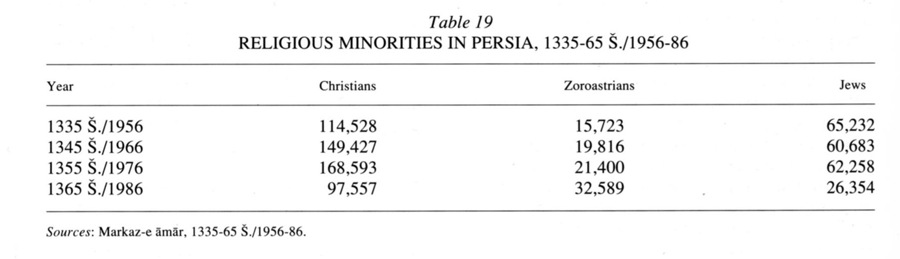
No comments:
Post a Comment