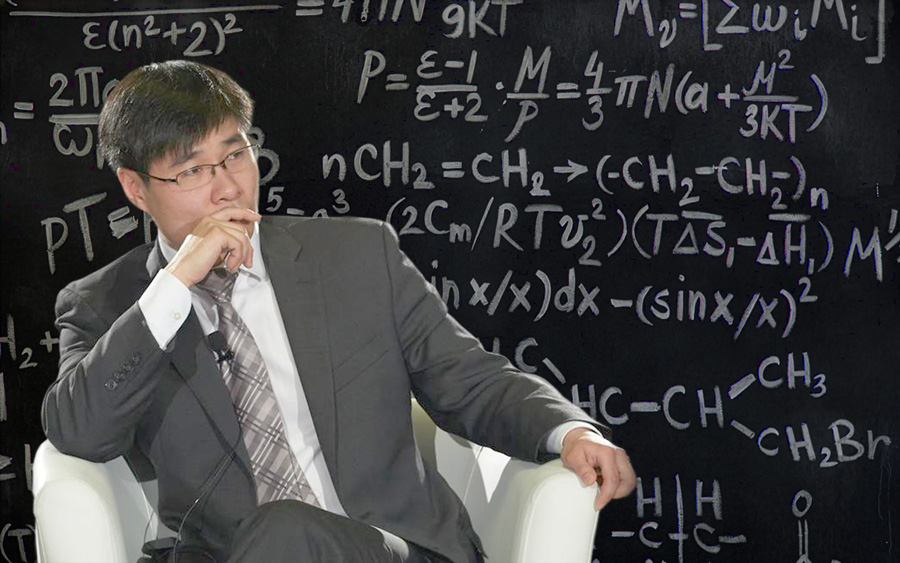
Jiang Xueqin
Jiang Xueqin, the Polymarket Professor & the Perils of his Geopolitical GriftDaniel Tutt
In the days following Trump’s war on Iran, the Chinese-Canadian influencer “Professor” Jiang has blown up, hitting all the major podcasts from Tucker Carlson to Glenn Diesen to manosphere celebrity Sneako. Each host introduces him with the same three boilerplate points. First, Jiang predicted that Trump would win in November 2024; second, that Trump and Israel would initiate the war in Iran; third, that they will lose to Iran.
How novel are Jiang’s predictions? On several occasions, Jiang has integrated data from the popular real-time political betting site Polymarket into his lectures in order to gauge future events. This may explain why his predictions are hardly more original than those of Polymarket. In May 2024, when Jiang predicted Trump would win the election, the odds of it were above 50% on the website. While there was no specific betting pool on whether Trump would invade Iran at that time, many bet the U.S. would, with this position becoming a majority one by mid-2025.
The third claim – that the US and Israel will lose and the Middle East will change forever – is more contentious. It is also where Jiang shows his true colors, leaning into a conspiratorial worldview according to which Iran’s victory will lead to U.S companies relocating to Israel en masse due to the destruction of the petrodollar. He has a term for this: “Pax Judaica.”
Jiang launched his Predictive History YouTube channel and Substack two years ago. Already, he has 2 million subscribers on Substack. Thousands of them pay him. What subscribers can expect in exchange are Wikipedia-grade summaries of history and current events aimed at helping them better predict geopolitical situations. Subtending all of this is a claim to scientific authority – Jiang purports to apply rules of game theory to history. This combination, so we’re told, will help predict future political outcomes. One follows it in much the same way one might follow Mad Money with Jim Cramer for stock tips. Jiang’s grift converts social reality into pure exchange value. On offer to any student of Predictive History is the idea that they too can apply Game Theory to predict what will happen in the Middle East.
But aside from the main grift, it is hard to say what Jiang’s je ne sais quoi truly is. The production quality of his videos is unremarkable, displaying no unique aesthetic. He lectures from a digital whiteboard in a nondescript classroom. By day he is allegedly a high school teacher in China. He claims his fans have given him the nickname “Professor.”
Jiang’s appeal is certainly bolstered by his Yale credentials. He completed his undergraduate studies there in 1999. Afterwards, he worked as a liberal journalist and educator across China. Despite this, however, he frequently undermines his credibility with absurd conspiracy thinking. In one video he states that “we don’t actually have any concrete evidence for the Holocaust.” In another discussion, he claims that communism is a continuation of Frankism, an 18th century Jewish mystical movement that originated as an offshoot of Sabbateanism. Indeed: Jiang may be the first liberal conspiracist to obtain celebrity influencer status.
That Sneako is among his interlocutors is telling. The streamer – real name Nicolas Kenn De Balinthazy – built a following of over 1.28 million predominantly young men through right-wing commentary, collaborations with Nick Fuentes, and vocal support for Trump’s 2024 campaign, before pivoting to criticism of the Iran war in a six-hour stream titled “Iran War is a DISASTER.” A subject of Louis Theroux’s Netflix documentary Inside the Manosphere, Sneako represents a younger wave of influencers linking the manosphere to electoral politics – a pipeline that runs directly into Jiang’s emerging audience. The fact that Jiang can now move between conversations with left-wing figures like Krystal Ball of Breaking Points and this demographic tells us something about the ideological promiscuity of the current moment.
Nowhere are the limitations of Jiang’s framework more apparent than in his treatment of the Iran War itself. His analysis rests on a handful of fixed premises: that Iran will succeed militarily over the U.S. and Israel due to the resolve of its proxies (the Houthis, Hamas, and Hezbollah) and its strong cohesion as a military force. But Jiang does not account for the deep rupture between the Islamic Republic and large portions of its own population, made viscerally legible by the 2019 fuel protests and the 2022 Woman, Life, Freedom uprisings. Similarly, Jiang’s reliance on zero sum logic game theory leads him to analyze the United States’ role without any attention to domestic pressures facing Trump, from the cost of living crisis to the widespread disapproval felt towards the war.
Given his rapid rise to internet prominence and the apparent amplification of his content by platform algorithms, it is reasonable to ask what accounts for Jiang’s visibility. As Alan Macleod documented in MintPress News, Facebook alone recruited dozens of former CIA officials into politically sensitive departments, including trust, security, and content moderation. Twitter similarly hired heavily from the FBI and CIA, with former agents placed in senior roles overseeing site integrity and content policy. These are not conspiracy theories – they are openly publicized employment relationships that exert influence over what billions of people see. If Jiang is some sort of op, this would explain his meteoric rise. But what would be the practical function of such engineering?
Jiang is anti-communist and highly pro-liberal entrepreneurship and elitism. That tells us something. But questions remain. Does he have ties to the intelligence community? If so, who does he work with? It is impossible to know definitively. But a more thorough look at his biography certainly raises a number of red flags.
A common tactic that the ruling class uses to shape perception is to set the terms of debate over major national issues. In the case of the Iran war this was evident in the resignation of Joe Kent, the former Director of National Counterterrorism. Kent’s resignation was delivered via a letter which criticized the war in Iran but stopped short of completely disavowing the Trump administration. Shortly thereafter he hit the podcast circuit. In effect, Kent was giving the party an exit strategy: if the war in Iran goes south and becomes wildly unpopular, he can function as a lifeline for disaffected Republicans to fall back on.
The Epstein files followed a similar logic (“limited hangout”). The intelligence community releases just enough information on a scandal to satisfy curiosity or outrage, while hiding the deeper reality. Our online lives are filled with this vicious circle of scheming and control, all of which makes the conspiracy theorist a serious threat to critical intellectual inquiry.
Social Fragmentation Fuels Conspiracy Thinking
Conspiracy theorists aren’t the pariahs that they used to be. In 2010, Peter Turchin coined the idea of “elite overproduction”: a societal condition where the number of people seeking high-status, influential positions (the “elite aspirants”) exceeds the number of such positions available.1 This in turn leads them to ally with marginalized groups and challenge the political status quo.
While this phenomenon seemed to undergird the “left populism” of the 2010s, since its defeat in 2020 we’ve witnessed the reverse trend: elite underproduction. This has been driven by the widespread gutting of the educational system. In the United States alone hundreds of programs in the humanities and social sciences were cut and over 80 colleges were closed or merged between 2020 and 2025. This institutional destruction has not only contributed to a crisis of elite legitimacy; it has also given rise to a new sort of public intellectual, one no longer curated through traditional institutional channels. A “parasocial left” is thereby forged in the interstices of the online world. It thrives as a set of counterpublics, often in conflict with one another.2
Conspiracists formulate their sociopolitical visions based on a cherry-picked and partial set of facts. They avoid engagement with deeper contradictions, as well as deeper social context. As a result, the conspiracist, and by extension their fans, tend to become neurotically obsessed with one thing. They become dependent—if not addicted—to the object of their investigation.
This obsession is what makes the conspiracist anti-intellectual and hence resistant to conflicting accounts or interpretations. But it is also this obsession that endears the conspiracist to their audience. It implants in them a certain madness; a passion for the real. The Lacanian theorist Glyn Daly has argued that conspiracy theories have a Kantian epistemology that is ‘hyper realist.’3 But they practice only a halfway Kantianism. The conspiracist worldview is premised on the notion that some substantial entity is blocking the truth behind appearances. But it is not blocked by the limits of our knowledge itself, as Kant maintains. It is blocked by a malevolent agent: a spectral authority that orchestrates the illusion, or what Lacan calls the ‘big Other.’
How did we undergo such a profound deterioration of the public sphere? The first factor that must be accounted for is the extensive deployment of algorithms in the 2010s across all major social media platforms, from Meta to Twitter to Instagram. The rise of the influencer economy, and affective content more generally, made conspiracy-oriented material increasingly visible and easy to discover.
The second more properly materialist reality driving the conspiracy boom is a distrust of the status quo. This began with neoliberalism; since then, elite mismanagement of the economy culminating in the Great Recession of 2008, Trump’s victory, Brexit, and the COVID-19 pandemic have all conspired to further shake faith in technocrats and mainstream media (we could throw in for good measure the imperialist instability that began under Biden’s watch with the Russia-Ukraine war and a two-year long genocide in Gaza). Unable to put forth a coherent narrative, the traditional bourgeoisie finds itself increasingly narrated by others. Egged on by the Internet, the understanding of reality goes up for sale. The conspiracist is primed for success in this market.
The Problem of Jiang’s Biography
As noted by a poster on X, Jiang’s early life is mapped out in some detail in his 2014 book, Creative China (创新中国教育). Born in 1976 in Taishan City, China, he immigrated to Canada with his parents at age six and grew up in Toronto. He enrolled at Yale in 1995 and studied Mandarin there, a language he had not acquired fluency in during childhood.
In this period, Yale was strongly linked with the American NGO complex. In 1997-98, Jiang Zemin and Bill Clinton agreed to implement the Sino-U.S. Rule of Law Initiative. In the years that followed, Yale Law School’s China Law Center played a crucial role as a safe harbor for Chinese activists, educating them in the operational and legal models of Western non-profits. Many of these ended up helping launch NGOs that received funding from the National Endowment for Democracy (NED)—a U.S.-government-funded, private non-profit foundation that provides support pro-democracy and political opposition movements, including in politically tense parts of China such as Hong Kong, Tibet, and Xinjiang. Partly in response to this, China cracked down on NGOs that received foreign funding beginning in 2012.
In 1998, Jiang broke off his studies at Yale to return to China. During this time, he worked at the Affiliated High School of Peking University (Beida Fuzhong)—an institution with strong ties to Yale. He then returned to Yale to finish his studies, graduating in 1999.
For nearly the next decade, Jiang worked as a journalist in China. While his book does not cover this period in depth, Zhen Ming has uploaded a number of his articles on X. An article published in 2000, “Consuming Problem,” criticizes China’s health system, stressing the need for increased NGO intervention to combat tuberculosis. Another from 2001, “Fighting to Organize,” encourages Chinese workers to spontaneously rise up against the government. In 2006, he wrote a report while working for the UN Assistance Mission in Afghanistan, calling for USAID and NGOs to invest more heavily in Afghan healthcare.
What is surely the most dramatic episode of Jiang’s journalistic career occurred in 2002. While filming a worker protest undercover in China for PBS, he was arrested by secret police and branded a spy. He was then deported, before being allowed to re-enter the country the following year.
This experience appears to have caused Jiang to give up journalism, instead opting to further his career in the educational sector.
In 2008, he took a job as Deputy Principal at Shenzhen Middle School. There, he was tasked with constructing a controversial “overseas studies unit” focused on sending students to top American universities. In a 2014 interview, he advocates reforming the Chinese education system to better suit the needs of the nation’s expanding middle class. “When I came here,” he recounts, “I hated rich people […] But at the end of the day the rich are the trendsetters. They see more, they have more access to education. […] So it’s elite, but it’s in this space that we can experiment.”
Jiang’s second stint in the educational sector ended 2014—just as China began tightening the screws on foreign-backed NGOs and actors. For several years, he worked as a researcher and writer, largely staying out of the public eye. In 2022, he took a job at Moonshot Academy in Beijing where he now teaches history and philosophy.
It is impossible to know for sure whether higher order forces are behind Jiang’s viral success. What we do know is this. He was educated in the United States, at a university that was at the time a hotbed of Sino-American intrigue. He was a longtime critic of the Chinese Communist Party, who actively cooperated with foreign organizations. He was accused of being a spy. He has become a social media phenomenon on websites in which the U.S. intelligence community is actively involved.
It is also worth noting that his central thesis – U.S. defeat in Iran, American withdrawal from the Middle East, the collapse of petrodollar hegemony – maps with striking precision onto the strategic interests of the Chinese state. This need not imply direction or coordination. The CPC has its own reasons to want the outcome Jiang predicts, and a high school teacher in China producing content that overlaps with the goals of the state is not something that requires a conspiracy to explain. Still, the convergence between Jiang’s analysis and Beijing’s agenda is one more thread in a biographical picture that demands more scrutiny than it has received.
Any influencer that arises ex nihilo, invents a completely new ideological persona and is subsequently raised on high by untransparent algorithms deserves to be heavily vetted. In Jiang’s case – due to his long history of Western cooperation, as well as his parroting of Chinese geopolitical goals – that goes double. Granted, even a cursory analysis of his biography is so damning that the entire case may seem farcical. But we can’t forget that the most powerful podcasters and media groups let him in.
We can expect many more Jiangs to sprout up. The best we can do is avoid falling for the next trickster.
====
1 Peter Turchin, End Times: Elites, Counter-Elites, and the Path of Political Disintegration (New York: Penguin Press, 2023), see especially chapter one, “Elites, Elite Overproduction, and the Road to Crisis” (pp. 6 – 9).
2 I coined the concept “parasocial left” to refer to the rise of Internet-based micro-communities that form online around public figures. These communities take on a “parasocial” quality that provides a holistic ground for political sense-making. For more on the concept of the parasocial and online political communities, see Daniel Tutt, “Loser Politics,” Muftah Magazine, republished on Substack: https://danieltutt.substack.com/p/loser-politics
3 Glyn Daly (29 Jul 2025): Conspiracy theory: Lacanian dynamics and mythic closure, Distinktion: Journal of Social Theory, DOI: 10.1080/1600910X.2025.2526511
<지앙 쉬에친, 폴리마켓 교수와 그의 지정학적 사기의 위험성> 요약
1. 지앙 쉬에친의 부상과 예측의 실체
최근 중-캐나다계 인플루언서 지앙 쉬에친(Jiang Xueqin)이 트럼프의 승리, 이스라엘-이란 전쟁 및 미국의 패배를 예측하며 급격한 대중적 인기를 얻고 있다.
2. 음모론적 세계관과 논란
지앙은 예일 대학교 출신이라는 학벌을 내세우지만, 실제로는 홀로코스트 부정론이나 공무주의를 유대인 신비주의 운동과 연결하는 등 황당한 음모론을 유포하고 있다.
3. 배경과 정체성에 대한 의문
지앙의 과거 행적은 다소 모순적이다.
평론: 엘리트 생산 부족 시대의 자극적 지정학 비즈니스
이 글은 지앙 쉬에친이라는 인물을 통해 현대 사회의 공론장이 얼마나 취약해졌는지를 날카롭게 분석한다.
1. 과학의 탈을 쓴 데이터 가공
지앙의 가장 큰 문제점은 학문적 엄밀함의 부재를 '게임 이론'이라는 매력적인 용어로 은폐한다는 점이다.
2. 음모론의 주류화와 공론장 분열
지앙이 좌우를 넘나들며 인기를 얻는 현상은 이른바 '엘리트 생산 부족(Elite underproduction)'과 인문학 교육의 붕괴가 가져온 참사로 해석된다.
3. 모호한 정체성과 전략적 이해관계
과거 서구 민주주의 가치를 옹호하던 인물이 현재는 중국의 지정학적 이익을 대변하는 논리를 펼치는 과정은 그가 진정성 있는 분석가라기보다 시장의 수요에 맞춰 자신의 입장을 재포장하는 ' ideological persona'임을 시사한다.
결론적으로, 이 비평은 지앙 쉬에친을 비판하는 동시에, 근거 없는 확신에 열광하는 현대 사회의 구조적 병폐를 경고하고 있다.

No comments:
Post a Comment