256 pages
China's War in Korea Strategic Culture and Geopolitics by Xiaobing Li
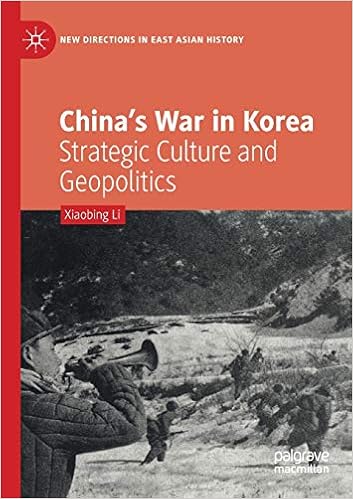
China’s War in Korea: Strategic Culture and Geopolitics Paperback – 18 November 2020
by Xiaobing Li (Author)
5.0 out of 5 stars 2 ratings
Kindle
$68.67Read with Our Free App
Hardcover
$180.74
7 New from $113.15
Paperback
$96.26
10 New from $78.80
This book re-visits the history of the Korean War of 1950-1953 from a Chinese perspective, examining Chinese strategy and exploring why China sent three million troops to Korea, in Mao’s words, to “defend the homeland and safeguard the country”―giving rise to what became the war’s common name in China. It also looks into the relatively neglected historical factors which have redefined China’s security concerns and strategic culture. Using newly available sources from China and the former Soviet Union, the book considers how interactive the parameters of defense changes were in a foreign war against Western powers, how flexible Chinese strategy was in the context of its intervention, and how expansive its strategic cultural repertoire was at the crucial moment to “defend the country.” Providing a re-examination of China’s military decisions and strategy evolution, this text narrates the story of successive generations of Chinese leaders and provides a key insight into security issues in China and Northeast Asia today.
262 pages
Palgrave Macmillan
Publication date
18 November 2020
Product description
From the Back Cover
This book re-visits the history of the Korean War of 1950-1953 from a Chinese perspective, examining Chinese strategy and exploring why China sent three million troops to Korea, in Mao’s words, to “defend the homeland and safeguard the country”―giving rise to what became the war’s common name in China. It also looks into the relatively neglected historical factors which have redefined China’s security concerns and strategic culture. Using newly available sources from China and the former Soviet Union, the book considers how interactive the parameters of defense changes were in a foreign war against Western powers, how flexible Chinese strategy was in the context of its intervention, and how expansive its strategic cultural repertoire was at the crucial moment to “defend the country.” Providing a re-examination of China’s military decisions and strategy evolution, this text narrates the story of successive generations of Chinese leaders and provides a key insight into security issues in China and Northeast Asia today.
About the Author
Xiaobing Li is Professor of History at University of Central Oklahoma, USA. He authored and co-authored The Cold War in East Asia, China’s Battle for Korea, China at War, Voices from the Vietnam War, A History of the Modern Chinese Army, Voices from the Korean War, and Mao’s Generals Remember Korea.
Product details
Publisher : Palgrave Macmillan; 1st ed. 2019 edition (18 November 2020)
About the author
Follow authors to get new release updates, plus improved recommendations.
Xiaobing Li
Discover more of the author’s books, see similar authors, read author blogs, and more
Customer reviews
5.0 out of 5 stars
Top reviews from other countries

Writing Historian
5.0 out of 5 stars New Content, insightful analysis, but a bit overpriced.Reviewed in the United States on 9 July 2021
Verified Purchase
If you have followed the author's work, you know that he has written several books on the Korean War from the Chinese perspective. This somewhat slimmer volume does contain new information which makes it worthwhile to add to any Korean War enthusiast's library. But it is pricey and that might give one pause before actually buying it. I purchased the softcover version because I intend to use this book as a reference. I havent mastered the use of kindle editions for that purpose, so I didnt have much choice.
China's War in Korea Strategic Culture and Geopolitics by Xiaobing Li
China’s War in Korea: Strategic Culture and Geopolitics Paperback – 18 November 2020
by Xiaobing Li (Author)
5.0 out of 5 stars 2 ratings
Kindle
$68.67Read with Our Free App
Hardcover
$180.74
7 New from $113.15
Paperback
$96.26
10 New from $78.80
This book re-visits the history of the Korean War of 1950-1953 from a Chinese perspective, examining Chinese strategy and exploring why China sent three million troops to Korea, in Mao’s words, to “defend the homeland and safeguard the country”―giving rise to what became the war’s common name in China. It also looks into the relatively neglected historical factors which have redefined China’s security concerns and strategic culture. Using newly available sources from China and the former Soviet Union, the book considers how interactive the parameters of defense changes were in a foreign war against Western powers, how flexible Chinese strategy was in the context of its intervention, and how expansive its strategic cultural repertoire was at the crucial moment to “defend the country.” Providing a re-examination of China’s military decisions and strategy evolution, this text narrates the story of successive generations of Chinese leaders and provides a key insight into security issues in China and Northeast Asia today.
262 pages
Palgrave Macmillan
Publication date
18 November 2020
Product description
From the Back Cover
This book re-visits the history of the Korean War of 1950-1953 from a Chinese perspective, examining Chinese strategy and exploring why China sent three million troops to Korea, in Mao’s words, to “defend the homeland and safeguard the country”―giving rise to what became the war’s common name in China. It also looks into the relatively neglected historical factors which have redefined China’s security concerns and strategic culture. Using newly available sources from China and the former Soviet Union, the book considers how interactive the parameters of defense changes were in a foreign war against Western powers, how flexible Chinese strategy was in the context of its intervention, and how expansive its strategic cultural repertoire was at the crucial moment to “defend the country.” Providing a re-examination of China’s military decisions and strategy evolution, this text narrates the story of successive generations of Chinese leaders and provides a key insight into security issues in China and Northeast Asia today.
About the Author
Xiaobing Li is Professor of History at University of Central Oklahoma, USA. He authored and co-authored The Cold War in East Asia, China’s Battle for Korea, China at War, Voices from the Vietnam War, A History of the Modern Chinese Army, Voices from the Korean War, and Mao’s Generals Remember Korea.
Product details
Publisher : Palgrave Macmillan; 1st ed. 2019 edition (18 November 2020)
About the author
Follow authors to get new release updates, plus improved recommendations.
Xiaobing Li
Discover more of the author’s books, see similar authors, read author blogs, and more
Customer reviews
5.0 out of 5 stars
Top reviews from other countries
Writing Historian
5.0 out of 5 stars New Content, insightful analysis, but a bit overpriced.Reviewed in the United States on 9 July 2021
Verified Purchase
If you have followed the author's work, you know that he has written several books on the Korean War from the Chinese perspective. This somewhat slimmer volume does contain new information which makes it worthwhile to add to any Korean War enthusiast's library. But it is pricey and that might give one pause before actually buying it. I purchased the softcover version because I intend to use this book as a reference. I havent mastered the use of kindle editions for that purpose, so I didnt have much choice.
Highly recommended, but only if you already have the author's earlier books and want to add to that body of knowledge.
Attack at Chosin: The Chinese Second Offensive in Korea 07/05/2020
by Xiaobing Li
( 8 )
$21.04
For members of the U.S. Army’s “Task Force Faith” and the First Marine Division, the Battle of Chosin Reservoir is an epic story of survival, courage, and ingenuity. Their exploits are well known—woven into the storied histories of the U.S. Army and Marine Corps. Now, for the first time, Attack at Chosin recounts this battle from the Chinese perspective, describing the advance that forced General MacArthur to reorient his strategy, which not only marked a turning point in the Korean War but impacted events in Asia in ways that still resonate today.
The Battle of Chosin Reservoir, as the Chinese commanders foretold, determined the fate and length of the Korean War. Author Xiaobing Li describes the fighting that began on November 27, 1950, when 150,000 soldiers from the Chinese Ninth Army Group attacked the First Marines and elements of the 7th Infantry Division in the remote mountains of North Korea. It was a calculated attempt to repel MacArthur’s “home-by-Christmas” offensive and to deter UN forces from further advances toward the Chinese border. The fierce fighting that followed, combined with the bitter cold, made Chosin one of the deadliest battles of the war. By December 17, after suffering more than 40,000 casualties and failing to achieve their campaign objectives to destroy the American divisions, the Ninth Army Group was forced to withdraw. One day later, on December 18, 1950, the remaining survivors were recalled to China.
As the first book to explore the role of command and control, technology, and combat effectiveness from the point of view of the Chinese, and to examine cooperation and friction between Beijing and Pyongyang, Attack at Chosin sheds new light on the ultimate military success of the UN forces during the Korean conflict. Li also provides invaluable insights into Chinese military doctrine, strategy, and tactics that continue to influence foreign policy and American military institutions today.
Read more
Other Formats:: Hardcover
includes tax, if applicable
Buy now with 1-Click ®
Sold by: Amazon Australia Services, Inc.
China’s War in Korea: Strategic Culture and Geopolitics (New Directions in East Asian History) 05/11/2019
by Xiaobing Li
( 2 )
$68.67
This book re-visits the history of the Korean War of 1950-1953 from a Chinese perspective, examining Chinese strategy and exploring why China sent three million troops to Korea, in Mao’s words, to “defend the homeland and safeguard the country”—giving rise to what became the war’s common name in China. It also looks into the relatively neglected historical factors which have redefined China’s security concerns and strategic culture. Using newly available sources from China and the former Soviet Union, the book considers how interactive the parameters of defense changes were in a foreign war against Western powers, how flexible Chinese strategy was in the context of its intervention, and how expansive its strategic cultural repertoire was at the crucial moment to “defend the country.” Providing a re-examination of China’s military decisions and strategy evolution, this text narrates the story of successive generations of Chinese leaders and provides a key insight into security issues in China and Northeast Asia today.
Read more
Other Formats:: Hardcover , Paperback
includes tax, if applicable
Buy now with 1-Click ®
Sold by: Amazon Australia Services, Inc.
Building Ho's Army: Chinese Military Assistance to North Vietnam 10/09/2019
by Xiaobing Li
( 2 )
$62.15
Built upon a solid foundation of sources, memoirs, and interviews, this study sheds new light on China's efforts in the Vietnam War. Utilizing secondary works in Chinese, Vietnamese, and Western languages, and the author's own familiarity as a former member of the Chinese People's Liberation Army, this examination expands the knowledge of China's relations with the North Vietnamese Army (NVA) during the 1950s and 1960s.
As a communist state bordering Vietnam, China actively facilitated the transformation of Ho Chi Minh's army from a small, loosely organized, poorly equipped guerrilla force in the 1940s into a formidable, well-trained professional army capable of defeating first the French (1946–1954) and then the Americans (1963–1973). Even after the signing of the Geneva Peace Agreement, China continued to aggressively support Vietnam. Between 1955 and 1963, Chinese military aid totaled $106 million and these massive contributions enabled Ho Chi Minh to build up a strong conventional force. After 1964, China increased its aid and provided approximately $20 billion more in military and economic aid to Vietnam.
Western strategists and historians have long speculated about the extent of China's involvement in Vietnam, but it was not until recently that newly available archival materials revealed the true extent of China's influence—its level of military assistance training, strategic advising, and monetary means during the war. This illuminating study answers questions about China's intention, objective, strategy, and operations of its involvement in the Vietnam Wars.
Read more
Other Formats:: Hardcover
includes tax, if applicable
Buy now with 1-Click ®
Sold by: Amazon Australia Services, Inc.
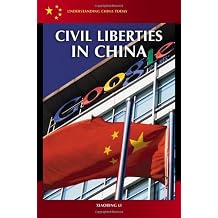
Civil Liberties in China (Understanding China Today) 21/10/2010
by Xiaobing Li
$47.40
This book examines civil liberties in China today, covering the topics of constitutional rights of citizens, rights of the criminally accused, the court and legal systems, and judicial conflicts between government regulation and personal freedoms.
Other Formats:: Hardcover
includes tax, if applicable
Buy now with 1-Click ®
Sold by: Amazon Australia Services, Inc.
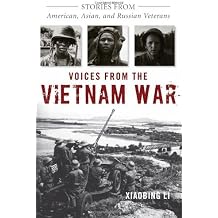
Voices from the Vietnam War: Stories from American, Asian, and Russian Veterans 11/06/2010
by Xiaobing Li
( 7 )
$34.90
The Vietnam War's influence on politics, foreign policy, and subsequent military campaigns is the center of much debate and analysis. But the impact on veterans across the globe, as well as the war's effects on individual lives and communities, is a largely neglected issue. As a consequence of cultural and legal barriers, the oral histories of the Vietnam War currently available in English are predictably one-sided, providing limited insight into the inner workings of the Communist nations that participated in the war. Furthermore, many of these accounts focus on combat experiences rather than the backgrounds, belief systems, and social experiences of interviewees, resulting in an incomplete historiography of the war.
Chinese native Xiaobing Li corrects this oversight in Voices from the Vietnam War: Stories from American, Asian, and Russian Veterans. Li spent seven years gathering hundreds of personal accounts from survivors of the war, accounts that span continents, nationalities, and political affiliations. The twenty-two intimate stories in the book feature the experiences of American, Chinese, Russian, Korean, and North and South Vietnamese veterans, representing the views of both anti-Communist and Communist participants, including Chinese officers of the PLA, a Russian missile-training instructor, and a KGB spy. These narratives humanize and contextualize the war's events while shedding light on aspects of the war previously unknown to Western scholars. Providing fresh perspectives on a long-discussed topic, Voices from the Vietnam War offers a thorough and unique understanding of America's longest war.
Read more
Other Formats:: Kindle , Hardcover , Paperback
includes tax, if applicable
Buy now with 1-Click ®
Sold by: Amazon Australia Services, Inc.
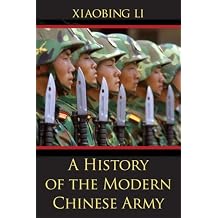
A History of the Modern Chinese Army 02/07/2009
by Xiaobing Li
( 9 )
$29.21
Since the establishment of the Red Army in 1927, China's military has responded to profound changes in Chinese society, particularly its domestic politics, shifting economy, and evolving threat perceptions. Recently tensions between China and Taiwan and other east Asian nations have aroused great interest in the extraordinary transformation and new capabilities of the Chinese army. In A History of the Modern Chinese Army, Xiaobing Li, a former member of the People's Liberation Army (PLA), provides a comprehensive examination of the PLA from the Cold War to the beginning of the twenty-first century that highlights the military's central function in modern Chinese society. In the 1940s, the Chinese army was in its infancy, and many soldiers were rural conscripts and volunteers who had received little formal schooling. The Chinese military rapidly increased its mobility and weapon strength, and the Korean War and Cold War offered intense combat experience that not only allowed soldiers to hone their fighting techniques but also helped China to develop military tactics tailored to the surrounding countries whose armies posed the most immediate threats. Yet even in the 1970s, the completion of a middle school education (nine years) was considered above-average, and only 4 percent of the 224 top Chinese generals had any college credit hours. However, in 1995 the high command began to institute massive reforms to transform the PLA from a labor-intensive force into a technology-intensive army. Continually seeking more urban conscripts and emphasizing higher education, the PLA Reserve Officer Training and Selection program recruited students from across the nation. These reservists would become commissioned officers upon graduation, and they majored in atomic physics, computer science, and electrical engineering. Grounding the text in previously unreleased official Chinese government and military records as well as the personal testimonies of more than two hundred PLA soldiers, Li charts the development of China's armed forces against the backdrop of Chinese society, cultural traditions, political history, and recent technological advancements. A History of the Modern Chinese Army links China's military modernization to the country's growing international and economic power and provides a unique perspective on China's esttablishment and maintenance of one of the world's most advanced military forces.
Read more
Other Formats:: Kindle , Hardcover , Paperback
Attack at Chosin: The Chinese Second Offensive in Korea 07/05/2020
by Xiaobing Li
( 8 )
$21.04
For members of the U.S. Army’s “Task Force Faith” and the First Marine Division, the Battle of Chosin Reservoir is an epic story of survival, courage, and ingenuity. Their exploits are well known—woven into the storied histories of the U.S. Army and Marine Corps. Now, for the first time, Attack at Chosin recounts this battle from the Chinese perspective, describing the advance that forced General MacArthur to reorient his strategy, which not only marked a turning point in the Korean War but impacted events in Asia in ways that still resonate today.
The Battle of Chosin Reservoir, as the Chinese commanders foretold, determined the fate and length of the Korean War. Author Xiaobing Li describes the fighting that began on November 27, 1950, when 150,000 soldiers from the Chinese Ninth Army Group attacked the First Marines and elements of the 7th Infantry Division in the remote mountains of North Korea. It was a calculated attempt to repel MacArthur’s “home-by-Christmas” offensive and to deter UN forces from further advances toward the Chinese border. The fierce fighting that followed, combined with the bitter cold, made Chosin one of the deadliest battles of the war. By December 17, after suffering more than 40,000 casualties and failing to achieve their campaign objectives to destroy the American divisions, the Ninth Army Group was forced to withdraw. One day later, on December 18, 1950, the remaining survivors were recalled to China.
As the first book to explore the role of command and control, technology, and combat effectiveness from the point of view of the Chinese, and to examine cooperation and friction between Beijing and Pyongyang, Attack at Chosin sheds new light on the ultimate military success of the UN forces during the Korean conflict. Li also provides invaluable insights into Chinese military doctrine, strategy, and tactics that continue to influence foreign policy and American military institutions today.
Read more
Other Formats:: Hardcover
includes tax, if applicable
Buy now with 1-Click ®
Sold by: Amazon Australia Services, Inc.
China’s War in Korea: Strategic Culture and Geopolitics (New Directions in East Asian History) 05/11/2019
by Xiaobing Li
( 2 )
$68.67
This book re-visits the history of the Korean War of 1950-1953 from a Chinese perspective, examining Chinese strategy and exploring why China sent three million troops to Korea, in Mao’s words, to “defend the homeland and safeguard the country”—giving rise to what became the war’s common name in China. It also looks into the relatively neglected historical factors which have redefined China’s security concerns and strategic culture. Using newly available sources from China and the former Soviet Union, the book considers how interactive the parameters of defense changes were in a foreign war against Western powers, how flexible Chinese strategy was in the context of its intervention, and how expansive its strategic cultural repertoire was at the crucial moment to “defend the country.” Providing a re-examination of China’s military decisions and strategy evolution, this text narrates the story of successive generations of Chinese leaders and provides a key insight into security issues in China and Northeast Asia today.
Read more
Other Formats:: Hardcover , Paperback
includes tax, if applicable
Buy now with 1-Click ®
Sold by: Amazon Australia Services, Inc.
Building Ho's Army: Chinese Military Assistance to North Vietnam 10/09/2019
by Xiaobing Li
( 2 )
$62.15
Built upon a solid foundation of sources, memoirs, and interviews, this study sheds new light on China's efforts in the Vietnam War. Utilizing secondary works in Chinese, Vietnamese, and Western languages, and the author's own familiarity as a former member of the Chinese People's Liberation Army, this examination expands the knowledge of China's relations with the North Vietnamese Army (NVA) during the 1950s and 1960s.
As a communist state bordering Vietnam, China actively facilitated the transformation of Ho Chi Minh's army from a small, loosely organized, poorly equipped guerrilla force in the 1940s into a formidable, well-trained professional army capable of defeating first the French (1946–1954) and then the Americans (1963–1973). Even after the signing of the Geneva Peace Agreement, China continued to aggressively support Vietnam. Between 1955 and 1963, Chinese military aid totaled $106 million and these massive contributions enabled Ho Chi Minh to build up a strong conventional force. After 1964, China increased its aid and provided approximately $20 billion more in military and economic aid to Vietnam.
Western strategists and historians have long speculated about the extent of China's involvement in Vietnam, but it was not until recently that newly available archival materials revealed the true extent of China's influence—its level of military assistance training, strategic advising, and monetary means during the war. This illuminating study answers questions about China's intention, objective, strategy, and operations of its involvement in the Vietnam Wars.
Read more
Other Formats:: Hardcover
includes tax, if applicable
Buy now with 1-Click ®
Sold by: Amazon Australia Services, Inc.
Civil Liberties in China (Understanding China Today) 21/10/2010
by Xiaobing Li
$47.40
This book examines civil liberties in China today, covering the topics of constitutional rights of citizens, rights of the criminally accused, the court and legal systems, and judicial conflicts between government regulation and personal freedoms.
Other Formats:: Hardcover
includes tax, if applicable
Buy now with 1-Click ®
Sold by: Amazon Australia Services, Inc.
Voices from the Vietnam War: Stories from American, Asian, and Russian Veterans 11/06/2010
by Xiaobing Li
( 7 )
$34.90
The Vietnam War's influence on politics, foreign policy, and subsequent military campaigns is the center of much debate and analysis. But the impact on veterans across the globe, as well as the war's effects on individual lives and communities, is a largely neglected issue. As a consequence of cultural and legal barriers, the oral histories of the Vietnam War currently available in English are predictably one-sided, providing limited insight into the inner workings of the Communist nations that participated in the war. Furthermore, many of these accounts focus on combat experiences rather than the backgrounds, belief systems, and social experiences of interviewees, resulting in an incomplete historiography of the war.
Chinese native Xiaobing Li corrects this oversight in Voices from the Vietnam War: Stories from American, Asian, and Russian Veterans. Li spent seven years gathering hundreds of personal accounts from survivors of the war, accounts that span continents, nationalities, and political affiliations. The twenty-two intimate stories in the book feature the experiences of American, Chinese, Russian, Korean, and North and South Vietnamese veterans, representing the views of both anti-Communist and Communist participants, including Chinese officers of the PLA, a Russian missile-training instructor, and a KGB spy. These narratives humanize and contextualize the war's events while shedding light on aspects of the war previously unknown to Western scholars. Providing fresh perspectives on a long-discussed topic, Voices from the Vietnam War offers a thorough and unique understanding of America's longest war.
Read more
Other Formats:: Kindle , Hardcover , Paperback
includes tax, if applicable
Buy now with 1-Click ®
Sold by: Amazon Australia Services, Inc.
A History of the Modern Chinese Army 02/07/2009
by Xiaobing Li
( 9 )
$29.21
Since the establishment of the Red Army in 1927, China's military has responded to profound changes in Chinese society, particularly its domestic politics, shifting economy, and evolving threat perceptions. Recently tensions between China and Taiwan and other east Asian nations have aroused great interest in the extraordinary transformation and new capabilities of the Chinese army. In A History of the Modern Chinese Army, Xiaobing Li, a former member of the People's Liberation Army (PLA), provides a comprehensive examination of the PLA from the Cold War to the beginning of the twenty-first century that highlights the military's central function in modern Chinese society. In the 1940s, the Chinese army was in its infancy, and many soldiers were rural conscripts and volunteers who had received little formal schooling. The Chinese military rapidly increased its mobility and weapon strength, and the Korean War and Cold War offered intense combat experience that not only allowed soldiers to hone their fighting techniques but also helped China to develop military tactics tailored to the surrounding countries whose armies posed the most immediate threats. Yet even in the 1970s, the completion of a middle school education (nine years) was considered above-average, and only 4 percent of the 224 top Chinese generals had any college credit hours. However, in 1995 the high command began to institute massive reforms to transform the PLA from a labor-intensive force into a technology-intensive army. Continually seeking more urban conscripts and emphasizing higher education, the PLA Reserve Officer Training and Selection program recruited students from across the nation. These reservists would become commissioned officers upon graduation, and they majored in atomic physics, computer science, and electrical engineering. Grounding the text in previously unreleased official Chinese government and military records as well as the personal testimonies of more than two hundred PLA soldiers, Li charts the development of China's armed forces against the backdrop of Chinese society, cultural traditions, political history, and recent technological advancements. A History of the Modern Chinese Army links China's military modernization to the country's growing international and economic power and provides a unique perspective on China's esttablishment and maintenance of one of the world's most advanced military forces.
Read more
Other Formats:: Kindle , Hardcover , Paperback
includes tax, if applicable

No comments:
Post a Comment