‘혐중’이란 병을 어떻게 치료할 것인가 [박노자의 한국, 안과 밖] 한국의 속칭 ‘혐중’ 역시 역사성을 지니고 있다. 근대에 접어들어 조선이 일본 제국주의 침략의 대상이 되면서, 조선의 근대주의자들에게 과거의 지역적 종주국이었던 중국은 빨리 벗어나야 할 ‘전근대’, 신속히 거리를 두어야 할 ‘타자’를 대표했다. 잘 알려진 바와 같이, 독립문의 ‘독립’이란 중국(청나라)으로부터의 독립을 의미한 것이었다. 수정 2025-04-30
일러스트레이션 김대중
박노자 | 노르웨이 오슬로대 교수(한국학)
2025년 4월17일, 나는 몇개월 만에 그리운 한국 땅을 다시 밟게 됐다. 세미나 참석 건이 있어서 부활절 휴가를 이용해 서울에 간 것이다. 한국에 다시 온 것은 매우 기뻤지만, 바로 그날 저녁에 너무나 충격적인 뉴스를 접하게 됐다. ‘윤 어게인’(Yoon again·윤석열을 다시) 집회를 연 윤석열 전 대통령의 일부 광적 지지자들은, 그날 저녁 집회가 해산된 뒤에 건국대학교 근처의 속칭 ‘양꼬치 골목’으로 갔다. 이들은 주로 중국 동포들이 운영하는 점포와 식당이 밀집한 거리에서 주민들을 상대로 하여 “중국으로 돌아가라”는 등의 폭언을 퍼붓고 난동을 부렸던 것이다. 충돌 끝에 한 가게의 중국인 직원은 가슴 통증을 호소하며 병원으로 이송됐다. 일제강점기에나 종종 있었던 중국인을 향한 물리적인 폭력의 그림자를, 해방 이후로는 최초로 이제 그야말로 ‘다시’ 보게 됐다.
일본에서 자행되고 있는 극우 ‘재특회’의 망동을 그대로 닮은 이와 같은 폭거들은, 과연 어떻게 해서 제국주의적 폭력의 피해자들의 후손들에 의해서 저질러지게 된 것일까? ‘재특회’의 폭력은 식민주의적 인종주의에 그 기원을 두고 있지만, 한국의 속칭 ‘혐중’(중국과 중국인에 대한 혐오) 역시 역사성을 지니고 있다. 근대에 접어들어 조선이 일본 제국주의 침략의 대상이 되면서, 조선의 근대주의자들에게 과거의 지역적 종주국이었던 중국은 빨리 벗어나야 할 ‘전근대’, 신속히 거리를 두어야 할 ‘타자’를 대표했다. 잘 알려진 바와 같이, 독립문의 ‘독립’이란 중국(청나라)으로부터의 독립을 의미한 것이었다. 또한 1882년의 임오군란 이후부터 중국인들이 조선으로 유입되기 시작하자, 개화파들은 당시에 중국 노동자들의 유입을 막았던 새로운 ‘문명의 중심’, 즉 미국 못지않게 그들에게 모질게 대하는 것을 ‘근대인의 미덕’으로 여겼다.
“청인(중국인)들이 개화한 나라에 가서도 저들의 야만의 풍속을 고치지 않은즉 그 나라 사람과 당초에 섞이지 못하고 대접받기로 그 나라 안에서 제일 천한 인종이 되니 어찌 교제가 되리오? 근년에 청인들이 조선으로 오기 시작하여 조선 사람들이 할 일과 할 장사를 빼앗아 가며, 가뜩이나 더러운 길을 더 더럽게 하며 아편을 조선 사람 보는 데에 피우니 청인들이 조선에 오는 것은 조금도 이로운 일이 없고 (……) 조선 사람들이 할 만한 일을 외국 사람들이 와서 하고, 돈을 모은 후에 고국으로 돌아가니 어찌 거머리와 다름이 있으리오?”
옛날 말투만 아니었다면 요즘의 ‘혐중’ 전단과 별로 다르지 않게 보였을 만한 글이지만, 이는 서재필이 쓴 것으로 추측되는 ‘독립신문’ 1896년 5월21일자 논설의 일부다. 그 당시 강자였던 미국인을 선망하여 스스로 그들과 닮아가길 원했던 개화파 인사들의 중국인 멸시관 역시 그 당시 미국인의 인종주의적 중국관과 별반 다르지 않았다. 화교 사업가들을 경쟁자로 인식했던 일제강점기의 ‘동아일보’, ‘조선일보’ 역시 화교들을 종종 ‘아편 밀매’, ‘인신매매’, ‘부정행위’ 등과 엮어서 ‘위험하고 더러운 사람’으로 묘사했다. 중국인 주인공을 “우리 여인을 성적으로 착취하고 죽인” 악한으로 그린 김동인의 ‘감자’(1925년)와 같은 그 시대의 문학 작품에서도 그대로 나타나는 이런 인식의 틀은, 언론을 통해 일반인에게 ‘상식’으로 전달돼 ‘만보산 사건’(1931년)이라는 이름으로 알려진 화교 학살의 하나의 배경이 됐다.
하지만 중국과 중국인에 대한 혐오·배제와 동시에 조·중 연대 역시 꽃피웠다. 같은 조선의 일간지들은 중국 혁명에 대해서 비상한 관심을 보였고, ‘아리랑’의 주인공 김산(장지락, 1905~1938)이나 중국 혁명의 가장 뛰어난 작곡가인 정율성(1914~1976)으로 상징되는 수많은 조선의 지사들은 몸을 돌보지 않고 중국 혁명의 현장으로 달려갔다. 그 현장에서는 함께 싸우고 함께 살고 함께 죽는 것이 예사였다. 나중에 북한이라는 국가의 ‘핵’이 된 김일성 부대(동북항일연군 제1로군 제6사) 역시 중국인과 조선인들이 섞인 연합 부대였다. 혁명적 연대 이외에도 조선의 화교들과의 사업상의 협력 등도 있었다. 일제강점기의 조선은 그만큼 상당히 국제화된 다민족 사회였다.
배제와 연대, 그리고 협력의 ‘삼중주’는 해방 이후에도 계속 이어졌다. 1990년대까지는 아무래도 중국에 대한 반공주의 선전과 박정희 등에 의한 화교 상업 활동 억제책 등으로 상징되는 배제가 더 우세했다. 중국과의 수교 이후 광활한 중국 시장이 열리고 중국 동포를 비롯한 수십만명의 중국 공민들이 한국 국내로 이주하기 시작한 1990년대부터 무엇보다 공동의 이익을 도모하는 협력의 코드가 주도적이었다. 하지만, 미-중 대립이 본격화되고 사드(종말단계 고고도 지역방어) 체계의 배치가 문제로 떠오른 2017년부터 중국의 반발에 직면한 한국의 보수는 다시 1945년 이전의 중국 혐오를 연상케 하는 배제 모드로 퇴보한 것이다. 더 큰 문제는, 언론에 의해서 그 정서가 보편화됐다는 것이다.
중국인에 대한 배제와 혐오는 1945년 이전에도 백해무익했다. 함께 손잡고 항일에 나서야 했던 중국인과 조선인 사이에 알력이 생기기를 희망했던 것은, 오히려 일제였다. 지금도 분절화돼가는 미국 패권 이후의 혼란스러운 세계 속에서 살길을 찾아야 하는 한국으로서는 중국이란 협력의 대상이지, 배제의 대상은 절대 아니다. 국내에 와서 없어서는 안 될 한국 사회의 구성원들이 된 중국 동포를 포함한 중국 공민들은, 마땅히 연대의 대상이 돼야 한다. 이런 협력과 연대가 가능하자면 한국 지식인 사회가 우선 해야 할 일은 여태까지의 중국과 중국인 인식 등에 대한 성찰과 반성이다. 미국의 인종주의적 중국관을 따라가고, 일제의 조-중 이간질 정책과 보조를 맞추어 중국인을 악마화했던 한국 언론의 과거도 반성의 대상이 돼야 하고, ‘만보산 사건’과 같은 중국인 학살에 대한 반성적 언급 역시 교과서에 실려야 한다. 혐오라는 사회의 병을 치료하기 위해서 가장 좋은 약이란 바로 과거의 사실을 직시하고, 반인권적 행태들의 재발을 방지하기 위해 최선을 다하면서 연대와 협력 본위의 미래를 향해 함께 나가는 것이다.
이석기 화형식, 통진당 해체 성토문 전달 예정 통진당이 해제되는 그날까지..[탈북민 감시단] 뜬다! 양원석 기자 입력 2013-09-08 탈북자 단체, 통진당사 앞에서 종북세력 종식 위한 총궐기대회 열어황장엽 선생 유언, 종북 척결 1인 릴레이 시위도 ▲ 지난달 30일 오후 서울 대방동 통합진보당사 앞에서 열린 '이석기 규탄 및 통진당 해체 촉구 집회'에서 대한국민재향군인회 회원들이 묵념을 하고 있다.ⓒ 연합뉴스
자유를 위해 사선을 넘은 탈북자들이 통진당 해체를 공식 요구하고 나섰다.
종북세력의 완전 종식을 위한 [탈북민 감시단]과 [종북 척결 1인 릴레이 시위]도 첫발을 뗀다.
<북한민주화위원회>, <북한인민해방전선>, <자유북한운동연합>, <탈북인총연합회>, <탈북난민인권연합>, NK지식인연대 등 탈북자 관련 단체들은 9일 오후 1시 서울 대방동 통합진보당 당사 앞에서 <통진당 해체와 종북세력의 종식을 위한 탈북민 총궐기대회>를 연다고 8일 밝혔다.
이날 탈북단체들은 통진당 해체를 위한 [성토문]을 이정희 대표에게 전달하고, 국가변란을 모의한 이석기에 대한 화형식도 열릴 예정이다.
특히 탈북단체들은 이날부터 통진당이 해체될 때까지 [탈북민 감시단] 활동과 [1인 릴레이 시위]에 들어간다고 향후 추진 계획을 발표했다.
다음은 탈북단체들이 공동으로 발표한 행사 진행 계획이다.
대한민국을 부정하고 북한을 추종해온 더러운 인간들이 [미군철수], [국가보안법 폐지] 등을 주장하며 촛불 난동을 벌려온 것도 모자라 [파출소-무기저장고-주요 통신시설 파괴]를 비롯한 국가전복음모까지 꾸며왔다는 것이 속속 드러나고 있다.
그럼에도 이석기를 비롯한 [혁명조직원]들은 그동안 자신들이 꾸며온 변란과 음모를 [농담]으로 돌리고 있으며, 노동당 통일전략의 하수인으로 살아온 치졸한 행적을 민주주의로 포장하며 국민들을 기만하고 있다.
하지만 우리 탈북자들은 이석기가 지껄인 [한 자루의 권총 사상]과 [이민위천] 따위의 숨은 뜻을 누구보다 잘 알고 있으며, 그 일당이 애국가 대신 불렀다는 [적기가]가 얼마나 종북적이고 반역적인가를 온 몸으로 느끼고 있다.
독재와 민주주의를 체험하면서 대한민국의 소중함을 누구보다 잘 알고 있는 우리 탈북자들은 이제 더 이상 이석기 일당의 거짓선동을 간과하지 않을 것이며, 저들의 숨은 의도가 무엇인가를 국민들 앞에 까밝히기를 결의했다.
이를 위해 9월 9일 오후 1시, <통합진보당> 당사 앞에서 <통진당 해체와 종북세력의 종식을 위한 탈북민 총궐기대회>를 진행할 것이며, 통진당 해체를 위한 우리의 결의가 담긴 [성토문]을 통진당 이정희 대표에게 전달할 것이다.
또한 우리는 이날 현장에서 결성, 진행되는 ▲ 종북세력 종식을 위한 [탈북민 감시단] 활동 ▲ [종북 척결 1인 릴레이 시위] ▲ 북한인권사진전 ▲ [종북 반대 구호응모 및 구호선창 대회] 등 수단과 방법을 총동원하여 종북세력과 싸울 것이며, 이 모든 활동을 통진당이 해체되는 그날까지 통진당 당사 앞에서 진행할 것이다.
1부, 북민전 창립 3주기를 맞으며 진행하는 종북 척결 퍼포먼스
- 고 황장엽 선생의 북민전 관련 유언 낭독 - 대한민국 전복을 기도한 이석기 공개총살 - 통진당 해산을 위한 탈북자들의 청원(서)접수 - 종북 감시단 결성, 현장 투입 - 1인 시위자들 현장 투입
2부, 통진당 해산을 위한 탈북민 총 궐기대회
- 국가변란을 모의한 이석기 화형식 - 통진당 해체 촉구, 탈북민 결의 낭독 - 통진당(대표)성토문 전달
[참여 단체 및 뜻을 모은 사람들]
<남북통일예술인협회> 대표 주명신, <북한민주화위원회> 대표 홍순경, <북한민주화추진연합회> 대표 김성민, <북한민주화운동본부> 대표 강철환, 김태진, <북한인민해방전선> 대표 장세율, <북한자유연맹> 대표 최철웅, <북한인권청년연대> 대표 한남수, <북한개혁방송> 대표 김승철, <북한전략센터> 대표 강철환, <북한인권보호연합> 대표 주성진, <성공적인통일을 만들어가는 사람들> 대표 김영일, <자유북한운동연합> 대표 박상학, <자유탈북민협회> 대표 박영학, <탈북인총연합회> 대표 한창권, <탈북난민인권연합> 대표 김용화, <세계북한문제연구센터> 대표 안찬일, <탈북자동지회> 대표 최주활, <탈북여성인권연대> 대표 강수진, <탈북자자립센터> 대표 강철호, <탈북문화예술인총연합> 대표 김영남, <평화통일탈북인협회> 대표 김태범, <함께가는사람들> 대표 이명옥, NK지식인연대 대표 김흥광. 2013년 9월 7일. 탈북민 및 탈북단체연합
민주노총이 2003년 이후 단체 명의로 북한을 114차례 다녀온 것으로 나타났다. 내란 선동 혐의로 해산된 통합진보당 인사들은 101회나 방북했다. 금강산이나 개성공단이 아닌 대부분 평양 방문이었다. 민노총은 전·현직 간부들이 북한 지령에 따라 반국가·이적 활동을 벌인 간첩 협의로 수사를 받고 있다. 이런 간첩 활동이 비정상적으로 빈번했던 방북과 관련 있는 것 아니냐는 의심이 들 수밖에 없다.
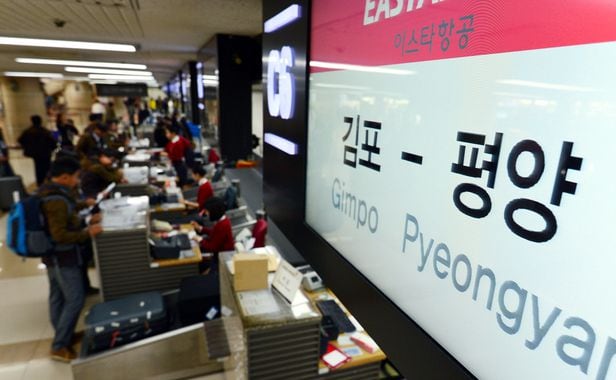
민노총과 통진당 인사들의 방북은 주로 노무현·문재인 정부 때 집중됐다. 민노총은 노 정부 시절 87회, 문 정부 때 5회 북한을 다녀왔다. 통진당 방북도 노 정부 때 집중됐다. ‘남북 노동자 통일 대회’ ‘6·15 남북공동선언 연대 모임’ ‘남북 축구 대회’ 등 명목이었다. 전세기까지 동원한 방북이 많았다. 하지만 이들의 북한 행적은 제대로 파악되지 않고 있다. 남북 노동자 축구대회에 참가하는 남측 대표단(민주노총과 한국노총)이 2015년 10월 28일 김포공항에서 북한 평양으로 가는 전세기를 타기 위해 출국 수속을 밟고 있다. /조선일보DB
민노총 전·현직 간부 4명은 해외에서 북한 공작원과 접촉해 ‘청와대 등 주요 기관에 대한 송전선망 체계를 입수해 마비시키도록 준비하라’는 지시를 받는 등 국가보안법 위반 혐의로 구속됐다. 이들은 북한에서 반미·반정부 시위 지침을 받고 핼러윈 참사 땐 ‘퇴진이 추모다’ 등 시위 구호까지 전달받았다.
핵심인 민노총 조직국장은 개인 자격으로만 3차례 방북했다. 민노총 단체 방북 때도 갔을 가능성이 있다고 한다. 그는 이후 100여 차례 북한과 접촉해 대남 지령문과 보고문을 주고받으며 활동 자금을 받은 혐의를 받고 있다. 그는 평택·오산 기지 등에 접근해 활주로, 탄약고, 미군 정찰기, 패트리엇 포대 등을 촬영해 북한에 보고했다. 그 역시 수차례 방북 때 북에 포섭됐을 가능성이 있다.
통진당을 이끈 이석기 전 의원은 2005년 등 두 차례 방북했다. 당시 이 전 의원은 민혁당 사건으로 유죄 확정 판결을 받은 뒤 가석방 상태였다. 국가보안법 사범이 형기 중에 북한을 방문하도록 노무현 정부가 허가한 것이다. 이런 무차별 방북이 통진당의 세력 확장에 영향을 미쳤을 수 있다.
좌파 정당과 단체, 노조의 일부 인사들은 북한에서 한편처럼 행동한 것으로 알려졌다. 하지만 정부는 이들이 방북 때 누구를 접촉하고 어떤 활동을 했는지 실상도 파악하지 못하고 있다. 북 주민 접촉 신고를 하지 않아도 과태료는커녕 서면 경고뿐이다. 민노총을 비롯해 창원·진주·제주 등 전국에 지하 간첩 조직이 판치는 것도 이와 무관치 않을 것이다.
탈북자 단체, 통진당 해체 종식 총궐기대회 “대한민국의 소중함 누구보다 잘 알고 있어...통진당 해체되는 그날까지 투쟁은 멈추지 않을 것” Written by. 이영찬 입력 : 2013-09-09
“우리는 국회의원이나 정당이 북한을 추종하고 내란을 목적하면 탈북자들의 신상정보로부터 중요한 군사비밀에 이르기까지 하루 사이에 ‘조선노동당’에 배달되는 것은 문제도 아니며 국회의원과 정당의 특권을 이용하면 국가변란도 가능하다는 것을 이번 사태를 통해 직시하고 있기에 통진당 해체를 촉구하고 또 촉구한다.”
▲ 9일 오후 대방동 통합진보당 당사 앞에서 탈북자 단체가 통진당 해체와 종북세력 종식을 위한 탈북민 총궐기대회를 가졌다.ⓒkonas.net
탈북자 단체가 지난 5일 통합진보당 해산을 요구하는 청원서를 법무부에 제출한데 이어 9일 오후 대방동 통진당사 앞에서 통진당 해체와 종북세력 종식을 위한 탈북민 총궐기대회를 가졌다.
이날 행사는 김성민 자유북한방송 대표, 김흥광 NK지식인연대 대표, 박상학 자유북한운동연합 대표를 비롯한 10여 개 탈북자단체가 모인 가운데 제1부 북민전 창립 3주기를 맞은 ‘종북 척결 퍼포먼스’와 제 2부 통진당 해산을 위한 탈북자 총궐기대회로 진행됐다.
이들 단체는 성토문을 통해 “대한민국을 부정하고 북한을 추종해온 더러운 인간들이 ‘미군철수’, ‘국가보안법 폐지’등을 주장하며 촛불난동을 벌여온 것도 모자라 파출소-무기저장고-주요 통신시설 파괴를 비롯한 국가전복음모 행위를 벌여 왔다”며 분개했다.
이어 “이석기를 비롯한 ‘혁명조직원’들은 그동안 자신들이 꾸며온 변란과 음모를 ‘농담’으로 돌리고 있고 노동당 통일전략의 하수인으로 살아온 치졸한 행적을 민주주의로 포장하며 국민들을 기만하고 있다”면서 “이석기가 지껄인 ‘한 자루의 권총 사상’과 ‘이민위천’ 따위의 숨은 뜻을 탈북자들은 잘 알고 있기에 더 이상 이석기 일당의 거짓 선동을 간과하지 않을 것”이라고 주장했다.
특히 “통진당은 전신인 민주노동당 시절부터 수많은 간첩사건과 연루 되었고, 간첩죄로 형을 살고 나온 사람을 요직에 등용한 기형정당”이라고 지적하면서 통진당을 향해 “反국가적 反헌법적 이념을 자백하라” 주문했다.
또한 “통진당은 강령을 통해 주한미군철수, 국가보안법 폐지, 한미동맹 해체와 反헌법적 통일방안들을 지지하고 있으며 노동당 통일전략의 산물인 6·15선언에 입각한 자주적 통일을 주장하고 있다”며 통합진보당 해산의 당위성을 주장하고 나섰다.
▲ '이석기 역도 처단'과 '통진당 해체'를 촉구하는 계란 세례 퍼포먼스(왼쪽)와 통진당 해산 서명운동에 참여하고 있는 탈북단체 회원들(오른쪽). ⓒkonas.net
아울러 이석기 의원이 북한독재정권의 한국 공산화에 동조한 反국가단체 출신이며, 현재 북한의 핵실험과 정전협정 무효화 선언에 호응하여 무장폭동에 의한 국헌문란을 기도한 협의를 받고 있음에도 불구하고 그에 동조한 당원들은 온갖 거짓 선동으로 이석기를 옹호하고 있을뿐 아니라 당내 비밀결사체인 RO와 한통속임을 증명하는 낯 뜨거운 행위만 거듭하고 있다고 지적했다.
그러면서 “독재와 민주주의를 체험한 탈북자들은 대한민국의 소중함을 누구보다 잘 알고 있다”며 “통진당이 해체되는 그날까지 투쟁은 멈추지 않을 것”이라고 일갈하면서 행사후에는 종북 감시단을 결성해 1인 시위자들을 현장에 투입한다고 밝혔다.
앞서 단체는 지난 5일 “법치에 도전하는 진보당의 해체는 국가정상화를 위한 (법무부) 장관의 의무”라며, 법무부에 ‘통진당 해산 청원서’를 제출한바 있다.(Konas)
프리미엄 윤석열 탄핵심판 선고 ㅣ 99화 "한국서 온 멋진 소식" 지구 반대편에서 탄핵 지켜본 이 남자 [인터뷰] 5.18 마지막 목격한 도널드 베이커 "윤석열, 모든 이에게 비난받아야 마땅해" 사회 박수림(srsrsrim)
25.04.07 ▲5.18민주화운동 마지막을 목격한 도널드 베이커 브티리시컬럼비아대학교(UBC) 교수가 지난 4일 오후 윤석열씨 탄핵 소식을 듣고 짤막한 소회를 남겼다.도널드 베이커 페이스북 갈무리 지구 반대편 캐나다에서 한국사를 강의하는 도널드 베이커(79)는 지난 4일 자신의 페이스북에 윤석열 탄핵에 대한 짤막한 소회를 남겼다.
"한국에서 온 멋진 소식. 윤 전 대통령 탄핵 성공은 오늘날에도 (한국에) 5.18민주화운동(5.18) 정신이 강하다는 것을 보여준다. 미국에 계신 분들이 대한민국 국민에게 민주주의를 지키는 방법을 배우면 좋겠다!"
그는 현재 브티리시컬럼비아대학교(UBC) 아시아학과 교수이자 한국연구센터 공동 소장으로 일하고 있다. 미국이 국적인 그는 광주를 '제2의 고향'으로 여길 만큼 사랑한다. 광주와의 인연은 반세기 전인 1971~1974년 평화봉사단원으로 활동하며 처음 시작됐다.
서울에서 연구하던 1980년엔 광주에서 난리가 났다는 소문을 듣고 하숙집 가족과 친구들의 상황을 확인하기 위해 다시 광주로 향했다. 계엄군의 눈을 피해 광주로 걸어가던 중 산을 넘다 시체를 보기도 했고, 광주 시내에서 혈흔을 목격하기도 했다. 5월 27일, 5.18의 마지막을 두 눈으로 목격한 것이다(관련기사 : 5.18 목격 외국인들 "전두환, 감옥서 죽었어야... 명복 못 빈다" https://omn.kr/1w5mn).
▲1971~1974년 광주에서 평화봉사단으로 활동했던 도널드 베이커. 1980년 연구를 위해 서울에 머물고 있던 그는 1980년 5월 27일 광주에 가 5.18민주화운동의 참상의 끝자락을 목격했다. 그는 현재 캐나다 브리티시컬럼비아대학 아시아학과 교수로 재직 중이다. 도널드 베이커 제공
헌법재판소의 탄핵 선고가 내려진 지난 4일 오후 베이커 교수에게 이메일을 보냈다. 그가 있는 밴쿠버와 한국 간의 시차로 답장은 지난 5일 자정이 조금 넘어 도착했다.
베이커 교수는 "5 대 3으로 탄핵이 기각될까 걱정했다"면서도 "헌법재판소(헌재)의 만장일치 인용 결정이 발표되었을 때 안도감을 느꼈다"고 했다. 지난해 12월 계엄 선포 당시 "1980년 5월로 플래시백(트라우마가 상기되는 현상) 되는 경험을 했다"던 그는 "우리는 계속해서 광주 사람들의 희생을 기억해야 한다"고 강조하기도 했다.
그러면서 "역사학자로서 반세기 동안 한국의 극적인 변화를 목격할 수 있어 매우 운이 좋았다고 생각한다"고 덧붙였다.
아래 베이커 교수와 나눈 인터뷰를 일문일답으로 정리했다.
반세기 동안 한국을 바라보며
▲헌재, 윤석열 대통령 '파면'4일 헌법재판소가 윤석열 대통령 탄핵 사건에 대해 인용 선고를 했다. 탄핵 소추 111일, 변론 종결 38일 만이다. 사진은 지난 2024 3월 3차 민주주의 정상회의 장관급 회의 개회식에 참석한 윤 전 대통령.연합뉴스 - 윤석열이 탄핵당했다는 소식을 언제, 어떤 경로로 알게 되었나.
"UBC 한국연구센터 소속 대학원생 연구원들과 저녁을 먹으며(선고 당시 밴쿠버는 2025년 4월 3일 오후 7시 - 기자 말) 휴대전화로 생중계를 켜두고 헌재 선고를 지켜봤다. 함께 있었던 대학원생 연구원은 두 명인데, 모두 한국 출신이다. 문형배 헌재소장 권한대행이 만장일치로 윤 전 대통령을 파면한다고 선언할 때 우리는 모두 축하했고 환호했다."
- 윤석열의 탄핵을 예상했나.
"역사학자로서 미래 예측은 불가능함을 배웠다. 이에 헌재 결정이 발표되기 전까지 희망적이면서도 우려스러웠다. 그간 윤 전 대통령과 관련해 (국회 측) 증거가 압도적이었고, 윤 전 대통령 측 변명이 매우 약하다는 것을 알고 있어서 8명의 재판관 중 대부분이 그에게 불리한 판결을 내릴 것으로 생각하긴 했다.
하지만 동시에 오늘날 한국 사회가 정치적으로 얼마나 양극화되어 있는지 알고 있었기 때문에 5(인용) 대 3(기각·각하)이 될까봐 걱정하기도 했다. 헌재의 만장일치 파면 결정이 발표된 후에는 안도감을 느꼈다. 이 결정을 계기로 윤 전 대통령 측 지지자들은 판결이 불공평하다고 주장하기 더 어려워질 것이다."
▲윤석열 탄핵 투표 가결, 꺼지지 않는 응원봉윤석열즉각퇴진·사회대개혁 비상행동 주최로 14일 오후 서울 영등포구 국회 앞에서 열린 '내란수괴 윤석열 즉각 탄핵 범국민 촛불 대행진'에서 시민들이 윤석열 대통령의 탄핵소추안 표결에서 탄핵 투표가 가결된 뒤 응원봉을 흔들며 노래를 합창하고 있다.이정민 - 지난해 12월 3일 한국에서 발생한 계엄 선포와 그 이후 벌어진 일련의 상황을 어떻게 생각하나.
"1980년에 우리가 본 것과 같은 대규모 폭력이 없었다는 점에서 큰 안도감을 느꼈다. 계엄 이후 상황이 전개되면서는 한국인을 매우 자랑스러워하기 시작했다. 민주주의를 보호하기 위해 신속하고 용감하게 반응했기 때문이다. 윤 전 대통령은 인터넷(생중계 등)이 쿠데타 시도에 맞서 시민들을 동원하는데 어떻게 작용하는지 고려하지 않은 것으로 보인다. 또 한국이 1980년 이후 얼마나 많이 변했는지, 그리고 국민들이 민주주의에 얼마나 헌신적인지 깨닫지 못하는 듯했다.
역사학자로서는 내가 지난 반세기 동안 한국인과 한국사에 관여하며 한국의 극적인 변화를 목격할 수 있어 운이 매우 좋았다고 생각한다. 나는 그동안 한국이 빈곤과 독재에서 번영과 민주주의로 변화하는 것을 지켜보았다. 한국계 캐나다 학생들에게도 한국 사회의 유산을 자랑스러워해야 한다고 말한다. 한국인들은 다른 국가 사람들이 달성하지 못한 것을 비교적 짧은 기간에 달성했기 때문이다. 윤 전 대통령의 탄핵을 인용한 헌재 판결은 한국인에 대한 저의 존경심을 더욱 강화했다. 저는 미국 사람들이 한국인들처럼 민주주의를 수호하려고 결의하길 바란다."
"계엄 선포에 광주로 플래시백... 그 희생을 잊지 말라"
▲5.18민주화 운동 당시 광주 제일은행(현재 무등빌딩) 앞에서 최루탄이 터진 상황에서 한 시민이 방독면을 쓴 계엄군에 둘러 싸여 겁에 질린 모습을 하고 있다. 나경택 촬영, 5.18기념재단 제공 - 이번 사태를 지켜보면서 5.18이 떠오르기도 했나.
"지난해 12월 3일 이른 아침(계엄 당시 밴쿠버는 2024년 12월 3일 오전 6시 30분 - 기자 말) 밴쿠버에서 윤 전 대통령이 계엄을 선포한 것을 알게 됐다. 그 즉시 저는 1980년 5월로 플래시백 되는 경험을 했고, 한국에서 무슨 일이 일어날지 정말 걱정했다. 하지만 유튜브 라이브 스트리밍 덕분에 서울 사람들, 특히 젊은 여성들이 쿠데타를 저지하기 위해 얼마나 빨리 행동했는지 확인할 수 있었다.
한국사학자로서 저는 1980년 광주 사람들이 민주주의를 달성하기 위해 목숨을 걸지 않았더라도 한국은 결국 민주주의 국가가 되었을 것이라고 믿는다. 다만 당시 광주 사람들이 치른 희생이 한국이 진정한 민주주의 국가가 되는 데 있어 진전을 가속했다고 생각한다. 한국인들은 그해 5월 광주에서 무슨 일이 일어났는지 뒤늦게 알게 된 후, 군사 정부가 얼마나 위험한지 깨닫고 민주주의를 요구하며 대거 일어났다. 당시 광주 사람들이 흘린 피가 오늘날 한국에서 볼 수 있는 튼튼한 민주주의 나무에 비료가 된 거다.
5.18은 지금도 한국인들에게 계속 영감을 주고 있으며, 많은 사람들이 윤 전 대통령의 쿠데타 시도를 막기 위해 빠르게 반응한 이유 중 하나라고 믿는다."
- 5.18을 배경으로 한 소설 <소년이 온다>의 저자인 한강 작가가 얼마 전 노벨문학상을 수상했다. 그는 노벨문학상 수상 당시 "'과거가 현재를 도울 수 있을까?', '죽은 자가 산 자를 구할 수 있을까?'라는 질문을 곰곰이 생각했다"고 밝히기도 했다. 1980년 5.18 희생자들이 현재의 대한민국 국민과 민주주의를 지켰다는 평가가 이어지는데, 어떻게 생각하나.
"최근 대학에서 현대한국사 수업을 진행하다 학생들에게 한강 작가의 <소년이 온다>를 읽고 과제를 작성하게 했다. 지난주 수요일 수업에서는 그 책에 대해 학생들과 의견을 교환했는데, 학생들이 책 내용에 매우 감동한 모습이었다. 그들 중 일부는 '책을 읽으며 울었다'고 말하기도 했다.
하지만 울음만으로는 충분하지 않다. 한강 작가가 지적했듯 우리는 1980년 5월의 희생을 잊어서는 안 된다. 당시 광주 사람들이 보여준 용감함을 기억하며 민주주의와 인권을 위해 싸워야 한다. 또 그 희생을 기억하며 더 정의로운 세상으로 향하는 길을 막는 모든 것들에 저항해야 한다."
- 쿠데타를 일으킨 전두환과 윤석열을 비교해 본다면.
"난 역사가로서 과거의 사건과 그에 연루된 사람들에 대해 이야기할 때 중립적인 입장을 취해야 한다. 그러나 나는 동시에 1980년 5월 광주에서 무슨 일이 일어났는지를 직접 목격한 불행한 감정을 가진 인간이기도 하다. 내 감정은 나에게 '중립적인 입장을 포기하고 두 사람을 모두 매우 이기적인 사람이라고 선언하라'고 주문한다.
두 사람은 동료 시민보다 자신의 권력에 대한 개인적인 욕망을 우선시했다. 듣자 하니 윤석열은 전두환만큼 재정적으로 부패하진 않은 것 같다. (이번 계엄 당시) 민중의 의지를 억압하려는 시도에서도 전두환만큼 폭력적이지는 않았다. 그래서 난 전두환이 윤석열보다 더 나쁜 인간이라고 본다.
하지만 두 사람 모두 민주주의를, 그리고 국민을 위한 최선의 이익을 배신했다. 이에 대해 전두환과 윤석열은 역사가를 포함한 모든 사람에게 비난받아 마땅하다."
This article is missing information about Islamic, Indian, Mayan, Persian, and other scribes. Please expand the article to include this information. Further details may exist on the talk page.(July 2019)
Portrait of the Scribe Mir 'Abd Allah Katib in the Company of a Youth Burnishing Paper (Mughal Empire, ca. 1602)
The work of scribes can involve copying manuscripts and other texts as well as secretarial and administrative duties such as the taking of dictation and keeping of business, judicial, and historical records for kings, nobles, temples, and cities.
The profession of scribe first appears in Mesopotamia. Scribes contributed in fundamental ways to ancient and medieval cultures, including Egypt, China, India, Persia, the Roman Empire, and medieval Europe. Judaism, Buddhism, and Islam have important scribal traditions. Scribes have been essential in these cultures for the preservation of legal codes, religious texts, and artistic and didactic literature. In some cultures, social functions of the scribe and of the calligrapher overlap, but the emphasis in scribal writing is on exactitude, whereas calligraphy aims to express the aesthetic qualities of writing apart from its content.[3]
Previously a prominent fixture in literary cultures, scribes lost most of their prominence and status with the advent of the printing press. The generally less prestigious profession of scrivener continued to be important for copying and writing out legal documents and the like. In societies with low literacy rates, street-corner letter-writers (and readers) may still be found providing scribe service.[4]
Neo-Sumerian clay tablet with 24 columns on the front and back listing the names of almost 20,000 temple workers (2094–2047 BCE)
The Sumerians developed one of the earliest writing systems (the Cuneiform), the first body of written literature, and an extensive scribal profession to further these activities. The work of Near Eastern scribes primarily exists on clay tablets and stone monuments written in cuneiform, though later in the period of cuneiform writing they begin to use papyrus, parchment, and writing tablets.[5] The body of knowledge that scribes possessed belonged to an elite urban culture, and few had access to it.[6] Traveling scribes played a vital role in the dissemination of literary culture.[7]
During the middle to late 3rd millennium BCE, Sumerian literature in the form of disputations proliferated, such as the Debate between bird and fish;[8] the Debate between Summer and Winter, in which Winter wins; and others between the cattle and grain, the tree and the reed, silver and copper, the pickaxe and the plough, and the millstone and the gul-gul stone.[9] Nearly all known Sumerian literary works were preserved as a result of young scribes apprenticing for their profession.[10] In addition to literary works, the contents of the tablets they produced include word lists, syllabaries, grammar forms, and lists of personal names.[11]
To the extent that the curriculum in scribal schools can be reconstructed, it appears that they would have begun by studying lists and syllabaries and learning metrology, the formulas for writing legal contracts, and proverbs. They then might have advanced to praise poems and finally to copying more sophisticated works of literature.[12] Some scholars have thought that apprentice scribes listened to literary compositions read aloud and took dictation; others, that they copied directly from master copies. A combination of dictation, copying, and memorization for reproduction has also been proposed.[13]
Early New Kingdom statue commemorating the scribe Minnakht ("Strength of Min"), showing how ancient scribes worked seated on the floor with the papyrus on their lap
One of the most important professionals in ancient Egypt was a person educated in the arts of writing (both hieroglyphics and hieratic scripts, as well as the demotic script from the second half of the first millennium BCE, which was mainly used as shorthand and for commerce) and arithmetic.[14][15] Sons of scribes were brought up in the same scribal tradition, sent to school, and inherited their fathers' positions upon entering the civil service.[16]
Much of what is known about ancient Egypt is due to the activities of its scribes and the officials. But because of their ability to study in the vast Egyptian libraries, they were entrusted with jobs bigger than just copyists. Monumental buildings were erected under their supervision,[17] administrative and economic activities were documented by them, and stories from Egypt's lower classes and foreign lands survive due to scribes putting them in writing.[17]: 296
Scribes were considered part of the royal court, were not conscripted into the army, did not have to pay taxes, and were exempt from the heavy manual labor required of the lower classes (corvée labor). The scribal profession worked with painters and artisans who decorated reliefs and other building works with scenes, personages, or hieroglyphic text. However, the physical aspect of their work sometimes took a toll on their joints, with ancient bones showing some signs of arthritis that might be attributable to their profession.[18]
Ancient Egyptian scribe's palette with five depressions for pigments and four styli
from the category of 'writings, & music'. The hieroglyph contains the scribe's ink-mixing palette, a vertical case to hold writing-reeds, and a leather pouch to hold the black and red ink blocks.
Granary with scribes (lower right) in a Middle Kingdom tomb model
The demotic scribes used rush pens which had stems thinner than that of a reed (2 mm). The end of the rush was cut obliquely and then chewed so that the fibers became separated. The result was a short, stiff brush which was handled in the same manner as that of a calligrapher.[19]
Thoth was the god credited with the invention of writing by the ancient Egyptians. He was the scribe of the gods who held knowledge of scientific and moral laws.[20][page needed]
The Three Gods of Paper-making, Cai Lun (middle) with the Korean monk Damjing (left), who brought the art to Japan, and Mochizuki Seibei, who brought the art to Nishijima (西嶋).(Minobu Town Museum of History and Folklore)
The earliest known examples of writing in China are a body of inscriptions made on bronze vessels and oracle bones during the late Shang dynasty (c. 1250 – 1050 BCE),[21][22] with the very oldest dated to c. 1200BCE.[23][24]: 108 It was originally used for divination, with characters etched onto turtle shells to interpret cracks caused by exposure to heat. By the sixth century BCE, scribes were producing books using bamboo and wooden slips.[25] Each strip contained a single column of script, and the books were bound together with hemp, silk, or leather. China is well-known as being the place where paper was originally invented, likely by an imperial eunuch named Cai Lun in 105 CE. The invention of paper allowed for the later invention of woodblock printing, where paper was rubbed onto an inked slab to copy the characters. Despite this invention, calligraphy remained a prized skill due to the belief that "the best way to absorb the contents of a book was to copy it by hand".[25]
Chinese scribes played an instrumental role in the imperial government's civil service. During the Tang dynasty, private collections of Confucian classics began to grow. Young men hoping to join the civil service would need to pass an exam based on Confucian doctrine, and these collections, which became known as "academy libraries" were places of study. Within this merit system, owning books was a sign of status. Despite the later importance of Confucian manuscripts, they were initially heavily resisted by the Qin dynasty. Though their accounts are likely exaggerated, later scholars describe a period of book burning and scholarly suppression. This exaggeration likely stems from Han dynasty historians being steeped in Confucianism as state orthodoxy.[26]
Similarly to the west, religious texts, particularly Buddhist, were transcribed in monasteries and hidden during "times of persecution".[27] In fact, the earliest known copy of a printed book is of the Diamond Sutra dating to 868 CE, which was found alongside other manuscripts within a walled-in cave called Dunhuang.[28]
As professionals, scribes would undergo three years of training before becoming novices. The title of "scribe" was inherited from father to son. Early in their careers, they would work with local and regional governments and did not enjoy an official rank. A young scribe needed to hone their writing skills before specializing in an area like public administration or law. Archaeological evidence even points to scribes being buried with marks of their trade such as brushes, "administrative, legal, divinatory, mathematical, and medicinal texts", thus displaying a personal embodiment of their profession.[29]
The Buddhist Tripiṭaka emerged at the beginning of the first century. Buddhist texts were treasured and sacred throughout Asia and were written in different languages. Buddhist scribes believed that, “The act of copying them could bring a scribe closer to perfection and earn him merit.”[30]
Rather later, Hindu texts were written, although the most sacred, especially the Vedas, were not written down until much later, and were learnt by heart by the priestly Brahmins. Writing in the several scripts of Indic languages was generally not regarded as a distinct artistic form, in a situation similar to Europe, but different from East Asian traditions of calligraphy.
Goshuin, a record of a temple visit sometimes kept in a passport-like booklet, stamped and written at the Zentsū-ji Buddhist temple in Kagawa
By the 5th century CE, written Chinese was being adapted in Japan to represent spoken Japanese. The complexity of reconciling Japanese with a system of writing not meant to express it meant that acquiring literacy was a long process.[31] Phonetic syllabaries(kana), used for private writing, were developed by the 8th century and were in use along with kanji, the logographic system, used for official records.[32] Gendering of the private and public spheres led to a characterization of kana as more feminine and kanji as masculine, but women of the court were educated and knew kanji, and men also wrote in kana, while works of literature were produced in both.[33]
Early 20th century writing box (suzuri-bako) and writing table (Metropolitan Museum of Art)
The earliest extant writings take the form of mokkan, wooden slips used for official memoranda and short communications and for practical purposes such as shipping tags;[34] inscriptions on metal and stone; and manuscripts of sutras and commentaries.[33]Mokkan were often used for writing practice.[35] Manuscripts first took the form of rolls made from cloth or sheets of paper,[36] but when manuscripts began to appear as bound books, they coexisted with handscrolls(makimono).
The influence of Chinese culture, especially written culture, made writing "immensely important" in the early Japanese court. The earliest Japanese writing to survive dates from the late Asuka and Nara periods (550–794), when Buddhist texts were being copied and disseminated. Because Buddhism was text-based, monks were employed in scribal and bureaucratic work for their skill in writing and knowledge of Chinese culture.[37] In portraits of Buddhist clerics, a handscroll is a symbol of scribal authority and the possession of knowledge.[38]
Government offices and Buddhist centers employed copyists on a wide scale,[33] requiring an abundance of materials such as paper, glue, ink, and brushes; exemplars from which to copy; an organizational structure; and technicians for assembly, called sōkō or sō’ō.[39] More than 10,000 Nara documents are preserved in the Shōsōin archives of the Tōdai-ji temple complex.[40] The institution of the ritsuryō legal state from the 8th to 10th centuries produced "a mountain of paperwork" employing hundreds of bureaucratic scribes in the capital and in the provinces.[41] The average sutra copyist is estimated to have generated 3,800–4,000 characters a day.[42] Scribes were paid by the "page," and the fastest completed thirteen or more sheets a day, working on a low table and seated on the floor.[43] Both speed and accuracy mattered. Proofreaders checked the copy against the exemplar, and the scribe's pay was docked for errors.[44]
In the 8th century, the demand for vast quantities of copies meant that scribes in the Office of Sutra Transcription were lay people of common status, not yet ordained monks, some finding opportunities for advancement.[45] In Classical Japan, even lay scribes at some sutra copyist centers were required to practice ritual purity through vegetarian dietary restrictions, wearing ritual garments (jōe), ablution, avoiding contact with death and illness, and possibly sexual abstinence.[46] Outside Buddhist centers, professional scriveners practiced copyist craft.[47] Court-commissioned chronicles of the 8th century, such as Kojiki and Nihon shoki, survive in much later copies, as is the case for the first Japanese poetry anthologies.[36]
The earliest printed books were produced under the Empress Shōtoku on a large scale in the 8th century, only three centuries after Japanese became a written language, and by the Edo period (1603–1868) bound printed books predominated.[36] Manuscripts remained valued for their aesthetic qualities,[48] and the scribal tradition continued to flourish for a wide range of reasons.[49] In addition to handwritten practical documents pertaining to legal and commercial transactions, individuals might write journals or commonplace books, which involved copying out sometimes lengthy passages by hand.[50] This copying might extend to complete manuscripts of books that were expensive or not readily available to buy.[51]
Portrait of Fujiwara no Teika (1162–1241), poet, scribe, and book collector
But scribal culture was not merely or always a matter of need or necessity. Copying Buddhist sutras was a devotional practice (shakyō). In the Nara period, wealthy patrons commissioned sutra copying on behalf of ancestors to gain them spiritual passage from the Buddhist hells.[52] The Edo-period court noble Konoe Iehiro created a sutra manuscript in gold ink on dark blue paper, stating his purpose in the colophon as "to ensure the spiritual enlightenment of his departed mother."[53]
Creating a calligraphic and pictorial work by copying secular literature likewise was an aesthetic practice for its own sake and a means of study.[53] Within the social elite of the court, calligraphy was thought to express the inner character of the writer.[54] In the Heian period, the book collector, scholar-scribe, and literary artist Fujiwara no Teika was a leader in preserving and producing quality manuscripts of works of literature.[48] Even so prolific an author of printed prose works as Ihara Saikaku (1642–1693) also produced handwritten works in several formats, including manuscripts, handscrolls, and poetry slips (tanzaku) and cards (shikishi).[55] Unique and prized handscrolls preserved the collaborative poetry sessions characteristic of renga and haikai poetic composition, distributed more widely in printed copies.[56]
For authors not located near the major centers of publishing and printing, manuscripts were a route to publication.[57] Some authors self-published their books, especially romance novels (ninjōbon), in manuscript form.[58] Women's prose writings in general were circulated as manuscripts during the Edo period.[59] Women were not prevented from writing and circulating their work, but private publication may have been a way for women to adhere to gender norms in not making themselves available in the public sphere.[60]
Manuscripts could more readily evade government censorship,[48] and officially banned books that could no longer be printed were copied for personal use or circulated privately.[61] Lending libraries (kashihon'ya) offered manuscript books, including illicit texts, along with printed books.[62] Books might also be composed as manuscripts when their transmission was limited to a particular circle of interested parties or sharers in the knowledge, such as local history and antiquarianism,[63] a family's accumulated lore or farming methods, or medical texts of a particular school of medicine.[64] Intentional secrecy might be desired to protect arcane knowledge or proprietary information with commercial value.[65]
In the esoteric strand of Japanese Buddhism, scribes recorded oracles, the utterances of a kami-inspired person often in the form of dialogues in response to questions. The transcriber also filled in context for the transmission. After the text was verified, it became part of the canon, stored in secret places, viewable by affiliated monks, and used to legitimate forms of religious authority. Because they dealt with genealogies and sacral boundaries, oracle texts were consulted as references in questions of lineage and land ownership.[66]
At contemporary Shinto or Buddhist shrines, scribal traditions still play a role in creating ofuda (talismans), omikuji (fortunes or divination lots), ema (votive tablets), goshuin (calligraphic visitor stamps), and gomagi (inscribed sticks for ritual burning), forms that may employ a combination of stamps and handwriting on media. Today these are often mass produced[67] and commercialized for marketing to tourists.[68]Ema, for instance, began as large-scale pictorial representations that historically were created by professional artists. Small versions began to be produced and sold, and a complex symbology developed for the messages. Modern versions sold at shrines, often already stamped with their local affiliation, tend to be used more verbally, with space left for individuals to act as their own scribes in messaging the kami.[69]
Workshop for making tefillin, with rods for scrolls on racks against the wall; sofers precisely write four biblical passages on parchment for placing in each box (Jerusalem, 1964)
Scribes of ancient Israel were a literate minority in an oral based-culture. Some of them belonged to the priestly class, other scribes were the record-keepers and letter-writers in the royal palaces and administrative centers, affiliated with the ancient equivalent of professional guilds. There were no scribal schools in Israel during the early part of the Iron Age (1200–800 B.C.E.). Between the 13th and 8th centuries B.C.E., the Hebrew alphabetic system had not been developed. Only after the appearance of the Kingdom of Israel, Finkelstein points to the reign of Omri, did the scribal schools begin to develop, reaching their culmination in the time of Jeroboam II, under Mesopotamian influence.[70] The eventual standardization of the Hebrew writing system between the eighth and sixth centuries B.C.E. would presumably have given rise to codified rules and principles of language that scribes would then have learned. The education of scribes in ancient Israel was supported by the state, although some scribal arts could have been taught within a small number of families.[71] Some scribes also copied documents, but this was not necessarily part of their job.[72][page needed]
Jewish scribes at the Tomb of Ezekiel in Iraq, c. 1914
The Jewish scribes used the following rules and procedures while creating copies of the Torah and eventually other books in the Hebrew Bible.[73]
They could only use clean animal skins, both to write on, and even to bind manuscripts.
Each column of writing could have no less than 48, and no more than 60, lines.
The ink must be black, and of a special recipe.
They must say each word aloud while they were writing.
They must wipe the pen and wash their entire bodies before writing the most Holy Name of God, YHVH, every time they wrote it. Also before they would write the Most Holy Name of God, they would wash their hands 7 times.
There must be a review within thirty days, and if as many as three pages required corrections, the entire manuscript had to be redone.
The letters, words, and paragraphs had to be counted, and the document became invalid if two letters touched each other. The middle paragraph, word and letter must correspond to those of the original document.
The documents could be stored only in sacred places (synagogues, etc.).
As no document containing God's Word could be destroyed, they were stored, or buried, in a genizah (Hebrew: "storage").
Sofers (Jewish scribes) are among the few scribes that still do their trade by hand, writing on parchment. Renowned calligraphers, they produce the Hebrew Torah scrolls and other holy texts.
Until 1948, the oldest known manuscripts of the Hebrew Bible dated back to 895 CE. In 1947, a shepherd boy discovered some scrolls dated between 100 BCE and 100 CE, inside a cave west of the Dead Sea. In the course of the following decades more scrolls were found in caves at Qumran and elsewhere.[74] The discovered texts have become known collectively as the "Dead Sea Scrolls".[75] One complete book, plus fragments of every other book in the Hebrew Bible except Esther, have been identified amongst the texts.[76][77][78] Fragments from each of the Hebrew canonical books have been discovered,[79] including 30 fragments from the Book of Deuteronomy.[80]
While there were other items found among the Dead Sea Scrolls not currently in the Hebrew Bible, and many variations and errors occurred when they were copied, the texts, on the whole, testify to the accuracy of the scribes.[81] The Dead Sea Scrolls are currently the best route of comparison to the accuracy and consistency of translation for the Hebrew Bible because they are the oldest out of any biblical text currently known.[82][83]
Priests who took over the leadership of the Jewish community preserved and edited biblical literature. Biblical literature became a tool that legitimated and furthered the priests' political and religious authority.[84]
Corrections by the scribes (Tiqqun soferim) refers to changes that were made in the original wording of the Hebrew Bible during the second temple period, perhaps sometime between 450 and 350 BCE. One of the most prominent men at this time was Ezra the scribe. He also hired scribes to work for him, in order to write down and revise the oral tradition.[85] After Ezra and the scribes had completed the writing, Ezra gathered the Jews who had returned from exile, all of whom belonged to Kohanim families. Ezra read them an unfamiliar version of the Torah. This version was different from the Torah of their fathers. Ezra did not write a new bible. Through the genius of his ‘editing', he presented the religion in a new light.[86][87]
Ancient Rome had several occupations for which the ability to write accurately and clearly was the primary qualification. The English word “scribe” derives from the Latin word scriba, a public notary or clerk. The public scribae were the highest in rank of the four prestigious occupational grades (decuriae) among the attendants of the Roman magistrates.[88]
In the city of Rome, the scribae worked out of the state treasury and government archive. They received a good salary. Scribae were often former slaves and their sons; other literary or educated men who advanced to the job through patronage; or even men as highly ranked as the equestrian order.[89] Among the writing duties of a scriba was the recording of sworn oaths on public tablets.[90] The office afforded several advantages, including a knowledge of Roman law that was traditionally the privilege of the elite.[91] People who needed legal documents drawn up and whose own literacy was low could make use of a public scribe.[92] A scriba might also be a private secretary.[93]
A tabellio (Greek agoraios) was a lower rank of scribe or notary who worked in civil service.[94] A notarius was a stenographer.[95]
An amanuensis was a scribe who took dictation and perhaps offered some compositional polish.[96]Amanuenses were typically Greek[97] and might be either male or female.[98] Upper-class Romans made extensive use of dictation, and Julius Caesar was said to employ as many as four secretaries at once on different projects.[99] The Apostle Paul, a Roman citizen literate in Greek, made use of an amanuensis for his epistles.[100] It was considered impolite, however, to use a scribe for writing personal letters to friends; these were to be written by one's own hand.[101] The Vindolanda tablets (early 2nd century CE) from a fort in Roman Britain contain several hundred examples of handwriting; a few tablets stand out as having been written by professional scribes.[102]
Some Roman households had libraries extensive enough to require specialized staff including librarii, copyists or scribes, who were often slaves or freedmen, along with more general librarians (librarioli).[103] Public libraries also existed under imperial sponsorship, and bookshops both sold books and employed independent librarii along with other specialists who constructed the scrolls. A copyist (librarius or libraria) was said to need an "irrational knack" for copying text accurately without slowing down to comprehend it.[104] Some literary slaves specialized in proofreading.[105]
Occasionally even senators took dictation or copied texts by hand for personal use, as did grammatici (“grammarians” or professors of higher education), but generally the routine copying of manuscripts was a task for educated slaves or for freedpersons who worked independently in bookshops.[106] Books were a favored gift for friends, and since they had to be individually written out, "deluxe" editions, made from higher-grade papyrus and other fine materials, might be commissioned from intellectuals who also acted as editors.[107] Unscrupulous copyists might produce and trade in unauthorized editions, sometimes passing them off as autograph manuscripts by famous authors.[108]
Museum reproduction of an ancient Roman funerary relief for a butcher, with a woman writing in wax tablets at left
The literacy of a librarius was also valued in business settings, where they might serve as clerks.[109] For example, a libraria cellaria would be a woman who kept business records such as inventories.[110] An early 2nd-century marble relief from Rome depicts a female scribe, seated on a chair and writing on kind of a tablet, facing the butcher who is chopping meat at a table.
Eleven Latin inscriptions uncovered from Rome identify women as scribes in the sense of copyists or amanuenses (not public scribae). Among these are Magia, Pyrrhe, Vergilia Euphrosyne, and a freedwoman whose name does not survive; Hapate, a shorthand writer of Greek who lived to the age of 25; and Corinna, a storeroom clerk and scribe. Three are identified as literary assistants: Tyche, Herma, and Plaetoriae.[111]
Monastic scribes copying manuscripts, in a miniature from the manuscript Werken, manufactured by Jan van Ruusbroec in Bergen-op-Zoom, published 1480[112]Titivillus, a demon said to introduce errors into the work of scribes, besets a scribe at his desk (14th century illustration)
In the Middle Ages, every book was made by hand. Specially trained monks, or scribes, had to carefully cut sheets of parchment, make the ink, write the script, bind the pages, and create a cover to protect the script. This was all accomplished in a monastic writing room called a scriptorium which was kept very quiet so scribes could maintain concentration.[113] A large scriptorium may have up to 40 scribes working.[114]
Scribes woke to morning bells before dawn and worked until the evening bells, with a lunch break in between. They worked every day except for the Sabbath.[115] The primary purpose of these scribes was to promote the ideas of the Christian Church, so they mostly copied classical and religious works. The scribes were required to copy works in Latin, Greek, and Hebrew whether or not they understood the language.[115] These re-creations were often written in calligraphy and featured rich illustrations, making the process incredibly time-consuming. Scribes had to be familiar with the writing technology as well. They had to make sure that the lines were straight and the letters were the same size in each book that they copied.[116] It typically took a scribe fifteen months to copy a Bible.[115]
Such books were written on parchment or vellum made from treated hides of sheep, goats, or calves. These hides were often from the monastery's own animals as monasteries were self-sufficient in raising animals, growing crops, and brewing beer.[114] The overall process was too extensive and costly for books to become widespread during this period.[113]
Although scribes were only able to work in daylight, due to the expense of candles and the rather poor lighting they provided, monastic scribes were still able to produce three to four pages of work per day.[115] The average scribe could copy two books per year.[114] They were expected to make at least one mistake per page.[116]
During the twelfth and thirteenth centuries, copying became more of a specialized activity and was increasingly performed by specialists. To meet expanding demand, the pecia system was introduced, in which different parts of the same text were assigned to hired copiers working both in and out of the monasteries.[117]
Women also played a role as scribes in Anglo-Saxon England, as religious women in convents and schools were literate. Excavations at medieval convents have uncovered styli, indicating that writing and copying were done at those locations.[118] Also, female pronouns are used in prayers in manuscripts from the late 8th century, suggesting that the manuscripts were originally written by and for female scribes.[119]
In the 12th century within a Benedictine monastery at Wessobrunn, Bavaria there lived a female scribe named Diemut. She lived within the monastery as recluse and professional scribe. Two medieval book lists exist that have named Diemut as having written more than forty books. Fourteen of Diemut's books are in existence today. Included in these are four volumes of a six volume set of Pope Gregory the Great's Moralia in Job, two volumes of a three-volume Bible, and an illuminated copy of the Gospels. It has been discovered that Diemut was a scribe for as long as five decades. She collaborated with other scribes in the production of other books. Since the Wessobrunn monastery enforced its strict claustration it is presumed that these other scribes were also women. Diemut was credited with writing so many volumes that she single-handedly stocked the Wessobrunn's library. Her dedication to book production for the benefit of the Wessobrunn monks and nuns eventually led to her being recognized as a local saint. At the Benedictine monastery within Admont, Austria it was discovered that some of the nuns had written verse and prose in both Latin and German. They delivered their own sermons, took dictation on wax tablets, and copied and illuminated manuscripts. They also taught Latin grammar and biblical interpretation at the school. By the end of the 12th century they owned so many books that they needed someone to oversee their scriptorium and library. Two female scribes have been identified within the Admont Monastery; Sisters Irmingart and Regilind.[120]
There are several hundred women scribes that have been identified in Germany. These women worked within German women's convent from the thirteenth to the early 16th century. Most of these women can only be identified by their names or initials, by their label as "scriptrix", "soror", "scrittorix", "scriba" or by the colophon (scribal identification which appears at the end of a manuscript). Some of the women scribes can be found through convent documents such as obituaries, payment records, book inventories, and narrative biographies of the individual nuns found in convent chronicles and sister books. These women are united by their contributions to the libraries of women's convents. Many of them remain unknown and unacknowledged but they served the intellectual endeavor of preserving, transmitting and on occasion creating texts. The books they left their legacies within were usually given to the sister of the convent and were dedicated to the abbess, or given or sold to the surrounding community. There are two obituaries that have been found that date back to the 16th century, both of the obituaries describe the women who died as a "scriba". In an obituary found from a monastery in Rulle, describes Christina Von Haltren as having written many other books.[121]
Breviary manuscript page with the portrait signature of Maria Ormani, nun and scribe (1453)
Women's monasteries were different from men's in the period from the 13th to the 16th century. They would shift their order depending on their abbess. If a new abbess would be appointed then the order would change their identity. Every time a monastery would shift their order they would need to replace, correct and sometimes rewrite their texts. Many books survived from this period. Approximately 4,000 manuscripts have been discovered from women's convents from late medieval Germany. Women scribes served as the business women of the convent. They produced a large amount of archival and business materials, they recorded the information of the convent in the form of chronicles and obituaries. They were responsible for producing the rules, statutes and constitution of the order. They also copied a large amount of prayer books and other devotional manuscripts. Many of these scribes were discovered by their colophon.[121]
Despite women being barred from transcribing Torah scrolls for ritual use, a few Jewish women between the thirteenth and sixteenth centuries are known to have copied other Hebrew manuscripts. They learned the craft from male scribes they were related to, and were unusual because women were not typically taught Hebrew. Knowledge of these women scribes comes from their colophon signatures.[122]
The scribe was a common job in medieval European towns during the 10th and 11th centuries. Many were employed at scriptoria owned by local schoolmasters or lords. These scribes worked under deadlines to complete commissioned works such as historic chronicles or poetry. Due to parchment being costly, scribes often created a draft of their work first on a wax or chalk tablet.[123]
^Roger Matthews, "Writing (and Reading) as Material Practice: The World of Cuneiform Culture as an Arena for Investigation," in Writing as Material Practice: Substance, Surface and Medium (Ubiquity, 2013), p. 72.
^Massimo Maoicchi, "Writing in Early Mesopotamia: The Historical Interplay of Technology, Cognition, and Environment," in Beyond the Meme: Development and Structure in Cultural Evolution (University of Minnesota Press, 2019), p. 408.
^Daniel Arnaud, "Scribes and Literature," Near Eastern Archaeology 63:4, The Mysteries of Ugarit: History, Daily Life, Cult (2000), p. 199
^Kern, Martin (2010). Owen, Stephen (ed.). The Cambridge History of Chinese Literature, vol. 1: To 1375. Cambridge: Cambridge University Press. p. 1. ISBN978-0-521-85558-7.
^Keightley, David (1978). Sources of Shang history: the oracle-bone inscriptions of bronze-age China. Berkeley: University of California Press. p. xvi. ISBN978-0-520-02969-9.
^Andrew T. Kamei-Dyche, "The History of Books and Print Culture in Japan: The State of the Discipline," Book History 14 (2011), p. 270.
^Kamei-Dyche, "The History of Books and Print Culture," pp. 270–271.
^ Jump up to:abcKamei-Dyche, "The History of Books and Print Culture," p. 271.
^Joan R. Piggott, "Mokkan: Wooden Documents from the Nara Period," Monumenta Nipponica 45:4 (1990), pp. 449–450.
^Kamei-Dyche, "The History of Books and Print Culture," p. 293, n. 8.
^ Jump up to:abcKamei-Dyche, "The History of Books and Print Culture," p. 272.
^Kamei-Dyche, "The History of Books and Print Culture," p. 294, n. 15.
^Radu Leca, "Dynamic Scribal Culture in Late Seventeenth-Century Japan: Ihara Saikaku's Engagement with Handscrolls," Japan Review 37 (2022), p. 82.
^Bryan Lowe, "Texts and Textures of Early Japanese Buddhism: Female Patrons, Lay Scribes, and Buddhist Scripture in Eighth-Century Japan," Princeton University Library Chronicle 73:1 (2011), pp. 23–26.
^Bryan D. Lowe, "The Discipline of Writing: Scribes and Purity in Eighth-Century Japan," Japanese Journal of Religious Studies 39:2 (2012), p. 210, 229.
^Lowe, "The Discipline of Writing," pp. 201-221, 228–229.
^Local archives of handscrolls are referenced in village boundary disputes in Ihara Saikaku's story collection Honchō ōin hiji (Trials under the Shade of Cherry Trees in Our Land, 1689); Leca, "Dynamic Scribal Culture," pp. 82–83.
^Elizabeth Tinsley, "Indirect Transmission in Shingon Buddhism: Notes on the Henmyōin Oracle," The Eastern Buddhist 45:1/2 (2014), pp. 77-112, especially 77–78, 82, 84, 87–88, 92ff. (on lineage and land).
^Caleb Carter, "Power Spots and the Charged Landscape of Shinto," Japanese Journal of Religious Studies 45:1 (2018), pp. 160 (on commercialization), 162 (ofuda and omikuji), and 167 (goshuin).
^Yamanaka Hiroshi, 山中 弘, "Religious Change in Modern Japanese Society: Established Religions and Spirituality," Japanese Journal of Religious Studies 48:2 (2021), pp. 365-382, especially pp. 368, 372 (on goshuin), 374 (on gomagi and the importation of Western vocabulary such as "spiritual supplements").
^Ian Reader, "Letters to the Gods: The Form and Meaning of Ema," Japanese Journal of Religious Studies 18:1 (1991), pp. 30–37.
^Schniedewind, William M.(2014) UNDERSTANDING SCRIBAL EDUCATION IN ANCIENT ISRAEL:A VIEW FROM KUNTILLET ʿAJRUD.In: MAARAV 21.1–2 pp.272 ff.
^Debel, Hans (26 September 2016). "Retracing Authoritative Traditions behind the Scriptural Texts: The Book of Daniel as a Case in Point". In Dušek, Jan; Roskovec, Jan (eds.). The Process of Authority: The Dynamics in Transmission and Reception of Canonical Texts. Deuterocanonical and Cognate Literature Studies, volume 27 (reprint ed.). Berlin: Walter de Gruyter GmbH & Co KG. p. 117. ISBN9783110399394. Retrieved 7 March 2025. It is a well-known truism that the different sites in the Judean Desert yielded fragments of all the books included in the canon of the Hebrew Bible except Esther. It should nevertheless be noted, in this regard, that the identification of 4Q118 as a fragment from Chronicles - the only fragment of Chronicles found among the Dead Sea Scrolls - remains highly doubtful [...]. [...] Taking into account the canons of the eastern churches, reference should also be made to the numerous fragments of the book of Jubilees and 1 Henoch, as well as to the longer version of Psalm 151 found in 11QPsa.
^VanderKam, James; Flint, Peter (10 July 2005) [2002]. "The Biblical Scrolls and the Text of the Hebrew Bible/Old Testament". The Meaning of the Dead Sea Scrolls: Their Significance For Understanding the Bible, Judaism, Jesus, and Christianity. Continuum imprint (reprint ed.). London: A&C Black. p. 119. ISBN9780567084682. Retrieved 7 March 2025. With the possible exception of Nehemiah Esther is the only book in the traditional Hebrew Bible not represented among the manuscripts found at Qumran, Masada, and other sites near the Dead Sea. [...] Research and evidence from certain nonbiblical scrolls, however, show that Esther was rejected by the Qumran community for theological reasons.
^Ariel, Donald T.; Israel Antiquities Authority (Rashut ha-ʻatiḳot) (2007). Ariel, Donald T. (ed.). The Dead Sea Scrolls (2 ed.). Israel Antiquities Authority. p. 3. ISBN9789654061926. Retrieved 7 March 2025. The scrolls, biblical and sectarian, [...] contain fragments of all the books of the Hebrew Bible (with the exception of the Book of Esther), as well as a complete text of Isaiah.
^VanderKam, James C. (31 January 2012). "The 'Biblical' Scrolls and Their Implications: Number of copies from the Qumran caves". The Dead Sea Scrolls and the Bible. Grand Rapids, Michigan: Wm. B. Eerdmans Publishing. pp. 2–3. ISBN9780802866790. Retrieved 13 March 2025. [...] 1QIsa contains the entire book of Isaiah. All of the other representatives of 'biblical' books are fragmentary to one degree or another, usually to a very high degree. [...] The list below gives the numbers of identified copies for each book of the Hebrew Bible. [...] Deuteronomy 30
^Johnson, Paul (1993). A History of the Jews (2nd ed.). London: Phoenix. p. 91. ISBN978-1857990966.
^Johnson, Paul (8 August 2013) [1987]. A History of the Jews. Hachette UK (published 2013). ISBN9781780226699. Retrieved 21 February 2022. The Dead Sea Scrolls testify, on the whole, to the accuracy with which the Bible was copied through the ages [...].
^Johnson, Paul (1993). A History of the Jews (2nd ed.). London: Phoenix. p. 91. ISBN978-1857990966.
^Marietta Horster, "Living on Religion: Professionals and Personnel," in A Companion to Roman Religion (Blackwell, 2007), p. 334; Daniel Peretz, "The Roman Interpreter and His Diplomatic and Military Roles," Historia 55 (2006), p. 452.
^David Armstrong, Horace (Yale University Press, 1989), p. 18.
^Clifford Ando, Imperial Ideology and Provincial Loyalty in the Roman Empire (University of California Press, 2000), p. 96.
^T.R.S. Broughton, The Magistrates of the Roman Republic (American Philological Association, 1951, 1986), vol. 1, pp. 166–168.
^T. J. Kraus, "(Il)literacy in Non-Literary Papyri from Graeco-Roman Egypt: Further Aspects of the Educational Ideal in Ancient Literary Sources and Modern Times," Mnemosyne 53:3 (2002), pp. 325–327; Clifford Ando, Imperial Ideology and Provincial Loyalty in the Roman Empire (University of California Press, 2000), p. 101.
^Peter White, "Bookshops in the Literary Culture of Rome," in Ancient Literacies: The Culture of Reading in Ancient Greece and Rome (Oxford University Press, 2009), p. 269, note 4.
^Marcus Niebuhr Tod, “A New Fragment of the Edictum Diocletiani,” Journal of Hellenic Studies 24 (1904), pp. 195-202.
^Nicholas Horsfall, “Rome without Spectacles,” Greece & Rome 42:1 (1995), p. 50.
^Myles McDonnell, "Writing, Copying, and Autograph Manuscripts in Ancient Rome," Classical Quarterly 46:2 (1996), p. 473.
^Clarence A. Forbes, "The Education and Training of Slaves in Antiquity," Transactions and Proceedings of the American Philological Association 86 (1955), p. 341.
^Susan Treggiari, "Jobs for Women," American Journal of Ancient History 1 (1976), p. 78.
^Nicholas Horsfall, “Rome without Spectacles,” p. 51, citing Pliny the Elder, Natural History 7.19; Cicero, Brutus 87.
^Chris Keith, "'In My Own Hand': Grapho-Literacy and the Apostle Paul," Biblica 89:1 (2008), pp. 39-58.
^McDonnell, "Writing, Copying, and Autograph Manuscripts," p. 474.
^McDonnell, "Writing, Copying, and Autograph Manuscripts," p. 471.
^George W. Houston, “The Slave and Freedman Personnel of Public Libraries in Ancient Rome,” Transactions of the American Philological Association 132:1/2 (2003), p. 147.
^McDonnell, "Writing, Copying, and Autograph Manuscripts," p. 473.
^McDonnell, "Writing, Copying, and Autograph Manuscripts," p. 477.
^McDonnell, "Writing, Copying, and Autograph Manuscripts," p. 477 "et passim’’.
^McDonnell, "Writing, Copying, and Autograph Manuscripts," p. 479.
^McDonnell, "Writing, Copying, and Autograph Manuscripts," p. 478
^Andrew Garland, “Cicero's Familia Urbana,” Greece & Rome 39:2 (1992), p. 167.
^Haines-Eitzen, Kim (Winter 1998). "Girls Trained in Beautiful Writing: Female Scribes in Roman Antiquity and Early Christianity". Journal of Early Christian Studies. 6 (4): 629–646. doi:10.1353/earl.1998.0071. S2CID171026920.
^ Jump up to:abPavlik, John; McIntosh, Shawn (2017). Converging Media: A New Introduction to Mass Communication. Oxford: Oxford University Press. pp. 66–67. ISBN9780190271510.
^Hall, Thomas N. (Summer 2006). "Women as Scribes: Book Production and Monastic Reform in Twelfth Century Bavaria". The Sixteenth Century Journal. 37: 160–162. doi:10.1086/SCJ20477735 – via Gale.
^ Jump up to:abCyrus, Cynthia (2009). The Scribe for Women's Convents in Late Medieval Germany. University of Toronto Press. ISBN9780802093691.
필경사(筆耕士, scribe)는 손글씨로 글을 적는 것을 직업으로 하는 사람, 또는 전문가를 뜻한다.
이 가운데 특히 공문서나 서신 등을 대신해서 작성하는 사람은 대서사(代書士, scrivener) 또는 대서인(代書人)이라고 하는데, 오늘날에는 일반적인 문서를 수작업으로 처리하지 않게 되어 의미가 변했다. 과거에는 행정사와 법무사도 일본식 용어인 '행정대서사(행정서사)'#와 '사법서사' 등으로 불렸다. 서예가와는 예술적, 심미적 목적을 중심으로 두느냐에 따라 차이가 있으나, 필경사가 서예가를 겸하는 경우도 있다. 또 필경사 가운데서는 속기가 특징인 사람도 있지만, 전문 속기사는 도구에 관계 없이 빠른 글자 입력을 목적으로 한다는 점에서 손으로만 글씨를 쓰는 필경사와는 구별된다.
필경사는 문자의 발명 이후 생겨난 인류 최초의 사무직이라고 할 수 있으며, 국가와 민족을 가리지 않고 그 역사가 매우 오래되었다. 특히 대다수의 민중이 문맹이었고 문자를 소수만이 향유하던 과거에는 정보를 전달하고 기록하는 데 매우 중요한 직업이었다. 20세기는 물론 21세기도 문맹률이 높은 곳에서는 편지나 서류 따위를 대신 읽고 써주는 사람이 있을 정도다.
수메르문명에서 기원전 4천 년쯤 탄생했다고 추정되며, 필경사를 양성하는 에두바(edubba)라는 교육기관이 있었다. 당시 유물 가운데서는 수메르의 어느 필경사가 글 공부를 게을리하는 자신의 아들을 훈계하는 내용의 점토판 수필도 남아 있다.
필경사의 '필경'은 글자를 풀이하면 '붓으로 밭을 간다.'는 뜻인데, 농부는 농사를 지어 돈을 벌지만 이 사람들은 글을 써서 돈을 벌기 때문에 그렇다는 설이 있다. 인쇄술이 발전하기 전에는 당연히 필경사가 손으로 베껴 써서 필사본을 제작했다. 중세유럽의 수도원에서 수도자들의 일과에도 필사본 제작이 포함되었다. 조선에는 공문서를 깨끗하게 작성하는 사자관(寫字官)이라는 벼슬아치가 있었는데, 명필로 유명한 한석봉도 이 관직부터 시작하였다. 목판인쇄술이나 금속활자 발명 등으로 점점 줄어들어 사라졌다.
책 출판이 아닌 일회성 문서 작성은 더 오랜 기간 손글씨로 처리했다. 1873년 최초의 상업용 타자기가 등장하면서 필경사라는 직업은 서서히 사라졌지만, 도입 초기의 타자기는 속도도 느리고 매우 고가의 기계로 취급되었으며, 그 속도도 느린 반면에 필경사의 인력비는 쌌고 속도도 매우 빨랐기 때문에 곧바로 대체되진 않았다. 타자기가 보급된 이후에는 필경사를 대신하여 전문적으로 타자를 치는 "타자수"(打字手)가 이 자리를 대신했으나, 그림과 복잡한 표등을 조합한 자료는 여전히 손글씨로 처리했다. 1990년대 초까지 대한민국 국군에도 그림과 표 등을 작성하는 차트병이란 보직이 존재했다.
1980~1990년대까지는 국내에서도 회사마다 서류 작성시 타자수에게 가서 타자 맡기는 일이 일상이었으나, 워드프로세서와 프린터가 보급되면서 둘다 점차 사라졌다.
오늘날에는 보통 컴퓨터워드프로세서를 사용하고 키보드를 통해 글을 입력한 뒤 인쇄하기가 보편적이기 때문에 거의 사라졌다. 필경사를 동원하는 경우는 전통적으로 명맥을 유지하거나 격식 있는 공적인 자리에서만 소수 찾아볼 수 있다. 오늘날 전문적인 필경사는 상장이나 임용장(임명장) 등 격식 있는 문서를 손으로 쓰는 이들이나 캘리그래피, 서예 등 예술과 연관 있는 글씨를 쓰는 사람뿐이다. 전통 문화재 복원에도 이러한 인력이 이용된다.
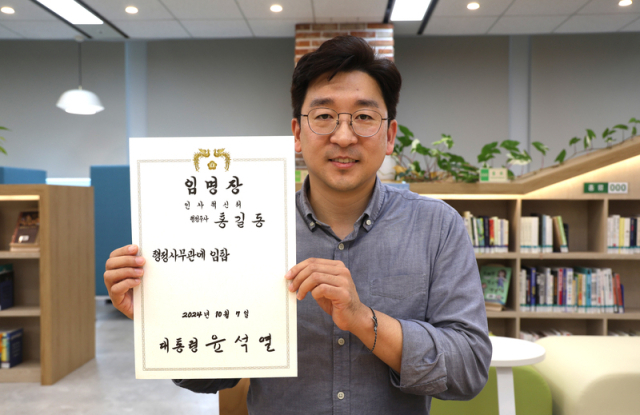
대한민국에서는 5급 이상 행정부 소속 국가공무원의 임명장을 인사혁신처 소속 필경사 2명이 전부다 처리한다. 이는 공문서로서의 격식을 부여하는 기능 외에, 활자로 위조 임명장을 만드는 것을 전면 방지하는 역할도 한다. 한국뿐만 아니라 중국과 일본에서도 이러한 수기 공문서를 찾아볼 수 있다. 2005년에는 프린터 인쇄로 잠시 바뀌었으나 조작방지문제와 명예 문제로 다시 필경사에게 맡기기로 했다. 지금껏 5명이 필경사로 붓을 잡았는데, 필경사 본인의 임명장도 자기가 직접 쓴다고 한다.
원래는 한 명이었지만 대통령 명의로 임명장이 나가면서 써야 하는 임명장 개수가 갈수록 크게 늘어 한 명을 더 뽑아 두 명으로 늘어났다. 유 퀴즈 온 더 블럭/59회에서 필경사 김이중이 출연해 주목을 받았다. 대통령의 입이 대통령실 직속 대변인이라면, 대통령의 붓은 바로 필경사인 것이다. #
한 해에 5급 이상 공무원의 임명장이 7천여장 정도 나가는데 1~2명이서 다 손으로 쓰기 때문에 매일 하루에 20건 이상을 처리해야 하므로 업무량이 많다고 한다. 그래서 휴가도 쉽게 못 냈다고 한다.
김이중 사무관이 2023년 개인 사유로 퇴직하면서 15년 만에 필경사를 공채로 뽑았다. 채널A뉴스
서기관 , 또는 필경사 (영어: scribe )는 고대에 사람들을 위해 사건을 기록하거나 텍스트를 베끼는 일을 전문으로 하는 직업이었습니다. 서기관의 일은 주로 종교적 텍스트, 허구적 이야기, 학술적 텍스트 또는 교훈적 문학 등 다양한 책을 베끼는 것이었습니다 . 때로는 서기관들이 군주 , 귀족 , 사원 , 도시 의 업무를 관리하고 명령을 기록하는 등 비서 및 행정 업무를 수행해야 했습니다 . 이 직업은 모든 문해 사회 에서 찾아볼 수 있었지만 , 인쇄술의 등장으로 그 중요성과 지위를 잃었습니다 . 나중에 이 직업은 공무원 , 언론인 , 회계사 , 타이피스트, 변호사 등 으로 발전했습니다 . 문화 수준이 비교적 낮은 사회에서는 서기관이 거리의 독자들에게 서비스를 제공하기도 했습니다.
==
==
"임명장 담긴 손 글씨의 힘, 공무원 사기 올리죠"
입력2024-11-06 17:34:58수정 2024.11.06 17:34:58 김정욱 기자
필경사(筆耕士). 손 글씨로 글을 적는 것을 직업으로 하는 사람이나 전문가를 뜻한다. 조선시대 왕이 내리는 교지를 썼던 필경사는 ‘사자관(寫字官)’이라고 불렸고 명필 한석봉이 오랫동안 맡았던 관직이기도 하다.
인쇄술이 발달한 지금도 필경사는 있다. 현재 우리나라에는 2명의 필경사가 인사혁신처에 근무 중이다. 대통령이 임명하는 5급 이상 고위공무원 임명장을 손으로 쓰는 업무를 하는 국가공무원이며 우리나라 공무원 중 가장 희귀한 직군이라고 할 수 있다.
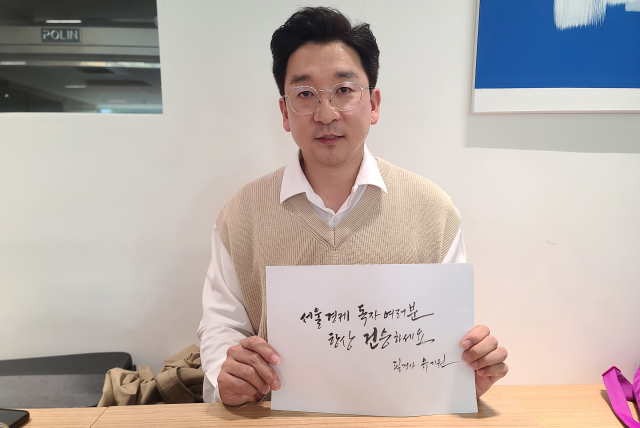
7월 역대 다섯 번째 필경사로 임용된 유기원 주무관은 6일 서울경제신문과의 인터뷰에서 “컴퓨터로 출력한 글씨는 마음이 제대로 전해지지 않을 것 같다”며 “정성을 담아 마음을 전하는 것이 손 글씨의 힘”이라고 강조했다.
1962년 필경사가 처음 생긴 후 62년 동안 필경사 업무를 했던 공무원은 유 주무관을 포함해 5명이다. 현재는 유 주무관 외 김동훈 주무관 1명이 더 있다.
대전대 서예학과를 졸업하고 그곳에서 석사와 박사 학위를 받은 유 주무관은 필경사가 되기 전 서예 작가였다. 그동안 여러 차례 전시회도 열었으며 ‘노량’ ‘경성크리처’ ‘재벌집 막내아들’ 등 다수의 영화와 드라마에 등장하는 글씨를 대필하기도 했다. 서예 작가가 되기 전에는 직업군인이었다. 그는 6년간 육군에 복무하다 대위로 전역했다.
56대1의 경쟁률을 뚫고 임용된 그가 필경사가 되기로 한 것은 서예가와 필경사는 밀접한 관계가 있음을 보여주고 싶어서라고 한다. 유 주무관은 “일반인들에게 생소한 직업인 필경사에 도전한 이유 중 하나는 필경사는 곧 서예가라는 것을 알리고 싶었기 때문”이라며 “또 요즘처럼 손 글씨를 안 쓰는 시대에 서예가는 몇 안 되는 손 글씨를 쓰는 사람이라는 것도 알리기 위해 필경사가 되고 싶었다”고 했다.
그가 이 직군을 택한 또 다른 이유는 대통령의 마음을 담아내고 공무원의 사기 진작에 작은 힘이나마 보태고 싶어서라고 했다. 유 주무관은 “대통령의 마음이 담긴 글을 종이에 써서 해당 승진자에게 전달하는 데 보람을 느낀다”며 “임명장을 대통령 대신 내가 전달한다고 보면 ‘마음의 전달자’라는 생각도 든다”고 말했다.
임명장을 쓰는 과정은 단순히 붓을 놀리는 게 아니다. 잉크는 시중에 파는 제품이 아닌 직접 먹을 갈아 쓴다. 손으로 만든 먹물을 써야 임명장의 글씨가 오래 가기 때문이라고 한다. 종이는 특수 제작된 한지다.
하루 평균 30장 정도의 임명장을 쓴다는 유 주무관이 임용 후 지금까지 작성한 임명장은 수백 장이다. 한 장의 임명장을 쓰는 데는 평균 20분 정도 걸린다고 했다. 임명장 용지에 내용을 다 쓴 후 행정안전부에서 ‘대한민국’이라는 글자가 찍힌 국새를 날인받으면 임명장이 완성된다.
유 주무관은 “어떤 이들은 ‘요즘 인쇄 기술이 얼마나 좋은데 굳이 왜 임명장을 손으로 쓰는지 이해가 안 된다’고 하는데 손 글씨의 의미를 잘 몰라서 하는 말”이라며 “필경사는 없어서는 안 될 공무원 직군이라고 생각하고, 그래서 앞으로 필경사가 지금보다 더 늘었으면 하는 작은 바람이 있다”고 전했다. 그는 또 “처음 임명장을 썼을 때 대통령이 내 오른손을 잡고 쓴 느낌 또는 내가 대통령의 손을 잡고 쓴 느낌으로 모든 정성을 기울였다”며 “초심을 잃지 않고 매번 임명장을 쓸 때 한 글자 한 글자 신중을 다해 붓을 움직일 것”이라고 강조했다.
 일러스트레이션 김대중

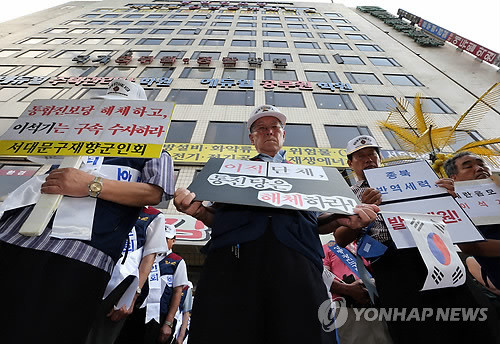 ▲ 지난달 30일 오후 서울 대방동 통합진보당사 앞에서 열린 '이석기 규탄 및 통진당 해체 촉구 집회'에서 대한국민재향군인회 회원들이 묵념을 하고 있다.ⓒ 연합뉴스

 ▲ 9일 오후 대방동 통합진보당 당사 앞에서 탈북자 단체가 통진당 해체와 종북세력 종식을 위한 탈북민 총궐기대회를 가졌다.ⓒkonas.net
 ▲ '이석기 역도 처단'과 '통진당 해체'를 촉구하는 계란 세례 퍼포먼스(왼쪽)와 통진당 해산 서명운동에 참여하고 있는 탈북단체 회원들(오른쪽). ⓒkonas.net





.jpg)
_and_Writing_Table_(Bundai)_with_Pines_at_Takasago_and_Sumiyoshi_MET_DP330038.jpg)

.jpg)


_achter_een_voll%E2%80%A6,_Bestanddeelnr_255-2339.jpg)


_01.JPG)

.jpg)