Chinese


Read sample
A History of Taiwan Literature Paperback – 1 December 2021
by Shitao Ye (Author), Christopher Lupke (Translator)
4.5 4.5 out of 5 stars (2)
Part of: Literature from Taiwan Series (6 books)
A History of Taiwan Literature by Ye Shitao, an important public intellectual in Taiwan, was published in the crucial watershed year of 1987 when the end of martial law on the island was signaled. Ye’s work was clearly a product of that period and would have been less timid, considering the fact that the rule book on public expression had yet to be written, if it had been written later. The book is a rigorous, comprehensive treatment; it goes to great lengths to devote attention to all major writers in the history of Taiwan as well as many who were not as prominent. Ye has been fair and evenhanded in the writing of his literary history of Taiwan; there is little, if any, tendentiousness in the book. This is arguably one of the most important intellectual works of literary history, made even more impressive by Ye’s inclusion of copious notes, including Japanese-language ones.
In this translation, Christopher Lupke has painstakingly translated both Ye’s main text and notes, making this valuable resource available to English readers for the first time. Lupke also provides an introduction that contextualizes Ye’s work as well as an epilogue that outlines some of the major historical and literary developments after 1987, along with a brief mention of some of the most important literary figures of Taiwan. In addition to a glossary and index, Lupke offers a select bibliography that lists works that Ye referenced in his own notes as well as some books that Lupke consulted in completing this translation.
A History of Taiwan Literature is a most important resource for those interested in the intellectual history of East Asia, world literature, and Taiwan studies. This book is part of the Literature From Taiwan Series, a collaboration by Cambria Press with the National Museum of Taiwan Literature and National Taiwan Normal University.
Read less
===
Books in this series (6 books)
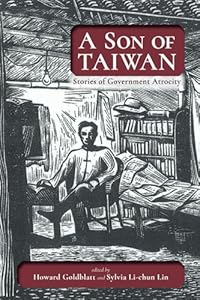
A Son of Taiwan: Stories of Government Atrocity(28 February 2021)
by Howard Goldblatt (Author) , Sylvia Li-chun Lin (Editor)
3.5 3.5 out of 5 stars 2
On February 28, 1947, a widow selling cigarettes on the street in Taipei was brutally beaten by government agents searching for contraband cigarettes. When a crowd gathered, shots were fired and a bystander was killed. Island-wide demonstrations prompted the Chiang Kai-shek government to send reinforcements from China. Upon arrival, the troops opened fire, killing thousands. The massacre was followed by large-scale arrests of anyone suspected of sedition or Communist associations, all in the name of national security. Martial law was declared and not lifted until 1987. What happened in 1947 is known as the 2/28 Incident, which led to a four-decade-long suppression of dissent, encroachments upon civil liberties, and the wholesale violation of human rights, all subsumed under an era referred to as White Terror. Its pernicious effects went beyond actual acts of atrocity, as the citizens practiced self-censorship and passed their fears on to the next generation. For many years, this part of Taiwan's past was talked about, if at all, with circumspection. As evidenced in this collection, literary representations often employed obscure references, which themselves could place the writers in serious jeopardy. Despite, or because of, differences in approach, these writers keep memories alive to ensure that the past is neither forgotten nor repeated. In many ways, Taiwan presents a compelling example of how autocratic regimes impose their will on a population, often as colonial overlords. A peaceful island peopled by Austronesians and ethnic Chinese, rich in agricultural output, has been a geopolitical pawn in recent history, first by the Japanese and then the defeated regime of Chiang Kai-shek in China. Parallels throughout the world are not difficult to find. Now that Asia's preeminent democracy has created a political and cultural milieu in which Taiwanese no longer have to tiptoe around sensitive topics, much historical research has been undertaken on this turbulent period, the results published and widely read. In presenting multiple perspectives from various ethnic groups that call Taiwan their homeland, the stories in this collection can expand our understanding of Taiwan's post-colonial history and extend our memory of the past, in Taiwan's pursuit of transitional justice. This collection will be of interest to general readers as well as classes dealing with fictional re-creation of government atrocity. This book is part of the Literature from Taiwan Series, in collaboration with the National Museum of Taiwan Literature, the National Human Rights Museum, and National Taiwan Normal University.
Read more
See product details for:
Paperback
$55.51
Kindle
$38.61
Paperback
$55.51
FREE delivery: Monday, 8 June
Add to cart
Ships from and sold by Amazon AU.

Transitions in Taiwan: Stories of the White Terror(30 April 2021)
by Ian Rowen (Author)
4.7 4.7 out of 5 stars 4
Taiwan’s peaceful, democratic society is built upon decades of authoritarian state violence with which it is still coming to terms. At the close of World War II in 1945, after fifty years of Japanese colonization, Taiwan was occupied by the Chinese Nationalist Party (KMT). The party massacred thousands of Taiwanese while it established a military dictatorship on the island with the tacit support of the United States. Although early episodes of state violence (such as the 228 Incident in 1947) and post-1980s democratization in Taiwan have received a significant amount of literary and scholarly attention, relatively less has been written or translated about the four-decade period known as the White Terror, which began right after the 228 Incident and continued until the end of martial law in 1987. The White Terror was aimed at eliminating alleged proponents of Taiwanese independence as well as supposed communist collaborators, and it wiped out an entire generation of intellectuals. Both native-born Taiwanese as well as mainland Chinese exiles were subject to imprisonment, torture, and execution. During this time, the KMT institutionally favored mainland Chinese over native-born Taiwanese and reserved most military, educational, and police positions for the former. Taiwanese were forcibly “reeducated” as Chinese subjects. China-centric national history curricula, forced Mandarin-language pedagogy and media, and the renaming of streets and public spaces after places in China further enforced a representational regime of Chineseness to legitimize the KMT’s authority. Taiwan’s contemporary commitment to transitional justice and democracy hinges on this history of violence, for which this volume provides a literary treatment as essential as it is varied. This is among the first collections of stories to comprehensively address the social, political, and economic aspects of the White Terror and to do so with deep attention to its transnational character. Featuring contributions from some of Taiwan’s most celebrated authors and from genres that range between realism, satire, and allegory, this book examines the modes and mechanisms of the White Terror and party-state exploitation in prisons, farming villages, slums, military bases, and professional communities. Transitions in Taiwan: Stories of the White Terror is an important book for Taiwan studies, Asian Studies, literature, and social justice collections.
Read more
See product details for:
Paperback
$54.13
Kindle
$29.82
Paperback
$54.13
FREE delivery: Monday, 8 June
Add to cart
Ships from and sold by Amazon AU.

A History of Taiwan Literature(1 December 2021)
by Shitao Ye (Author) , Christopher Lupke (Translator)
4.5 4.5 out of 5 stars 2
A History of Taiwan Literature by Ye Shitao, an important public intellectual in Taiwan, was published in the crucial watershed year of 1987 when the end of martial law on the island was signaled. Ye’s work was clearly a product of that period and would have been less timid, considering the fact that the rule book on public expression had yet to be written, if it had been written later. The book is a rigorous, comprehensive treatment; it goes to great lengths to devote attention to all major writers in the history of Taiwan as well as many who were not as prominent. Ye has been fair and evenhanded in the writing of his literary history of Taiwan; there is little, if any, tendentiousness in the book. This is arguably one of the most important intellectual works of literary history, made even more impressive by Ye’s inclusion of copious notes, including Japanese-language ones.
In this translation, Christopher Lupke has painstakingly translated both Ye’s main text and notes, making this valuable resource available to English readers for the first time. Lupke also provides an introduction that contextualizes Ye’s work as well as an epilogue that outlines some of the major historical and literary developments after 1987, along with a brief mention of some of the most important literary figures of Taiwan. In addition to a glossary and index, Lupke offers a select bibliography that lists works that Ye referenced in his own notes as well as some books that Lupke consulted in completing this translation.
A History of Taiwan Literature is a most important resource for those interested in the intellectual history of East Asia, world literature, and Taiwan studies. This book is part of the Literature From Taiwan Series, a collaboration by Cambria Press with the National Museum of Taiwan Literature and National Taiwan Normal University.
Read more
See product details for:
Paperback
$76.68
Kindle
$55.76
Hardcover
$177.95
Paperback
$76.68
FREE delivery: Monday, 8 June
Add to cart
Ships from and sold by Amazon AU.

A Taiwanese Literature Reader(1 December 2021)
by Nikky Lin (Author) and 2 more
Taiwan was a Japanese colony until the end of the Second World War in 1945—making for fifty-one years of Japanese rule over Taiwan. This period was a struggle for the Taiwanese people, whose lives were inevitably shaped by the changes and challenges brought about in the transition from a traditional to a modern society, one that was caught between the pull of colonization and modernization.
Literature serves as a reflection of an era. This book thus focuses on the literature written by Taiwanese authors during the era of Japanese colonial rule over Taiwan. Two of the short stories were written in Chinese, while the other four were written in Japanese—a testament to Taiwan’s complex history.
According to Taiwanese writer and historian Ye Shitao, the development of Taiwanese literature during Japanese occupation can be divided into three stages: the “nascent period” (1920–1925), followed by the “mature period” (1926–1937), and finally the “war period” (1937–1945). The six stories in this collection are representative works from the mature period and the war period. Each story depicts different hardships and predicaments faced by Taiwan as a colony under Japanese rule, offering insight into how this part of Taiwan’s history continues to impact contemporary Taiwanese society.
A Taiwanese Literature Reader is a most important resource for those interested in world literature and Taiwan studies.
This book is part of the Literature from Taiwan Series, in collaboration with the National Museum of Taiwan Literature and National Taiwan Normal University.
Read more
See product details for:
Paperback
$77.10
Kindle
$55.67
Paperback
$77.10
FREE delivery: Monday, 8 June
Add to cart
Ships from and sold by Amazon AU.
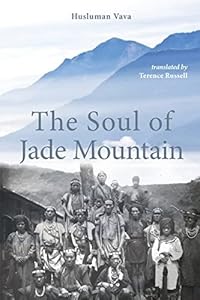
The Soul of Jade Mountain(1 December 2021)
by Husluman Vava (Author) , Terence Russell (Translator)
Cultural production, including literary work, has been a key element in the Indigenous struggle for decolonization worldwide. In Taiwan, ethnographic novels written in Chinese, such as The Soul of Jade Mountain (Yushan hun) by Bunun writer Husluman Vava (1958–2007), have been an important tool in the process of bringing the situation of Indigenous people to the attention of mainstream audiences.
Before his untimely death, Vava was one of the leaders of the Indigenous cultural revival movement in Taiwan. He was among the first Indigenous authors to make use of long fiction, and he did so quite prolifically. For Vava, as is the case for many Indigenous community leaders, the mission was twofold. He wanted to recover and preserve the rich traditions of his ancestors so that younger generations, in their search for their identity and roots in the modern world, could find quality sources created within their own community. Vava also wanted to make those in the mainstream aware of the true nature and depth of Bunun culture. His many short stories and novels fashion a vivid portrait of the Bunun people, their daily life, their values, and their aspirations. Vava created accessible characters in empathetic situations in order to demonstrate the deeply human qualities of traditional Bunun life and to suggest that those qualities maintain their validity in the modern world.
Vava’s novel The Soul of Jade Mountain won the 2007 Taiwan Literature Award for the best novel, and this is the first English translation of an ethnographic novel by a Taiwan Indigenous writer to be published by a North American publisher, marking an important step in bringing Indigenous Taiwan to international audiences.
Read more
See product details for:
Paperback
$82.91
Kindle
$59.66
Hardcover
$216.83
Paperback
$82.91
FREE delivery: Monday, 8 June
Add to cart
Ships from and sold by Amazon AU.

Queer Taiwanese Literature: A Reader(3 May 2021)
by Howard Chiang (Author)
5.0 5.0 out of 5 stars 2
As the first state to legalize same-sex marriage in Asia and host the first annual gay pride in the Sinophone Pacific, Taiwan is a historic center of lesbian, gay, bisexual, transgender, and queer culture. With this blazing path of activism, queer Taiwanese literature has also risen in prominence and there is a growing popular interest in stories about the transgression of gender and sexual norms.
Since the lifting of martial law in 1987, queer authors have redefined Taiwan's cultural scene, and throughout the 1990s many of their works won the most prestigious literary awards and accolades. This anthology provides a deeper understanding of queer literary history in Taiwan. It includes a selection of short stories, previously untranslated, written by Taiwanese authors dating from 1975 to 2020. Readers are introduced to a wide range of themes: bisexuality, aging, mobility, diaspora, AIDS, indigeneity, recreational drug use, transgender identity, surrogacy, and many others. The diversity of literary tropes and styles canvased in this book reflects the profusion of gender and sexual configurations that has marked Taiwan's complex history for the past half century.
Queer Taiwanese Literature: A Reader is a timely and important resource for readers interested in Taiwan studies, queer literature, and global cultural studies.
This book is part of the Cambria Literature from Taiwan Series, in collaboration with the National Museum of Taiwan Literature and National Taiwan Normal University.
Read more
See product details for:
Paperback
$59.39
Kindle
$11.99
Paperback
$59.39
FREE delivery: Monday, 8 June
Add to cart
Ships from and sold by Amazon AU.
===
Books in this series (6 books)
A Son of Taiwan: Stories of Government Atrocity(28 February 2021)
by Howard Goldblatt (Author) , Sylvia Li-chun Lin (Editor)
3.5 3.5 out of 5 stars 2
On February 28, 1947, a widow selling cigarettes on the street in Taipei was brutally beaten by government agents searching for contraband cigarettes. When a crowd gathered, shots were fired and a bystander was killed. Island-wide demonstrations prompted the Chiang Kai-shek government to send reinforcements from China. Upon arrival, the troops opened fire, killing thousands. The massacre was followed by large-scale arrests of anyone suspected of sedition or Communist associations, all in the name of national security. Martial law was declared and not lifted until 1987. What happened in 1947 is known as the 2/28 Incident, which led to a four-decade-long suppression of dissent, encroachments upon civil liberties, and the wholesale violation of human rights, all subsumed under an era referred to as White Terror. Its pernicious effects went beyond actual acts of atrocity, as the citizens practiced self-censorship and passed their fears on to the next generation. For many years, this part of Taiwan's past was talked about, if at all, with circumspection. As evidenced in this collection, literary representations often employed obscure references, which themselves could place the writers in serious jeopardy. Despite, or because of, differences in approach, these writers keep memories alive to ensure that the past is neither forgotten nor repeated. In many ways, Taiwan presents a compelling example of how autocratic regimes impose their will on a population, often as colonial overlords. A peaceful island peopled by Austronesians and ethnic Chinese, rich in agricultural output, has been a geopolitical pawn in recent history, first by the Japanese and then the defeated regime of Chiang Kai-shek in China. Parallels throughout the world are not difficult to find. Now that Asia's preeminent democracy has created a political and cultural milieu in which Taiwanese no longer have to tiptoe around sensitive topics, much historical research has been undertaken on this turbulent period, the results published and widely read. In presenting multiple perspectives from various ethnic groups that call Taiwan their homeland, the stories in this collection can expand our understanding of Taiwan's post-colonial history and extend our memory of the past, in Taiwan's pursuit of transitional justice. This collection will be of interest to general readers as well as classes dealing with fictional re-creation of government atrocity. This book is part of the Literature from Taiwan Series, in collaboration with the National Museum of Taiwan Literature, the National Human Rights Museum, and National Taiwan Normal University.
Read more
See product details for:
Paperback
$55.51
Kindle
$38.61
Paperback
$55.51
FREE delivery: Monday, 8 June
Add to cart
Ships from and sold by Amazon AU.
Transitions in Taiwan: Stories of the White Terror(30 April 2021)
by Ian Rowen (Author)
4.7 4.7 out of 5 stars 4
Taiwan’s peaceful, democratic society is built upon decades of authoritarian state violence with which it is still coming to terms. At the close of World War II in 1945, after fifty years of Japanese colonization, Taiwan was occupied by the Chinese Nationalist Party (KMT). The party massacred thousands of Taiwanese while it established a military dictatorship on the island with the tacit support of the United States. Although early episodes of state violence (such as the 228 Incident in 1947) and post-1980s democratization in Taiwan have received a significant amount of literary and scholarly attention, relatively less has been written or translated about the four-decade period known as the White Terror, which began right after the 228 Incident and continued until the end of martial law in 1987. The White Terror was aimed at eliminating alleged proponents of Taiwanese independence as well as supposed communist collaborators, and it wiped out an entire generation of intellectuals. Both native-born Taiwanese as well as mainland Chinese exiles were subject to imprisonment, torture, and execution. During this time, the KMT institutionally favored mainland Chinese over native-born Taiwanese and reserved most military, educational, and police positions for the former. Taiwanese were forcibly “reeducated” as Chinese subjects. China-centric national history curricula, forced Mandarin-language pedagogy and media, and the renaming of streets and public spaces after places in China further enforced a representational regime of Chineseness to legitimize the KMT’s authority. Taiwan’s contemporary commitment to transitional justice and democracy hinges on this history of violence, for which this volume provides a literary treatment as essential as it is varied. This is among the first collections of stories to comprehensively address the social, political, and economic aspects of the White Terror and to do so with deep attention to its transnational character. Featuring contributions from some of Taiwan’s most celebrated authors and from genres that range between realism, satire, and allegory, this book examines the modes and mechanisms of the White Terror and party-state exploitation in prisons, farming villages, slums, military bases, and professional communities. Transitions in Taiwan: Stories of the White Terror is an important book for Taiwan studies, Asian Studies, literature, and social justice collections.
Read more
See product details for:
Paperback
$54.13
Kindle
$29.82
Paperback
$54.13
FREE delivery: Monday, 8 June
Add to cart
Ships from and sold by Amazon AU.
A History of Taiwan Literature(1 December 2021)
by Shitao Ye (Author) , Christopher Lupke (Translator)
4.5 4.5 out of 5 stars 2
A History of Taiwan Literature by Ye Shitao, an important public intellectual in Taiwan, was published in the crucial watershed year of 1987 when the end of martial law on the island was signaled. Ye’s work was clearly a product of that period and would have been less timid, considering the fact that the rule book on public expression had yet to be written, if it had been written later. The book is a rigorous, comprehensive treatment; it goes to great lengths to devote attention to all major writers in the history of Taiwan as well as many who were not as prominent. Ye has been fair and evenhanded in the writing of his literary history of Taiwan; there is little, if any, tendentiousness in the book. This is arguably one of the most important intellectual works of literary history, made even more impressive by Ye’s inclusion of copious notes, including Japanese-language ones.
In this translation, Christopher Lupke has painstakingly translated both Ye’s main text and notes, making this valuable resource available to English readers for the first time. Lupke also provides an introduction that contextualizes Ye’s work as well as an epilogue that outlines some of the major historical and literary developments after 1987, along with a brief mention of some of the most important literary figures of Taiwan. In addition to a glossary and index, Lupke offers a select bibliography that lists works that Ye referenced in his own notes as well as some books that Lupke consulted in completing this translation.
A History of Taiwan Literature is a most important resource for those interested in the intellectual history of East Asia, world literature, and Taiwan studies. This book is part of the Literature From Taiwan Series, a collaboration by Cambria Press with the National Museum of Taiwan Literature and National Taiwan Normal University.
Read more
See product details for:
Paperback
$76.68
Kindle
$55.76
Hardcover
$177.95
Paperback
$76.68
FREE delivery: Monday, 8 June
Add to cart
Ships from and sold by Amazon AU.
A Taiwanese Literature Reader(1 December 2021)
by Nikky Lin (Author) and 2 more
Taiwan was a Japanese colony until the end of the Second World War in 1945—making for fifty-one years of Japanese rule over Taiwan. This period was a struggle for the Taiwanese people, whose lives were inevitably shaped by the changes and challenges brought about in the transition from a traditional to a modern society, one that was caught between the pull of colonization and modernization.
Literature serves as a reflection of an era. This book thus focuses on the literature written by Taiwanese authors during the era of Japanese colonial rule over Taiwan. Two of the short stories were written in Chinese, while the other four were written in Japanese—a testament to Taiwan’s complex history.
According to Taiwanese writer and historian Ye Shitao, the development of Taiwanese literature during Japanese occupation can be divided into three stages: the “nascent period” (1920–1925), followed by the “mature period” (1926–1937), and finally the “war period” (1937–1945). The six stories in this collection are representative works from the mature period and the war period. Each story depicts different hardships and predicaments faced by Taiwan as a colony under Japanese rule, offering insight into how this part of Taiwan’s history continues to impact contemporary Taiwanese society.
A Taiwanese Literature Reader is a most important resource for those interested in world literature and Taiwan studies.
This book is part of the Literature from Taiwan Series, in collaboration with the National Museum of Taiwan Literature and National Taiwan Normal University.
Read more
See product details for:
Paperback
$77.10
Kindle
$55.67
Paperback
$77.10
FREE delivery: Monday, 8 June
Add to cart
Ships from and sold by Amazon AU.
The Soul of Jade Mountain(1 December 2021)
by Husluman Vava (Author) , Terence Russell (Translator)
Cultural production, including literary work, has been a key element in the Indigenous struggle for decolonization worldwide. In Taiwan, ethnographic novels written in Chinese, such as The Soul of Jade Mountain (Yushan hun) by Bunun writer Husluman Vava (1958–2007), have been an important tool in the process of bringing the situation of Indigenous people to the attention of mainstream audiences.
Before his untimely death, Vava was one of the leaders of the Indigenous cultural revival movement in Taiwan. He was among the first Indigenous authors to make use of long fiction, and he did so quite prolifically. For Vava, as is the case for many Indigenous community leaders, the mission was twofold. He wanted to recover and preserve the rich traditions of his ancestors so that younger generations, in their search for their identity and roots in the modern world, could find quality sources created within their own community. Vava also wanted to make those in the mainstream aware of the true nature and depth of Bunun culture. His many short stories and novels fashion a vivid portrait of the Bunun people, their daily life, their values, and their aspirations. Vava created accessible characters in empathetic situations in order to demonstrate the deeply human qualities of traditional Bunun life and to suggest that those qualities maintain their validity in the modern world.
Vava’s novel The Soul of Jade Mountain won the 2007 Taiwan Literature Award for the best novel, and this is the first English translation of an ethnographic novel by a Taiwan Indigenous writer to be published by a North American publisher, marking an important step in bringing Indigenous Taiwan to international audiences.
Read more
See product details for:
Paperback
$82.91
Kindle
$59.66
Hardcover
$216.83
Paperback
$82.91
FREE delivery: Monday, 8 June
Add to cart
Ships from and sold by Amazon AU.
Queer Taiwanese Literature: A Reader(3 May 2021)
by Howard Chiang (Author)
5.0 5.0 out of 5 stars 2
As the first state to legalize same-sex marriage in Asia and host the first annual gay pride in the Sinophone Pacific, Taiwan is a historic center of lesbian, gay, bisexual, transgender, and queer culture. With this blazing path of activism, queer Taiwanese literature has also risen in prominence and there is a growing popular interest in stories about the transgression of gender and sexual norms.
Since the lifting of martial law in 1987, queer authors have redefined Taiwan's cultural scene, and throughout the 1990s many of their works won the most prestigious literary awards and accolades. This anthology provides a deeper understanding of queer literary history in Taiwan. It includes a selection of short stories, previously untranslated, written by Taiwanese authors dating from 1975 to 2020. Readers are introduced to a wide range of themes: bisexuality, aging, mobility, diaspora, AIDS, indigeneity, recreational drug use, transgender identity, surrogacy, and many others. The diversity of literary tropes and styles canvased in this book reflects the profusion of gender and sexual configurations that has marked Taiwan's complex history for the past half century.
Queer Taiwanese Literature: A Reader is a timely and important resource for readers interested in Taiwan studies, queer literature, and global cultural studies.
This book is part of the Cambria Literature from Taiwan Series, in collaboration with the National Museum of Taiwan Literature and National Taiwan Normal University.
Read more
See product details for:
Paperback
$59.39
Kindle
$11.99
Paperback
$59.39
FREE delivery: Monday, 8 June
Add to cart
Ships from and sold by Amazon AU.
===

No comments:
Post a Comment