Ang Swee Chai – From Christian Zionist to Palestinian Activist – Book Review
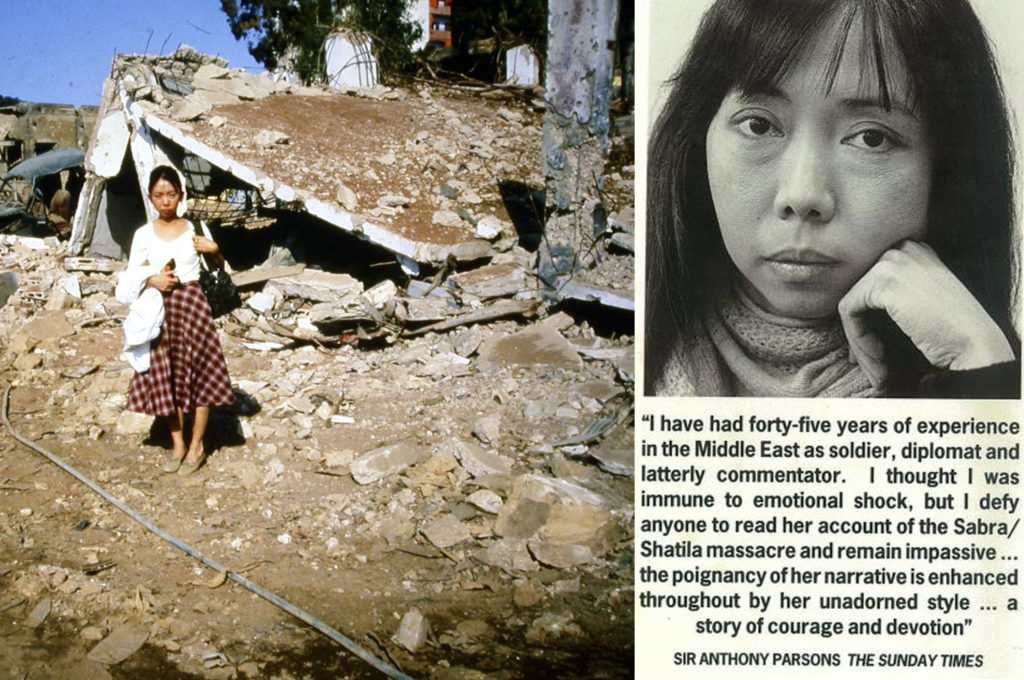
Sad, angry, depressed, hopeful, were few of the thousands of emotions aroused reading ‘From Beirut to Jerusalem’, a memoir by Ang Swee Chai. Through her passion, love, perseverance, bravery, and determination, the world is indeed greatly indebted for her work both as a doctor and also as a witness to the massacre suffered by Palestinian refugee in Sabra-Shatila during the Israeli invasion of Lebanon in 1982.
Her maternal grandfather was a conservative and traditionalist, he believed that an educated woman will not make a good wife. But her mother was a defiant daughter, register herself to school and went to become a teacher. Her father ran away from his grandfather in mainland China refusing to marry a girl arranged for him and went to became a journalist in Singapore. During the Japanese invasion on Malaya, both of them met in the Outram Road prison in Singapore.
After Japan was defeated, they settled as a family. When her mother was pregnant, she went back to her hometown in Pulau Pinang to give birth to her. She was raised in Ayer Itam district in Pulau Pinang with her younger brother, Lee Cyn. They eventually moved back to Singapore following their father’s work. Raised in poor family, her mother raised her with discipline, she then continues her studies in medical school. She married Francis Khoo, a lawyer and activist. Francis was accused to be a communist, he fled Singapore in 1977 avoiding arrest under Internal Security Act (ISA) and took refuge in Britain.
Her parent was areligious but they allowed their children to choose a religion of their own. She embraced Christianity during her studies in medical school.
Ang was well versed about Israel even before volunteering. The church has taught her that Israel was God’s chosen people, and the return of the Jew to Israel was a verification of biblical prophecy. There are many reasons why she supported Israel, one of it was the oppression of the Jew by the Nazis, and the Nazis were Japanese ally during world war, with the creation of Israel the Jew can defend themselves, its a realization of justice from God.
She was prejudiced towards Palestinians, the church has told her that they were terrorist, an old foe, the Philistines of the Old Testament. She was a bigoted, self-righteous fundamentalist Christian, like many Christians she rejoiced in the military triumph of Israel. But that morning in Sabra and Shatila, God destroyed that self-righteousness.
In her memoir, she recreated that journey, from a bigoted Christian fundamentalist to peace activist and friend of the Palestinian people. It started in 1982 when she watch the horror of Israeli invasion and bombardment of the people of Lebanon through British television. The killing of women and children shook her to the core, she resigned prom her hospital in Britain, pack her bag, and went to Beirut as a medical surgeon volunteer.
In Beirut, Dr. Ang Swee Chai served at Gaza Hospital, Palestinian refugees named their hospital with their town in Palestine, its a symbol of longing to their homeland from where they were expelled by the Zionist colonialism. Many of the camp residence were refugees who fled the ethnic cleansing of Palestine in 1948. The hospital situated near the Sabra and Shatila camp. Here, she witnessed the kindness of Palestinian people, the gentleness they showed toward their guest, she also saw their courage, resolution, patience, and resistance against Israeli aggression and occupation.
Before the Sabra and Shatila massacre, Palestinian fighters from Palestinian Liberation Organization (PLO) agreed to evacuate from Beirut as a condition of a ceasefire. Dr. Ang noted “this is the first time that I realized that PLO fighters (who she preconceived as a terrorist) have a home and family in Lebanon, they withdraw and left their wives, children, siblings and parents”. The Palestinian gave away their weapon, the roads are cleared from any barrier. On 14 September 1882, water and electricity supply were restored. They believed in the promised of United States and western powers, that they will be let to live unharmed. They were wrong.
The next day, the camp were encircled by Israeli army and under siege, Israel coordinated Phalangist militia to enter the camp and massacred the people, children, baby, women, old people were brutally murdered. Dr. Ang realized the scale of barbarity and hope that the PLO did not withdraw on the first place, so they can defend the camp people. But it was too late. She recollected this barbaric massacre in her memoir which was first published by Grafton Books & Times Book International in 1989.
Reading her memoir really shock reader’s emotion to the core, your tears will be flowing like a river as she collected her horror, by page 70 your tear will run-out dry, there is so much to take. The story of a people exiled from their homeland in 1948 only to be massacred again by the Israelis in 1982, Dr. Ang could not help but ask, where should they go?
She recalled a story on the height of the killing, there was a woman and a child brought into the hospital, the woman was shot on her stomach and badly wounded. After operation, she needed a blood transfusion. She overheard that the nurse told the doctor that the blood pint given to her was the last, and the child need blood transfusion of the same blood type. She refused the blood pint so that the child can have it and asked for painkiller instead. She died shortly after.
She also written a story about a boy named Mahmoud, who was her patient before the massacre, he injured his wrist whilst helping his father rebuilding their house. After the massacre, when she walked down the road in the camp, Mahmoud appeared, ran toward her and hug her, he was so happy to know that she was alive. Soon, children began to appear around her, they saw her camera and asked for a photo, they wanted the world to see that although their house have been destroyed, their parent massacred, they still can smile and raised their hand with victory sign. Their courage was astonishing.
Reflecting on the Palestinian tragedy, she wondered why Palestinians need to suffer to accommodate the victim of Nazis persecution and European racism? At the end of the memoir, in the post-script, she also reflected on her Christian belief. She wrote “[I was] a bigoted, self-righteous fundamentalist Christian. I thought that I knew the Bible, and God was on our side. I rejoiced in the military triumph of Israel. On that morning in Sabra and Shatila, God destroyed that self-righteousness. Many of my Zionist Christian friends shunned me, but I am no longer intimidated by all this. I have seen a different face of God – that of love, compassion, and grace. He promised Ishmael would be a father of many nations. Palestinian are the children of Ishmael and the children of Abraham. He will wipe away all tears and bring us home..next year in Jerusalem.”
===
Dr. Ang Swee Chai then became a co-founder of Medical Aid for Palestinians (MAP), she became an activist and regularly invited to talk about the plight of the Palestinians. Her experience in Lebanon changed her life completely, she became the witness of Sabra-Shatila massacre which taught her to never relent in the face of injustice. In her letter to her husband, Francis Khoo she wrote “we are just two small persons in the history of liberation..I saw the face of death, I saw their power and ugliness, but I also saw fear deep inside their eyes, the children of the new generation will come, and they are not afraid”.

1] Was the Sabra and Shatila camp entirely civilian?
1. Was the Sabra and Shatila camp entirely civilian?
No, the population was not entirely civilian in the absolute literal sense, but it was overwhelmingly civilian and effectively defenseless at the time of the massacre
Prior to the incident, the Military/PLO units had completely evacuated Beirut by September 1, 1982, under an international ceasefire agreement
2. Was this fact well known to the Israeli and Christian Lebanese sides?
Yes, both sides were fully aware that the camps were overwhelmingly populated by civilians
The Israeli Side: The Israeli military hierarchy, led by Defense Minister Ariel Sharon and Chief of Staff Rafael Eitan, knew that the PLO's regular combat units had evacuated the city
. The official Israeli justification for surrounding the camps and sending in the Phalangists was to clear out a remaining pocket of "2,000 terrorists." However, intelligence reports and field observations clearly indicated that the vast majority of the inhabitants left in the camps were civilian families . The Christian Lebanese Side (Phalangists): The Phalangist leadership knew exactly who lived in these camps. Sabra and Shatila were well-established refugee settlements that had existed for decades, and the Phalangists were fully aware that the evacuation had left behind the families, wives, and children of the departed PLO fighters
.
3. Did the killing happen because they were PLO family members, with revenge being a factor?
Yes, revenge and familial association were primary driving factors behind the atrocities.
The Motive of Revenge: Just two days prior, on September 14, 1982, the newly elected Lebanese President and Phalangist leader, Bachir Gemayel, was assassinated in a bomb blast. The Phalangists blamed Palestinian and Syrian factions for the assassination. The entry into the camps on September 15 was fueled by a desire for immediate, violent retribution.
Dehumanization through Association: Because the residents were the families, relatives, and remaining community of the departed PLO fighters, the Phalangists did not view them merely as non-combatants
. Instead, they viewed the entire civilian population as an extension of the enemy, treating the families of the PLO as collective targets to be eradicated or terrorized into fleeing Lebanon entirely .
세 질문 모두 역사학계에서 오랫동안 논쟁되어 온 주제입니다. 현재 알려진 연구 성과를 기준으로 답하면 다음과 같습니다.
1] Was the Sabra and Shatila camp entirely civilian?
짧게 답하면:
<아니오. 완전히 민간인만 있었던 것은 아니다. 그러나 학살 당시 희생자의 대부분은 민간인이었다.>
1982년 8월 미국 특사의 중재로 PLO 주력 부대는 베이루트를 떠났다.
- 야세르 아라파트를 포함한 주요 전투원 수천 명이 튀니지 등으로 철수
- 국제사회는 난민촌 주민들의 안전을 보장하겠다고 약속
그러나:
- 일부 무장대원이 남아 있었을 가능성
- 은신 중인 전투원이 있었을 가능성
은 당시 이스라엘 측도 주장했다.
문제는 이후의 조사들에서:
- 대규모 PLO 전투부대가 남아 있었다는 증거는 발견되지 않았고
- 희생자 다수가 여성, 어린이, 노인, 일반 남성이었다는 점이다.
따라서 오늘날 대부분의 역사학자는
"난민촌 전체를 군사기지로 보는 것은 사실과 다르다"
고 본다.
2] Was this fact well known to the Israeli and Christian Lebanese sides?
여기서는 이스라엘군과 팔랑헤 민병대를 구분해야 한다.
팔랑헤(기독교 민병대)
그들은 레바논 사회를 잘 알고 있었다.
사브라·샤틸라에:
- 팔레스타인 난민
- 여성
- 어린이
- 노인
이 대거 거주한다는 사실을 몰랐다고 보기는 어렵다.
실제로 팔랑헤 지도부는 수년 동안 이 난민촌들과 접촉하거나 적대해 왔다.
따라서
"그곳에 민간인이 많다는 사실을 몰랐다"
는 설명은 설득력이 약하다.
이스라엘군
이 부분은 더 복잡하다.
이스라엘은 공식적으로:
"남아 있는 PLO 전투원을 제거하기 위해 팔랑헤를 투입했다"
고 설명했다.
하지만 이후 카한 조사위원회는
- 팔랑헤가 보복에 나설 가능성
- 민간인 학살 위험
을 이스라엘 지도부가 충분히 예상했어야 했다고 결론 내렸다.
즉,
위원회조차도
"학살이 일어날 것을 미리 알았다"
까지는 인정하지 않았지만,
"심각한 위험을 무시했다"
고 판단했다.
그래서 아리엘 샤론은 개인적으로 "간접 책임(indirect responsibility)"을 지게 되었다.
3] Did the killing happen because civilians were family members of the PLO?
이 질문은 매우 중요합니다.
많은 연구자들은
"예, 부분적으로는 그랬다"
고 본다.
그러나 단순히 가족 관계 때문만은 아니다.
복수의 논리
팔랑헤 입장에서 보면:
- 수년간의 내전
- 기독교인 학살 경험
- 바시르 제마엘 암살
등이 누적되어 있었다.
그들은 종종
"팔레스타인 공동체 전체"
를 적으로 보는 경향이 있었다.
즉,
전투원과 민간인을 구별하기보다
"그들을 지원하는 공동체"
전체를 책임 있는 집단으로 보는 집단적 보복 논리가 작동했다.
내전에서 흔히 나타나는 현상
세계 여러 내전에서도 비슷하다.
예를 들면:
- 보스니아
- 르완다
- 알제리
- 시리아
등에서
적 전투원의
- 가족
- 친척
- 같은 마을 주민
까지 "적의 일부"로 간주하는 일이 발생했다.
사브라·샤틸라에서도 비슷한 심리가 작동한 것으로 보인다.
그러나 이것만으로 설명되지는 않는다
역사학자들이 강조하는 것은
희생자 중 상당수는 PLO와 아무 관련도 없었다
는 점이다.
난민촌에는
- 레바논 출생 팔레스타인인
- 노인
- 어린아이
- 노동자
- 과부
도 많았다.
따라서
"그들은 PLO 가족이었기 때문에 죽었다"
보다는
"팔레스타인 공동체 전체가 적으로 취급되었다"
가 더 정확한 설명에 가깝다.
종합
세 질문에 대한 가장 균형 잡힌 답은 다음과 같다.
- <사브라·샤틸라는 순수한 민간인촌은 아니었지만, PLO 주력부대는 이미 철수했고 희생자의 대부분은 민간인이었다.>
- <팔랑헤는 민간인이 대거 거주한다는 사실을 알고 있었을 가능성이 매우 높다. 이스라엘 지도부도 민간인 존재를 알고 있었지만 학살 위험을 과소평가하거나 무시한 것으로 조사되었다.>
- <살해 동기에는 PLO에 대한 증오와 복수가 중요한 역할을 했지만, 실제 행동은 전투원 개인이 아니라 팔레스타인 공동체 전체를 적으로 보는 집단적 보복의 성격을 띠었다.>
그래서 사브라·샤틸라 사건은 단순한 군사작전 실패라기보다, 내전 상황에서 "전투원과 민간인의 구분이 무너질 때 어떤 일이 일어나는가"를 보여주는 대표적 사례로 연구되고 있습니다.

No comments:
Post a Comment